Rare 1839 Dime Errors (List & Pictures)
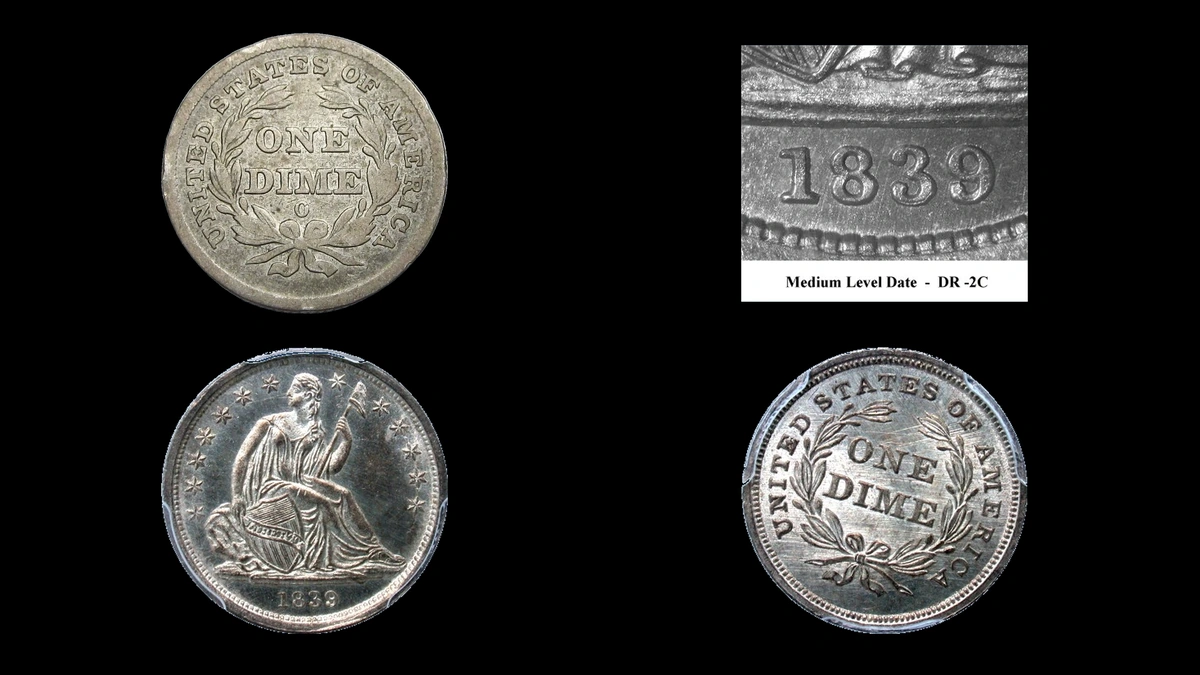
The space below the wreath is the first useful landmark for 1839 dime errors: an O identifies New Orleans, while Philadelphia coins have no mint letter. Estimated whole-coin values span $50–$20,000, with a repunched-O MS67+ example selling for $12,925 in March 2016.
Check the mint, compare any repeated strokes, and then examine crack routes or the alignment of the two faces.
| Observation | Feature | Estimated whole-coin value |
|---|---|---|
| Extra rounded outline below O | Repunched Large O mintmark | $75–$20,000 |
| Earlier strokes near date numerals | Repunched date | $75–$5,000 |
| Raised routes across the design | Die cracks and shattered dies | $50–$6,000 |
| Reverse leans after a controlled flip | Rotated dies | $50–$1,500 for worn to lightly worn coins |
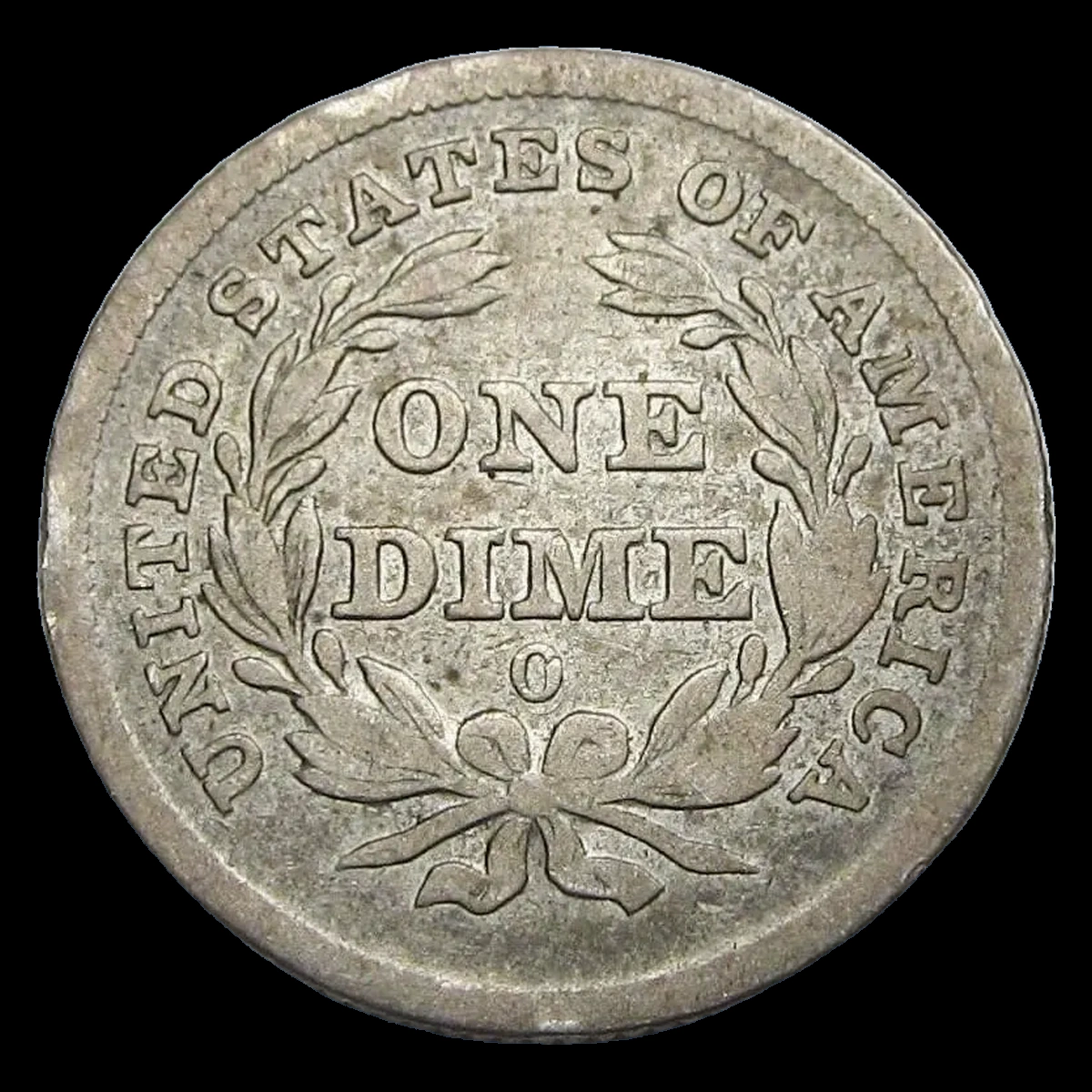
1. 1839 Dime Another rounded outline appears below O: Repunched Large O Mintmark Error
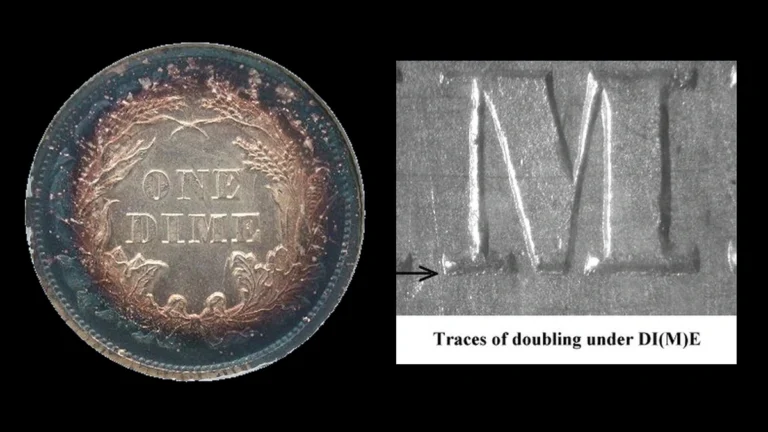
On the 1839-O FS-501 dime, remnants of an earlier O appear below and to the lower right of the final mintmark. Its size alone is not the feature; the second outline is essential.
The mint-letter punch entered the reverse die more than once, leaving portions of both positions. The die then transferred that repeated shape to the coins it struck.
The earlier stage is listed as F-104 and the later cracked stage as F-104a. Development of the reverse crack did not create a different repunched mintmark.
How to Identify
Magnify the O below the wreath and compare its lower and lower-right edges with an attributed example. A normal Large O and a normal Small O differ in size without necessarily showing repunching.
The later F-104a reverse crack can support the die-stage identification, and repeated detail on obverse star 8 provides another comparison point. Neither replaces the actual extra O outline.
Confirm the denomination before consulting price records. An 1839-O half dime is a different coin, even when a similar catalog number appears in its description.
The dime’s original specifications are about 2.67 grams and 17.90 millimeters, with a grooved edge. Measurements of an accessible coin help establish its basic identity rather than proving a mintmark variety.
What It’s Worth
The estimate is $75–$20,000 for worn through very high-grade unworn whole coins. The PCGS variety record lists $12,925 for an MS67+ example in March 2016.
An NGC MS67 brought $10,350 in August 1999. Both results concern exceptionally well-preserved unworn coins, not a fixed payment for an extra mintmark stroke.
Clear O remnants and original surfaces support stronger comparisons. A worn example cannot inherit those high-grade prices simply because the same variety is present.
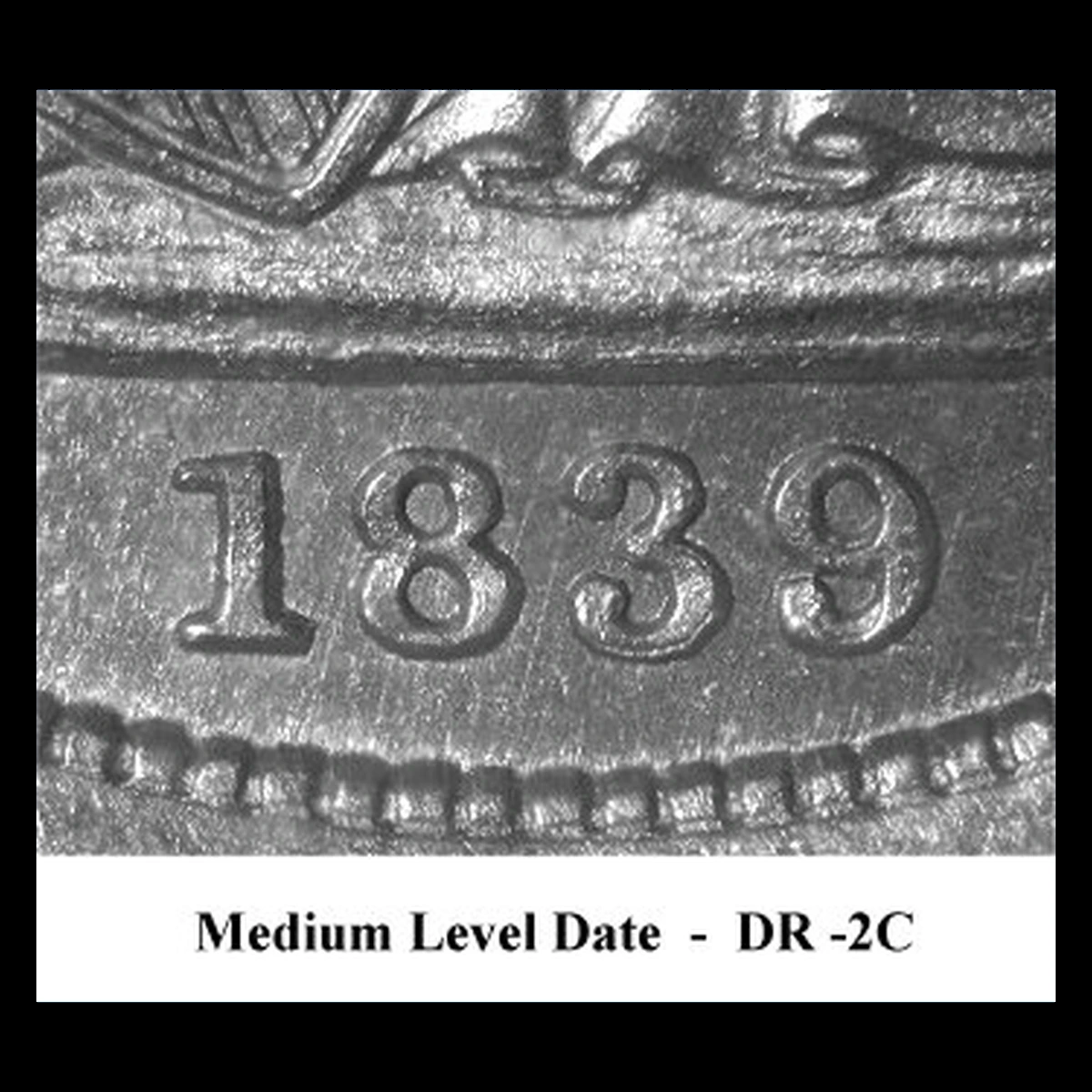
2. 1839 Dime Parts of earlier numerals border the date: Repunched Date Error
The Philadelphia F-104 has reported repetition on 39. A different obverse, F-105a, has a slight remnant at 1 and clearer repetition at 3.
An older description included 9 on that second obverse, but a later examination specifically confirmed 1 and 3. Keeping the observations tied to their separate examples avoids inventing a date with every numeral doubled.
These remnants originated when the date was entered into a die more than once. They were already in the stamping tool before any individual dime received its design.
How to Identify
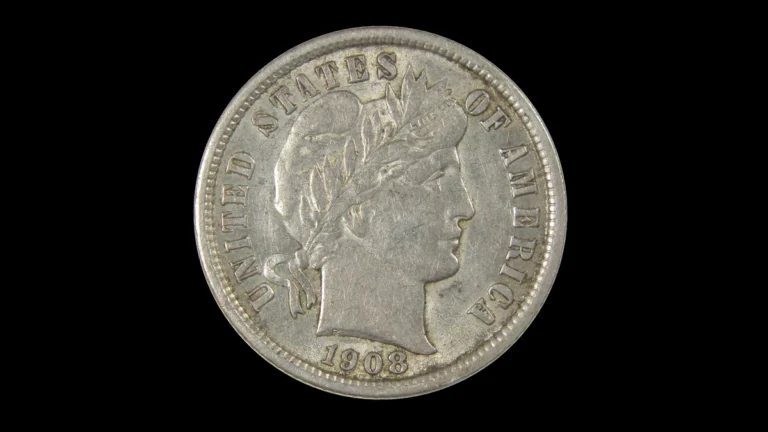
Confirm the Philadelphia dime with no O below the wreath and the No Drapery design, without the extra cloth fold used later. Do not substitute a smaller half dime.
Compare the full date with the appropriate obverse reference. For F-104, inspect 39; for F-105a, focus on the slight 1 remnant and the stronger repetition at 3.
Vary the light to separate raised numeral pieces from scratches and shadows. A vague mark near 9 should not overrule the more specific later examination of the second obverse.
What It’s Worth
The whole-coin estimate is $75–$5,000, from worn examples to very well-preserved unworn coins. Condition remains central to the comparison.
CAC’s market discussion reports a PCGS MS64 CAC sale at $2,400 in January 2024 and a PCGS MS65 CAC dealer sale at $3,750 in January 2025. MS65 generally indicates fewer marks than MS64.
Neither result specifically prices repunched-date remnants. The $3,750 transaction was a dealer sale and should not be relabeled as an auction result.
3. 1839 Dime Raised lines follow distinct routes: Die Cracks and Shattered Dies Error
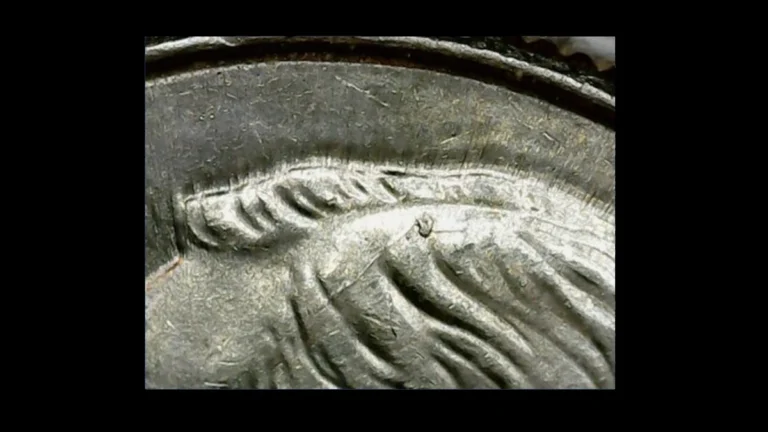
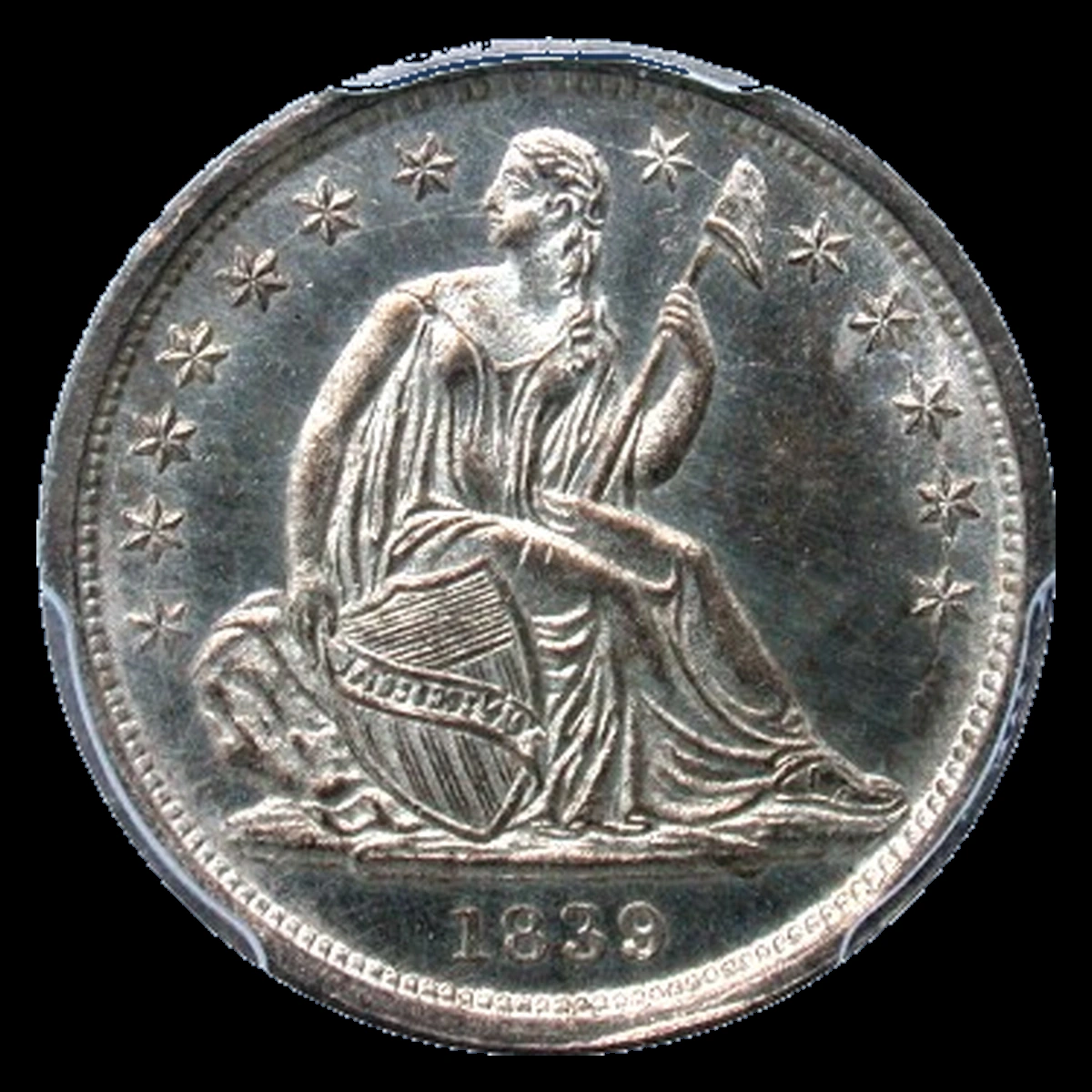
On Philadelphia F-104, a crack travels from the rim through star 2, Liberty’s hand, and the shield’s left side toward the 3 in the date. New Orleans F-104a instead has a prominent reverse route crossing DIME.
Other arrangements are described as pie-shaped or cobweb patterns. These names refer to the distribution of cracks, not to separate denominations or automatic price categories.
Metal entering narrow openings in damaged dies formed the raised lines. Each network must remain associated with its own mint, face, and stage of tool use.
How to Identify
For the Philadelphia front, trace the complete star-to-hand-to-shield route rather than accepting one line near Liberty. Use side lighting to distinguish a raised ridge from an incised scratch or an ordinary clothing fold.
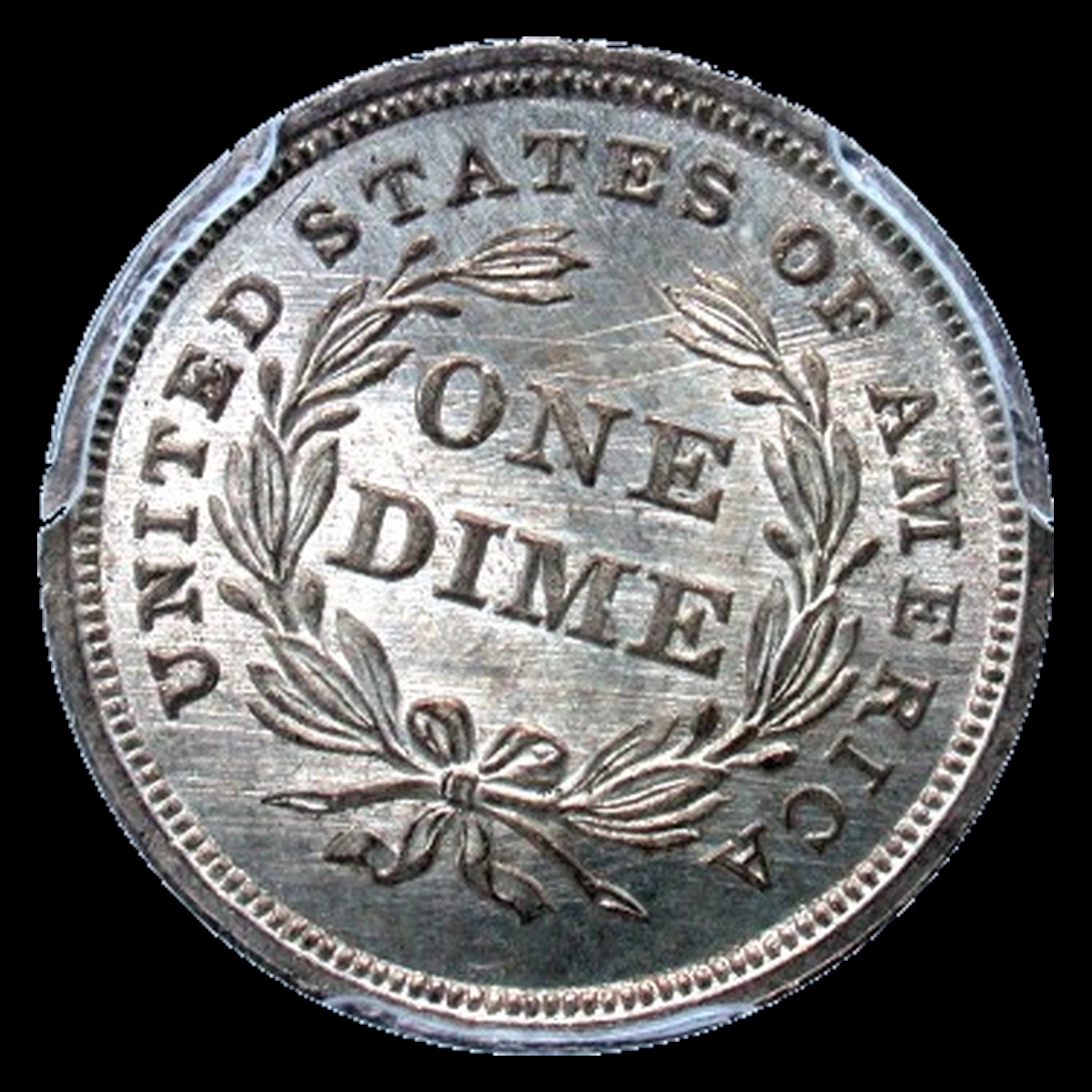
For New Orleans F-104a, begin at I in UNITED and follow the line through the left wreath and DIME. Continue through the lower right buds toward C in AMERICA.
The New Orleans reference photographs show the appropriate reverse comparison. A Philadelphia obverse photograph cannot establish that network on an O-mint coin.
What It’s Worth
Estimated whole-coin values run $50–$6,000 across worn and attractive unworn examples. Visible networks and well-preserved surrounding surfaces can increase collector interest.
The $2,400 Philadelphia MS64 sale provides condition context, while a New Orleans XF40 sold for $384 in 2025 at a more worn level. Neither record is assigned to the exact crack pattern described here.
A dramatic line still needs an accurate attribution. Its length does not erase differences in mint, wear, or surface problems.
4. 1839 Dime The reverse tilts after a straight flip: Rotated Dies Error
A Philadelphia F-104 example is reported at 18 degrees left, while a separate F-109 shows about 12 degrees right. Other examples show around 23 degrees left or normal alignment.
These angles record how the dies were oriented relative to one another at particular stages. The date 1839 alone does not predict one fixed rotation.
How to Identify
Place Liberty upright in a stable transparent holder and flip the holder from top to bottom. Avoid twisting it sideways, which would introduce an apparent rotation.
Use a vertical reference behind the holder and repeat the movement. The reverse should return to the same lean if the angle belongs to the coin.
Confirm the absence of O, since the listed angle comparisons here are Philadelphia examples. Keep the turning direction consistent with the reference, and do not rely on separately straightened photographs.
What It’s Worth
The estimated range is $50–$1,500 for worn through lightly worn Philadelphia whole coins. Modest angular shifts generally add interest while the underlying condition remains important.
The PCGS MS64 CAC coin sold for $2,400 in 2024 was unworn with some marks, placing it above much of this worn-coin range. Its result is a condition comparison.
It does not establish a four-figure premium for an 18-degree turn. Measure the actual rotation and compare coins of similar preservation.
Conclusion
Mint and denomination keep the comparisons on track: an O-mint dime, a Philadelphia dime, and a half dime are not interchangeable. Match repeated strokes or crack routes to the correct example, and use a controlled flip for rotation.
The $50–$20,000 span reflects different varieties and conditions. Several features can coexist on one coin without producing separate full-coin premiums that should be added together.