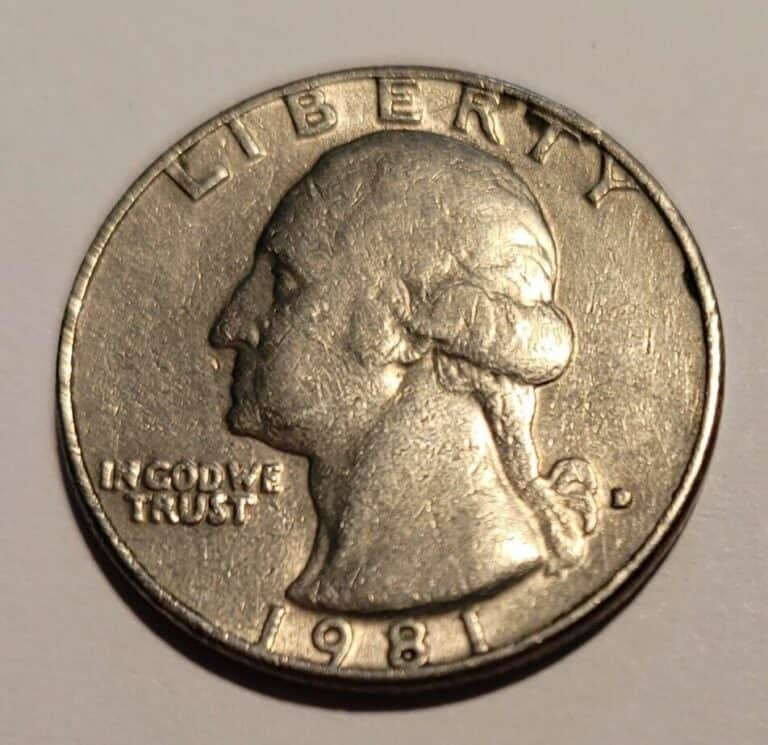
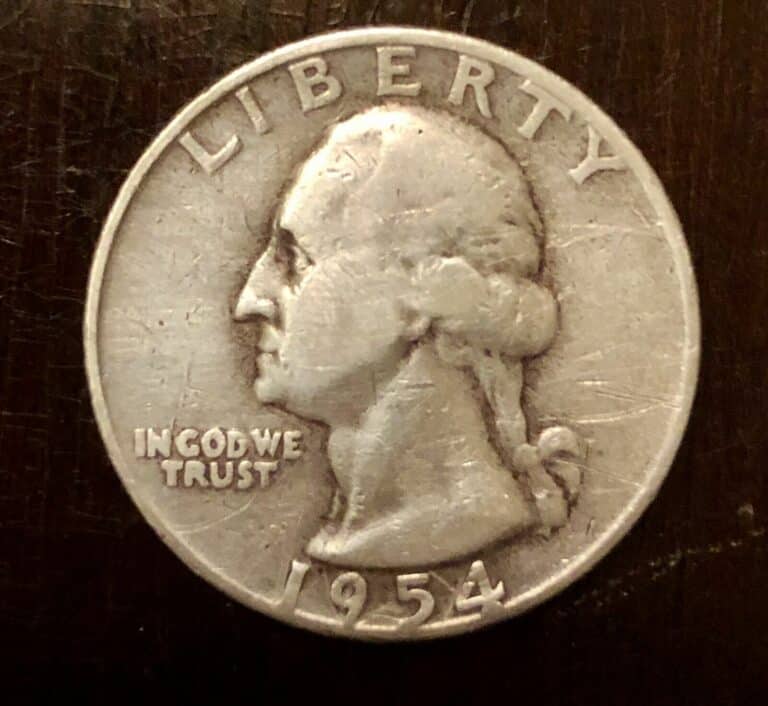
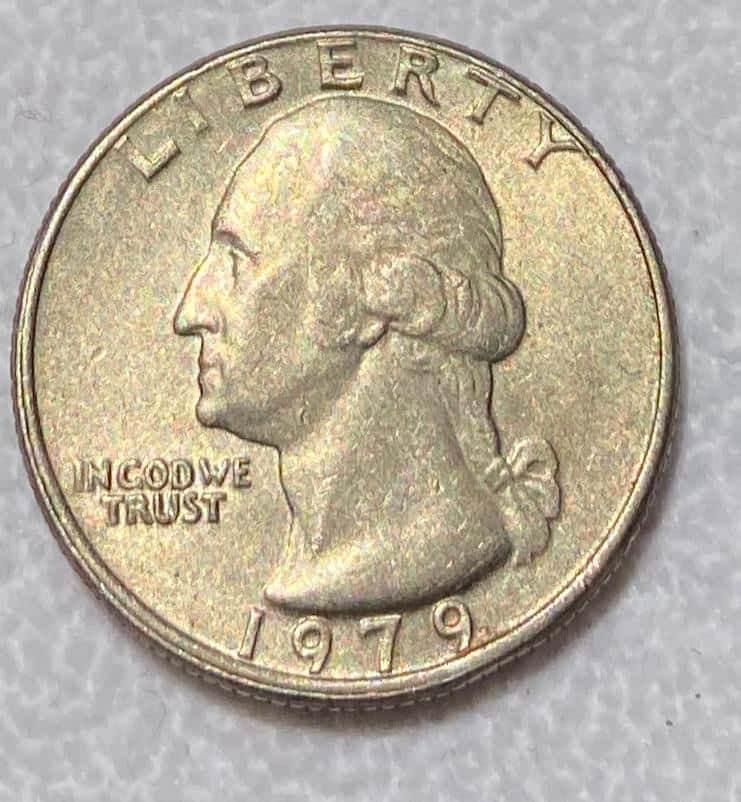
Washington quarters have been made in the US for a very long time and many of them are still in circulation today. The mintages of these coins are usually quite sizable too so they are by no means rare, at least not as a whole.
Does this mean that a Washington Quarter is not valuable, however? How about a more recent one such as a 1986 quarter? Merely a few decades old, which, in the world of numismatics isn’t much, the 1986 quarter has been through many people’s pockets, and yet, you can still see some such coins command high prices at auctions. Let’s find out why and how that works below.
1986 Quarter Value Chart
Mint mark
Good
Fine
Extremely Fine
Uncirculated
1986 “D” Quarter Value
$0.25 to $0.50
$1.25 to $2.50
$3.50 to $10
$30 to $395 and above
1986 “P” Quarter Value
$0.25 to $0.50
$1.25 to $2.50
$3.50 to $10
$35 to $625 and above
1986 “S” Proof Quarter Value
$0.25 to $1
$2 to $5
$6
$7 to $34 and above
Seeing how the vast majority of 1986 quarters were used in wide circulation and have quality grades only in the “Good” range or even lower, it comes as no surprise that their collector’s value is equal to their face value – $0.25.
The grading scale usually used to measure the visual quality of such coins is typically the 1-to-70 Sheldon coin grading scale but you can also see other similar grading methods used. With either of them, the only 1986 quarters you’ll see evaluated at more than $0.25 are the ones with especially high visual quality – usually classified as “Fine”, “Extremely Fine”, or “Uncirculated”.
All of these are coins that have either seen very little circulation before being pulled and hoarded by numismatists or are those that haven’t been in wide use at all and were uncirculated from the start. The latter, in particular, can have very high value as all the details on their obverse and reverse sides will be near-perfectly preserved.
This is especially noticeable on Washington quarters compared to most other coins because the obverse side of the quarter – as gorgeously designed as it is – is really susceptible to wear and tear. So, the visual difference between a circulated Washington Quarter and an uncirculated one is very noticeable.
All this is to say that, if you want to find a high-value 1986 quarter, you need to watch exclusively for uncirculated coins. The next step would be to watch for quarters with interesting production errors – we’ll talk more about that below. First, let’s cover the three different variations of the 1986 quarter separately, including the especially poorly valued 1986 proof quarter.
1986 “D” Quarter Value
Credit: usacoinbook
The first variant of this 1986 coin to talk about is the 1986 quarter made by the Denver Mint. There were a total of 504,298,660 of these coins made in 1986, all with the signature “D” mint mark of the Denver Mint on their obverse sides.
Design-wise, this coin is virtually identical to all other Washington quarters not just of that year but as a whole. The 1986 “D” quarter is made of the same nickel-copper alloy covering a copper core. The diameter of this coin is 24.3 mm, the weight is 5.67 grams, and its edge is reeded, all according to the Washington Quarter’s norm.
Both the obverse and the reverse sides are made using John Flanagan’s original designs too. The obverse features George Washington’s left-facing profile with the word “Liberty” written in huge letters right above his head. The motto “In God we trust” is written in a smaller font to the right, just below Washington’s chin while the year 1986 is printed below him.
The only other thing featured on the rather simple but elegant obverse side is the tiny “D” mint mark to the lower right, behind Washington’s shoulder.
The reverse side is quite busy, as is common for Washington quarters – it features a large eagle in the center with its wings spread out wide. The bird is perched on a bunch of arrows and with two olive branches placed directly beneath them.
The coin’s face value of “Quarter Dollar” is written below the olive branches while the motto “E Pluribus Unum” (From many, one) is placed above the eagle’s head. At the top of the reverse side is simply written “United States of America”.
In short, if you’ve ever seen a Washington Quarter, you know what the 1986 “D” quarter looks like – the design wasn’t changed in any way by the Denver Mint that year.
So, does this mean that the Denver-made 1986 quarter isn’t worth much on average? In short – yes. This isn’t solely due to the lack of design changes, however – it’s customary for the US Mint to make changes in their coins only rarely and for special occasions.
The other contributing factors here include the large mintage of half a billion coins, the relatively recent year of 1986, the fact that the vast majority of these coins were released for wide circulation, and more. While all this brings the averages for a 1986 “D” quarter down, it doesn’t mean that individual coins can’t be valuable.
Neither the large mintage, nor the recent year, unchanged design, or the wide circulation of most of these coins matter if you can find one of the rare few 1986 “D” quarters that are perfectly preserved in their near-mint uncirculated state and also have a unique and interesting manufacturing error.
That’s why there are examples of these coins being sold for anywhere between several dozen dollars all the way up to a few hundred bucks. A prime case of that is an MS 67 1986 “D” Washington Quarter that was sold for $408 in 2019.
Even this price isn’t as high as you can see from other types of coins, of course – there are examples of coins selling for millions of dollars too. For a 1986 quarter, however, a few hundred dollars is quite respectable.
This also makes these coins excellent for novice numismatists who are just now getting into the hobby and want to find something special and rare that will likely grow in value but won’t cut too large of a hole in their wallets. The same applies to the other two variants of the 1986 quarter so let’s take a look at them too.
1986 “P” Quarter Value
The second common variant of the 1986 quarter is the one made by the Philadelphia Mint. While Denver-made quarters usually outnumber those made In Philly, this wasn’t the case in 1986. That year, the Philadelphia Mint produced 551,199,000 Washington Quarter coins, bringing the total from both minds well above a billion.
Naturally, this means that quarters made in Philadelphia aren’t exactly rare either. What’s more, like the “D” quarters of that year, these ones also have the same unchanged Washington Quarter design by John Flanagan. So, the only difference between the two coins is the fact that those made in Philly have a “P” mint mark rather than a “D” – the two can even be a bit hard to differentiate if the quality of the coin is low.
What is noteworthy here, however, is that for the longest time, the Philadelphia Mint didn’t use to put any mint marks on their coins – the space where the Denver Mint would put a “D” mark would just be empty on coins made in Philadelphia. The lack of a mint mark was effectively seen as the “mint mark” of the Philadelphia Mint.
This changed in the early 1980s, however, at least as far as Washington quarters were concerned, as the Philly Mint finally started putting “P” mint marks rather than leaving the space open. So, while 1986 isn’t the first year of the Philadelphia Mint using a “P” mint mark, it is one of the first.
All this isn’t enough to raise the average price of 1986 “P” quarters too high above that of 1986 “D” quarters, however – the only slight difference in the average prices can be noticed in the higher quality grades where uncirculated 1986 “P” quarters have been known to have a slightly higher value than their “D” counterparts.
This isn’t solely contributed to the presence of a “P” mint mark, however. Rather, the difference seems to be more just a function of some Philly-made 1986 quarters being preserved in a better uncirculated quality while also having a bit more desirable production errors on them.
Because of that, the average value of a 1986 “P” quarter is a couple of hundred dollars higher than that of a 1986 “D” quarter. The highest-value example is an MS 67 1986 “P” quarter that was auctioned for about $2,600 in 2019.
1986 “S” Proof Quarter Value
Last and definitely least are the 1986 “S” proof quarters. Like other proof coins, these quarters were made by the San Francisco Mint using an entirely different technology which gave them a much higher quality and visual fidelity. Their purpose wasn’t to be used for wide circulation but, instead, to be used for display purposes, as proofs against fakes, and to be sold to collectors. 3,010,497 such coins were made.
While these coins are of much higher quality, however, they don’t command particularly high prices today. The reason for that is simple – even though “only” 3 million of these coins were made, all of them were kept out of circulation. This means that there are actually many more uncirculated 1986 “S” proof quarters than there are uncirculated “D” or “P” quarters.
As scarcity drives value up, this effectively means that 1986 proof quarters are doomed not to be particularly valuable for as long as there are so many of them out there.
1986 Quarter Grading
As you can see from all of the above, grading a 1986 quarter is done the same way as it is with all other coins – numismatists look for the visual quality and preservation of the coin to make sure all of its design’s details are there and its surface is as well-preserved as possible.
Once the high visual quality of the coin is established, collectors look at how rare the piece is compared to other coins of that same year and mintage and then, they look for the presence of any manufacturing errors that might make the individual coin even rarer.
Lists of 1986 Quarter Errors
1986 quarters are as susceptible to manufacturing errors as any other coin. Such errors, while they might sound bad, are usually very sought-after by collectors as they can drastically ramp up a coin’s value. That doesn’t apply to all errors, of course, as some just make the coin way too visually unappealing to be worth anything even if they make it rare too.
If you’re curious as to how some of these errors look, here’s a nice video on the topic. In the meantime, let’s list some of the more interesting errors below too:
1986 Quarter Struck on a Nickel Planchet Error
Every once in a while, another coin’s planchet falls in the wrong production line and gets minted with another coin’s design. This has happened a few times with nickel planchet and 1986 quarter minting dies. In those cases, we get a 1986 quarter struck on a nickel planchet which is quite a peculiar and valuable error.
1986 Quarter Off-Center Error
Credit: icollector
Off-center errors occur when the minting die hasn’t stricken the coin’s planchet perfectly in the center – usually because the latter hasn’t been perfectly positioned. When the off-center deviation is small enough for the coin’s design to still be visible on the planchet in its whole, this error can also be quite valuable.
1986 Quarter Broad Struck Error
Credit: greatcollections
This strange error happens when the die has stricken the planchet a bit too forcefully and has spread out the metal further than it’s supposed to. This results in wider but thinner coins which is a surprisingly common albeit interesting error.
1986 Quarter FAQ
Is a quarter from 1986 worth anything?
Most 1986 quarters are worth their face value. For such a coin to be worth more than that, it needs to be uncirculated as well as to have some interesting and appealing manufacturing errors on it.
What is the 1986 quarter made of?
The core of a 1986 quarter is made of solid copper clad in 25% nickel and 75% copper alloy. This gives the quarter a silvery look even though it has no silver in it whatsoever.




 The second common variant of the 1986 quarter is the one made by the Philadelphia Mint. While Denver-made quarters usually outnumber those made In Philly, this wasn’t the case in 1986. That year, the Philadelphia Mint produced 551,199,000 Washington Quarter coins, bringing the total from both minds well above a billion.
Naturally, this means that quarters made in Philadelphia aren’t exactly rare either. What’s more, like the “D” quarters of that year, these ones also have the same unchanged Washington Quarter design by John Flanagan. So, the only difference between the two coins is the fact that those made in Philly have a “P” mint mark rather than a “D” – the two can even be a bit hard to differentiate if the quality of the coin is low.
What is noteworthy here, however, is that for the longest time, the Philadelphia Mint didn’t use to put any mint marks on their coins – the space where the Denver Mint would put a “D” mark would just be empty on coins made in Philadelphia. The lack of a mint mark was effectively seen as the “mint mark” of the Philadelphia Mint.
This changed in the early 1980s, however, at least as far as Washington quarters were concerned, as the Philly Mint finally started putting “P” mint marks rather than leaving the space open. So, while 1986 isn’t the first year of the Philadelphia Mint using a “P” mint mark, it is one of the first.
All this isn’t enough to raise the average price of 1986 “P” quarters too high above that of 1986 “D” quarters, however – the only slight difference in the average prices can be noticed in the higher quality grades where uncirculated 1986 “P” quarters have been known to have a slightly higher value than their “D” counterparts.
This isn’t solely contributed to the presence of a “P” mint mark, however. Rather, the difference seems to be more just a function of some Philly-made 1986 quarters being preserved in a better uncirculated quality while also having a bit more desirable production errors on them.
Because of that, the average value of a 1986 “P” quarter is a couple of hundred dollars higher than that of a 1986 “D” quarter. The highest-value example is an MS 67 1986 “P” quarter that was auctioned for about $2,600 in 2019.
 Last and definitely least are the 1986 “S” proof quarters. Like other proof coins, these quarters were made by the San Francisco Mint using an entirely different technology which gave them a much higher quality and visual fidelity. Their purpose wasn’t to be used for wide circulation but, instead, to be used for display purposes, as proofs against fakes, and to be sold to collectors. 3,010,497 such coins were made.
While these coins are of much higher quality, however, they don’t command particularly high prices today. The reason for that is simple – even though “only” 3 million of these coins were made, all of them were kept out of circulation. This means that there are actually many more uncirculated 1986 “S” proof quarters than there are uncirculated “D” or “P” quarters.
As scarcity drives value up, this effectively means that 1986 proof quarters are doomed not to be particularly valuable for as long as there are so many of them out there.