Rare 1962 Half Dollar Errors (List & Pictures)
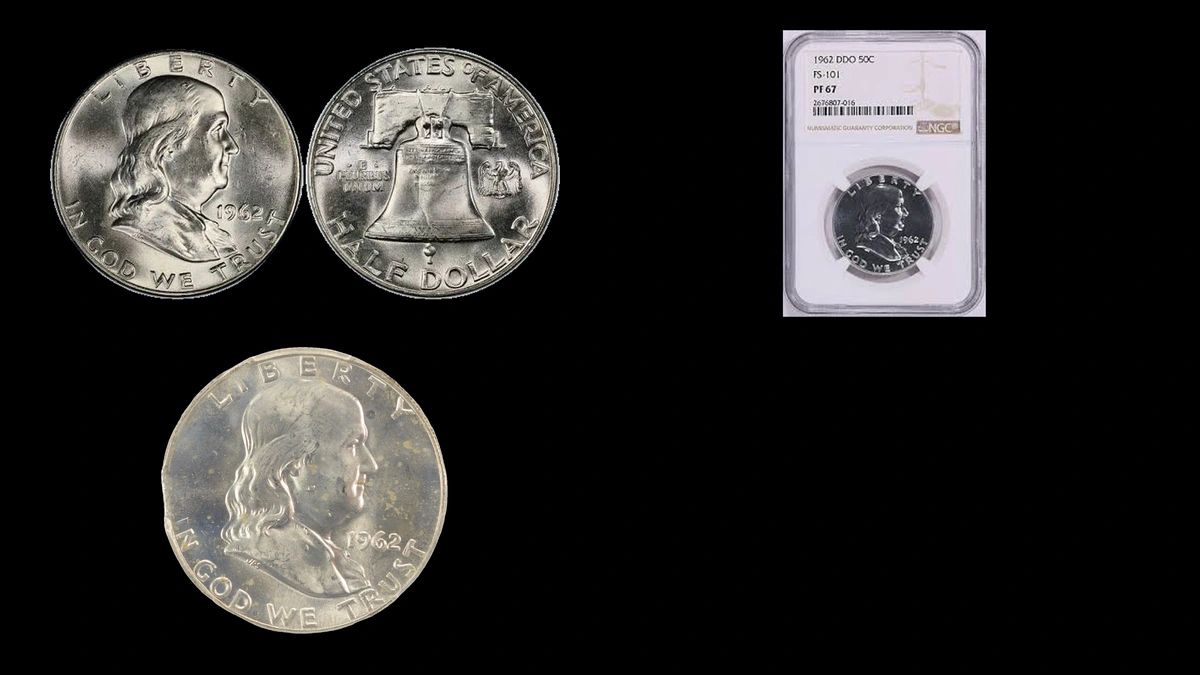
A few extra “teeth” at Franklin’s mouth can be worth checking, even when the rest of the coin looks normal. Other 1962 Franklin half dollar errors are much harder to miss, including a second strike that overlaps the first.
The estimated values below run from $40–$13,000. A Denver double strike brought $11,400 in November 2022, while smaller die varieties can cost under $200.
Check the mouth and letters first, then compare the shape of the coin and its edge.
| What you notice | Type to check | Estimated value |
|---|---|---|
| Extra shape at the mouth | Bugs Bunny clash | $40–$175 |
| Two outlines in the front lettering | Proof doubled die | $60–$350 |
| Another stroke beside D | Repunched mintmark | $50–$200 |
| Curved piece missing | Clipped blank | $75–$250 |
| Picture shifted beside bare metal | Off-center strike | $50–$500 |
| Two overlapping pictures | Double strike | $9,000–$13,000 |
| Small, unusually light coin | Nickel blank | $3,000–$6,000 |
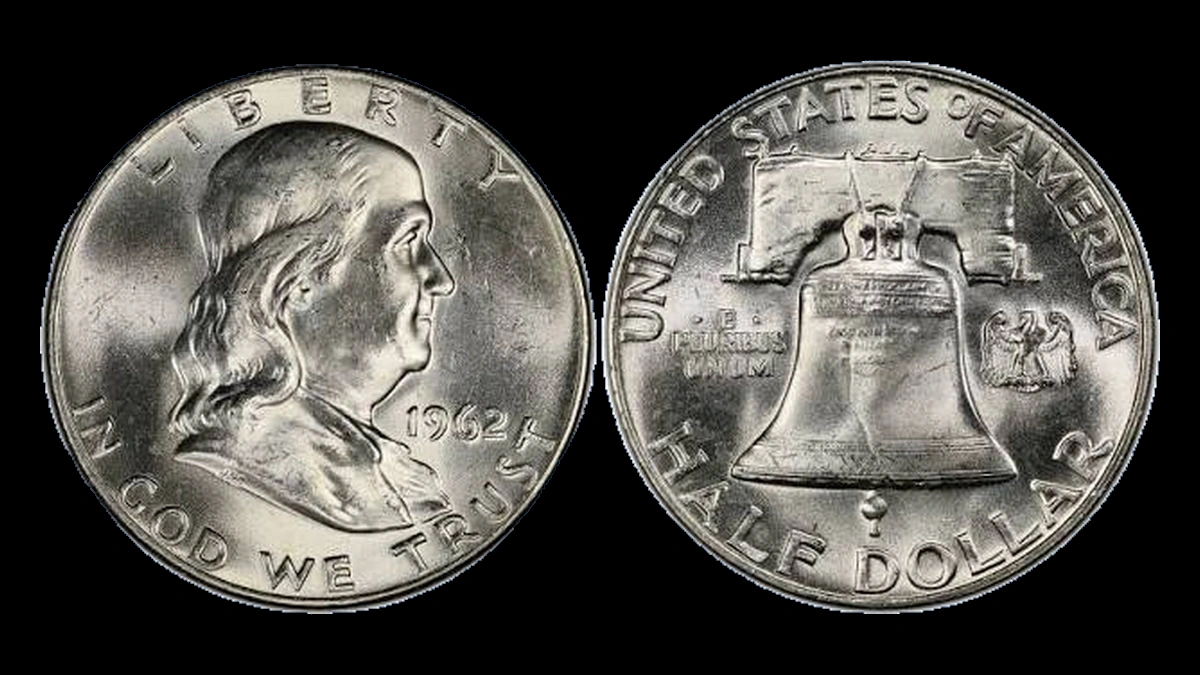
A regular 1962 half dollar weighs 12.50 grams, measures 30.6 mm across, and contains 90% silver. Its mint letter, if present, sits above the Liberty Bell on the back.
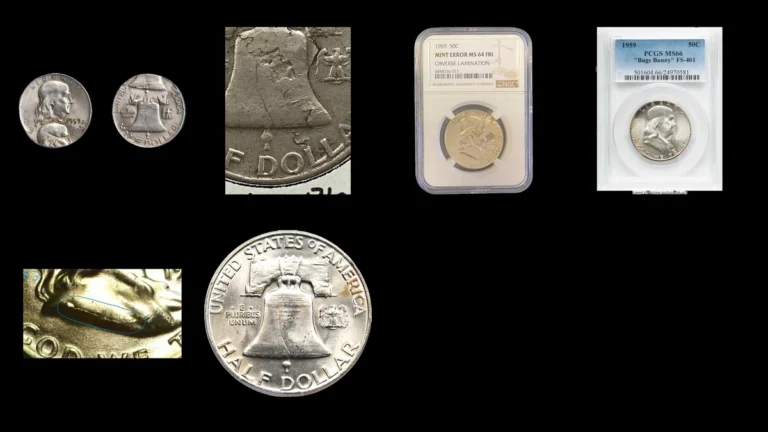
1. 1962 Half Dollar Extra Teeth at Franklin’s Mouth: Bugs Bunny Die Clash Error
The nickname makes this a friendly place to start: look for a small tooth-like shape beside Franklin’s lips. The feature belongs to Philadelphia coins made for everyday use, with no mint letter.
The steel stamping tools, called dies, hit each other when no blank was between them. Part of the eagle’s wing left a mark on the front die, which then put that unwanted detail onto later coins.
How to Identify
Use a 10× magnifier and keep the whole mouth in view. You need a raised projection in the right place, not simply any spot on the lip.
Dirt can sit on top of the surface, while a scratch cuts into it. Compare the shape with the variety information connected to the PCGS 1962 listing.
What It’s Worth
$40–$175 is the estimated range for recognizable examples, from worn coins to attractive unworn pieces. A clear mouth feature helps the coin stand out.
The supplied records include sold listings of $50 and $95 in July 2026 for MS63 examples. MS63 describes an unworn coin that still has visible marks.
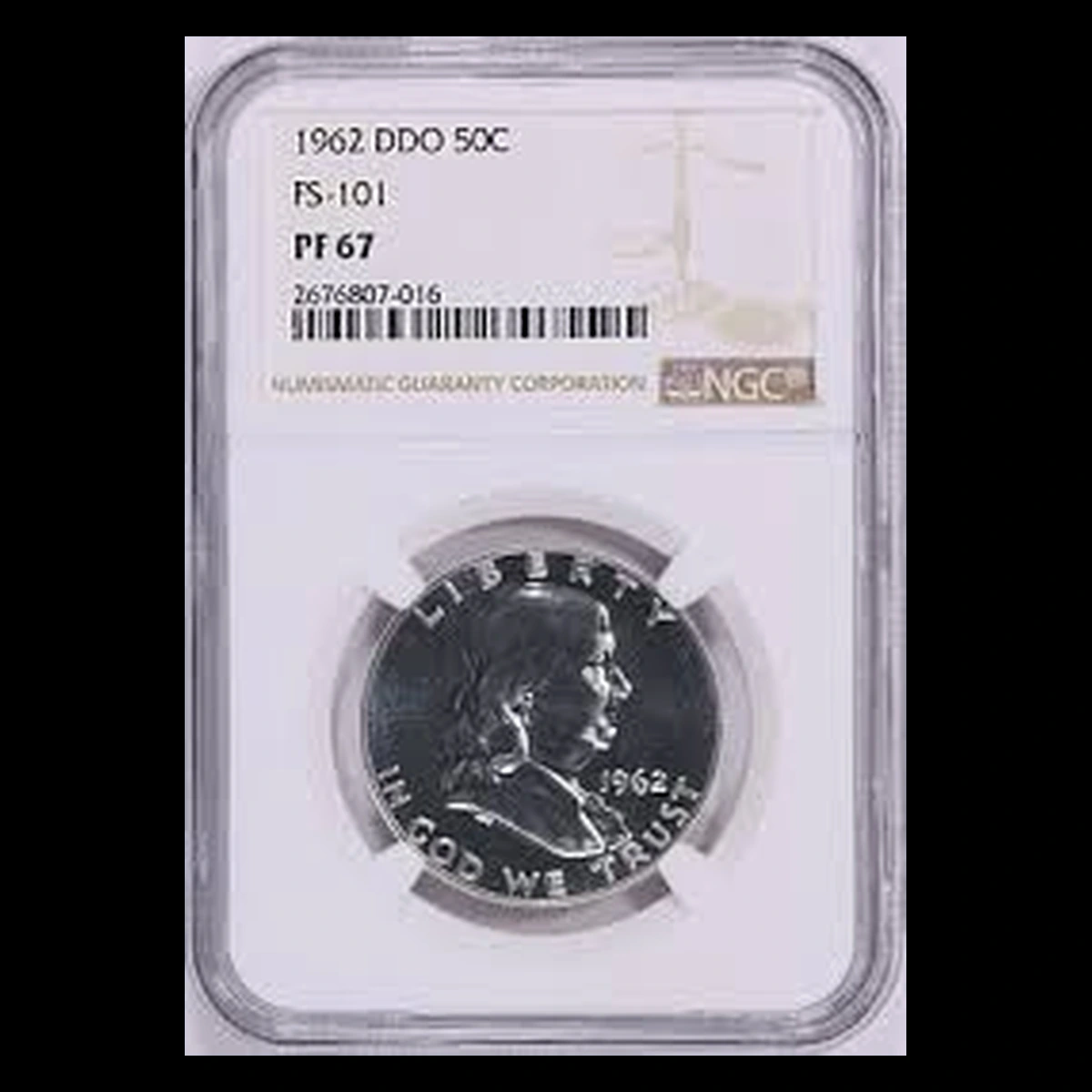
2. 1962 Half Dollar Extra Front Lettering: Proof Doubled Die Error
On a 1962 Proof, inspect the front letters and date for a second outline. Proofs were specially made for collectors and often have shiny, mirror-like areas around the design.
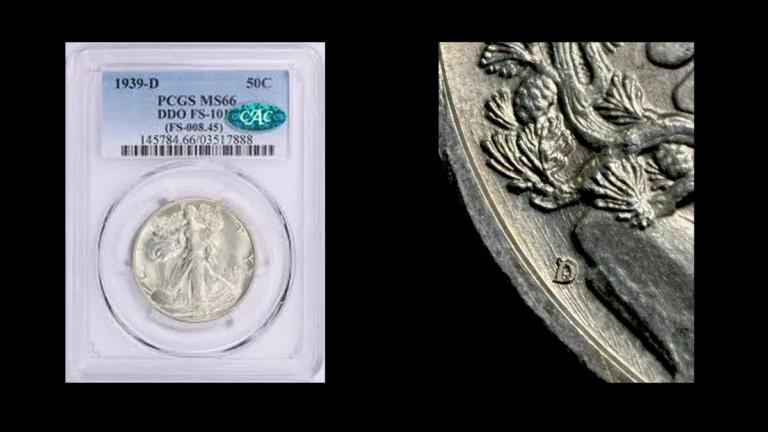
The listed variety is FS-101, a catalog number used to identify this particular doubled die. Its extra outlines were already in the stamping tool before the coin was struck.
How to Identify
First establish that the coin is a Philadelphia Proof, with no D above the bell. A polished everyday coin can look shiny without being a Proof.
Turn the light slowly while viewing the letters through a magnifier. True doubled detail stays in place as reflections move.
Match several details to a confirmed FS-101 image. A thin, flat ledge beside one letter may be strike doubling, which is a different effect.
What It’s Worth
$60–$350 covers the estimated range for identified FS-101 Proofs in comparable condition. Scratches in the shiny areas can make a large difference.
Recorded sales include $69 for PR64 in April 2026 and $159 for PR67 in July 2026. The GreatCollections archive separates Proof grades; the higher number describes better preservation.
3. 1962 Half Dollar An Extra Stroke Beside D: Repunched Mintmark Error
Turn the coin over and find the D above the bell. A repunched mintmark has a surviving part of an earlier D beside the final impression.
At the time, the mint letter was punched into the die separately. A small change in punch position could leave two impressions for that die to reproduce.
How to Identify
Follow the extra stroke and see whether it forms part of another D. General thickness or a bright edge around the whole letter is not enough.
The NGC D/D listing gives a reference for the shape. Do not assign a direction to the earlier punch until your coin matches that reference.
What It’s Worth
$50–$200 is a working estimate for worn through unworn examples with a recognizable extra D stroke. Better surfaces and stronger detail tend to place a coin higher in that range.
The 1962 value guide gives about $120 for an unworn example. That figure is a guide estimate, rather than a recorded auction sale.
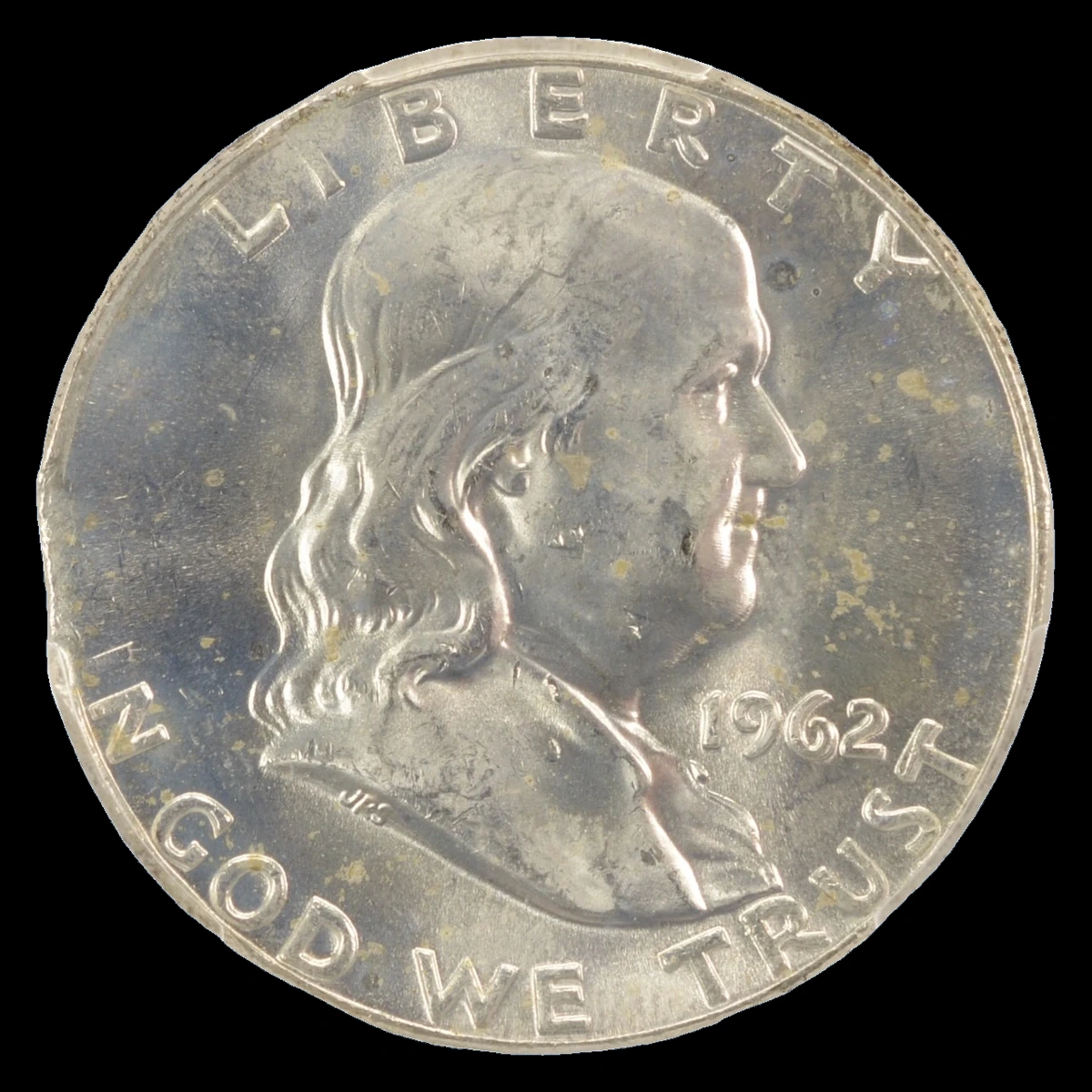
4. 1962 Half Dollar A Crescent Missing from the Edge: Curved Clip Error
A clipped blank began with a piece missing before it became a coin. The blank-cutting punch overlapped an earlier hole in the metal strip, leaving a curved gap.
The supplied accounts describe a 15% clip graded MS64 and a separate, smaller 1962-D clip. Keep those two coins separate when comparing pictures and prices.
How to Identify
Examine the metal beside both ends of the curve. The nearby rim and design should show how metal flowed around a gap that was already there.
A weak area on the opposite rim can support the identification. Fresh cutting marks, burrs, or a cut through finished edge grooves point toward damage after minting.
Weight should be below the normal 12.50 grams because metal is missing. The date must still establish the year.
What It’s Worth
$75–$250 is the estimated range for genuine curved clips, with size and condition both affecting value. A larger gap does not cancel out heavy damage elsewhere.
A 1962-D with a 4% clip, graded MS61, sold for $84 in March 2011. This sale does not belong to the reported 15% MS64 coin, whose mint letter was not established in that account.
5. 1962 Half Dollar The Picture Misses Part of the Blank: Off-Center Strike Error
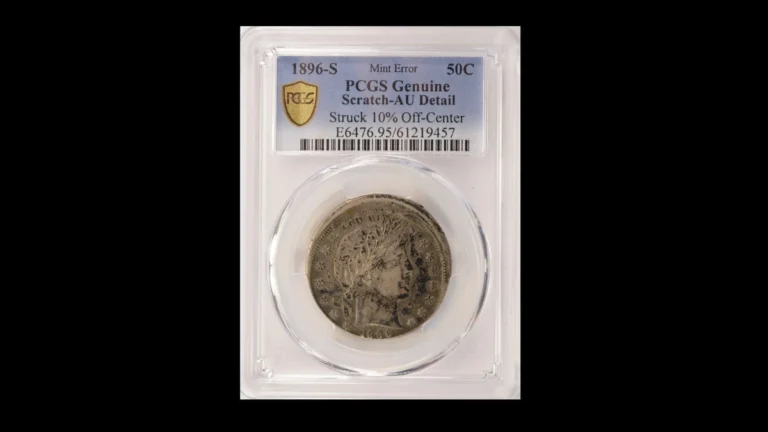
An off-center half dollar has a bare area next to an incomplete design. The blank entered the press out of position, so some of the intended picture missed the metal.
This category is reported in the year guide. It should not be confused with the Denver coin struck twice in the next section.
How to Identify
Read the date before judging how far the design has moved. If 1962 is missing, the coin cannot be assigned to this year from appearance alone.
Compare both faces in the same orientation. A matching shift on both sides supports an off-center blank; a shifted front with a centered back may instead involve one misaligned die.
The unstruck portion should retain natural blank surface. Grinding away a finished design leaves a different texture.
What It’s Worth
$50–$500 is the supplied estimated span for this category. The amount of shift, surviving date, and surface condition all matter.
The year guide places pronounced examples with readable dates around $300–$500. These are guide figures, not documented sales for every degree of shift.
6. 1962 Half Dollar One Picture Crosses Another: Double Strike Error
Here the space beside the displaced picture is not simply blank. It already carries an earlier strike.
The recorded 1962-D first received a normal strike inside the retaining ring. It then moved and was struck again about 70% off center, toward the two o’clock position.
How to Identify
Trace the first design across the coin, then follow the second impression toward the upper right. Several repeated details should agree with that second strike’s position.
The cataloged coin retains complete edge grooves from the first strike. Those grooves help explain the order of events.
A tiny flat shelf beside a letter cannot establish this error. The example has a large overlapping picture, not just a doubled edge.
What It’s Worth
$9,000–$13,000 is an estimate for an authenticated coin with similarly clear strikes and comparable preservation. It is not a range for every coin described as “double struck.”
The recorded MS60 example sold for $11,400 on November 21, 2022. Although unworn, its grade allows many marks; the dramatic second strike is the central feature.
7. 1962 Half Dollar A Half Dollar on a Smaller Body: Nickel Blank Error
A half-dollar design cannot fit fully onto a five-cent blank. Outer details run beyond the available metal, and the result weighs far less than a normal silver half.
Recorded 1962-D examples include an MS64 coin at about 5.1 grams and a separate MS67 coin at about 5.0 grams. Their copper-nickel metal also differs from the usual silver alloy.
How to Identify
Weigh a safely accessible coin and compare its size with a normal half dollar. The recorded pieces are near five grams and smaller than the ordinary 30.6 mm format, allowing for metal spreading during the strike.
Look for a design that naturally runs off the edge. Filing or cutting a regular half dollar smaller can reduce its weight but leaves signs of removed metal.
A specialist’s metal test can help confirm a nickel blank. The published MS67 example provides a same-year comparison with the Denver identity intact.
What It’s Worth
$3,000–$6,000 is the estimated range for authenticated examples in comparable unworn condition. Surviving design and surface marks help separate otherwise similar coins.
The MS67 example sold for $4,312.50 in January 2009. That historical result belongs to the MS67 coin, not the separate MS64 example.
Conclusion
Let the visible feature guide your next check: the mouth for a clash, the letters for a die variety, and the edge for a clip or misplaced strike. A small coin also calls for a weight and metal check.
Match the mint and finish before using a price comparison. A Philadelphia Proof, an everyday silver half, and a Denver coin on a nickel blank belong in different groups.