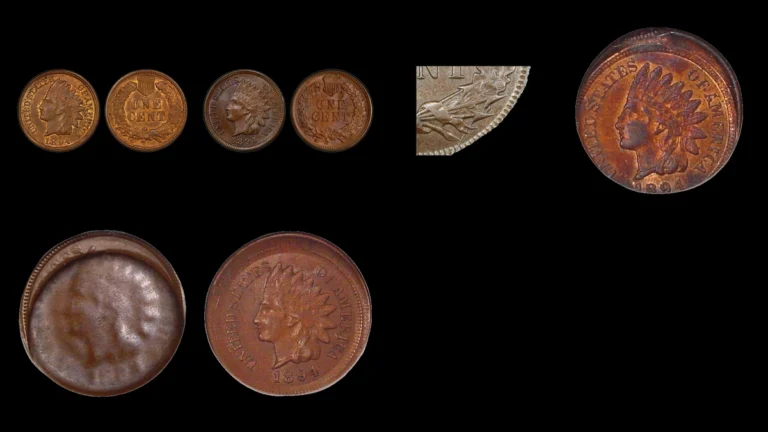
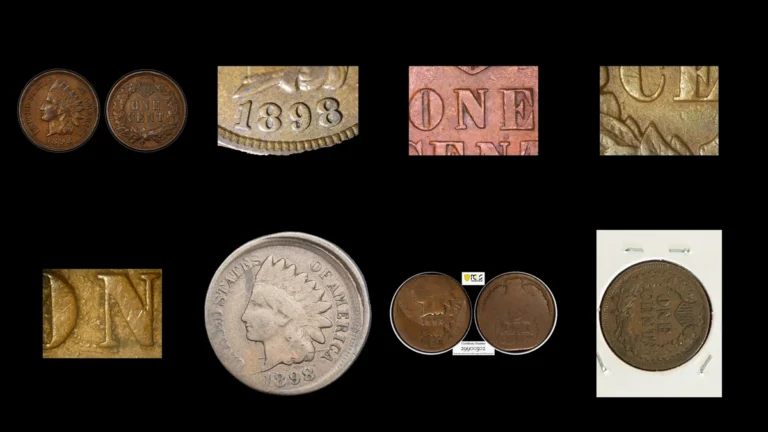
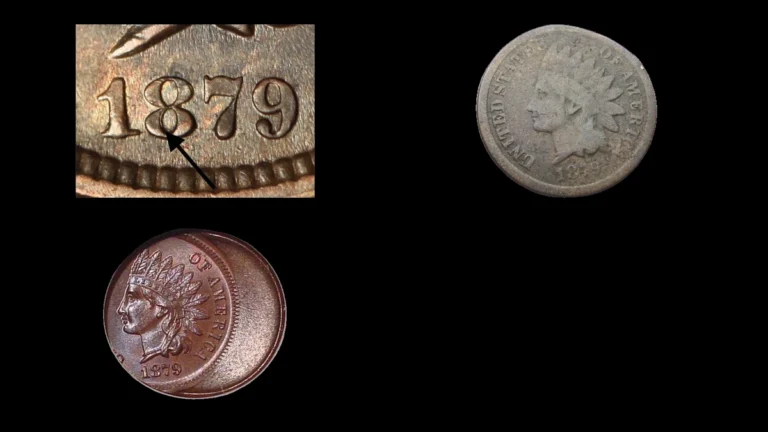
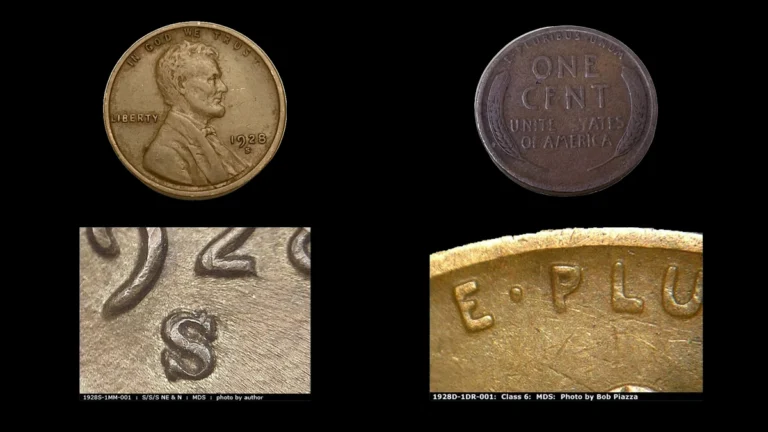
Rare 1804 Penny Errors (List & Pictures)
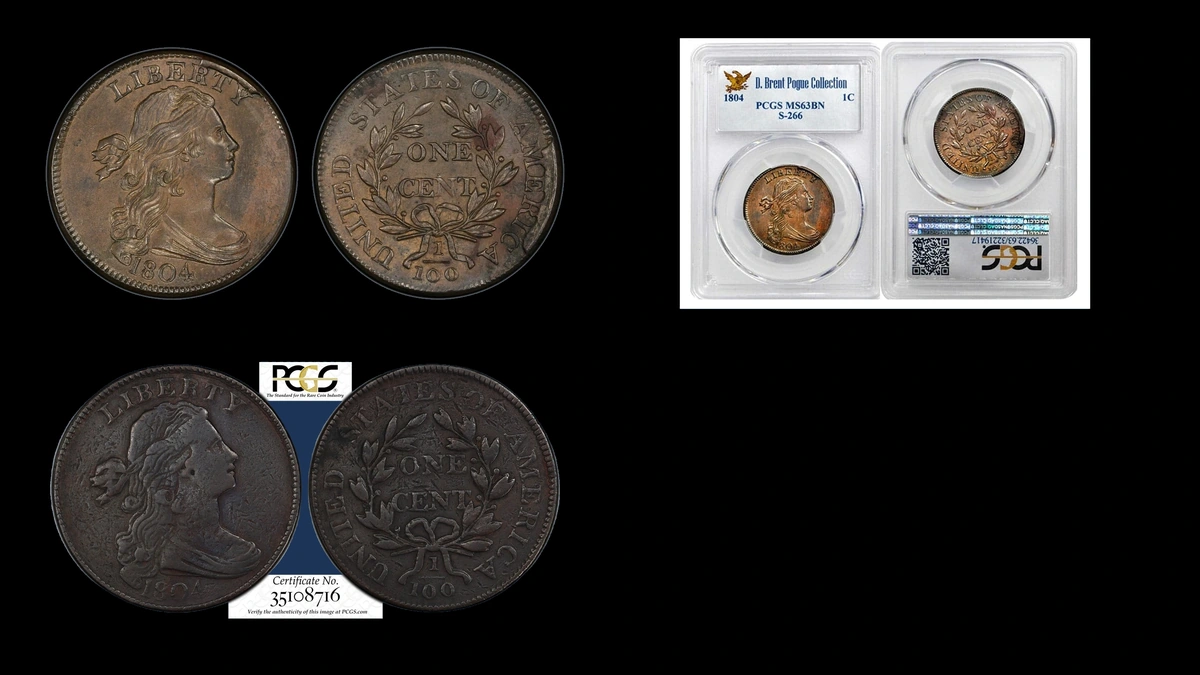
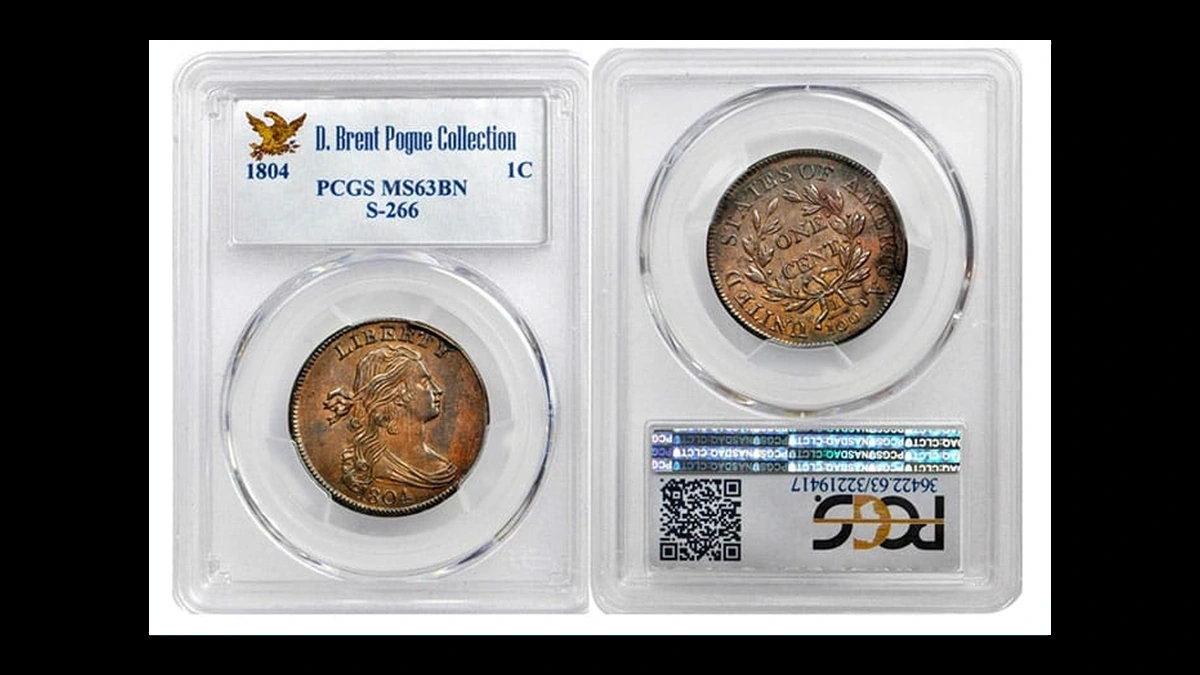
The Cardinal Collection’s 1804 cent sold for $223,250 in January 2013. Its rim breaks and faint clash marks were part of one exceptionally preserved scarce-date coin.
Estimated whole-coin values for 1804 penny errors span $1,000–$250,000. Confirm an original Draped Bust large cent first, then inspect the rim, metal surface, design traces, and alignment.
| Observation | Category | Estimated value |
|---|---|---|
| Raised patches above lettering | Rim cuds | $1,500–$250,000 |
| Peeling beside LIBERTY | Lamination | $1,000–$4,000 |
| Curved missing edge | Reported clip | $2,000–$8,000 if genuine |
| Faint opposite-side outlines | Die clash | $1,500–$250,000 |
| Extra chin contour | Disputed double strike | $2,000–$20,000 if confirmed |
| Reverse leans counterclockwise | Die alignment | $1,500–$75,000 across worn grades |
The original copper large cent began near 10.89 g and 29 mm, with a plain edge. Later private restrikes used different tools and require separate identification.
1. 1804 Penny Raised Patches above RTY and MERIC: Rim Cuds Error
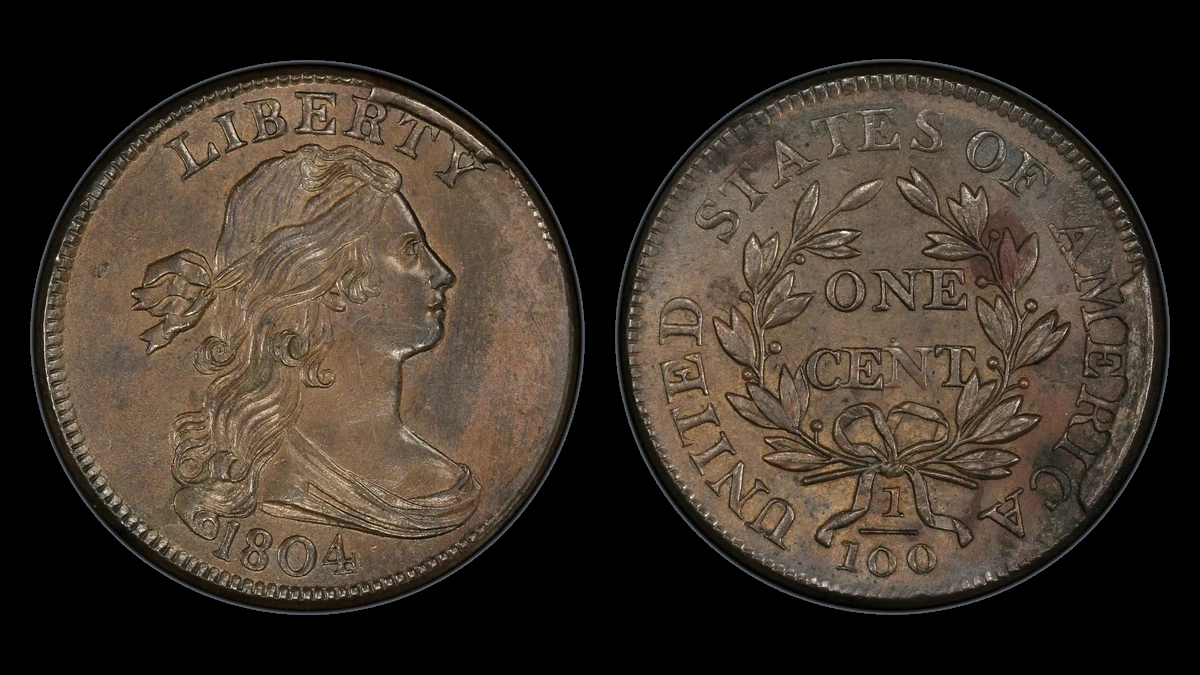
The original die pair developed a rim break above RTY in LIBERTY. Later examples can also show a reverse break above MERIC in AMERICA.
These raised patches formed when pieces of die steel broke away at the edge. Copper flowed into the resulting gaps during striking.
How to Identify
Examine each patch separately and follow its connection to the rim. Earlier die stages may lack the reverse break, so both patches are not required on every original cent.
Compare the exact shapes with original 1804 references. A rim dent, altered date, or crack on a later private restrike cannot substitute for this match.
What It’s Worth
Estimated whole-coin values range from $1,500–$250,000, including roughly $1,500–$25,000 for worn examples. Exceptional lightly worn coins occupy a very different tier.
The Cardinal PCGS AU55 cent sold for $223,250 in January 2013. Its two rim breaks accompany unusually attractive surviving surfaces, rather than explaining the entire price by themselves.
2. 1804 Penny A Small Layer Flaw Left of L: Lamination Error
A cataloged NCS AG Details cent has a small lamination immediately left of L in LIBERTY. The description connects the problem label to that local copper-layer defect.
The same heavily worn coin also has rim breaks on both faces. The raised breaks and peeling metal come from different causes.
How to Identify
Use side lighting to find the layer boundary beside L. Compare it with surrounding wear and roughness instead of treating every pit as part of the lamination.
Leave attached copper undisturbed. This local flaw does not establish an entire coin split into two sheets.
What It’s Worth
A heavily worn original 1804 cent with a small lamination has an estimated whole-coin value of $1,000–$4,000. The scarce date can account for much more than the peeling area.
No sale amount is supplied for the NCS example. A corroded 1812 Classic Head cent with a small blank flaw carried a $115–$140 auction estimate, illustrating a different date and an estimate rather than a sale.
3. 1804 Penny A Curved Gap in the Outline: Reported Clip Error
A year guide reports an 1804 cent with a 20% clip. It supplies neither a clock position nor a certified grade.
An original curved clip can arise when the blank punch overlaps an existing hole in the copper strip. The incomplete blank then enters the coin press.
How to Identify
Confirm ONE CENT on the reverse before comparing the error. An 1804 half cent is a different denomination and cannot establish this large cent’s identity.
Inspect the curved wall and adjacent design for an original shortage rather than later cutting. Filing, saw lines, or a fresh edge through finished detail argue for alteration.
Weakness beside the gap or at the opposite rim may provide supporting evidence. Reduced weight alone does not establish when the copper disappeared.
What It’s Worth
A worn original with a clear, confirmed clip has an estimated value of $2,000–$8,000. Readable date details and healthy surfaces matter.
The reported 20% example was offered at $2,550. That is an asking price, not a documented auction result or certification of the clip.
4. 1804 Penny Faint Unfamiliar Outlines around the Designs: Die Clash Error
Recorded front clash traces occur near Liberty’s profile, throat, and below the hair bow. The Cardinal coin has faint reverse marks around S in STATES, OF, and below M in AMERICA.
These arose when the dies touched without a blank and transferred design fragments to each other. Later coins copied the marks.
How to Identify
Match each suspected trace with a recognizable detail from the opposite design. Random fine scratches do not become clashes simply because they lie near the recorded locations.
Clashing can precede broad rim breaks. A coin without the later cuds may still carry genuine transferred traces.
What It’s Worth
Estimated values span $1,500–$250,000, with worn original examples around $1,500–$25,000. Outstanding lightly worn coins can reach far above that ordinary comparison group.
An AU Details coin with altered surfaces sold for $19,200 in August 2024. The Cardinal’s much higher result reflects different preservation, and its clashes and cuds share one whole-coin price.
5. 1804 Penny A Second Contour at the Chin: Disputed Double Strike Error
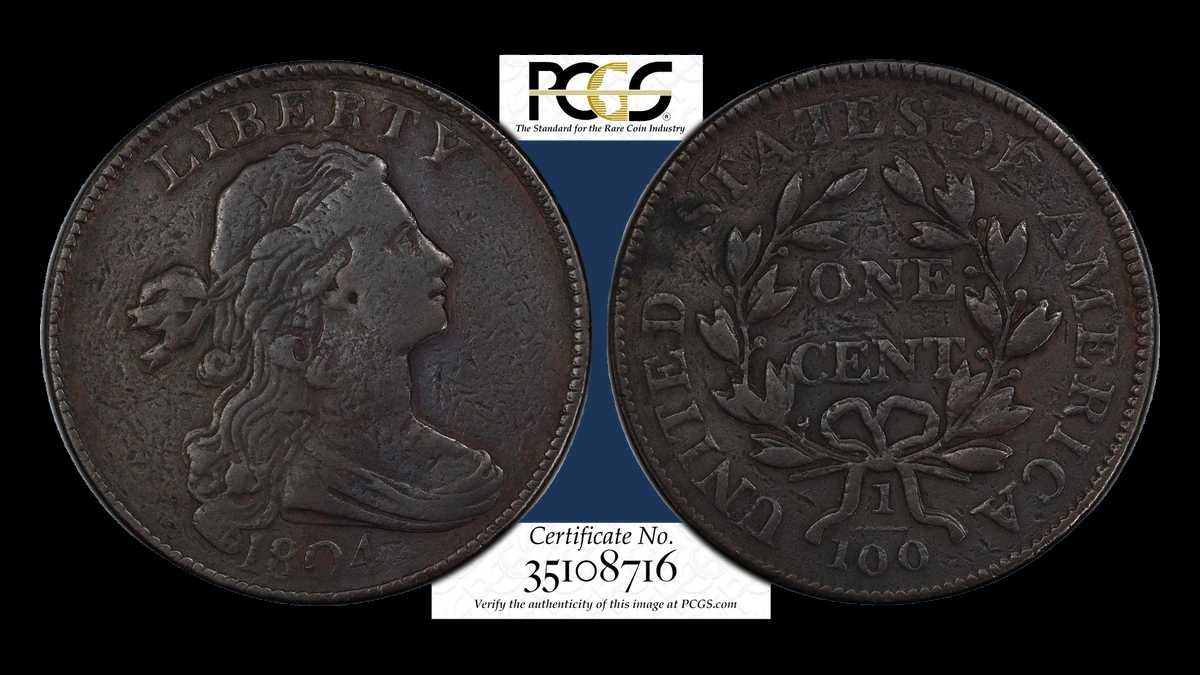
A collector reported a PCGS holder naming a double strike on an 1804 cent with an extra chin outline. Other participants questioned whether movement or bounce during one striking event explained the feature.
How to Identify
Compare the chin with nearby portrait details and the entire reverse. Two blows should leave evidence that fits a coherent sequence, while a flat ledge beside one contour may have another cause.
The collector discussion does not resolve the disagreement. Clear photographs of the holder, both faces, and edge are needed for a specialist assessment.
A hand-operated press can still allow movement during a blow. Its operating method alone does not settle whether two distinct strikes occurred.
What It’s Worth
A confirmed worn double-struck 1804 cent has an estimated value of $2,000–$20,000. That range is conditional and is not a price assigned to the debated coin.
A damaged, heavily worn 1817 Coronet double strike sold for $264 in June 2019. The date, condition, and strike evidence differ sharply from a genuine 1804 example.
6. 1804 Penny The Reverse Leans about Forty-Five Degrees: Die Rotation Error
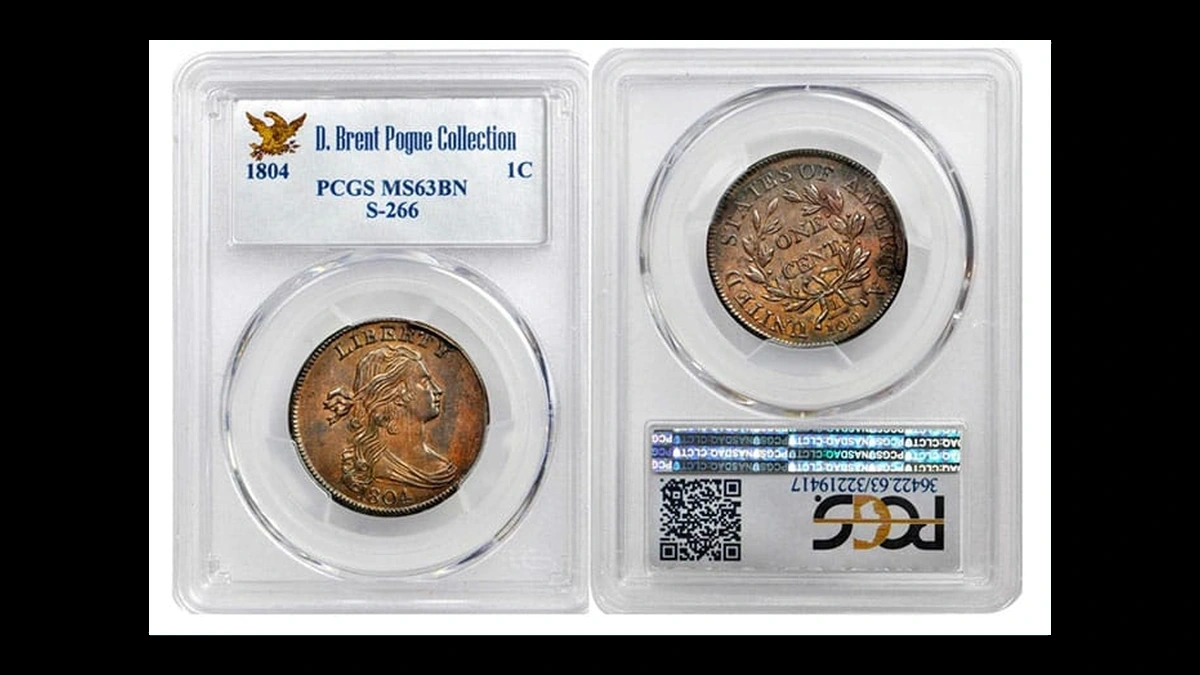
A published description places the original die pair’s reverse alignment at roughly 45 degrees counterclockwise. This familiar relationship is not automatically a rare isolated accident on one coin.
How to Identify
Hold the front upright and flip top to bottom without twisting sideways. Photograph the reverse before straightening it, then compare its lean with the original vertical reference.
Verify the original design, including ONE CENT and the fraction beneath the wreath. A later private restrike needs its own comparison, and a shift toward the rim is different from rotation.
What It’s Worth
Original cents with this alignment have an estimated whole-coin range of $1,500–$75,000 across worn grades. Condition and surface quality dominate that spread.
The $19,200 AU Details result above provides a same-date condition comparison. It is not a separately priced rotation error, and the angle alone should not receive a large added premium.
Conclusion
Original 1804 cents can combine several features from the same die pair, including clashes, rotation, and later rim breaks. Establish the original coin and its die stage before comparing any unusual detail.
The date’s scarcity and preservation drive much of the estimated $1,000–$250,000 range. A reported clip or debated double strike requires its own evidence, while multiple confirmed features remain part of one overall valuation.