Rare 1966 Penny Errors (List & Pictures)
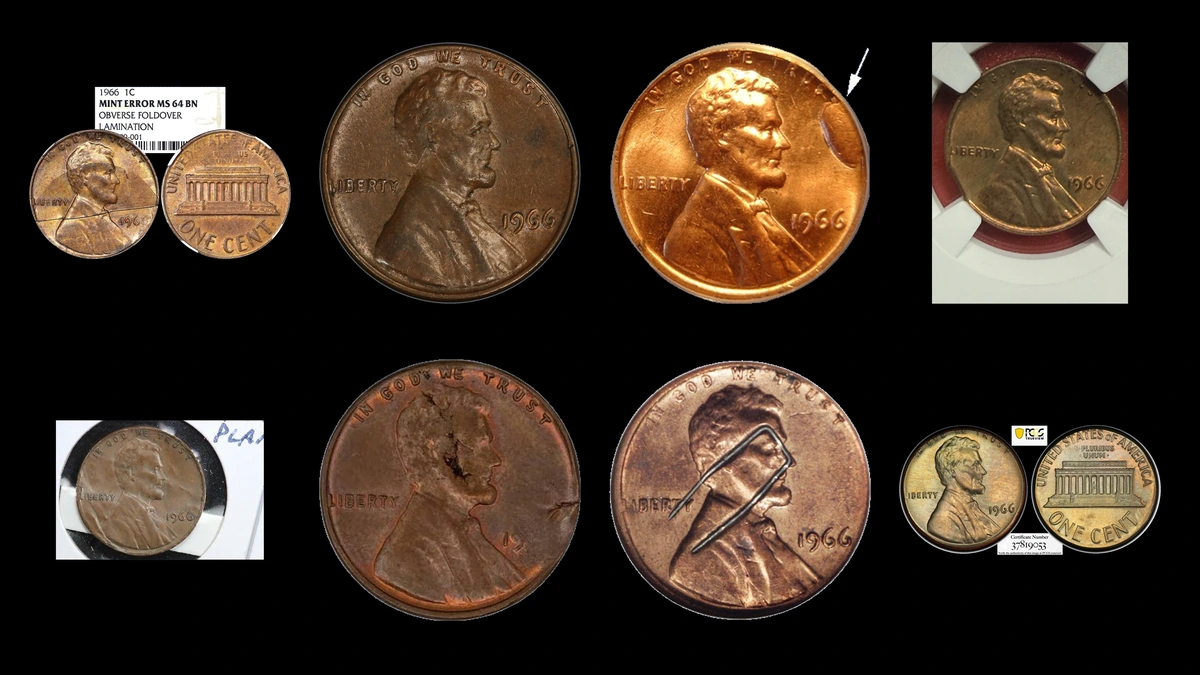
No mintmark is normal on a 1966 cent, so that empty space is not the place to start an error search. More useful clues for 1966 penny errors include a lifting metal layer, a missing edge, or an older dime design.
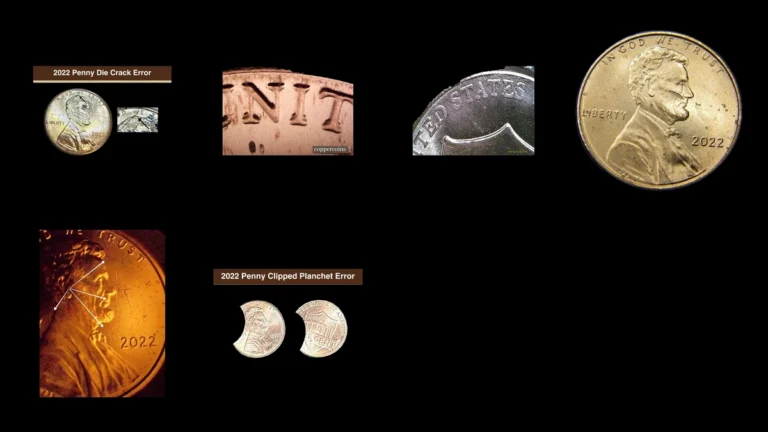
A cent on an unused clad dime blank sold for $1,020 in July 2021. Estimated ranges below span $5–$5,000; compare the visible feature before deciding which price belongs with it.
1. 1966 Penny A Thin Surface Layer Lifts: Lamination Error
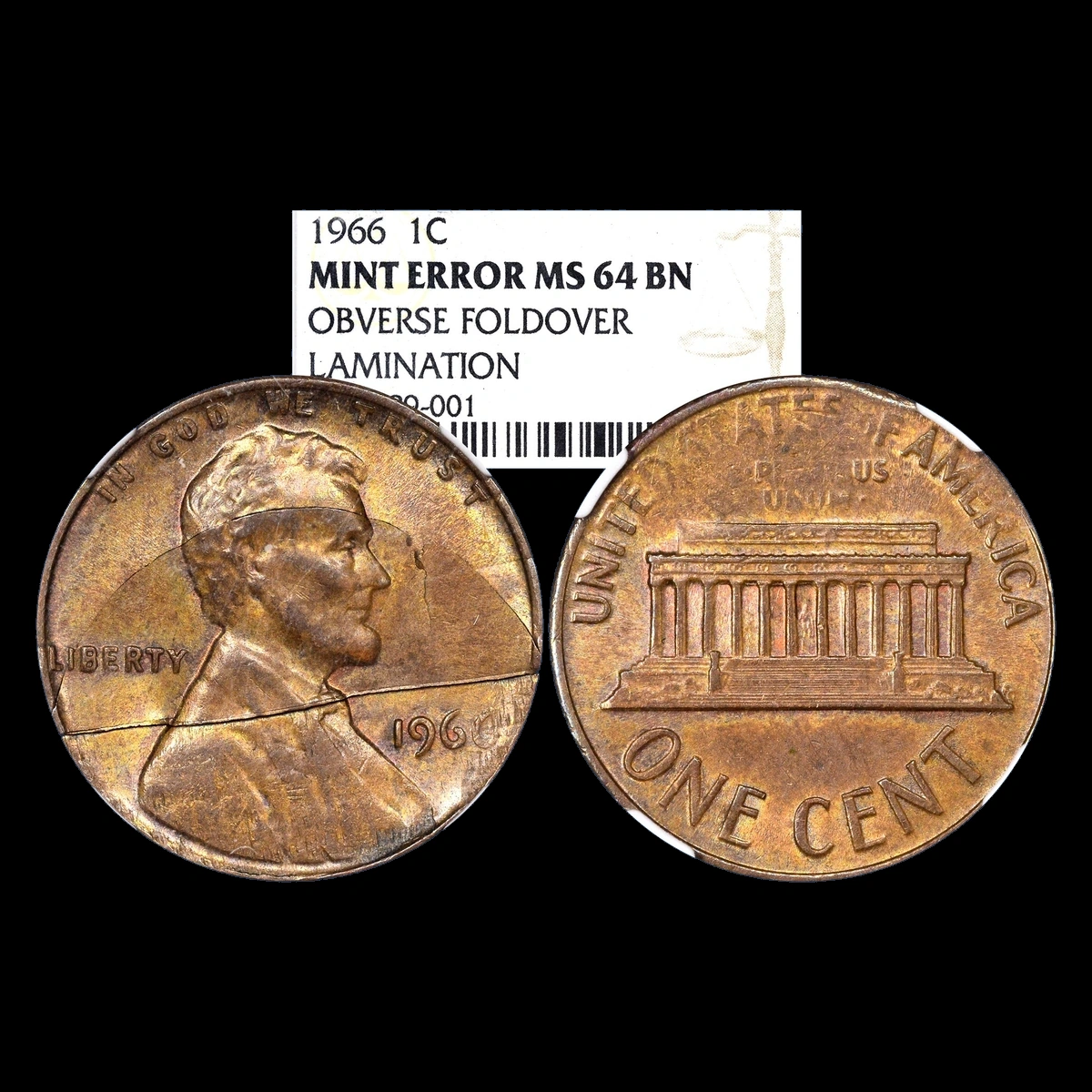
The recorded front-lamination example has metal separating within its copper alloy. A normal 1966 penny does not have the copper coating over zinc found on later cents.
How to Identify
Follow the separation under low side light without lifting any attached flap. Its boundary and exposed texture should explain a layer breaking within the metal.
Scattered corrosion pits and scraping can also leave rough patches. The supplied record does not establish one exact path for every front lamination.
What It’s Worth
$5–$250 is the estimate for genuine laminations of differing size and clarity. A retained flap can make the original defect easier to understand.
The NGC MS63 Brown front-lamination coin sold for $61 in July 2021. That result belongs to the particular specimen, not every rough patch on a 1966 penny.
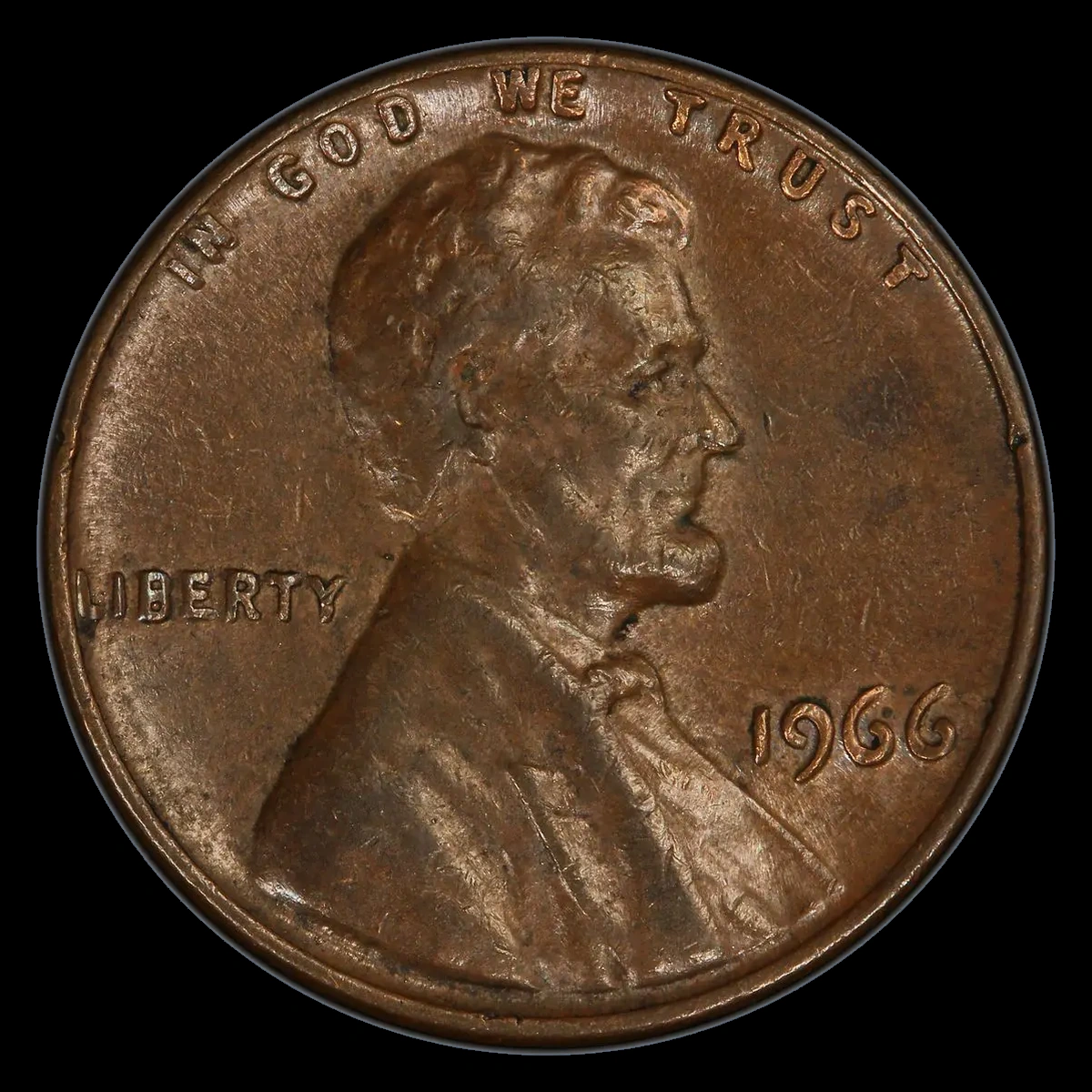
2. 1966 Penny Letter or Date Contours Repeat: Doubled Dies Error
Reported front patterns affect the date and TRUST, while separate back reports concern ONE CENT and parts of the Memorial. The repeated design originated on the die rather than from two complete strikes.
How to Identify
Inspect the affected word for matching rounded extra edges. A flat shelf beside a reduced letter can result from movement during striking.
The broad reports do not establish a precise variety or production finish. Special Mint Set coins need their own identification; shine or absence of a mintmark does not prove that format.
What It’s Worth
$5–$300 is the estimate for identified minor front or back patterns. The actual feature and its preservation come before the general label.
No recorded sale is supplied for an unnamed 1966 variety. Ordinary and Special Mint Set pieces should be compared within their own finish.
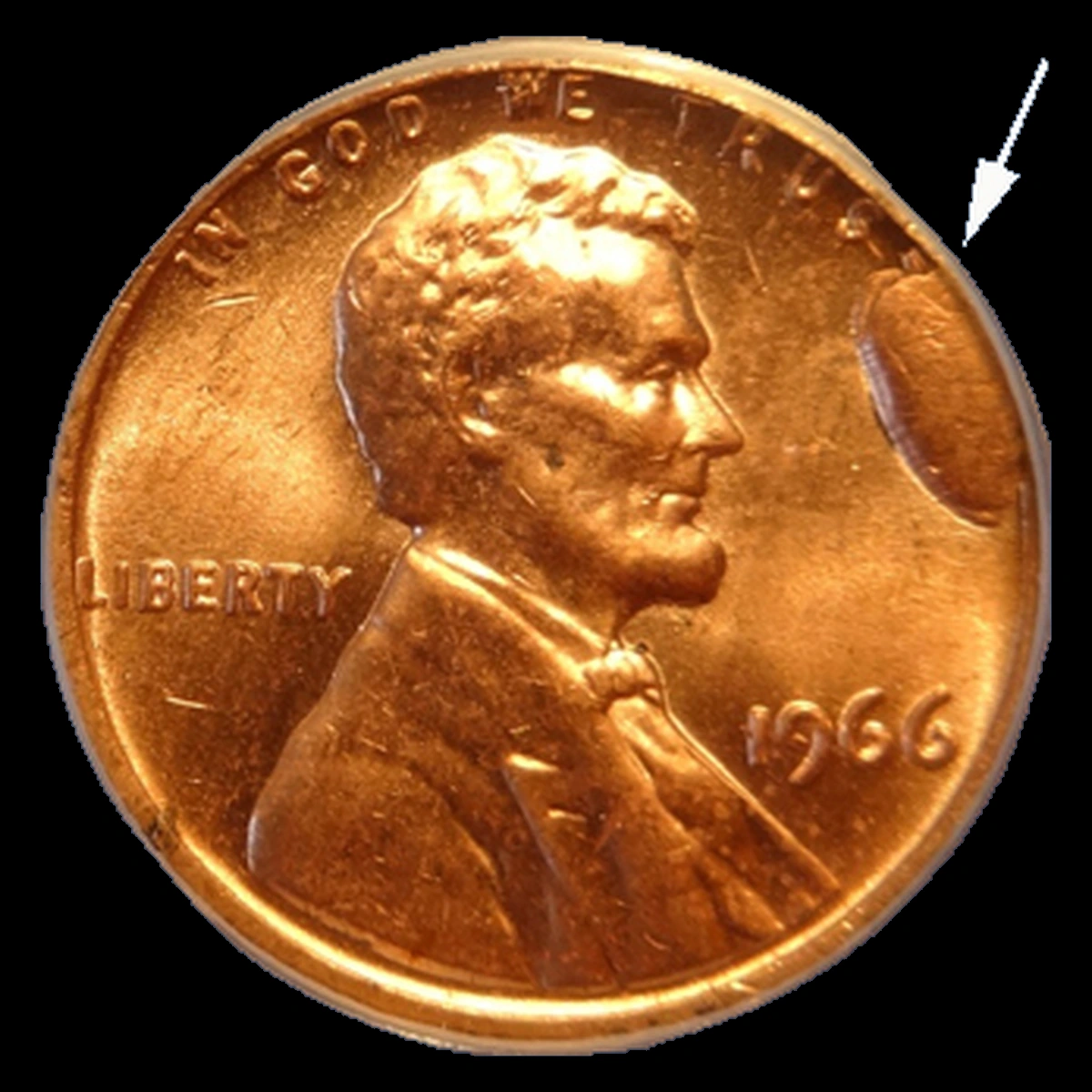
3. 1966 Penny Raised Metal Replaces Part of the Picture: Die Break Error
A piece missing from a die leaves a space that penny metal can fill during striking. The result is a raised patch rather than a hole in the coin.
The year report does not locate the patch. A break touching the rim is a cud, while an interior chip need not reach the edge.
How to Identify
Trace the whole raised boundary before choosing the name. Check whether the original surface joins the replaced design naturally.
Dirt, solder, and pushed-up impact damage can imitate extra metal. Do not scrape the patch to test it.
What It’s Worth
$5–$40 is the estimate for small chips, with larger identified breaks around $40–$500. Size and the design replaced help guide the comparison.
A 1977 cud graded PCGS MS63 Red and Brown brought $138 in May 2021. That related sale does not prove the unspecified 1966 patch is rim-connected.
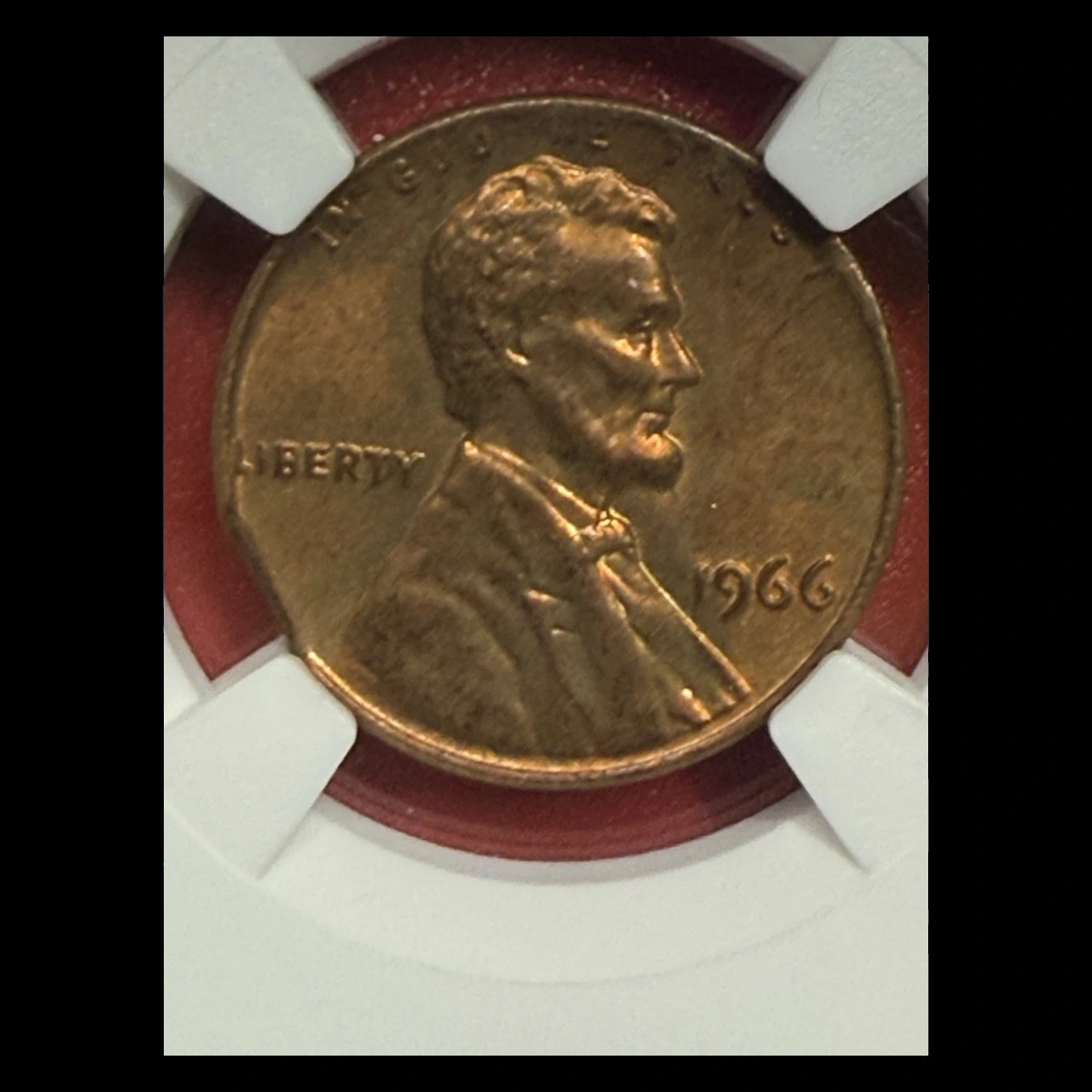
4. 1966 Penny The Outline Has a Curved, Straight, or Ragged Gap: Clip Error
The recorded curved 1966 clip weighs 1.8 grams, while a separate straight clip weighs 2.6 grams. A ragged end clip is also reported.
All concern metal missing from the blank before striking. Their different shapes and weights belong to different coins.
How to Identify
Choose the correct outline before examining the gap’s wall and its meeting with the rim. Saw teeth or filing can show later removal.
A weak opposite rim may support the clip diagnosis but cannot replace the boundary evidence. A complete copper-alloy cent starts near 3.11 grams and 19.05 millimeters across.
What It’s Worth
$10–$350 is the estimate for authentic clips of differing size and condition. Readable identity and an original edge help their appeal.
A 1967 straight clip brought $39 in July 2021, and a 1955 ragged clip sold for $124 in March 2026. Neither is a price for the 1.8-gram or 2.6-gram 1966 specimen.
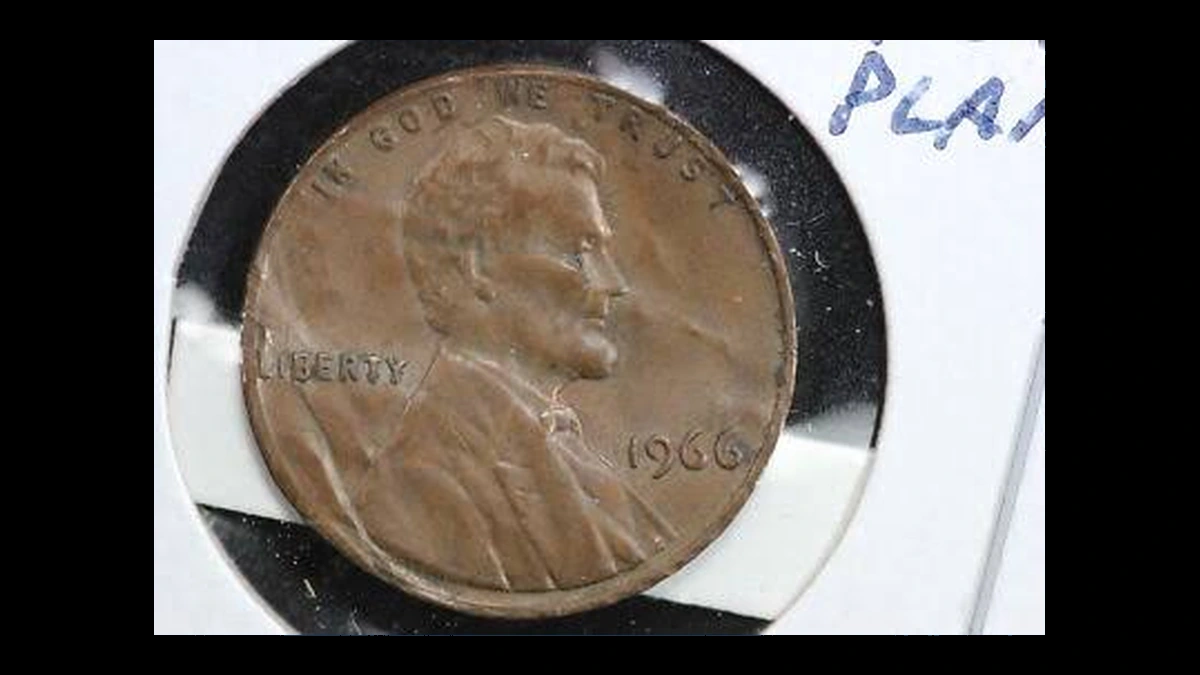
5. 1966 Penny The Thin Metal Received a Weak Design: Split before Striking Error
The documented 1.9-gram 1966 example was struck after its blank split through its thickness. It has weak design and a separating layer at the upper-left back.
How to Identify
Look for design impressed into the rough internal surface. That relationship shows the thinner piece existed before the blow.
Grinding can also reduce weight and thickness, while ordinary weak striking can leave faint detail on a full blank. Keep the known back lamination intact while comparing these possibilities.
What It’s Worth
$40–$450 is the estimate for an identified split-before-striking cent. Clear separated texture beneath the design helps explain its sequence.
The recorded coin is NGC MS62 Red and Brown. A separate 1964 split-blank cent graded PCGS MS60 Brown sold for $53 in May 2021.
6. 1966 Penny Two Pieces Preserve Related Split Surfaces: Matched Split Pair Error
An auction records a 1966 matched pair with its first member described as having a split front. That member is graded NGC MS64 Red and Brown.
The abbreviated description does not fully explain the other piece or the timing of separation. The actual matching surfaces must supply that evidence.
How to Identify
Photograph both pieces and compare their boundaries, internal textures, and corresponding design. Do not force thin surfaces together to make a fit.
A pair of related fragments is different from two fresh blanks struck together. The short record does not justify calling them two complete halves of one penny without examination.
What It’s Worth
$150–$1,200 for both pieces together is the estimate for a documented matched split pair. How clearly the surfaces explain their relationship affects appeal.
A 1960-D pair described with laminations sold for $228 in July 2021. That comparison is not a per-piece price or a sale of the 1966 pair.
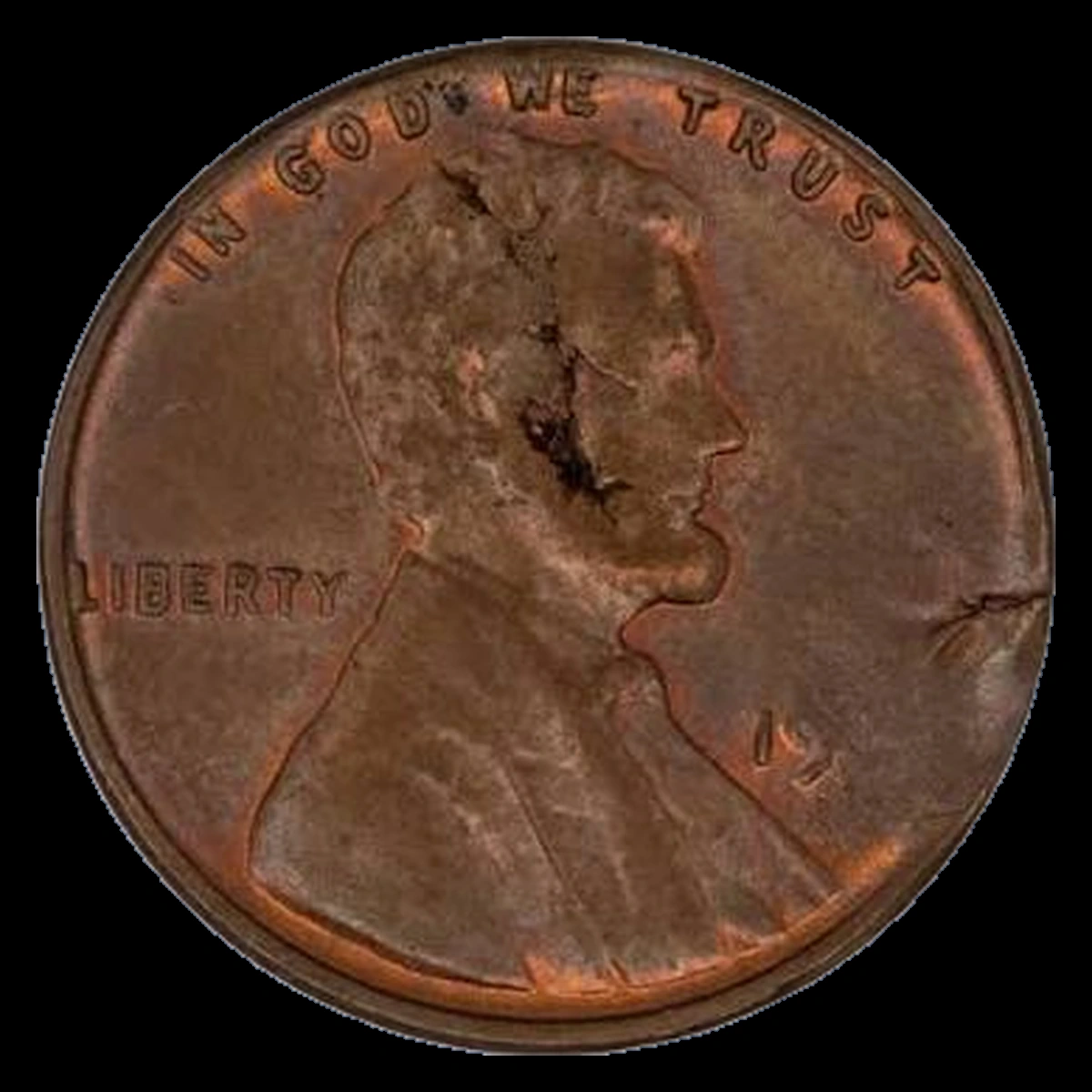
7. 1966 Penny The Design Forms around an Opening: Holed Blank Error
The listed 1966 NGC MS65 Brown weighs 2.6 grams and was struck on a blank with an original hole. The record does not specify the opening’s location or shape.
How to Identify
Inspect the hole’s inner wall and the way nearby design approaches it. Original striking around a preexisting opening differs from drilling across finished letters.
Circular cutting marks or sharp burrs can reveal a drill. Leave the opening unchanged rather than enlarging it for a clearer view.
What It’s Worth
$100–$1,000 is the estimate for an authenticated originally holed blank. The opening’s size and clear surrounding strike help determine the comparison.
A 1960 example weighing 2.9 grams sold for $228 in July 2021. That separate weight must not replace the 1966 coin’s recorded 2.6 grams.
8. 1966 Penny A Plain Crescent Remains beside the Picture: Off-Center Strike Error
A blank partly outside the dies receives only part of Lincoln and the Memorial. The 1966 reports establish no single direction or displacement percentage for every example.
How to Identify
Read the surviving year, then compare the unstruck area and lost design on both faces. A one-face centering change can involve a shifted die instead.
The plain area still contains metal, unlike a clip. Check for grinding or cutting that could have removed a finished design later.
What It’s Worth
$15–$600 is the estimate for genuine dated examples. A readable smaller shift may be more appealing than an extreme strike with its date missing.
A 1965 cent about 40% off center sold for $61 in July 2022. Its percentage and price belong to that neighboring-year coin.
9. 1966 Penny Lincoln Looks Covered while the Back Stays Clear: Capped-Die Strike Error
The reported 1966 receiver has a faint front opposite a clearer back. An earlier coin stuck to the front die acted as a cover through which the new design formed.
How to Identify
Compare both faces under similar lighting and follow connected softening or stretching. General wear or polishing scratches can explain other weak portraits.
The receiving coin does not need the deep rim of the cap itself. Its evidence is the way the design passed through the covering.
What It’s Worth
$25–$600 is the estimate for an identified front cap-strike receiver. Clear original distortion supports a stronger example than vague weakness.
A 1965 cent struck through a cap on its back sold for $61 in July 2021. That is an opposite-face comparison, not the reported 1966 front receiver’s sale.
10. 1966 Penny Lincoln Faces a Blank-Looking Back: One Member of a Two-Blank Strike Error
Two blanks stacked in the press can each receive a normal outer design while their inner faces meet blank metal. The reported 1966 coin is one member with Lincoln on the front and a blocked-looking back.
The description does not establish that it remains bonded to a partner.
How to Identify
Look for original compressed texture on the back rather than grinding grooves or polish lines. Compare its surface with the intact front and edge.
One surviving member should not be expected to weigh like two coins. A matching second piece must not be assumed from the event’s name.
What It’s Worth
$75–$750 is the estimate for a genuine single member. A readable front and preserved blocked surface help show what happened.
This range is neither a sale of the reported coin nor a valuation of two bonded pieces. A later-ground back does not qualify.
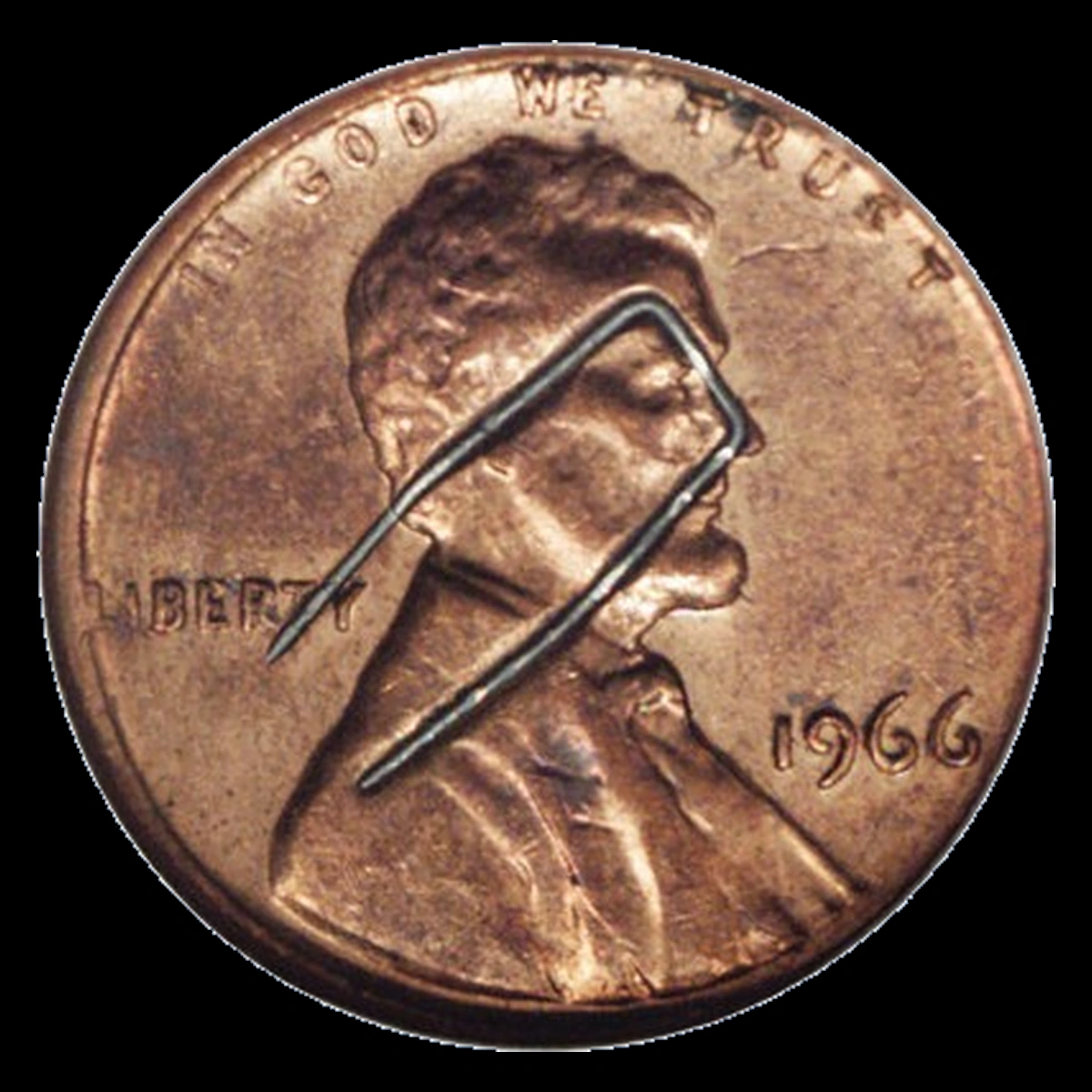
11. 1966 Penny A Wire Remains Embedded in the Design: Retained Struck-Through Error
A year report describes retained staple wire on a 1966 cent. The object interrupted the strike and stayed attached rather than leaving only an empty impression.
How to Identify
Photograph the entire contact area without pulling up a wire end. The surrounding metal and design should show that it was present during the blow.
Fresh punctures, glue, or solder can explain a later attachment. The report supplies no universal location or wire shape to impose on a candidate.
What It’s Worth
$100–$4,000 is the estimate for authenticated retained wire or staples. Size, visual effect, preservation, and convincing original contact create the wide range.
A 1963 retained-staple cent brought $3,416 in March 2026. That recent comparison is not a sale or certification assigned to the reported 1966 piece.
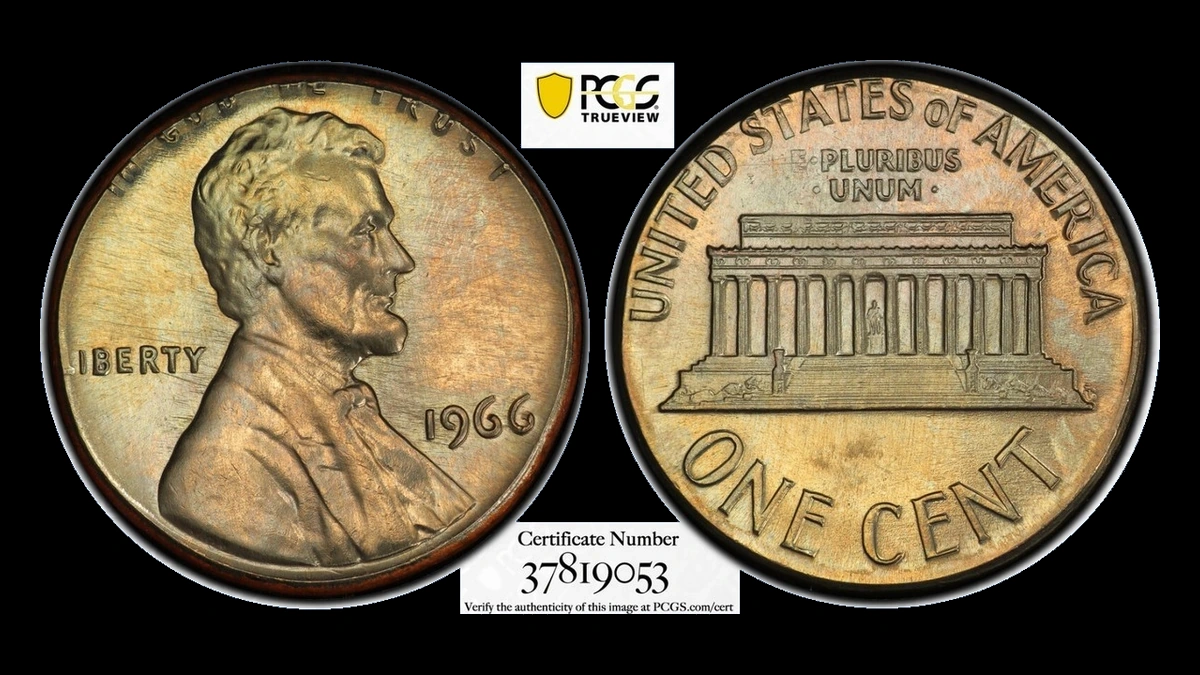
12. 1966 Penny The Penny Uses a Smaller Clad Dime Blank: Wrong Blank Error
The recorded 1966 PCGS MS66 carries cent design on an unused clad dime blank. Outer letters can lose space even when the design is fairly centered.
Clad metal has pale outer layers around a copper core. It differs from both silver dime metal and ordinary copper-alloy cent metal.
How to Identify
A clad dime blank starts near 2.268 grams and 17.91 millimeters across. Check the layered edge and limited design space alongside the actual measurements.
No earlier Roosevelt portrait or torch should lie beneath Lincoln on an unused blank. Finished dime grooves are not required either.
What It’s Worth
$300–$2,500 is the estimate for comparable authenticated examples. Readable cent identity and original surfaces help support stronger prices.
The PCGS MS66 sold for $1,020 in July 2021. A separate 1976-D dime-blank cent brought $480 in December 2024, not a revised result for the 1966 coin.
13. 1966 Penny An Upside-Down Dime Date Remains: Double Denomination Error
The documented example began as a finished 1966 dime. Its full earlier year remains flattened but readable beside Lincoln’s head after the cent strike.
Parts of the torch and leaves survive around the Memorial steps. Those older details distinguish it from the unused blank above.
How to Identify
Rotate the front photograph to read the earlier date independently of the cent date. Then connect the reverse remnants with the dime’s torch and leaves.
The designs should overlap on one continuous piece of metal. Inspect the edge for seams or added faces that could imitate two denominations.
What It’s Worth
$500–$3,000 is the estimate for identified 1966 cent-over-dime coins. The clarity of the earlier picture helps collectors understand the error.
The NGC MS65 example sold for $632.50 in April 2011. That price belongs to the finished-dime overstrike.
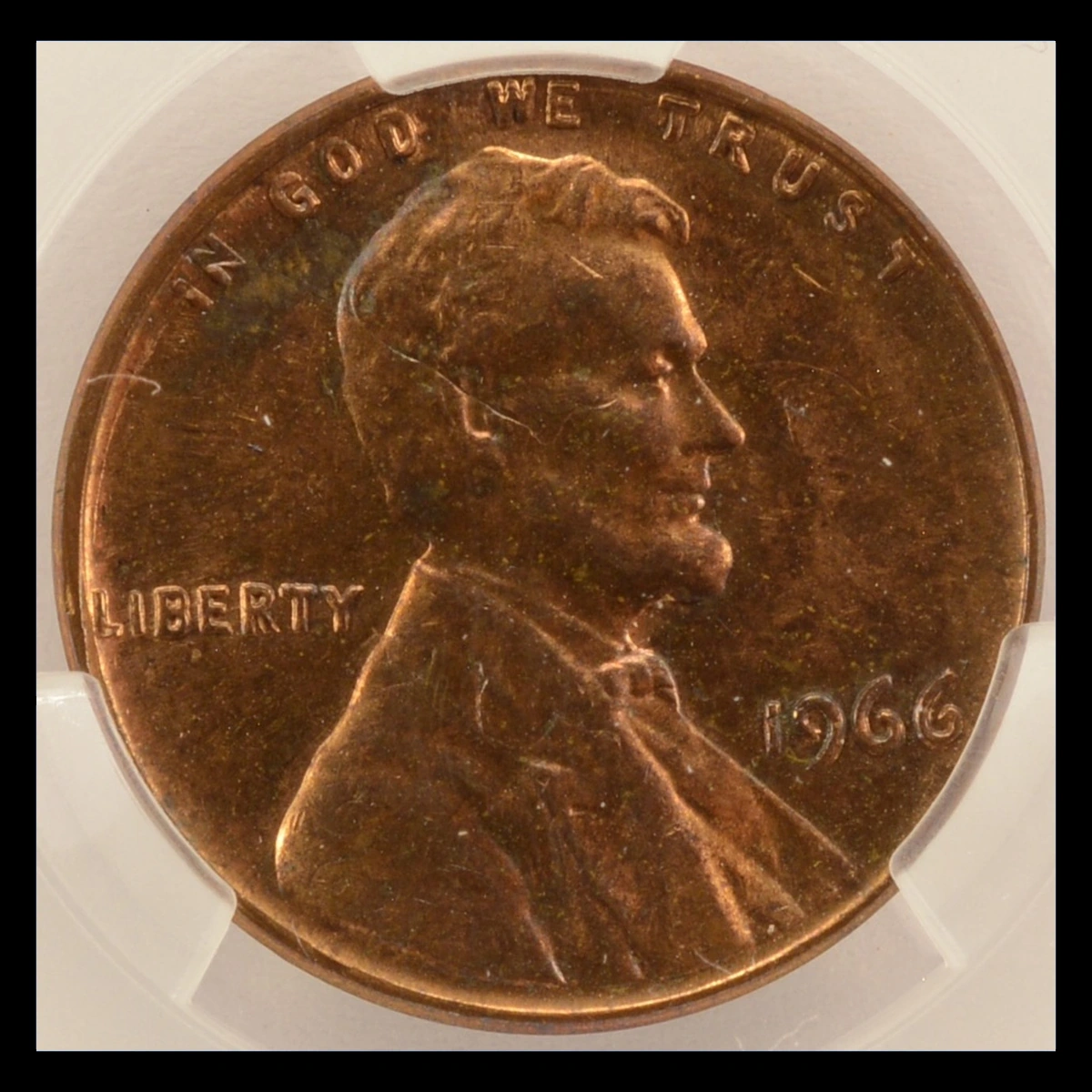
14. 1966 Penny A Mirror Image Is Struck Again: Double-Strike Combination Error
One 1966 coin first received a sunken backward copy of the front design on its back, called a brockage. It then rotated within the collar and received another strike.
A backward 1966 remains beneath the later Memorial, while the front shows rotated repeated detail. Mint Error News describes this sequence.
How to Identify
Find the recessed backward date on the back, then compare the changed angles of Lincoln and the front lettering. Both faces should support the rotation before the later blow.
Ordinary double strikes need their own two-position evidence without necessarily having this first mirror image. Do not count every small repeated edge as another strike.
What It’s Worth
$50–$1,000 is the estimate for ordinary identified double strikes. An authenticated double-strike-and-brockage combination can fit about $500–$5,000.
No sale of the illustrated 1966 combination is supplied. A 1973-D flipover double strike brought $1,320 in November 2020, offering a related but different sequence.
Conclusion
On a 1966 penny, the relationship between design and metal explains more than one weight reading or unusual color. A surface struck after splitting differs from a finished coin that separated later.
Likewise, keep a single blocked-face member separate from a matched split pair, and an unused dime blank separate from a finished dime. Those distinctions make the price ranges and future photographs much more useful.