Rare 1841 Half Dollar Errors (List & Pictures)
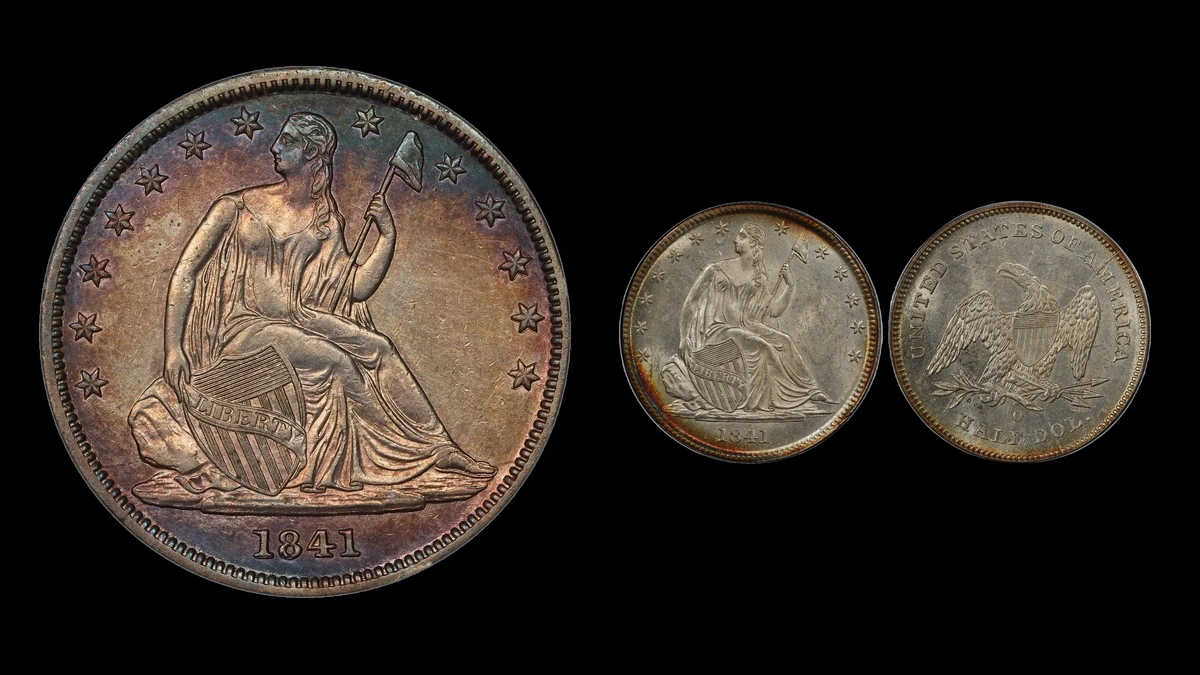
An O mintmark changes the reference you need when investigating 1841 half dollar errors. Philadelphia has the repunched date discussed here, while New Orleans produced the distinctive “Baseball” crack pattern.
Estimated values span $500–$14,000, including a documented $13,800 Baseball sale in November 2019. Work through the front date first, then turn to the reverse mintmark and raised lines.
A die is the steel tool that stamps the coin’s design. The two features below originated in those tools: one during date punching, the other as the steel cracked in use.
1841 Half Dollar Repeated Parts of the First Two Digits: Repunched Date Error
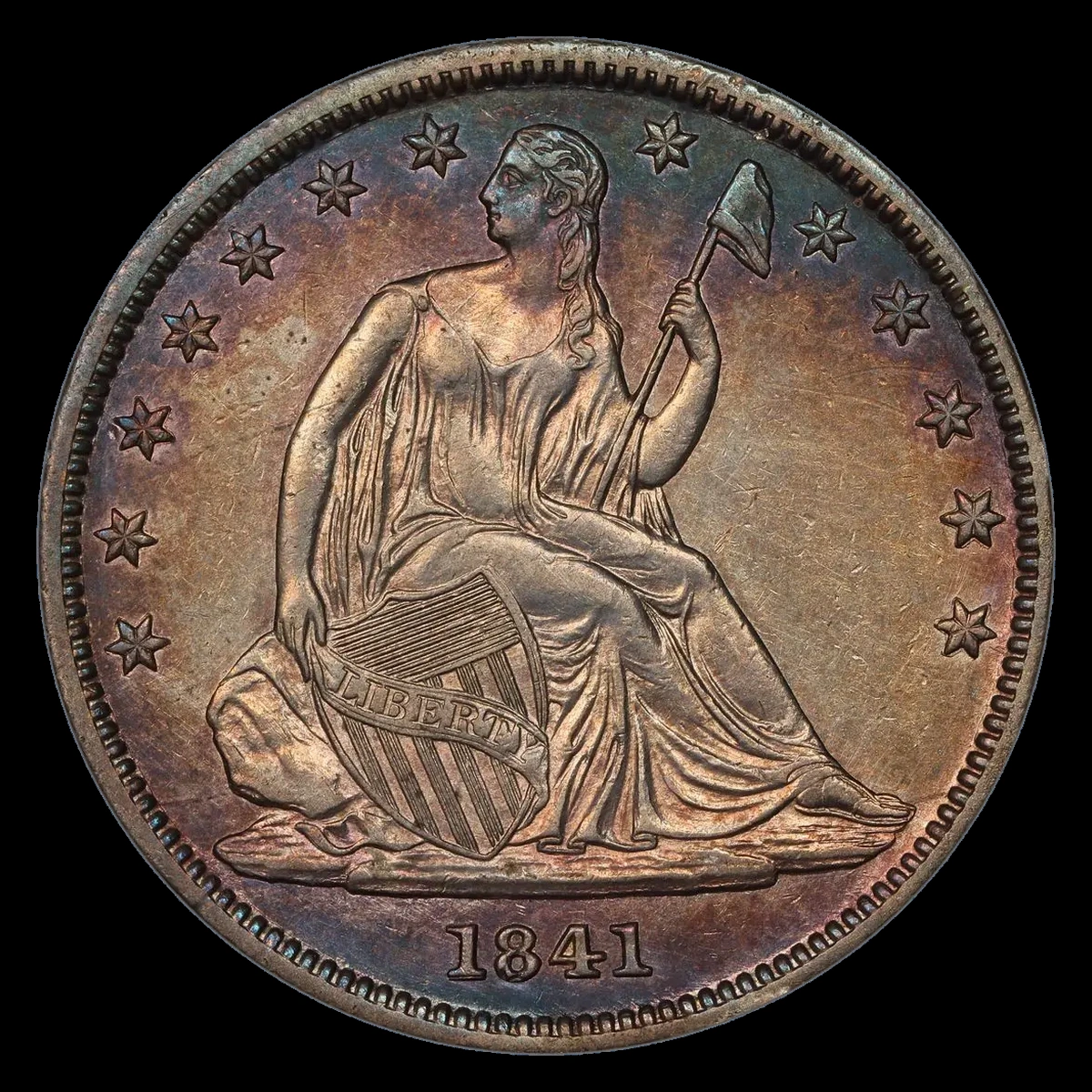
WB-1 is the catalog name to compare with a regular Philadelphia 1841 half dollar. At the beginning of its date, remnants beside the 1 and 8 reveal an earlier placement of the date punch.
The worker’s second placement did not cover every part of the first impression. The surviving portions became permanent features of that die and repeated on coins it struck.
Some examples also show cracks near the stars or faint clash traces. These accompanying marks do not replace the date as the feature that identifies a repunched date.
How to Identify
Bring the first two digits into focus with a magnifier and side lighting. Try to connect each extra stroke to the shape of its original numeral.
Compare both the 1 and 8 with an identified WB-1 photograph. Uniformly thick lettering or an isolated lump beside one digit is not enough.
A flat ledge along a number can result from movement during the strike, while a scratch leaves a cut. Neither has the same meaning as a surviving piece of an earlier punched numeral.
Turn the coin over to confirm the Philadelphia issue has no mintmark. A separate repunched-date report exists for proofs, the specially made collector coins, and that report needs its own reference photographs.
What It’s Worth
Estimated range: $500–$3,500 from lightly worn AU coins through MS63 examples without circulation wear. The supplied MS63 sale gives a firmer guide to the upper portion than to the lower portion.
A PCGS MS63 with CAC approval sold for $3,172.50 in May 2018, as recorded in the Newtown Collection catalog. That price includes the condition and appeal of the whole 1841 half dollar.
An 1843 repunched-date example graded PCGS AU53 brought $516 in September 2024. It offers context for a more worn coin, but its different date makes it a comparison rather than an 1841 transaction.
1841 Half Dollar Curved Ridges Resembling Stitching: Die Cracks Error
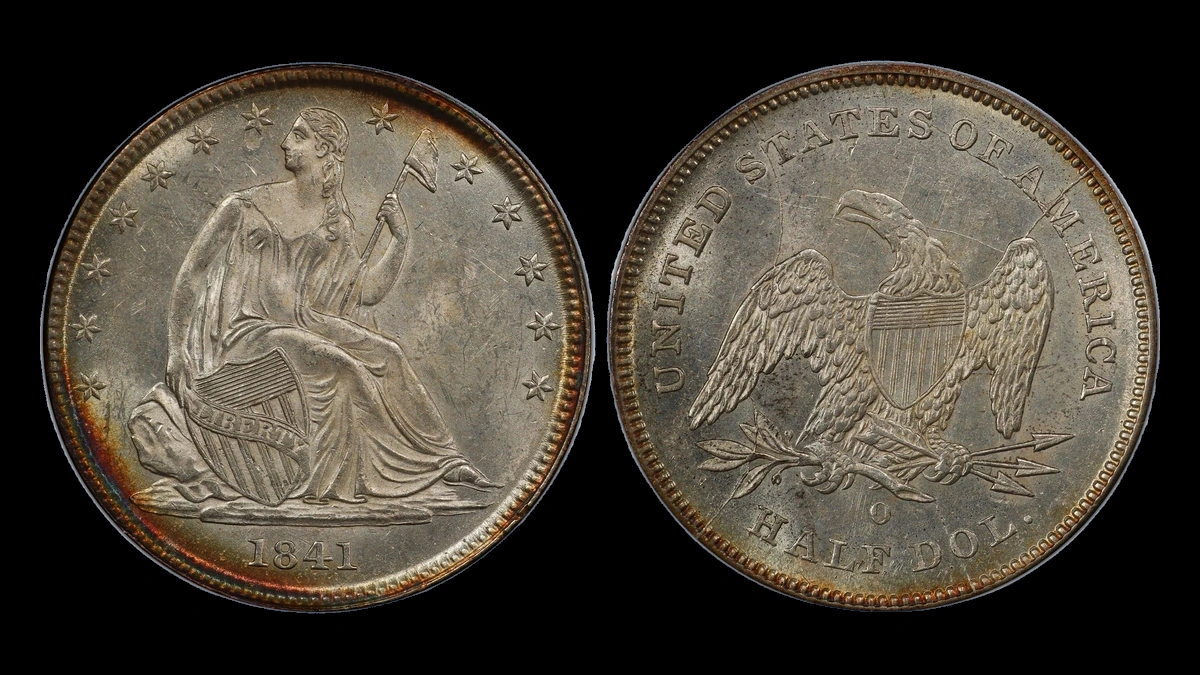
The back of the 1841-O “Baseball” variety carries an arrangement of curved raised lines. Together they suggest the stitching on a baseball and give the coin its familiar nickname.
As silver entered narrow cracks in the working die, it formed ridges on the coin. The steel tool had cracked; the resulting silver coin need not be split at all.
This New Orleans pattern is cataloged as WB-2. Other 1841 half dollars can have die cracks too, including Philadelphia examples with lines through the stars, but those do not become Baseball varieties.
How to Identify
Locate the O mintmark below the eagle before following the curves. Without the New Orleans mintmark, the coin cannot match the variety described here.
Compare the arrangement as a whole with the Liberty Seated Collectors Club Baseball reference. Several correctly placed line segments are more convincing than one vaguely curved mark.
View each line with the light arriving from opposite sides. A ridge should stand above the field, while a scratched groove sinks into it and may have rough metal along its edges.
Wear can interrupt a faint ridge, so judge the portions that remain rather than demanding an equally bold line everywhere. For Philadelphia cracks, compare the star-area route with a Philadelphia reference instead.
If the coin is loose, its normal unworn specifications are about 13.36 grams and 30.6 mm, with a grooved edge. These measurements help check the basic coin but cannot distinguish Baseball cracks from ordinary ones.
What It’s Worth
Estimated range: $2,500–$14,000 for identified Baseball examples from XF45 through MS63+. That span runs from visible circulation wear to highly attractive coins without such wear.
A PCGS XF45 sold for $2,820 in January 2017. At a much higher level of preservation, a PCGS MS63+ reached $13,800 in November 2019.
The distinctive pattern draws specialist demand. A small Philadelphia crack needs its own valuation and cannot inherit these New Orleans prices simply because both coins are dated 1841.
Conclusion
Use the first 1 and 8 to investigate Philadelphia’s repunched date, then use the O and the full curved pattern to investigate a Baseball reverse. Each has a specific visual match.
The overall $500–$14,000 estimate combines two different groups and several grades. It is the identified variety together with the coin’s preservation that makes an auction result relevant, not an extra line by itself.