Rare 1794 Half Dollar Errors (List & Pictures)
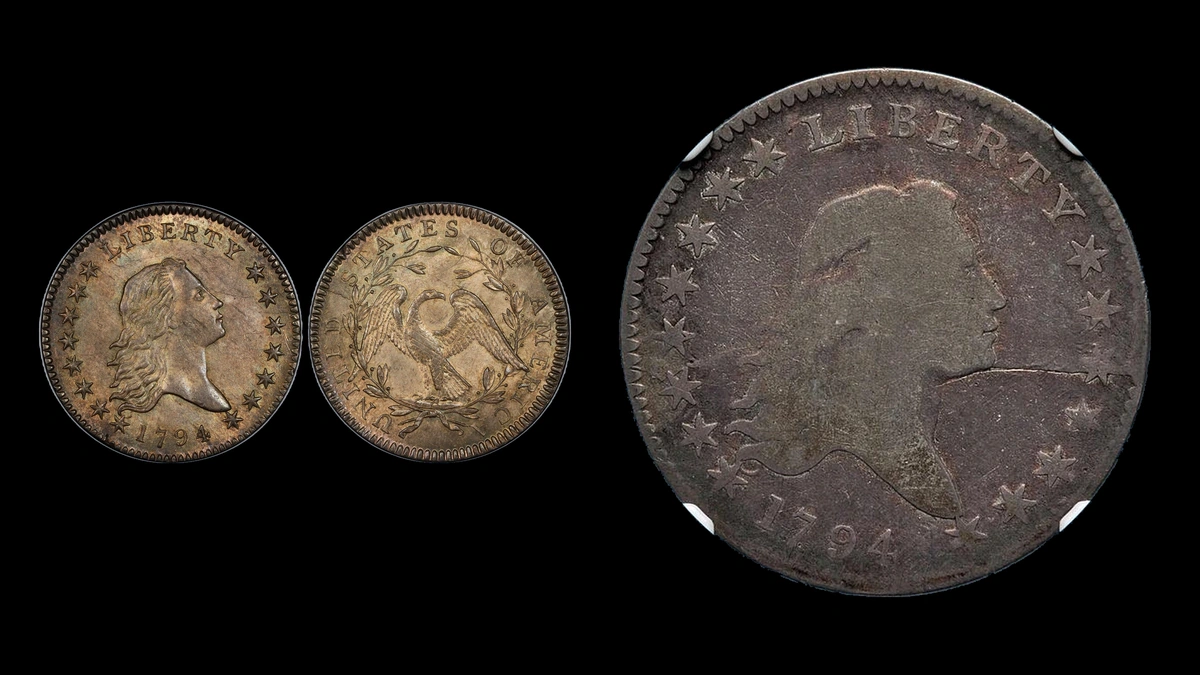
All three surfaces matter when examining 1794 half dollar errors: the front, the back, and the lettered edge. Estimated values of $5,000–$750,000 cover the very different examples below.
A documented $705,000 sale in April 2015 belongs to the rare silver O-109 specimen with overlapping edge ornaments. Follow the portrait-to-edge route below to avoid connecting an ordinary-looking mark with that exceptional coin’s price.
| Visible clue | Inspection area | Feature | Estimated value |
|---|---|---|---|
| A long raised line | Liberty’s bust and lower chin | Obverse die crack | $5,000–$10,000 |
| A raised patch touching the border | Above ER in AMERICA | Reverse cud | $7,000–$11,000 |
| Decorative symbols overlapping | Ends of the edge inscription | Overlapping edge ornaments | $500,000–$750,000 for the rare silver O-109 |
View All Three Surfaces
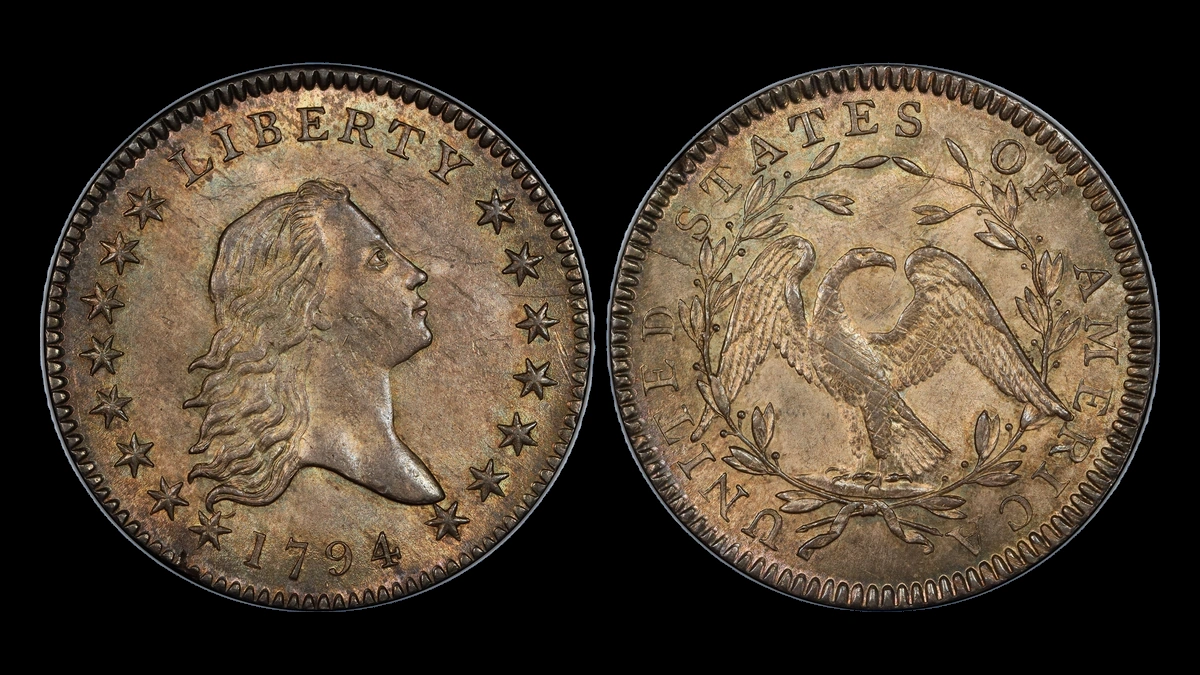
A 1794 half dollar shows Liberty with flowing hair on the front, a small eagle on the back, and lettering on the edge. The normal unworn specifications are 13.48 grams and approximately 32.5 mm across.
The catalog numbers below identify particular pairs of dies, the steel tools used to stamp coins. Matching a number requires the coin’s broader design details as well as one unusual mark.
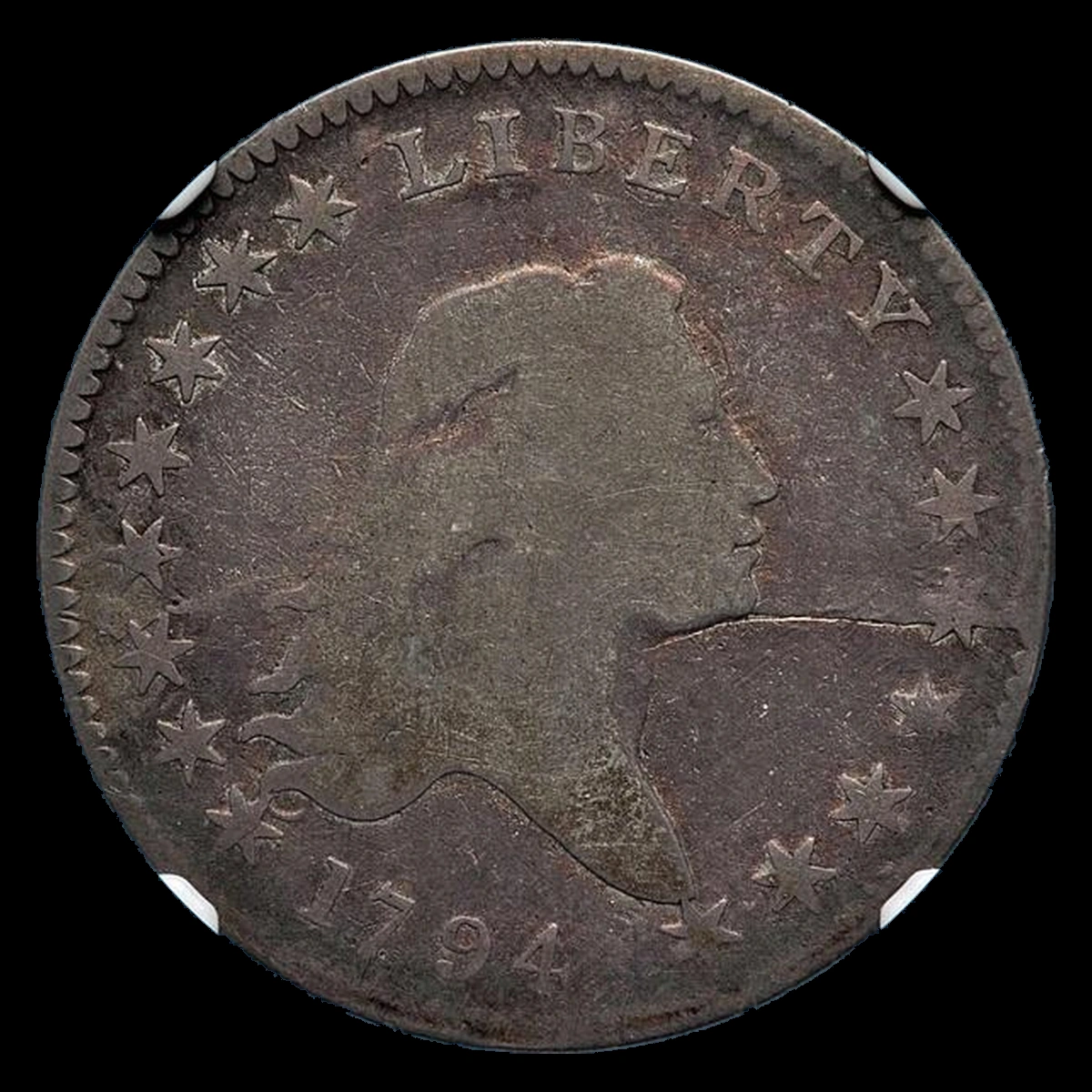
1. 1794 Half Dollar A Ridge Across Liberty: Obverse Die Crack Error
Start at the third star on the lower left of the front. On the O-104a example, a raised line runs across the bust near the lower chin and toward star 11.
The John Reich Collectors Society describes this late die state. The line records a split in the stamping tool that grew as the die continued to be used.
The ridge preserves the shape of the opening in the die. During striking, pressure drove silver into that opening, adding height along the line on the finished coin.
How to Identify
Count the stars before tracing the line with a 10× magnifier. Using both endpoints and the path by the chin makes the comparison more reliable than finding any raised mark on the portrait.
Low light from the side helps reveal the ridge’s height. Scratches cut into the surface, although displaced metal along their edges can also shine.
On a worn coin, sections of the crack may be difficult to follow. Compare several separated points along the expected route instead of joining unrelated stains or cleaning marks into one apparent line.
Photographs of a documented O-104a give the necessary reference for the complete path. A shorter visible crack may reflect wear or an earlier stage of the die’s damage, so its length needs context.
What It’s Worth
Estimated range: $5,000–$10,000 for similar circulated examples. Less wear and undamaged surfaces can support more interest than a heavily worn or impaired coin.
A Heritage O-104a graded NGC Good 6 sold for $5,318.75 in July 2012. Good 6 describes substantial circulation wear.
The result includes the value of a scarce first-year half dollar. It does not measure a separate charge for the raised line alone.
2. 1794 Half Dollar A Raised Patch Above AMERICA: Reverse Cud Error
Turn the coin over and find ER in AMERICA. Immediately above those letters, the O-104 examples discussed here can have a raised patch joining the rim.
This feature is a cud, caused by a piece breaking away from the edge of the die. Silver filled the open area, producing a patch rather than the narrow ridge of a crack.
How to Identify
Hold the word AMERICA upright and inspect the border above ER. The raised area should meet the rim where normal border detail would otherwise appear.
Check the outline of the patch under angled light and compare it with a known example. A rim dent can push metal inward too, but often leaves crushed or disturbed detail around the impact.
Examine the front independently. A documented coin had the reverse patch without the long crack across Liberty, so one feature cannot substitute for checking the other.
The variety name and visible features should be recorded together. This is particularly helpful when a catalog label includes a die-state suffix that seems to imply more damage than the photographs show.
What It’s Worth
Estimated range: $7,000–$11,000 for comparable moderately worn coins. Fine and Very Fine grades fall in the general condition range used here.
A PCGS VF30 example brought $10,200 at Stack’s Bowers in August 2022. The patch above ER was visible even though the long front crack was absent.
Remaining portrait and eagle detail matter alongside the variety. Repairs or other surface problems can lower the value of an otherwise identifiable example.
3. 1794 Half Dollar Symbols Meeting Twice on the Edge: Overlapping Edge Ornaments Error
The edge reads FIFTY CENTS OR HALF A DOLLAR, with small decorative ornaments beside the inscription. On the rare silver O-109 specimen, ornaments overlap where the inscription’s ends meet.
Specialist Bradley Karoleff described this overlap. The report concerns the symbols and does not say that the complete wording is doubled.
A Castaing machine pressed the inscription into the edge before the two faces were struck. The overlap therefore arose during edge lettering, separate from the die damage on the faces.
How to Identify
Photograph the entire edge in overlapping views so no part of the inscription is missed. Ordinary front and back pictures cannot show where the ornaments meet.
The matching symbols should be pressed into the edge. Random cuts or later damage will not reproduce their documented shapes and arrangement.
Keep both face photographs with the edge sequence. O-109 identifies a specific die pairing, and the rare silver coin must match those face details as well as the overlapping ornaments.
Copper test pieces with the same face designs also exist. Metal, face details, and the specimen’s recorded ownership history all matter when identifying the silver rarity.
What It’s Worth
Estimated range: $500,000–$750,000 for the rare silver O-109 specimen. This narrow scope is essential to using such an unusually high estimate.
The NGC VF25 silver coin sold at Heritage for $705,000 in April 2015. Its rarity and documented identity carry much of the value despite its visible circulation wear.
An ornament overlap on another half dollar does not establish a comparable price. Without the matching die pair and silver-specimen identity, this sale is not an appropriate valuation.
Conclusion
For a 1794 half dollar, inspect the front, back, and lettered edge as separate surfaces. The long portrait ridge, rim-connected patch, and overlapping ornaments each reveal a different part of manufacture.
The $5,000–$750,000 estimates reflect very different varieties and conditions. Most of that gap comes from the rare silver O-109, so a similar-looking edge mark alone cannot support its extraordinary price.