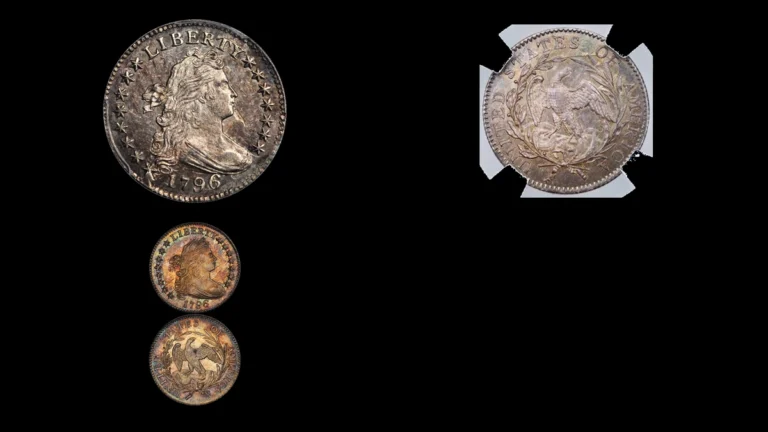
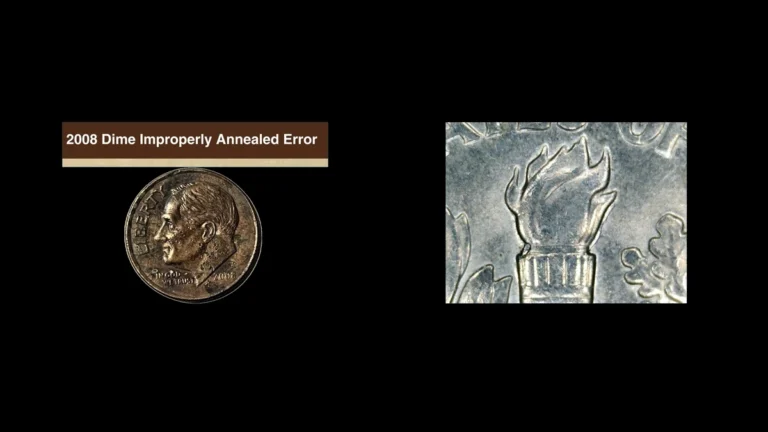
Rare 1842 Dime Errors (List & Pictures)
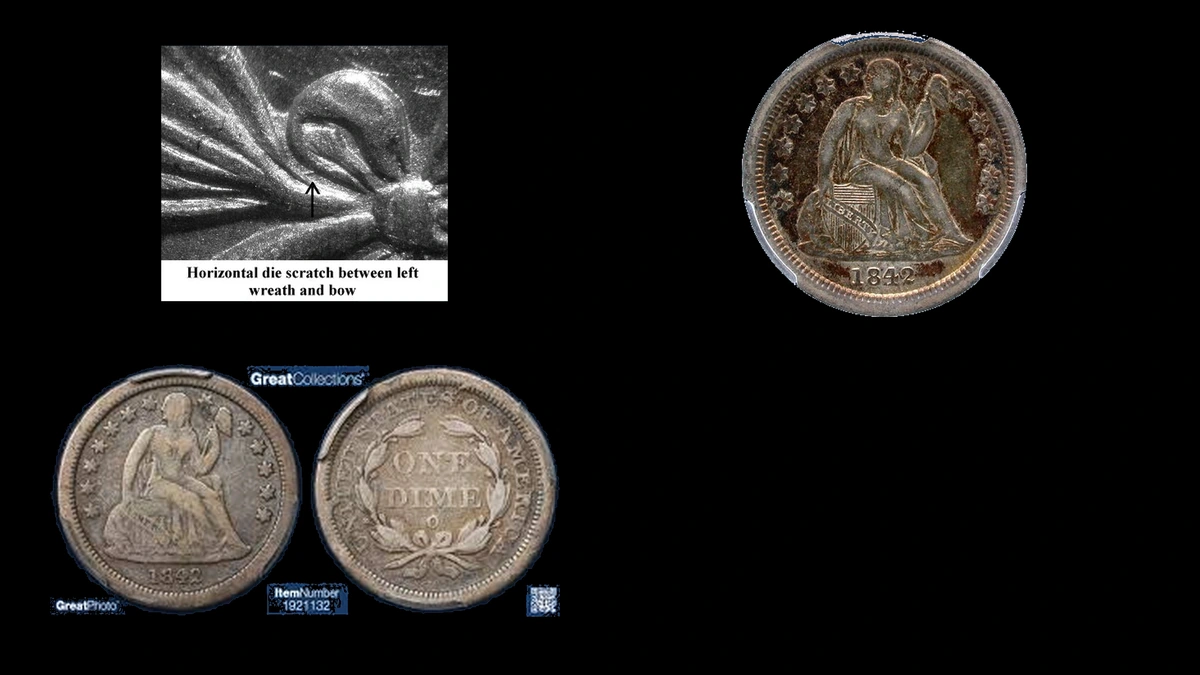
Raised metal, missing detail, and shallow hollows require different explanations among 1842 dime errors. Estimated whole-coin values range from $100–$20,000, and an unworn 1842-O with a cracked reverse sold for $14,100 in May 2015.
Inspect Liberty’s hand and surrounding design first, then examine local depressions, rim patches, and reverse crack networks.
| Where or what to inspect | Feature | Estimated whole-coin value |
|---|---|---|
| Raised metal at Liberty’s index finger | Die gouge | $100–$1,000 |
| Selected design details shrink or disappear | Excessively lapped dies | $100–$1,200 |
| Repeated shallow areas on shield, gown, and base | Reported filled-die depressions | $150–$1,500 |
| A raised patch meets the obverse rim | Rim cud | $100–$2,000 |
| Raised routes cross reverse letters | Shattered reverse | $100–$20,000 |
1. 1842 Dime Extra metal appears at the index finger: Die Gouge Error
The hand on the related 1842-O F-106 and F-107 examples carries a specific raised feature at Liberty’s index finger. A small defect at the nose provides another comparison point.
A gouge cut into a die can produce raised metal on the coin because silver enters the opening during the strike. The die is the steel tool that stamps the design.
A scratch made directly on a finished coin instead cuts into its surface. The distinction between raised and recessed metal matters as much as the location.
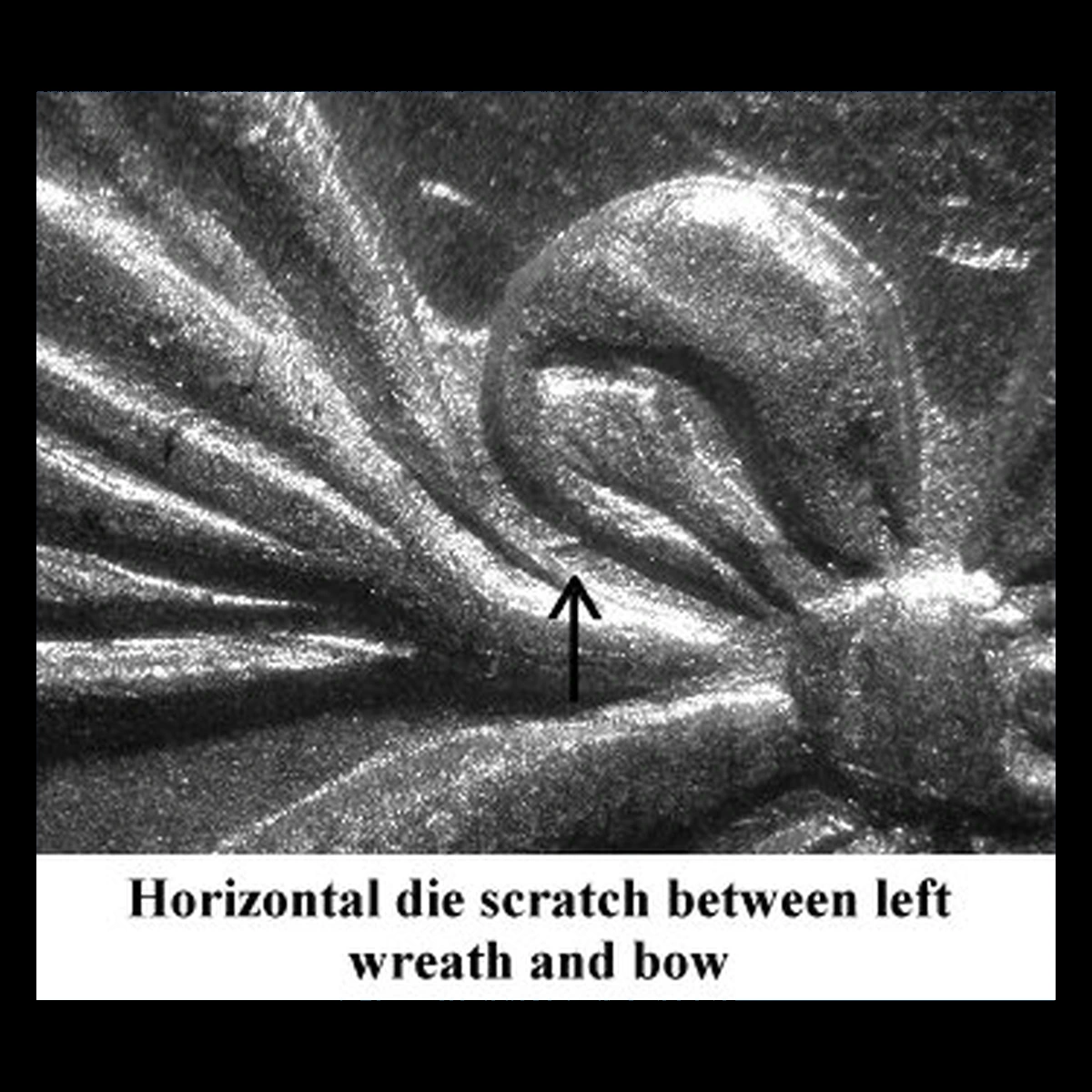
How to Identify
Keep the surrounding hand in view while examining the index finger under a 10× magnifier. Change the light to determine whether the unusual shape stands above the surface.
Compare it with a clear F-106 or F-107 image, then check the nose feature, date, and reverse O. An unrelated nick near the hand does not establish the same die feature.
Inspect for an attached substance or later cut that might explain the shape differently. For an accessible coin, the original specifications are about 2.67 grams and 17.9 millimeters, in 90% silver with a grooved edge.
What It’s Worth
The estimate is $100–$1,000 for a worn whole coin with the matching finger feature. Clear hand detail and natural surfaces support a stronger comparison.
No documented sale is assigned to the pictured gouge example. The much higher cracked-reverse result belongs to another comparison and should not be applied to this small obverse feature.
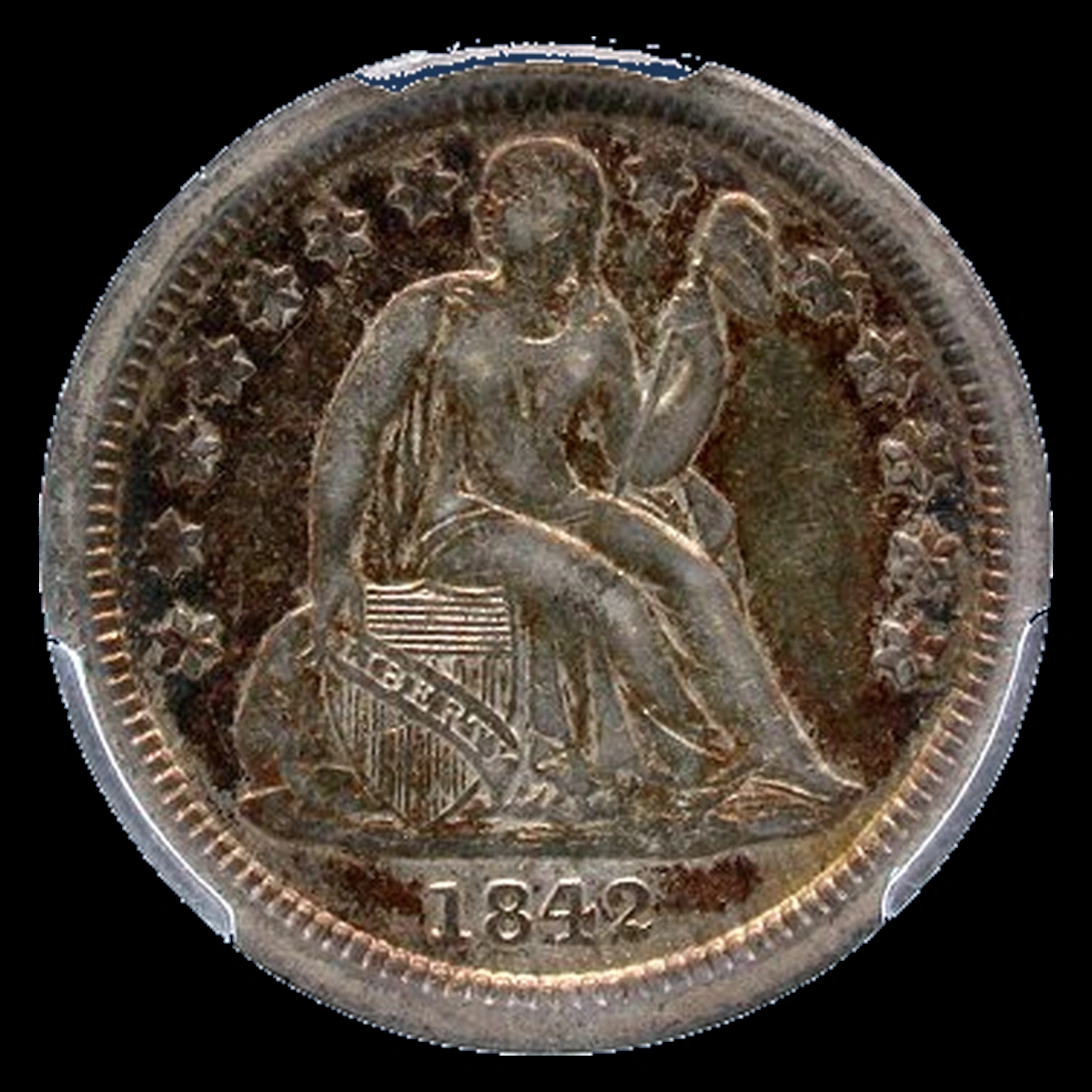
2. 1842 Dime Some details shrink while others remain: Excessively Lapped Dies Error
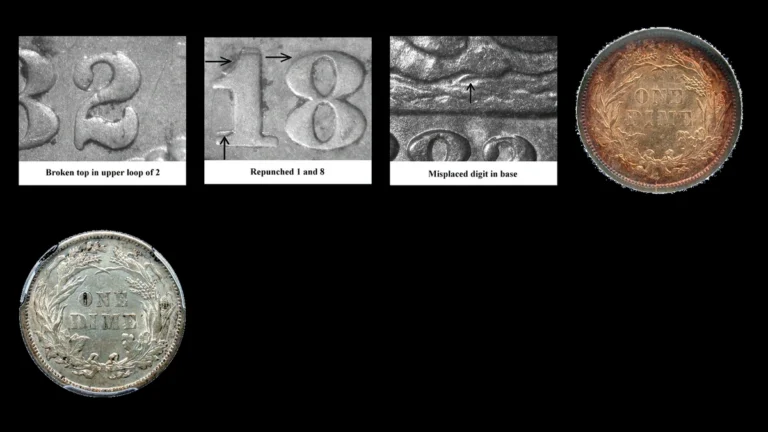
A coin can lose design detail because the tool no longer contains enough of that design to transfer. Heavy maintenance polishing, called lapping, can remove shallow elements from a die.
On recorded 1842-O examples, affected areas can include stars, date digits, Liberty, lettering, or reverse leaves. The F-107 obverse comparison shows a smaller-looking date and loss of upper-body detail.
This selective reduction occurred before the coin was struck. It differs from circulation wear across the finished coin or polishing applied directly to its silver surface.
How to Identify
Compare an earlier, fuller strike from the same tool with the later reduced pattern. Identify which details become smaller or disappear and which remain relatively strong.
The combination is more useful than a general impression that a coin looks weak. Surviving matching features must link the examples to the same die.
Examine the surface for later polishing of the coin itself. Repetition of the same selective losses across genuine matching examples supports tool maintenance as the explanation.
What It’s Worth
The supplied estimate is $100–$1,200 for worn through lightly worn whole coins. A clear pattern of missing and surviving detail makes the feature easier to assess.
Original surfaces and strong remaining elements can support a better comparison than general weakness everywhere. A coin polished after minting does not qualify simply because some parts now look smooth.
3. 1842 Dime Shallow areas repeat in three locations: Reported Filled-Die Depressions Error
Reported 1842-O examples have shallow areas at the lower shield, gown, and base above the final 2. Their repeated positions led a researcher to propose that material blocked parts of the die.
That proposed cause remains debated. No retained object or chemically identified grease has been established in the supplied evidence.
The same coins also show broader losses from heavy die polishing. Those widespread reductions and the local hollows are separate observations that should not be merged into one explanation.
How to Identify
Compare all three locations with photographs of the reported examples. Match the boundaries at the shield, gown, and base rather than accepting an isolated dent in one approximate position.
Inspect for sharp cuts, pushed-up metal, or later smoothing around the depressions. Those signs can suggest damage applied after striking.
Describe the visible shallow pattern even when its cause remains uncertain. A matching hollow does not establish that grease was present or that a foreign object is still embedded.
What It’s Worth
The estimated whole-coin range is $150–$1,500 for an example matching the reported pattern. Intact surrounding surfaces and agreement at all three positions make a comparison more persuasive.
No verified sale is assigned to this feature. The estimate concerns the visible depressions and underlying dime, not a proven retained object or grease deposit.
4. 1842 Dime A raised lump replaces part of the front rim: Obverse Rim Cuds Error
A cud forms when a piece breaks from the rim-side edge of a die. Silver fills the opening, producing a raised patch where normal rim or design detail should have appeared.
Separate 1842 examples are reported for Philadelphia and New Orleans. The Philadelphia break lies near ten o’clock, while a New Orleans Small O example has a break near stars 3–6 and another example belongs to the Medium O issue.
Those locations and mintmark sizes describe different coins. No single specimen is required to display all of them.
How to Identify
Read the reverse mintmark before choosing an obverse comparison. No O points to Philadelphia here, while an O directs the examination to the appropriate New Orleans example.
Trace the raised patch’s boundary and confirm that it connects to the rim. Use the ten-o’clock position for the Philadelphia report and the specified star area only for the matching Small O example.
A folded edge from a rim blow or attached solder can produce a lump for another reason. Check the edge and neighboring struck design rather than judging from size alone.
What It’s Worth
The estimate is $100–$2,000 for worn through lightly worn whole coins. Mint, condition, and the visibility of the break determine which part of the range is relevant.
No auction amount is assigned to the pictured examples. A large clear break can be more appealing than a tiny irregularity, while cleaning or damage elsewhere still affects the coin’s value.
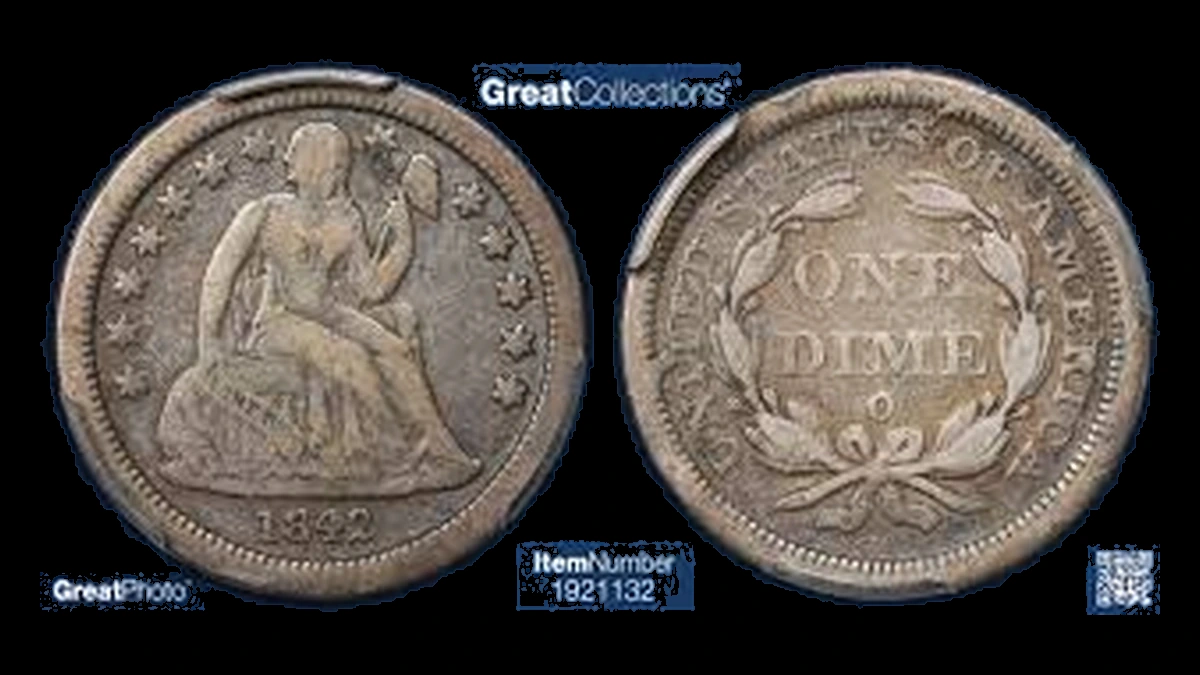
5. 1842 Dime A network of ridges crosses the reverse: Shattered Reverse Error
An extensively cracked reverse die can leave several raised lines through the lettering and wreath. “Shattered reverse” describes the condition of that tool, not a dime that has broken into separate pieces.
One reverse die used in 1841 was reused with an 1842 obverse, preserving its crack through ES on later-dated coins. Other 1842-O tools developed different networks around STATES and AMERICA.
For F-107, useful landmarks include ES and the beginning of AMERICA. These locations should remain tied to that variety rather than combined with every other reported reverse line.
How to Identify
Follow each raised route through letters and toward the wreath with a magnifier. A crack should stand above the silver, while weak lettering alone does not establish a broken tool.
Compare one complete network with one attributed reference. The F-107 photographs provide the appropriate comparison for its ES and AMERICA landmarks.
Check the obverse date even when the reverse die had earlier service. Tool reuse does not change the year stamped on the finished coin.
What It’s Worth
Estimated ranges are $100–$1,500 for worn examples and $2,000–$20,000 for desirable unworn coins. These values apply to whole New Orleans dimes.
An NGC MS65 F-103 with CAC approval sold for $14,100 in May 2015. The high grade indicates an unworn coin with relatively few marks.
Its preservation contributes substantially to the price. A worn coin with faint cracks cannot inherit that result from the “shattered” label alone, and F-103’s sale should not be presented as a sale of F-107.
Conclusion
Raised finger metal, selective design loss, local depressions, rim patches, and reverse ridges provide different evidence. Compare the complete pattern for the correct mint and variety before assigning a cause.
Keep the filled-die explanation qualified, and reserve high-grade auction comparisons for suitably preserved coins. The $100–$20,000 span includes the whole dime’s value across several features and very different condition levels.