Rare 1848 Quarter Errors (List & Pictures)
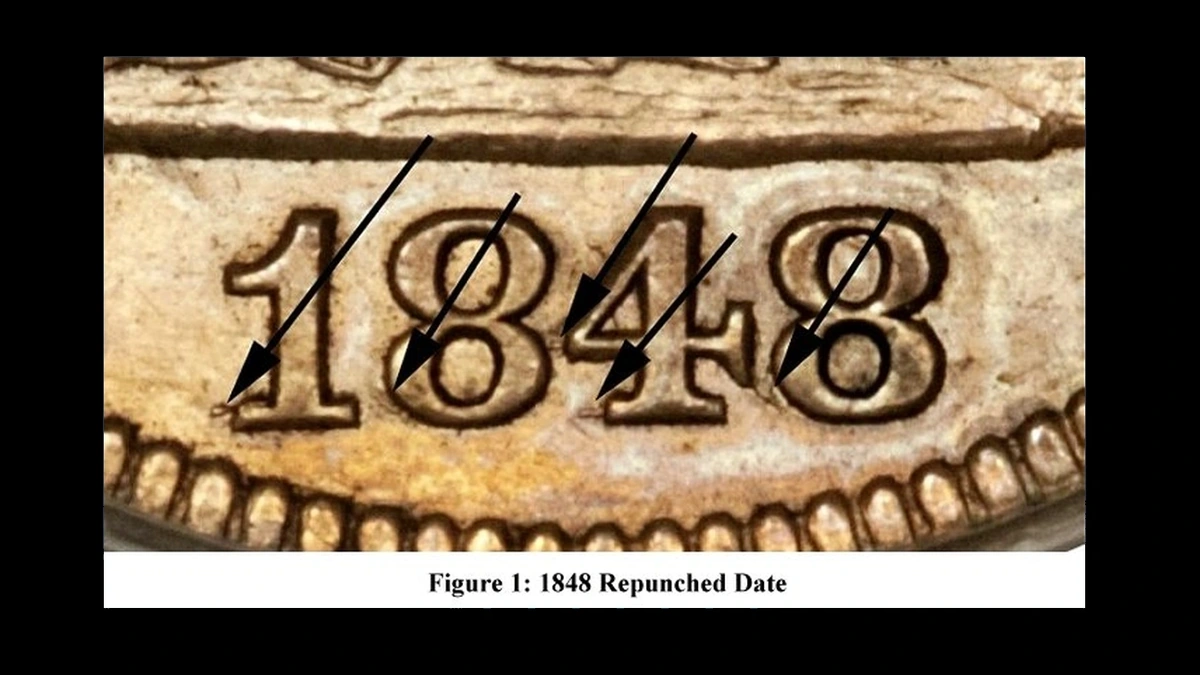
An exceptionally preserved 1848 quarter sold for $21,150 in November 2013. The 1848 quarter errors discussed here involve repeated date punches, with estimated whole-coin values of $100–$25,000.
Both known circulation-strike die pairings have repeated dates, so use the numerals and the eagle’s shield to identify the variety before judging its value.
1848 Quarter Overlapping date strokes: doubled and tripled repunched dates Error
The date can show traces of two or three impressions made when a worker punched 1848 into the die. The die is the steel tool that later transfers its design to the coins.
This repetition was already present in the tool. A coin with a tripled date did not need to receive three separate strikes to acquire those numeral outlines.
The doubled-date front pairs with a reverse bearing a small central shield defect, often called a compass point. The tripled-date front uses a reverse without that feature.
These two pairings make the reverse useful even though the most obvious repetition is on the front. They also explain why extra date strokes are not automatically a rare exception among 1848 circulation coins.
How to Identify
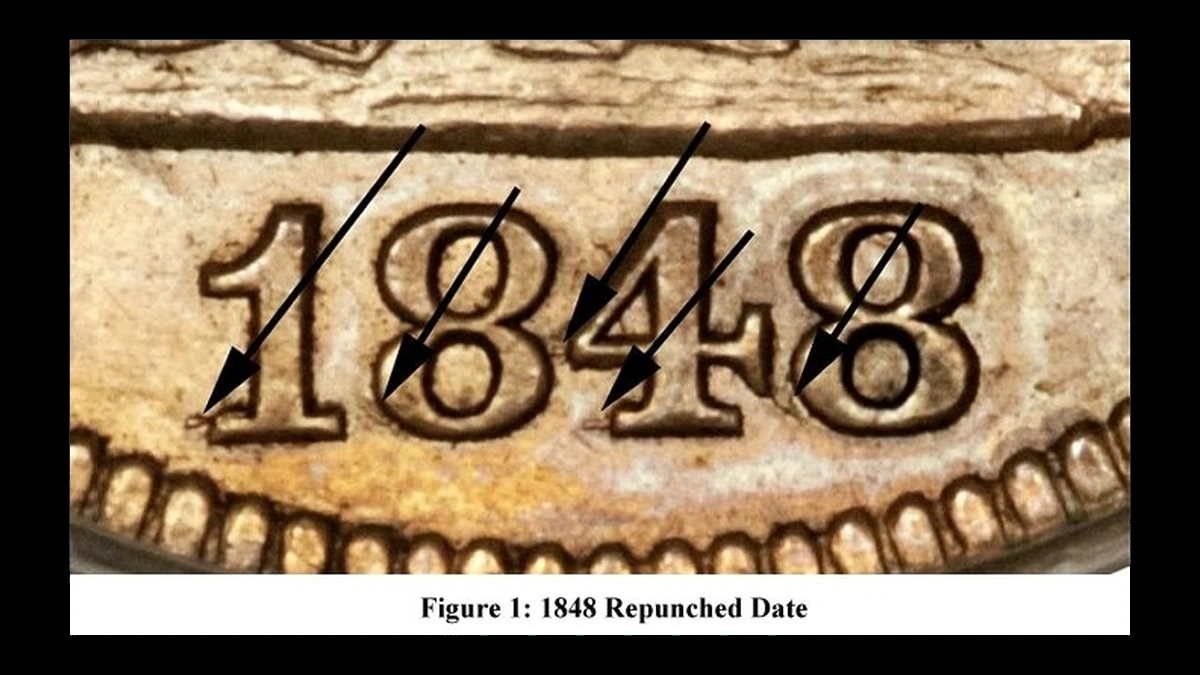
Begin with photographs of both faces of the same coin. Keep the date and the eagle’s shield clear enough to compare their features together.
Under magnification, trace the outlines of the entire date rather than counting bright edges on one digit. Changing the light can reveal whether a supposed extra stroke is raised metal, a scratch, or a reflection.
Next examine the center of the reverse shield for the small defect associated with the doubled-date pairing. The 1848 variety study explains the front-and-back combinations.
Wear can merge adjacent strokes or erase the faintest impression. A worn date may therefore need support from the correct reverse instead of displaying every original outline equally well.
The supplied evidence does not give a universal directional checklist for each extra numeral stroke. Match the actual date photograph rather than assuming the repetition must always appear on a particular side.
What It’s Worth
Estimated whole-coin values span $100–$25,000, from worn coins to exceptional unworn pieces. Repetition alone does not establish a large premium because it occurs in both known circulation-strike pairings.
A PCGS AU50 example sold for $1,050 in January 2023. AU50 indicates light wear with much of the design still present.
The $21,150 November 2013 result in the introduction belongs to a superb ordinary-strike example. It reflects the complete scarce issue and exceptional preservation, not a separately measured charge for an extra date stroke.
Compare surface quality and wear before comparing the apparent number of impressions. A sharply visible tripled date does not cancel cleaning, scratches, or other condition problems.
Conclusion
An 1848 quarter’s date and shield work as a pair of identification clues. Record the repeated numeral outlines, then check whether the central shield feature agrees with the expected reverse.
The doubled and tripled dates belong to the known circulation varieties. Their interest lies in attribution, while the total value still depends heavily on the condition and originality of the entire coin.