Rare 1844 Quarter Errors (List & Pictures)
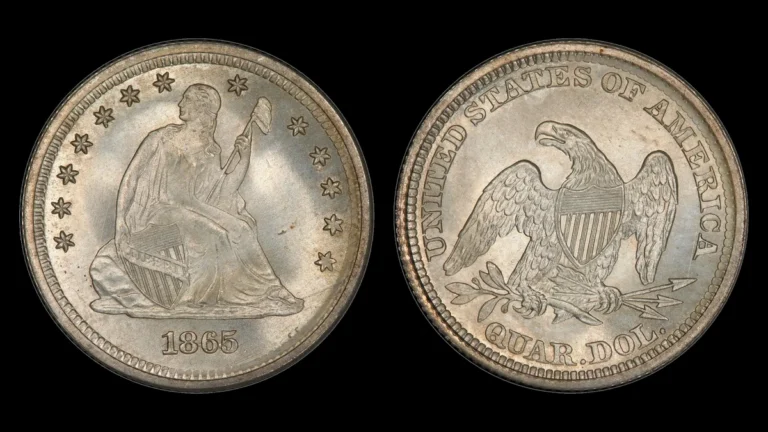
The mint helps separate two different searches for 1844 quarter errors. Philadelphia pieces can show a repeated date, while some New Orleans coins carry cracks and a reversed back from a reused die.
Estimated whole-coin values span $50–$6,000. A Philadelphia repunched-date example has a reported $1,900 auction result from May 2024; the listing does not explain whether the buyer’s fee is included.
Read the date first, trace any raised reverse lines, and finish with a controlled flip.
1. 1844 Quarter Extra Strokes above the Date: Repunched 1 and 8 Error
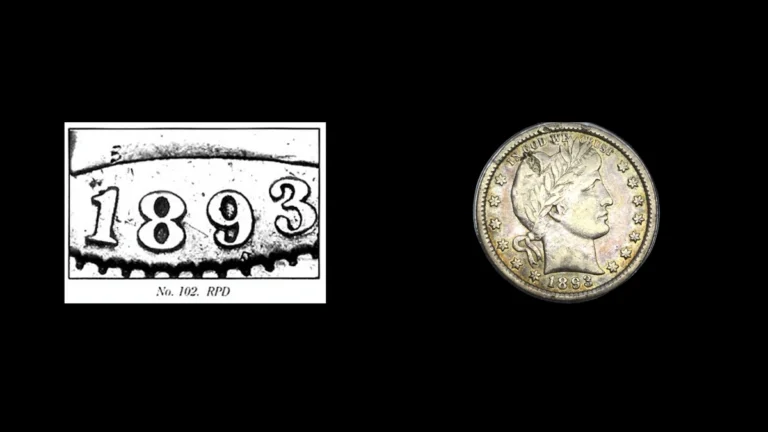
Small raised strokes above the 1 and 8 can remain from an earlier placement of the date punch. The later impression did not fully cover those marks in the die.
Coins struck with that tool copied the overlapping date details. The described Philadelphia example is a circulation strike, not an overdate with a different year underneath.
How to Identify
Aim a magnifier just above the 1 and 8. Look for the reported remnants rather than expecting a second complete row of numbers.
A scratch crossing the date and open background does not prove repunching. Match the shape and position of the raised strokes with the documented coin.
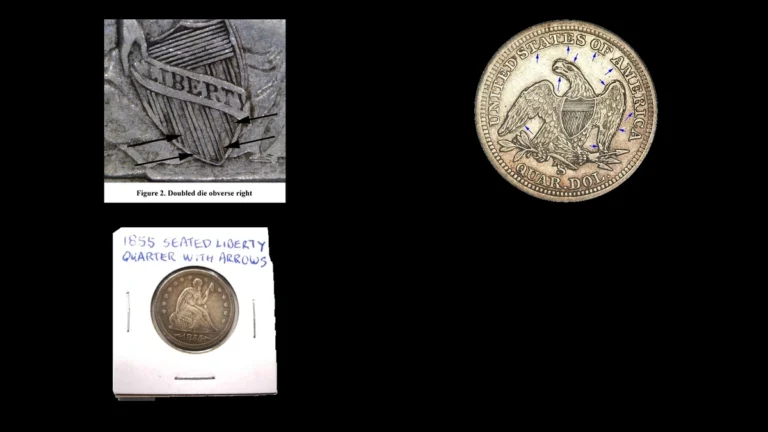
The auction example also has vertical reverse shield lines extending into the horizontal bars and below the bottom border. These offer a useful second check on the other face.
Catalog numbers have been used inconsistently for these date varieties. Comparing the actual date and shield is more reliable than accepting a number in a seller’s title.
What It’s Worth
$50–$6,000 is the estimated whole-coin range, from worn pieces to well-preserved unworn examples. Much of that spread comes from condition.
NumisBids reports $1,900 for an NGC MS64 example in May 2024. MS64 means unworn with some visible marks, and the reported amount has no stated buyer-fee treatment.
A sharp date on attractive surfaces is a stronger comparison than the same feature on a cleaned or deeply scratched coin.
2. 1844 Quarter Heavy Raised Lines on the Back: New Orleans Die Cracks Error
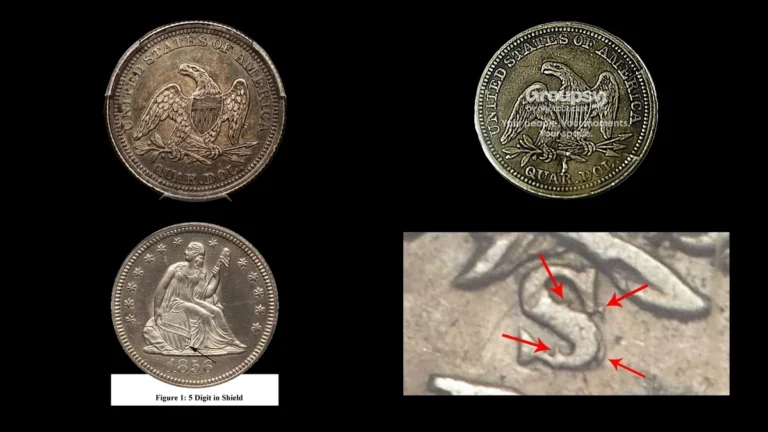
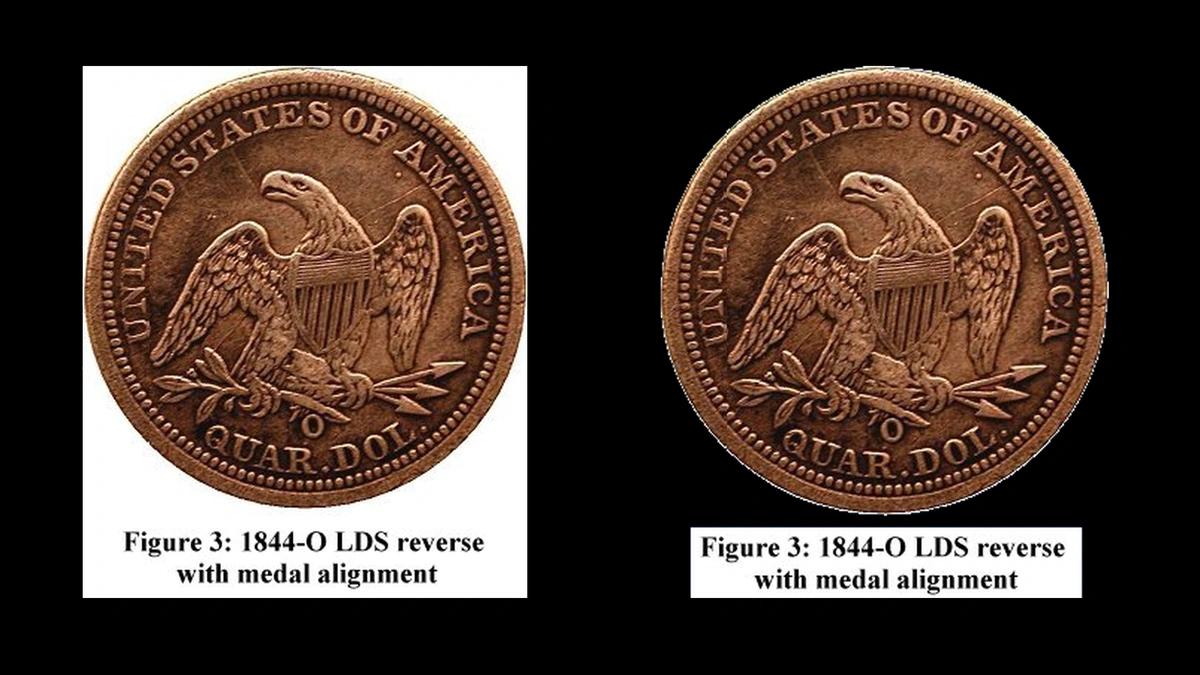
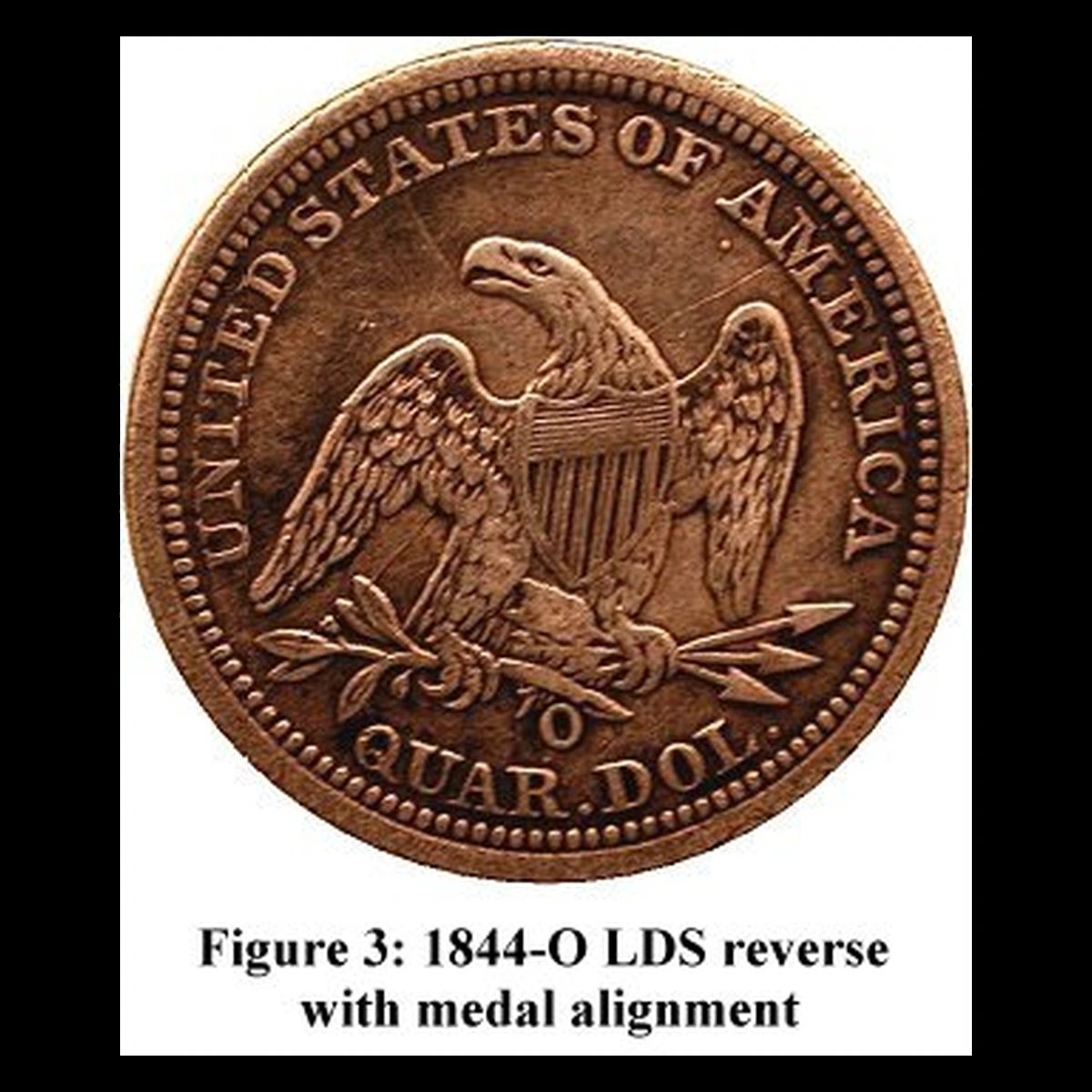
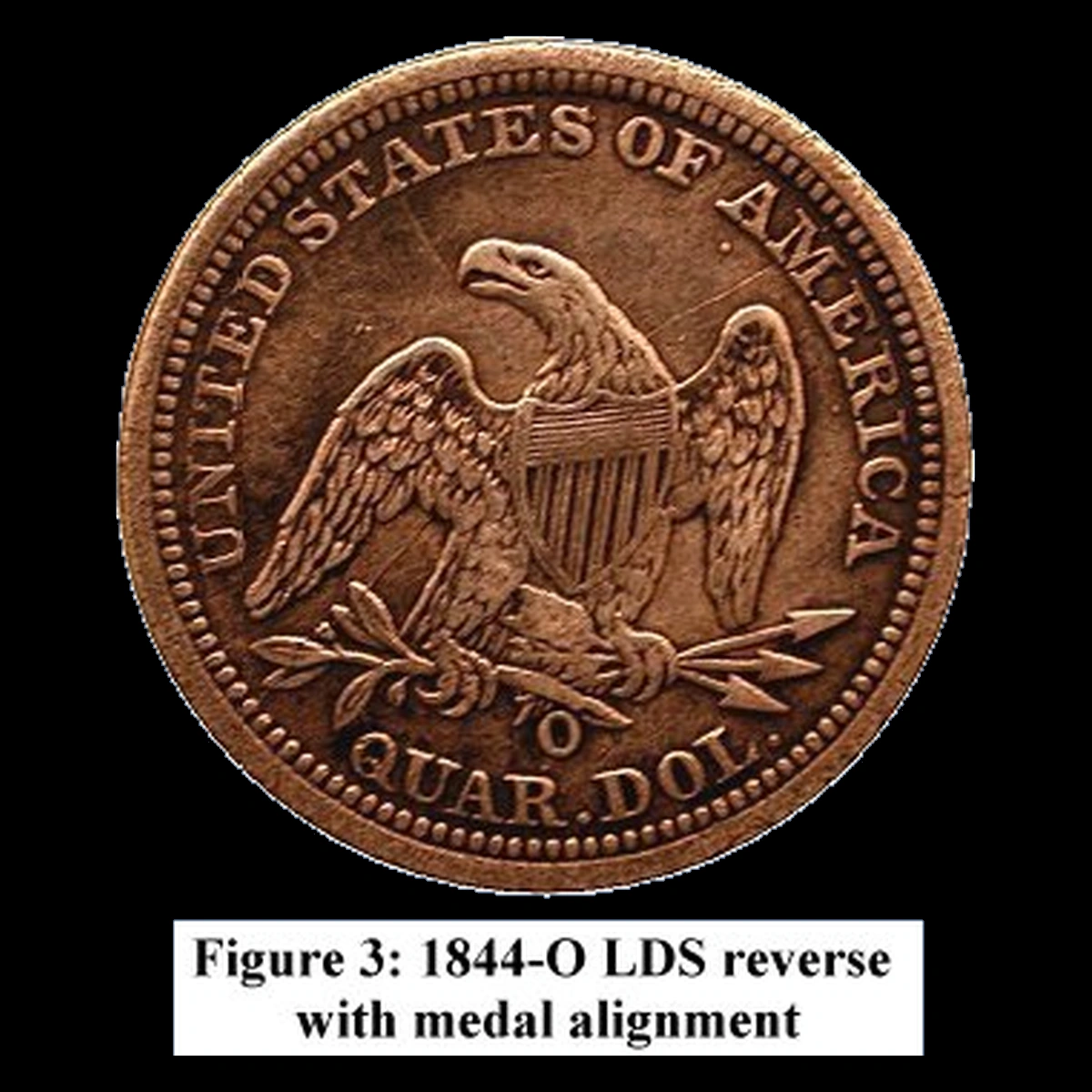
Some 1844-O quarters were struck with a reverse die previously used for large-O quarters in 1843. Cracks in that tool left raised silver lines across the newer coins.
Earlier examples can show the first crack with normal alignment. Later examples have two cracks, including the studied coins with a back rotated by a half-turn.
How to Identify
Turn the reverse under low side lighting to check that the suspected line is raised. A cut through the silver is a scratch, even if it follows a long path.
Compare the route and nearby features with the 1844 coins in the reused-die study. That page also shows an 1843 example, which should remain separate from the 1844 match.
Keep the eagle’s inner wing area, the O’s position, and nearby raised lumps in the photograph. A large O alone does not identify this die because other 1844-O quarters also have a large mintmark.
After the reverse details agree, check its alignment with the front. The cracks do not automatically mean the coin has the full rotation described next.
What It’s Worth
$100–$2,500 is the estimated range for circulated examples with clear reused-die cracks. This includes the value of the underlying 1844-O quarter.
Visible crack paths and attractive surfaces help show the variety. Do not assign a separate charge for each line or add this range to the rotation range on the same coin.
3. 1844 Quarter An Upside-Down Eagle after a Flip: 180-Degree Rotation Error
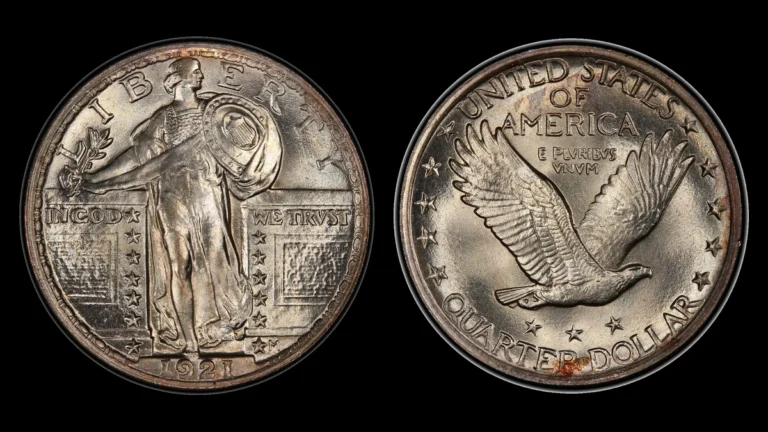
On the reported rotated 1844-O variety, a top-to-bottom flip leaves the eagle upside down. The reverse is a full half-turn from normal American coin alignment.
The reused reverse die was installed or moved into this position during production. Other coins made with the same tool have normal alignment.
The studied rotated pieces also show the later reverse cracks. Rotation describes the direction of the design, while those cracks describe the tool’s condition.
How to Identify
Hold Liberty upright at the coin’s left and right edges. Turn it top to bottom without a sideways twist and observe where the eagle ends up.
Repeat the movement slowly to confirm the half-turn. As a cross-check, this rotated variety should show an upright eagle after a left-to-right turn.
Then match the O’s position and reverse marks to an authenticated 1844-O example. A half-turn by itself does not establish which reverse die made the coin.
A holder can stay closed during this check. Photograph both sides with a fixed reference rather than rotating each image to look upright.
What It’s Worth
$150–$4,000 is the estimated whole-coin range for a genuine 180-degree example. Wear, original surfaces, and a clear match to the reused reverse all affect the comparison.
An LSCC newsletter published in January 2012 reported a collector paying $200 for one. That was a reported private transaction, not a graded auction result.
If the same coin also has the die cracks, assess the combination once. Clear orientation photographs help a buyer understand what makes it different.
Conclusion
On a Philadelphia quarter, concentrate on the small strokes above the date and the matching shield details. For New Orleans, identify the reverse crack pattern before testing whether the eagle is rotated.
The cracks and half-turn can belong to one coin, so their estimated values should not be added together. Keep the date, mintmark, and both complete faces in your photographs to make each comparison useful.