Rare 1866 Dime Errors (List & Pictures)
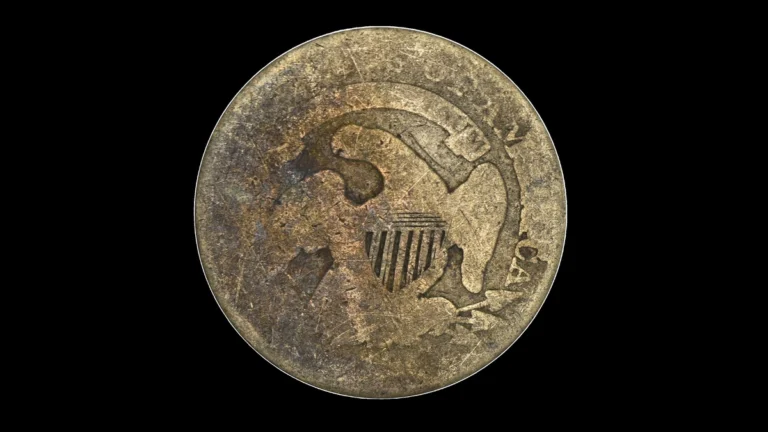
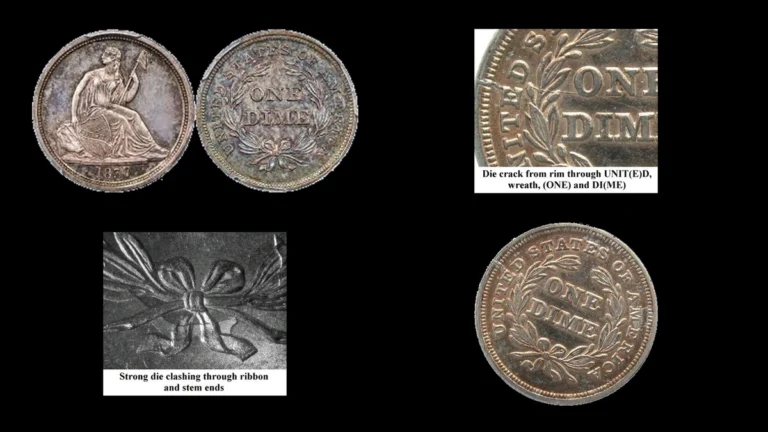
Date placement can be as useful as an unusual line when examining 1866 dime errors. Estimated whole-coin values span $150–$25,000, including an unworn 1866-S with two obverse cracks that sold for $23,575 in January 2004.
Work from the front’s date and crack lines to the reverse’s extra shapes and doubled lettering.
| Visible clue | Feature to investigate | Estimated whole-coin value |
|---|---|---|
| Raised lines through Liberty or below the date | 1866-S obverse die cracks | $150–$25,000 |
| Unwanted shapes beside E in DIME | F-102b reverse die clash | $1,000–$8,000 |
| A slight extra outline on M | F-101 Proof doubled die reverse | $600–$5,000 |
1. 1866 Dime Lines cross Liberty and the date: Obverse Die Cracks Error
One documented 1866-S pattern includes a line from Liberty’s ear through her body toward the banner across the shield. A second line follows the bottom of the date and reaches toward the right rim.
The raised lines record narrow openings in the obverse die, the steel tool that stamped the front. Coin metal entered those openings under pressure, leaving the cracks visible on the finished dime.
The tool’s condition changed as it continued striking coins. An earlier example may show less developed cracking, so the two complete lines need not appear together on every coin from that die.
How to Identify
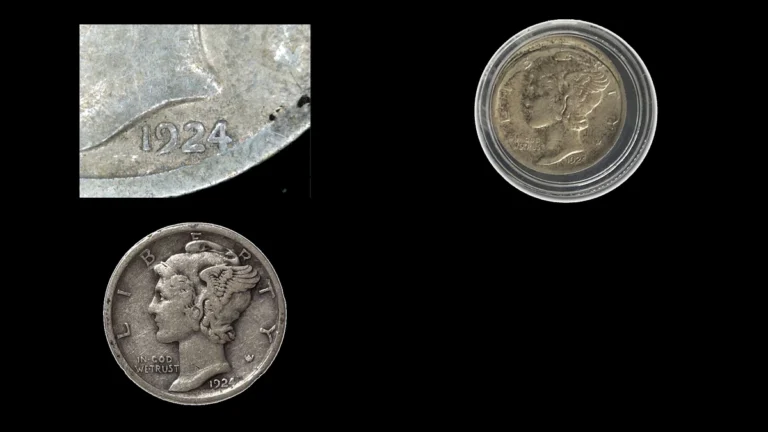
Locate the date before trying to follow a faint line through Liberty’s clothing. A high date with a pronounced downward slope supports identification of the San Francisco issue discussed here.
Inspect the reverse for the S mintmark, which can be weak or worn away. A faint letter is not evidence of a missing-mintmark error, and scraping the area will not improve the identification.
Under a 10× magnifier, distinguish the line through Liberty from the normal folds of her clothing. Change the light angle to check that the suspected crack rises above the surface rather than cutting into it.
Repeat that examination along the date’s lower edge and toward the right rim. Match the route and date arrangement instead of requiring a later-stage crack pattern on a possible earlier strike.
For these 90% silver dimes, original specifications are about 2.49 grams and 17.9 millimeters, with a grooved edge. If the coin is safely accessible, measurements and an edge inspection can support a general examination, allowing for wear.
What It’s Worth
The estimated whole-coin range is $150–$25,000. Scarcity of the 1866-S issue and the coin’s preservation account for much of this wide spread.
An NGC MS66 example displaying both obverse cracks realized $23,575 in January 2004. MS66 describes an unworn coin with few marks, a very different condition level from an ordinary circulated example.
Worn 1866-S dimes brought $630 in June 2025 at NGC VF35 and $552 in September 2025 at PCGS VF20 with CAC approval. These results illustrate condition differences; they do not measure separate payments for each crack.
2. 1866 Dime Extra shapes surround DIME: Reverse Die Clash Error
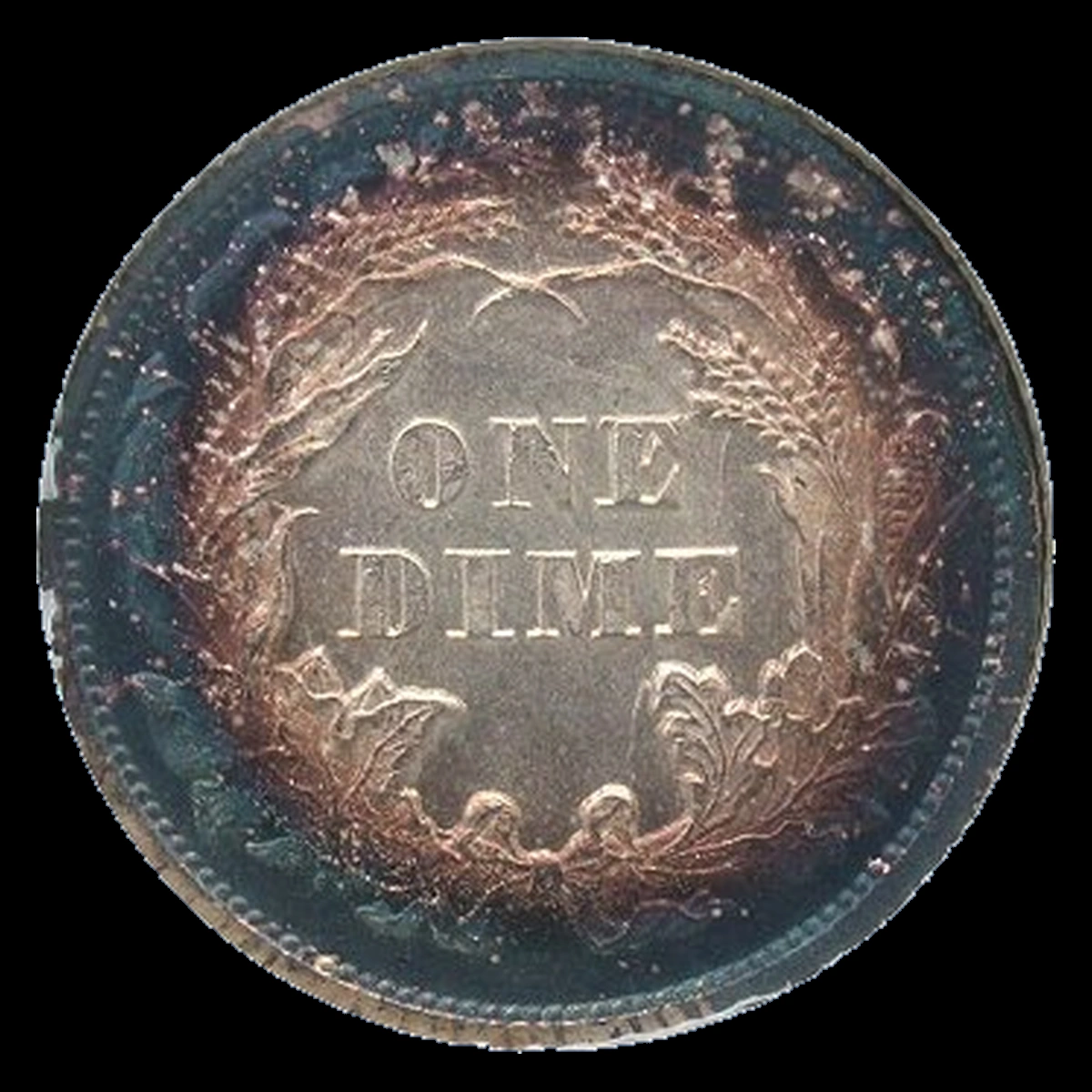
On F-102b, the most noticeable unwanted design traces lie beside the E in DIME. Additional traces occur in the opening between the wreath’s upper ends and near its lower right oak leaves.
Those locations form a useful pattern rather than a collection of unrelated scratches. They resulted from a die clash, when the two dies met without a blank between them and picked up parts of the opposite design.
The damaged tools then transferred those traces to later coins. A coin can consequently carry several clash marks while retaining its normal central design.
How to Identify
Place the coin beside Fortin’s F-102b photographs with both reverses upright. Compare the shape beside E first, followed by the upper wreath opening and the lower right leaves.
A random incised line does not become a clash merely because it occupies the same general area. The form and positions should agree with transferred design features in the reference.
Turn the coin over to check the upward-sloping date associated with this variety. That pairing helps separate the regular-strike F-102b from the differently arranged Proof and San Francisco coins discussed elsewhere here.
What It’s Worth
Estimated values run $1,000–$8,000 for the whole coin. A PCGS MS66 F-102b dime sold for $3,172.50 in March 2016.
This is a regular strike, meaning a coin produced for everyday use, from the scarce Philadelphia issue. Its preservation and variety should be compared with similar regular strikes before applying a price.
A Proof sale is a different kind of evidence even when the date is identical. In particular, the $2,640 Proof result below does not establish a value for this reverse clash.
3. 1866 Dime The M has a small extra outline: Proof Doubled Die Reverse Error
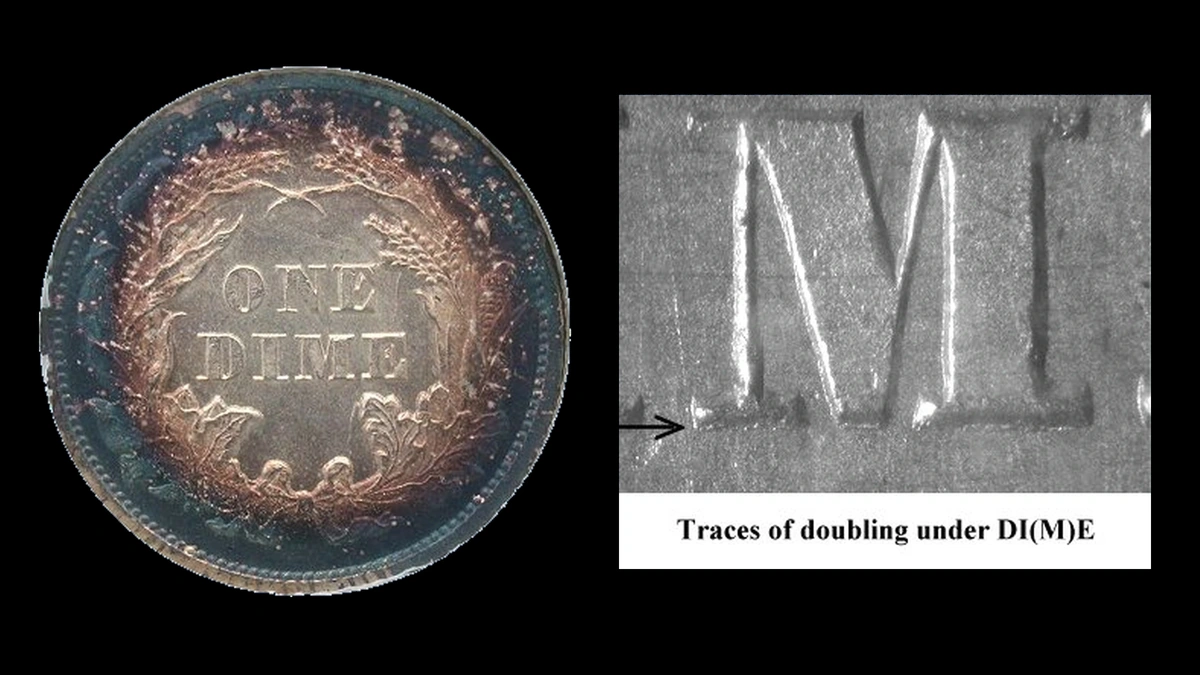
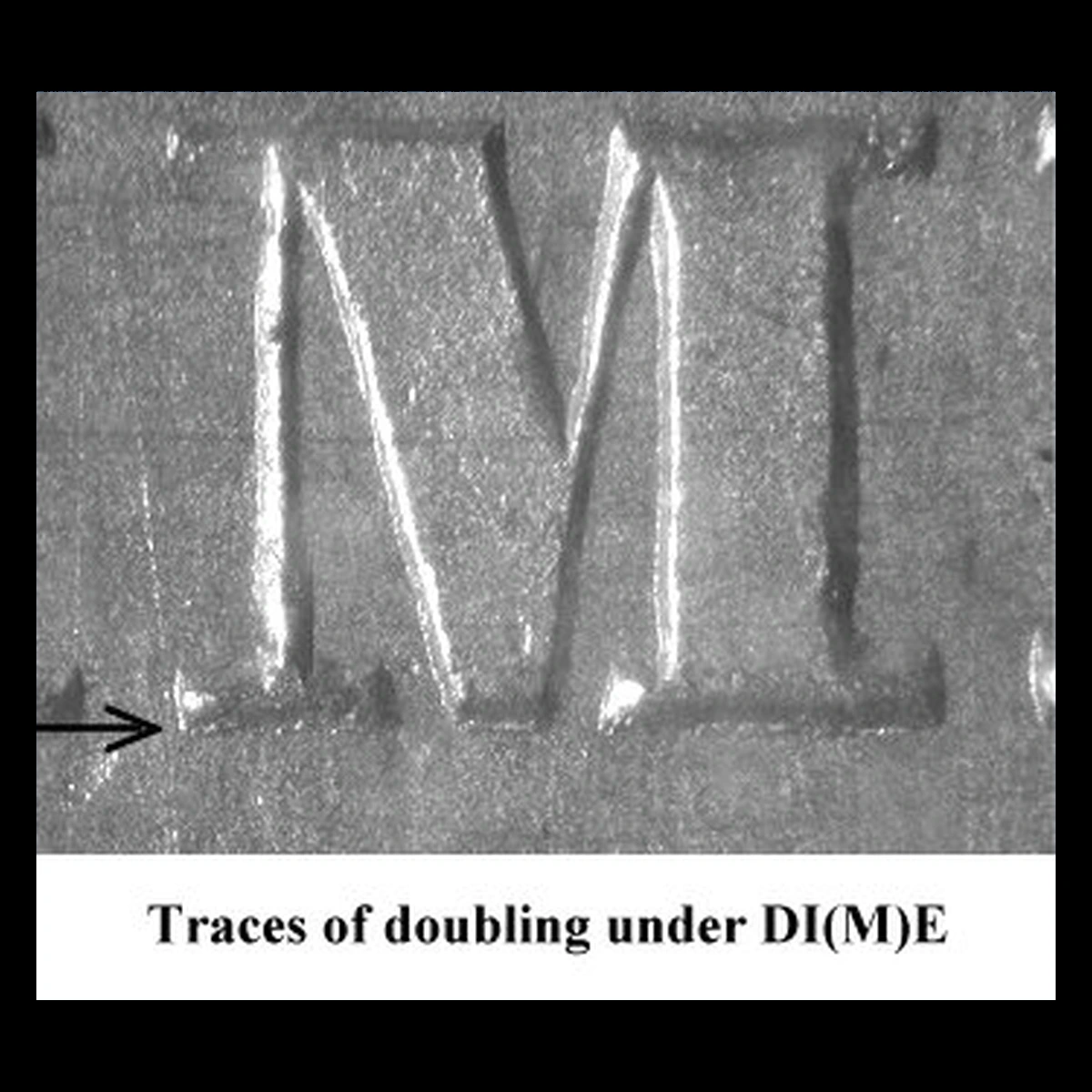
The F-101 Proof reverse carries slight doubling on the M in DIME. The feature belongs to the die’s design, so a genuine match involves a particular raised outline rather than any M that happens to look thick.
A Proof is a coin specially manufactured for collectors, usually with reflective fields. Those reflections can make this subtle feature difficult to judge from a single photograph.
How to Identify
Examine M while moving the light source and keeping the coin steady. An actual secondary outline remains part of the letter as reflections shift across the surface.
Use a clear F-101 image and a normal letter at comparable magnification to judge the shape. A flat shelf or damage around the letter is not enough to identify a doubled die.
The matching obverse provides a second check: its medium-sized date slopes gently downward. A shiny coin with a different date arrangement does not satisfy that combination.
What It’s Worth
The supplied estimate is $600–$5,000 for the whole Proof. Surface preservation and condition can matter much more than the small doubled detail.
An NGC PR66★ Cameo 1866 Proof sold for $2,640 in November 2025, while a PR67 Cameo example brought $3,782 in January 2026. These are high Proof grades, and Cameo describes frosted design elements against reflective fields.
Neither listing specifically attributed the doubled M. Treat those results as general Proof comparisons, not confirmed auction records for the F-101 doubling.
Conclusion
Each feature needs its own combination of location, shape, and date placement. An upward date slope accompanies the clash variety, a gentle downward slope helps with the Proof, and the high, strongly sloping date assists when an S is faint.
After identifying the feature, compare like coins by mint, manufacturing method, and condition. The $150–$25,000 span values complete dimes rather than isolated marks.