Rare 1910 Dime Errors (List & Pictures)
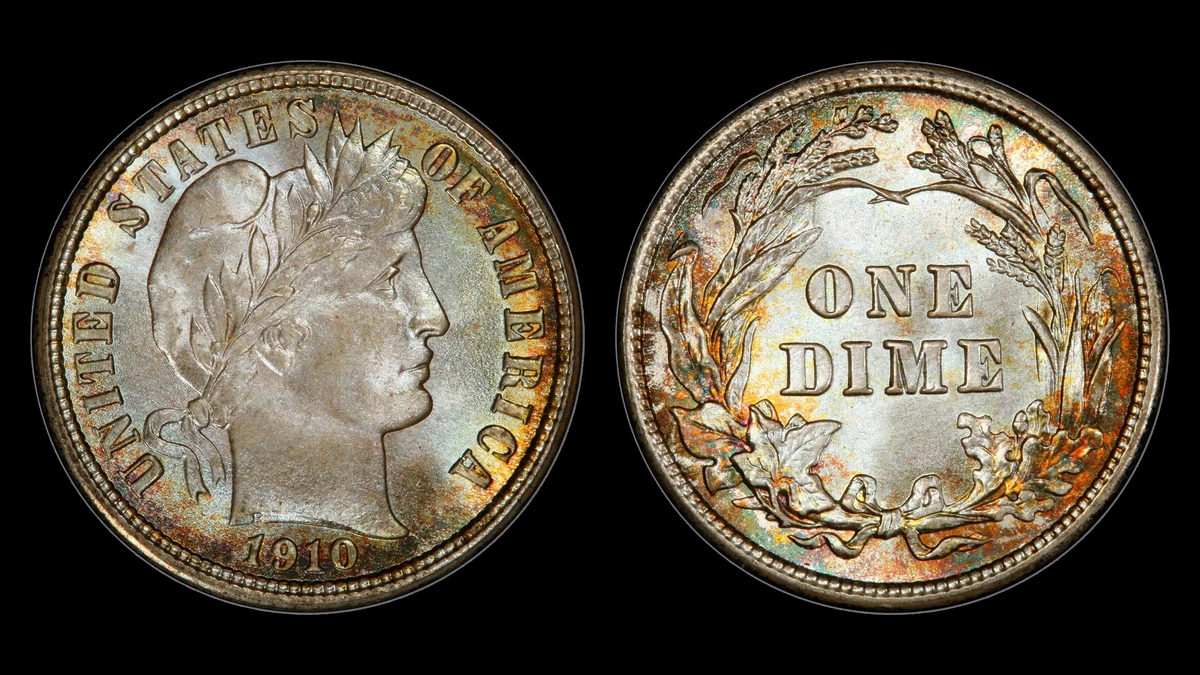
A remarkable MS68+ 1910 dime reached $23,500 in December 2014, without an identified mint error accounting for that price. The reported 1910 dime errors discussed here have a much broader estimated range of $50–$2,000.
Check the position of the whole design before studying the tiny lettering. A regular Barber dime weighs 2.50 grams, measures 17.90 millimeters, and has a reeded edge; any mintmark sits below the reverse wreath.
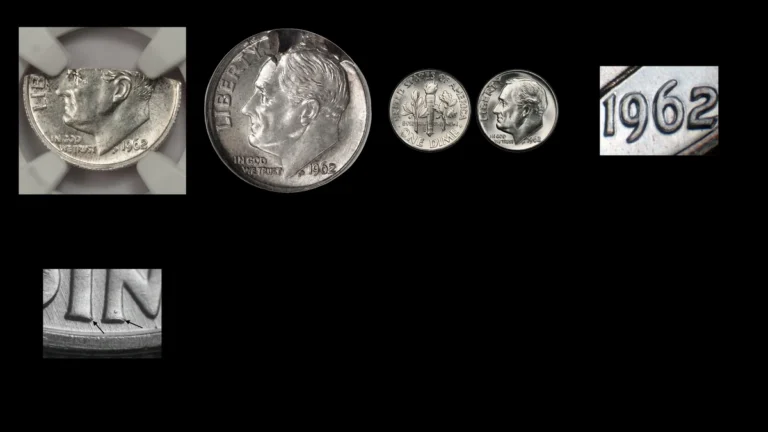
1910 Dime A design displaced toward the edge: off-center strike Error
An off-center dime has more than an uneven border. Part of the design misses the blank altogether, leaving a plain area on the opposite side.
This can happen when the blank is incorrectly positioned as the dies strike. Both faces participate in that misplaced strike, so the reverse is as important as Liberty’s portrait.
How to Identify
Look for a clear combination of missing design at one edge and original unstruck metal at the other. A photograph cropped close to the portrait may hide the very area needed to make this judgment.
Turn the dime over and check whether the displacement is consistent with what you saw on the front. A wide border on just one face may instead reflect a misaligned die, which is a different problem.
The complete date should read 1910 if you want to identify the coin as this year. A partial 191 followed by an absent last digit leaves several possibilities, even if a seller supplies a confident date.
Also inspect the outline for cuts or metal pushed over after minting. Later damage can remove part of a normal design, but it does not create the untouched blank area of a genuine off-center strike.
What It’s Worth
An estimated $50–$1,500 covers reported 1910 off-center dimes, depending on displacement, readable date, surface condition, and authentication. The supplied evidence does not establish a particular mint or a confirmed 1910 auction price.
A different-year Barber dime provides a limited comparison: a 1902 off-center example graded ANACS AU50 brought $561.20 at Heritage in June 2026. AU50 indicates wear, and that sale should not be presented as a 1910 result.
A sharply displaced coin with its date still visible can be easier to recognize and collect than one with an uncertain date. The stated upper estimate nevertheless remains an estimate, rather than a documented 1910 record.
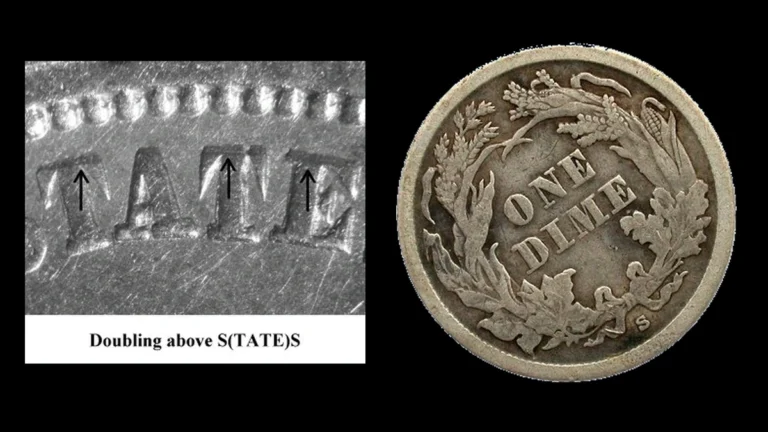
1910 Dime Repeated details on the front: reported doubled die obverse Error
The front of the coin is its obverse, and a doubled die carries a repeated part of the design in the die itself. Coins struck from it can show the same repeated detail in the same places.
A 1910 dime guide reports this category, but does not identify a numbered variety or a particular mint. That limits how precisely a collector can match a suspected example from this information alone.
How to Identify
Examine LIBERTY on the headband, the date, and the lettering around the front. These are inspection areas, not a claim that every one of them is doubled on a confirmed 1910 variety.
Look for a second rounded contour or a notch where strokes meet, and follow it across nearby details. Consistent repetition deserves closer study than one thick or misshapen letter.
Flat, shelf-like edges may come from movement during striking rather than a doubled die. Reflections can also make a bright letter appear to have a second edge, so change the light before deciding.
Record the mintmark and the coin’s finish as well as the suspected doubling. A Proof made for collectors should be compared with appropriate Proof evidence, not automatically with an ordinary circulation strike.
What It’s Worth
The reported estimated range is $150–$2,000, but no certified 1910 doubled-die auction sale is supplied to confirm it. Treat the figure as a guide range requiring an established attribution.
The $23,500 MS68+ sale mentioned above illustrates the price of exceptional preservation. It supplies no evidence that a suspected doubled letter adds thousands of dollars to a worn dime.
Before attaching a premium, obtain clear detail photographs and a reliable identification of the actual variety. Without that match, the sounder starting point is the value of the coin’s date, mint, and condition.
Conclusion
For a possible off-center strike, the relationship between both faces and the plain metal is the useful evidence. For suspected doubling, the repeated letter contours need a much closer examination and a firmer variety match.
Keep the reported price ranges separate from documented sales. The supplied auction comparisons show what other coins achieved; they do not establish a record for either reported 1910 error.