Rare 1868 Half Dollar Errors (List & Pictures)
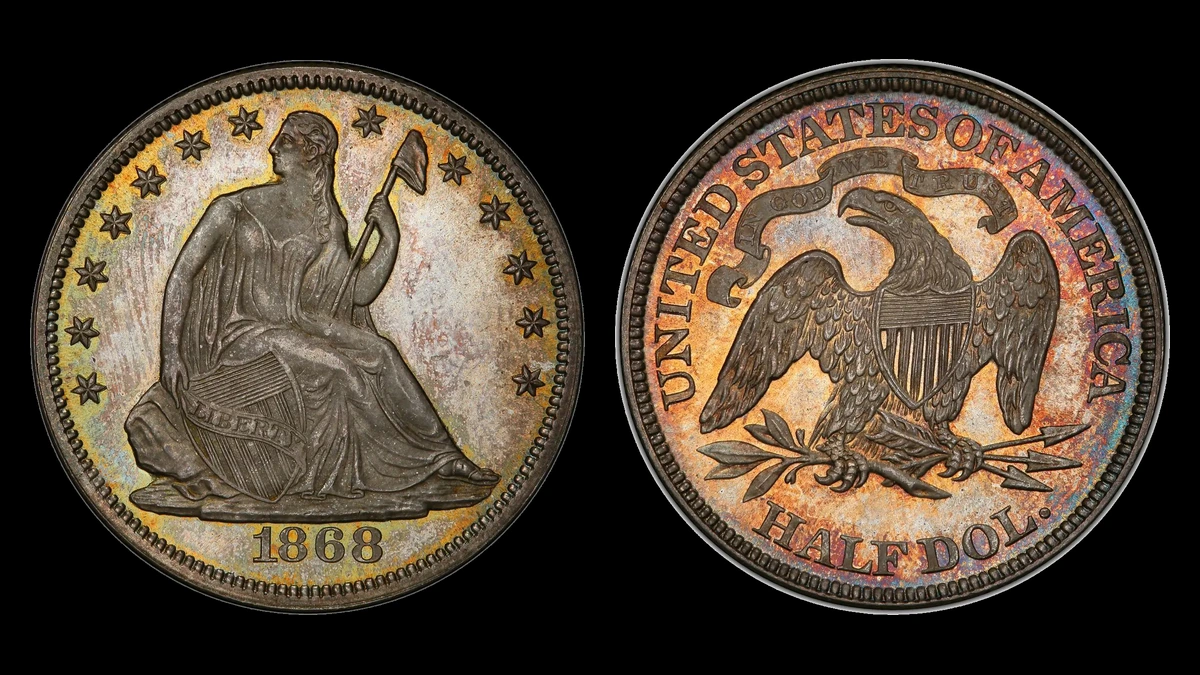
Location helps separate 1868 half dollar errors: extra strokes beside a numeral differ from stray digits in the border, and faint cloth differs from missing metal. The worn-coin estimates here span $250–$1,200.
The highest supplied auction comparison is $930 for an ordinary Philadelphia AU53 in September 2025, not a confirmed error sale. Inspect the outline first, then work through the date, elbow, and any raised lines.
| Clue | Inspection location | Category | Estimated value |
|---|---|---|---|
| A straight missing section | Coin edge and adjacent design | Reported straight clip | $300–$1,200 |
| Additional strokes beside numerals | Philadelphia date | Repunched date | $300–$1,200 |
| Numeral pieces outside normal date | San Francisco lower border teeth | Misplaced date | $250–$800 |
| Absent or faint folds | Beneath Liberty’s elbow | Missing drapery detail | $250–$900 |
| Raised lines across design | San Francisco coin surfaces | Die cracks | $250–$1,000 |
S below the eagle identifies San Francisco; Philadelphia has no mintmark. A normal 1868 half dollar weighs 12.44 grams before wear and measures about 30.6 mm across, with a grooved edge.
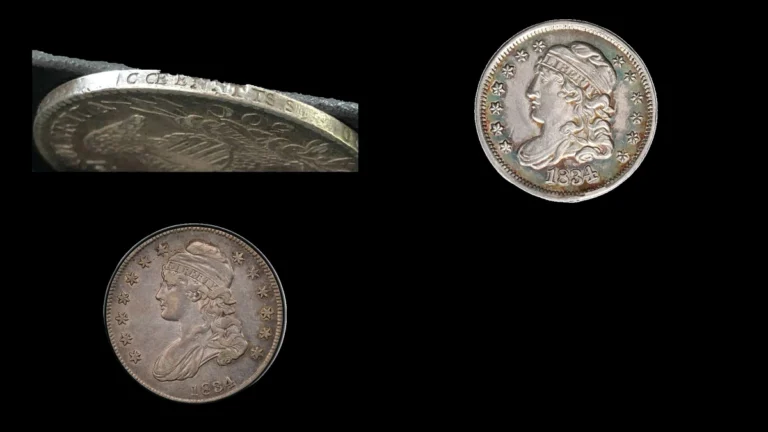
1. 1868 Half Dollar A Straight Section Missing From the Edge: Straight Clip Error
A seller reports an 1868-S with a straight clip, without establishing a certified grade, authentication, or the location of the gap. The coin itself must provide those details.
A blank punched beyond the edge of a metal strip can be incomplete before striking. Its straight missing portion should therefore fit the way the rim and design formed afterward.
How to Identify
View the boundary from both faces and directly along the edge. A straight cut through a finished half can be concealed in a face-only picture.
Inspect for saw or file marks, sharp burrs, and crushed design beside the gap. A manufacturing clip needs evidence that the metal was absent when the coin received its design.
Weakness at the opposite rim can support that explanation, though it does not prove a clip alone. Weigh the coin and compare the loss with the amount of missing silver.
An intact span can still measure the normal diameter. Record the complete outline and remaining edge grooves instead of relying on one width reading.
What It’s Worth
Estimated range: $300–$1,200 for a verified worn 1868-S straight clip. The estimate is not a recorded sale of the seller’s reported example.
Ordinary San Francisco comparisons include $329 for PCGS VF35 at Heritage in February 2026 and $720 for NGC AU58 in April 2023. Their different wear levels provide context without establishing a clip premium.
A later cut would remove the basis for treating the gap as a mint error. Authentication of the edge comes before applying the estimated allowance.
2. 1868 Half Dollar Extra Numeral Edges at the Date: Repunched Date Error
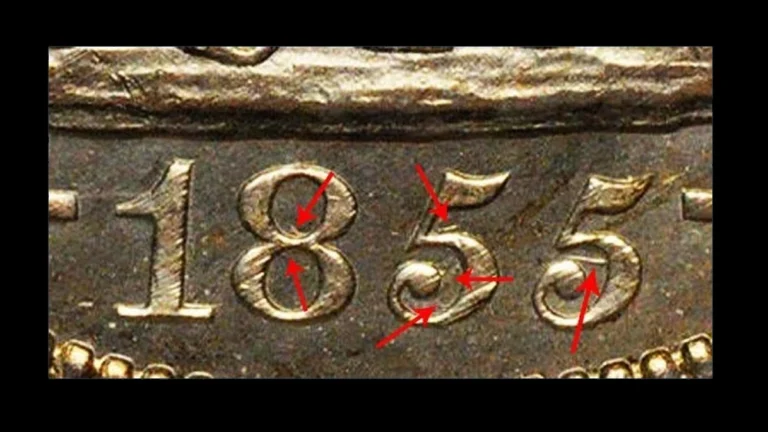
For a Philadelphia coin, examine the complete 1868 before choosing one mark to enlarge. Reported repunched dates retain parts of an earlier date impression close to the final numerals.
The date punch was applied to the die, or steel stamping tool, in slightly displaced positions. The uncovered pieces of the earlier impression became raised strokes on coins.
How to Identify
Check the spacing and shapes of all four numbers. Several matching extra strokes are more persuasive than general thickness on one digit.
Use a documented Philadelphia reference and confirm that the coin has no S. Keep the background around the date visible so nicks or displaced metal can be assessed.
Flat shelves may come from movement during striking, while scratches cut into the silver. A genuine earlier numeral fragment needs recognizable shape and the proper position under different lighting angles.
What It’s Worth
Estimated range: $300–$1,200 from worn examples through coins with little wear. Clear repeated numerals support attribution but do not eliminate condition differences.
Heritage sold ordinary Philadelphia examples at $480 for ANACS XF45 in December 2025 and $930 for PCGS AU53 in September 2025. Neither supplied transaction is identified as a repunched-date sale.
The figures are condition benchmarks for the complete date and mint. The estimate is not a range of recorded sales for this specific variety.
3. 1868 Half Dollar A Digit Hidden Among Border Teeth: Misplaced Date Error
On San Francisco examples, move below the proper date into the small border teeth. An extra raised numeral fragment can appear there, away from the intended digit positions.
The date punch reached the wrong area of the die before the final date was placed correctly. More than one 1868-S variety exists, so the precise fragment arrangement varies.
How to Identify
Photograph the normal date and lower border together. The fragment’s relationship to the correctly placed numerals is central to the match.
Compare with a confirmed example of the same San Francisco variety. Do not assume the stray piece must lie beneath the same digit on every known 1868-S.
A battered border tooth, cut, or corrosion patch can suggest a number in a close crop. Look for the raised shape of a specific numeral fragment rather than any unusual bump.
What It’s Worth
Estimated range: $250–$800 for worn coins with an identifiable misplaced digit. Less wear and clearer fragments can improve the comparison.
A PCGS VF30 WB-1 sold for $312 at Stack’s Bowers on March 24, 2020. That is a recorded sale of an identified misplaced-date variety.
The price values one complete moderately worn coin. It is not a separate amount to multiply by the number of visible fragments.
4. 1868 Half Dollar Folds Missing Under the Elbow: Missing Drapery Detail Error
Below Liberty’s elbow, some reported coins have faint or absent cloth folds. A published Seated half variety list uses the name No Drapery for Philadelphia and San Francisco examples of 1868.
The label describes an appearance without establishing one cause. It is also separate from the original 1839 design called No Drapery.
Die polishing, weak striking, circulation wear, and later removal can reduce cloth detail in different ways. The surrounding design helps assess an individual coin.
How to Identify
Choose a normal same-mint coin with similar wear for comparison. A heavily worn elbow viewed beside an unworn reference can create a false impression of missing design.
Look for comparable preservation beside the absent folds. Inspect the area for scraping lines or a hollowed surface that may indicate detail was removed later.
Keep both sides in the record, including the motto and mintmark area. An isolated elbow close-up cannot establish the complete issue or rule out general wear.
What It’s Worth
Estimated range: $250–$900 for worn examples with an identifiable missing-drapery feature. The source does not supply a confirmed No Drapery transaction.
Ordinary Philadelphia XF40 and AU50 coins sold for $300 and $504 at Heritage in April 2025. They provide lightly worn through nearly unworn condition comparisons, without establishing this variety.
5. 1868 Half Dollar Fine Ridges Following the Design: Die Cracks Error
Raised routes elsewhere on an S-mint coin may record damage in its dies. Bill Bugert describes badly cracked tools used for the 1868 San Francisco issue.
Silver pressed into openings in the steel and remained as ridges on the coin. Different tools developed different routes, so there is no single universal 1868-S crack map.
How to Identify
Record the whole path with nearby design landmarks visible. Avoid mentally joining disconnected scratches or stains into a crack that is not actually continuous.
A crack ridge and a scratch can cross on the same coin. Move the light to distinguish the raised feature from the channel cut into the surface.
Verify the S before matching a route to a specialist reference. A full-face photograph and several angled close-ups are more useful than one short bright line.
What It’s Worth
Estimated range: $250–$1,000 for worn examples, depending on preservation and crack visibility. No supplied sale identifies the exact crack pattern under discussion.
The ordinary San Francisco VF35 at $329 and AU58 at $720 noted earlier supply general condition context. Bold die damage may interest specialists, but a faint line does not move a heavily worn coin into the best-preserved group.
Conclusion
Follow the physical location of the clue: outline, date, lower border, elbow, or raised surface route. This keeps adjacent but different features from being assigned the same explanation.
The $250–$1,200 estimates cover several grades and levels of evidence. The $312 misplaced-date record is variety-specific, while the larger ordinary-coin comparisons and the reported straight clip require their own limits when used for valuation.