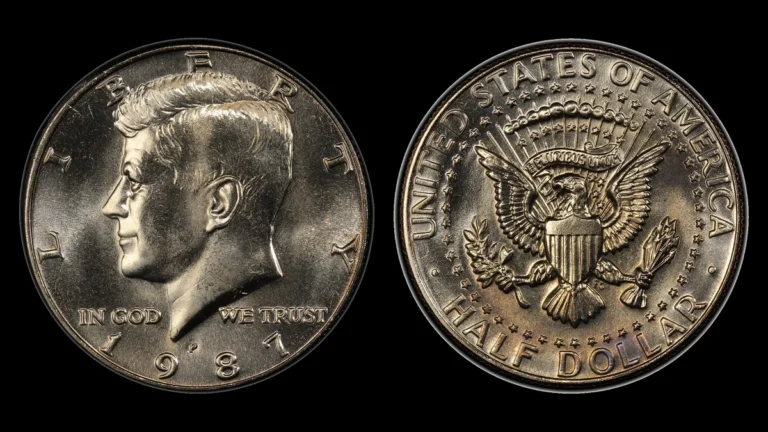
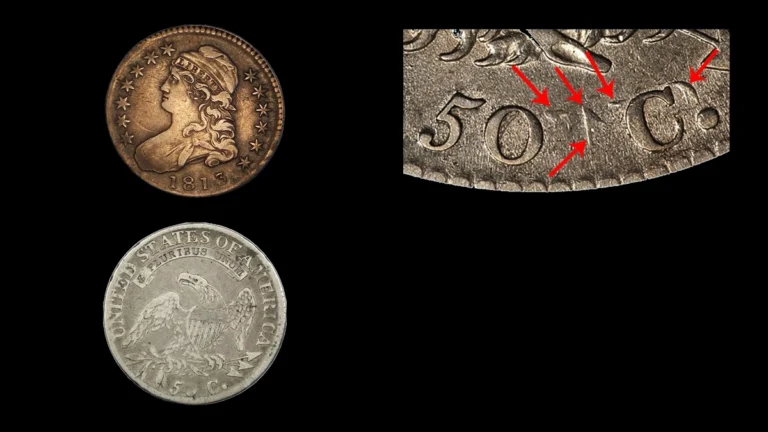
Rare 1976 Half Dollar Errors (List & Pictures)
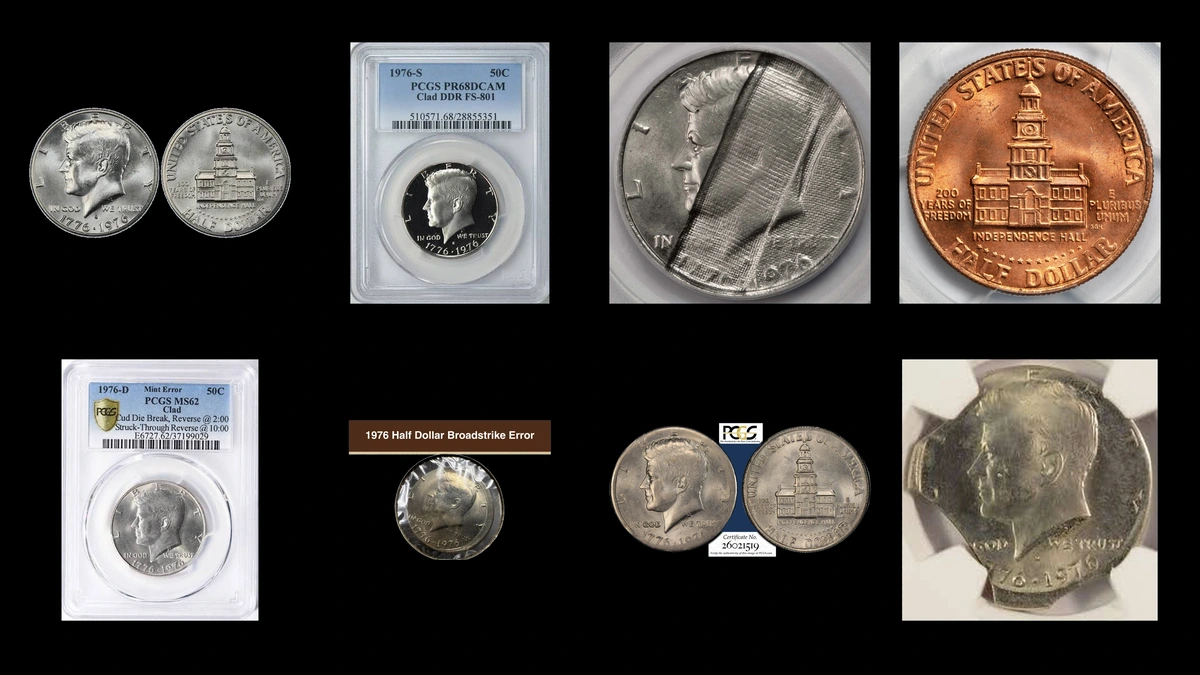
The dual date and Independence Hall design make 1976 half dollar errors easy to recognize even when part of the coin is missing. Estimated values span $25–$18,000, with a double-struck Proof on a cent blank bringing $5,280 in 2023; a different-year magnetic 1968-S example provides a higher $9,000 comparison for unusual metal errors.
Begin with the lettering and surfaces, follow the rim around both sides, then investigate unusual size, weight, or overlapping designs.
| Visible clue | Possibility | Estimated range |
|---|---|---|
| Extra letter outlines | Doubled dies | $25–$2,000 |
| Texture, peeling, or raised rim patch | Strike-through, layer trouble, cud | $40–$1,000 |
| Wide, stepped, or clipped edge | Broadstrike, partial collar, clip | $30–$1,200 |
| Missing or overlapping design | Weak strike, off-center strike, indent, multiple strike | $150–$5,500 |
| Backward design or cup shape | Brockage or die cap | $150–$7,500 |
| Wrong size, metal, or earlier coin underneath | Wrong blank or wrong object | $800–$18,000 |
A normal clad half weighs 11.34 grams; the 40% silver version weighs 11.50 grams, and both measure about 30.61 millimeters across. Philadelphia pieces normally have no mintmark, Denver uses D, and San Francisco uses S on several products, so an S alone does not establish a Proof finish.
1. 1976 Half Dollar Extra Outlines in the Motto: Doubled Die Obverse Error
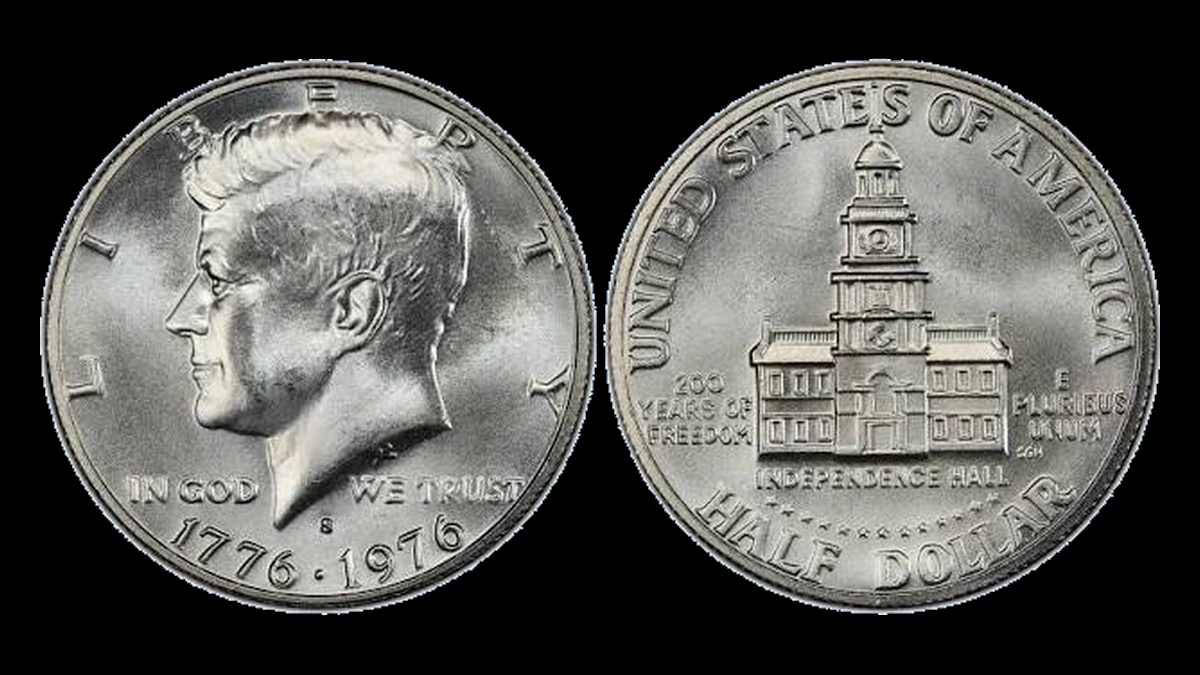
On the silver San Francisco FS-101 variety, examine WE TRUST, TY in LIBERTY, and the dual date for distinct extra outlines. This is a regular-strike variety created in the die, not a description of every doubled-looking 1976-S Proof.
How to Identify
A line above Y and a small lump near T can support an FS-101 match after the main lettering agrees. Other reported patterns occur on Proofs and Philadelphia or Denver coins; match the complete pattern and finish instead of treating flat shelves as the same variety.
What It’s Worth
Minor attributed forms are estimated at $25–$200, with stronger varieties around $100–$1,500. The GreatCollections FS-101 archive includes silver examples graded MS65–MS67 selling for $39–$405, showing that the variety name alone does not command the top estimate.
2. 1976 Half Dollar Separated Reverse Letters: Doubled Die Reverse Error
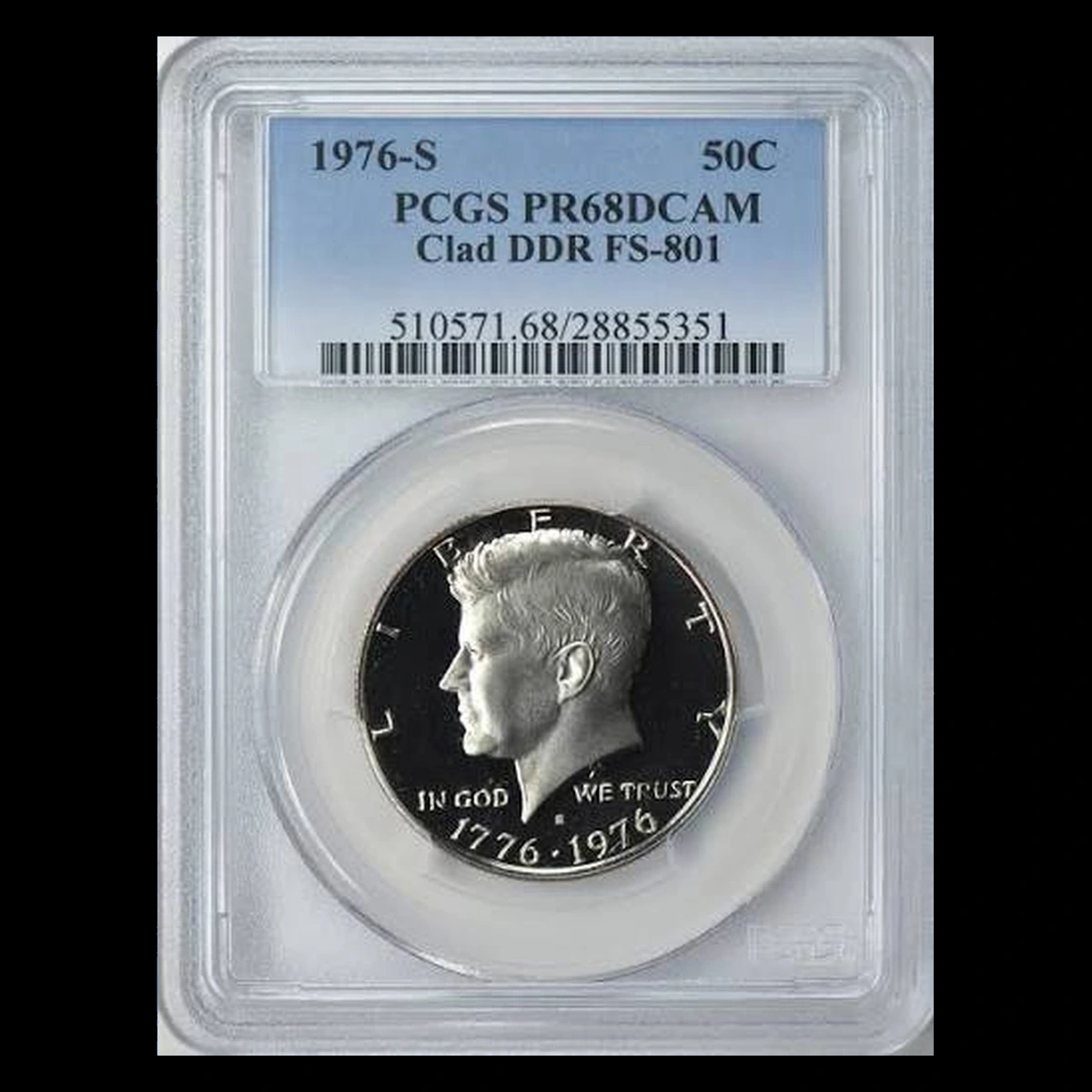
Turn a clad San Francisco Proof toward the light and inspect E PLURIBUS UNUM and the designer’s SGH initials. The FS-801 doubled die produces separated details, with additional clues among the stars and other reverse lettering.
How to Identify
Thick lettering in 200 YEARS OF FREEDOM is less persuasive than clearly divided letter edges. Other reported Proof doubling includes a silver example and pieces of unspecified composition, so do not assign every similar-looking coin to the clad FS-801 variety.
What It’s Worth
FS-801 Proofs are estimated at $400–$2,000; lesser attributed patterns fall around $25–$300. Reported PR66 sales of about $881 in September 2016 and $1,528 in November 2015 illustrate the spread even within one numerical grade.
3. 1976 Half Dollar Fabric Texture or Fine Grooves: Struck Through Material Error
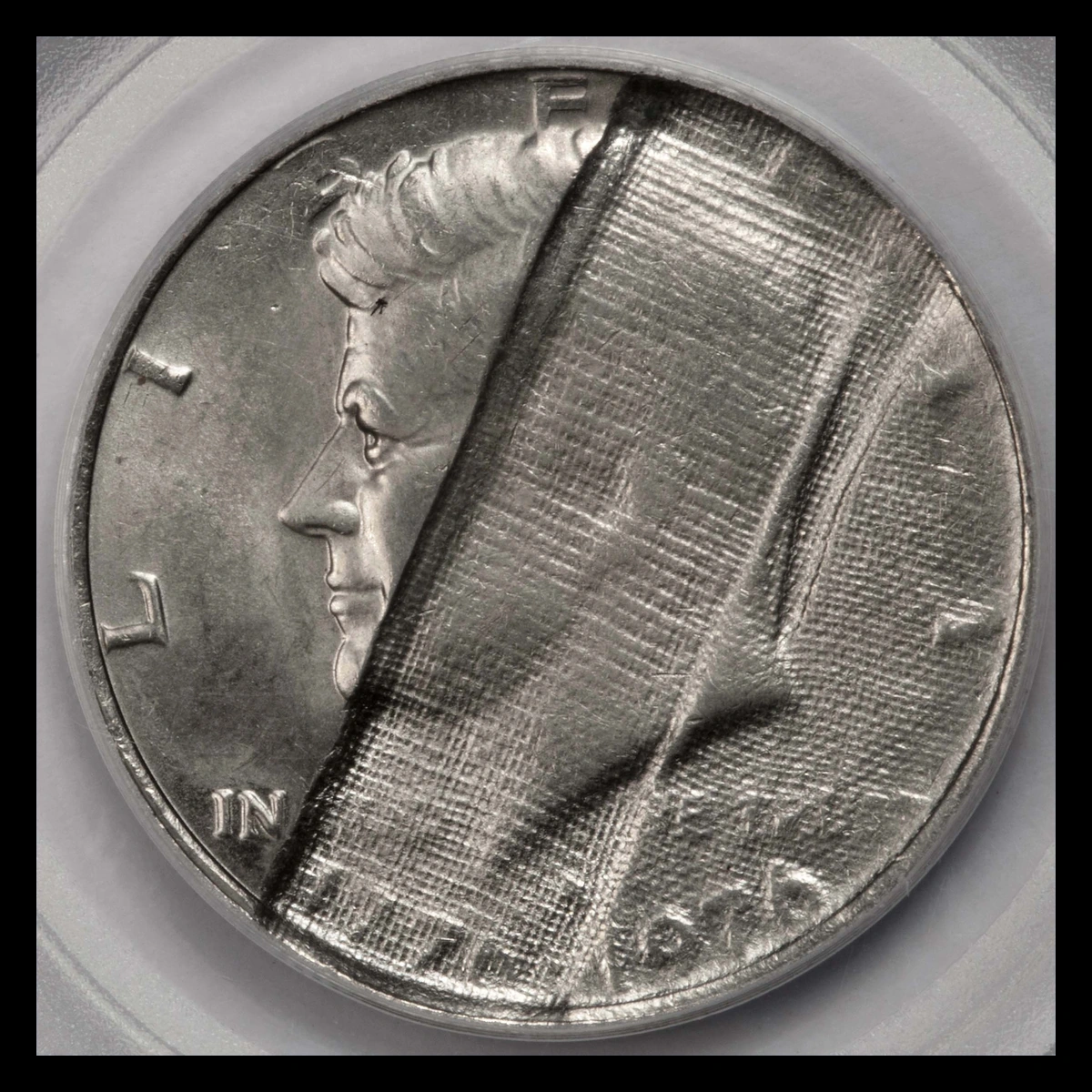
A Denver example graded PCGS MS65 has a woven texture over roughly 60% of its front. Cloth between the die and blank interrupted the design while leaving its own surface pattern.
Separate reports describe an MS63 Philadelphia coin struck through unidentified material and a silver San Francisco Proof with thread impressions. Those observations do not establish cloth as the obstruction on all three coins.
How to Identify
Look for repeated woven lines within the affected area, rather than calling any shallow patch a fabric impression. A thread impression is recessed; a die crack normally leaves a raised line.
What It’s Worth
Allow approximately $75–$800 according to coverage, texture, and preservation. A different-year 1969-D MS65 struck through material on both faces sold for $144 in January 2023, offering context rather than a price for the large 1976 cloth impression.
4. 1976 Half Dollar Peeling Metal or a Copper-Colored Face: Layer Separation Error
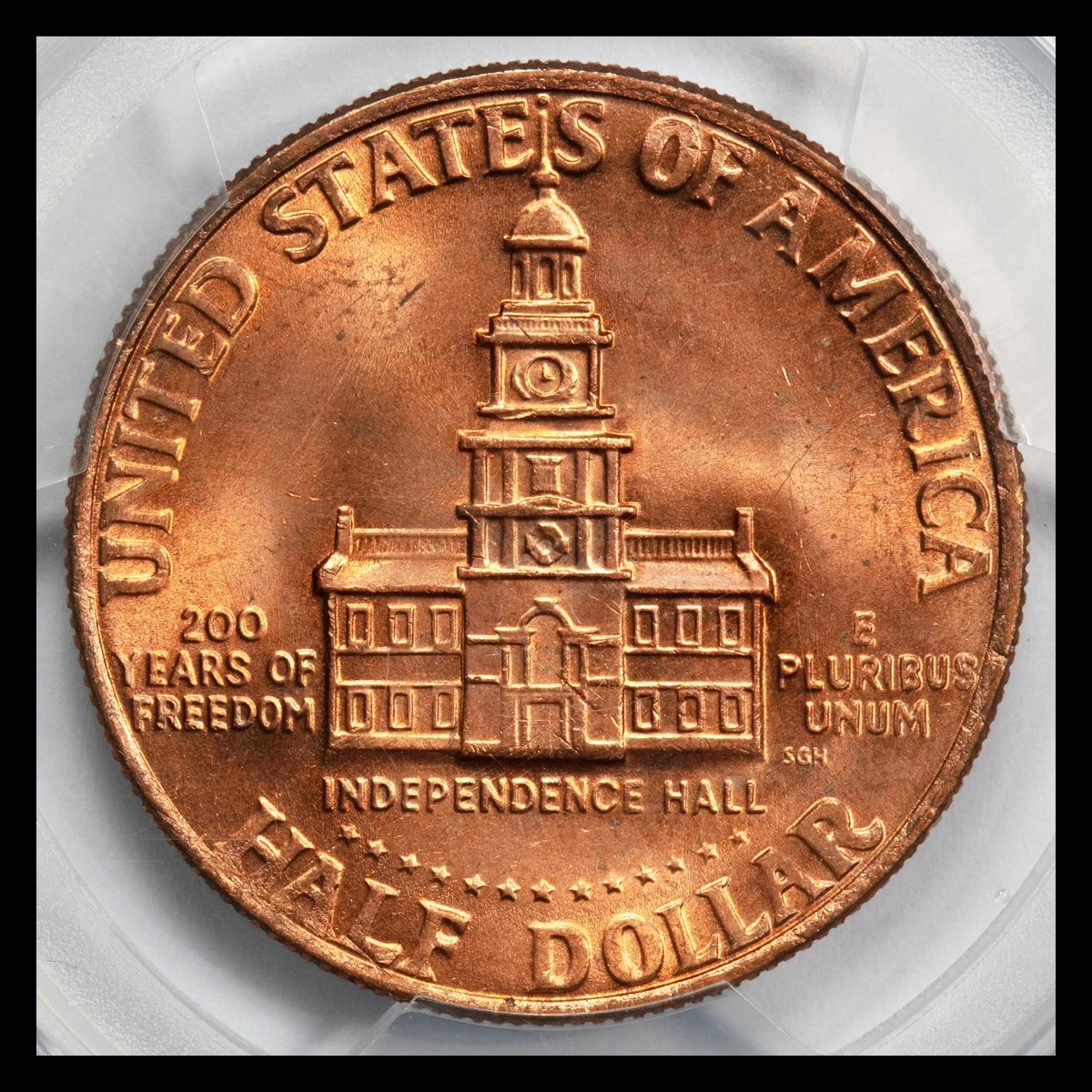
Layer trouble can leave a loose flap, a missing patch, or an entire absent outer layer. Separate Denver examples have been certified with the obverse layer missing and with the reverse layer missing.
Silver Bicentennial halves can also split or peel, but their inner layer contains silver and should not be described as a pure copper core. The reported silver examples include a peeling Proof and an MS66 coin with an attached reverse split.
How to Identify
Trace the boundary and check whether the coin’s struck design continues naturally across the exposed area. Leave attached metal in place; later peeling, corrosion, or stripping can imitate a mint-made layer problem.
What It’s Worth
These errors are estimated at $100–$900, with the amount of missing metal and the finish affecting demand. The silver 1976-S PR64 Cameo with reverse peeling sold for $493.50 in April 2015.
5. 1976 Half Dollar A Raised Patch at the Rim: Cud Error
A cud replaces part of the normal design with a raised patch connected to the rim. Metal flowed into a space left when a piece of the die broke away.
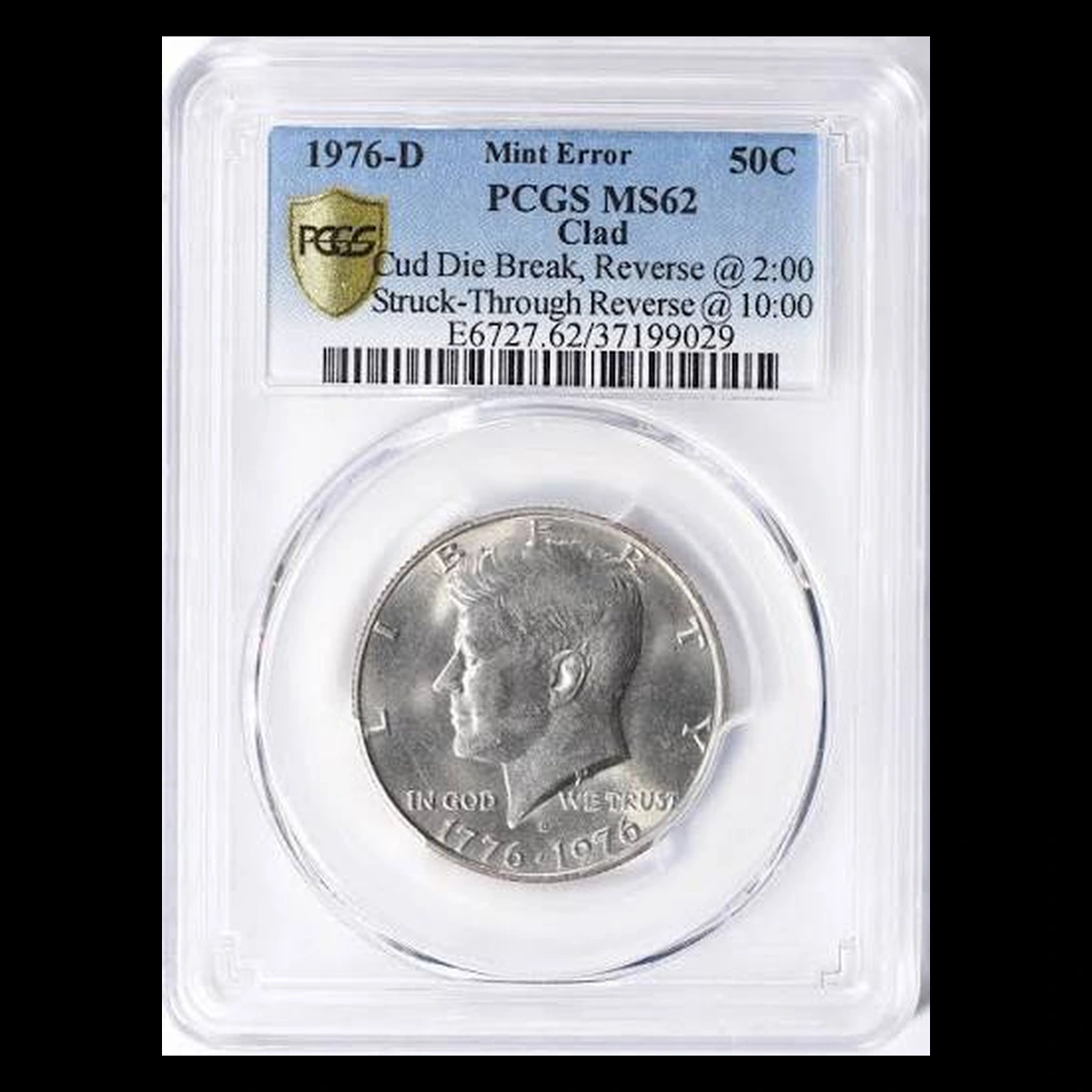
The supplied examples include several break paths and a Denver coin combining a reverse cud with a struck-through area near 10 o’clock. A large obverse cud can hide the mintmark, so its absence does not prove Philadelphia production.
How to Identify
Confirm that the raised area reaches the rim and replaces details where the die failed. On the compound Denver example, distinguish the raised cud from the separate recessed strike-through.
What It’s Worth
A working range is $40–$1,000, depending on the size and position of the break. The Denver MS62 compound error sold for $264 in March 2021; older $35 and $200 dealer listings were asking prices.
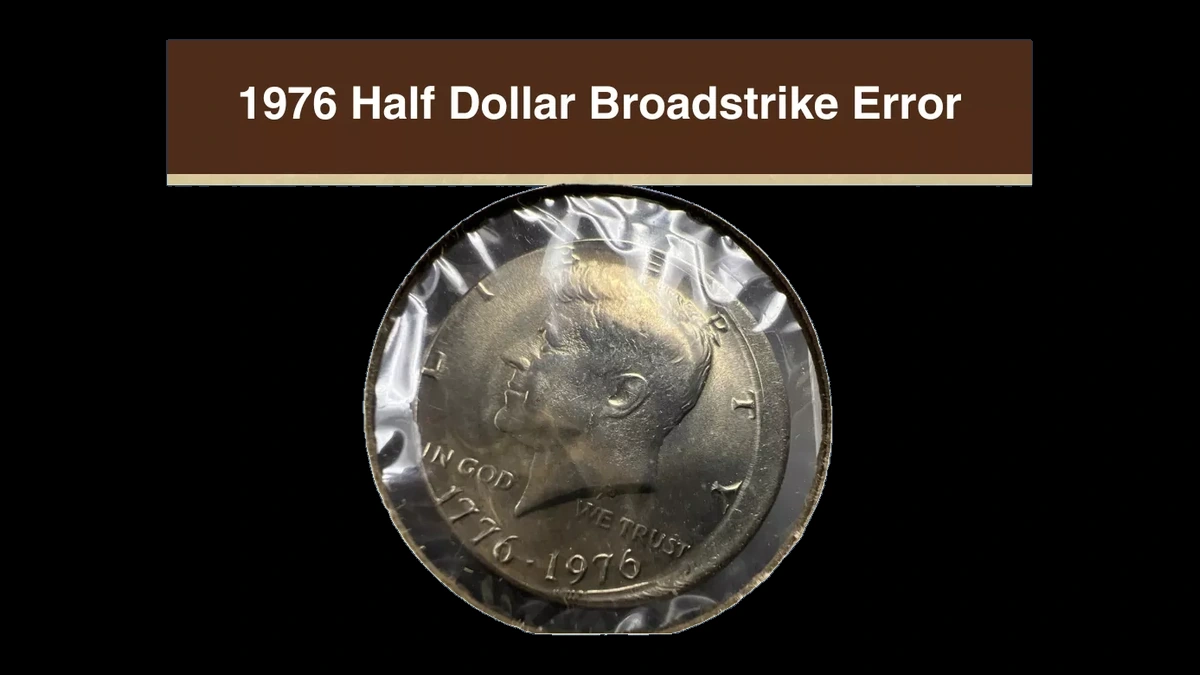
6. 1976 Half Dollar An Expanded Outline with Complete Designs: Broadstrike Error
A broadstrike spreads outward because the collar, the ring that normally contains the blank, did not restrain it properly. The Philadelphia MS65 example retains complete designs within its wider outline.
How to Identify
Check for original outward metal flow and an edge lacking the normal fully formed grooves. A filed edge or a coin flattened after striking cannot be identified as a broadstrike just because it is smooth or wide.
What It’s Worth
Estimated value is $100–$500. A 1995 Kennedy broadstrike graded MS64 sold for $312 in July 2021, a different-year comparison rather than a sale of the 1976 MS65.
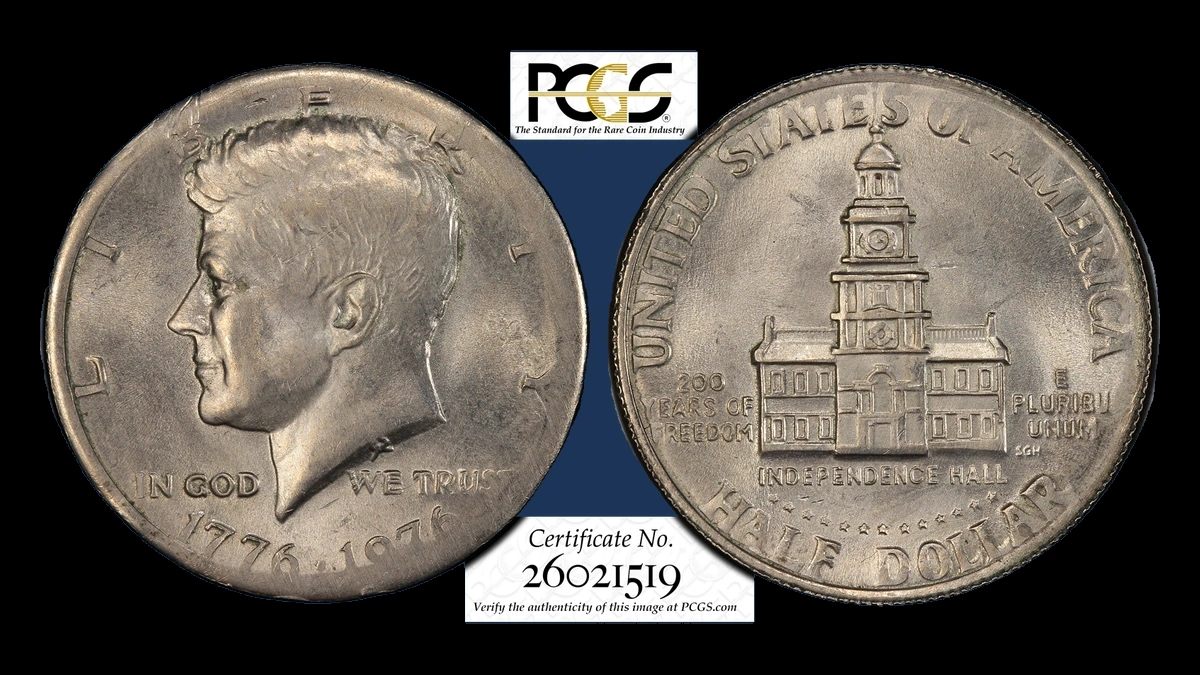
7. 1976 Half Dollar A Step Around the Edge: Partial Collar Error
A ledge around the edge forms when only part of the blank sits inside the collar during the strike. The ledge can change height around a tilted coin.
Reported Bicentennial examples include a Philadelphia piece struck on a Type 1 blank, a Denver MS65 also showing sideways die misalignment, and a clad San Francisco PR68 Cameo with a tilted partial collar. Here, Type 1 describes an earlier stage of blank preparation, not a reverse design.
How to Identify
Examine the full edge for a division between the portion restrained by the collar and the portion that spread beyond it. On a misaligned-die combination, also compare the design’s position on the two faces.
What It’s Worth
Expect roughly $75–$700, with attractive Proofs and clear combinations needing individual comparison. Supplied Kennedy collar-related figures of $165–$312 mix asking prices with a different-year broadstrike sale and are not a series of 1976 partial-collar auction results.
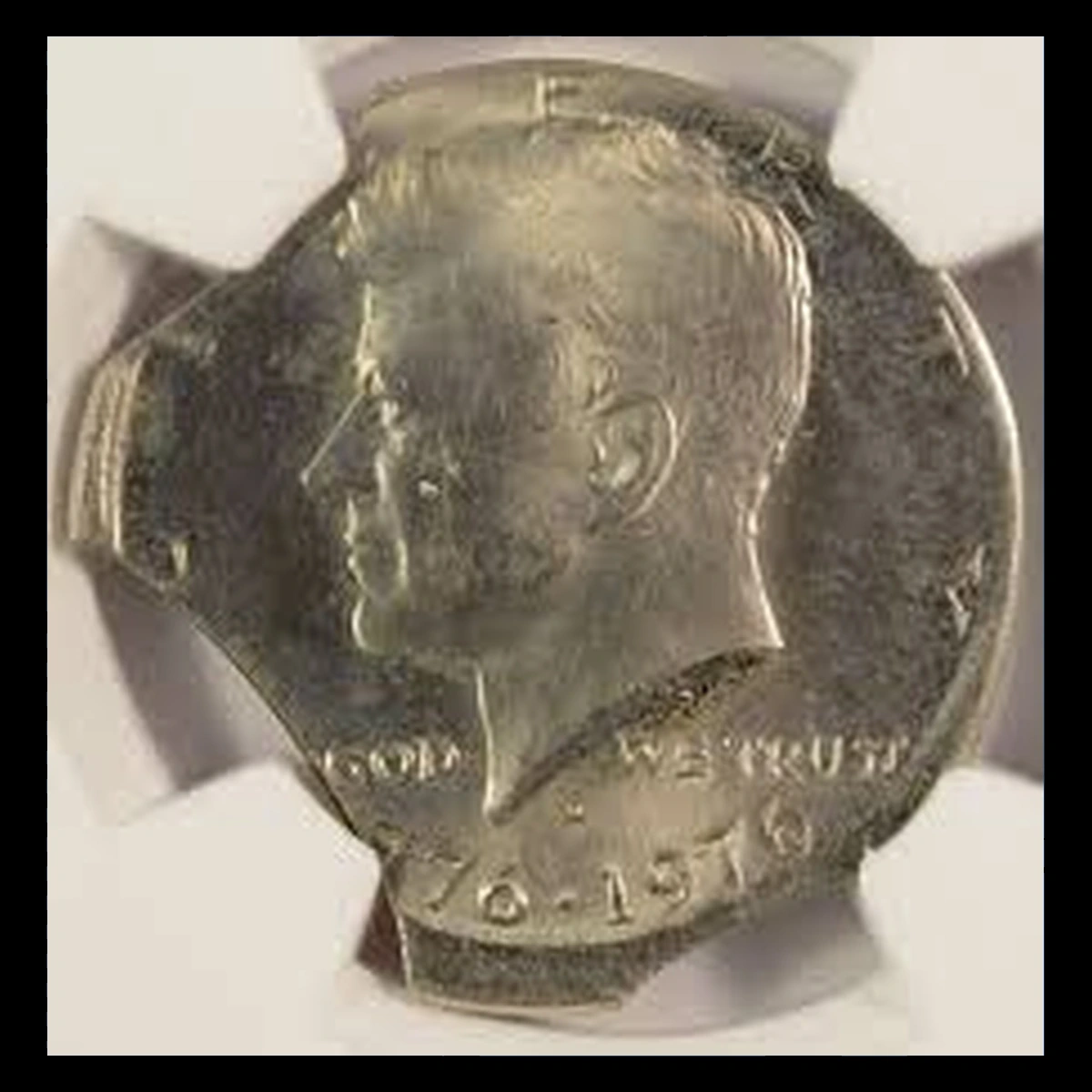
8. 1976 Half Dollar Missing Segments of the Outline: Clipped Planchet Error
A clipped blank lacks metal before it is struck. The reported Denver MS67 double clip weighs only 5.5 grams, while other Bicentennial examples have single, triple, or differently sized clips.
How to Identify
Study how the struck design and rim meet each missing segment, looking for a boundary formed during manufacture rather than a later cut. A blank crescent still containing metal belongs to a different problem.
One MS64 has both a 20% curved clip and a 20% off-center strike. Those percentages describe separate features and do not combine into a “40% clip.”
What It’s Worth
Single clips are estimated at $30–$300, rising to about $250–$1,200 for large, multiple, or compound examples. The supplied $90 listing for a 1971-D 10% clip is an older dealer ask, not a Bicentennial auction result.
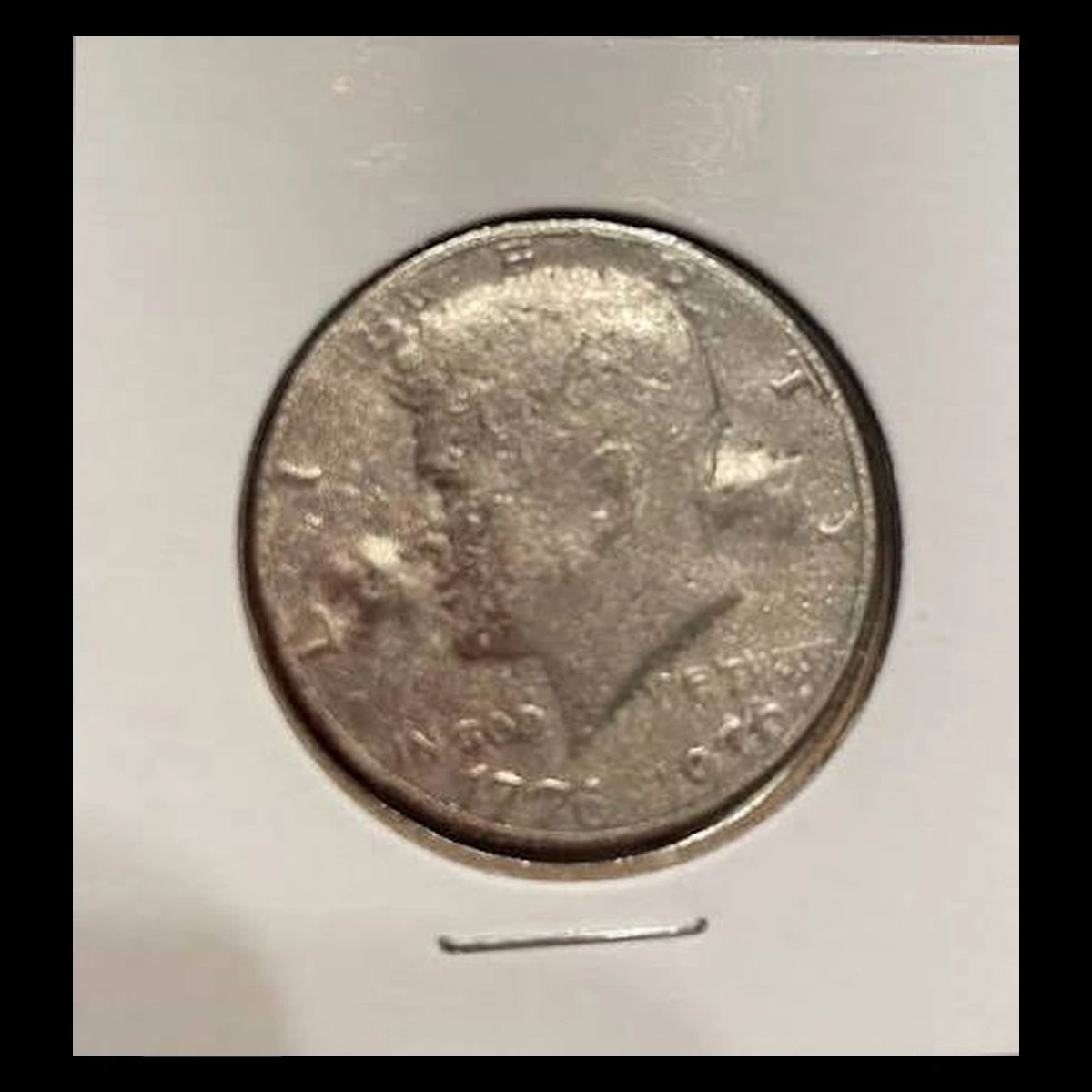
9. 1976 Half Dollar An Abnormal Blank with Low Weight: Defective Planchet Error
The Denver MS64 described as a defective planchet weighs 8.1 grams, well below the normal clad standard. The broad label records a problem with the blank without proving exactly why so much weight is missing.
How to Identify
Record the thickness, outline, and surface features alongside the weight, and inspect how the design meets the defective area. Do not automatically relabel it as a missing layer or a thin-stock error without the corresponding evidence.
What It’s Worth
A provisional range is $150–$600. A 1969-D missing-layer MS63 sold for $154 in March 2023, but that different-year, specifically diagnosed error does not establish the cause or value of this 8.1-gram coin.
10. 1976 Half Dollar Faint Designs on Both Faces: Die-Adjustment Strike Error
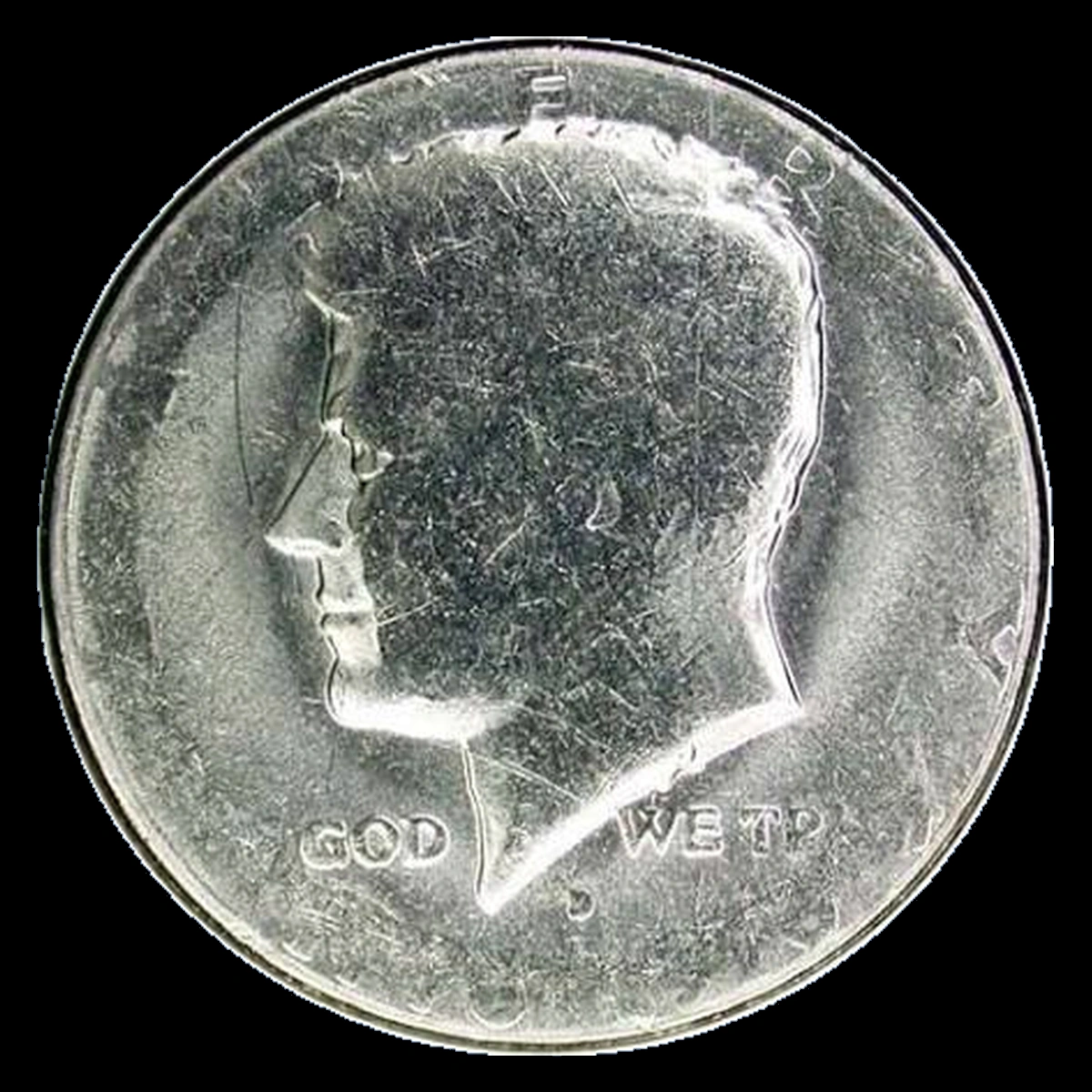
The Denver MS60 die-adjustment example has weak images of both Kennedy and Independence Hall. Insufficient striking force can leave much of the intended design shallow without shifting it sideways.
How to Identify
Compare both faces for widespread weakness while checking for original surface shine in the fields. Wear usually attacks exposed high points, while a small grease-filled area suppresses only part of the design.
What It’s Worth
Estimated value is $200–$1,500, with no exact sale supplied for this coin. The $144 sale of a 1969-D strike-through is a different mechanism and should not be presented as a die-adjustment result.
11. 1976 Half Dollar Design on an Irregular Piece: Struck Fragment Error
A certified MS65 carries the Bicentennial design on an irregular metal fragment. Its broken-looking outline distinguishes the reported object from a normal round blank intended for another denomination.
How to Identify
Authentication must establish that the irregular boundary existed when the dies struck, rather than being cut from a finished half dollar. The supplied descriptions conflict between 2.3 grams and 23 grains, so the actual label and a fresh measurement are needed before quoting its weight.
What It’s Worth
The working estimate is $800–$2,500. A 1976 half struck on a quarter blank sold for $1,020 in July 2021, providing a size-error comparison but not a fragment sale.
12. 1976 Half Dollar A Blank Crescent Beside the Design: Off-Center Strike Error
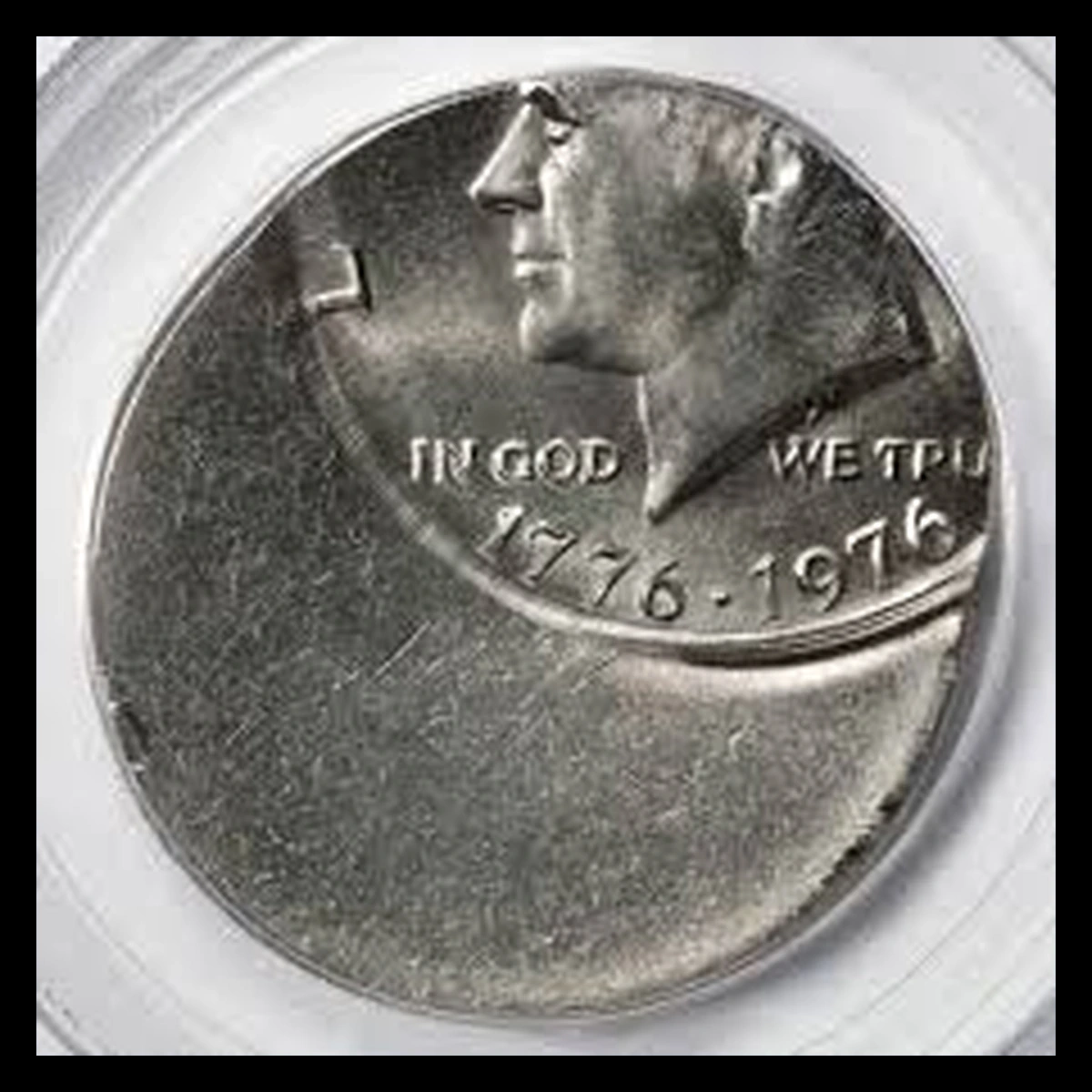
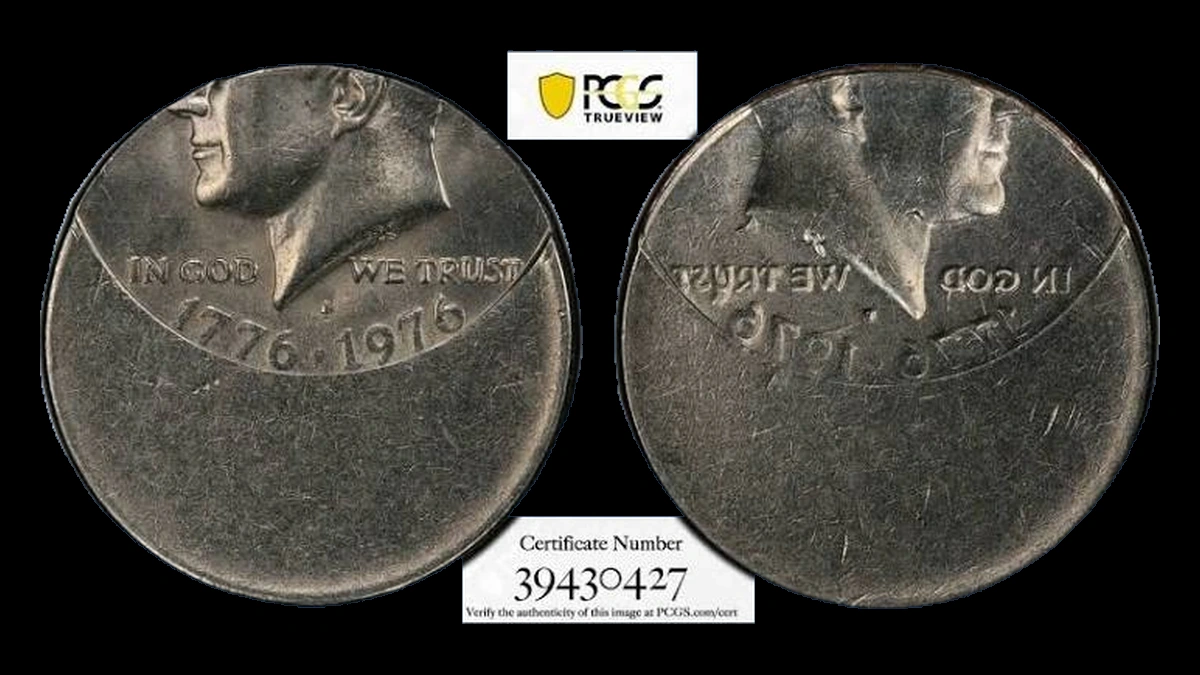
When a blank is not correctly positioned between the dies, part of its surface remains unstruck. Separate Philadelphia and Denver examples show approximately 50% off-center strikes.
A Denver AU58 combines displacement with a uniface reverse, meaning another blank blocked the reverse design. That extra obstruction makes it different from an ordinary off-center coin showing designs on both faces.
How to Identify
Look for a natural unstruck crescent and corresponding displacement on both sides. Independence Hall can identify the Bicentennial type when the date is hidden, but it cannot reveal a covered mintmark.
What It’s Worth
Ordinary off-center pieces are estimated at $150–$1,500, with the uniface combination around $500–$3,000. A dealer’s $350 ask for an MS65 10% off-center example cannot be multiplied directly by the percentage on another coin.
13. 1976 Half Dollar Two Obstructions Across the Front: Dual Indent Error
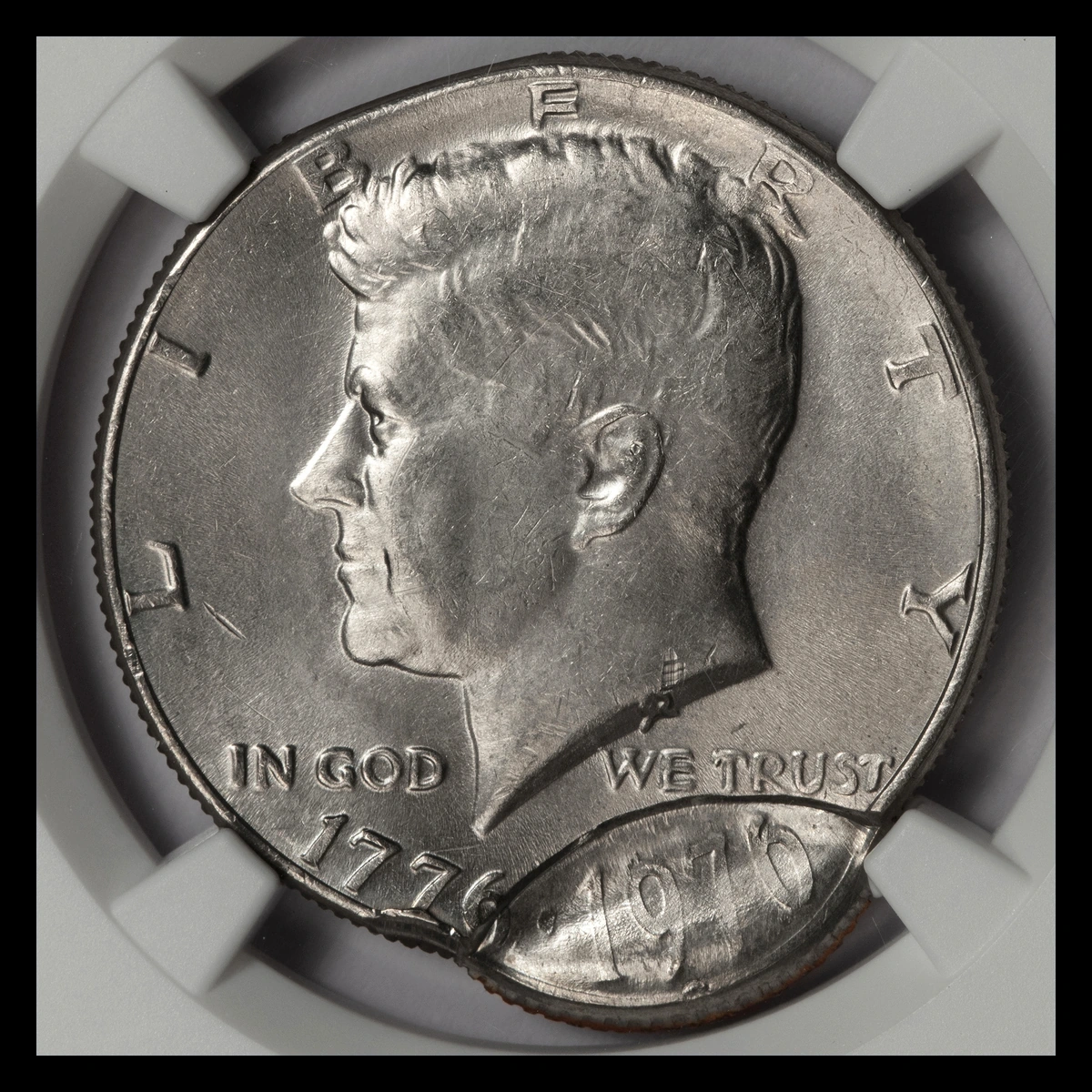
The MS65 dual-indent example had two interfering blanks covering the entire front during striking. Its reverse still identifies the Independence Hall design.
How to Identify
Examine the separate depressed boundaries and the surviving struck surface around them. Plain blanks can leave indents without lettering; recognizable backward, recessed lettering would point toward contact with an already struck coin.
What It’s Worth
A $1,000–$4,500 range is an estimate, not a documented sale for this dual indent. A 1969-D involving a dime-blank indent reportedly brought $3,840 in 2020, although its coverage and event differ.
14. 1976 Half Dollar Overlapping Portraits or Buildings: Multiple Strikes Error
Look for whole sections of design appearing in more than one position. A coin that stayed in the press could move before receiving a second or third strike.
The records include separate Philadelphia and Denver double strikes about 40% displaced, a silver San Francisco triple strike with two later impressions about 20% displaced, and a clad Proof with a slight second strike toward 6 o’clock.
How to Identify
Trace coherent groups of portrait, date, and building details rather than counting individual doubled letters. Normal aligned Proof striking does not explain a clearly displaced second design.
What It’s Worth
The group has an estimated range of $500–$5,500. A Philadelphia MS66 double strike sold for $2,232.50 in January 2017; older $350 listings for differently shaped or obstructed pieces were asks.
15. 1976 Half Dollar A Small Round Coin with Cropped Details: Quarter or Nickel Blank Error
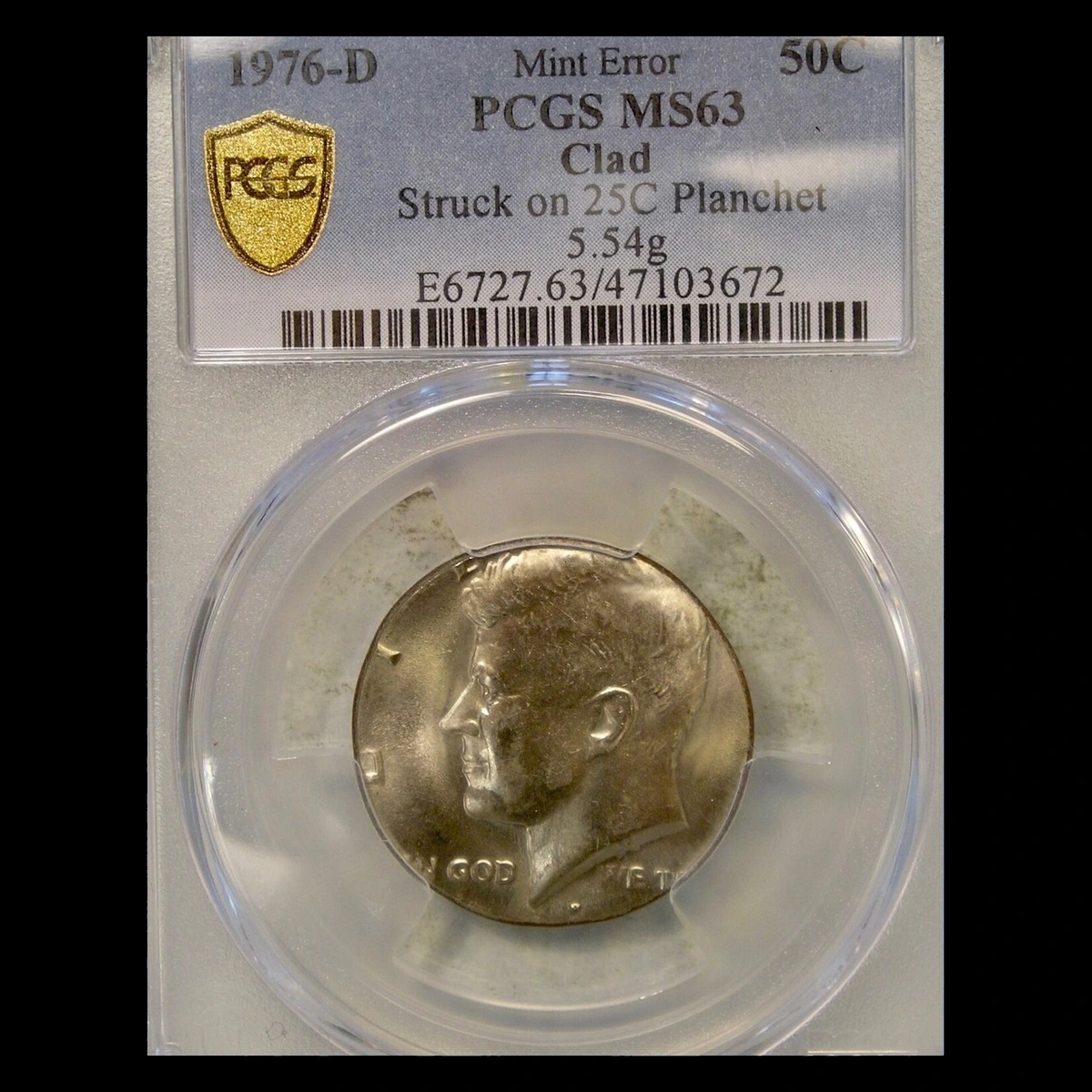
A half-dollar design can be squeezed onto a blank meant for a smaller denomination. Quarter blanks have a layered composition, while nickel blanks are solid copper-nickel.
How to Identify
Use size, weight, and composition together: a normal quarter blank is about 5.67 grams and a nickel blank about 5 grams. Missing outer lettering should fit the smaller striking surface, and no earlier quarter or nickel design is required on an unused blank.
What It’s Worth
Quarter-blank errors are estimated at $800–$3,500 and nickel-blank errors at $2,000–$6,000. The 5.6-gram MS63 quarter-blank example sold for $1,020 in July 2021, while separate San Francisco nickel-blank coins brought $3,360 as MS64 in September 2019 and $4,465 as PR63 in January 2017.
16. 1976 Half Dollar A Backward Kennedy on the Reverse: Brockage Error
A struck coin trapped against a fresh blank can press its design into that blank backward and below the surface. The Denver MS64 full brockage has an ordinary Kennedy front and a recessed, reversed Kennedy where Independence Hall should be.
How to Identify
Check the portrait’s orientation and the recessed lettering, then distinguish that transferred design from unrelated dents. A separate rod impression near the date on the Denver specimen is not part of the definition of brockage.
What It’s Worth
Brockages span an estimated $500–$6,500. The Denver full brockage sold for $4,465 in January 2017, while a separate MS64 with a 45% off-center brockage brought $2,300 in December 2011.
17. 1976 Half Dollar Raised Walls or a Distorted Face: Die Cap and Capped-Die Strike Error
A coin stuck to a die can stretch into a cup as it repeatedly strikes other blanks. The deep Denver cap began with a brockage, while coins struck beneath such a cap receive flattened or distorted impressions.
How to Identify
A cap should show metal and design stretched by the striking sequence, not an ordinary coin bent into a dish. A claimed matching pair needs complementary contact surfaces, rather than merely similar damage.
What It’s Worth
Capped-die strikes are estimated at $150–$800; deep caps and matched pairs may reach $2,500–$7,500. The Denver MS65 deep cap sold for $5,170 in January 2017, and a separate MS65/MS62 pair brought $3,760 total that month.
18. 1976 Half Dollar The Half-Dollar Design on Copper: Cent Blank Error
A cent blank leaves room for only a small part of the Bicentennial design. Reports include a single-struck San Francisco Proof, a double-struck San Francisco Proof, and a regular Denver example.
How to Identify
The reported Proof blanks weigh about 3.1 grams, with copper color and severely cropped designs. On the double strike, fragments of Independence Hall in separate positions and overlapping portrait details establish two strikes; red or brown color alone does not.
What It’s Worth
Estimated value is $2,500–$8,000. The double-struck PR65 Red and Brown example sold for $5,280 in 2023; its price should not be assigned automatically to the separate single-struck PR64 Brown coin.
19. 1976 Half Dollar Unusual Weight on a Proof: Reported Foreign Blank Error
A dealer-described 1976-S PR67 Deep Cameo weighs 9.75 grams and has been proposed as a foreign-planchet error. A Philippine one-piso blank is a suggested identification, not a settled conclusion from weight alone.
How to Identify
Reported features include spreading near 1–3 o’clock on the front, weak reverse rim formation around 3–6 o’clock, and incomplete edge grooves. Composition testing and dimensional evidence are needed to assess the proposed foreign blank.
What It’s Worth
A tentative $3,000–$10,000 estimate draws on related wrong-blank Proofs. Comparisons include the 1976-S nickel-blank PR63 at $4,465 and a magnetic 1968-S PR62 at $9,000 in 2025; the reported June 2025 private sale of this 9.75-gram piece has no supplied price.
20. 1976 Half Dollar Independence Hall on a Toothed Object: Struck Brass Gear Error
A brass gear bearing fragments of Independence Hall appears in a historical 1984 Weinberg listing. Its toothed outline belongs to the object struck, rather than to a normal coin blank.
How to Identify
The key question is whether the teeth existed before the half-dollar dies impressed the object. A modern examination would need actual dimensions, weight, and images; the supplied record does not establish a mintmark, grade, or route into the press.
What It’s Worth
The $4,000–$15,000 range is an estimate with no supplied sale of this gear. A 1970-S half struck on an aluminum token appeared in a $5,760 lot in 2021, but that lot also contained a normal token and is a different object error.
21. 1976 Half Dollar An Earlier Dime Under the Half Dollar: Overstruck Coin Error
The Denver MS66 example was struck over a finished 1975-D Roosevelt dime. Surviving dime details distinguish this from a half-dollar design struck on an unused dime blank.
How to Identify
Locate evidence of the earlier Roosevelt portrait, date, or lettering beneath the Bicentennial design. The 1975 date belongs to the host dime, and the later strike can spread the originally smaller coin beyond its normal outline.
What It’s Worth
An estimated $8,000–$18,000 reflects the unusual combination, with a published Weinberg asking price of $12,500, not a completed sale. A different combination, a 1973-D half over a 1973-D quarter, sold for $6,600 in 2022.
Conclusion
Bicentennial errors cover far more than doubled lettering: the edge, composition, and surviving pieces of design can reveal very different minting events. Record each feature separately when several occur together, and keep regular strikes, Proofs, clad coins, and silver coins distinct.
A useful identification explains both what remains visible and why other details are missing, without turning an uncertain material or hidden mintmark into a claimed fact.