Rare 1896 Dollar Errors (List & Pictures)
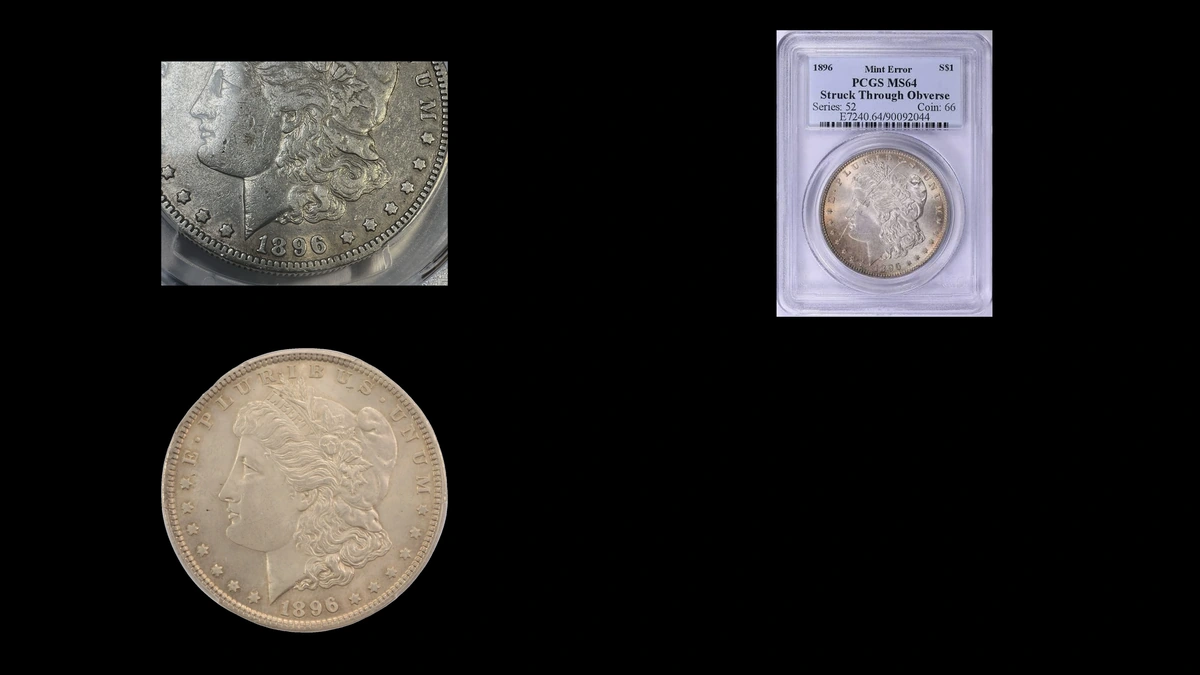
The space around the date is particularly useful when studying 1896 Morgan dollar errors. Extra star points, a bar inside 6, and a misplaced piece of 8 represent different features with different causes.
Supplied whole-coin estimates span $60–$15,000. An exceptionally preserved misplaced-date example realized $3,360 in December 2022; compare the exact mark and mint before moving to the edge and larger striking errors.
1. 1896 Dollar Extra Points beside the Date: Doubled Stars Error
Philadelphia VAM-4 repeats portions of stars on both sides of the date. VAM-4 is the catalog designation for the die combination, not a count of strikes on the coin.
The die contained overlapping design detail before it struck the silver. Several dollars from that tool can therefore share the same extra points.
How to Identify
Confirm no mintmark beneath the reverse wreath and compare the candidate with an ordinary Philadelphia coin at matching scale. Follow several stars to the date’s left and right for the attributed split contours.
A flattened mechanical shelf beside one point is different from rounded repeated design. Where wear has blended the contours, use the least worn stars and change the light to separate relief from glare.
What It’s Worth
$60–$1,500 is estimated across worn through nicely preserved examples. The year guide reports $53 for an almost unworn coin and $349 for an MS63, without supplying complete auction details here.
Those reports offer lower-priced context rather than fixed premiums. Original surfaces and readable star separation help determine the whole-coin comparison.
2. 1896 Dollar A Raised Vertical Stroke inside 6: Bar 6 Die Gouge Error
The Philadelphia Bar 6 has a vertical raised bar inside the right side of the numeral’s lower loop. A shorter tip appears in its upper portion.
A gouge in the die produced these raised marks on the coin. They do not establish a 4 beneath the 6 or an 1896/4 overdate.
How to Identify
Compare the lower-loop bar and upper tip together with an attributed Bar 6 image. Check their exact connections to the digit rather than accepting any stray line inside it.
A later cut can leave a recessed trench with raised lips, so inspect the center under angled light. Reflective backgrounds may require careful lighting but do not by themselves establish a specially made Proof.
What It’s Worth
$60–$2,500 is estimated for ordinary examples. The same-year $53 and $349 doubled-star reports concern another variety and are not Bar 6 transactions.
Strong preservation and attractive reflective surfaces can support a higher comparison. The unusual numeral shape alone cannot substitute for condition.
3. 1896 Dollar Another 8 in the Border or Overlapping Digits: Date-Punching Varieties Error
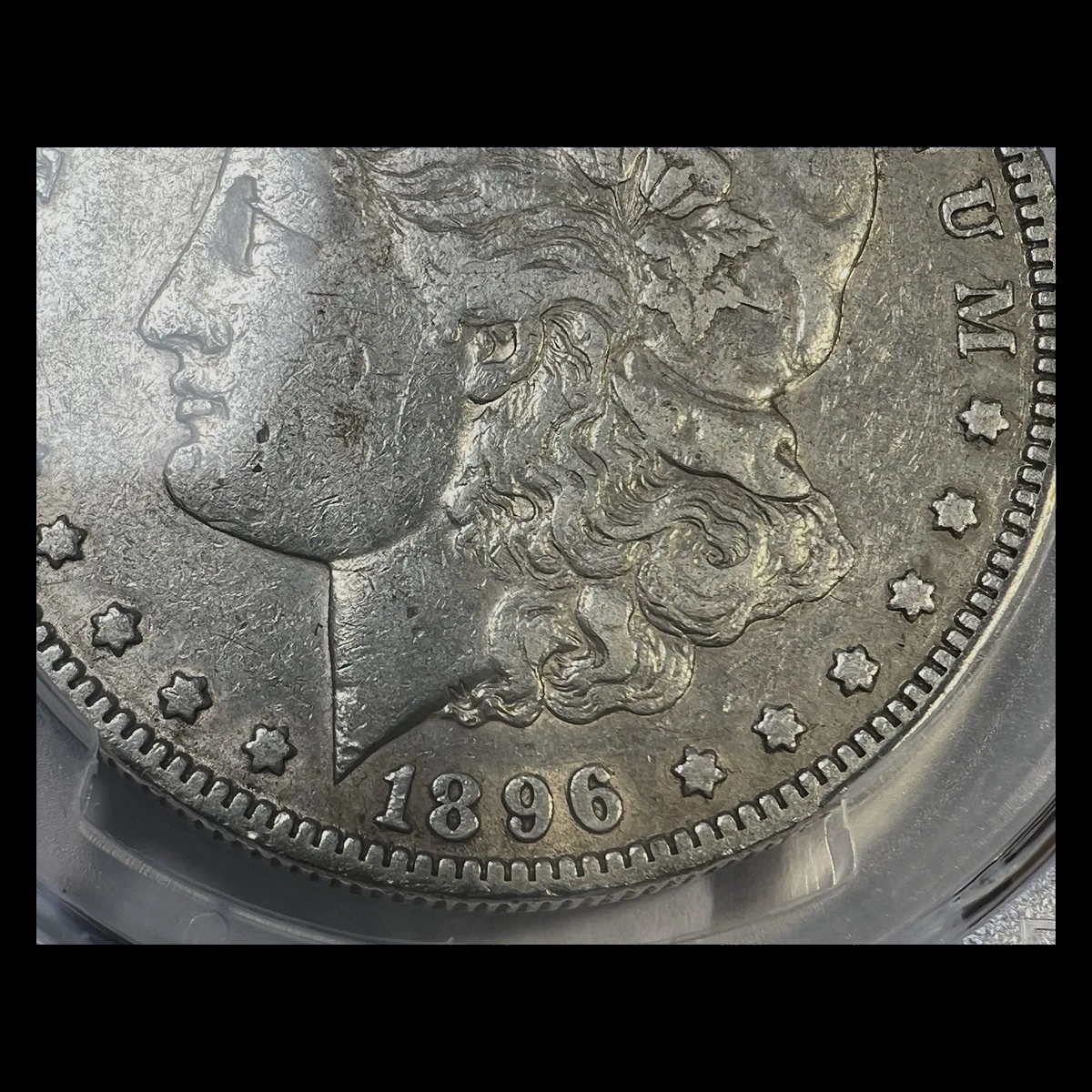
Philadelphia VAM-19 has the top of an extra 8 among the border teeth below the date. A misplaced punch entered the die too low before the intended date was completed.
A separate New Orleans variety instead shows shifted overlapping date digits. The two descriptions concern different coins, although both originated in date punching.
How to Identify
Read the reverse mint area before choosing a photograph. Philadelphia has no letter, while O directs the comparison to the separate New Orleans date pattern.
For VAM-19, enlarge the teeth immediately below 8 and compare the curved top of the misplaced numeral. Check adjacent teeth for dents that could have pushed metal into a misleading rounded shape.
For the O-mint coin, inspect the date itself against an attributed example. Searching only for the Philadelphia border fragment would apply the wrong diagnostic.
What It’s Worth
$75–$5,000 is estimated across these date varieties. PCGS records a Philadelphia VAM-19 in MS67 at $3,360 in December 2022.
That exceptionally preserved unworn coin is a different comparison from an ordinary worn piece. Its result does not establish a transaction for the New Orleans shifted date.
4. 1896 Dollar A Second S Trace beneath the Wreath: Repunched Mintmark Error
The reported San Francisco pattern is VAM-5. Part of an earlier S remained after the mintmark was entered into the die again in a slightly different position.
Both contours then transferred to the coin during striking. An unrelated scratch near the letter does not reproduce that repeated-punch relationship.
How to Identify
Find the S above DOLLAR and below the wreath, keeping the camera square to the reverse. Compare its inner curves and outer edges with an attributed VAM-5.
The extra trace must match both shape and placement, not merely lie somewhere near S. Inspect for recessed scratches, corrosion pits, and dents before treating the remnant as part of the original raised letter.
What It’s Worth
$75–$2,000 is estimated for confirmed repunched-S examples from worn through modest unworn grades. Much of the price can come from the underlying San Francisco dollar.
Exceptional high-grade 1896-S coins require their own comparison beyond this working range. A clear second trace does not remove that dependence on preservation.
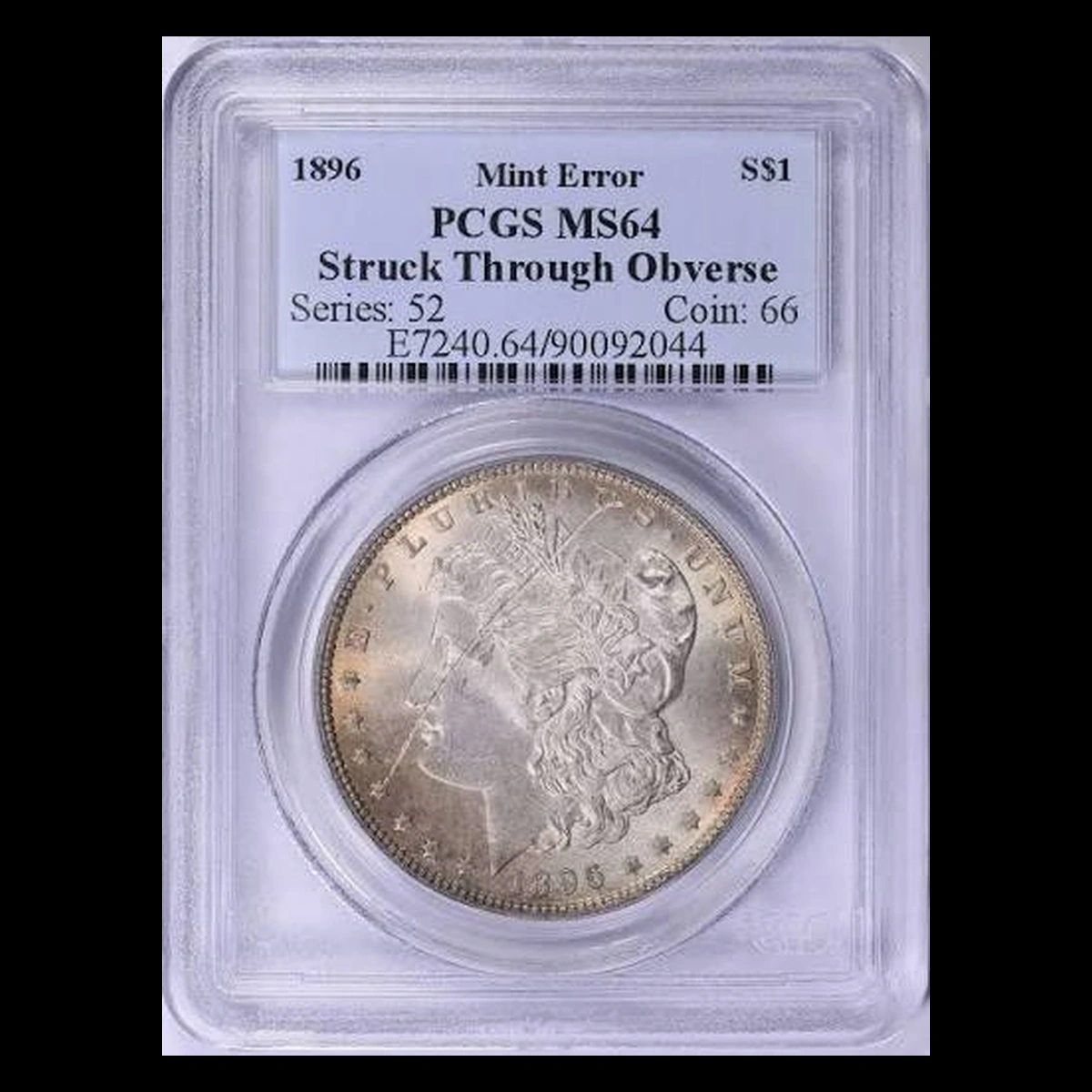
5. 1896 Dollar A Narrow Recessed Path across Detail: Wire Strike-Through Error
A published Philadelphia example is described as unworn with a wire impression. Wire between a blank and die can prevent a narrow strip of design from forming before falling away.
The report does not establish retained wire. An empty impression and a coin still containing an object are separate physical claims.
How to Identify
Follow the impression into any letters or portrait features it touches, without dragging a pin along the line. Interrupted design should support material present during striking.
A later scratch can cut completed details and pile metal alongside them. Preserve both full-face views with the close-up so an error specialist can examine the entire relationship.
What It’s Worth
$100–$3,000 is estimated from small clear impressions through stronger examples on attractive dollars. The reported unworn 1896 coin was offered at $172.45, an asking price rather than a verified auction result.
6. 1896 Dollar Two Levels on the Edge: Partial Collar Error
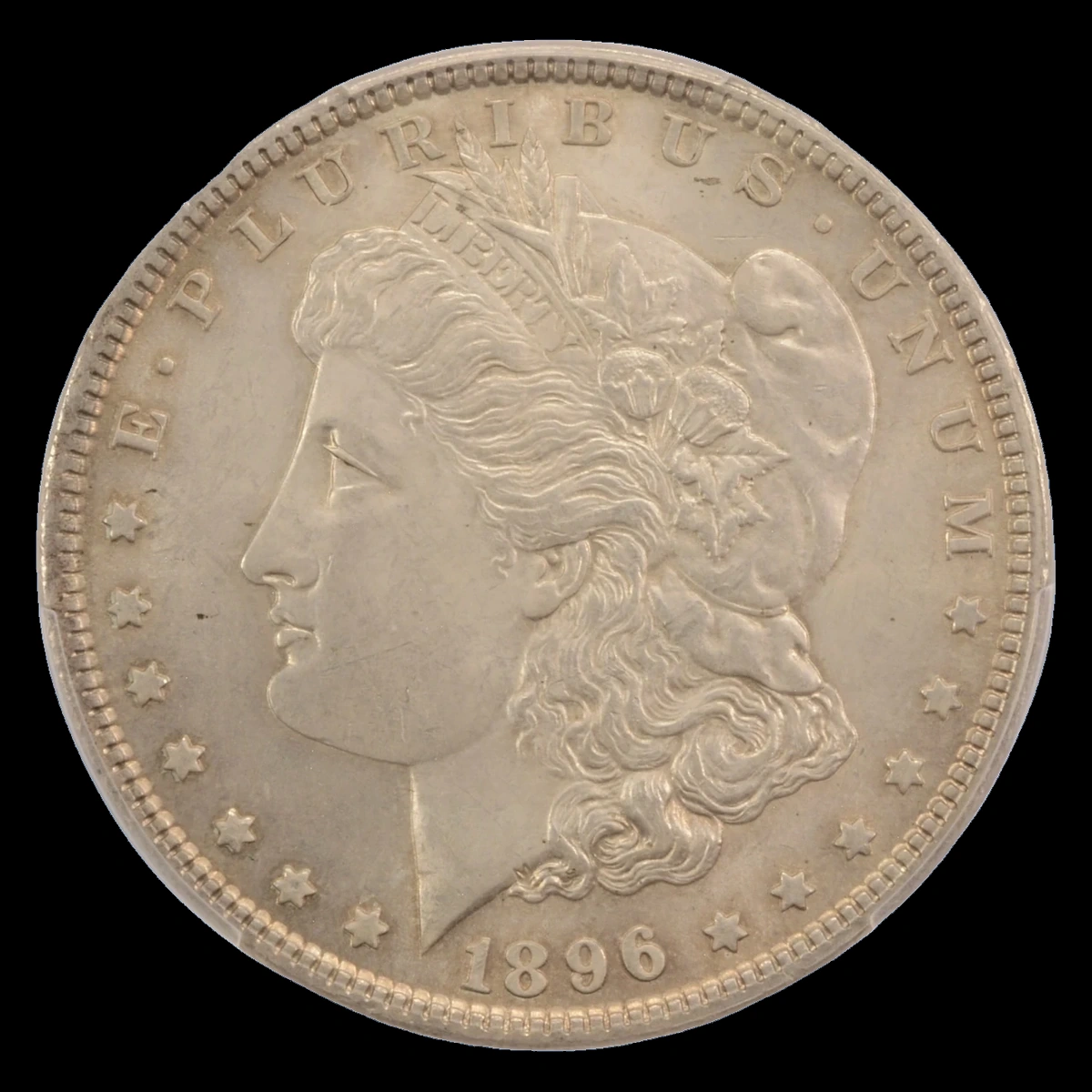
The reported Philadelphia example is described as MS61, an unworn grade with noticeable marks. Its partial-collar error concerns a stepped edge, with normally grooved metal beside a smoother or expanded portion.
The collar ring constrained only part of the blank during striking. Metal outside its restraint could spread, creating the appearance often called a railroad rim.
How to Identify
Follow the step around the circumference and compare its boundary with the normally formed grooves. Look for grinding cuts or crushed lettering from later squeezing.
Normal dollar references are 38.1 millimeters and 26.73 grams, useful for a loose coin’s measurements. Keep encapsulated pieces sealed and examine available edge angles rather than removing them for routine checks.
What It’s Worth
$150–$4,000 is estimated for confirmed partial-collar examples. The reported MS61 was offered at about $333, a seller’s asking price.
The actual step’s clarity and the surrounding coin’s marks affect the comparison. A slight edge change should not inherit a value intended for a broad, undamaged original step.
7. 1896 Dollar An Unstruck Crescent beside Incomplete Design: Off-Center Strike Error
The year guide reports off-center 1896 dollars without establishing an individual mint. A blank displaced beyond the dies receives only part of the intended designs while leaving original bare metal.
A small rim imbalance alone is insufficient. The complete physical arrangement must explain missing artwork and the untouched portion together.
How to Identify
Confirm the readable 1896 date, then compare both faces before estimating displacement. A shift limited to one face may arise from a misaligned die instead.
If the mintmark area was never struck, do not infer Philadelphia from its blank appearance. The unstruck crescent must still be metal, whereas a clip or cut removes part of the outline.
Inspect the boundary for filing or added material and use actual loose-coin weight only as supporting evidence. Normal Morgan metal is 90% silver, but neither composition nor weight can supply a missing mint.
What It’s Worth
$500–$15,000 is estimated across confirmed modest through dramatic off-center examples. The guide describes small shifts in the hundreds and larger ones in the thousands without a documented transaction for an identified 1896 specimen.
Conclusion
The bar inside 6 is a die-gouge feature, while an extra 8 in the border and overlapping date numerals reflect punching. Match each to its correct mint before assigning a variety name.
Edge and displacement errors need complete views, and neither a low weight nor an empty mintmark area settles their identity. Preserve the distinction between reported asking prices, broad estimates, and the recorded high-grade VAM-19 auction.