Rare 1905 Nickel Errors (List & Pictures)
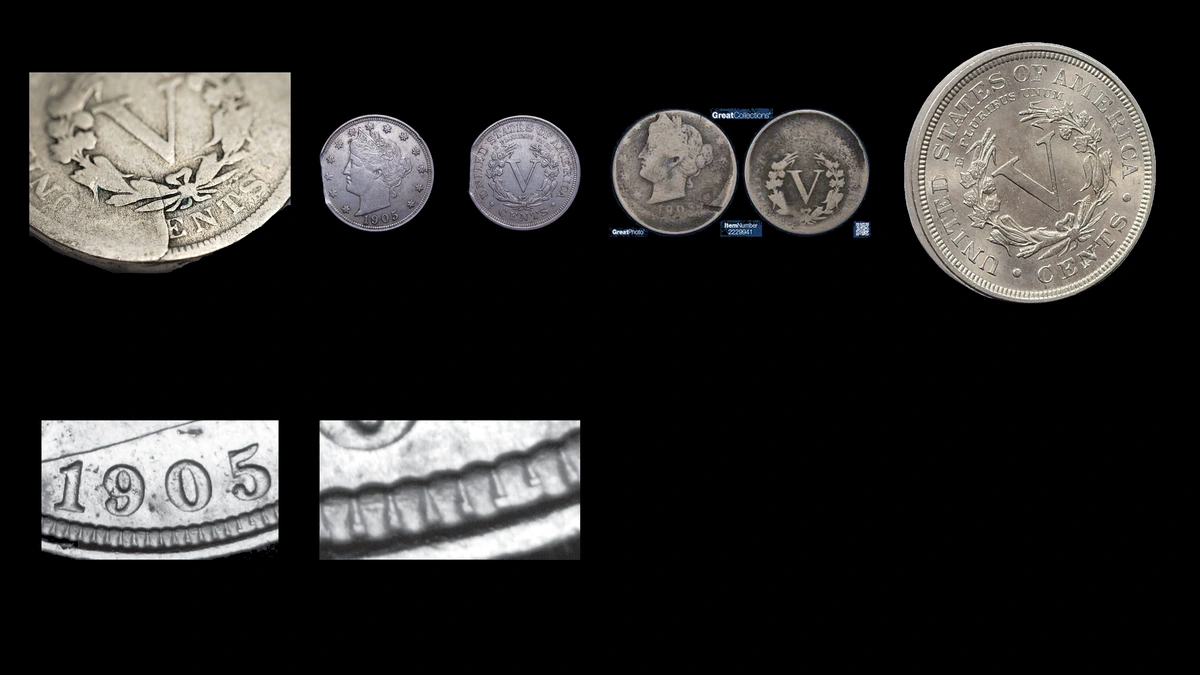
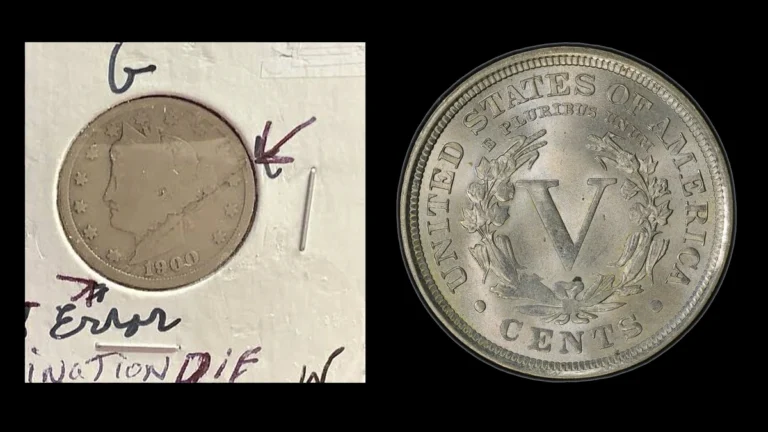
The date and the edge offer two very different starting points for 1905 Liberty Head nickel errors. Tiny misplaced number fragments can hide below 1905, while a partly split coin may open visibly along its edge.
Estimates range from $10–$6,000, including a cent-blank nickel that sold for $3,120 in August 2024. Use the shape and metal checks first, then compare the smaller raised details around the date.
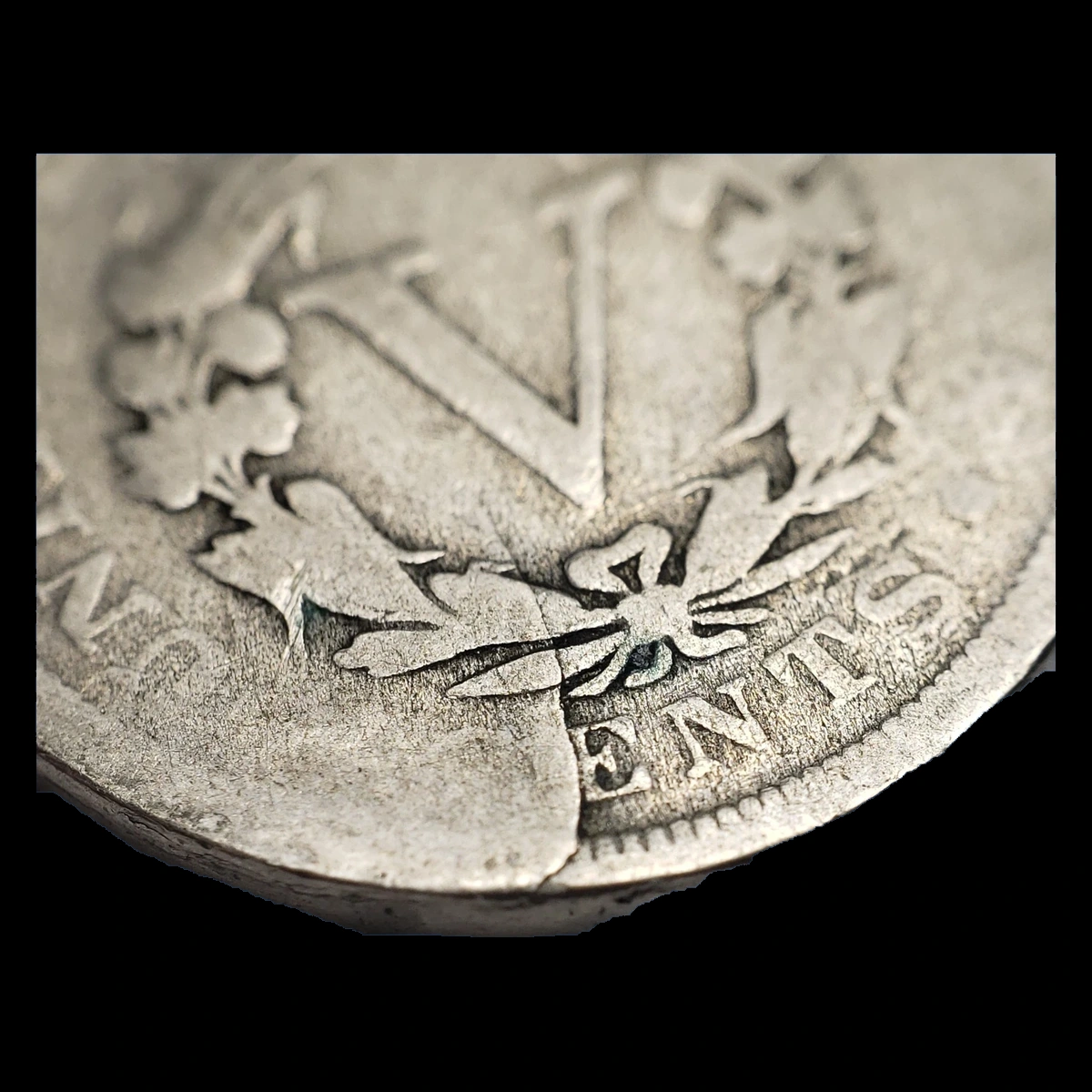
1. 1905 Nickel An Opening beneath the Front: Clamshell Split Error
A partly separated front can lift while remaining attached elsewhere around the coin. This shell-like opening comes from weakness inside the solid copper-nickel alloy, rather than loss of a plated outer skin.
How to Identify
Support the coin in its existing position and examine the opening without widening it. The exposed inner metal and the remaining attachment provide evidence that prying or flattening could destroy.
Look for saw marks, fresh bending, or signs that a tool forced the sides apart. An original partial split does not establish that the nickel ever became two completely separate halves.
A normal 1905 nickel weighs 5 grams, measures about 21.2 mm, and has a plain edge. A split may stay near full weight when both portions remain attached and no metal has fallen away.
An NGC VG8 example is recorded, indicating heavy circulation wear. A separate ungraded seller example should not be treated as that same coin.
What It’s Worth
Genuine partial splits are estimated at $30–$350 for the complete object. The separate seller example was offered at $45, an asking price rather than a completed auction sale.
A natural, visible opening generally displays better than a narrow seam. Forced separation can reduce value even when the initial weakness was original.
2. 1905 Nickel Separate or Joined Pieces with Related Marks: Reported Matching Pair or Bonded Group Error
Establish the number and relationship of the pieces before choosing an error name. A bonded group remains physically joined, while a matching pair may consist of separate coins bearing evidence of related contact in the press.
The older 1905 report does not resolve which object it describes. It supplies neither a confirmed blank count nor a definite striking sequence.
How to Identify
Photograph all pieces, their edges, and their contact areas as found. Do not pull a joined object apart or press separate pieces together to make them fit.
Related impressions should explain how the pieces met during striking. Matching dates alone are insufficient, and glue or solder joining normal coins would show a different origin.
Record individual weights where the pieces are already separate. No combined weight has been established for the reported group, so a guessed total cannot confirm its construction.
What It’s Worth
A confirmed matching pair has a conditional estimate of $500–$3,000; a genuine bonded group, $1,000–$5,000. Each range prices the complete group.
These estimates require identification of the actual object first. An unresolved paired description does not establish either the construction or a completed sale.
3. 1905 Nickel A Smaller or Lighter Nickel: Struck on a Cent or Foreign Blank Error
Two documented wrong-blank examples need separate comparisons. One used a copper cent blank and was graded PCGS AU50; the other used an unidentified foreign blank and received NGC MS64.
The foreign piece weighs 2.67 grams and is slightly smaller and thinner than an ordinary nickel. Its border words remain readable despite weak design.
How to Identify
Compare the metal, weight, and design coverage together. A contemporary cent blank begins near 3.11 grams and 19.05 mm across, though a nickel strike can spread that smaller disk.
Neither copper color nor low weight proves a wrong blank. Coatings and grinding can change those features after a coin leaves the Mint.
For the foreign example, the country remains unidentified. Heritage did not verify the accompanying metal analysis, so it cannot be used here as a settled composition or country attribution.
Preserve the surfaces during examination. Any necessary metal testing should avoid filing or scratching away original material.
What It’s Worth
Cent-blank examples are estimated at $2,000–$6,000, and comparable foreign-blank pieces at $700–$3,000. The PCGS AU50 cent-blank coin sold for $3,120 in August 2024.
The separate NGC MS64 foreign-blank coin brought $1,320 in March 2021. Its higher preservation grade does not make it the same type of blank as the more expensive cent example.
4. 1905 Nickel A Curved Gap through the Rim: Clipped Blank Error
A missing curved section can begin when the blanking punch overlaps an earlier hole in the strip. The resulting incomplete disk receives its design afterward.
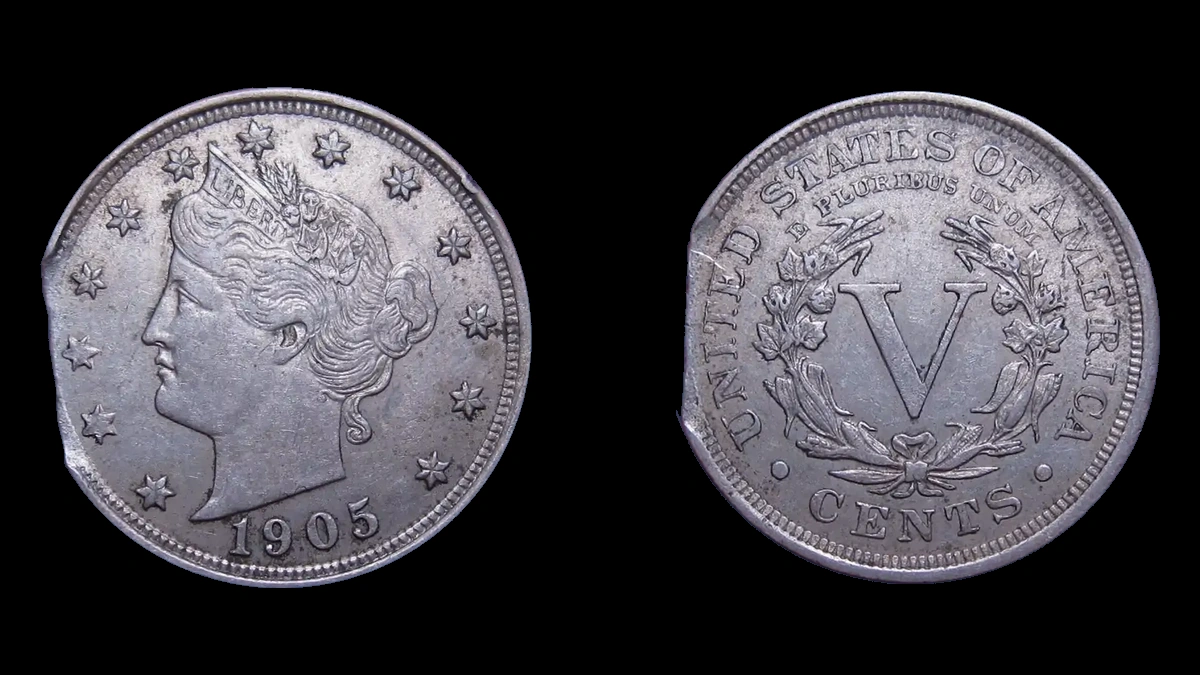
How to Identify
Follow the lettering and rim into both ends of the gap. Metal shaped during the strike differs from completed lettering sliced through later, or a cut with fresh burrs and saw marks.
Inspect the opposite rim for weakness, which can result when an incomplete blank passes through rim preparation. This supports a clip when present, but its absence does not automatically rule one out.
The 1905 report gives no fixed size or clock position. Missing weight helps document the gap, while the struck boundary helps determine whether it predates the design.
What It’s Worth
Worn clips are estimated at $40–$150; clearer unworn examples at $175–$500. These are whole-coin estimates drawn from the supplied guide comparisons.
A readable date and original surfaces matter alongside the size of the opening. A large later cut does not qualify for the error range.
5. 1905 Nickel A Blank Crescent beside Cut-Off Design: Off-Center Strike Error
Unlike a clip, an off-center strike can leave the original metal present but partly unstruck. The opposite side loses design where the stamping tools extended beyond the misplaced blank.
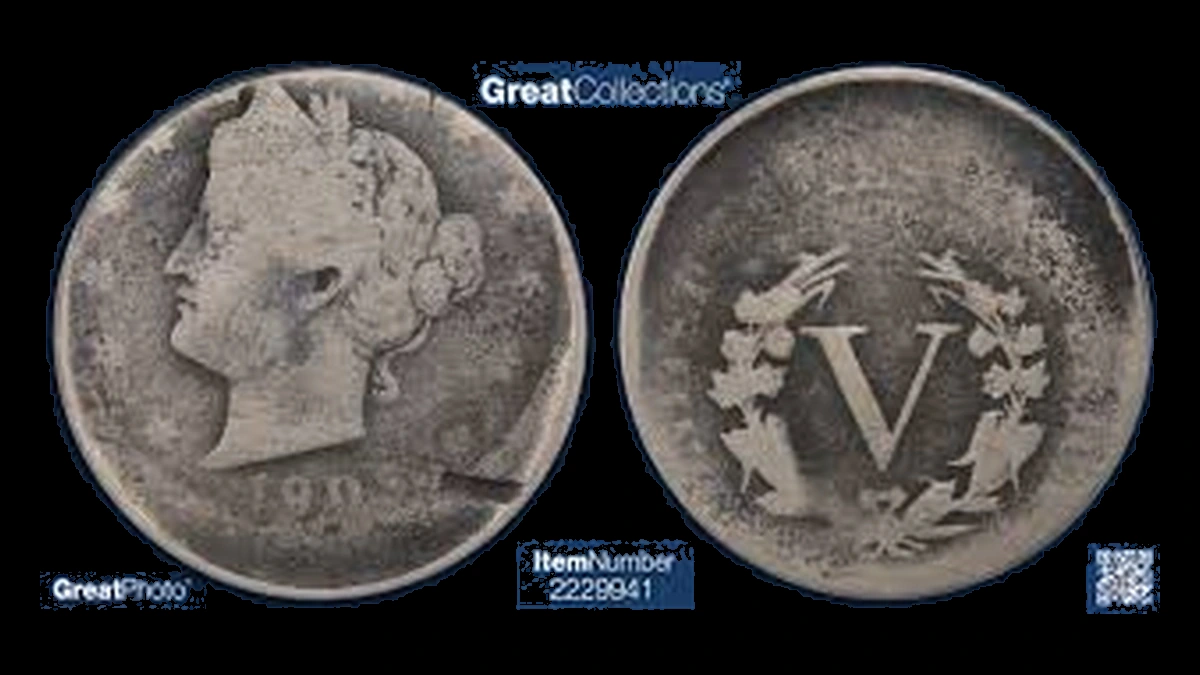
How to Identify
Compare both faces for the corresponding displaced boundary. An uneven rim on one face alone does not demonstrate that the whole blank sat off center.
The recorded 1905 example is 10% off center and graded PCGS AG3, a heavily worn grade. Its listing provides no clock direction.
Confirm the surviving date and examine the transition into untouched metal. Wear smooths an existing design, while an original unstruck crescent records where no design was applied.
What It’s Worth
A smaller shift on a heavily worn coin is estimated at $100–$300; stronger, better-preserved dated pieces at $300–$1,500. The AG3 example belongs among the heavily worn comparisons.
No completed sale is supplied for that coin. More blank metal may look dramatic, but losing the year can make a piece less appealing to a date collector.
6. 1905 Nickel Design Crossing an Irregular Surface: Defective Planchet Error
An uneven patch may have existed in the prepared blank, also called a planchet, before it received the design. The recorded 1905 example carries a PCGS AU55 defective-planchet description.
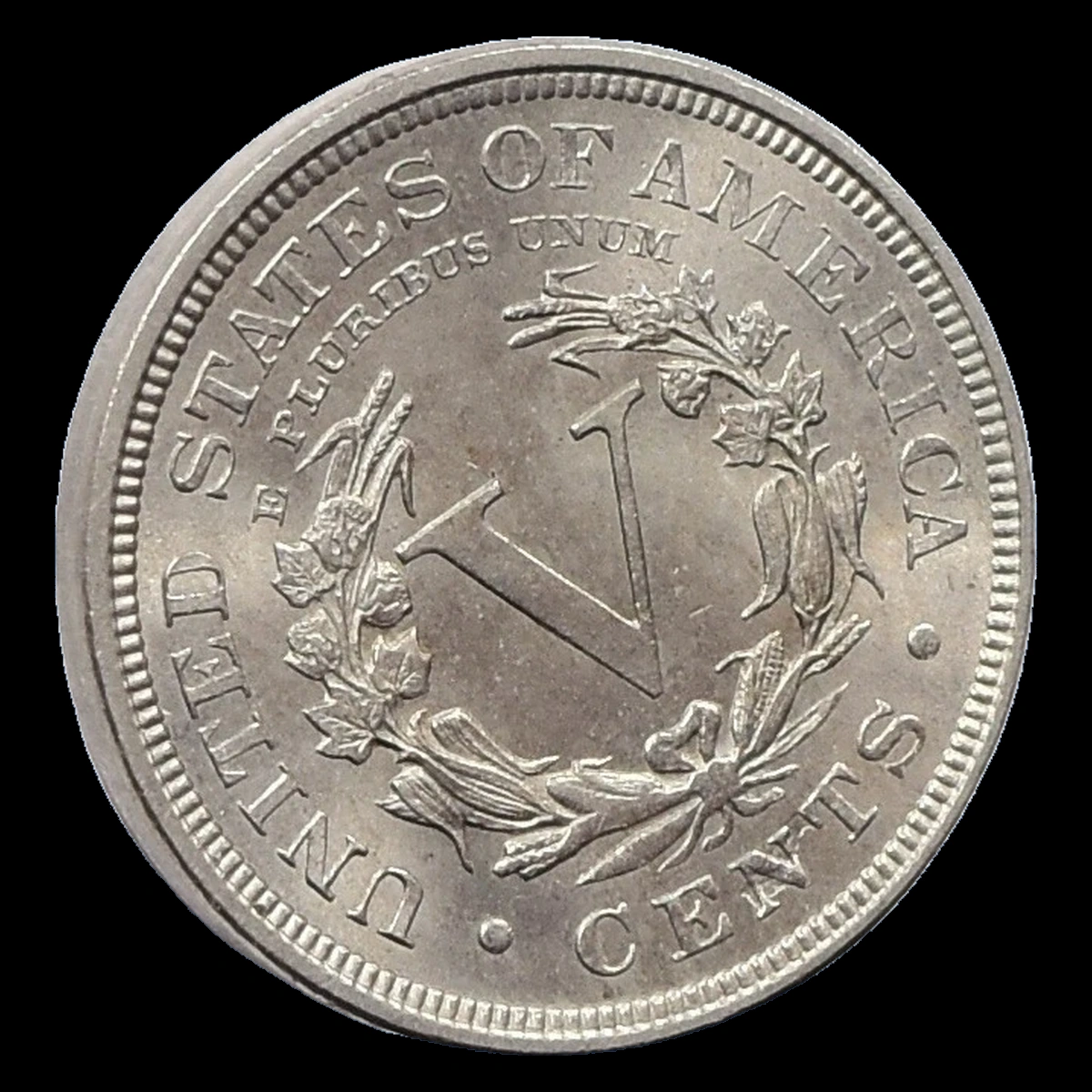
How to Identify
Study how the design meets and crosses the flaw, keeping nearby letters in the photograph. That relationship is more informative than an isolated close-up of rough metal.
The grading description establishes a broad blank flaw, not a foreign alloy or particular missing area. No exact weight or defect location is provided in the supplied record.
Check the edge for filing, crushing, and later cuts that might explain the shape. A vague rough spot should not be promoted to a specific wrong-metal error.
What It’s Worth
Comparable genuine defects are estimated at $50–$400. Greysheet records an $85 Heritage result in September 2024 for the PCGS AU55 example.
AU55 indicates light circulation wear. Readable design and a clear original flaw help make the coin a useful comparison, but the broad label alone adds no wrong-blank premium.
7. 1905 Nickel A Raised Line or Rim-Connected Lump: Die Cracks and Cuds Error
A broken stamping tool adds relief instead of removing coin metal. A narrow opening in the die fills to form a raised crack line, while a larger missing section at the edge can leave a rim-connected lump called a cud.
How to Identify
Use side light to follow a ridge above the field. Scratches cut into the surface, though their raised sides can be misleading if the central groove is overlooked.
A claimed cud should connect with the rim and replace the design in that area. Examine the adjacent plain edge for a blow or bend that pushed metal upward instead.
The 1905 reports give no exact crack path or cud position. Each candidate needs its own original feature, not a location borrowed from another year.
What It’s Worth
Modest cracks are estimated at $15–$100; substantial rim breaks at $100–$750. A small line merely reaching the rim does not automatically enter the stronger cud range.
Preservation and readable surrounding design matter in both groups. Several cracks still receive one whole-coin price.
8. 1905 Nickel An Extra Curve Immediately below the 0: Repunched Date Error
Focus on the lower edge of the 0 in 1905. The reported remnant is part of an earlier date impression left when the date was punched again in a slightly different position on the tool.
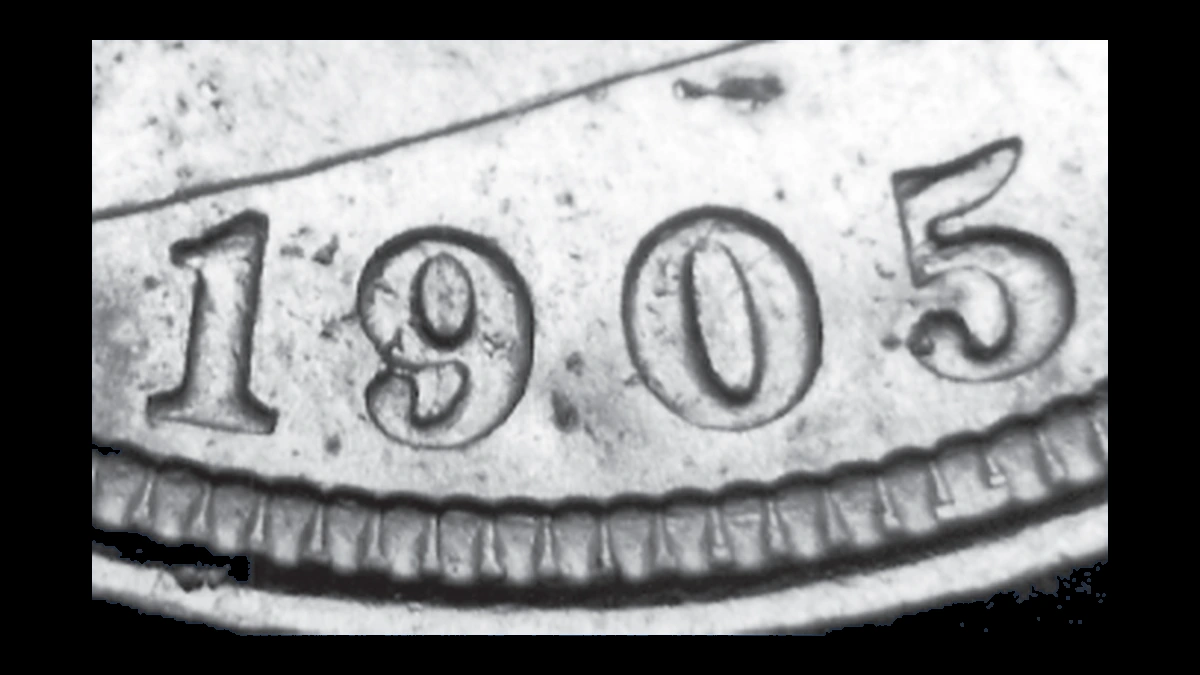
How to Identify
Keep the full date and the border teeth in view while examining the small curve. Its position immediately below the digit separates this report from misplaced number tops farther down in the border.
Compare the curve with a correctly identified example of the pattern. It should explain part of an earlier 0 rather than merely resemble a scratch, irregular lump, or flat shelf.
Move the light across the feature and inspect for alteration. A seller’s variety name cannot substitute for the matching original outline.
What It’s Worth
Clear worn examples are estimated at $25–$150; better-preserved, well-identified pieces at $150–$500. These estimates cover the complete nickel.
Wear may obscure the small remnant, and cleaning can lower the appeal of a coin whose feature remains visible.
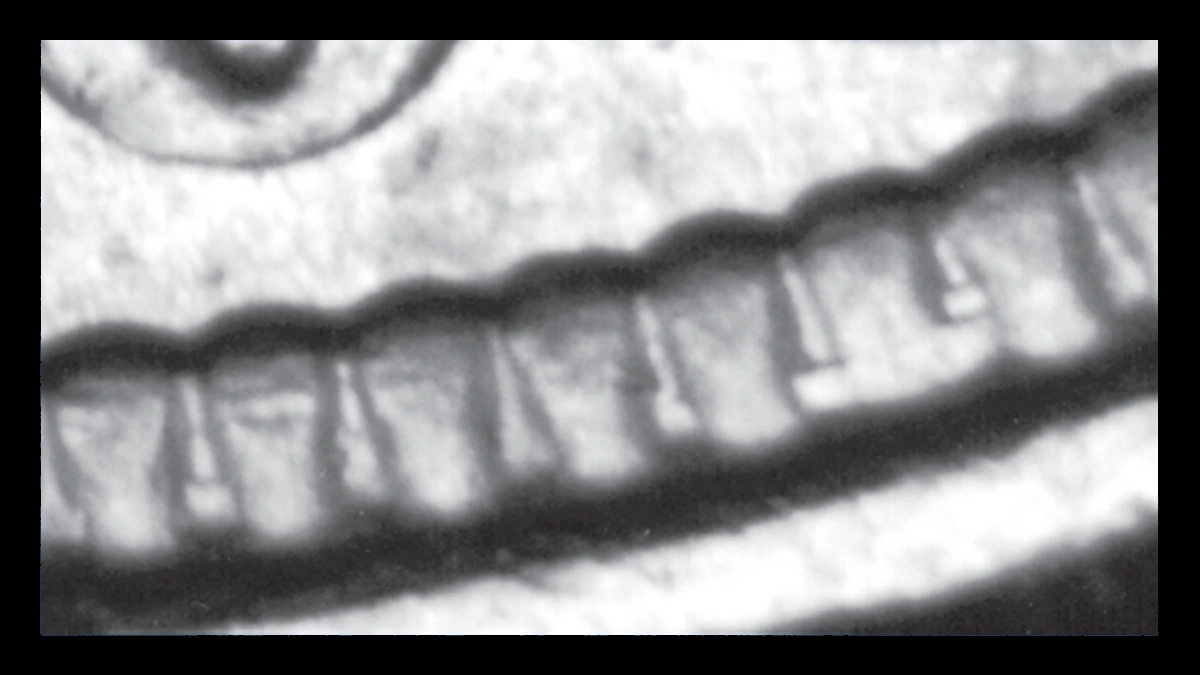
9. 1905 Nickel Number Fragments among the Border Teeth: Misplaced Date Error
Farther below the normal date, the reported tops of 0 and 5 interrupt the regular border teeth. They are attributed to a date punch placed too low before the correct date was positioned on the die.
How to Identify
Follow the row of border teeth with the complete 1905 date still visible for orientation. Compare the curved fragments and their positions with an identified photograph.
Do not connect unrelated bumps to invent a complete hidden digit. A rim impact can push metal into this area, so the fragment must belong to the struck design rather than later displacement.
This is a misplaced impression in the tool, not a second strike of the whole coin. It also differs from the repunched 0 remnant immediately beneath the normal digit.
What It’s Worth
The supplied estimates place worn examples at $10–$100 and clearer unworn coins at $125–$600. Recognizable fragments and the condition of the whole nickel determine the appropriate comparison.
An irregular border tooth without a matching number shape does not establish the variety.
Conclusion
The largest 1905 nickel premiums require more than an unusual appearance: the cent blank, foreign blank, and unresolved paired report each need their own evidence. Protect split metal and keep any related pieces in their original condition.
For the smaller date varieties, location is especially useful. A curve below the 0 and digit tops among the border teeth describe different features, even though both began with a date punch.