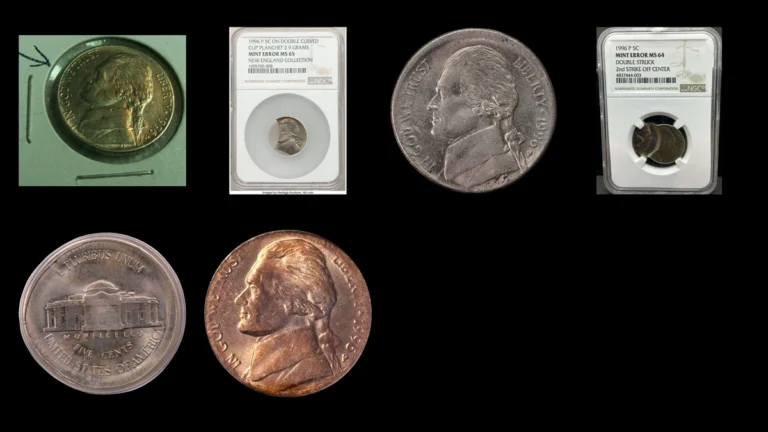
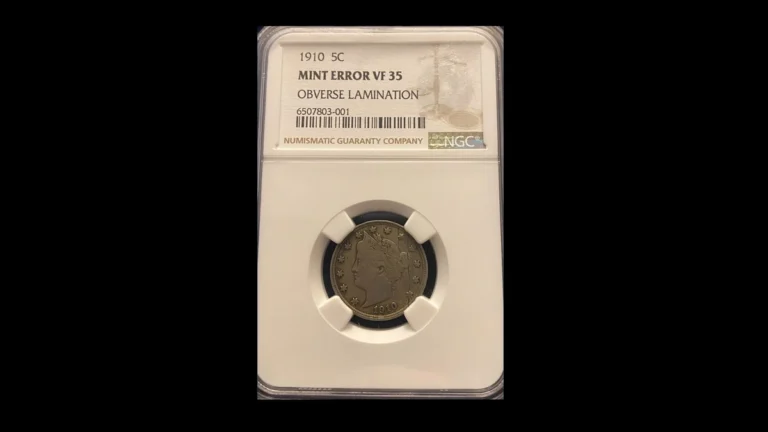
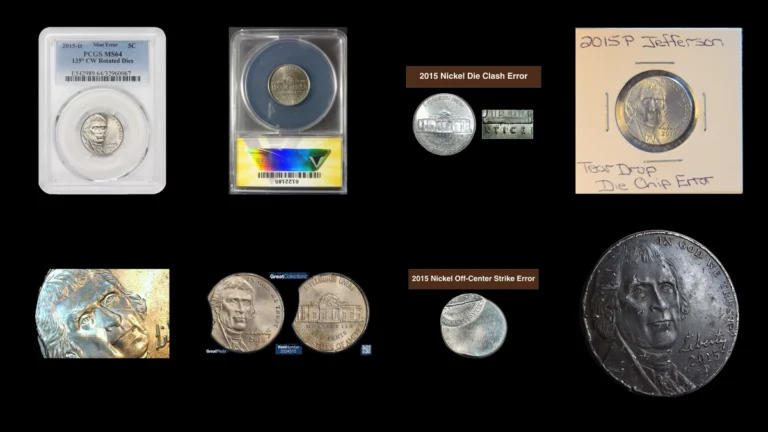
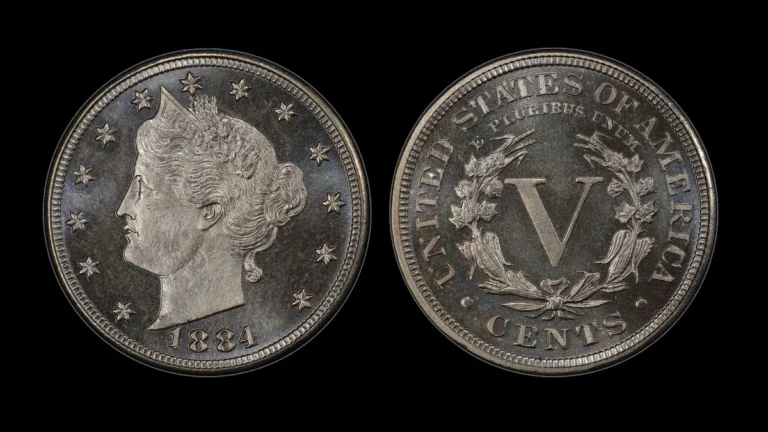
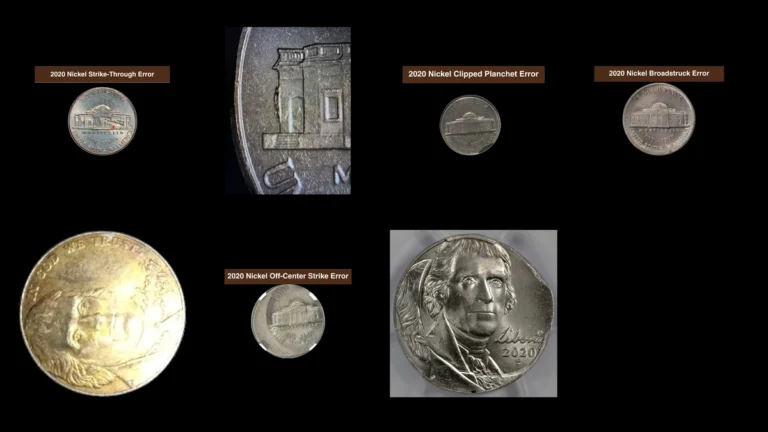
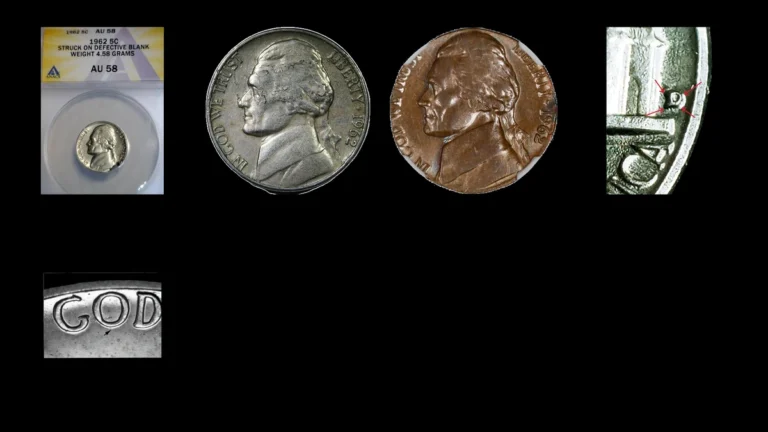
Rare 1978 Nickel Errors (List & Pictures)
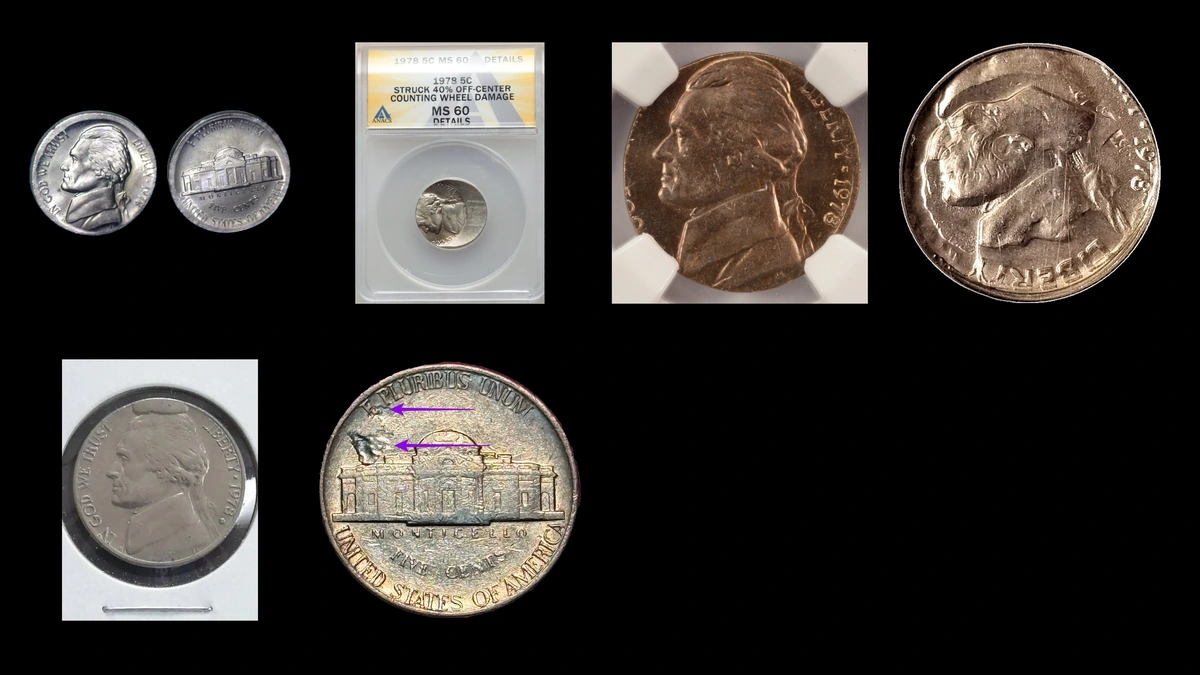
A 1978 nickel on a cent blank sold for $207; a different-year nickel-over-cent comparison brought $1,020. Estimated values for 1978 Jefferson nickel errors span $5–$6,000, including a reported nickel-over-dime whose $5,250 listing was an asking price.
Examine the whole design and metal before deciding whether missing detail, a shifted strike or another denomination explains the coin.
| What stands out? | Possible error | Estimated range |
|---|---|---|
| Complete design on a wider coin | Broadstrike | $25–$250 |
| Unused metal beside incomplete design | Off-center strike | $30–$400 |
| Small copper-colored disk | Cent-blank strike | $200–$900 |
| Earlier dime details under nickel designs | Double denomination | $1,000–$6,000 |
| Raised patch on the front | Die break | $15–$300 |
| Local weak or missing detail | Filled die or strike-through | $5–$150 |
A regular nickel weighs 5 grams and measures 21.21 millimeters with a plain edge. Philadelphia used no P mintmark on ordinary 1978 nickels, but an extreme strike that loses the mintmark area cannot be assigned a mint from absence alone.
1. 1978 Nickel Extra Width Around a Complete Design: Broadstrike Error
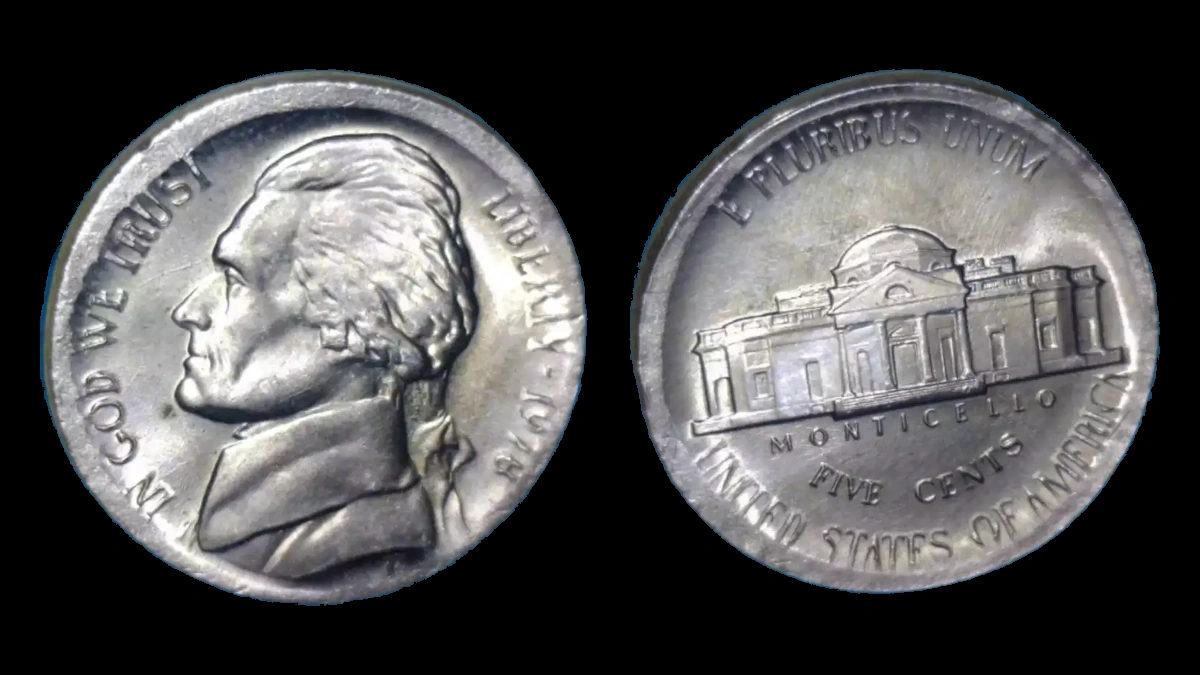
If all the outer words remain within a spread border, investigate a broadstrike. The collar, a ring around the blank during striking, failed to restrain the metal normally.
The reported 1978 type has no fixed mint or measured specimen. Its complete design matters as much as its extra width.
How to Identify
Follow the outer letters on both faces, then measure the outline in several directions. A coin with design missing beyond one edge needs an off-center comparison instead.
Inspect the extra border and high points for hammer marks or crushing. Later flattening can also enlarge a nickel, and a smooth edge proves little on this normally plain-edge denomination.
What It’s Worth
A genuine ordinary-strike broadstrike is estimated at $25–$250. Clear original spreading and preserved detail help support the stronger end.
A 1999-P broadstrike brought $89 in March 2025. This different-year sale provides context without supplying measurements or a mint for the 1978 report.
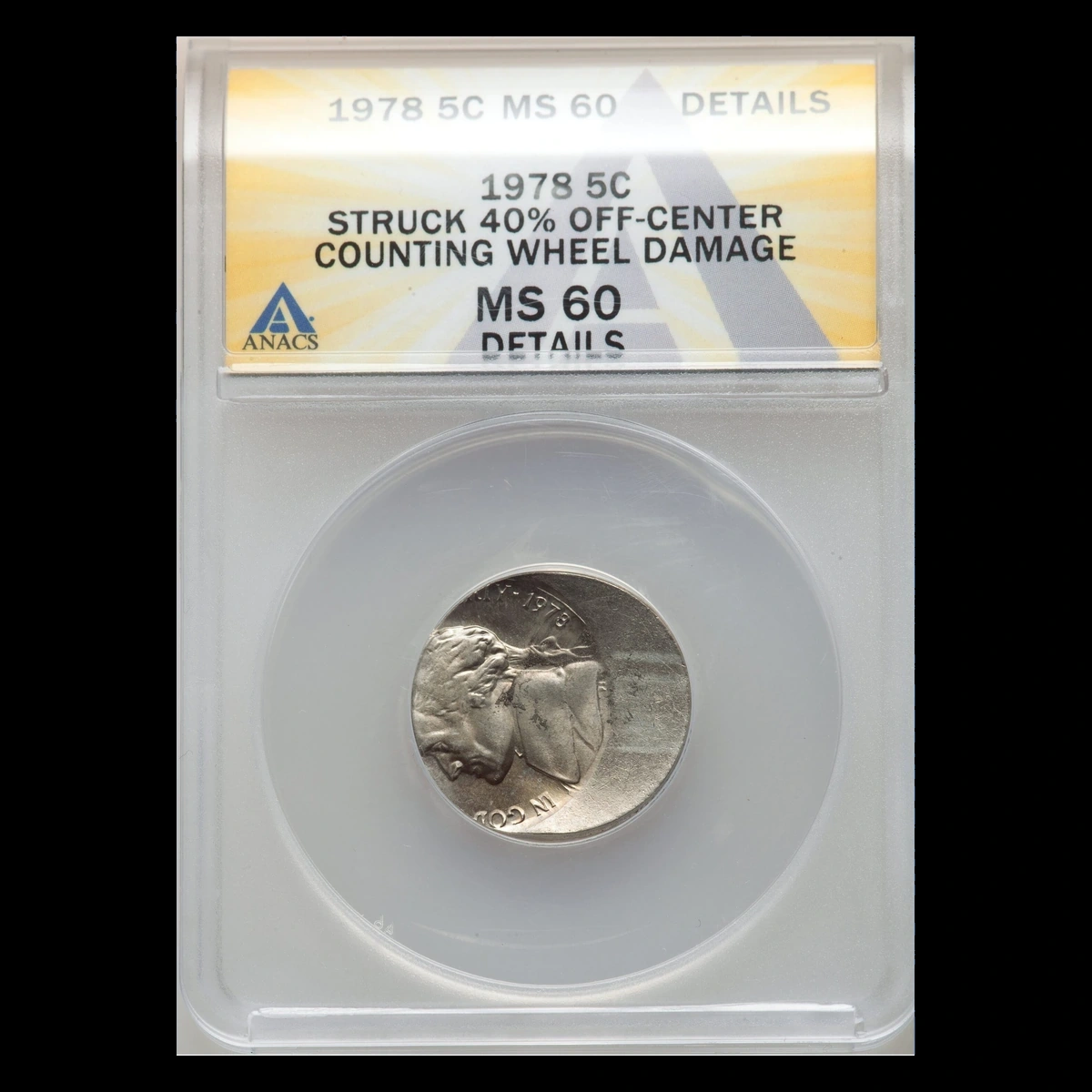
2. 1978 Nickel An Unused Crescent Along One Side: Off-Center Strike Error
A blank positioned away from the center can miss part of the intended design. The opposite section remains unstruck but still contains metal.
No specific mint, angle or percentage is established for the general 1978 report. A readable date is necessary before assigning a candidate to this year.
How to Identify
Compare both faces to connect the solid unused area with the lost design. One misplaced blank should explain both impressions.
Examine the boundary for grinding or polishing that could have removed an earlier finished image. A slightly uneven rim with a complete design is not the same as a true off-center strike.
Record the surviving mintmark area along with the date. Do not fill in an unreadable year or infer Philadelphia where the relevant area never landed on the coin.
What It’s Worth
Genuine dated ordinary-strike examples are estimated at $30–$400. The amount of shift, condition and remaining identification affect the comparison.
A 1999-D nickel struck 65% off center sold for $75 in September 2024. Its percentage belongs to that coin and is not a diagnostic for 1978.
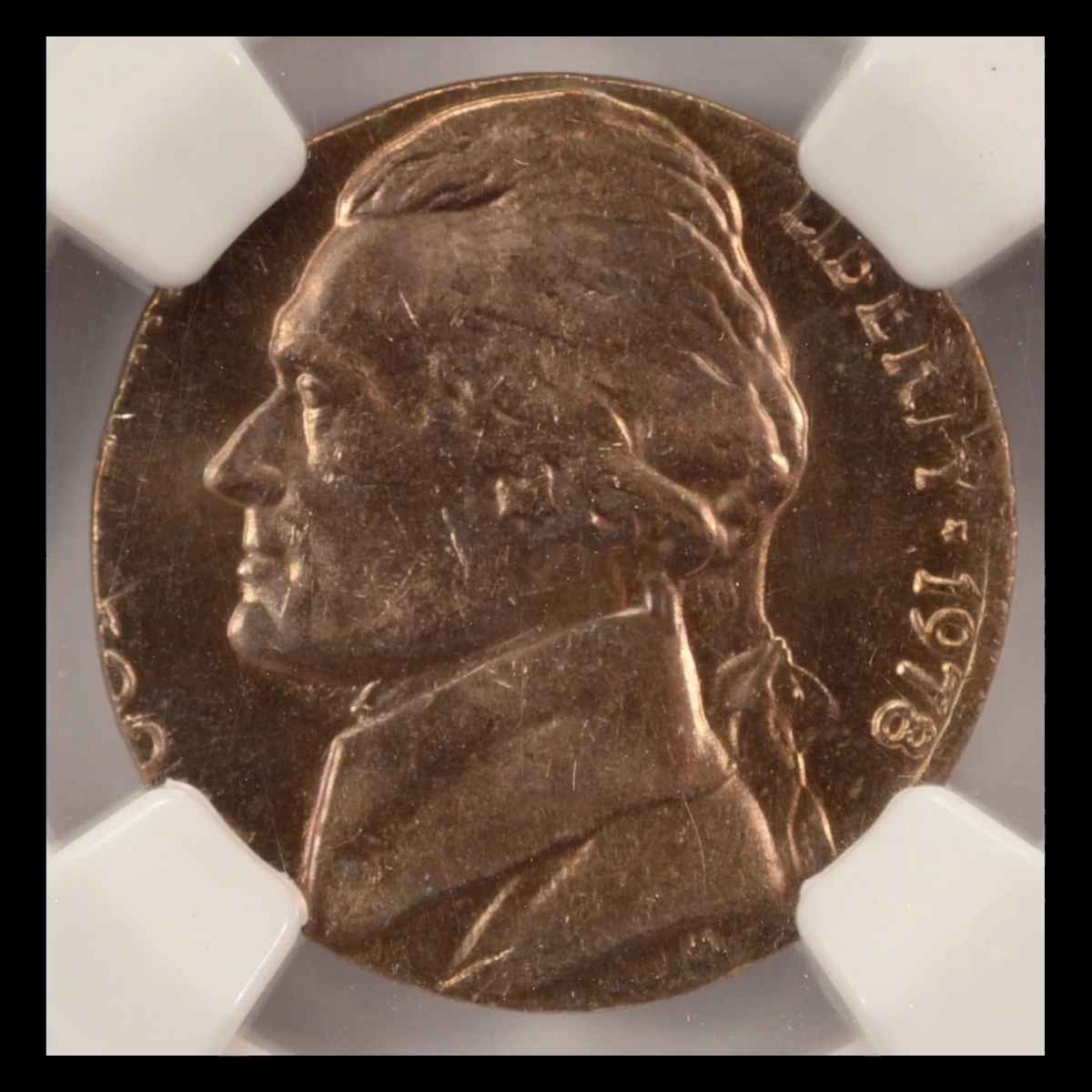
3. 1978 Nickel A Cramped Design on Copper: Cent-Blank Strike Error
A smaller copper cent blank can enter the nickel press and receive Jefferson instead of Lincoln. Some outer wording then falls beyond the available metal.
The recorded Philadelphia example is PCGS MS62 Red and Brown, with an almost complete date. A separate Denver NGC MS65 Red and Brown coin must retain its own grade and identity.
How to Identify
A cent blank of this period starts near 3.11 grams and 19.05 millimeters. These standards help assess a loose candidate but are not supplied measurements for the auctioned specimen.
Compare naturally cropped lettering with the edge and metal, allowing for spreading under the nickel strike. Filing and an added copper coating can imitate size or color.
No earlier Lincoln design is required because the starting piece was unused. A full-size copper-colored nickel with all outer detail intact needs a different explanation before this attribution fits.
What It’s Worth
Comparable authenticated 1978 cent-blank errors are estimated at $200–$900. Remaining date and preservation are central to the comparison.
The PCGS MS62 Red and Brown coin sold for $207 on April 29, 2006. That result does not price the separate higher-graded Denver example.
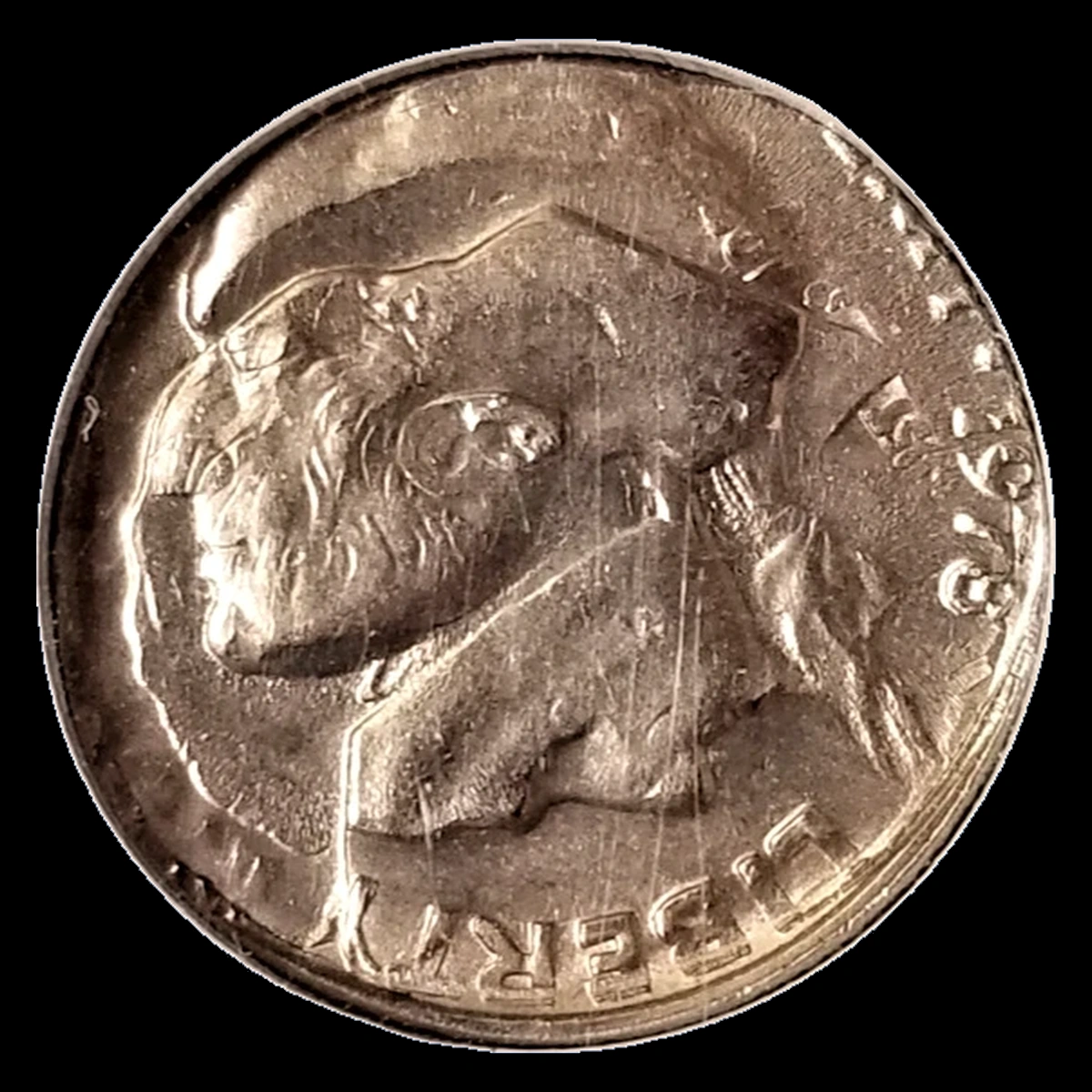
4. 1978 Nickel Dime Details Beneath Jefferson: Double Denomination Error
An already struck dime can receive a later nickel design. Surviving parts of both denominations distinguish this event from a nickel made on an unused dime blank.
A seller reported a 1978 example as NGC MS63, without establishing the dime host’s year. The actual label and overlapping designs must support that description on the same coin.
How to Identify
Find a recognizable older Roosevelt or torch feature beneath the newer nickel impression. Small size and pale color cannot demonstrate that a finished dime was used.
A modern dime’s usual 2.27 grams and 17.91 millimeters are starting comparisons, not a recorded weight or date for this listing. Inspect the edge for a join or later squeezing marks.
Trace where a nickel design crosses the earlier dime detail. The relationship should show successive designs in the same struck metal.
What It’s Worth
An authenticated nickel-over-dime of the reported type is estimated at $1,000–$6,000. Original surfaces and readable remnants of both designs support the comparison.
The recorded listing asked $5,250 with offers invited. That is not a completed sale.
A 1986-P nickel over a finished cent sold for $1,020 in September 2019. Its different year and host denomination limit how directly it can be compared.
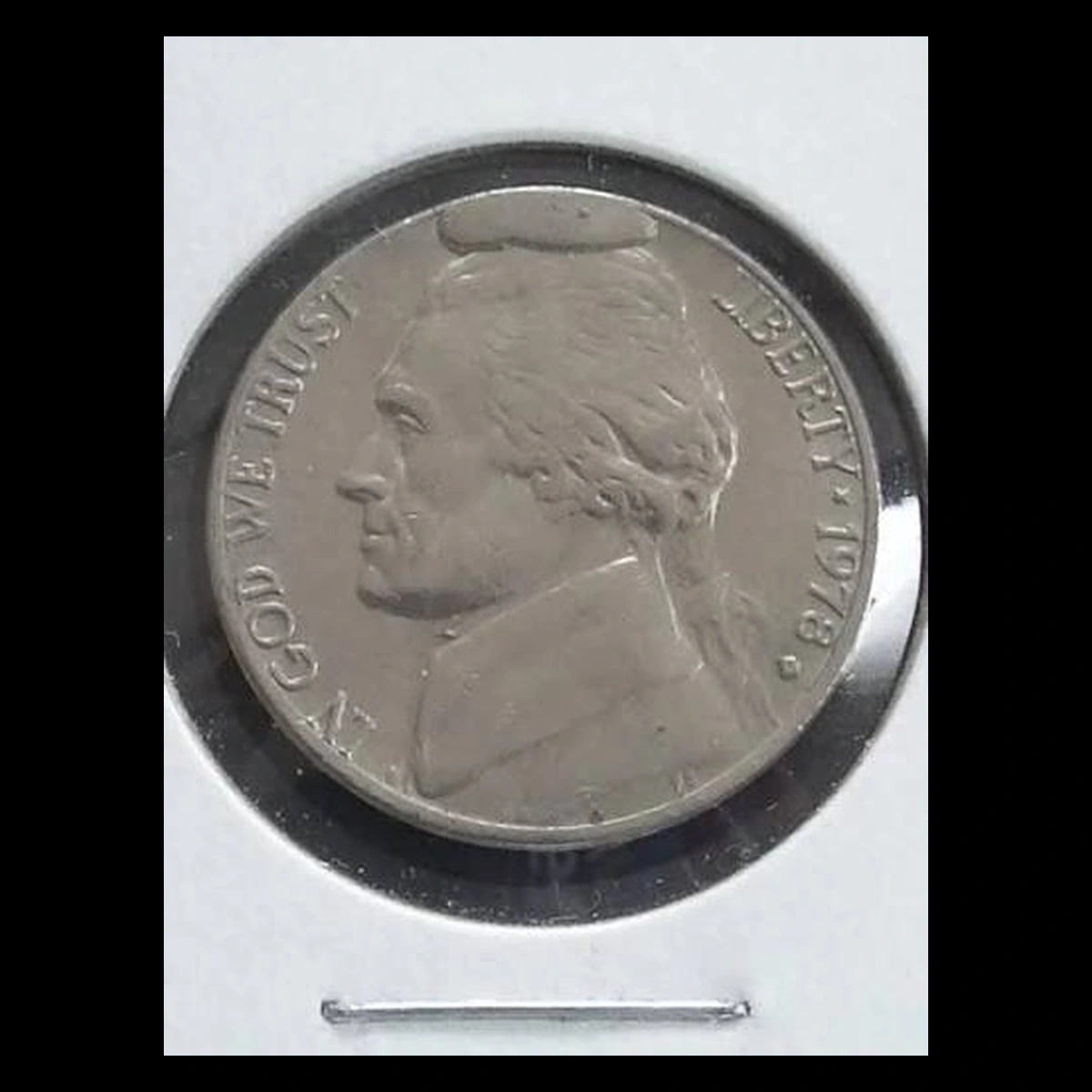
5. 1978 Nickel An Extra Raised Front Patch: Die Break Error
A missing piece of die steel leaves space for coin metal to rise during striking. The resulting raised patch can replace part of the intended design.
A recorded 1978-D NGC AU58 example appeared with two other 1978-D front-break nickels and a 1979 coin. Those pieces do not establish one shared break outline.
How to Identify
Compare the whole patch and surrounding portrait with the selected specimen. If the patch reaches the rim, that connection supports the more specific term cud.
Inspect the nearby edge for an impact and the surface for a seam or added material. A dent that pushed metal onto the face is a different process from a broken die.
What It’s Worth
Comparable original 1978 die breaks are estimated at $15–$300. Size, clarity and the remaining coin’s condition affect their appeal.
The four-coin group sold for $132.25 in August 2010. The total covers all three 1978-D nickels and the separate 1979 coin, not the AU58 specimen alone.
6. 1978 Nickel Local Missing Letters or Steps: Filled Die Error
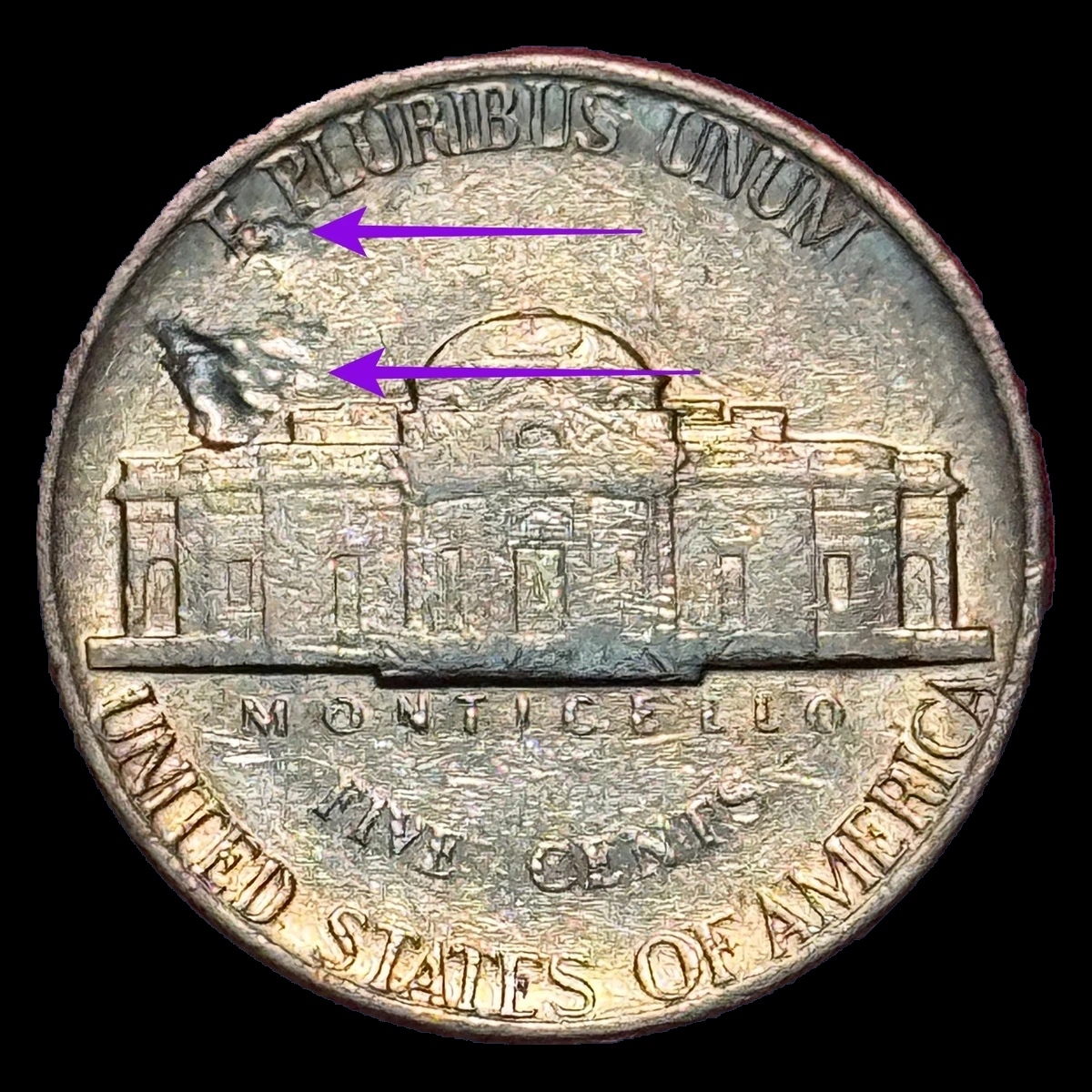
Grease or debris can fill small recesses in a die and prevent parts of the design from forming. This may leave a local weak patch beside sharper detail.
The 1978 report mentions letters and Monticello’s steps without one fixed specimen or mint. Missing stair lines alone do not identify the obstruction.
How to Identify
Compare the steps with neighboring walls and words, then examine Jefferson’s high points. Widespread flattening may indicate wear or an ordinary weak strike rather than local blockage.
Inspect where the sharp design meets the weak area. Scratches, polishing or other worked surfaces can show that completed detail was removed later.
What It’s Worth
Small genuine filled-die areas are estimated at $5–$40, with larger clear interruptions around $40–$150. The range depends on evidence of an original striking problem.
A 2000 Philadelphia strike-through sold for $84 in February 2015. That different-year comparison does not identify a particular missing letter or material on a 1978 coin.
Conclusion
A 1978 nickel can lose detail because the blank was misplaced, the wrong size or blocked by material. Checking the complete outline and both faces helps separate those possibilities before a close-up feature receives a name.
Keep the evidence and price on the same object. The die-break group total is not an individual sale, and the reported nickel-over-dime asking price remains an offer until a completed transaction is documented.