Rare 2009 Dime Errors (List & Pictures)
Some unusual dime surfaces need magnification; others need a careful metal examination. The nine groups of 2009 dime errors below have estimated values of $10–$1,000, with many individual prices supplied as year-guide reports.
A documented cloth-strike comparison brought $384 in September 2024, but that coin was dateless. Follow the guide from color and peeling metal to design placement, then inspect weak patches and extra outlines.
| What you notice | Possible explanation | Estimated value |
|---|---|---|
| Coppery or dark color | Improper annealing | $40–$1,000 |
| Persistent colored streaks | Improper alloy mix | $50–$600 |
| Lifted flap or separated layer | Lamination or layer separation | $30–$900 |
| Blank crescent beside incomplete designs | Off-center strike | $40–$450 |
| Broad shallow design | Low-pressure strike | $75–$350 |
| Local weakness or a weave pattern | Grease or cloth strike-through | $10–$700 |
| Parallel raised portrait-area lines | Feed-related die scrapes | $25–$600 |
| Portrait traces near the torch | Die clash | $40–$400 |
| Repeated front contours | Doubled front design | $25–$750 |
Normal P and D circulation dimes weigh 2.268 g and measure 17.9 mm, with copper-nickel coverings over a copper center and a grooved edge. A 2009-S silver Proof is a different collector issue weighing 2.50 g.
Measure accessible coins with a precise scale and calipers, and use existing records for sealed examples. Original surfaces are part of the evidence, so avoid cleaning or lifting loose metal during inspection.
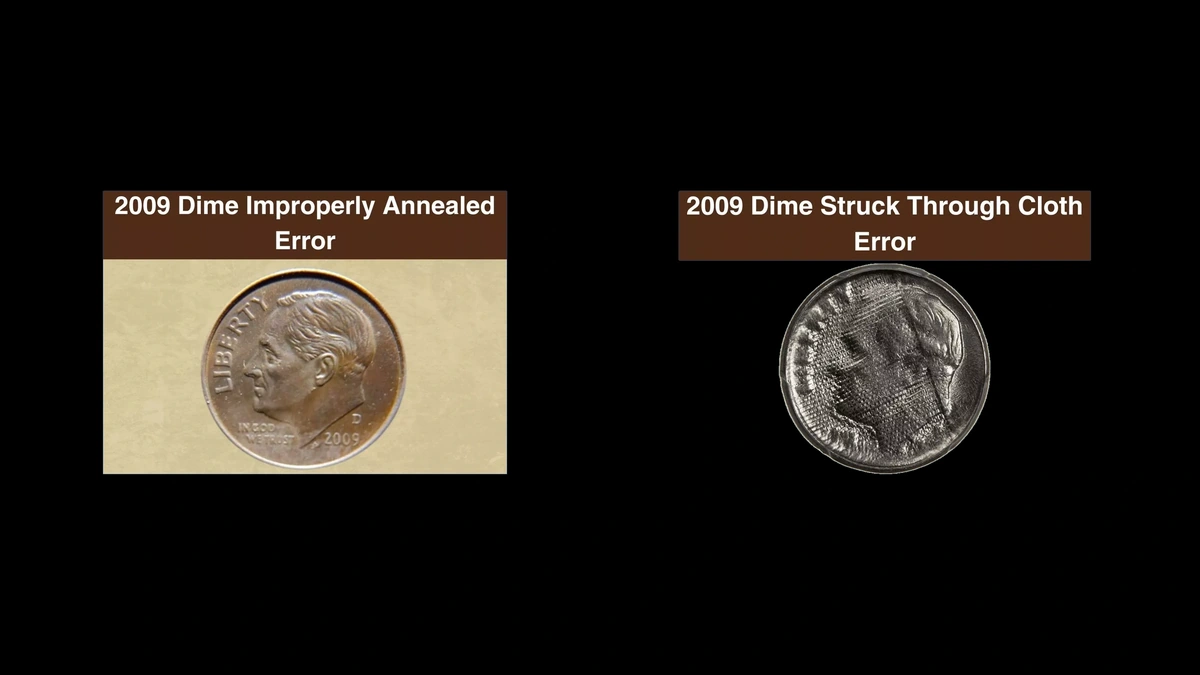
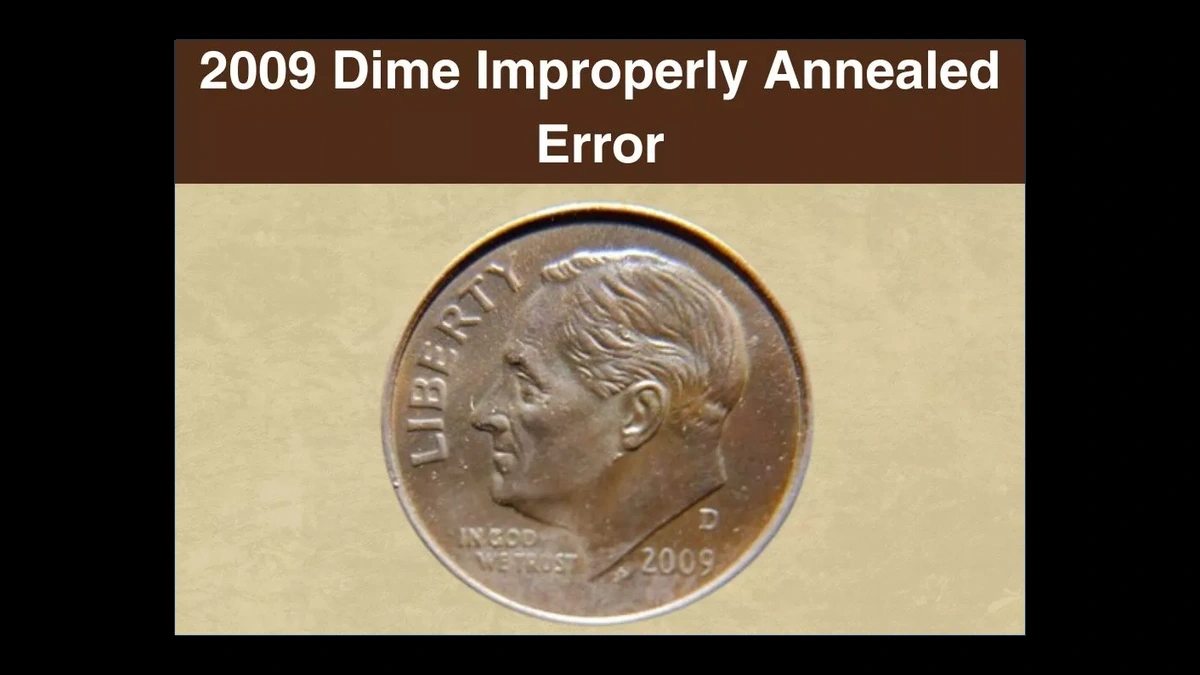
1. 2009 Dime Coppery or Dark Surfaces: Reported 2009-D Improper Annealing Error
Annealing is the heating step that softens blanks before striking. Problems during that treatment can affect their surface metal and color.
The year guide describes a Denver example. Uneven coverage can occur, while even color does not establish that a change happened inside the Mint.
How to Identify
Use neutral lighting to compare portrait, fields, and edge. Warm lamps and altered photographs can make normal silver-gray metal appear coppery.
Look under a 10× magnifier for coatings, chemical attack, or later heat damage. Undisturbed struck texture helps preserve the evidence, but a specialist must still distinguish the cause from ordinary discoloration.
What It’s Worth
Identified Mint-made annealing color has an estimated $40–$1,000 range. Convincing attribution and attractive unworn surfaces are especially important at the upper end.
The guide reports $978 for a 2009-D MS65, an unworn grade with relatively few marks. That figure is not a verified auction record here and does not apply to color alone.
2. 2009 Dime Streaks in the Metal: Reported 2009-P Improper Alloy Mix Error
An alloy is a mixture of metals, such as the copper and nickel in the dime’s outer coverings. Uneven composition can create streaks, but a striped surface does not establish that explanation by itself.
The Philadelphia report supplies no exact unusual metal recipe. Normal clad construction already includes a visible copper center at the edge.
How to Identify
Photograph how the streaks cross raised detail and smooth fields on both sides. Stains and ordinary color changes can follow similar-looking patterns.
Seek a nondestructive composition test interpreted with the layered construction in mind. Normal weight and diameter cannot rule out a composition problem, but neither unusual measurements nor edge copper prove one.
What It’s Worth
A verified alloy problem has an estimated $50–$600 range. The extent of the affected metal and the coin’s condition influence its appeal.
The guide reports $575 for an MS60 example, an unworn grade with substantial marks. That reported comparison does not identify the composition of another streaky dime.
3. 2009 Dime A Flap Lifts from the Front: Reported 2009-P Peeling Metal and Layer Separation Error
A natural split can lift a thin portion of the dime’s surface while leaving it partly attached. The exposed boundary helps determine whether separation follows a clad interface or lies within another part of the metal.
The year guide reports a front-side example from Philadelphia. Calling it lamination does not automatically establish which layer or internal plane failed.
How to Identify
Follow the split into its remaining connection without bending the flap. Observe how original struck detail meets or crosses the boundary.
A gouge can curl metal upward, while deliberate prying can separate a covering. Scraping, pushed-up edges, and tool marks require a different explanation from a natural internal split.
An attached flap can leave weight nearly normal. Lost portions can reduce it, so the scale reading must be considered alongside the actual separation.
What It’s Worth
Identified examples have an estimated $30–$900 range, from small worn peels to substantial well-preserved separations. Size alone does not outweigh damage caused during handling.
The guide reports $865 for a 2009-P MS63. Treat that as a reported comparison rather than the expected value of every lifted patch.
4. 2009 Dime A Narrow Blank Crescent: Reported 2009-P Five-Percent Off-Center Strike Error
The reported Philadelphia dime is about five percent off center, a modest displacement. Its blank entered the press out of position and retained an area the design did not reach.
Because the shift is small, checking both faces is particularly useful. A wide border on only one face may involve a misaligned die rather than a misplaced blank.
How to Identify
Find the boundary between struck design and original blank metal on each face. Both impressions should support the same displaced position.
Inspect for grinding that could have erased detail, and confirm the date and P remain readable. The report supplies no fixed clock direction for this coin.
What It’s Worth
Identified readable-date examples have an estimated $40–$450 range. Worn coins and barely visible displacements make lower comparisons.
The guide reports $450 for an unworn 2009-P. That upper figure should not be transferred to every dime with an uneven rim.
5. 2009 Dime Weak Detail Extends Across the Coin: Reported 2009-D Low-Pressure Strike Error
Insufficient force can leave metal short of the dies’ deeper design recesses. The resulting portrait, letters, and rim may all be underdeveloped.
The Denver report is sometimes described as a die adjustment strike. A shallow impression alone cannot reveal why the pressure was low or establish an adjustment event.
How to Identify
Compare the rim and lettering on both faces with a normal dime. Look for original texture in areas where the design never formed fully.
Smooth patches on exposed high points may instead indicate wear removing previously complete details. A localized weak area beside a sharp design can point toward an obstruction rather than low pressure overall.
What It’s Worth
Identified examples with broad weakness have an estimated $75–$350 range. Unworn surfaces make the incomplete formation easier to assess.
The year guide reports $315 for a 2009-D MS62, an unworn grade with noticeable marks. It is a guide comparison rather than an independently established auction result in the supplied material.
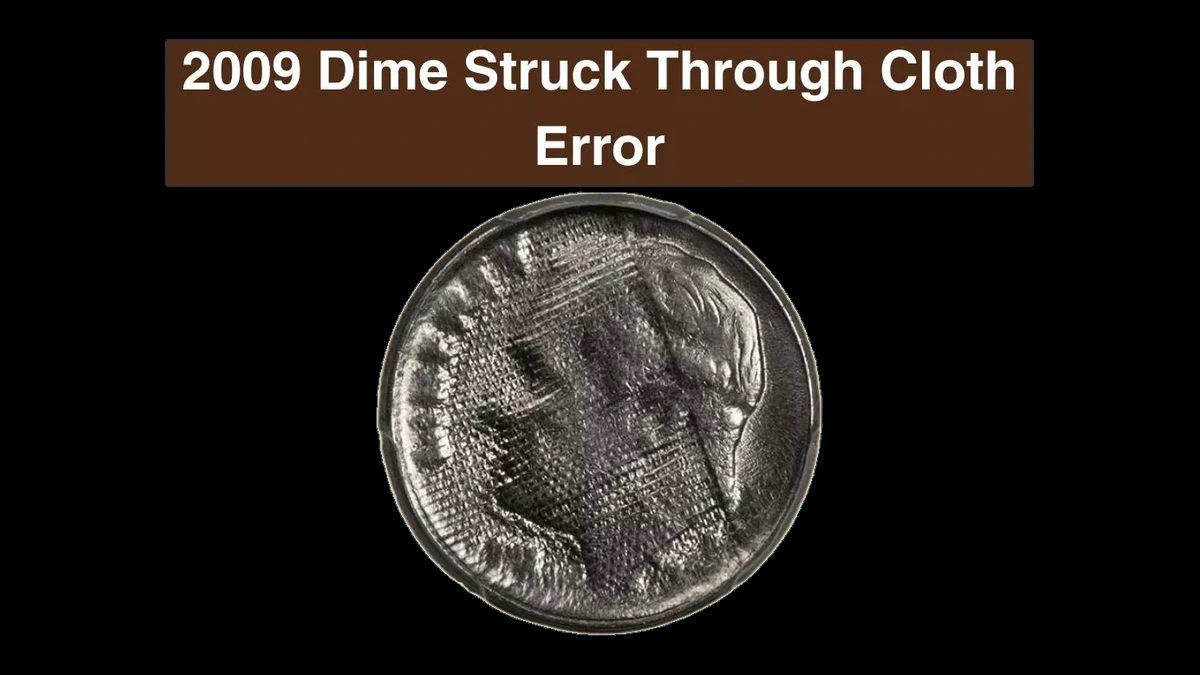
6. 2009 Dime Missing Portrait Detail or a Woven Pattern: 2009 Grease and Cloth Strike-Throughs Error
Material between a die and blank can block or imprint the design during striking. The reports describe grease affecting a Denver portrait and cloth producing a woven pattern on a separate Philadelphia coin.
Grease may leave details weak or absent, while crossing cloth threads can create a textured impression. A visible weave does not mean fabric remains attached to the coin.
How to Identify
For the grease report, follow the transition from missing portrait detail into sharp surrounding design. Polishing lines, scraping, or rubbed metal can indicate later removal instead.
For cloth, inspect intersecting lines forming a regular weave and their relationship to the remaining design. Loose threads lying on top prove little, and attached material should not be pulled away.
What It’s Worth
Grease effects have an estimated $10–$450 range, while clear cloth patterns are estimated at $100–$700. A small missing letter fits the lower grease comparisons.
A dateless Roosevelt cloth strike-through sold for $384 in September 2024 in ANACS AU55. Its slight wear and matching mechanism provide context without turning it into a 2009 sale.
7. 2009 Dime Parallel Raised Lines near the Portrait: Reported 2009-P Feed-Related Die Scrapes Error
Scratches already present in a die can leave raised ridges when coin metal enters them. A moving feeder, ejector, or another machine part can cause such tool damage.
The Philadelphia report links portrait-area lines to a feeder. As the die-scrape explanation makes clear, establishing tool damage and naming the exact moving part are separate questions.
How to Identify
View the lines under low-angle light to determine whether they form a group of raised ridges. An ordinary scratch cuts into metal and may push a little material upward beside its groove.
Matching marks on other coins in the same positions support a pattern carried by the die. A set of lines alone cannot identify the particular machine part that caused it.
What It’s Worth
Identified die-scrape patterns have an estimated $25–$600 range. A bold pattern on a clean unworn coin gives a stronger comparison than ambiguous marks.
The guide reports $615 for a 2009-P MS62, just above that working range. A feeder label should not create an error premium when the evidence shows only post-mint scratches.
8. 2009 Dime Portrait Traces beside the Torch: Reported 2009-P Die Clash Error
A curve near the torch or olive branch may reproduce part of Roosevelt’s outline. It can originate when the dies meet without a blank and damage each other’s surfaces.
Later strikes transfer those opposite-design traces to coins. The reported Philadelphia locations provide areas to examine, not a reason to call every stray line a clash.
How to Identify
Compare both designs at matching size and trace the complete suspected fragment. Its shape and location should fit contact between the tools.
Do not assume that every clash mark must be recessed. Recognizable design relationships offer better evidence than a blanket rule about the height of a line.
What It’s Worth
Identified 2009 clashes have an estimated $40–$400 range. Strong traces and good preservation can make the error easier to appreciate.
A 1978-S Proof clash graded PR68 Deep Cameo brought $159 in October 2022. That specially made collector coin has a different finish from an ordinary 2009-P, so the sale offers only broader context.
9. 2009 Dime Repeated Front Contours: Reported 2009-D Doubled Design Error
A doubled die contains extra design detail before it ever strikes a coin. The same added contours can therefore recur on coins made with that tool.
The Denver report suggests examining the motto, LIBERTY, date, eye, and ear. It does not establish one known example with duplication in every listed area.
How to Identify
Begin with the clearest extra contour and follow it beside the main letter or portrait edge. Rounded separation and small split corners deserve a match to a documented pattern.
A low flat shelf that narrows the normal design can come from strike movement. Thickness or extreme photographic enlargement alone cannot establish a doubled die.
What It’s Worth
Identified examples have an estimated $25–$750 range. Clear separation visible under ordinary magnification makes a more persuasive comparison than vague extra thickness.
The guide reports $703 for a 2009-D MS64, but that price statement establishes no specific cataloged variety. The pattern must be identified before an individual coin can be compared with the report.
Conclusion
A useful examination follows the feature rather than the largest reported price. Color requires a cause, a loose flap needs its boundary preserved, and extra lines must be separated into design traces, die damage, or later scratches.
Within the estimated $10–$1,000 span, guide reports and documented auctions carry different evidentiary weight. Match the mechanism and condition carefully, keeping the Denver grease report separate from the Philadelphia cloth example.