Rare 1923 Dime Errors (List & Pictures)
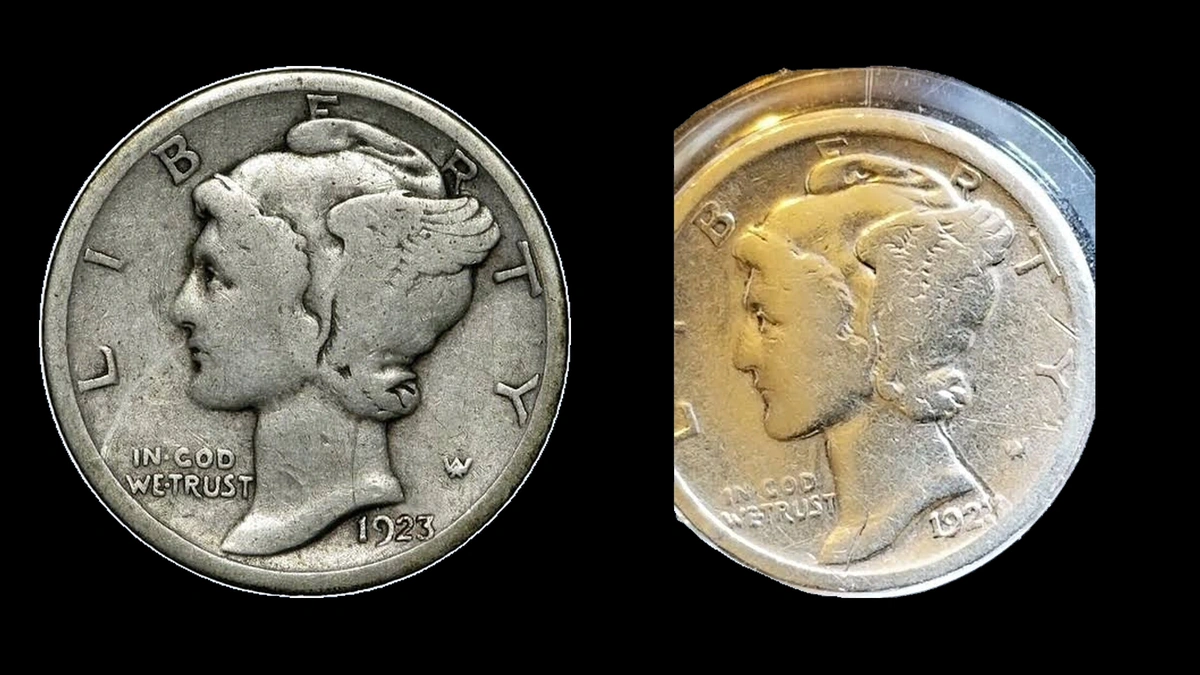
A 1923-S dime struck 10% off-center sold for $276 in March 2021, graded NGC VF35. The 1923 dime errors below span estimated whole-coin values of $20–$2,500.
Sort the clues by whether metal is missing, the design is displaced, or a smaller surface feature is present. A normal Mercury dime weighs 2.50 grams and measures 17.9 millimeters.
| Visible clue | Feature | Estimated whole-coin range |
|---|---|---|
| Missing edge | Reported clip | $50–$400 |
| Shifted design | Off-center strike | $150–$2,500 |
| Complete design within expansion | Reported broadstrike | $75–$500 |
| Repeated front contours | Reported doubled die | $50–$300 |
| Raised ridge | Die crack | $20–$150 |
| Thin separating layer | Lamination | $25–$250 |
| Local interrupted detail | Reported strike-through | $30–$300 |
1. 1923 Dime A gap in the original disc: reported clipped planchet Error
A clipped planchet is an incomplete metal disc that receives its design around an existing gap. It differs from a notch cut into a finished dime.
A 1923 discussion illustrates a coin labeled Very Good with a clip. The report establishes no mintmark, measured percentage, or position for the missing section.
How to Identify
Inspect the gap’s ends and adjacent edge grooves for evidence of striking around the boundary. Saw marks, sharp cut walls, or abruptly removed lettering suggest later trimming.
Weakness opposite a curved clip can provide support, although wear may hide it. Neither a curved outline nor a light weight alone proves the origin of the gap.
Keep the complete date and mintmark area visible. Do not assign the illustrated coin an unreported clip percentage or mint.
What It’s Worth
Small genuine circulated clips suggest an estimated whole-coin range of $50–$125, with more obvious examples around $150–$400. The supplied report gives no sale price for the Very Good coin.
A San Francisco example may require additional consideration for its date, mint, and grade. Later cutting or jewelry alteration does not earn the same error allowance.
2. 1923 Dime Part of the design misses the blank: off-center strike Error
The documented 1923-S NGC VF35 has a 10% displacement. A separate dealer snapshot lists a PCGS AU55 coin as “1923-x,” struck 70% off-center.
The x leaves the mint unresolved. It cannot be expanded into either Philadelphia or San Francisco merely to select a price comparison.
How to Identify
Check both faces for displaced impressions related to the same surviving unstruck metal. A shift confined to one side may come from a misaligned die.
Read the surviving date and mintmark evidence directly. Keep the 10% San Francisco VF35 and the 70% unresolved-mint AU55 attached to their own photographs and descriptions.
Inspect the plain margin for cutting or grinding. Missing design does not necessarily mean missing metal, since the blank may simply have escaped contact with the dies.
What It’s Worth
Modest readable-date circulated examples have an estimated whole-coin range of $150–$500. More dramatic attractive pieces may fit a broader $500–$2,500 range.
The 1923-S VF35 sold for $276 at Heritage on March 8, 2021. No realized price is supplied for the separate 70% AU55 listing.
That extreme example needs its own comparison. Its unresolved mint should not receive a San Francisco premium without supporting evidence.
3. 1923 Dime The full design survives within a wider edge: reported broadstrike Error
A broadstrike occurs when the collar that normally controls width fails to contain the metal. The dime spreads outward while retaining its complete design.
The 1923 guides list this category without a certified specimen or measured expanded diameter. The actual candidate needs measurement rather than an assumed amount of expansion.
How to Identify
Measure in more than one direction if the outline is oval. Then trace every peripheral detail on both faces to confirm that the design remains complete.
Reduced or absent normal reeding can support collar failure, but a filed edge can also look smooth. Examine how the design and edge formed together.
Later compression may widen a coin while flattening details. A natural expanded strike must be distinguished from that damage.
What It’s Worth
Ordinary circulated broadstrikes are estimated at $75–$200, with cleaner, more obvious examples around $200–$500. No specific 1923 auction sale is supplied.
The upper allowance concerns condition and visual appeal. A particularly valuable high-grade San Francisco dime needs its own assessment beyond these general comparisons.
4. 1923 Dime Extra outlines on the front: reported doubled die obverse Error
A doubled die carries repeated design detail before it strikes a coin, allowing one blow to transfer both outlines. That is different from a coin receiving two complete strikes.
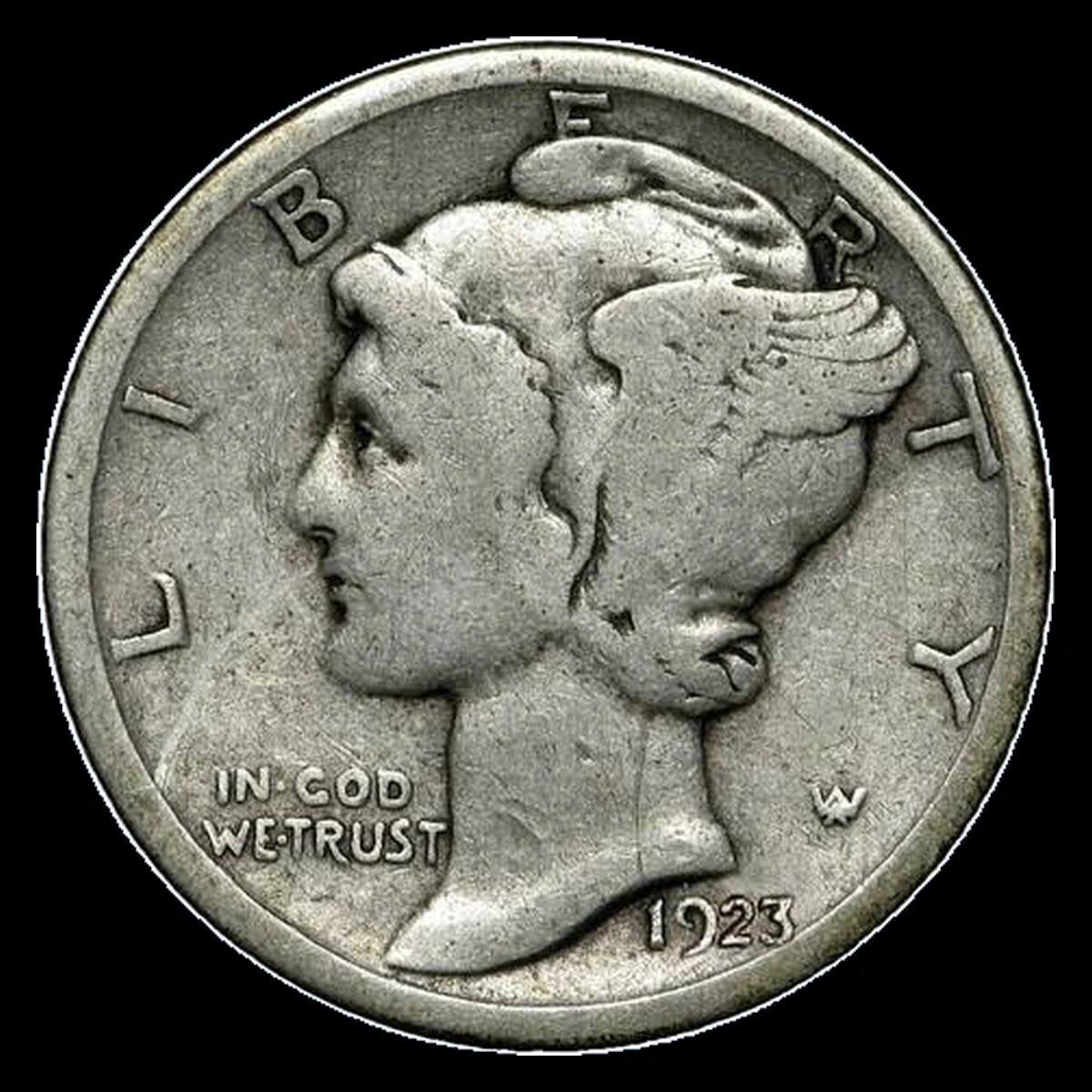
The reports mention minor Philadelphia and San Francisco examples without linking a numbered variety to a diagnostic photograph. Date, lettering, and portrait areas are therefore places to inspect, not a proven combined pattern.
How to Identify
Compare corresponding details with a normal front and look for rounded repetition or split corners. A flat shelf or one thick edge is weaker evidence.
Keep every claimed diagnostic tied to the same candidate. A doubled-looking date does not establish that LIBERTY or the portrait must also be doubled.
Read the actual mintmark: S means San Francisco, while no mintmark in an intact area indicates Philadelphia. AW is the designer’s mark and should not be mistaken for a mintmark.
What It’s Worth
The comparison estimate is $50–$300 once genuine minor doubled-die detail is established. No named 1923 auction specimen supports the range here.
A flat doubled-looking shelf from the strike does not receive that allowance. Clear identification and original surfaces are needed before applying a variety premium.
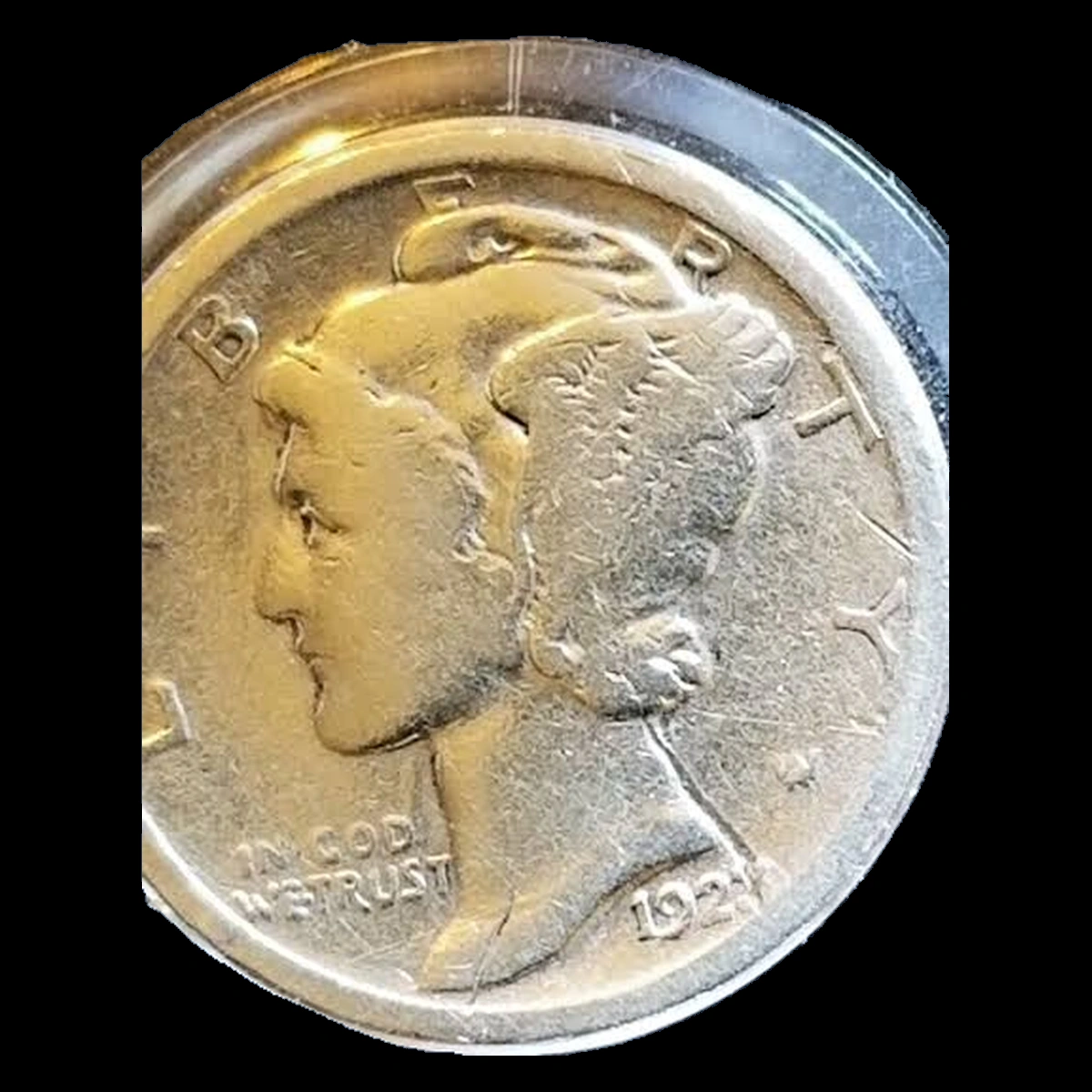
5. 1923 Dime A continuous raised line: die crack Error
A March 2012 coin-show report mentions a 1923 dime with a die crack but gives neither mint nor route. It does not establish a particular eye-area or reverse line.
A genuine crack ridge forms when metal enters a split in the die. The line transfers with the intended design and stands above the coin’s surface.
How to Identify
Follow the line through nearby details under low-angle light. A scratch cuts down into the coin and may have displaced metal along its sides.
A thin flap or an opening within a metal layer points toward separation instead. Confirm a continuous raised ridge before naming the feature from its location.
Record the mint and full date from the actual dime. The show report cannot supply information it did not state.
What It’s Worth
Ordinary circulated coins with modest visible cracks have an estimated whole-coin range of $20–$150. The 2012 report provides no transaction amount.
A small ridge usually adds limited interest. A scarce, well-preserved 1923-S may be worth more because of its underlying mint and grade, rather than because of the crack.
6. 1923 Dime A flap or shallow peel in the silver: lamination Error
Lamination is a separation within the coin’s metal that can lift a thin flap or leave a shallow rough area. The supplied reports do not assign one mint or fixed location.
A local peel is also different from the entire disc splitting into two complete pieces. Those claims require different physical evidence.
How to Identify
Trace the boundary between intact silver and the separating layer. Look for a thin natural layer rather than adhesive on top or directional scraping marks.
Leave attached metal in place and inspect both faces and any seam reaching the edge. A shallow peel may barely affect the weight, while a larger lost piece can reduce it.
Do not infer the extent of separation from a dark patch alone. The layered boundary is the useful evidence.
What It’s Worth
Localized circulated peeling is estimated at $25–$100, with larger clear separations around $100–$250 for the whole coin. These are working comparisons, not sales of a specific 1923 example.
The underlying mint and preservation remain relevant. An attached flap may show the feature clearly, but disturbed surfaces can still reduce the coin’s appeal.
7. 1923 Dime A localized interruption in the picture: reported struck-through Error
Material between a blank and die can block contact or press an impression into the coin. The obstruction may then fall away, leaving a hollow or weak patch beside intact design.
The 1923 guide reports the category for Philadelphia and San Francisco without identifying a certified impression or retained object. No specific wire, fabric, or other material is established.
How to Identify
Follow the intact design toward the affected patch and study how it stops or weakens. Dirt covering an already struck design is a different condition.
Wear generally affects exposed high points, while corrosion may create rough porous cavities. Do not scrape the surface to test either explanation.
Look for a boundary consistent with interruption during striking rather than a later gouge. An object attached afterward does not establish a retained strike-through.
What It’s Worth
A shallow local interruption is estimated at $30–$100, while a larger clear impression may fit $100–$300 as a whole-coin value. No particular 1923 auction result is supplied.
The range assumes a genuine Mint-made feature with collectible surrounding surfaces. It includes no separate retained-object premium because the report establishes no such object.
Conclusion
The strongest direct sale reference here is the 10% off-center San Francisco VF35. The separate 70% coin remains unresolved by mint, and several smaller-feature categories lack a named certified specimen.
Let the actual coin supply the missing details. A raised ridge, thin separating layer, missing edge, and plain unstruck margin each need their own evidence before a price estimate becomes useful.