Rare 1928 Half Dollar Errors (List & Pictures)
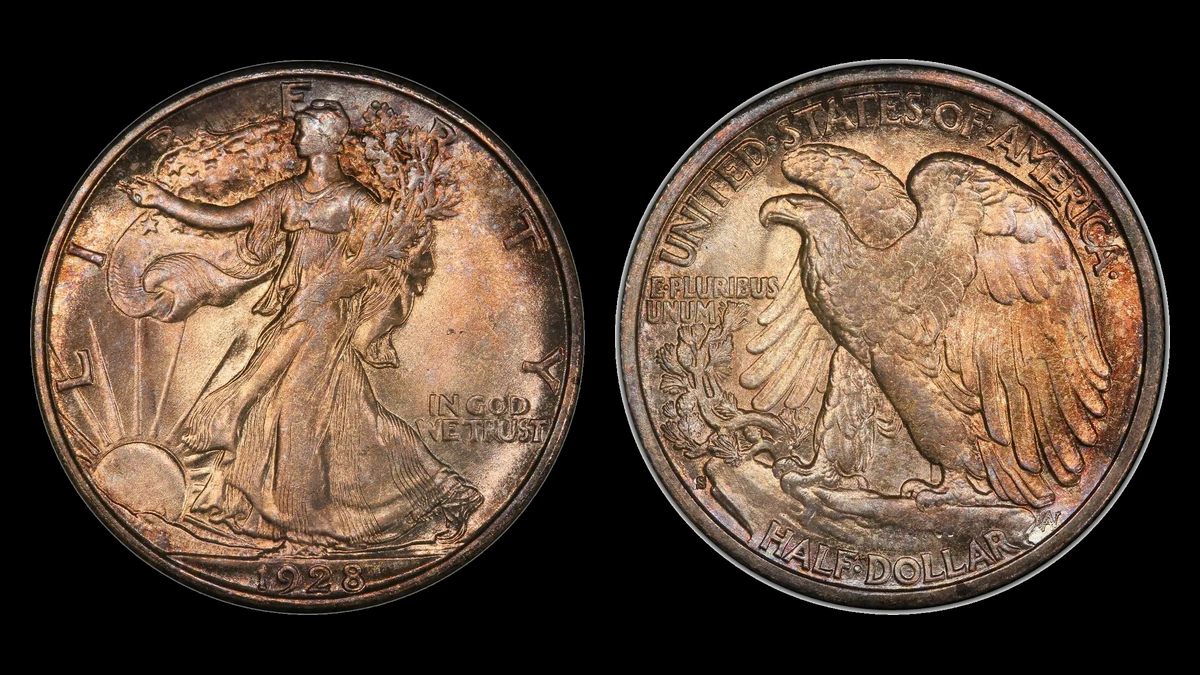
A small, light half dollar needs measurements before a valuable error name. The 1928 half dollar errors discussed here range from reported raised lines to a possible wrong-blank discovery.
Estimated comparisons span $75–$18,000, with the upper bracket conditional on authentication. A $16,200 sale in 2018 involved a 1942 half on a quarter blank, not an established 1928-S example.
Separate the surface marks from missing or unstruck metal before choosing a comparison.
| First clue | Possible feature | Estimated range |
|---|---|---|
| Raised line | Die crack or raised die scratch | $75–$450 |
| Separating surface layer | Lamination | $100–$600 |
| Missing metal segment | Clipped blank | $150–$1,000 |
| Bare metal beside incomplete design | Off-center strike | $300–$1,500 |
| Quarter-sized silver blank | Wrong planchet, if authenticated | $3,000–$18,000 |
Regular 1928 Walking Liberty halves were made in San Francisco and carry an S on the reverse. The normal unworn standard is 12.50 grams and about 30.6 millimeters across, with a grooved edge.
1. 1928 Half Dollar Lines Raised from the Surface: Die Cracks and Die Scratches Error
A scratch in a steel stamping tool can leave a raised line on a coin, even though a scratch on the finished coin cuts downward. The location of the damage changes the result.
The supplied guide reports both die cracks and die scratches for 1928-S. Cracks often produce irregular or branching ridges, while scratches in the tool can make finer, straighter raised traces.
How to Identify
Determine the line’s height before following its route. Use a 10× magnifier and light from opposite sides.
A groove, fresh bright metal, or a raised lip beside a cut can indicate later damage. A genuine raised die line should belong to the struck surface.
Then examine the shape for branches or changes in direction. A straighter fine line may fit a die scratch rather than a fracture, but its height still needs to be established.
What It’s Worth
Estimated range: $75–$450 for moderately worn examples through coins retaining strong detail. The year guide reports ordinary 2025 sales at $145 for VF25 and $168 for VF30.
Neither result identifies these die marks. A bold fracture can add interest, while a fine line may add little beyond the coin’s date, surfaces, and condition.
2. 1928 Half Dollar A Thin Layer Separating: Reported Lamination Error
A weakness within the silver alloy can let a thin layer lift away. The result may be an attached flap or a shallow area where a flake has detached.
The 1928 year guide reports lamination without locating a flaw on a particular certified coin. The actual layered boundary matters more than an assumed position on Liberty or the eagle.
How to Identify
Examine the patch edge under magnification for a thin overhang or a split continuing beneath attached metal. A color change alone does not show separation.
Compare remaining design near the flaw. Corrosion pits and scraped channels can remove metal without forming the same layered structure.
Do not pull a loose flap. Keep both complete faces with the close-up so the date and S remain documented.
What It’s Worth
Estimated range: $100–$600 for moderately worn examples with visible natural separation. The flaw’s appearance and the condition of the rest of the coin both matter.
A 1912-S Barber half with a retained flap sold for $89 in March 2026. Its VG8 grade, different design, and older date make it a related comparison rather than a 1928-S result.
3. 1928 Half Dollar A Segment of Metal Missing: Reported Clipped Planchet Error
A clipped blank is incomplete before the design is struck. The punch can overlap an earlier hole in the metal strip or extend beyond its edge.
The guide supplies no particular certified 1928-S specimen or clip size. A curved gap is possible, but not every clip has that shape.
How to Identify
Inspect how the struck detail approaches the missing boundary. Filing, saw marks, or sharp burrs can indicate metal removed after minting.
Look at the rim opposite the gap for supporting weakness. Its presence can help, but its absence alone does not settle the question.
Compare a loose coin’s weight with 12.50 grams and its remaining round section with the normal diameter. Missing metal lowers weight regardless of whether a clip or later cutting caused it.
What It’s Worth
Estimated range: $150–$1,000 for genuine worn 1928-S clips with readable dates. A larger clear clip can command a different price from a tiny missing section.
A 1942 Walking Liberty half with a one-percent clip sold for $126 in September 2019. It graded AU58, so both its tiny clip and its slight wear belong in the other-year comparison.
4. 1928 Half Dollar Blank Metal beside an Incomplete Picture: Reported Off-Center Strike Error
An off-center coin retains the blank metal that missed the design. This differs from a clip, where part of the metal itself is absent.
The guide reports the type without fixing a direction or percentage for 1928-S. The amount of displacement must come from the actual coin.
How to Identify
Keep the whole outline visible and find the boundary between struck and untouched metal. Turn the coin over while tracking its orientation.
Both faces should support a displaced blank. A shift on only one face suggests die alignment, while complete designs on an enlarged coin can suggest a broadstrike.
Inspect the edge for trimming or hammering and read the year from surviving detail. A weak strike can lose detail without moving the design across the coin.
What It’s Worth
Estimated range: $300–$1,500 for genuine worn examples with a moderate shift and readable date. Condition and the amount of original bare metal affect the comparison.
A 1976 Kennedy half struck fifteen percent off center sold for $480 in December 2025. Its MS64 grade, later design, and different alloy keep it separate from a documented 1928-S transaction.
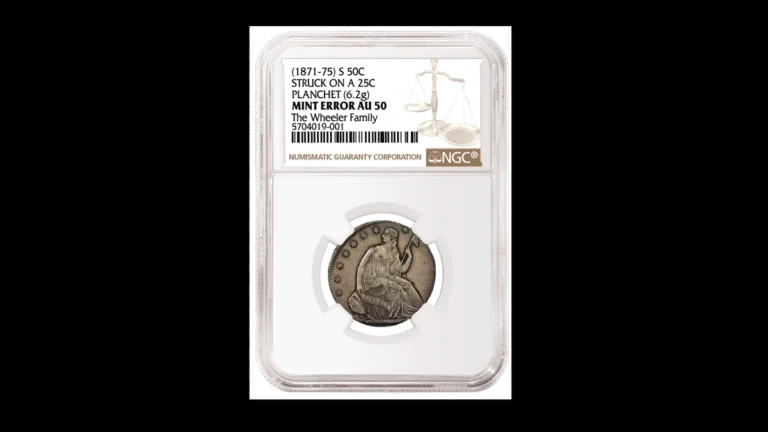
5. 1928 Half Dollar A Half-Dollar Design on a Smaller Blank: Wrong-Planchet Examination Error
A silver quarter blank would be too small to hold the complete half-dollar design. The smaller diameter and lower weight must agree with the surviving strike.
The supplied guide discusses this as a possible 1928-S discovery rather than documenting a certified example. The known 1942 comparison is called the Headless Walker because upper design detail is missing.
How to Identify
For a safely accessible coin, compare measurements with a silver quarter blank: about 6.25 grams and 24.3 millimeters. The normal half-dollar figures are roughly twice the weight and a larger 30.6-millimeter diameter.
Inspect for filing, clipping, or thinning that could reduce an ordinary half. Low weight alone does not identify the original blank.
The surviving design must establish the denomination and year, with visible support for any mint claim. A specialist can then examine the metal and strike to separate an original mint error from alteration.
What It’s Worth
Estimated range: $3,000–$18,000 for a newly authenticated 1928-S on a silver quarter blank, with readable dating and slight wear through lower unworn condition. This is a stated scenario, not an existing 1928-S sale.
The 1942 Headless Walker sold for $16,200 in 2018 and graded MS62. Its actual other-year result supports the comparison without establishing a matching 1928 discovery.
Another blank size, alloy, or condition would need a different price comparison. Do not apply this bracket to a normal half made smaller after minting.
Conclusion
Begin by deciding whether the clue is raised, layered, missing metal, or metal that never received the design. Measurements become especially important when the proposed blank belongs to another denomination.
The $75–$18,000 estimates have different evidence and condition limits. The upper wrong-blank bracket requires an authenticated discovery; the 1942 sale does not establish a 1928-S specimen.