Rare 1930 Dime Errors (List & Pictures)
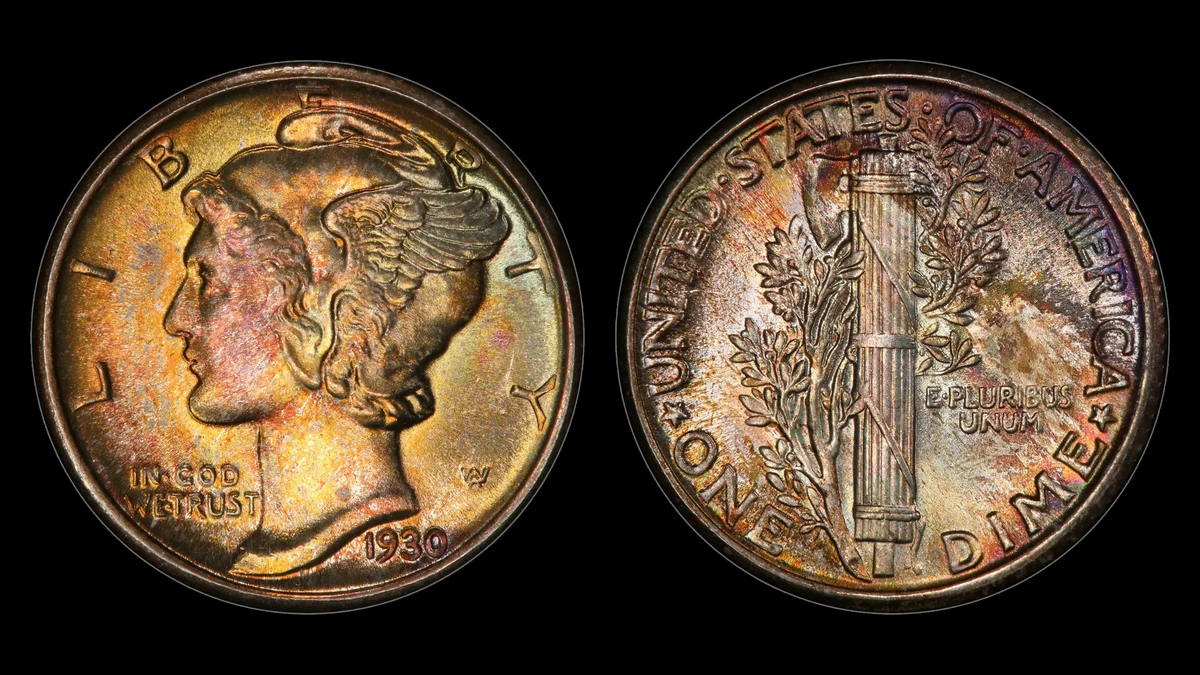
An exceptional ordinary 1930-S sold for $7,800 in March 2026, a preservation result rather than an error record. The 1930 dime errors below have a separate estimated range of $25–$1,800.
Examine the date and S mintmark, inspect any diagonal depression or peeling layer, then compare the full design and outline before naming a wider coin broadstruck or off center.
| Clue | Possible feature | Estimated range |
|---|---|---|
| Extra date contour | Reported obverse doubling | $30–$500 |
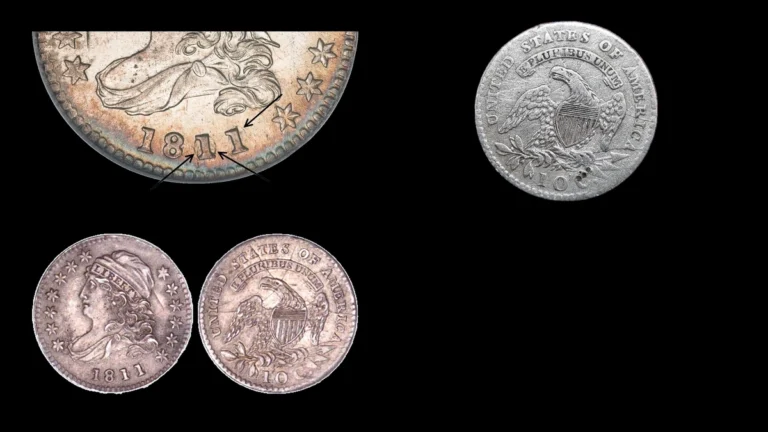
| Earlier S left of main S | Repunched mintmark | $35–$850 |
| Diagonal reverse interruption | Strike-through | $25–$600 |
| Attached flap or split | Lamination | $25–$400 |
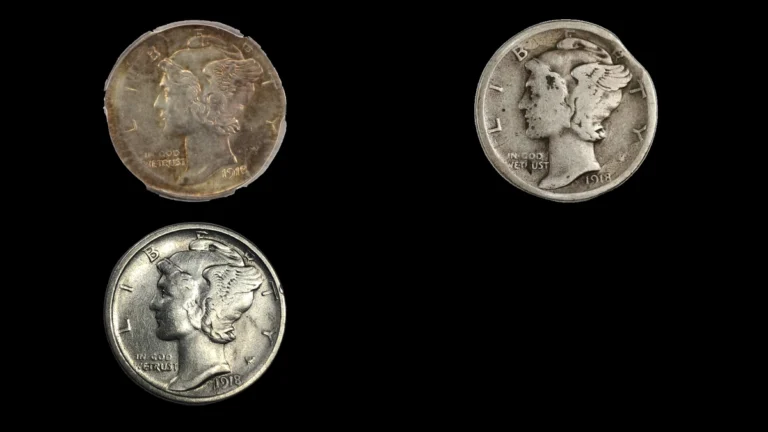
| Expanded outline with complete design | Broadstrike | $100–$1,500 |
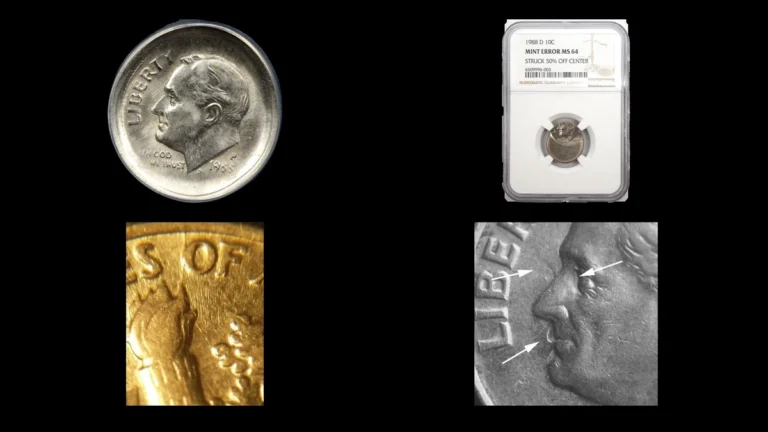
| Missing outer design and untouched margin | Off-center strike | $150–$1,800 |
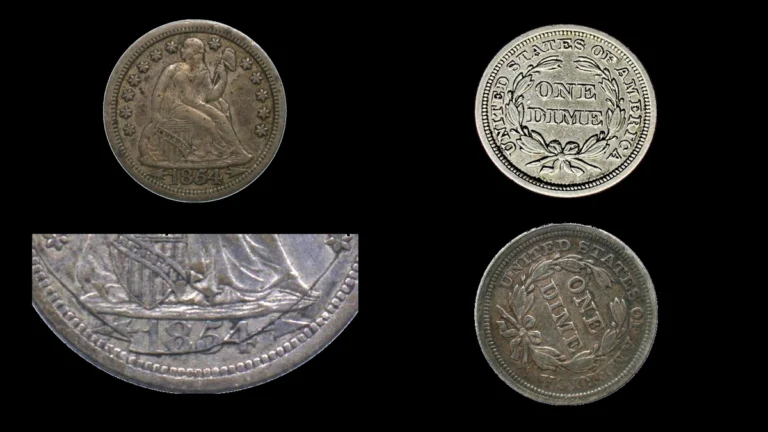
Mercury dimes use silver and copper mixed throughout the blank, not separate modern cladding sheets. The original standard is 2.50 grams at about 17.90 millimeters, with a grooved edge and possible weight loss from wear.
1. 1930 Dime An Extra Edge in the Date: Reported Obverse Doubling Error
A seller described a Philadelphia dime as having a doubled date without establishing a named professional attribution. The report provides no exact direction or repeatable pattern to apply to every candidate.
A doubled die can produce two rounded contours with one strike, whereas movement during striking can flatten a lower shelf beside the main numeral. Those effects need to be distinguished before assigning a variety premium.
How to Identify
Compare the date with a normal coin under the same light, checking whether the main stroke retains its width beside a genuine extra outline. A shelf that appears to shave down the main numeral suggests a different striking effect.
Inspect other lettering and portrait edges while changing the light. A stable raised contour is more persuasive than a reflection, but the seller’s wording alone still does not establish a cataloged variety.
What It’s Worth
Clearly identified minor doubling is provisionally estimated at $30–$500. A recognized 1929-S doubled die graded ANACS MS66 Full Bands sold for $1,410 in 2017, a different-year high-grade variety that cannot price an unconfirmed 1930 report.
Full Bands describes sharp separation of the central reverse bands. Flat strike-related shelves generally belong with ordinary coin values rather than that variety comparison.
2. 1930 Dime A Small Curve Left of S: Repunched Mintmark Error
WRPM-001, also listed as CONECA RPM 1, preserves an earlier S to the left of the main mintmark. The hand-entered punch shifted between entries into the die.
The resulting extra letter piece stays within the mintmark area on the back. It does not indicate that the obverse or entire reverse design was doubled.
How to Identify
Find S beside the lower bundle and compare its left edge with Wexler’s 1930-S reference. Trace the earlier curve as a recognizable part of another S.
A nick, corrosion, or a flat shelf can distort a letter without producing the same pattern. Examine the surrounding field for disturbed metal or evidence of an added mintmark.
What It’s Worth
Whole-coin estimates range from $35–$850, with attractive preservation and a clear repeat supporting stronger interest. A dealer’s $30 ask for a different-year 1929-S/S in Extremely Fine condition is an offer, not a completed 1930 sale.
3. 1930 Dime A Diagonal Hollow across the Reverse: Struck Through Material Error
The cataloged Fine example has a diagonal interruption running from about 1:30 to 7:30 with the reverse upright. Material between the die and blank blocked normal contact along that path.
The long shape does not identify the material as wire. Its position and effect on the design can be described without claiming an unsupported obstruction.
How to Identify
Follow the diagonal boundary and observe where the normal design weakens or stops. Any remaining detail inside the depression should be assessed as part of the original striking event.
A groove with tool tracks or pushed-up lips can result from later scraping. A shallow impression may leave normal weight and diameter, so surface relationships matter more than those measurements alone.
What It’s Worth
Genuine strike-throughs are estimated at $25–$600. An indexed $59.99 sale concerns a different-year 1929 dime described as struck through and graded ANACS MS63.
The reported 1930 Fine grade establishes wear, not a selling price. Length of the depression alone does not guarantee a substantial premium.
4. 1930 Dime A Flap or Narrow Opening in the Metal: Lamination Error
A weak area within the original alloy can split, lift, or shed a thin layer. This lamination differs from losing bonded cladding on a modern dime.
The 1930 guide supplies no recurring location or mint for the category. Each candidate’s boundary needs to be examined on its own merits.
How to Identify
Look for a thin layer continuing into the opening and leave any attached flap untouched. A fresh gouge may expose bright metal without showing a natural separation.
Follow the flaw toward the edge, distinguishing it from smooth scoops, corrosion pits, or impact-displaced metal. If the layer remains attached, the weight may stay close to normal.
What It’s Worth
Circulated through modest unworn examples are estimated at $25–$400. A 1921-D reverse lamination graded NGC VG8 sold for $74 in 2013, but that different-year coin also carries scarce-date value.
It provides a general error comparison rather than a direct 1930 estimate. Small flaws often add less than a greatly enlarged image suggests.
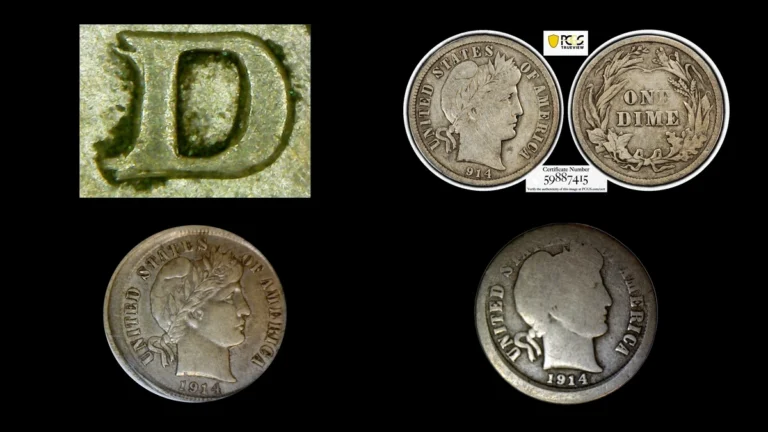
5. 1930 Dime A Wider Outline with All Design Present: Broadstrike Error
The collar normally contains the blank and forms the edge grooves. Without its restraint, silver can spread beyond normal width while the full design remains on the coin.
The year guide explains broadstrikes without identifying a named certified 1930 example. A wide or uneven rim must therefore be tested against the actual mechanism.
How to Identify
Measure the widest and narrowest spans, then follow all outer design on both faces. True outward spread with intact struck detail differs from a disc widened by later hammering.
Check the edge for incomplete normal grooves and the surfaces for compression or flattened details. A partial collar or an off-center strike can also alter the outline but produces a different combination of evidence.
What It’s Worth
Genuine 1930 examples are estimated at $100–$1,500. Different-year comparisons from September 2025 include a 1941-S MS63 at $228 and a 1945 MS64 Full Bands at $2,040.
The latter lies above the working range and has different preservation and strike quality. Neither sale establishes a fixed price for the generic 1930 category.
6. 1930 Dime Cropped Design opposite a Blank Crescent: Off-Center Strike Error
A blank placed partly outside the correct striking position retains an untouched margin while some intended design misses the metal. The displacement should be visible on both sides.
The guide gives no measured percentage for one confirmed 1930 specimen. Possible degrees of shift describe the category rather than a particular documented coin.
How to Identify
Read every digit of 1930; a surviving 193 cannot establish the final numeral. Compare the struck-to-blank boundaries on both faces for a single coherent displacement.
A one-sided shift may come from a moved die instead. Inspect the blank crescent for grinding marks and remember that an untouched area contains metal, unlike a cut-away segment.
What It’s Worth
Genuine examples are estimated at $150–$1,800. A 1944 AU58 struck 10% off center sold for $360 in December 2025, while a 1920-D MS62 with the same stated percentage brought $1,020 that September.
Those different-year results illustrate the role of mint, wear, and surfaces at a similar displacement. A small worn 1930 offset need not approach the upper estimate.
Conclusion
The earlier S has a specific reference shape, while the doubled-date report remains less firmly attributed. Surface interruptions need their own boundary checks, and a wider outline requires a decision about whether the design is complete or partly missing.
Compare each candidate’s actual evidence and preservation, keeping the exceptional ordinary 1930-S sale outside the working error ranges and every different-year example clearly identified.