Rare 1943 Quarter Errors (List & Pictures)
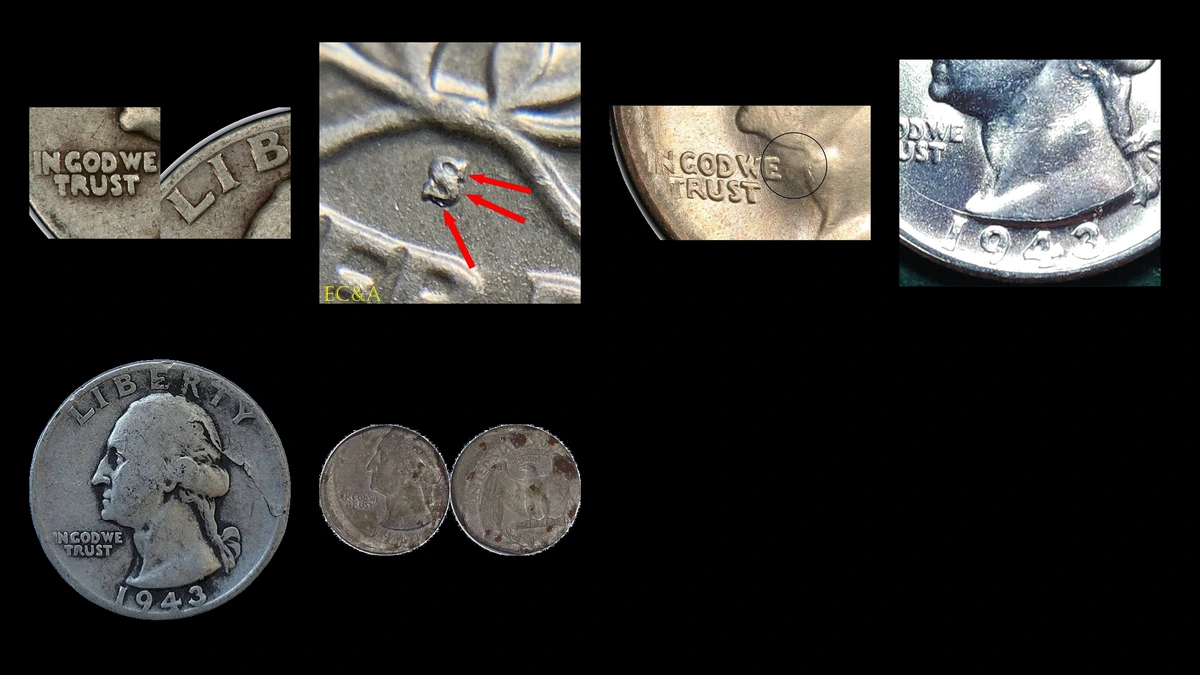
Start with the metal, mint, and lettering when examining 1943 quarter errors. Ordinary quarters remained silver during the war; a steel example requires evidence of a wrong blank, while a doubled design requires an exact variety match.
Supplied estimates span $10–$25,000, with a Philadelphia doubled-front quarter realizing $22,250 in March 2020. The sections move from small design features to damaged blanks and displaced strikes so that a raised line, an open split, and missing design receive different explanations.
1. 1943 Quarter Repeated Words or Portrait Edges: Doubled Dies Error
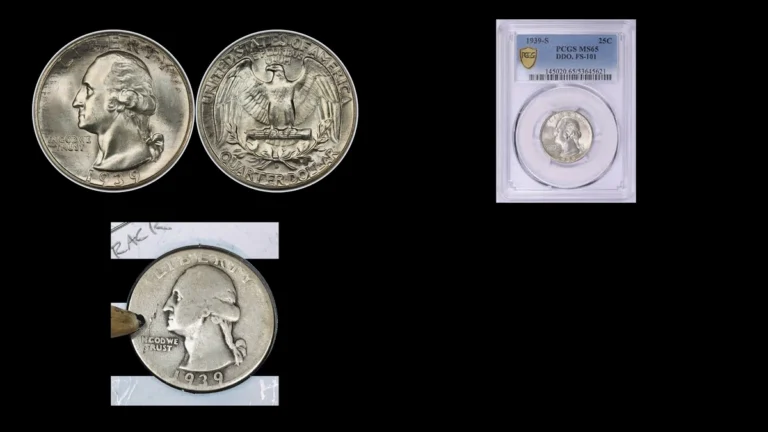
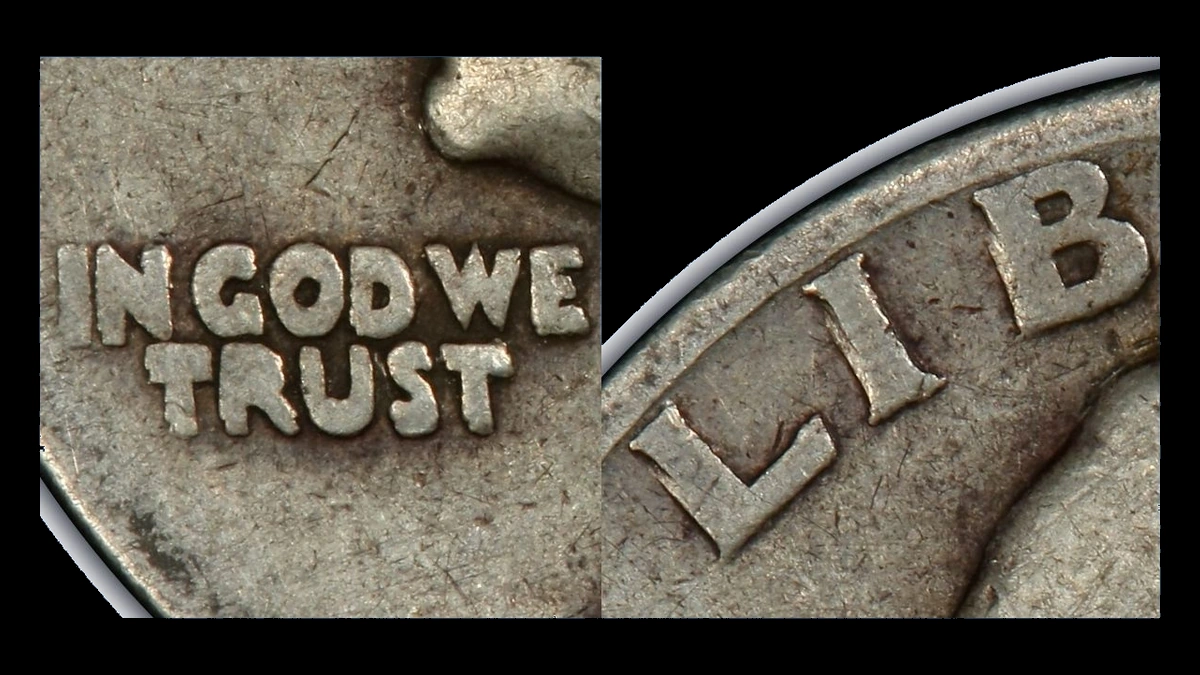
Major Philadelphia and San Francisco front varieties show separation in the motto, date, and LIBERTY. A Denver pattern concentrates on the ear and hair, while other listed fronts affect different lettering.
Reverse varieties involve their own combinations of words, feathers, or wreath details. A die carrying duplicated design can transfer those outlines in one normal strike.
How to Identify
Read the reverse mintmark first: D indicates Denver, S indicates San Francisco, and no letter is normal for Philadelphia. Select reference photographs for that mint and the correct face.
For a major Philadelphia or San Francisco front, compare several letters across the motto, LIBERTY, and date. Denver ear-and-hair candidates require a portrait comparison instead of borrowing those lettering diagnostics.
Flat shelves produced by movement during striking can imitate extra edges. Match the raised contours and their spacing at multiple points, since a single swollen letter may reflect wear or a different effect.
What It’s Worth
$25–$25,000 is the broad estimate across subtle identified patterns and exceptional major varieties. A Philadelphia doubled-front quarter in PCGS MS67 brought $22,250 in March 2020.
A San Francisco major front in MS67 realized $18,800 in February 2021. Those high grades describe unworn coins with very few marks, and their results do not price every small doubled detail from 1943.
2. 1943 Quarter Extra Strokes around D or S: Repunched Mintmarks Error
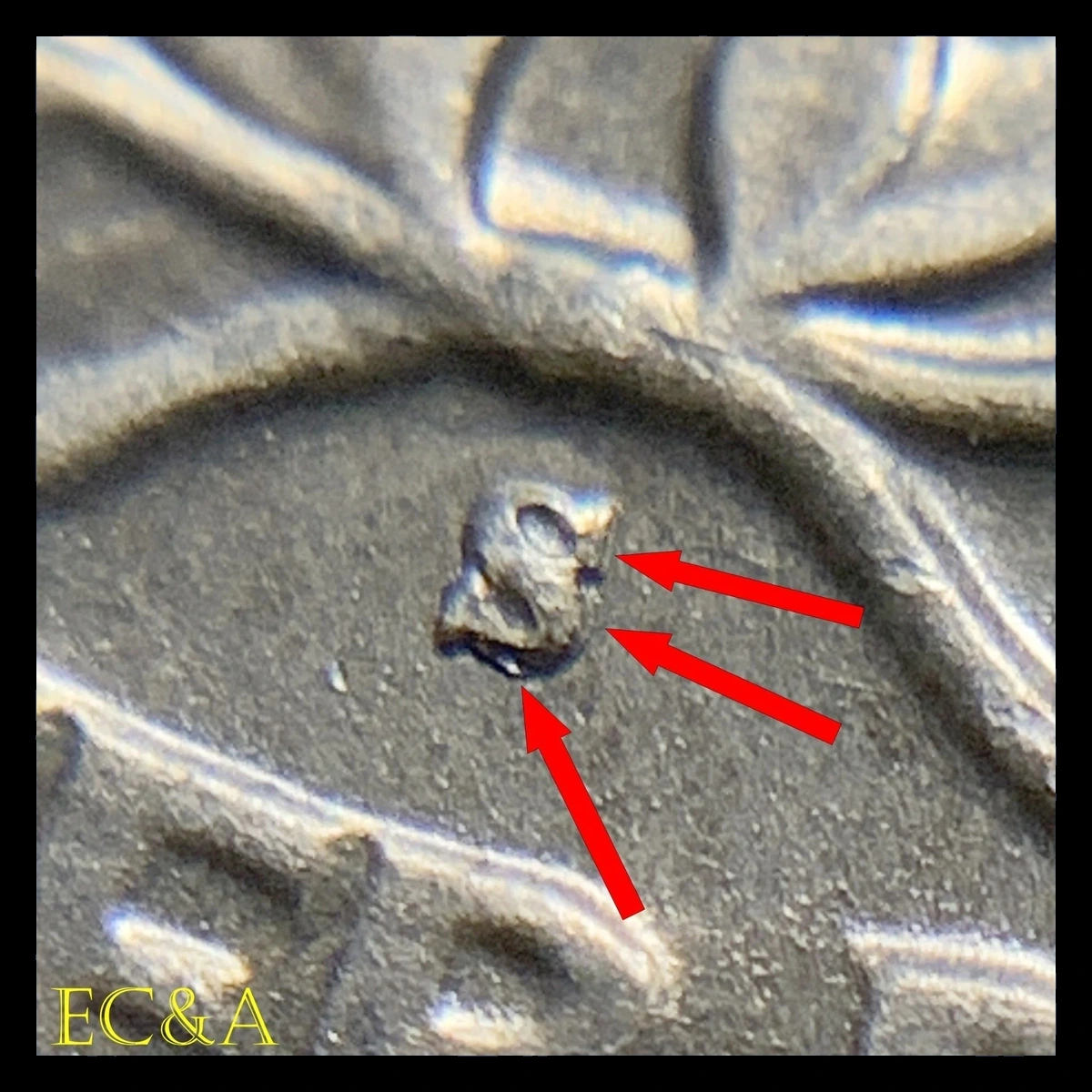
Below the reverse wreath, a genuine repunched mintmark contains remnants of another position of the same letter. Repeated hand-punching placed those remnants in the die before it struck the coins.
Listed Denver and San Francisco patterns include traces beneath the main letter and others to its side. They are distinct arrangements, not one universal 1943 mintmark diagnostic.
How to Identify
Keep the eagle upright while tracing the extra portions of the D’s stem or the S’s curves. Compare their exact placement with an attributed example from the same mint.
Normal S punch shapes include forms called Trumpet Tail and Medium S. Size or an unusual tail alone does not establish a second punched outline.
Inspect for a hit that pushed part of the letter aside or left a flat ledge. A coherent additional letter shape is more persuasive than an unexplained thick edge.
What It’s Worth
$25–$500 is estimated for many identified repunched D and S varieties. PCGS records a 1943-S FS-504 in MS66 at $312 in March 2018.
That result belongs to its particular San Francisco pattern and preservation. A different direction of repunching, a Denver letter, or an ordinary S punch style needs its own comparison.
3. 1943 Quarter Swelling below the Chin: Goiter Die Deterioration Error
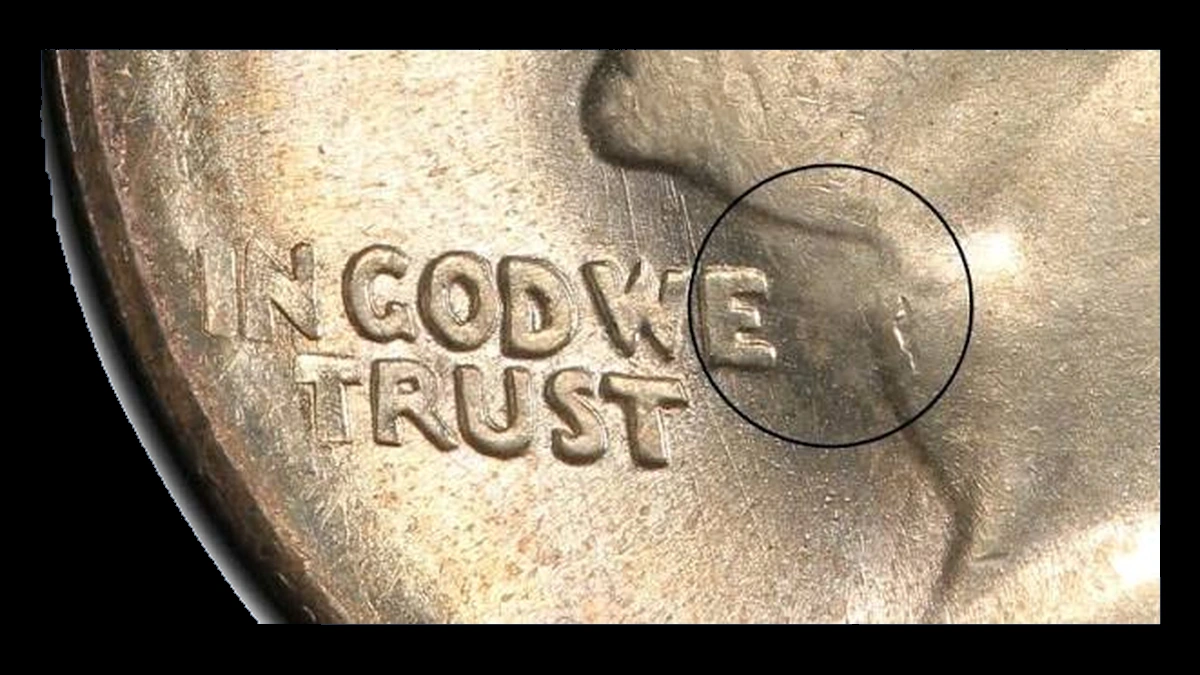
The 1943-S Goiter variety, FS-401, changes the contour of Washington’s throat. A local area of the die sank, allowing metal to fill a deeper space and form the coin’s raised swelling.
Nearby WE and UST tend to lean left as well. This combination distinguishes the variety from simply finding a lump beneath the chin.
How to Identify
Compare the throat and the neighboring words with an identified FS-401 in a straight-on view. Keep Washington upright so that camera rotation does not create apparent leaning letters.
Confirm the reverse S and inspect the opposite face for a dent that could explain metal pushed outward after minting. The broad swelling and associated lettering distortion should agree with the variety together.
This is not a die cap, which involves a coin sticking to a die and taking a cup-like shape. Nor does the throat feature indicate a change in the quarter’s normal silver composition.
What It’s Worth
$50–$5,000 is estimated for recognizable Goiter examples across different conditions. A PCGS-recorded MS67 example brought $4,935 in September 2016.
Excellent preservation contributed to that result. A worn or damaged swelling without the matching letter distortion does not establish the same variety.
4. 1943 Quarter Raised Lines or Solid Lumps: Die Cracks and Breaks Error
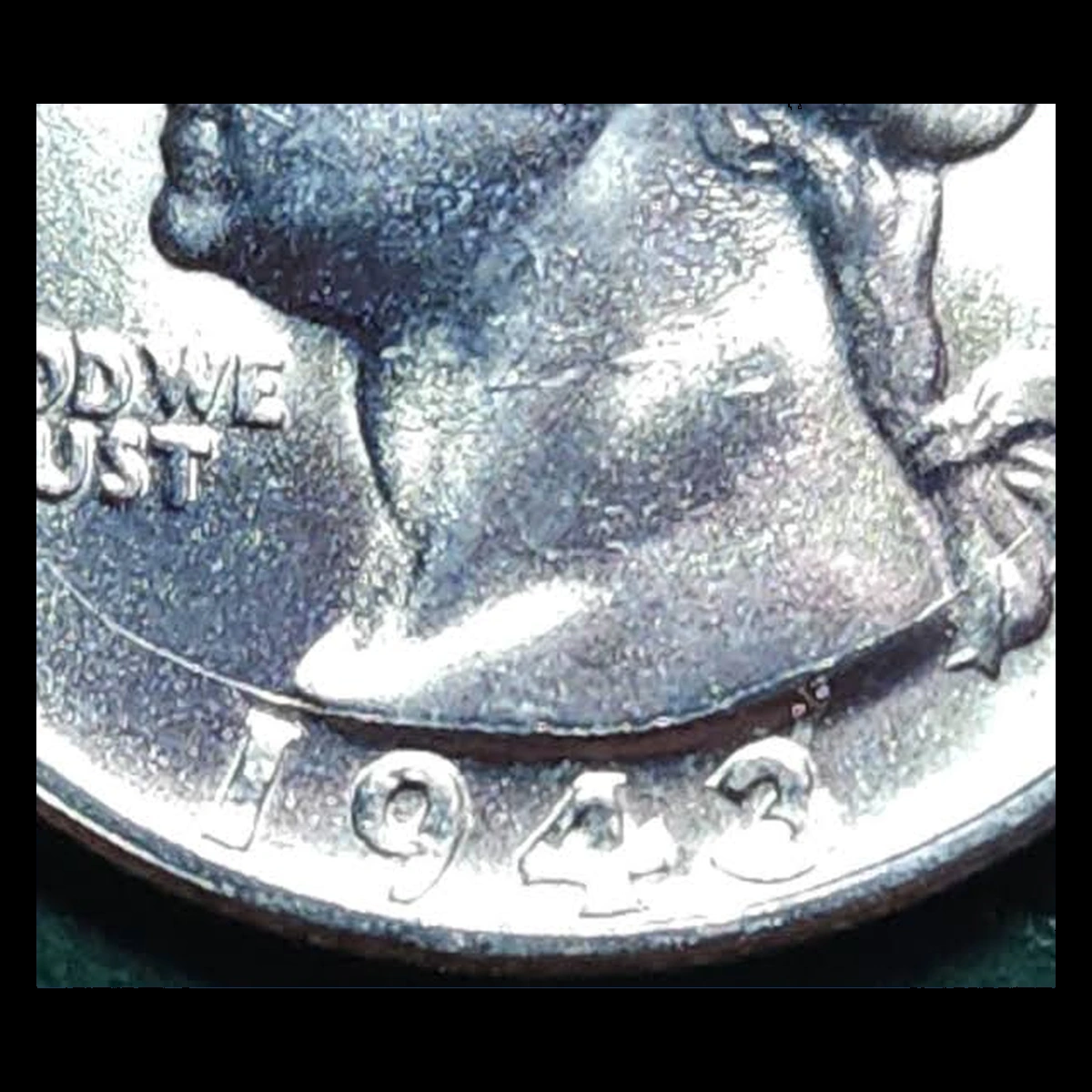
The year material includes die cracks and breaks without identifying a fixed mint or position. A thin opening in the tool produces a raised line, while a missing piece of tool surface can produce a larger lump.
Both effects record damage to the die rather than an opening in the coin’s own metal. That distinction matters when a seller uses the word “crack” without explaining which object cracked.
How to Identify
Illuminate the center of the line from the side to establish whether it rises or falls into the surface. A scratch may have raised lips along a cut, so examining the edges alone can mislead.
For a larger raised area, follow its boundary into neighboring detail and the rim. A claimed rim-connected break must actually reach the outer border.
Look for a seam, foreign texture, or other sign that metal was attached later. An unexplained bump does not demonstrate a cavity in the original die.
What It’s Worth
$10–$400 is estimated for authentic cracks and breaks. Small lines may add little, while substantial clearly formed breaks can attract more attention.
The range includes the coin’s preservation and does not come from a named 1943 sale. Cleaning, circulation wear, and damage around the feature affect the complete coin.
5. 1943 Quarter A Locally Interrupted Picture: Strike-Through Error
The supplied 1943 guide reports strike-throughs without naming an authenticated specimen, an affected face, or the obstructing material. Something between a die and the blank can leave an impression or prevent details from fully forming.
The resulting weak or depressed patch needs an explanation consistent with its surface. Its mere presence does not identify cloth, wire, or another particular object.
How to Identify
Inspect the boundary where clear design meets the interruption. Original texture within the impression can help distinguish striking through material from scraping away a finished design.
Examine the other face for related distortion from a later blow or squeeze. If material remains attached, preserve it and photograph how the design meets it.
What It’s Worth
$20–$600 is the estimate for a verified 1943 strike-through. A distinctive impression with an intact surface gives more useful evidence than a vague weak patch.
A cloth-struck 1776–1976 quarter in NGC MS66 realized $881.25 in January 2017. Its fabric impression belongs to a different-year specimen and cannot establish a cloth error on the reported 1943 type.
6. 1943 Quarter A Peeling Silver Flap: Lamination Error
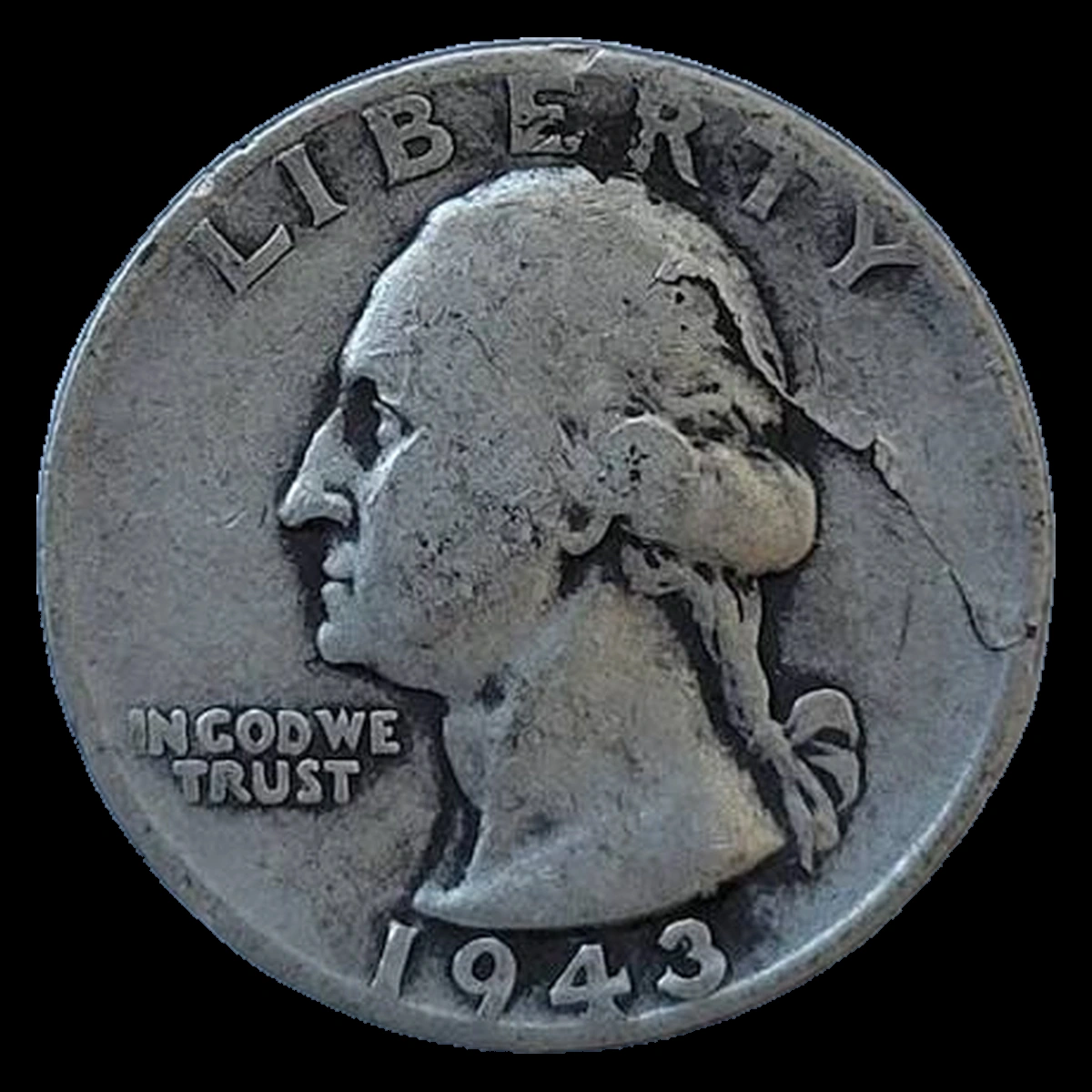
Normal 1943 quarter metal is an alloy of 90% silver with copper, rather than the layered construction of later clad quarters. A weakness within this alloy can separate into a thin flap or leave a shallow peeled area.
The year list reports lamination without specifying a mint or exact location. The evidence must show actual separation, not simply dark toning or a rough spot.
How to Identify
Look beneath any lifted edge with angled light, leaving the flap attached and unbent. Trace the split into surrounding metal and note where struck design continues across it.
Where a flake is already absent, examine the exposed area and irregular boundary for signs of internal separation. A directional scrape with pushed-up metal needs a different explanation.
What It’s Worth
$20–$200 is estimated for genuine examples, from small splits to more visible original flaps. The estimate values the whole coin, including the quality of the unaffected silver surface.
7. 1943 Quarter An Opening into the Metal: Cracked Planchet Error
Heritage cataloged a 1943 cracked-planchet quarter in PCGS VG8, a grade reflecting heavy circulation wear. Here the blank itself has a fissure rather than carrying a raised line copied from a cracked die.
The opening’s depth and relationship to the edge are central to recognizing the defect. A surface groove alone does not establish a split in the blank.
How to Identify
Support the coin without flexing it, then follow the opening from the edge onto the faces. Examine whether it enters the body of the metal instead of sitting above the surface as a ridge.
Check for saw marks or fresh tearing associated with later bending. Wear may soften the edges on a VG8 coin, but deliberately widening a split destroys useful evidence.
What It’s Worth
$30–$250 is the supplied estimate for identifiable cracked blanks. The cataloged VG8 proves that substantial wear can coexist with an attributed blank defect, but no individual realized price is supplied.
8. 1943 Quarter A Curved Gap in the Outline: Clipped Planchet Error
A blanking punch that overlaps an earlier hole in the strip can produce a disk with a curved section missing. That incomplete blank then receives the quarter design.
Curved clips are reported for 1943, but the supplied guide does not establish an individual coin’s mint, clip size, or direction. Those details should come from the specimen being examined.
How to Identify
Inspect both ends of the gap for the way the rim and nearby lettering approach the opening. Natural weakness or metal flow differs from design sliced cleanly after striking.
The rim opposite a genuine clip can also be weak, though that feature is not required on every example. Search the gap for cutting burrs or tool marks instead of relying on its curved shape alone.
Normal silver-quarter references are 6.25 grams and approximately 24.3 millimeters across. Use measurements only on loose coins and keep encapsulated specimens in their holders.
What It’s Worth
$25–$300 is estimated for verified 1943 curved clips. A separate clad 1967 quarter with two curved clips in NGC MS66 sold for $144 in July 2021.
That comparison supplies neither two clips nor an MS66 grade to an unspecified 1943 coin. The actual gap, condition, and evidence of original manufacture determine the relevant match.
9. 1943 Quarter The Full Picture on a Wider Coin: Broadstrike Error
The retaining ring, or collar, normally limits the blank’s spread and helps form the grooved edge. Without proper restraint, silver can spread beyond the usual outline while retaining the complete intended design.
The 1943 broadstrike is a reported category without a named certified specimen in the supplied material. A slightly large diameter alone does not establish it.
How to Identify
Follow the outer lettering around both faces to confirm that the entire design remains on the metal. Missing design beyond the blank belongs in an off-center assessment instead.
Compare the expanded outline with the edge and surviving surface texture. Flattened details, repeated hammer marks, or a crushed rim can show later damage that also made the coin wider.
What It’s Worth
$50–$400 is estimated for an authenticated 1943 broadstrike. A clear full design within naturally expanded metal supports the description better than a small unexplained size difference.
10. 1943 Quarter One Face Sits Closer to the Rim: Misaligned Die Error
A noticeably shifted front image with a centered eagle can point to movement of one die. The entire blank did not necessarily move out of position.
The year list includes the type without a specific mint or measured example. Ordinary centering variation and rim damage must be distinguished from a meaningful die displacement.
How to Identify
Compare opposite border widths on each face in straight-on photographs. Keep track of the same physical edges while checking whether the reverse remains centered where the front is shifted.
Inspect the narrow border for filing, impact marks, or a rim pushed inward. If both designs miss part of the blank, investigate an off-center strike rather than assuming a front-only tool shift.
What It’s Worth
$10–$150 is the supplied estimate for a genuine misaligned-die example. Very slight unevenness may add little, and no individually identified 1943 sale supports this range.
11. 1943 Quarter A Large Bare Crescent: Off-Center Strike Error
A cataloged 1943 quarter in PCGS MS63 was struck 65% off center. The figure describes the displacement of the design, not a percentage of silver removed from the blank.
Only part of the intended image landed on the disk because the blank sat far outside its normal position. MS63 describes an unworn coin that can still have noticeable marks.
How to Identify
Locate the surviving date and recognizable details on both sides. The supplied percentage does not establish the direction of movement, which must be read from the actual coin.
Check where the struck portion ends beside untouched blank metal. Both faces should fit the same displaced disk, without grinding marks or traces of a design removed afterward.
What It’s Worth
$300–$1,500 is estimated for clearly identified 1943 off-center quarters. The recorded MS63 description establishes a dramatic example but comes without a quoted individual realized price.
A surviving date and attractive original blank area help establish and display the error. An undated piece needs separate evidence for its year, regardless of the size of its crescent.
12. 1943 Quarter A Smaller Disk or Different Metal: Wrong Planchet Error
Wrong blanks can remove outer lettering from the strike and change the quarter’s metal. GreatCollections announced an ANACS-authenticated 1943 quarter on a steel-cent blank.
A different 1943-S coin, graded NGC MS64, was struck on a five-cent blank and weighs 4.9 grams. Its auction description does not establish the alloy of that blank.
A third, corroded Denver steel piece is illustrated with an attributed date of (1943). Its NCS label records 2.6 grams but no date, so it must remain distinct from a proven dated 1943 specimen.
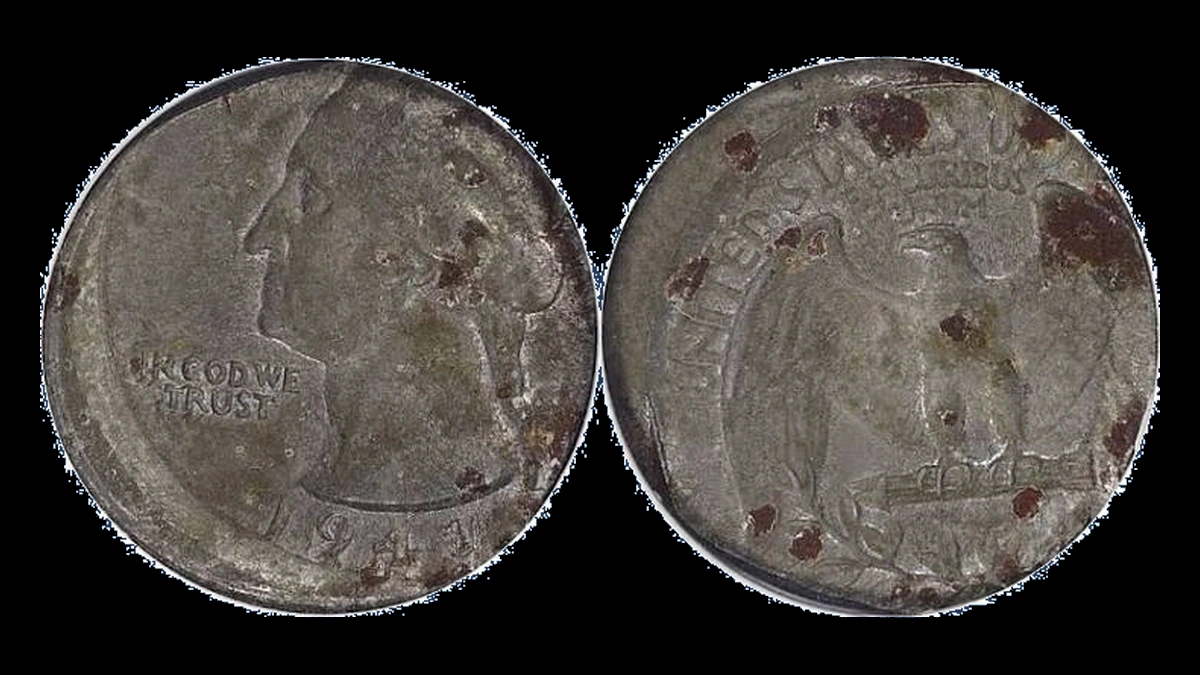
How to Identify
On the documented San Francisco five-cent blank, portions of LIBERTY and QUARTER DOLLAR are missing. The lower front and upper reverse are clearer because the small disk lay against the collar near 7 o’clock.
Keep its measured 4.9 grams attached to that specific specimen. The year alone cannot establish a wartime silver-nickel alloy; composition testing would be needed to settle that question.
A steel blank should respond to a magnet, unlike normal silver-quarter metal. Prevent contact with the surface and combine this observation with a professional identification of the strike and blank.
Read every surviving date digit before assigning a year. Neither steel nor a 2.6-gram label supplies the absent date on the corroded Denver piece.
What It’s Worth
$1,500–$20,000 is the combined estimate across these different wrong-blank types. The 1943-S five-cent-blank quarter realized $3,818.75 in November 2013, with comparable pieces estimated at $1,500–$5,000.
Authenticated dated steel-blank quarters are estimated at $5,000–$20,000. GreatCollections’ early $2,350 bid was an auction-in-progress figure, not a completed sale.
The undated, corroded Denver steel coin has a conditional $2,000–$8,000 whole-coin estimate. It should not be priced as a securely dated 1943 merely because that attribution appears in an illustration.
Conclusion
Keep the small design checks separate from the physical state of the blank. A repunched letter, a sunken die area, an open metal fissure, and a wrong planchet leave different evidence even when all are advertised as errors.
The largest documented doubled-die results concern specific high-grade varieties. For unusual blanks, preserve each specimen’s measured weight, metal identification, and readable date rather than transferring another coin’s facts or price.