Rare 1947 Dime Errors (List & Pictures)
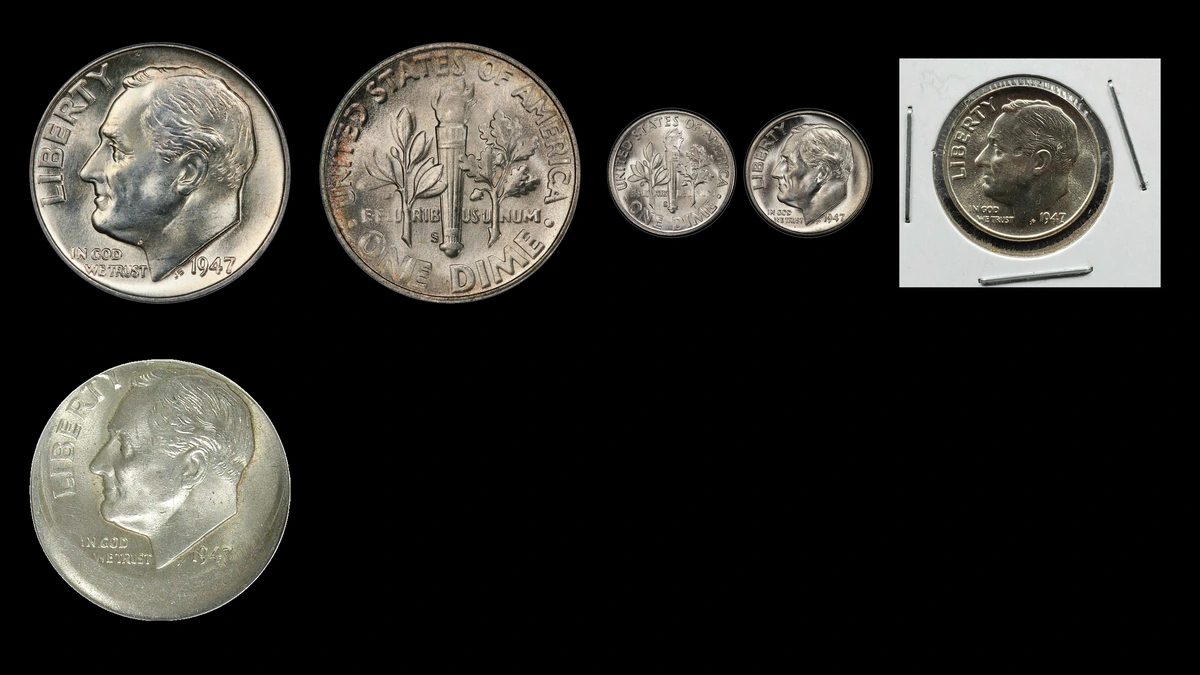
The small S beside a Roosevelt dime’s torch can hide part of a different letter. A 1947-S/D graded MS67 sold for $646 in April 2014, while an ordinary repeated S belongs in a different price group.
Estimated values for these 1947 dime errors run from $20–$1,000. Check the initials below the portrait, the reverse details, and finally any weak design or missing metal.
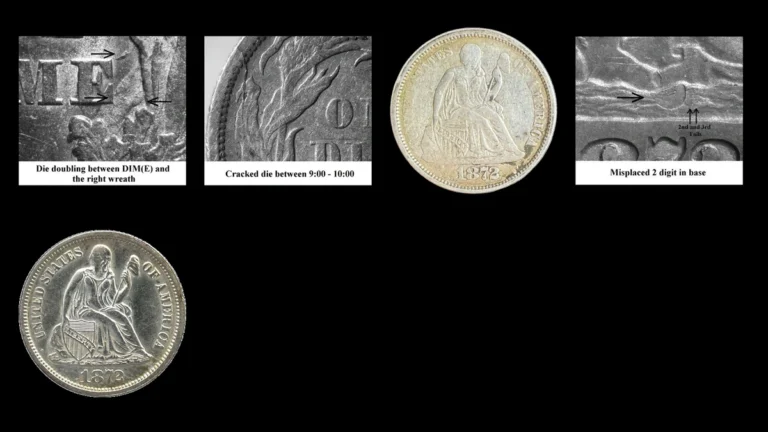
1. 1947 Dime JS and Nearby Front Details Repeat: Doubled Die Obverse Error
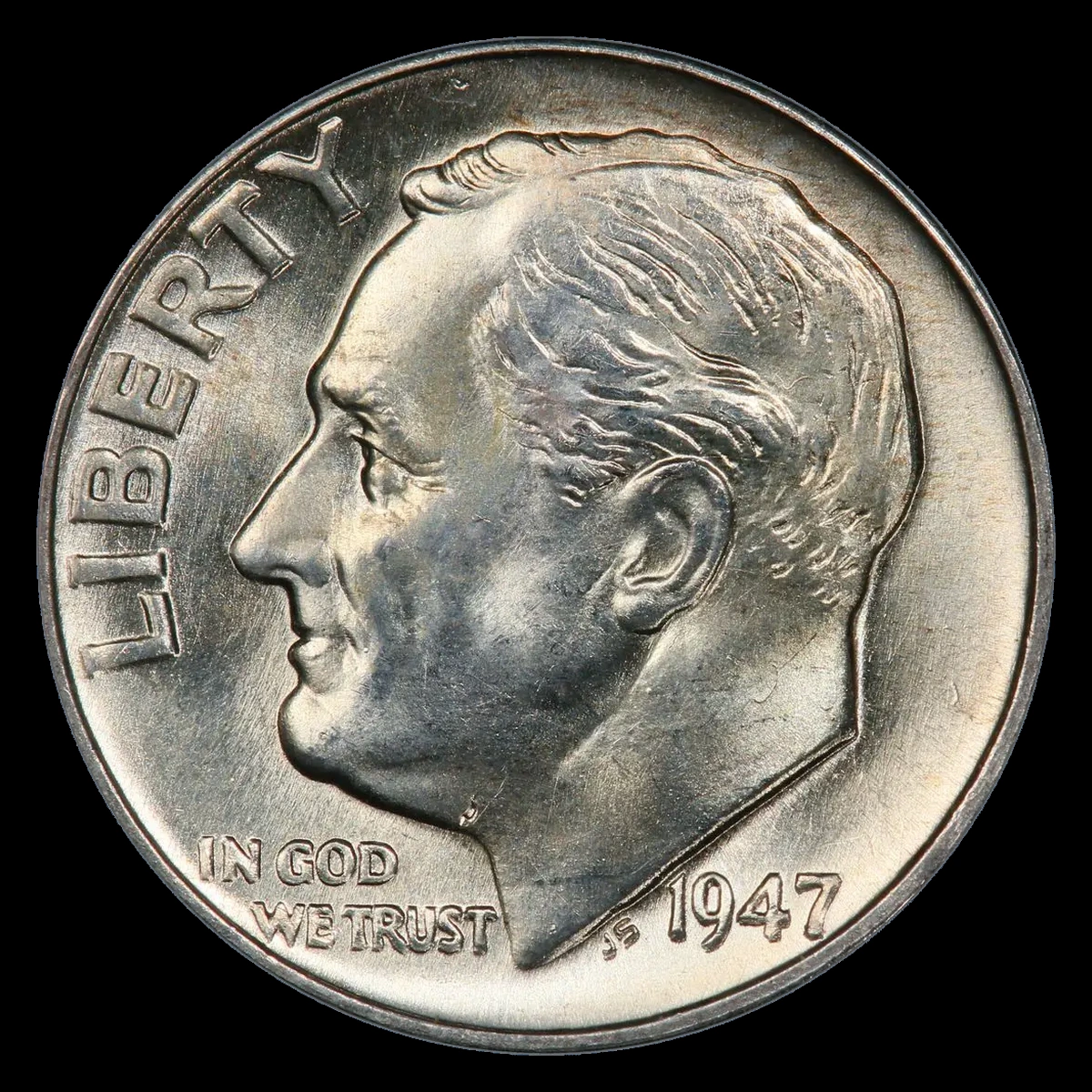
The Philadelphia FS-101 has especially strong doubling on the small JS initials below Roosevelt’s neck. Inward extra outlines also appear on the date, IN GOD WE TRUST, and LIB in LIBERTY.
FS-101 is a catalog label for the variety. The repeated design was already on the die, the stamping tool, so it does not mean the finished dime was struck twice.
How to Identify
Start with JS and compare its outlines with a clear FS-101 photograph. Then use the date, motto, and LIB to check that the broader pattern agrees.
Rounded extra detail is different from a low flat shelf caused by movement during striking. A single thick letter or bright reflection is not enough.
Turn the dime over and confirm that it has no mintmark beside the torch. The supplied FS-101 comparison is Philadelphia, not the separate San Francisco reverse variety.
What It’s Worth
$50–$300 is the estimate for correctly identified circulated through attractive lower-grade unworn examples. Clear doubling and cleaner surfaces help explain differences within the range.
The PCGS MS65 listing ended in November 2025 without a public final price supplied here. Its $75 opening bid was not the selling price.
2. 1947 Dime The Torch-Side Design Has Extra Outlines: Doubled Die Reverse Error
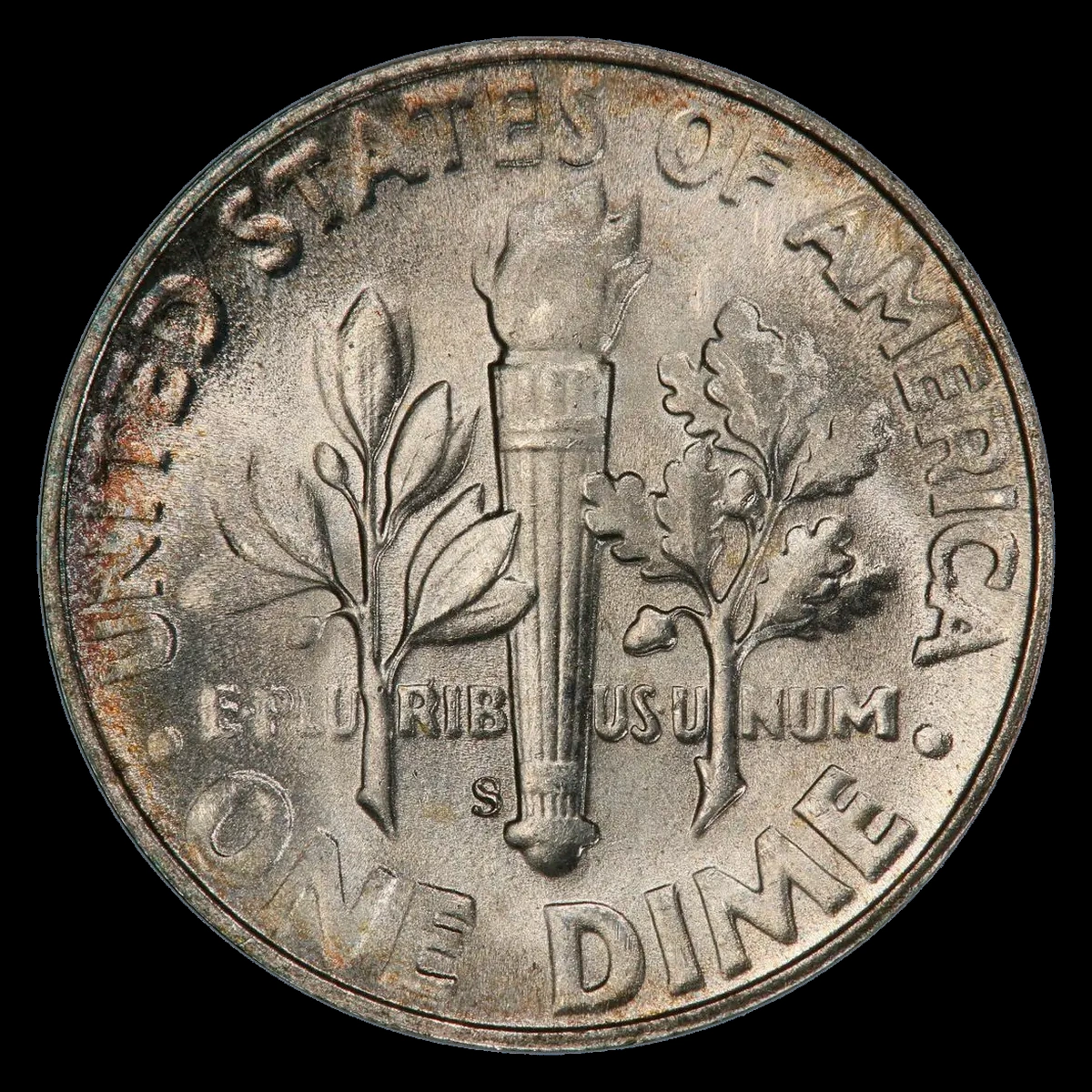
The 1947-S FS-801 concerns repeated detail on the reverse. Its design was doubled on the die before coins were struck, just as with a doubled front, but the locations and mint are different.
A sold example in an older ANACS holder was graded MS65. The variety label identifies the design pattern; the grade describes its unworn condition.
How to Identify
Find S to the left of the lower torch, then compare the reverse with a correctly identified FS-801 photograph. The sold ANACS example’s certificate number is 971199.
Match actual extra raised contours rather than searching for thick lettering anywhere. Normal paired lines across the torch are part of the design and do not prove doubling.
Keep the full reverse visible beside the enlarged detail. The supplied summary does not justify inventing one specific doubled letter as a universal shortcut.
What It’s Worth
$50–$600 is the estimate for correctly identified circulated through better unworn examples. The ANACS MS65 sold for $120 in May 2022, a result recorded by PCGS Auction Prices.
PCGS recording the result does not change which company graded the coin. Better condition, attractive surfaces, and sharp torch detail can affect the whole-coin value beyond that particular sale.
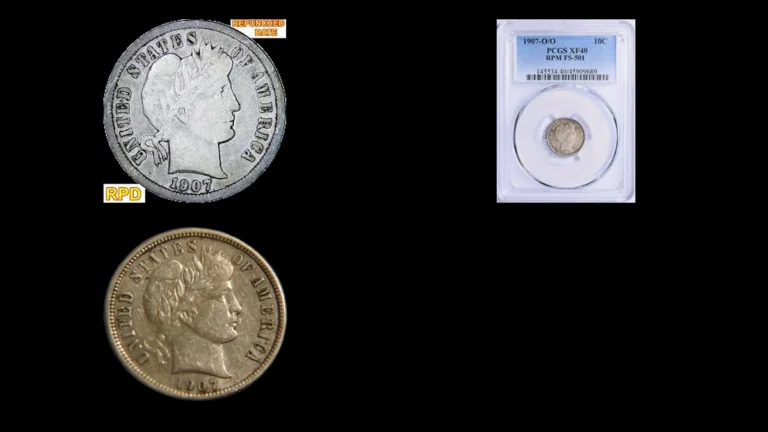
3. 1947 Dime Another Letter Shows beneath S: Repunched and Overpunched Mintmarks Error
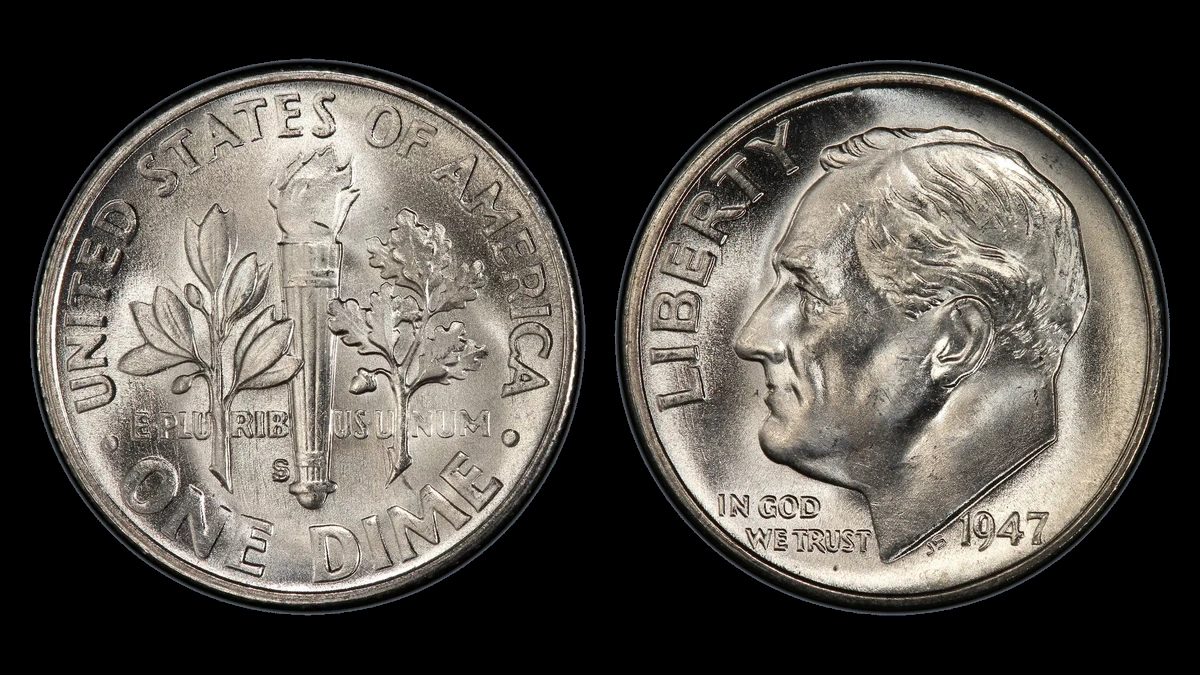
Some 1947-S dimes show a D beneath the S; others preserve part of an earlier S. Mintmarks were punched into the dies by hand, allowing earlier letter fragments to remain after another punch.
S/D means S over D, while S/S means the same letter was punched again in a different position. These belong in one broad mintmark group but need separate identification and prices.
How to Identify
Study S to the left of the lower torch and trace the extra shape. Decide whether it fits part of a D or follows another S.
Compare the whole letter with the exact variety’s reference. Different punches can expose different parts of the earlier letter, so one unexplained line cannot identify every variety.
Stains, added metal, and flat striking shelves can imitate extra edges. Check the surface around the mintmark as well as the letter itself.
What It’s Worth
$75–$1,000 is the estimate for identified S/D examples in circulated through better unworn grades. The recorded MS67 S/D sold for $646 at Heritage in April 2014.
Ordinary S/S examples have a separate estimated range of $25–$300. The S/D sale should not be used to price every doubled-looking S.
4. 1947 Dime One Area Is Weak beside Sharp Details: Struck-Through Error
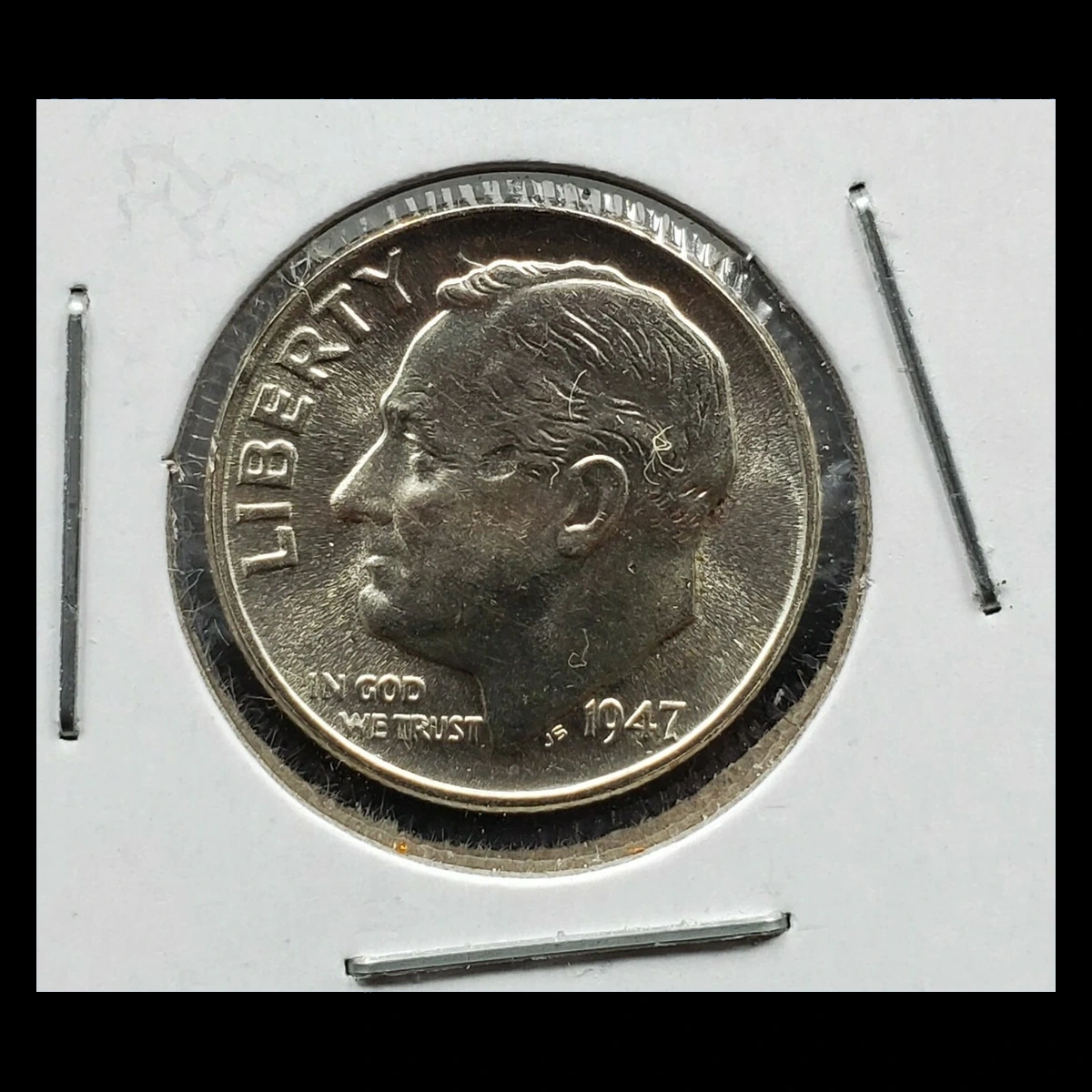
Something caught between the die and blank can prevent a patch of design from forming. The resulting mark depends on what blocked the strike and how much of the surface it covered.
The supplied 1947 report does not identify a particular certified specimen. The visible interruption needs to be checked before a worn or dirty patch is called an error.
How to Identify
Compare the weak patch with nearby letters and other raised details. A local interruption among sharp original features gives more useful evidence than broad wear across the whole face.
Move the light along the boundary to look for scratches or corrosion pits. Dirt sitting on complete lettering is different from material that blocked the design while it was struck.
A normal silver dime weighs about 2.50 grams and measures 17.9 millimeters. Those measurements can reveal major changes, but they cannot establish a strike-through on their own.
What It’s Worth
$20–$100 is the estimate for a small genuine strike-through on a circulated silver Roosevelt dime. Larger, clearer examples have an estimated $100–$300 range.
These are comparisons with similar silver-dime errors, not a reported sale of a specific 1947 coin. The stronger range assumes an obvious mint-made feature and appealing surfaces.
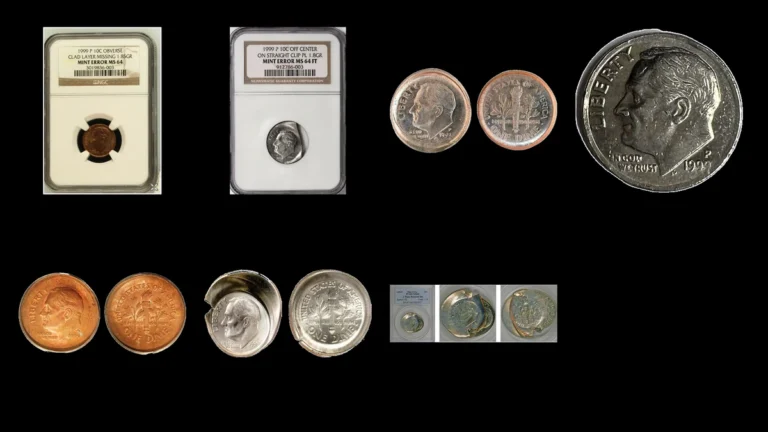
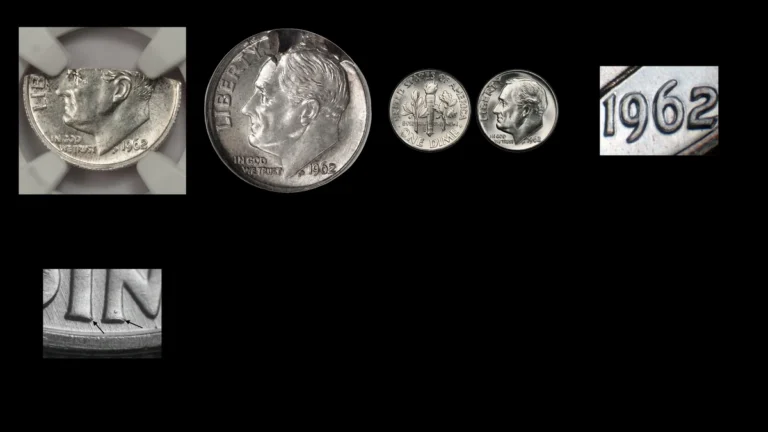
5. 1947 Dime A Curved or Rough Section Is Missing: Clipped Blank Error
A 1947-S example has a curved clip of about 10%, which can form when the blank-cutting punch overlaps an earlier hole. The gap exists before the design is struck.
A different Philadelphia coin has a rough missing section from five to six-thirty, consistent with the rough edge of the metal strip. Its shape and location should not be assigned to the curved San Francisco coin.
How to Identify
Choose the comparison that fits the actual boundary: curved or rough. Inspect where the struck rim and design meet both ends of the missing section.
Natural metal flow around the gap and possible weakness on the opposite rim can support a clip. Fresh cuts, file marks, or crushed edges suggest later damage.
Measure across an intact span and consider weight together with wear. A lighter coin proves that less metal is present, but does not show when it disappeared.
What It’s Worth
$30–$400 is the estimate across circulated and attractive unworn clipped examples. The 1947-S 10% curved clip graded NGC MS66 sold for $104 in December 2024, according to the supplied Heritage record.
The older Philadelphia rough-edge listing’s $6 minimum bid was not a sale result or a current value. Its different shape and preservation need their own comparison.
6. 1947 Dime A Shifted Design Leaves Bare Metal: Off-Center Strike Error
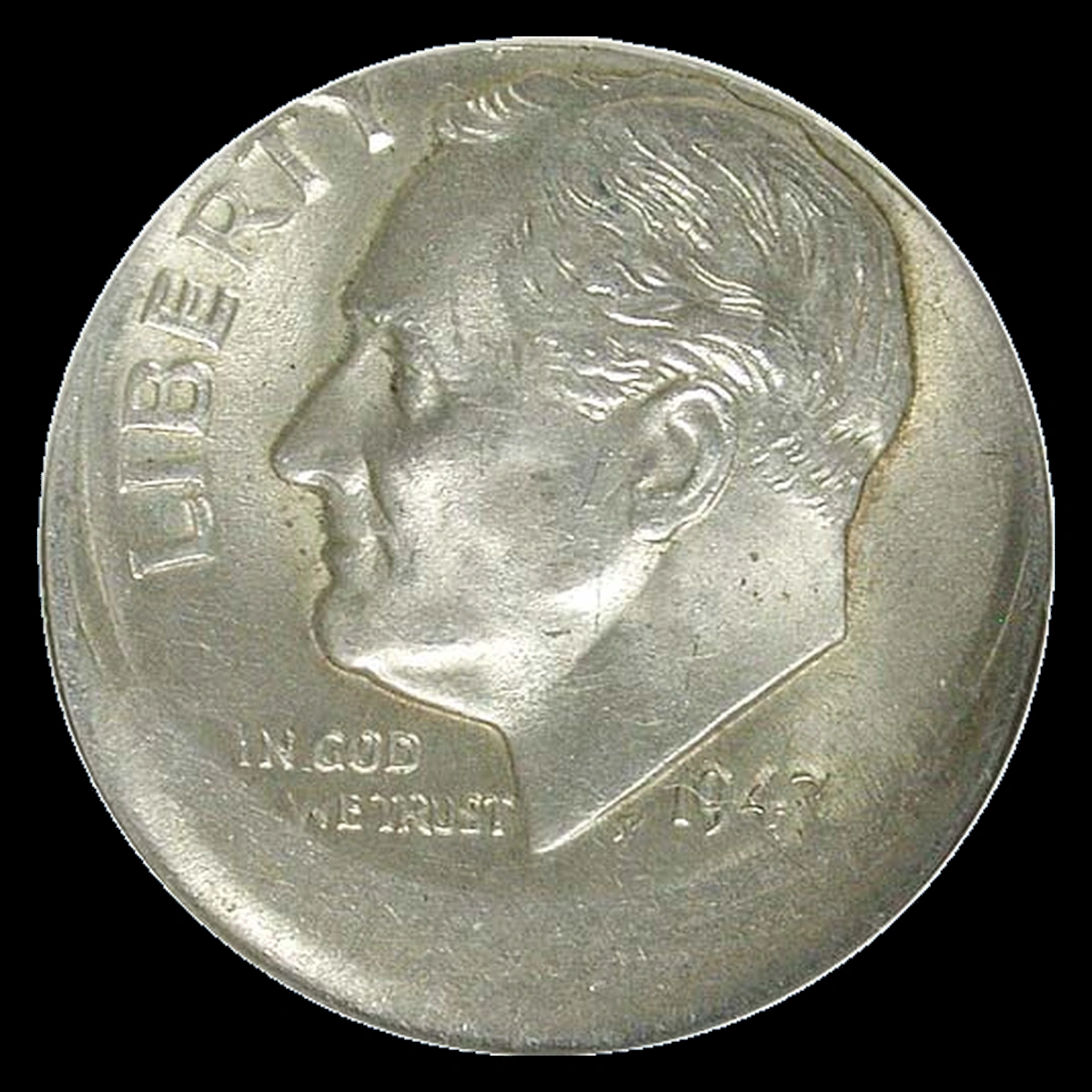
A collector’s NGC set lists a 1947-S struck 15% off-center and graded MS62 FT. The blank was out of position under the dies, leaving part of the design beyond the metal and another area unstruck.
MS62 means unworn with noticeable marks. FT means Full Torch, a designation for sharp torch detail surviving on the coin.
How to Identify
Compare both faces for displaced design beside original blank metal. Keep the readable 1947 date and S mintmark in the full views.
Only one shifted face can point toward a misaligned die. A wider coin that keeps the entire design can instead be a broadstrike, made without normal edge restraint.
Examine the boundary for filing that could remove finished design. The 15% description belongs to the collector-listed specimen, not every off-center 1947 dime.
What It’s Worth
$150–$750 is the estimate for genuine readable-date examples with a similar displacement. No sale price is supplied for the listed MS62 FT coin.
A 1934-D Mercury dime graded PCGS AU50 and 10% off-center was offered for $350. That asking price concerns a different design, date, and worn grade, so it provides broad context rather than an exact sale comparison.
Conclusion
The 1947 varieties reward a close look at specific details: JS for the Philadelphia doubled front, the correct reverse pattern for FS-801, and the earlier letter beneath S. A vague thick edge is not enough to identify any of them.
For larger errors, examine how the design meets weak or missing areas. Keep separate specimens, starting bids, dealer asks, and actual sales distinct when choosing a whole-coin estimate.