Rare 1889 Dime Errors (List & Pictures)
An off-center example with later graffiti sold for $1,092.50 in July 2005, illustrating why mint errors and subsequent damage need separate descriptions. The 1889 dime errors below have estimated whole-coin values of $20–$2,500.
Inspect the full outline, then use the date, shield, and wreath landmarks to identify smaller features.
| Observation | Feature | Estimated whole-coin value |
|---|---|---|
| Incomplete design beside blank metal | Off-center strike | $500–$1,800 |
| A thin sheet lifts from the surface | Planchet lamination | $20–$300 |
| A raised reverse patch reaches the rim | F-111a rim cud | $75–$900 |
| Raised routes cross normal detail | Die cracks | $20–$400 |
| Extra strokes border date numerals | Repunched date | $30–$1,000 |
| Numeral fragments cross shield or base detail | Misplaced digits | $40–$1,500 |
| Leaf details have repeated contours | Doubled die reverse | $50–$2,500 |
| Faint shapes echo the opposite side | Clashed dies | $25–$500 |
1. 1889 Dime A blank crescent borders missing lettering: Off-Center Strike Error
The recorded PCGS XF45 was struck 15% off center toward ten-thirty, losing much of UNITED STATES from the struck design. The blank had been outside the intended position when the dies came together.
Heritage also described faint cursive graffiti on the unused area. Those later scratches are separate from the striking error that left the reverse crescent blank.
How to Identify
View both complete faces and identify which design elements fell beyond the blank. An uneven wide border around a complete picture requires another explanation.
Compare the struck-to-blank transition under magnification. Distinguish original unstruck metal from later scratches without treating the graffiti as evidence of the strike itself.
For accessible coins, original specifications of 2.50 grams and 17.9 millimeters offer a baseline, allowing for wear and distortion. The 90% silver dime normally has a grooved, or reeded, edge.
What It’s Worth
The estimate is $500–$1,800 for comparable circulated whole coins with readable dates. The 15% PCGS XF45 sold for $1,092.50 at Heritage on July 30, 2005.
XF45 indicates wear with much remaining detail. A clean blank crescent may be more appealing than one with graffiti, while lost date digits or other damage can limit comparison with the historical result.
2. 1889 Dime A thin layer lifts or leaves a shallow hollow: Planchet Lamination Error
A weakness within the metal can let a surface sheet separate during striking or later handling. The flake may remain attached or detach naturally.
The general 1889 lamination report does not establish a mint or location. The boundary on the actual coin provides the evidence rather than an expected fixed position.
How to Identify
Leave an attached flap undisturbed and inspect it from the side under low light. Look for a thin separation within the alloy instead of a gouge bordered by pushed-up metal.
A missing flake can reduce weight, but ordinary wear can do the same. The natural sheet-like boundary is more specific than either low weight or a shallow recess alone.
What It’s Worth
Circulated examples have an estimated $20–$300 whole-coin range. Small splits generally sit lower, while a clear attached flap may attract more interest.
No recorded sale is assigned to the guide’s example. Extensive metal loss can also reduce visual appeal, so size alone does not determine price.
3. 1889 Dime A raised patch meets the rim near eleven-thirty: Reverse Rim Cud Error
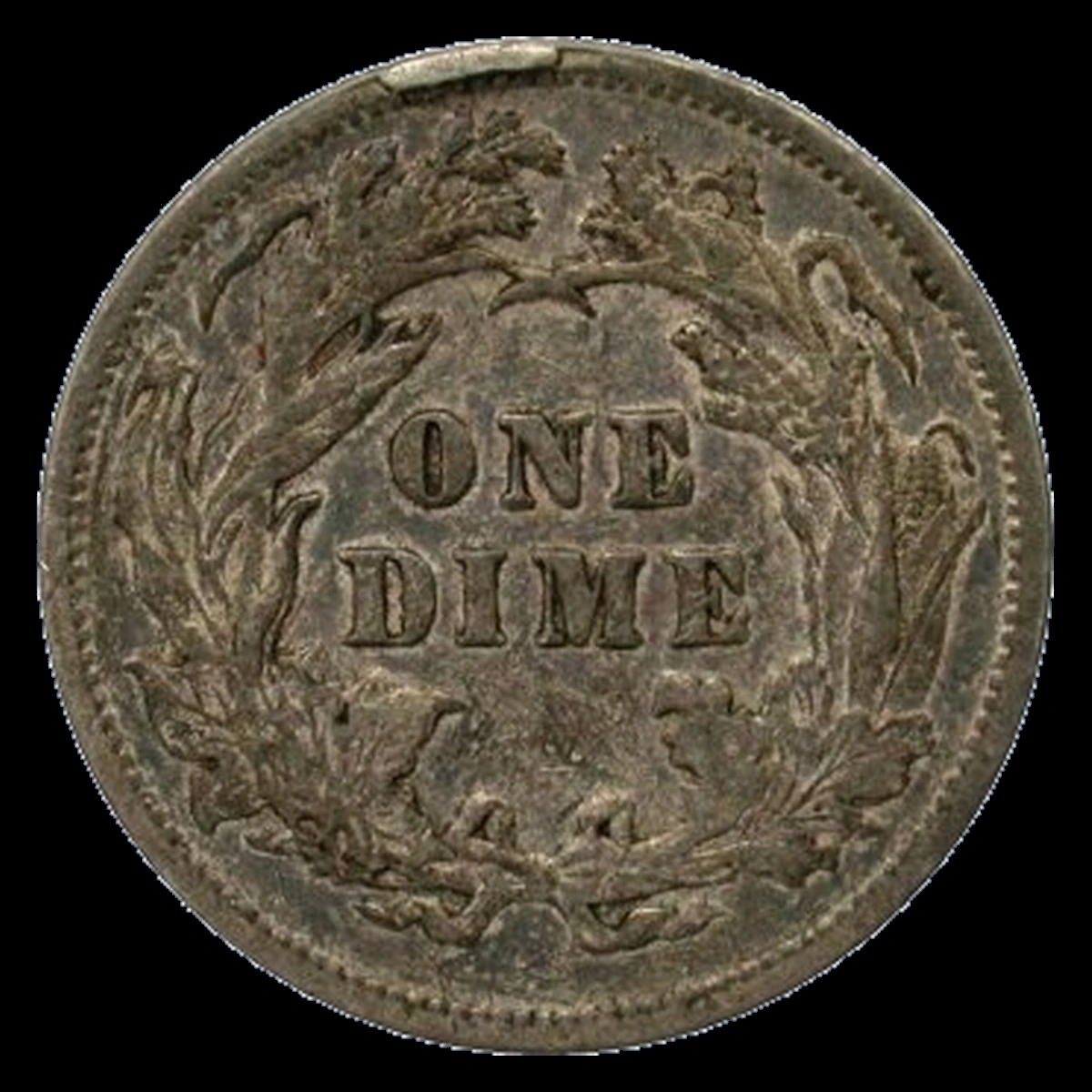
The late die state F-111a has a reverse cud near eleven-thirty when upright. Its earlier F-111 pairing is listed without this rim break.
A cud develops when a rim-side die fragment falls away and metal fills the opening during striking. The resulting patch replaces normal detail and connects to the rim.
How to Identify
Orient the reverse upright and compare the eleven-thirty boundary with the late-state reference. An angled view helps show the patch’s relief and connection to the edge.
Inspect nearby reeding for crushing from a later impact. A thick rim or pushed-up lip cannot establish the same broken-die feature.
What It’s Worth
The estimate is $75–$900 for circulated through About Uncirculated F-111a coins with a clear cud. About Uncirculated, or AU, means only light wear.
No particular F-111a sale establishes this range. Original nearby surfaces and a readable boundary make the comparison more useful than an area obscured by edge damage.
4. 1889 Dime Raised lines follow separate routes through the design: Die Cracks Error
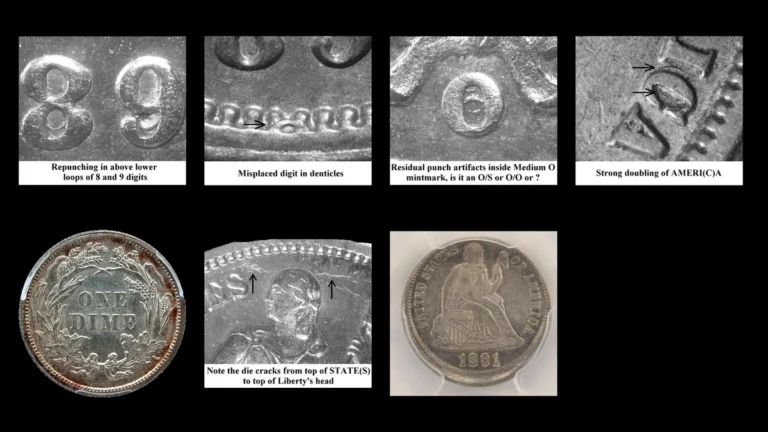
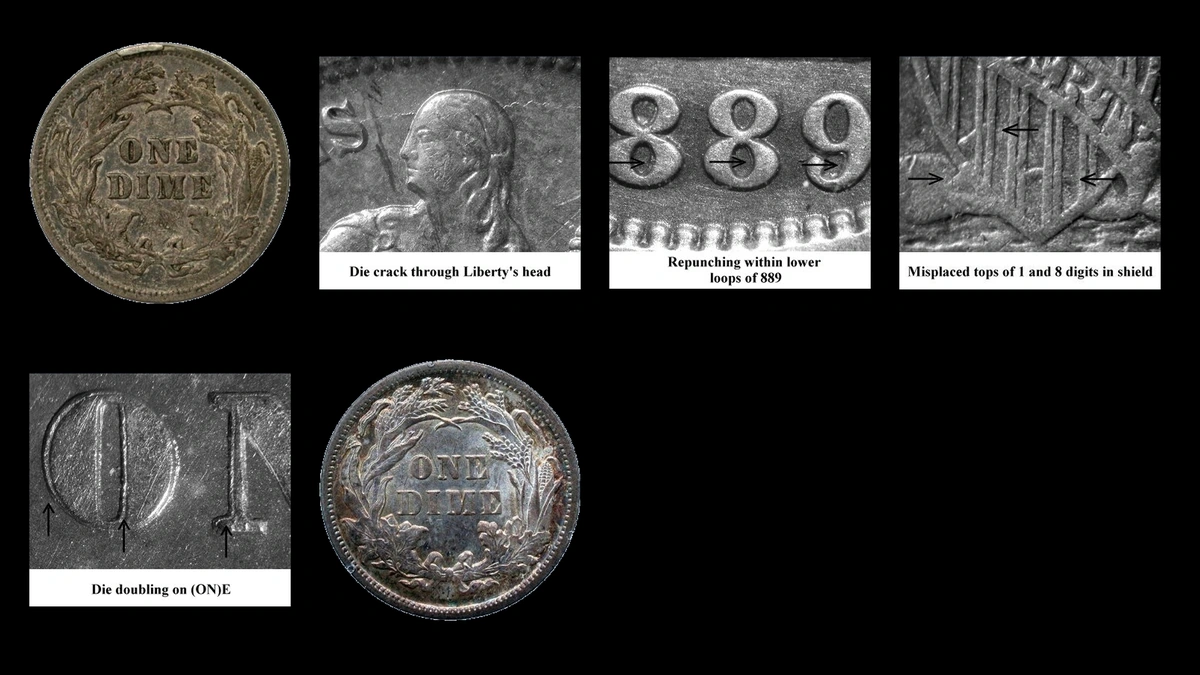
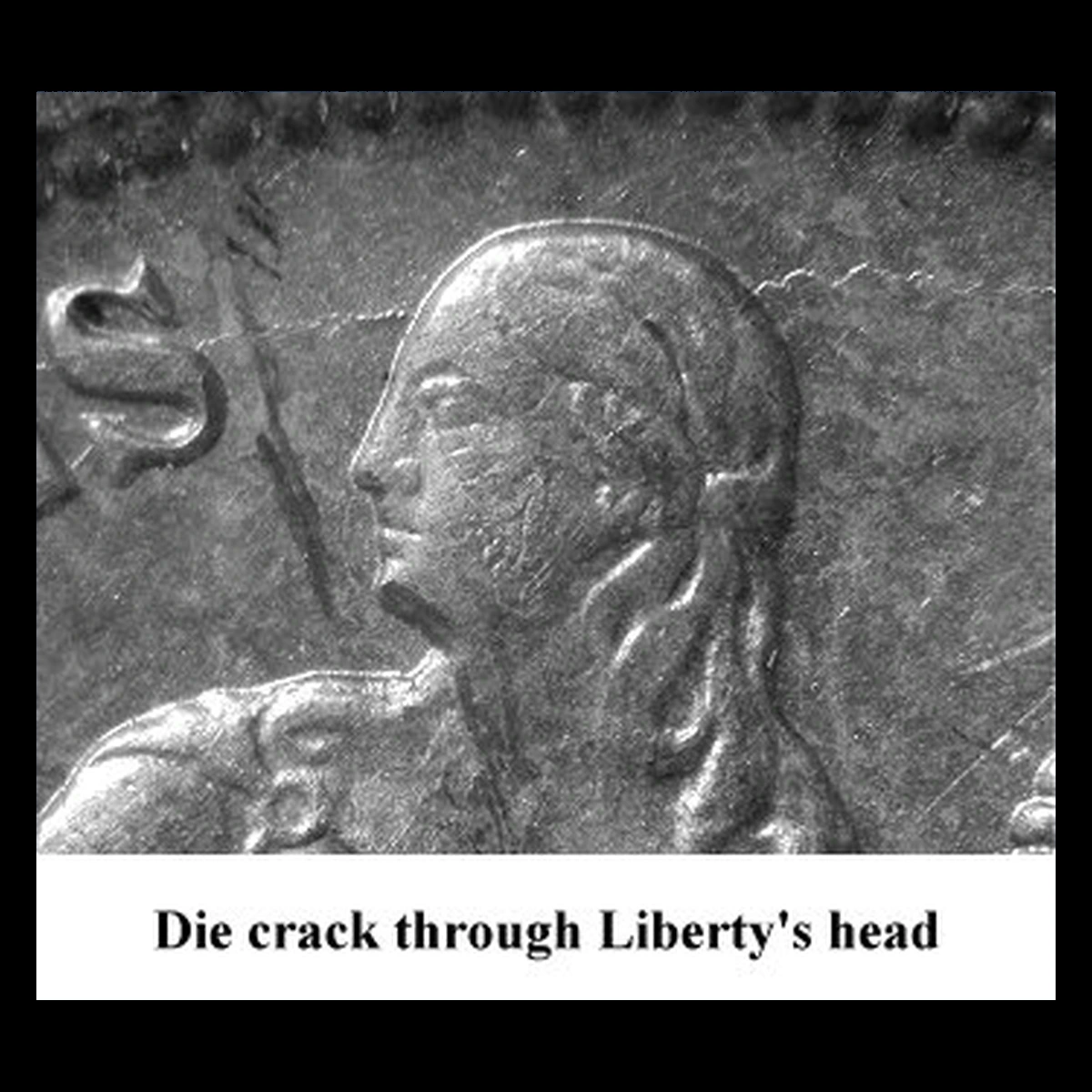
Reported 1889 routes include CA in AMERICA toward the rim, a line through Liberty’s head, and reverse cracks through the lower right wreath or near nine o’clock. Those paths belong to different dies or stages.
A die is the steel stamping tool. Silver entering one of its fractures leaves a ridge on the coin rather than a split through the coin itself.
How to Identify
Select the reference for the actual face and region before following the line. A wreath crack cannot establish the separate route through Liberty’s head.
Move the lamp from one side to the other to distinguish raised metal from an incised scratch. Trace the complete route through recognizable landmarks instead of relying on one dark segment.
What It’s Worth
The estimated whole-coin range is $20–$400 for circulated through AU examples with visible cracks. These are estimates rather than assigned sales for named specimens.
A readable continuous ridge can be more interesting than a faint mark lost in wear. Grade and surface quality remain part of the comparison.
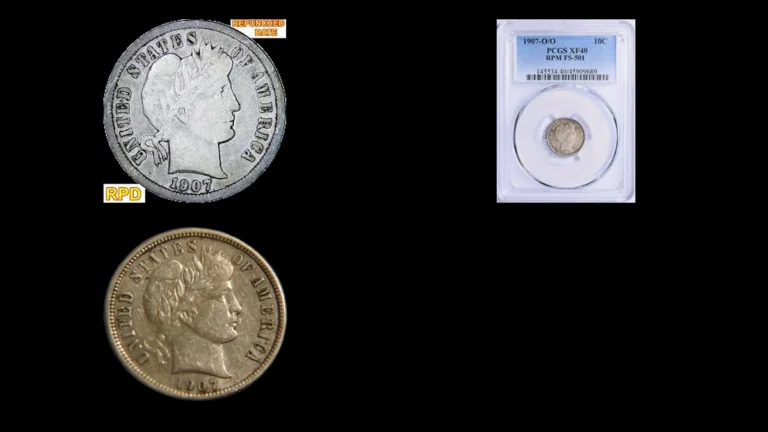
5. 1889 Dime Smaller contours repeat parts of the date: Repunched Date Error
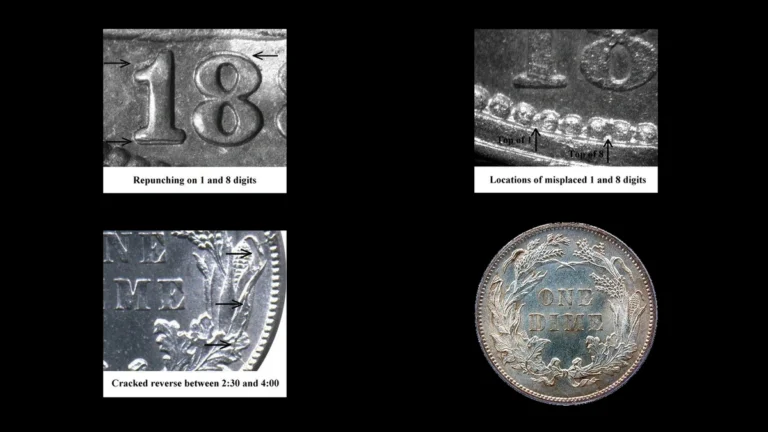
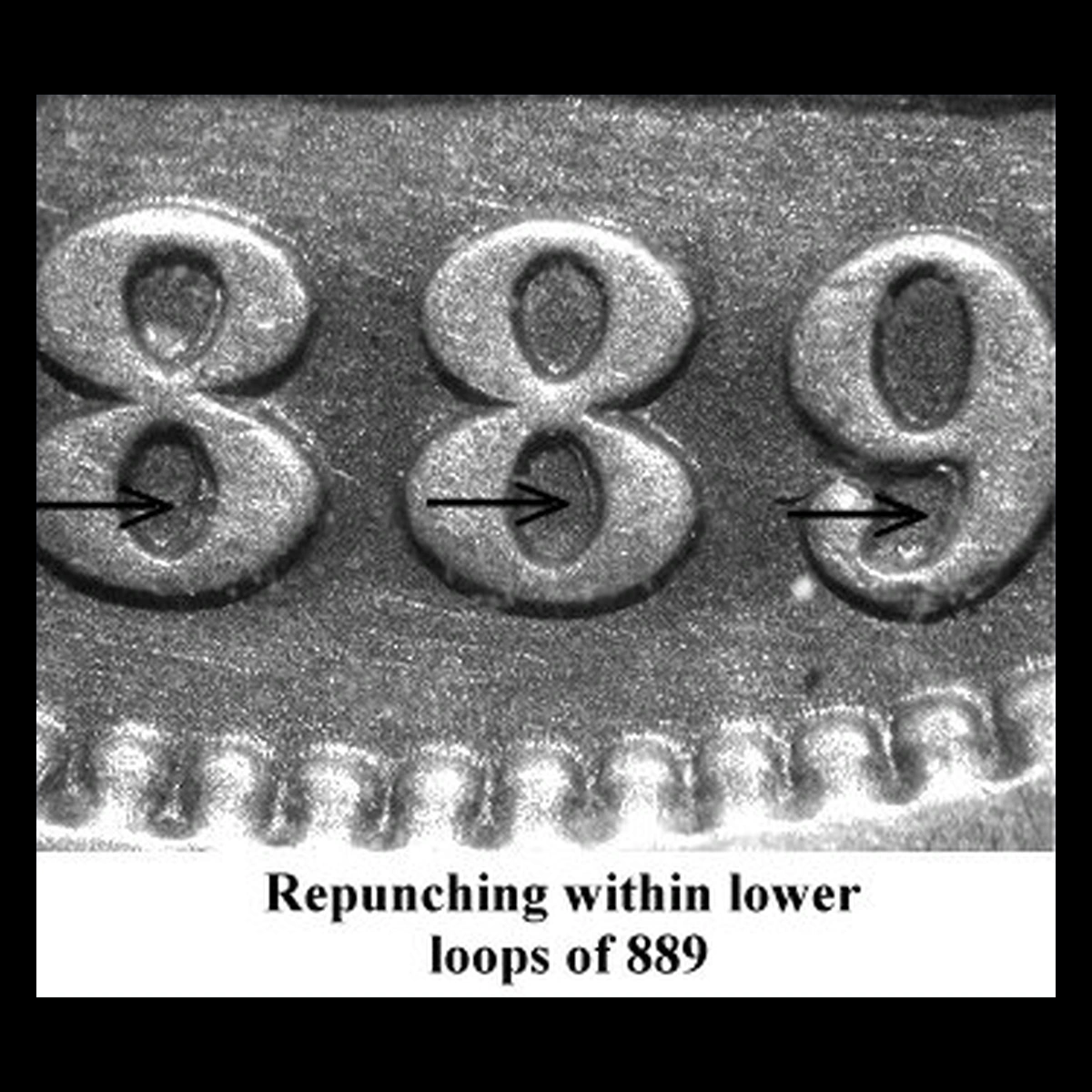
Philadelphia F-103 has remnants around all four numerals, including the left foot of 1, the 8 loops, and the tail of 9. Other Philadelphia dies have fewer repeated contours.
A San Francisco report instead identifies a small remnant above the flag of 1. Normal Open 9 and Closed 9 shapes are not, by themselves, evidence of repunching.
These remnants originated through repeated date-punch placement in the die. The affected positions depend on the particular tool.
How to Identify
Check beneath the reverse wreath for S before selecting a date reference. No mintmark indicates Philadelphia for these comparisons.
Photograph all four numerals and follow each proposed remnant into a recognizable earlier numeral shape. F-103 needs several matching details, while the S-mint example requires its own above-flag comparison.
What It’s Worth
The estimate is $30–$1,000 for commoner repunched dates from circulated through lower Mint State grades. Mint State means no circulation wear, though contact marks can remain.
A Philadelphia F-104 graded MS63 is recorded at $223 in 2017. That type also has reverse doubling, so the result covers more than the date remnant alone.
It does not directly price the much scarcer F-103. A fixed premium cannot be assigned to every extra numeral edge from that one comparison.
6. 1889 Dime Numeral fragments cross shield lines or the base: Misplaced Digits Error
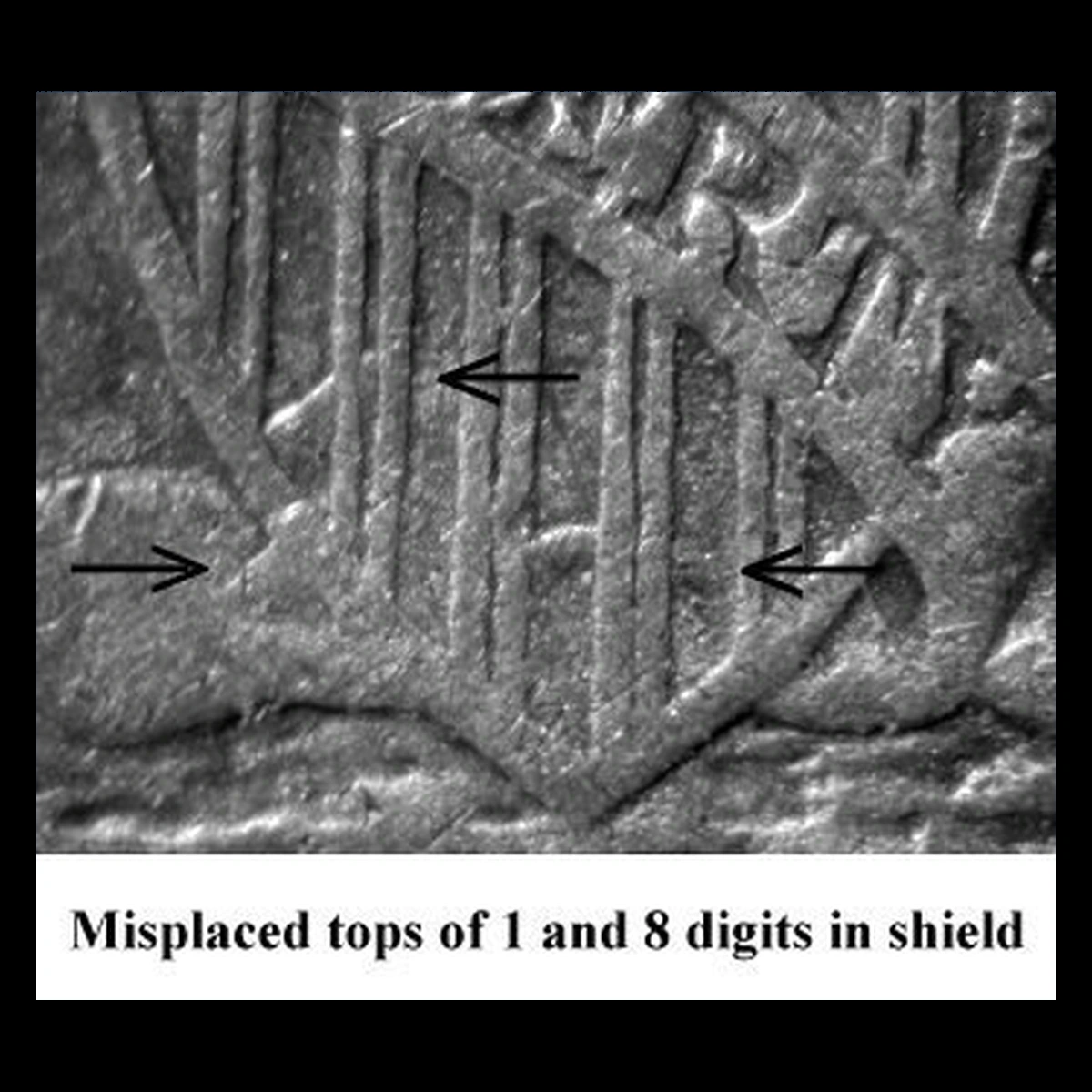
On F-126, a remnant of 1 crosses shield lines two and three, while part of 8 crosses lines seven and eight. The date punch touched the die outside its intended location.
Other varieties have fragments in Liberty’s base or beside the scroll. The F-103 scroll remnant is described as part of an 8 or 9, without a firm choice.
How to Identify
Count the relevant shield lines before assigning the F-126 fragments. The shape and its crossing points should agree with the reference.
Use separate images for base and scroll examples. Describe an uncertain 8-or-9 fragment as uncertain rather than completing an imagined digit.
Confirm the Philadelphia issue and keep enough surrounding design in each photograph to show location. An isolated curve is less persuasive than a matching fragment crossing the same landmarks.
What It’s Worth
The estimated whole-coin range is $40–$1,500 for circulated through lower Mint State examples. Availability varies substantially among the separate die pairings.
PCGS records $40 for a VF20 F-112 in October 2018. That circulated coin retained clear detail but does not set the price of every other misplaced-digit variety.
7. 1889 Dime Maple-leaf detail has distinct repeated edges: Doubled Die Reverse Error
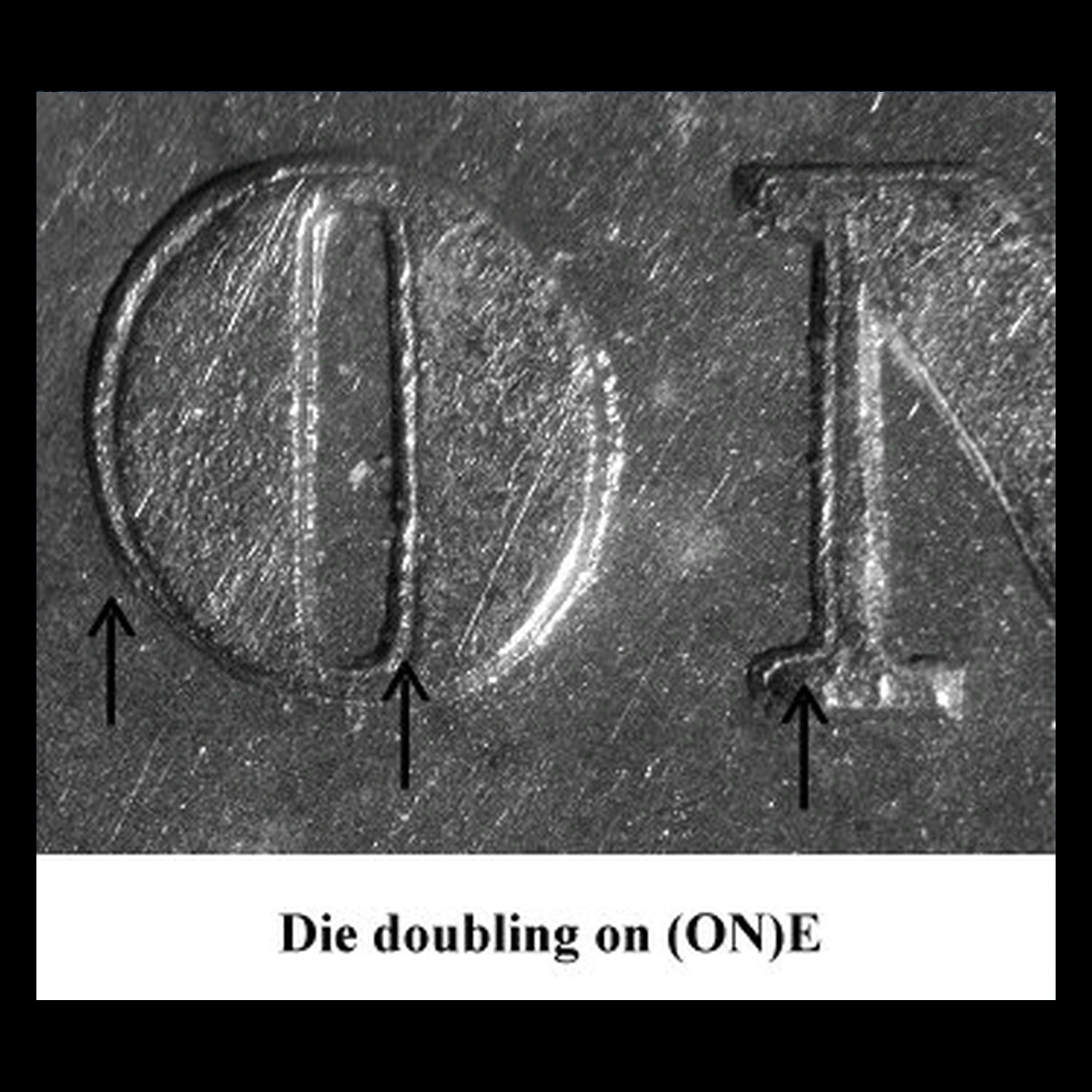
The lower-left maple leaves on Philadelphia F-104 can show two raised edges in their detail. The repeated design was transferred into the die before it struck coins.
Fortin’s reference lists several 1889 doubled reverses with different leaf patterns. One reverse also served with more than one obverse, making the complete pairing relevant.
How to Identify
Compare several adjacent leaf contours or veins, following the repeated raised shape rather than a flat shelf. Normal internal leaf lines must be distinguished from duplicated detail.
Then compare the obverse date arrangement to establish the pairing. A generic DDR number does not automatically identify every Fortin-numbered combination.
What It’s Worth
The estimate is $50–$2,500 for clear doubled reverses from circulated grades through approximately MS65. Better preservation and visible separation support stronger comparisons.
Heritage sold a PCGS MS63 DDR-001 for $336 on March 4, 2024. That unworn coin’s attribution must be matched before applying the result to another leaf pattern.
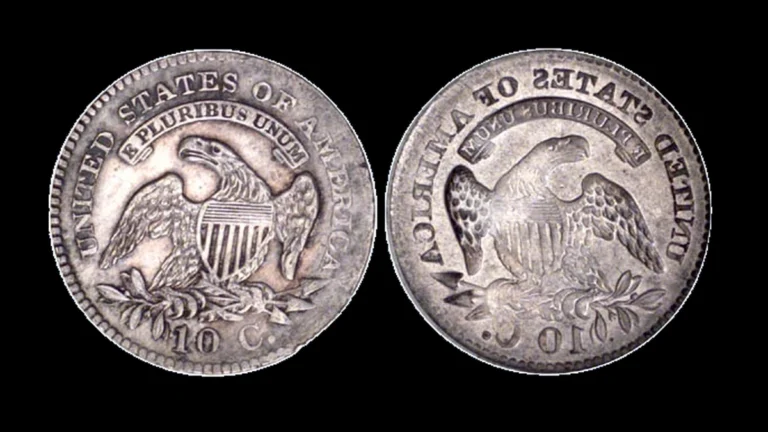
8. 1889 Dime Faint outlines copy the opposite face: Clashed Dies Error
Several Philadelphia die pairings show clash marks, sometimes alongside doubled reverse details. The two features have different origins even when they share one dime.
A clash occurs when the dies meet without a blank and acquire traces of the opposing design. Subsequent coins can receive those extra outlines.
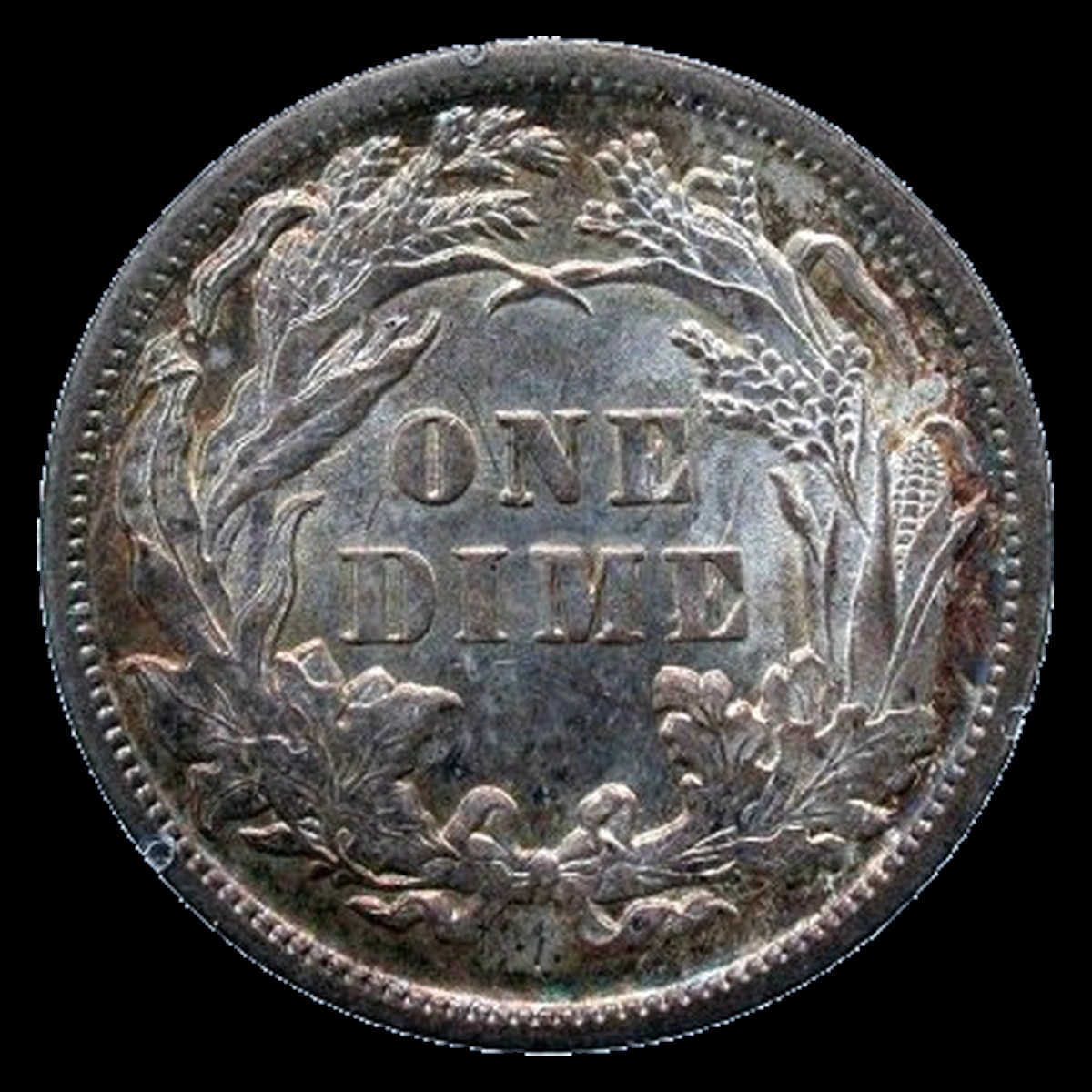
How to Identify
Photograph both faces at comparable size and compare unusual shapes with the opposite design. Use the correct pairing rather than rotating unrelated pictures until two lines happen to coincide.
A recognizable fragment of Liberty on the reverse can support a clash, while a random scratch cannot reproduce the whole relationship. Keep doubled leaf contours separate from this transferred-design test.
What It’s Worth
The estimated whole-coin range is $25–$500 for circulated through lower Mint State examples with clear clashes. Recognizable outlines are more useful than a few unexplained marks.
If reverse doubling is also present, assess the coin as a complete variety. Adding full clash and doubled-die estimates would count the same specimen twice.
Conclusion
The location and relief of the feature guide the identification: a rim-connected patch, a shield fragment, and a repeated leaf contour need different references. Full views of both faces keep those small observations tied to the correct pairing.
The $20–$2,500 estimates value complete coins. Preserve later damage in sale comparisons, and do not let a general error name erase differences in grade, surfaces, or variety scarcity.