Rare 1949 Quarter Errors (List & Pictures)
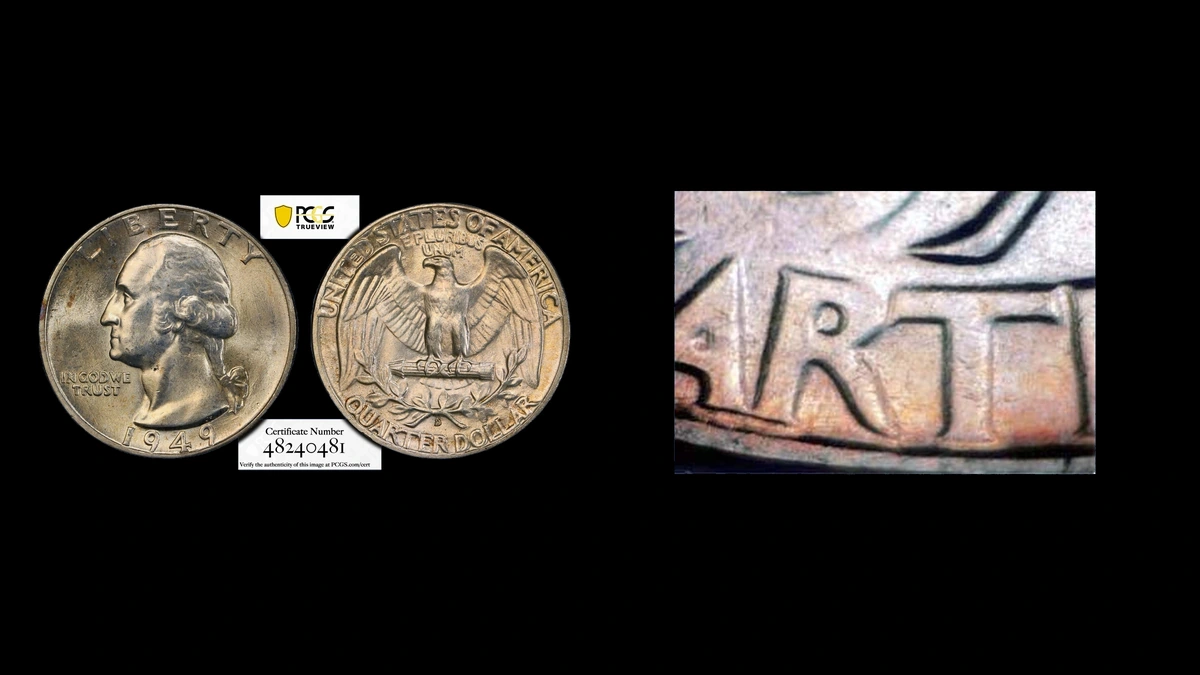
A second curve around the D may be the most useful detail on a 1949 quarter. Estimated whole-coin values for 1949 quarter errors and listed varieties span $30–$3,000.
The supplied comparisons include a different-year 1957 dime-planchet quarter that sold for $1,920 in December 2023. Start by matching the reverse details, then use the outline and edge to investigate larger striking and blank errors.
| Clue | Identification to investigate | Estimated value |
|---|---|---|
| Extra shape at D | FS-501 or FS-601 mint-mark variety | $30–$1,000 |
| Repeated reverse lettering | 1949-D WDDR-001 | $50–$800 |
| Section absent from the edge | Clipped planchet | $30–$300 |
| Expanded metal around complete artwork | Broadstrike | $75–$600 |
| Lost design opposite an unstruck area | Off-center strike | $100–$1,500 |
| Quarter design on an unsuitable blank | Wrong planchet | $300–$3,000 |
1. 1949 Quarter Another Curve Around the D: Mint-Mark Variety Error
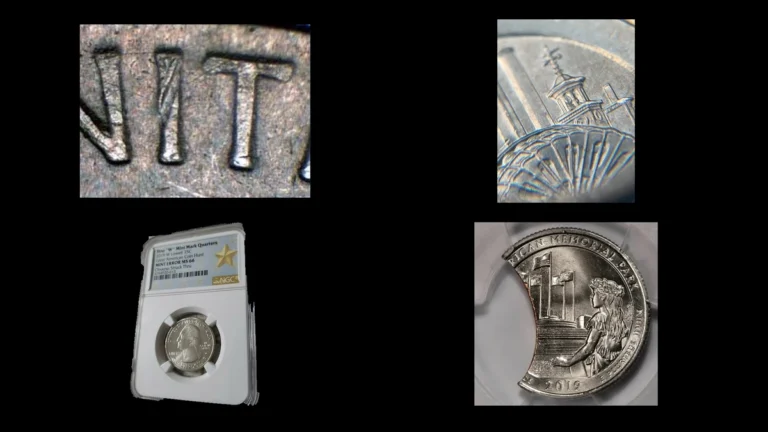
Two cataloged varieties place the search at the D below the eagle. FS-501 is a repunched D/D, while FS-601 retains a traditional over-mint-mark description, often written as D over S.
The explanation for FS-601 is disputed, with a damaged D/D proposed as an alternative. Its listed shape can still be identified without claiming that the underlying mark is conclusively an S.
How to Identify
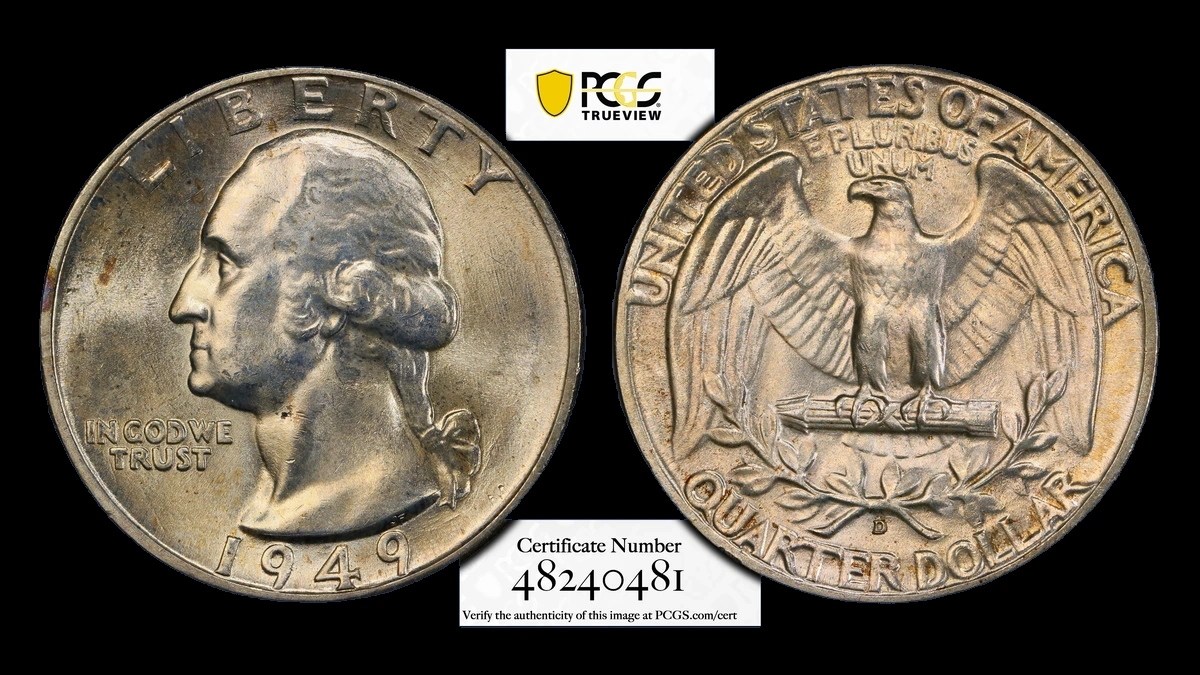
Photograph the entire D upright, including the nearby field, and compare it with one attributed variety at a time. Follow the extra raised outline instead of naming an isolated fragment by resemblance alone.
Match the second D impression for FS-501 and the separate cataloged shape for FS-601. Scratches, flat strike-doubling shelves, and metal pushed by a dent can all create misleading extra edges.
What It’s Worth
$30–$1,000 is the supplied estimate for confirmed mint-mark varieties. An MS65 FS-501 sold for $384 in March 2018.
The PCGS FS-601 listing records a separate MS65 eBay result of $529 in January 2023. Those prices belong to different attributed varieties, despite their shared location on the coin.
2. 1949 Quarter Repeated Words on the Eagle Side: Doubled Die Reverse Error
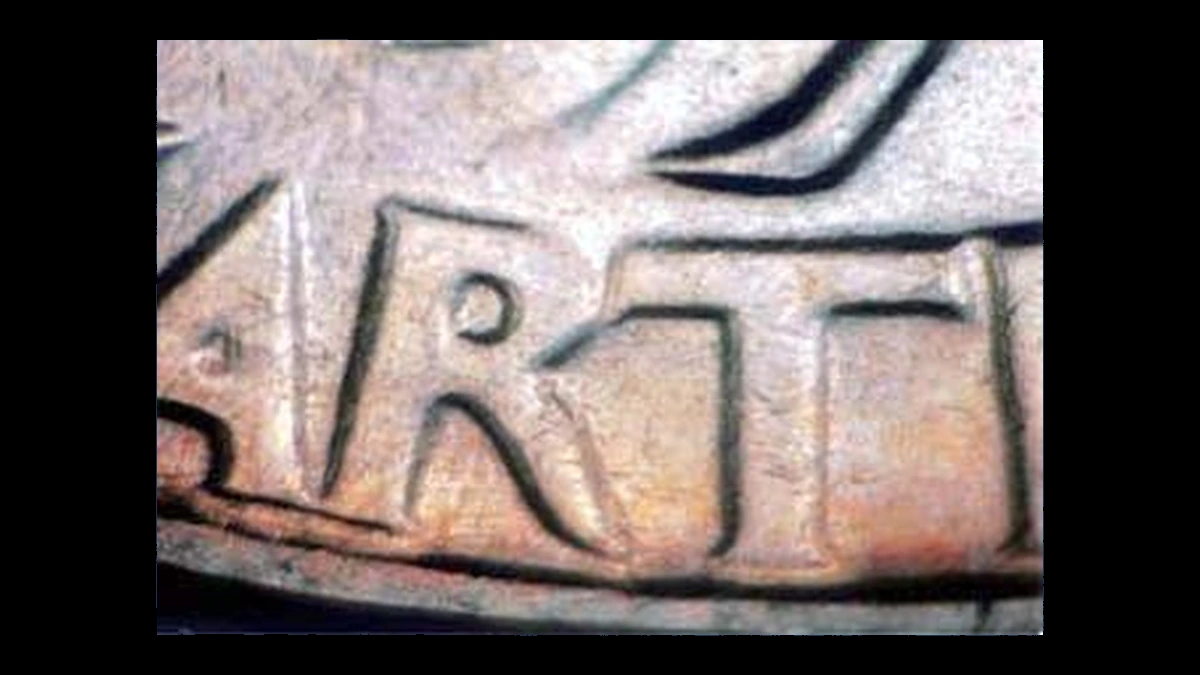
The 1949-D WDDR-001 pattern affects UNITED STATES OF AMERICA, E PLURIBUS UNUM, and QUARTER. Its doubled design rotates counterclockwise around a point near four o’clock.
This repetition was present in the die that struck the coin. It is separate from the common front doubling inherited from an earlier master tool, which carries no independent doubling premium here.
How to Identify
Compare several letters with Wexler’s WDDR-001 photographs. A short vertical tool mark above the M in AMERICA can support a match, but the repeated lettering is the central evidence.
The four-o’clock pivot describes the doubled design within this face. It does not mean that the entire reverse is rotated relative to Washington’s side.
Look for rounded separated outlines rather than thin flat shelves. An otherwise ordinary quarter with only the shared front feature has not been identified as WDDR-001.
What It’s Worth
$50–$800 is the estimated range for a correctly attributed 1949-D WDDR-001. Wear and the visibility of the repeated lettering influence where a particular coin belongs.
A 1965 obverse FS-101 doubled die graded PCGS MS64 sold for $1,518.75 at GreatCollections. That different-year, different-face variety supplies context rather than a price for the 1949 reverse.
3. 1949 Quarter A Gap That Predates the Design: Clipped Planchet Error
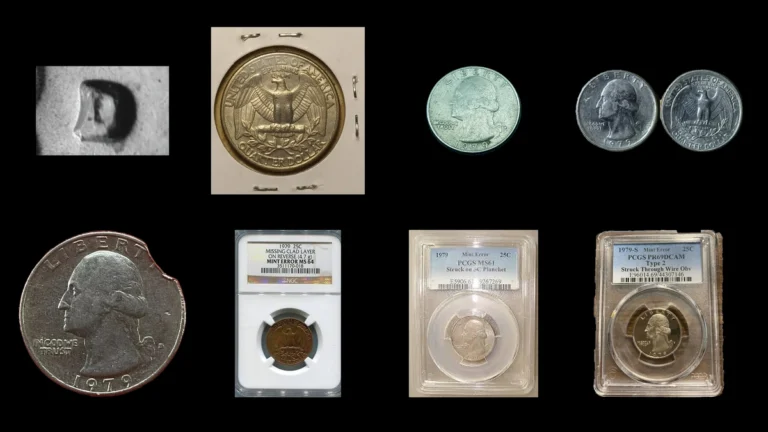
Philadelphia and Denver clipped quarters are reported for 1949. A blank can lose part of its outline during cutting if the punch overlaps a previous hole or reaches the edge of the metal strip.
The design then forms beside that existing gap. This sequence distinguishes a mint-made clip from metal removed after the quarter was finished.
How to Identify
Examine the two junctions where the gap meets the rim, looking for natural changes in metal flow and nearby detail. A cut passing sharply through completed lettering or showing tool marks suggests alteration.
The opposite rim may be weak, although that supporting feature is not mandatory on every clip. Check the surviving date and mint mark rather than assigning a mint from the general report.
A normal 90% silver quarter of this year weighs about 6.25 grams and measures 24.3 millimeters across. Missing metal lowers the weight, but the same is true of a later cut, so the scale cannot establish origin by itself.
What It’s Worth
$30–$300 is the supplied whole-coin estimate for genuine 1949 clips. Clear formation evidence and original surfaces are more useful than the mere size of a hole.
A 1953 curved-clip quarter graded ANACS MS64 sold for $79 in June 2026. It is a nearby-year silver comparison, with its own clip shape and condition.
4. 1949 Quarter A Complete Design Inside Spread Metal: Broadstrike Error
A broadstruck quarter expands because the collar, the ring surrounding the blank, does not provide normal restraint. The coin may retain all its design while gaining a wide or uneven border.
How to Identify
Trace the full outer lettering on both faces before deciding what the wide border means. A complete design can be unevenly positioned and still be broadstruck.
Compare the expanded outline with the normal diameter and inspect the edge for absent or incomplete grooves. Later hammering may widen a quarter too, but it commonly flattens the already struck artwork.
What It’s Worth
$75–$600 is the estimated range for a confirmed 1949 broadstrike. The extent of spread and preservation of the original strike are important differences between examples.
A 1965 Type One blank broadstrike graded PCGS MS61 sold for $192 in June 2024. Its clad metal and unprepared blank rim describe that comparison only, not every broadstruck silver quarter.
5. 1949 Quarter Blank Metal Opposite Missing Artwork: Off-Center Strike Error
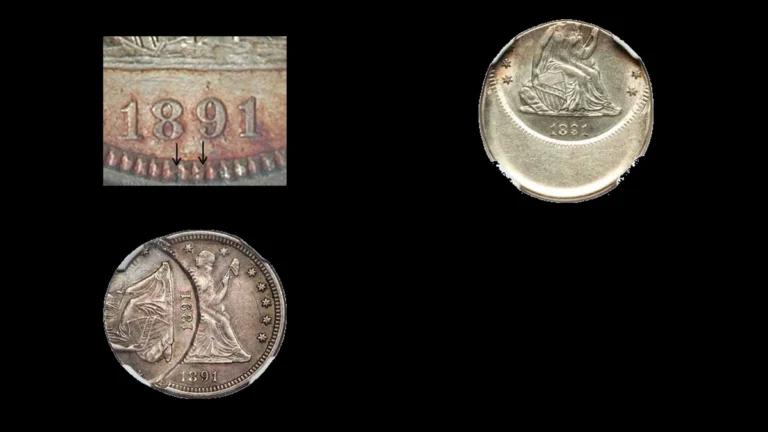
An off-center strike changes which parts of the quarter design reach the blank. Some artwork falls beyond one edge while an area on the opposite side remains unstruck.
Both Philadelphia and Denver examples are reported for 1949. The direction and amount of displacement must be read from each actual coin.
How to Identify
Turn the coin over and confirm that both designs fit the same misplaced blank. A wide rim confined to one face can have another explanation, including a misaligned die.
Establish the readable year and inspect the reverse mint-mark area. If that area missed the metal entirely, an absent D does not prove a Philadelphia strike.
Examine the boundary between struck and unstruck metal for evidence of later flattening. Unlike a clip, an off-center strike ordinarily retains the original blank’s metal.
What It’s Worth
$100–$1,500 is the supplied estimate for genuine 1949 off-center quarters. Readable identity, degree of displacement, and wear all shape the comparison.
A 1965 clad quarter struck 25% off center sold for $180 in December 2025. Neither its percentage nor its price should be applied automatically to a 1949 silver specimen.
6. 1949 Quarter A Blank That Does Not Fit the Quarter Design: Wrong Planchet Error
A planchet intended for another denomination may be too small or made from the wrong alloy for a quarter. Wrong-planchet errors are reported for 1949, but the supplied material does not establish one specific blank for every report.
How to Identify
Record the actual weight, diameter, and metal evidence before naming the supposed denomination. Follow the quarter design to the edge to see whether it was originally struck on the smaller disk.
A silver dime blank starts near 2.5 grams and 17.9 millimeters, while a copper-nickel five-cent blank starts near 5 grams and 21.2 millimeters. These are comparison standards, and striking can spread a blank beyond its original diameter.
Look for filing or cutting around the edge and for coatings that change the apparent metal. A finished quarter reduced in size is not a wrong-planchet strike even if its final measurements resemble another denomination.
What It’s Worth
$300–$3,000 is the supplied estimate after the blank and original error strike have been authenticated. The remaining date and surface condition affect the value alongside the blank type.
A 1953 quarter on a nickel blank graded PCGS MS63 sold for $720 in September 2024. A separate 1957 silver-dime-planchet quarter graded MS64 sold for $1,920 in December 2023.
These later-year sales illustrate two different combinations. They do not establish either blank as the confirmed identity of an unexamined 1949 coin.
Conclusion
A useful 1949 quarter identification connects the visible feature to a specific cause or catalog match. Begin with the D and reverse lettering, keeping the disputed FS-601 explanation and common front doubling in their proper context.
For larger errors, compare both faces with the edge and measurements. The strongest case explains how the design formed on the metal, rather than relying on a dramatic outline or an unrelated auction price.