Rare 1995 Quarter Errors (List & Pictures)
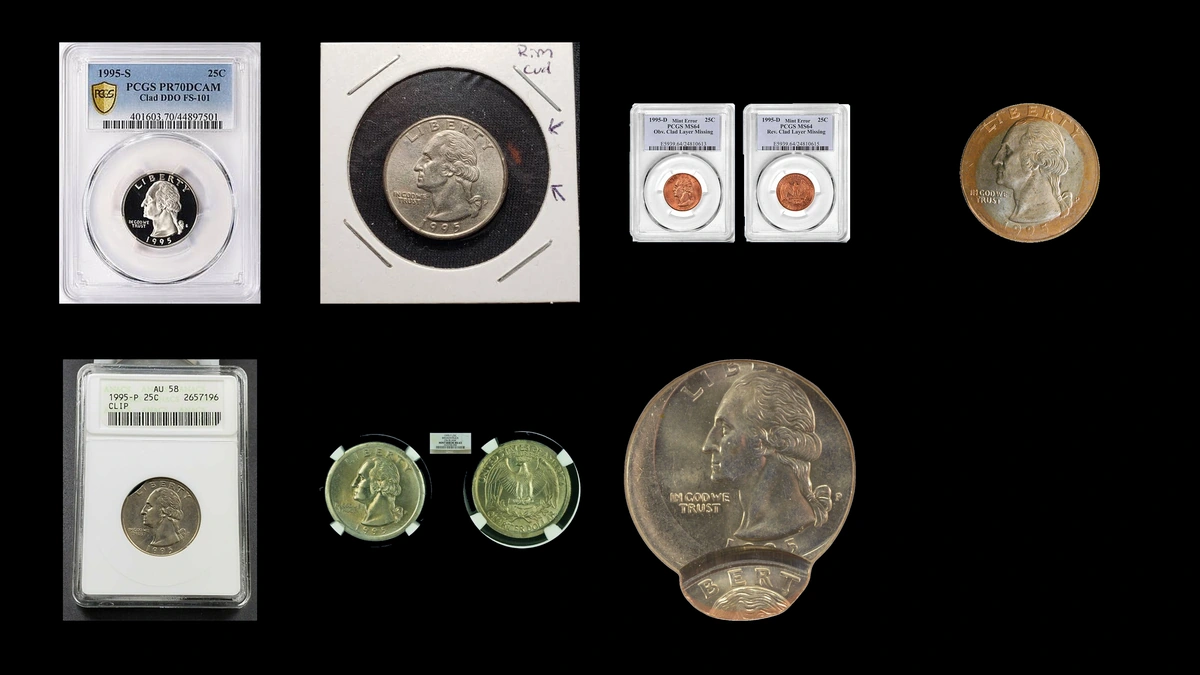
Two copper-colored 1995 quarters can need opposite explanations: one lost an outer layer, while another gained a surface coating. Small doubled details have their own market, with a 1995-S clad Proof selling for $920 in July 2010.
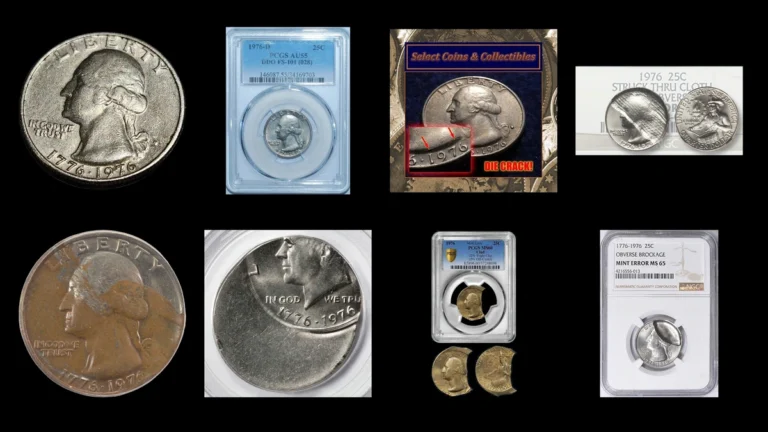
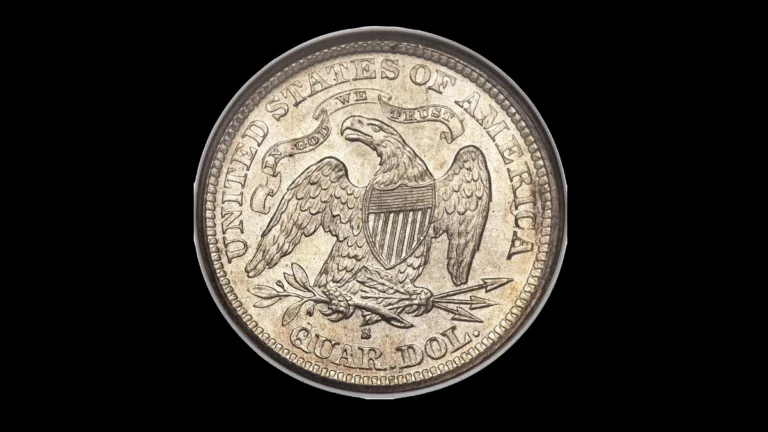
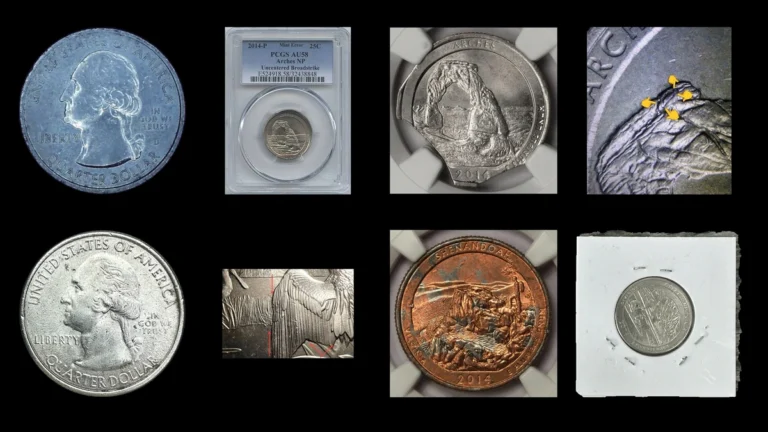
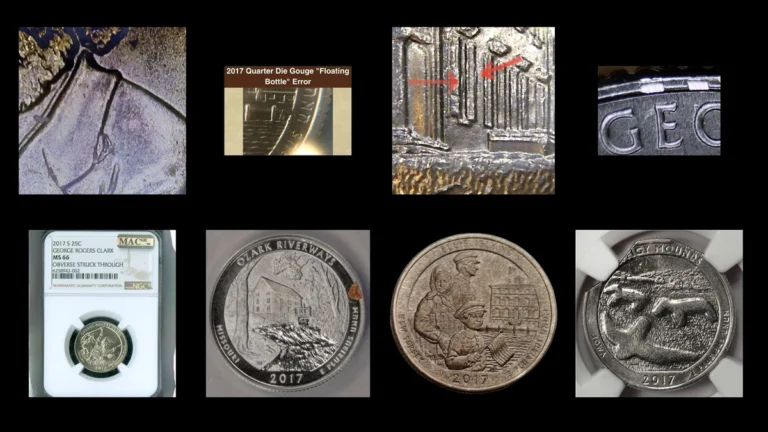
The 1995 quarter errors below have estimated values of $10–$3,000. Check the finish and surface first, then use the edge and design positions to identify the larger mistakes.
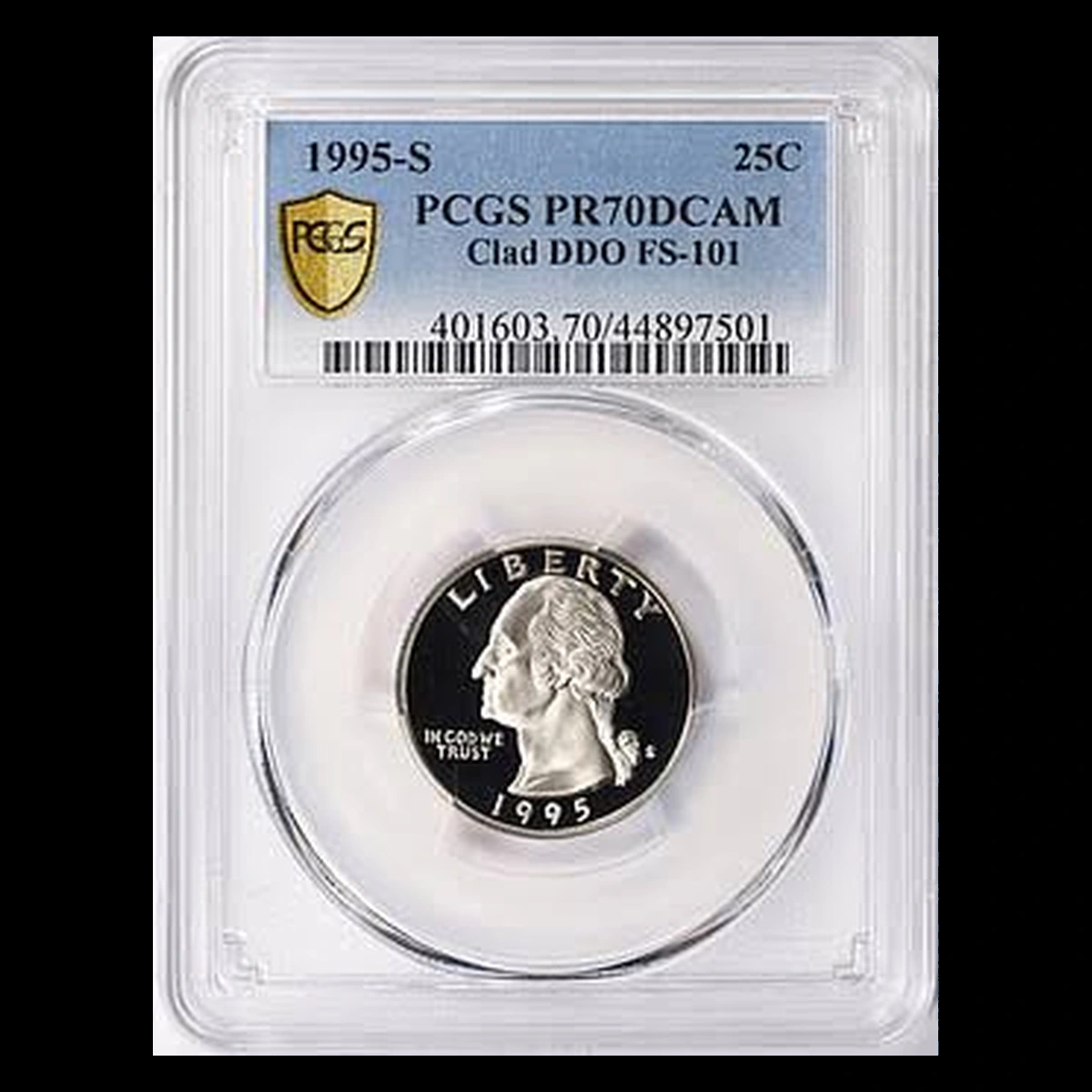
1. 1995 Quarter Extra Date and Ribbon Outlines — Doubled Die Error
The 1995-S clad Proof FS-101 repeats details around the date and lower ribbon, with additional comparison points in the lower hair, lettering, and mintmark. The doubled design was in the die before striking.
A separate Philadelphia report concerns the motto. It is not identified by the San Francisco Proof pattern.
How to Identify
Confirm the issue before enlarging details: an S alone does not distinguish clad from silver Proofs. Their normal weights are 5.67 and 6.25 grams respectively.
Match the clad Proof’s date and lower ribbon, then the other listed points. Rounded separation differs from the low flat shelves of mechanical doubling.
What It’s Worth
$30–$1,200 spans the supplied groups. Identified clad FS-101 Proofs are estimated at $100–$1,200, while the separately reported Philadelphia type fits $30–$200 once matched.
PCGS records $920 for a PR69 clad Proof in July 2010. That near-top grade should not price every doubled-looking quarter.
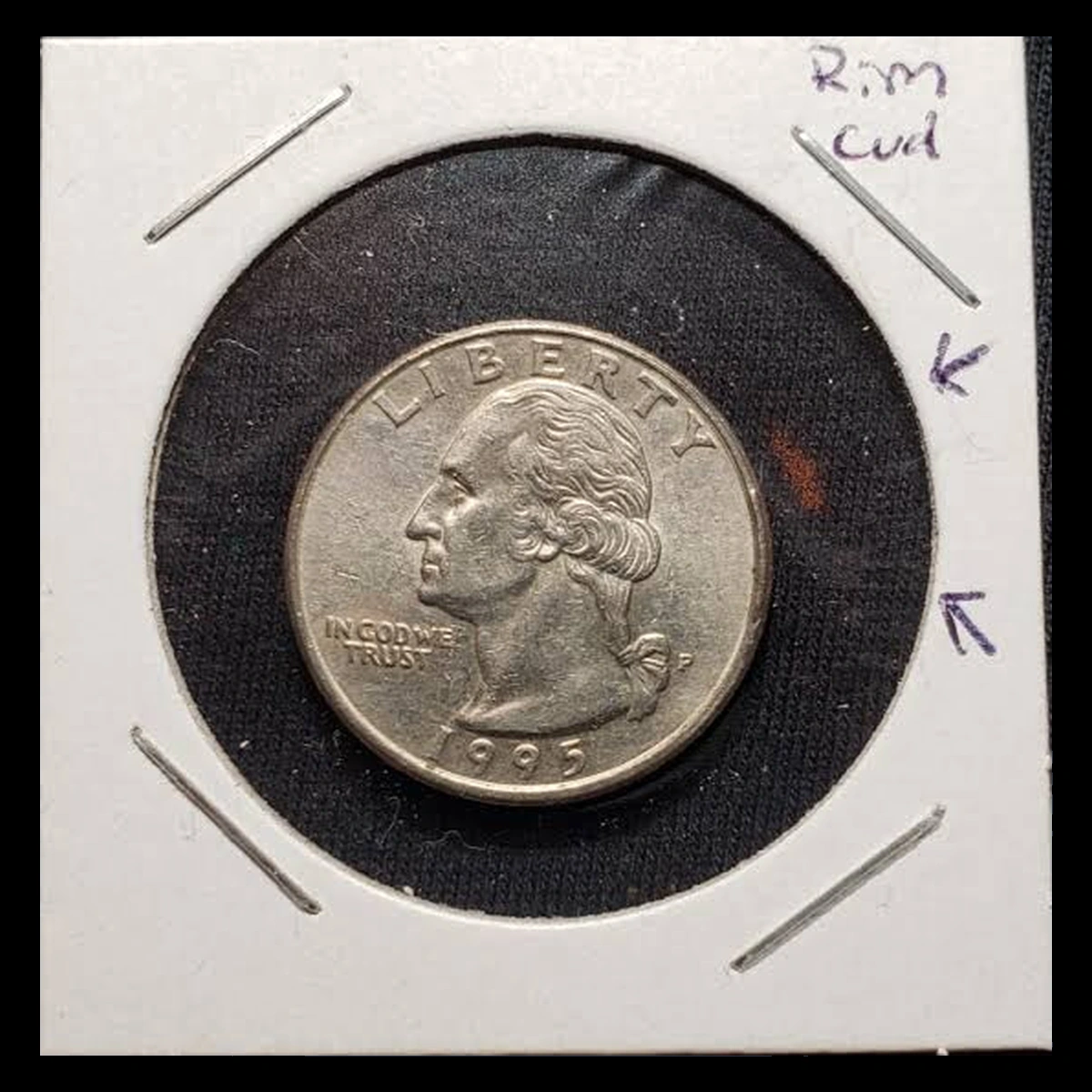
2. 1995 Quarter A Raised Strip Joins the Rim — Cud Error
Two Philadelphia rim-break patterns are recorded. One sits outside the L in LIBERTY at the upper left, while the other forms a longer strip beside the portrait at the right.
A piece of the die’s edge broke away and metal filled the space. These alternative shapes do not need to occur together.
How to Identify
Compare the upper-left pattern around 9:45–11 o’clock or the right-side strip around two to four o’clock. Follow the entire boundary into the normal rim.
Check for a neighboring dent or folded lip that could explain metal pushed up later. A bright reflection on one bump is not a complete match.
What It’s Worth
$10–$150 is an estimate for clear small 1995-P cuds. Size, definition, and original surfaces help distinguish stronger examples from worn rough patches.
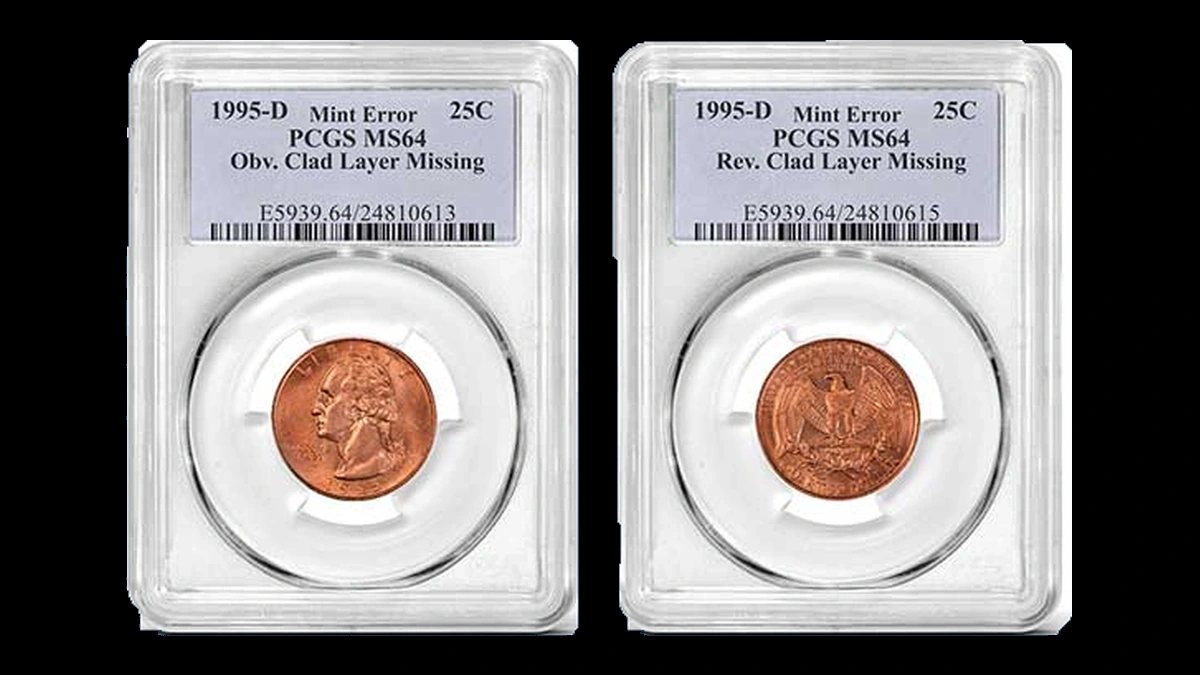
3. 1995 Quarter A Copper Face with an Outer Layer Gone — Missing Clad Error
Philadelphia front losses and Denver front and back losses are recorded. Two separate Denver front-loss coins weigh 4.7 and 4.6 grams.
The absent copper-nickel layer exposes the copper center. A normal quarter’s narrow copper edge stripe is a different, ordinary feature.
How to Identify
Compare the actual weight with the normal 5.67 grams and examine the exposed design. Grinding or acid can also lower weight, so original struck detail and a natural layer boundary are essential.
Keep each reading with its own specimen. Neither Denver measurement establishes the Philadelphia coin’s weight.
What It’s Worth
$100–$500 is the estimate for individual genuine layer-loss coins. The 4.6-gram Denver example sold for $149 in July 2022.
Two Denver pieces, one front loss and one reverse loss, sold together for $246.75 in February 2014. That lot total is not a price for either coin alone.
4. 1995 Quarter Copper Color Covers Both Faces — Copperwash Error
A Philadelphia PCGS MS63 quarter was cataloged with 100% copperwash on the front and back. Its outer layers were not described as missing.
The term refers to a thin copper-colored coating. Broad color coverage on this specimen does not identify every brown quarter as the same error.
How to Identify
View the coin under neutral white light and compare both faces and the edge. Warm room lighting can make normal metal appear orange.
Inspect whether a coating bridges old scratches or collects around letters, which may suggest later plating. Near-normal weight alone cannot establish when a thin coating formed.
What It’s Worth
$150–$500 is an estimate for an authenticated comparable example. The two-sided PCGS MS63 copperwash sold for $312 in July 2022.
The range assumes a mint-related coating rather than later stains or plating.
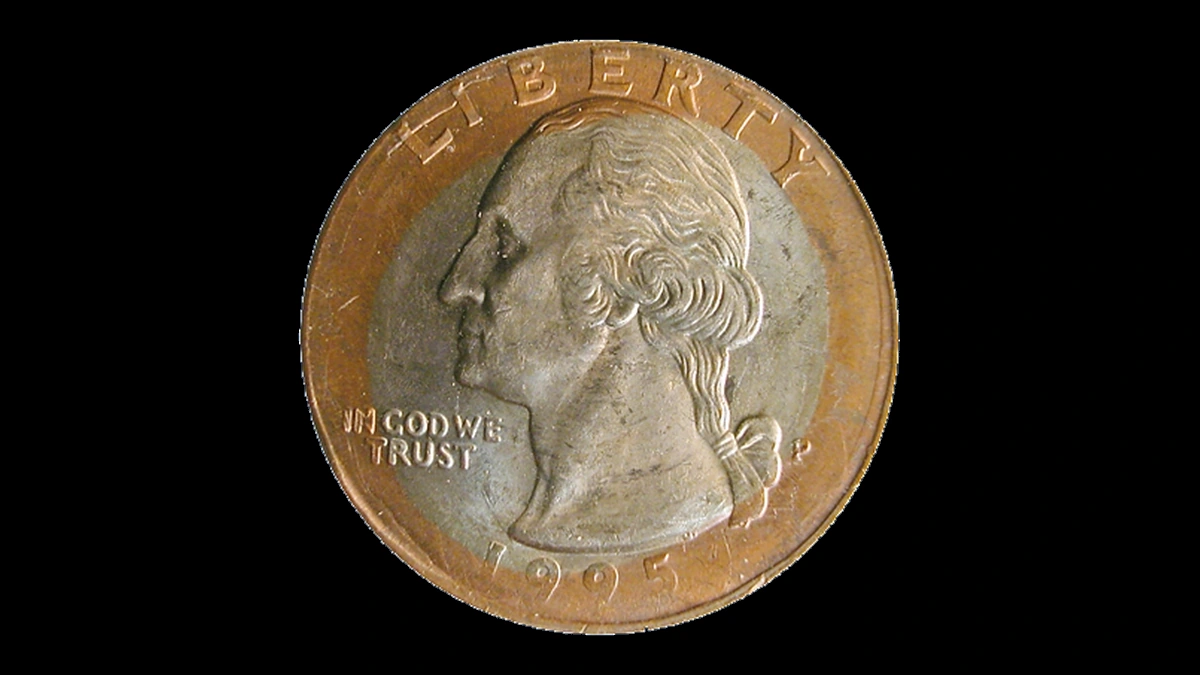
5. 1995 Quarter A Matte, Small, Lightweight Coin — Abraded Blank Error
The illustrated Philadelphia example measures 23.54 mm and weighs 4.66 grams. Both faces have fine matte texture, with reverse pits and copper exposed around outer areas.
Mike Diamond proposed abrasion before striking, perhaps sandblasting or a similar treatment, along with sideways rolling and squeezing. The source of that treatment remains unexplained.
How to Identify
Examine how the roughness meets the struck portrait and letters. Abrasion applied after minting attacks the already-completed design as well as open areas.
Use Diamond’s illustrated discussion for the actual specimen. Its measurements and proposed sequence do not establish an intentional Mint experiment.
What It’s Worth
$50–$500 is an estimate if the coin is accepted as this kind of pre-strike blank damage. It is not a recorded sale of the 4.66-gram piece.
A quarter sandblasted afterward is damaged and does not qualify merely because it looks matte.
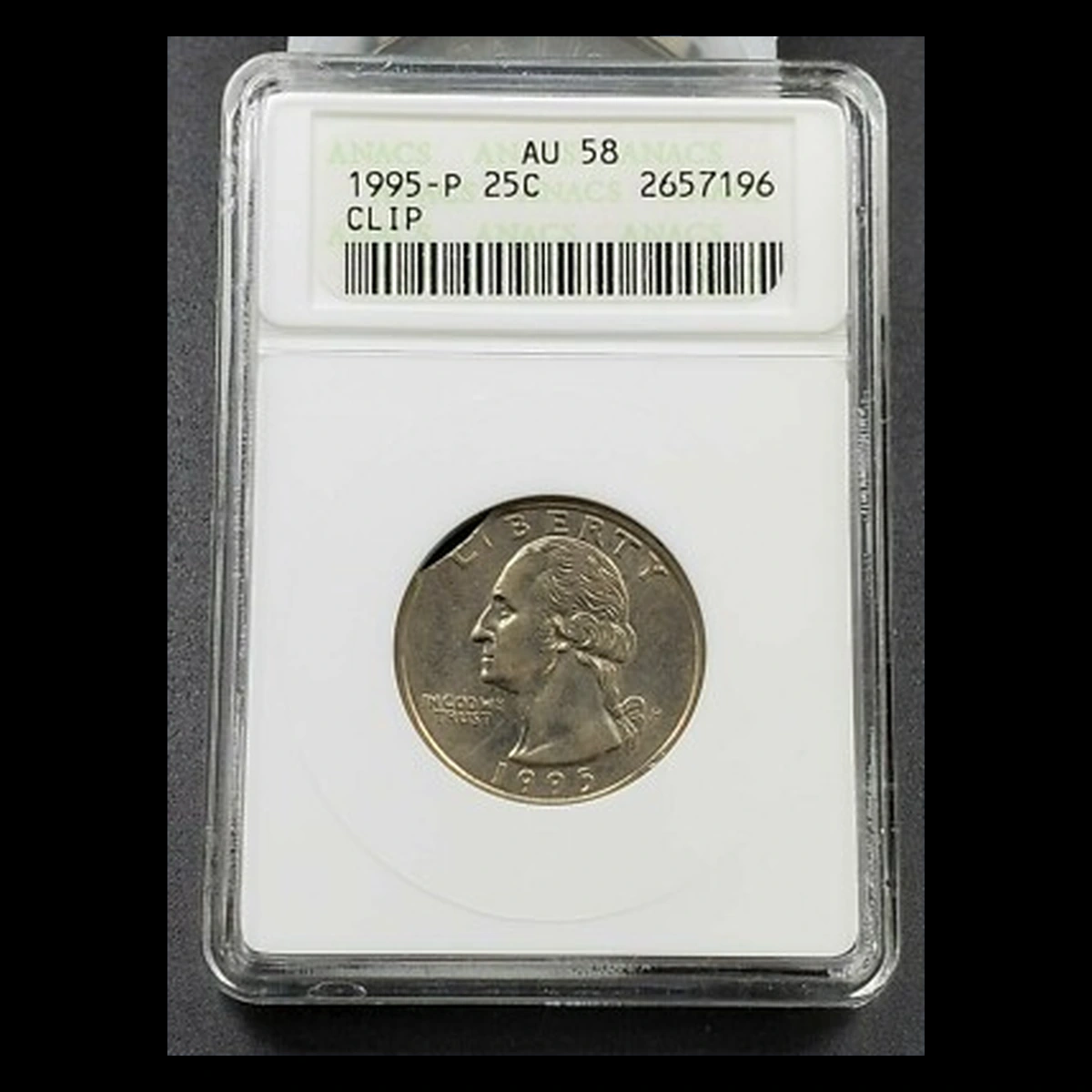
6. 1995 Quarter A Curved Gap plus an Unfinished Cutting Line — Clipped Blank Error
A Philadelphia MS62 quarter has an open curved clip near one o’clock and a separate unfinished curved cut in its remaining metal. Both features come from blank preparation.
The unfinished section remains attached. It is not an extra loose fragment.
How to Identify
Photograph the date, P, open gap, and separate cutting trace together. Then examine how each boundary meets the struck design.
Fresh saw or file marks can indicate later cutting. Do not bend the attached metal to widen the unfinished line.
What It’s Worth
$75–$250 is the estimate for comparable genuine combinations. The documented example sold for $159 in July 2022.
The cutting trace adds interest when it remains clear enough to explain the unfinished step.
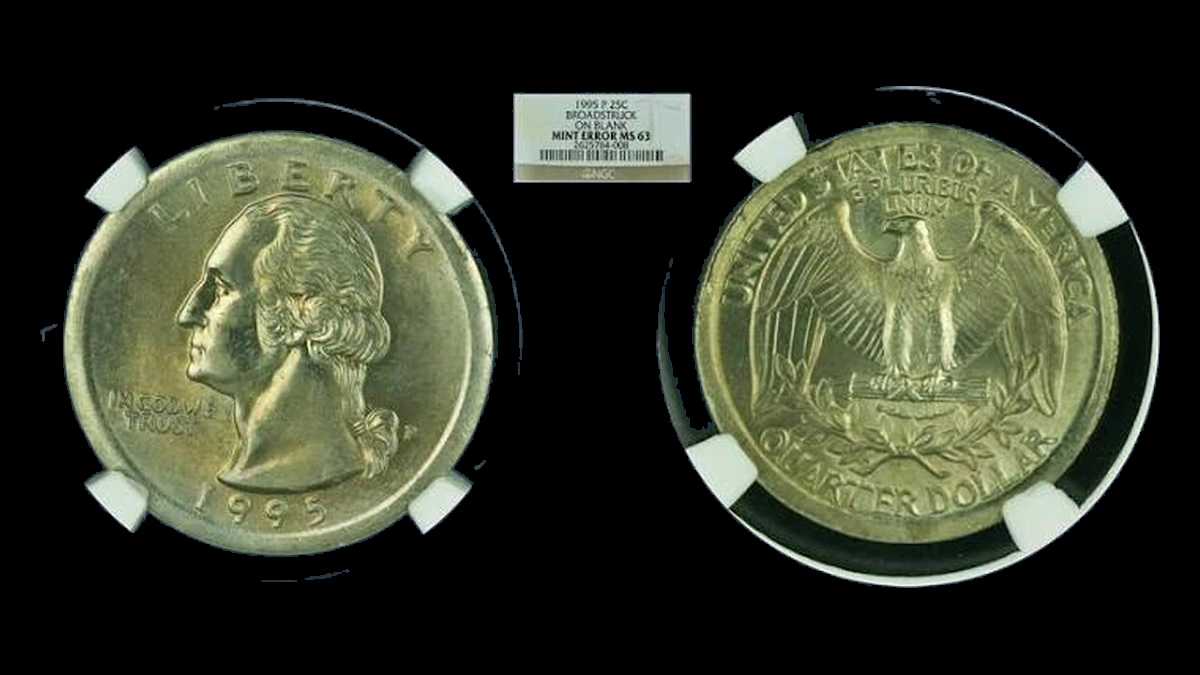
7. 1995 Quarter A Complete Design inside an Enlarged Border — Broadstrike Error
A broadstrike expands when the collar ring fails to contain the blank. The design can remain complete even when the border spreads unevenly.
Records include a Denver MS62 and a separate Philadelphia MS65 example. Those grades describe preservation, not the amount of expansion.
How to Identify
Compare the full outline with a normal quarter about 24.3 mm across. Follow the outside letters to check that they remain on naturally spread metal.
Look for incomplete edge grooves where collar contact failed. Flattened letters, scraped rims, or hammer marks can reveal widening after minting.
What It’s Worth
$40–$200 is the estimate for ordinary single broadstrikes. The Denver MS62 example sold for $63 in March 2023.
A coin with an additional strike needs a comparison that includes that second impression.
8. 1995 Quarter About Half the Design Misses the Blank — Off-Center Strike Error
Philadelphia and Denver examples include substantial shifts, with some coins about half off center. Other specimens have too little surviving mintmark to identify the mint.
The percentage describes displacement during striking. It does not mean that percentage of the metal was cut away.
How to Identify
Read the date below Washington and the mintmark beside his hair ribbon where they survive. Do not reconstruct a missing letter from the offset shape.
Compare both faces for the same unused crescent. A shifted die can move one design while leaving the other centered.
What It’s Worth
$50–$400 is the estimate for comparable examples. A Denver quarter about 50% off center, graded NGC MS64, brought $169 in June 2023.
A full date and clean original surfaces can matter more than a still larger displacement.
9. 1995 Quarter One Edge Stops Spreading against Another Coin — Chain Strike Error
Two cataloged 1995 chain strikes preserve contact where neighboring pieces pressed against each other in the press. One is described as about 45% off center.
The locally constrained edge differs from freely spreading metal. The mint is not established for these records, and the neighboring coin need not survive.
How to Identify
Follow the off-center outline to a section flattened or restrained by contact. Photograph that boundary from above and from the side.
The surrounding strike and metal flow should fit the contact without file marks or hammer dents. A flat edge alone is not proof of another blank in the press.
What It’s Worth
$100–$350 is an estimate for similar single chain-struck quarters. An ANACS MS64 example sold for $146.05 in November 2004.
That price concerns one coin. An actual surviving matched pair would need its own valuation.
10. 1995 Quarter A Front Hollow and a Stepped Edge — Indent with Partial Collar Error
A Philadelphia MS62 quarter has an approximately 20% front indentation and a partial-collar step. Another blank blocked part of the front while the collar restrained only part of the edge.
A plain indent need not carry backward letters. That would call for examining a brockage instead.
How to Identify
Trace the edge step between contained and expanded bands, then follow the front hollow’s boundary. Both should fit the original strike.
Search inside the depression for transferred design and inspect nearby metal for later impact. A dent alone does not explain the corresponding collar structure.
What It’s Worth
$100–$600 is the estimate for comparable combinations. The MS62 example appeared in a three-coin lot with two different double strikes.
A total for that group would not establish the indent coin’s individual price.
11. 1995 Quarter Backward Design with an Unusual Edge — Brockage Error
A struck coin caught against a new blank can press a sunken mirror image into its front. Philadelphia examples combine this brockage with partial-collar steps or broad spreading.
The smaller partial-collar pieces include 15% and 20% impressions. A separate broadstrike has about 75% front brockage.
How to Identify
Reverse a photograph to follow the backward details and check that they are sunken. Raised duplicate letters or an ordinary second strike are different features.
Match the edge to the correct specimen: a step for partial collar, wider expansion for the broadstrike. Later squeezing can imitate transferred images, so the surrounding strike must agree.
What It’s Worth
$100–$1,000 is the estimated range for these combinations. A Philadelphia partial-collar brockage sold for $149.50 in January 2010.
The clearer and larger mirror image can offer more visual appeal, but every coin receives one complete valuation.
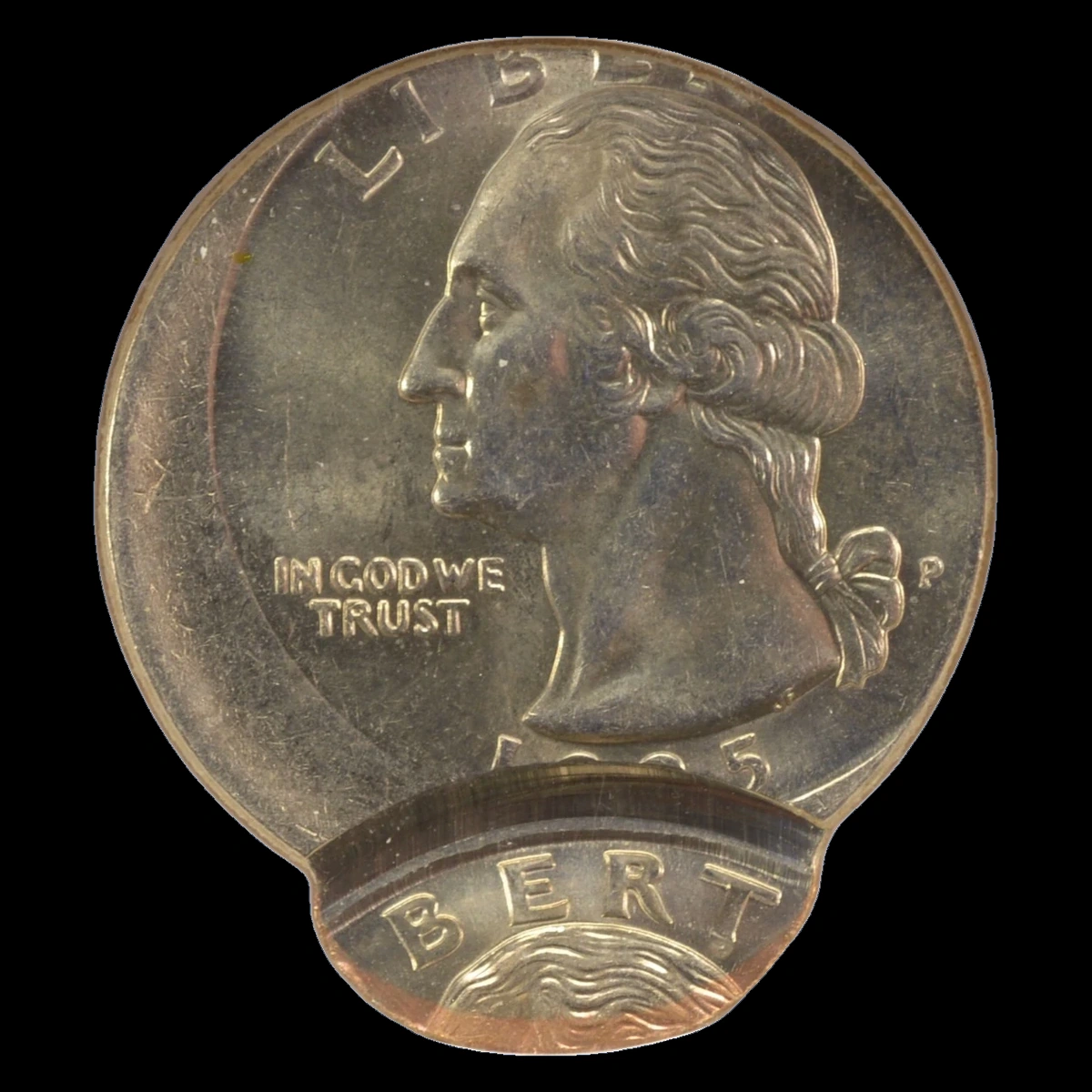
12. 1995 Quarter Separate Impressions and Sometimes a Blocked Face — Repeated Strikes Error
A Denver coin has its second strike about 60% off center. Philadelphia records include two off-center strikes, a 90% second strike, a stretched combination, and a double broadstrike.
Some later blows were blocked on one face. Two strikes therefore do not require two full images on both sides.
How to Identify
Map recognizable details into separate strike positions. For the Philadelphia 25%/85% stretched example, the reverse received no new design on the second blow.
The double broadstrike instead had its later front impression blocked. A separate 85%/85% coin has no established mint and should not inherit another example’s letter.
What It’s Worth
$200–$2,000 is the estimate for genuine repeated-strike combinations. The Denver 60% second-strike coin sold for $312 and a Philadelphia two-off-center-strike piece for $264, both in July 2022.
The stretched 25%/85% example brought $217.35 in November 2004. Preserve each sale’s own design arrangement when comparing.
13. 1995 Quarter Quarter Details Run beyond a Smaller Blank — Wrong Planchet Error
Philadelphia examples include dime and nickel blanks. The nickel-blank specimen has an actual recorded weight of 5.0 grams.
A foreign-blank type is also reported without a country, denomination, or mint established. It needs a separate metal identification.
How to Identify
A clad dime blank normally begins near 2.27 grams, while a nickel blank begins near 5 grams. The dime standard is a reference, not a measured weight supplied for the auctioned piece.
Inspect the edge’s layered or uniform metal and the naturally cropped quarter design. A perimeter cut off after striking does not explain a genuine smaller blank.
What It’s Worth
$200–$3,000 spans domestic and foreign blank estimates. Domestic examples generally fit $200–$1,200, with the NGC MS66 Philadelphia dime-blank coin selling for $646.25 in January 2016 and an MS64 nickel-blank coin for $216 in July 2022.
An authenticated foreign-blank piece is estimated at $500–$3,000. That upper range is not a recorded 1995 sale with a named country.
Conclusion
For a 1995 quarter, match a copper-colored surface with its actual layer structure before naming the error. At the edge, missing metal, free expansion, and contact with another blank each leave a different boundary.
Keep the Proof doubled die separate from ordinary Philadelphia reports, and keep paired or grouped sale totals separate from individual prices. A clear view of both faces and the edge usually explains more than one enlarged detail.