Rare 1952 Nickel Errors (List & Pictures)
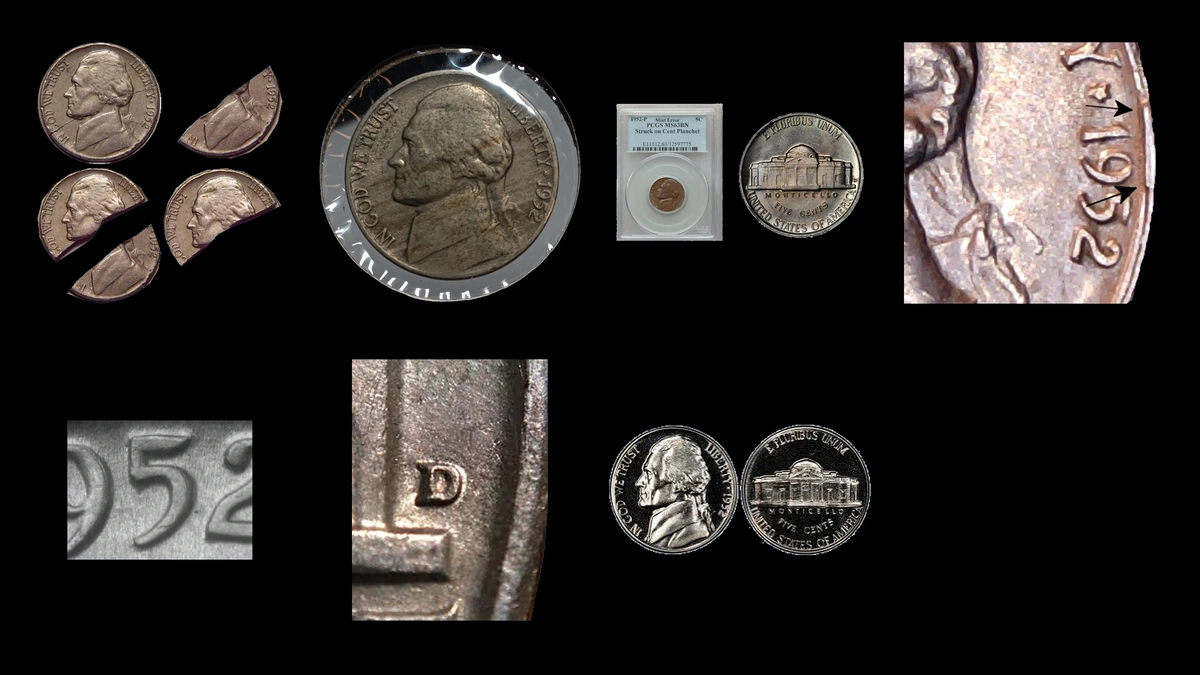
A two-coin error lot containing a 1952 dime-blank nickel sold for $870 in August 2023. That is a group total; estimated individual and matched-fragment values for 1952 Jefferson nickel errors range from $10–$1,200.
Follow the coin from its outline and metal to small design features, keeping each specimen’s grade and sale context attached to it.
| What to inspect | Possible error | Estimated range |
|---|---|---|
| Uneven thickness | Tapered blank | $25–$200 |
| Extra width | Broadstrike | $40–$250 |
| Unused crescent | Off-center strike | $75–$750 |
| Separate design impressions | Double strike | $150–$750 |
| Broken or peeling metal | Broken blank or lamination | $15–$500 |
| Unusual metal | Nonstandard alloy, dime or cent blank | $200–$1,200 |
| Raised rim lump | Rim die break | $20–$300 |
| Repeated letters or mintmark | Doubled die or repunched mintmark | $10–$150 |
| Extra Proof ribbon lines | Re-engraved design | $75–$800 |
The normal nickel contains 75% copper and 25% nickel, weighs 5 grams and measures about 21.2 millimeters across its plain edge. Its D or S mintmark, when present, is beside Monticello on the reverse.
1. 1952 Nickel One Side Thinner Than the Other: Tapered Blank Error
A wedge-like thickness difference can explain weak detail in part of a coin. Less metal in the thinner area leaves less material to fill the die, the tool carrying the design.
The known Philadelphia example was graded NGC MS65 and described as struck on a tapered blank. Its exact thickness readings were not published.
How to Identify
Compare thickness around the edge and photograph the change from the side. An overhead view of weak lettering cannot establish the taper by itself.
Look for design weakness that corresponds to the reduced metal. Grinding marks, altered edges and ordinary high-point wear can explain superficially similar flat areas.
What It’s Worth
Recognizable original tapered blanks are estimated at $25–$200. The degree of taper and remaining design affect their appeal.
The NGC MS65 example sold for $41 at Heritage in August 2013. Its modest result shows why weak detail should not automatically suggest a major premium.
2. 1952 Nickel A Wide Border Around the Design: Broadstrike Error
The collar normally restrains a blank as the dies press it into a coin. When that ring fails to contain the metal, the blank can spread outward into a broadstrike.
A reported 1952-D specimen is described as MS60 and cleaned. Its unworn grade and later cleaning are condition information, not explanations for the original spreading.
How to Identify
Check whether all the outer lettering remains on the coin. A broadstrike preserves the design within expanded metal, while an off-center strike loses some design beyond an edge.
Measure several spans and inspect the wider border for hammering or filing. Cleaning lines do not establish the mint error.
What It’s Worth
Genuine 1952 broadstrikes are estimated at $40–$250. Cleaning usually weakens the comparison with an otherwise similar original-surface coin.
No established sale price is supplied for the Denver report. A different-year 1999 Philadelphia broadstrike brought $89 in March 2025.
3. 1952 Nickel A Large Unused Crescent: Off-Center Strike Error
The known San Francisco example places about half the design beyond the blank. A broad solid area received no design because the blank entered the press out of position.
It was graded MS64 Full Steps. Full Steps describes clear stair detail on Monticello and is not a second error.
How to Identify
Record both faces with the surviving date and mintmark. The unused metal and missing design should fit the same displaced blank.
Check the smooth area for grinding and the edge for cutting. If the mintmark area never received the strike, its absence cannot prove Philadelphia.
What It’s Worth
Dated 1952 off-center nickels are estimated at $75–$750. A dramatic well-preserved shift can command more than a mild worn example.
A 1999 Philadelphia coin struck 15% off center sold for $64 in March 2025. It is not the price of the reported 50% San Francisco specimen.
4. 1952 Nickel A Small Second Impression: Double Strike Error
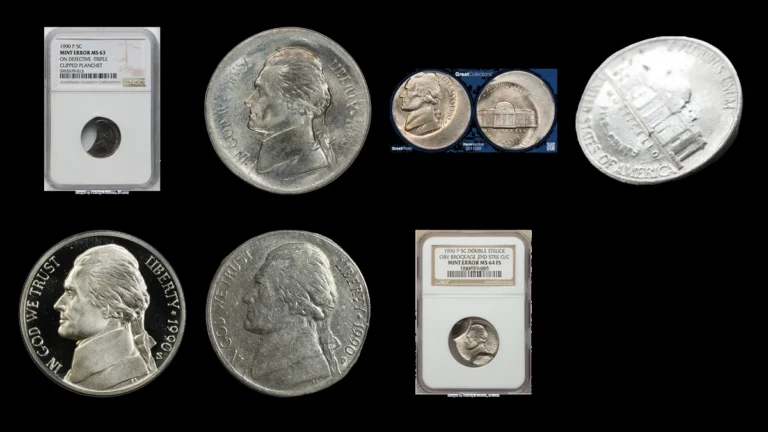
A repeated strike need not leave two complete portraits. On the NGC MS62 example, the second blow was about 90% off center, so only a narrow part landed on the coin.
A separate published coin combines a similar displacement with a blocked face. That one-sided second strike is not automatically the same specimen.
How to Identify
Trace a recognizable later letter, portrait segment or border where it overlaps the first impression. A dent without design cannot show that the nickel dies struck again.
Turn the coin over to compare the second face. An obstruction can prevent a matching clear impression there, but it requires evidence on that individual coin.
What It’s Worth
Comparable double strikes are estimated at $150–$750. Clear overlap, a readable date and original surfaces improve the comparison.
Greysheet’s auction index records $196 on October 31, 2010, for the MS62 90% second-strike example. Do not transfer that result to the separate one-sided coin.
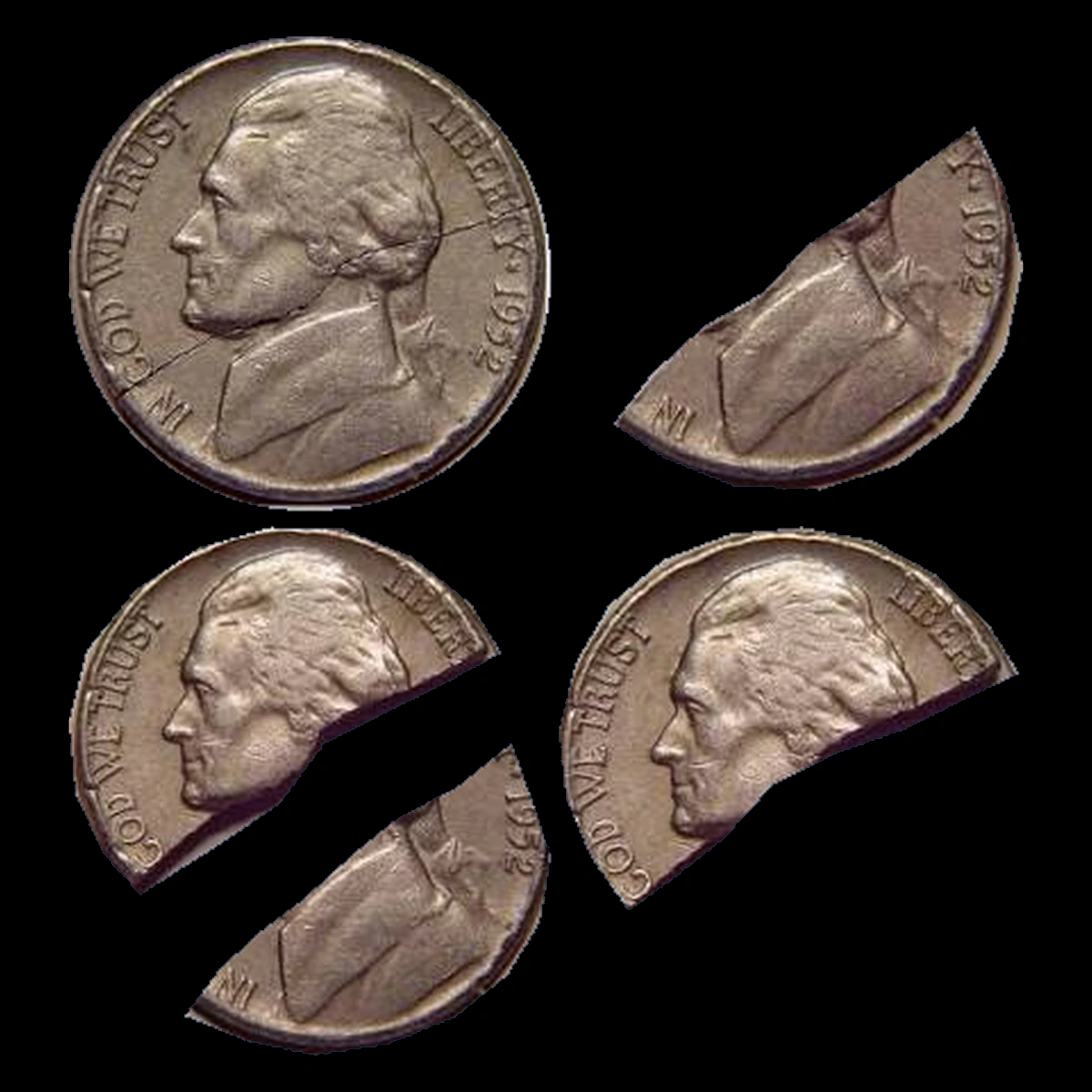
5. 1952 Nickel Two Matching Fragments: Broken Blank Error
An auctioned 1952 nickel survives as two pieces certified together by PCGS at AU58. The catalog calls it a broken planchet, meaning a broken blank.
That description does not establish the exact fracture direction or when it occurred. It also does not automatically mean front and back layers peeled apart.
How to Identify
Photograph both pieces together and separately, following the design across their boundaries. Matching edges establish a shared object but do not alone prove a Mint origin.
Inspect the break for cuts, bending or added material. Avoid forcing the pieces together or gripping the fracture with calipers.
What It’s Worth
A comparable authenticated matching pair is estimated at $100–$400 for both fragments. Losing one piece changes the evidence and value.
The AU58 pair sold for $186 at Heritage on August 19, 2018. That total is not the price of each fragment separately.
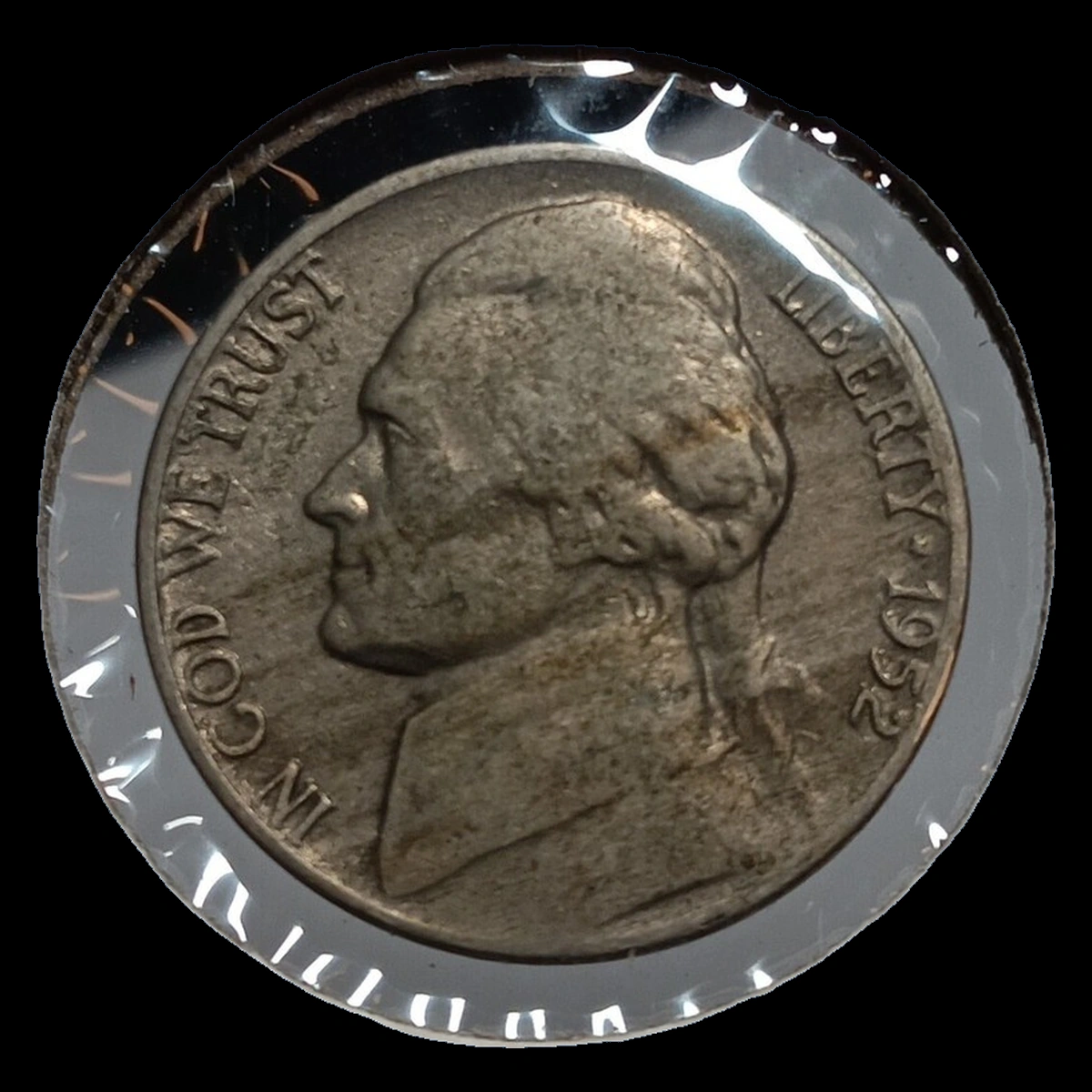
6. 1952 Nickel Peeling, Hinged or Separated Layers: Lamination Error
A weakness inside the alloy can produce a small peel, a hinged clamshell opening or a complete split. These are separations within the original metal, not a normal coating peeling from a core.
A worn Philadelphia clamshell and a different Philadelphia pair split into front and back pieces are recorded. The latter separated after striking and retains design on its outside faces.
How to Identify
Show a hinged opening without pulling it farther apart. For completely separated layers, photograph the struck outer faces and rough inner faces without rubbing them together.
A lone front layer cannot reveal a mintmark that belonged on the missing reverse. Keep the mint uncertain unless independent evidence identifies it.
What It’s Worth
Estimated values span $15–$500, from modest peels to desirable complete split pairs. These different forms should not all receive the same valuation.
Greysheet’s index records a clamshell at $36 in February 2012. The separate post-strike split pair sold together for $322 in August 2006.
7. 1952 Nickel An Unusual Metal Mixture: Nonstandard Alloy Error
The documented blank contains 63% copper, 26% zinc and 11% nickel and weighs 4.66 grams. The zinc content distinguishes it from normal nickel alloy more reliably than its shade does.
NGC described the coin as lightly worn but scratched. Neither the composition nor the catalog identifies a specific foreign denomination as its source.
How to Identify
Obtain a credible non-damaging metal test rather than choosing an alloy from color. Then compare actual weight and inspect the edge for removal or coatings.
Corrosion and filing can alter a normal nickel’s weight. Even a matching alloy would not alone establish the blank’s intended foreign use.
What It’s Worth
Confirmed nonstandard-alloy examples of similar interest are estimated at $200–$600. Surface damage must remain part of the comparison.
The 4.66-gram unusual-alloy coin sold for $288 in January 2019. Its scratches are later damage, not an additional mint error.
8. 1952 Nickel A Small Silver Disk: Dime-Blank Strike Error
A silver dime blank cannot hold the entire nickel design. Outer lettering may run beyond its smaller boundary even when the strike is nearly centered.
A PCGS AU58 example and a separate NGC AU55 example are known. The recorded 2.4-gram measurement belongs to the AU55 coin.
How to Identify
A silver dime blank normally starts near 2.5 grams and 17.9 millimeters. Match the metal and original design boundaries with the candidate’s own measurements.
Look for trimming or filing that could reduce a normal nickel. An unused dime blank requires neither an older dime design nor dime-style edge grooves after a nickel strike.
What It’s Worth
Confirmed silver-dime-blank nickels are estimated at $350–$1,000. Wear and preserved identification help determine an appropriate comparison.
Greysheet’s index records $476 in April 2014 for the AU55 2.4-gram coin. The separate AU58 appeared with a 1956 cent-blank nickel in an August 2023 lot that sold for $870 for both coins.
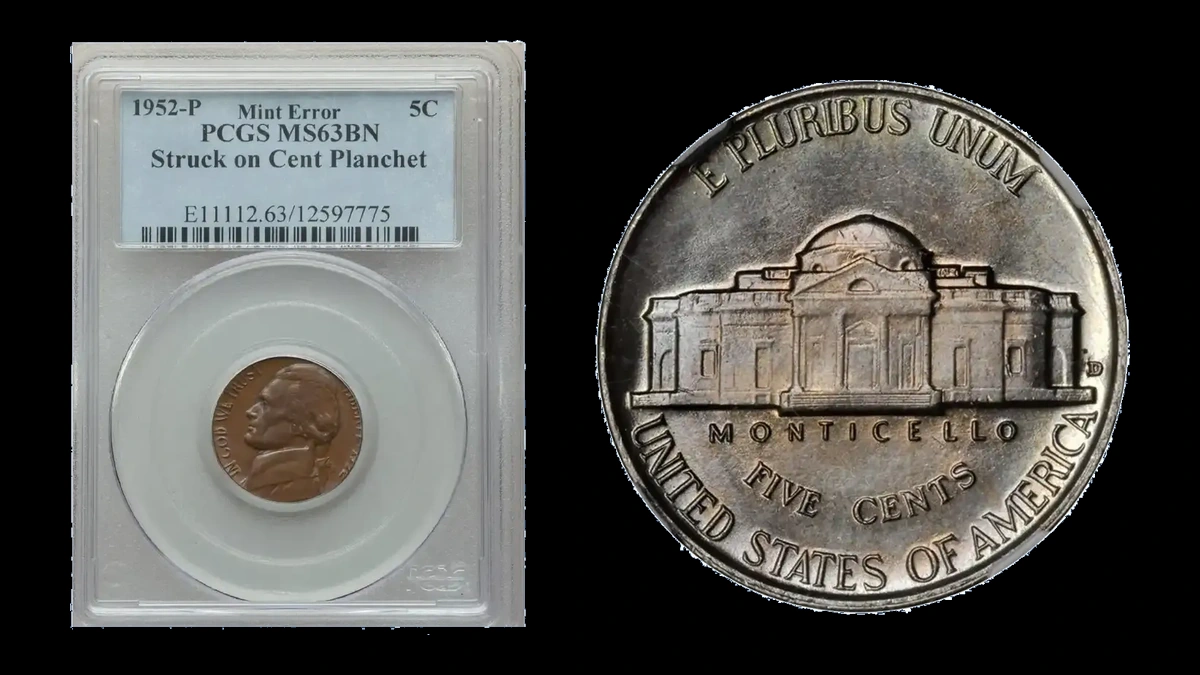
9. 1952 Nickel A Copper Disk with Jefferson’s Portrait: Cent-Blank Strike Error
The recorded Philadelphia NGC MS63 Red coin was struck on a 3.1-gram copper cent blank. Its red color designation describes preserved copper color rather than a different error mechanism.
A separate example has brown surfaces and another certification. Their measurements and sale histories must stay with the correct specimens.
How to Identify
A cent blank from this period starts around 3.11 grams and 19 millimeters. Inspect the smaller disk’s naturally cropped design together with its weight and metal.
Coating seams, filing and fresh cuts can expose an altered normal nickel. No older Lincoln portrait is required when the starting piece was an unused blank.
What It’s Worth
Desirable authenticated cent-blank examples are estimated at $350–$1,200. Original surfaces and a clear date help support stronger prices.
The 3.1-gram MS63 Red specimen sold for $504 at Heritage on March 31, 2025. It is separate from the heavier zinc-bearing alloy coin described above.
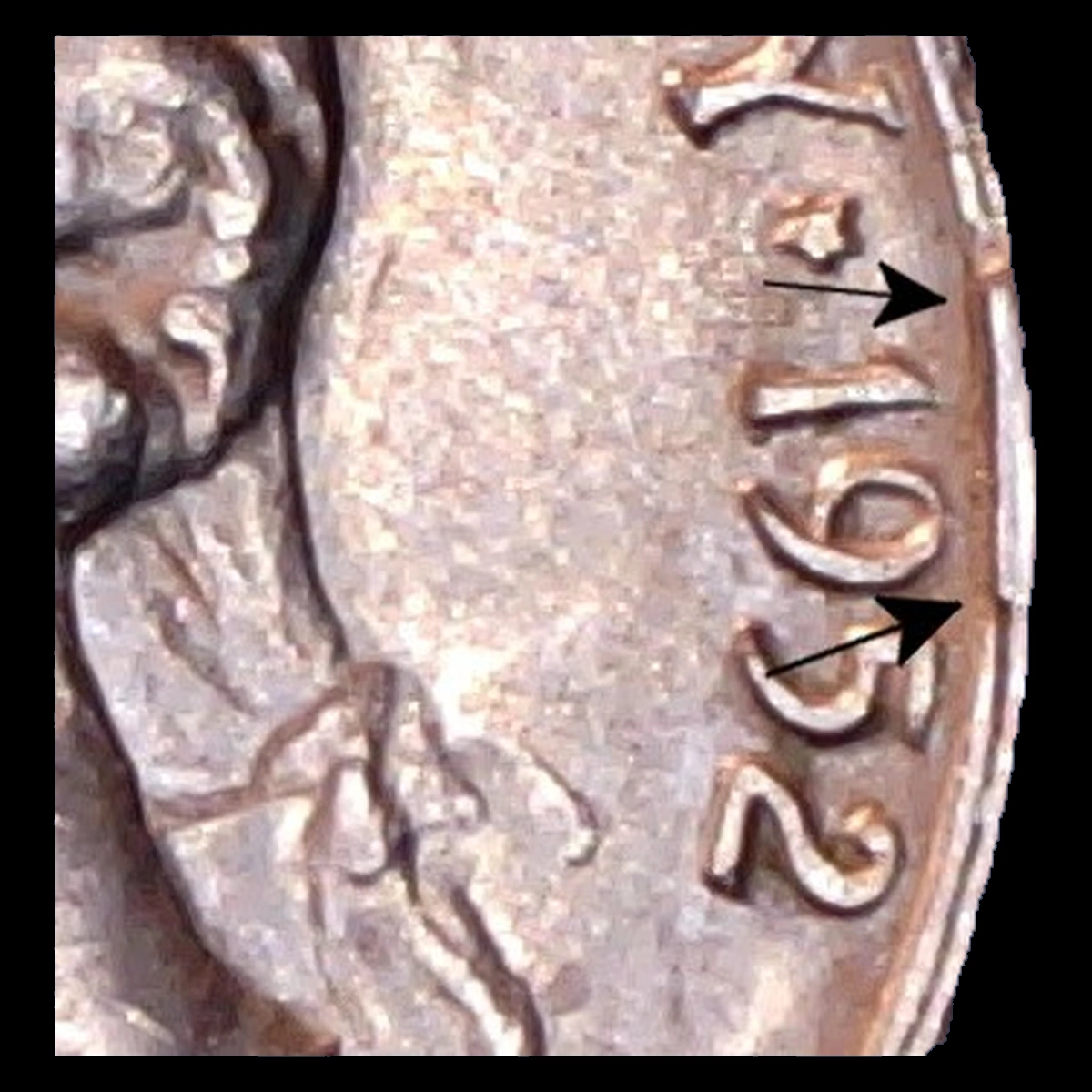
10. 1952 Nickel An Extra Rim Lump: Rim Die Break Error
A small missing section of the die’s rim can leave extra raised metal on a coin. Collectors call the resulting edge-related feature a rim cud.
A Denver example is cataloged, but its exact position should come from the photograph. The normal rim already stands high, so height by itself proves little.
How to Identify
Compare the added shape and adjacent design with the Cuds on Coins nickel catalog. Match the actual outline rather than selecting a clock position from a general description.
A blow can fold a rim inward and damage the outer edge. A side view helps distinguish displaced metal from an original die-break feature.
What It’s Worth
Confirmed rim breaks are estimated at $20–$300. A small lump warrants a different comparison from a substantial break extending into the design.
A worn 1983 Philadelphia cud sold for $63 in July 2022. It is a different-year general comparison, not a sale of the cataloged 1952-D piece.
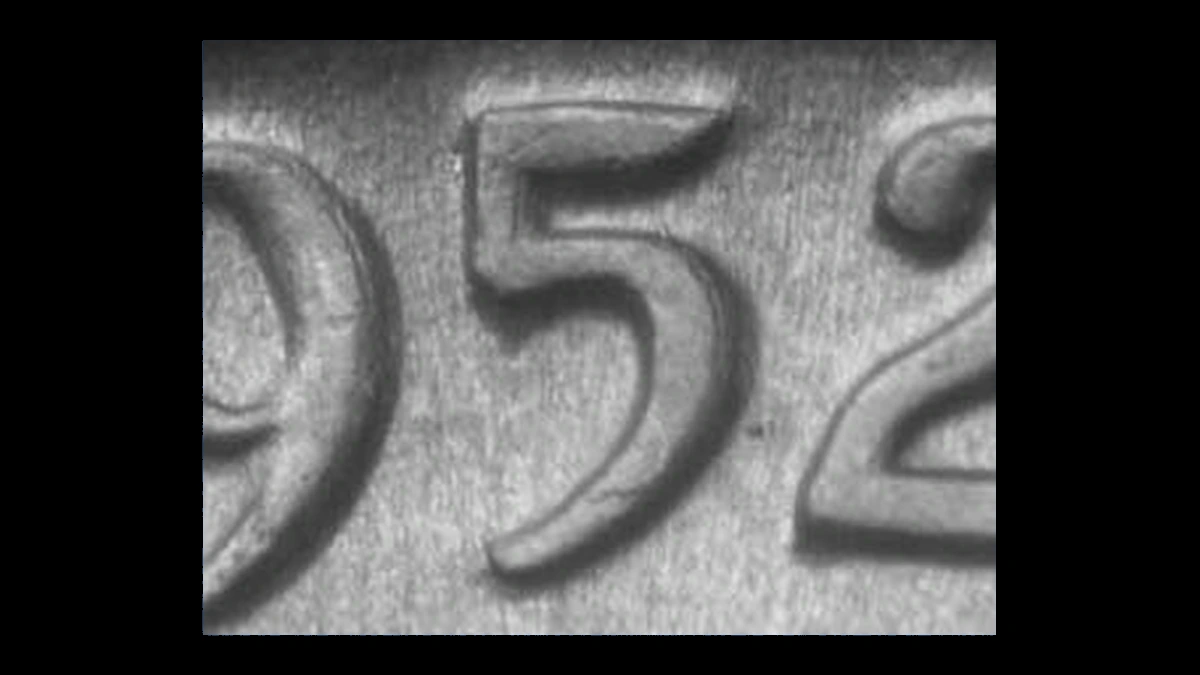
11. 1952 Nickel Extra Outlines in Words: Doubled Die Error
Repeated detail in a die’s design appears on coins struck from it. Reported San Francisco varieties affect IN GOD WE TRUST or E PLURIBUS UNUM.
Separate Philadelphia and Denver obverse varieties involve LIBERTY, the nearby star and date. A Denver reverse variety affects PLURIBUS UNUM.
How to Identify
Choose a same-mint comparison and inspect the relevant letters with magnification. A raised extra outline stays fixed as the light changes; a reflection does not.
Flat shelves from striking movement need another explanation. A doubled obverse also does not establish doubling on the reverse.
What It’s Worth
These modest matched doubled dies are estimated at $10–$150. Clear detail on an attractive unworn coin usually offers a stronger comparison than a faint worn feature.
The range is not a collection of documented sales for every catalog number. Ordinary condition value remains part of the full coin price.
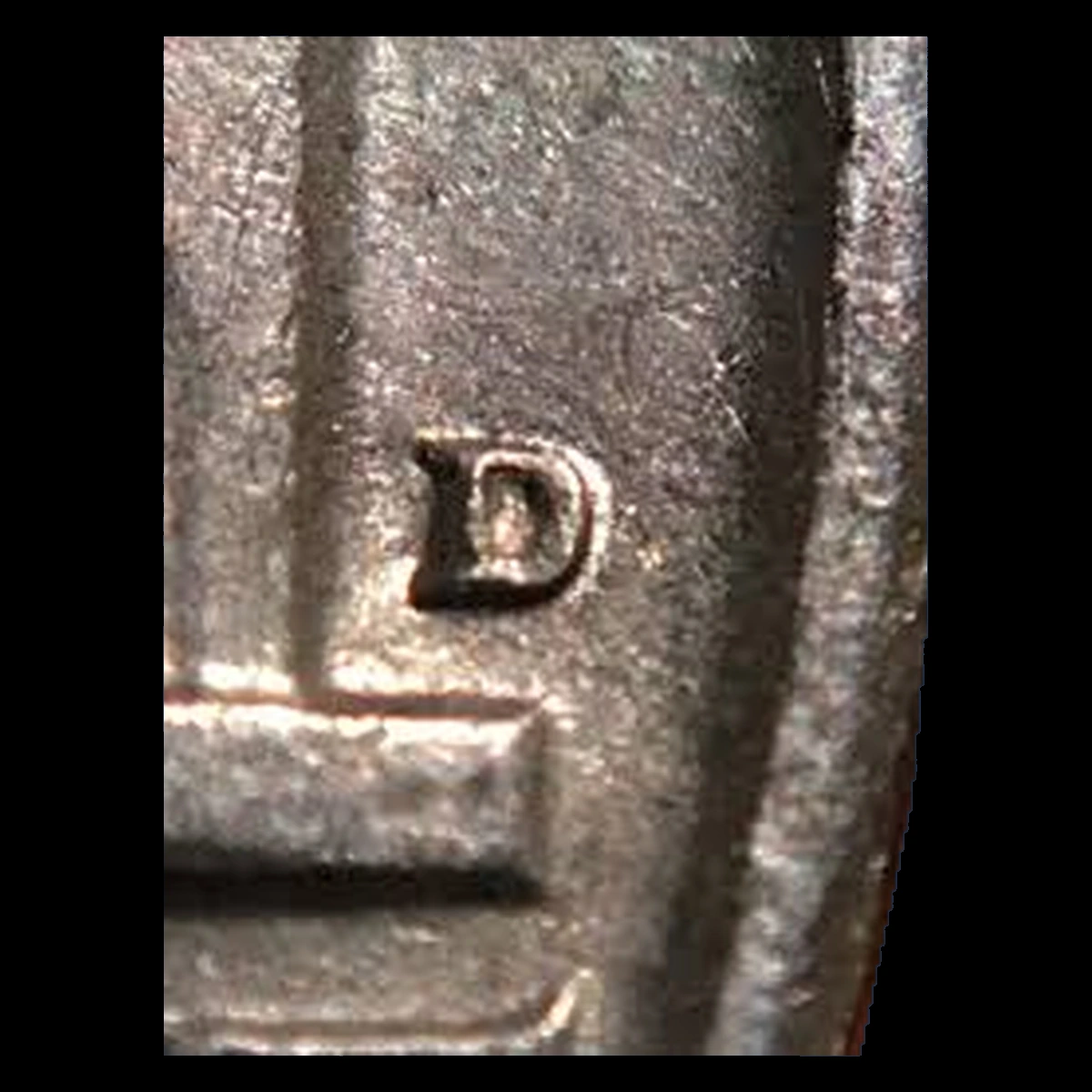
12. 1952 Nickel Overlapping D or S Shapes: Repunched Mintmark Error
The mintmark was punched into the die separately in 1952. Slightly different placements could leave part of an additional D or S beside the main letter.
Denver reports include sideways, lower and tilted remnants. San Francisco has several sideways patterns, including a larger S shape.
How to Identify
Keep the reverse upright and compare the entire letter with Wexler’s 1952 mintmark listings. Two varieties can spread in the same direction yet differ in the curves where the outlines meet.
A cut into a letter is not a raised second punch. Philadelphia coins have no mintmark in this location to repunch.
What It’s Worth
Minor matched repunched mintmarks are estimated at $10–$150. Larger clear secondary shapes and preserved surfaces can support the higher portion.
These are estimates rather than separate auction results for every D and S variety. Value the whole coin instead of attributing all of its condition premium to the mintmark.
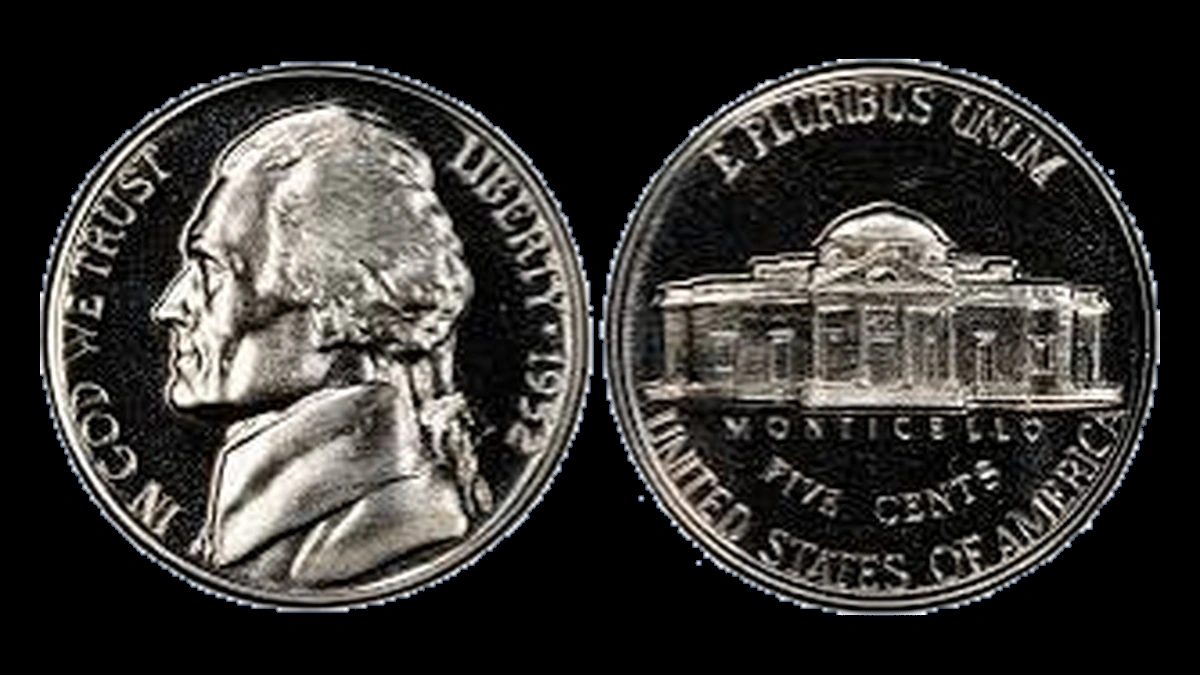
13. 1952 Nickel Extra Lines at Jefferson’s Ribbon: Re-Engraved Proof Design Error
On these specially prepared Proof coins, hand-cut changes in the die produced raised lines around Jefferson’s hair ribbon. The feature is on the back of his head, not on Monticello’s steps.
FS-401 through FS-404 describe four cataloged varieties. They are not four proven stages in the life of one die.
How to Identify
Confirm the Proof finish before matching the ribbon details. A bright surface alone does not make a coin a Proof.
Trace the extra raised lines against one specific cataloged pattern. Scratches cut into the surface, while the reworked die’s lines rise above it.
What It’s Worth
Estimated values are $75–$800, depending on the ribbon variety and Proof preservation. Do not apply one variety’s result to a different ribbon shape.
PCGS records a $600 eBay result for FS-403 in PR68 in March 2018. Other recorded results are $495 for FS-401 in August 2019 and $378 for FS-402 in March 2021.
Conclusion
A sound 1952 nickel identification keeps the physical coin and its comparison together. A split-layer pair differs from two broken fragments, and a tested zinc-bearing blank differs from an ordinary copper cent blank.
For small varieties, match the exact mintmark or design pattern before considering grade. For auction evidence, retain group totals and specimen-specific measurements; neither a two-coin lot nor a different example’s weight gives an individual coin its identity.