Rare 1874 Nickel Errors (List & Pictures)
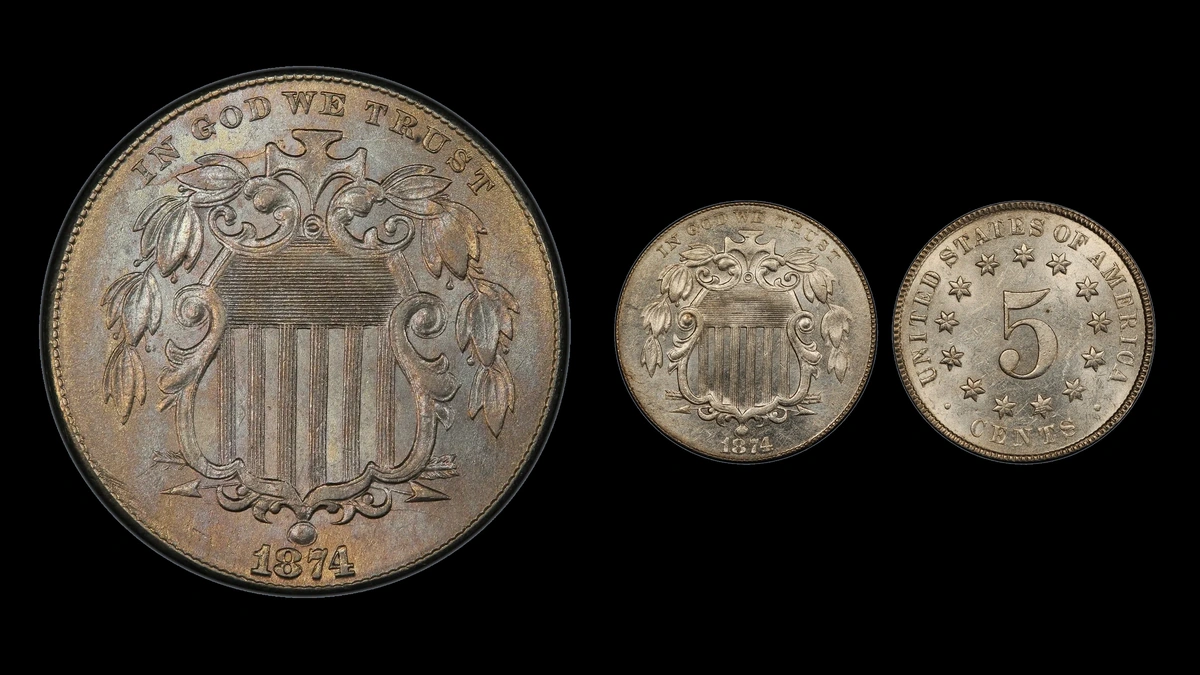
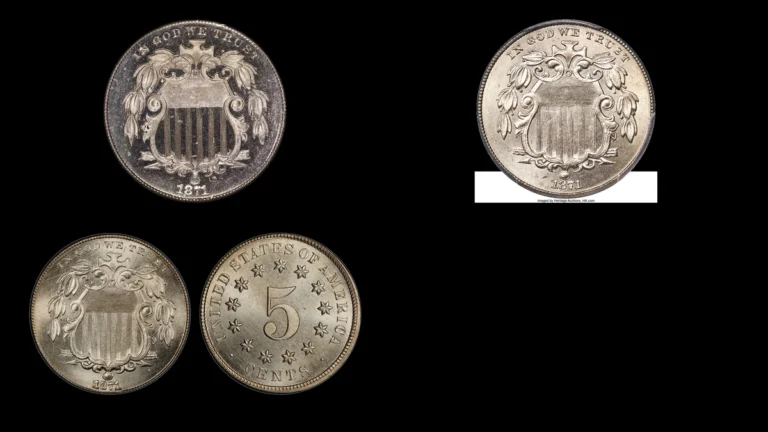
An 1874 Shield nickel struck 20% off center brought $1,265 in a historical auction report. Small repeated date strokes and raised die lines require very different comparisons.
Estimated whole-coin values for 1874 nickel errors range from $20–$2,500. Start with the outline, then examine the shield, motto, and full date with the border beneath it.
| Visible clue | Possible explanation | Estimated value |
|---|---|---|
| Untouched crescent and cropped design | Off-center strike | $500–$2,500 |
| Localized irregular metal | Original blank flaw | $40–$400 |
| Second shield-ring contour | Doubled die | $75–$1,500 for ordinary strikes |
| Extra digit beside the date or in the border | Repunched or misplaced date | $75–$1,000 for ordinary strikes |
A normal Shield nickel weighs 5 grams, measures 20.5 millimeters across, and has a plain edge. Proofs are specially prepared collector coins and require separate price comparisons from ordinary strikes.
1. 1874 Nickel The Design Misses Part of the Blank: Off-Center Strike Error
The documented PCGS XF45 coin has a 20% off-center strike. A misplaced blank retained an untouched crescent while some intended design fell beyond the opposite edge.
XF45 indicates a worn coin with much of its detail remaining. The percentage describes displacement rather than metal removed from the coin.
How to Identify
Read the date and compare both faces for the same blank-to-design relationship. A narrow border on only one side can instead concern a shifted die.
Inspect the crescent and plain edge for filing or cutting. An original off-center strike can alter the outline while retaining nearly the blank’s normal mass.
What It’s Worth
Comparable genuine dated Shield nickel off-center errors suggest $500–$2,500, depending on preservation and displacement.
Mint Error News issue 26 reported $1,265 for the PCGS XF45 example in Heritage results. The later GreatCollections listing identifies that same certified coin, not a separate error specimen.
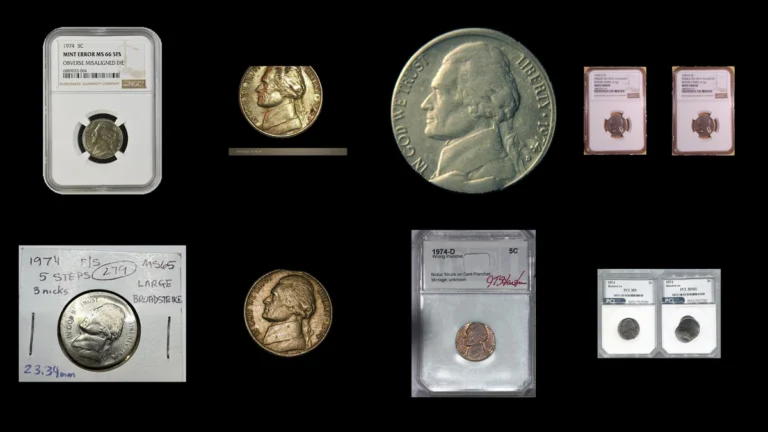
2. 1874 Nickel An Irregular Area Meets Original Design: Planchet Flaw Error
The Shield nickel guide includes flaws in the original blank among problems on ordinary 1874 coins. A weakness or irregularity in the metal disk can survive the strike.
The report gives no universal shape or location. A rough patch should not automatically be called lamination, and an opening should not automatically be called a clip.
How to Identify
Begin at the transition between normal design and the flaw. Look for a boundary within the original metal rather than a tool cut through completed detail.
Preserve any loose edge and compare both faces, including the rim if affected. Corrosion can create roughness without following a pre-existing weakness in the blank.
What It’s Worth
Modest identifiable original blank flaws suggest $40–$400 across worn and attractive specimens.
A 1911 Liberty Head nickel with front lamination sold for $51 in January 2023. That different-year example gives broad context without identifying the cause or value of an 1874 patch.
3. 1874 Nickel A Local Shield or Motto Patch Is Weak: Struck Through Material Error
A year guide describes grease-related weak detail on the shield or motto. An obstruction in or against the die can prevent part of the intended design from forming.
The appearance alone does not identify grease. An incomplete overall strike, circulation wear, or later scraping can also weaken small features.
How to Identify
Check the whole coin’s wear before enlarging the patch. Local weakness beside much sharper detail offers a different clue from uniformly flattened high points on both faces.
Follow how letters fade into the affected area under two lighting angles. Scratches and pushed-up metal may indicate later removal instead of an original blockage.
What It’s Worth
Genuine blocked-detail errors on ordinary coins suggest $50–$800, with larger clear interruptions on attractive specimens toward the stronger end.
No specific auction result is supplied for the report. Missing detail caused by cleaning or corrosion does not qualify for the same striking-error range.
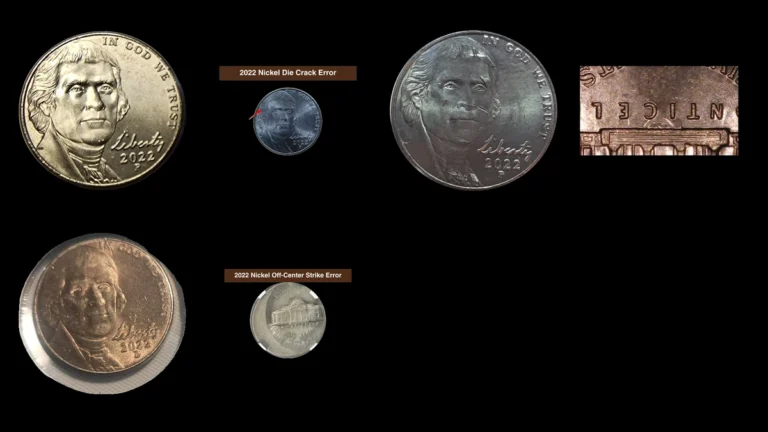
4. 1874 Nickel A Narrow Line Rises above the Surface: Die Crack Error
The Shield Nickel Varieties catalog notes cracks on some 1874 doubled-die coins. Silver-colored coin metal entered openings in the steel die and formed raised ridges during striking.
Those paths need individual matches. A crack can accompany doubling without becoming the same feature as a repeated letter or a split through the actual coin.
How to Identify
Follow the complete line, including branches and crossings of nearby design. Side lighting reveals whether it stands above the surface or is a scratch with a raised lip beside a groove.
Examine any doubled lettering independently. A fixed crack path can support a comparison, but it does not substitute for matching the extra design contours.
What It’s Worth
An ordinary nickel with a recognizable narrow crack suggests $20–$250 as a whole-coin estimate.
A faint line on a heavily worn piece may add little. Much of an attractive example’s price can come from its remaining detail and original surfaces.
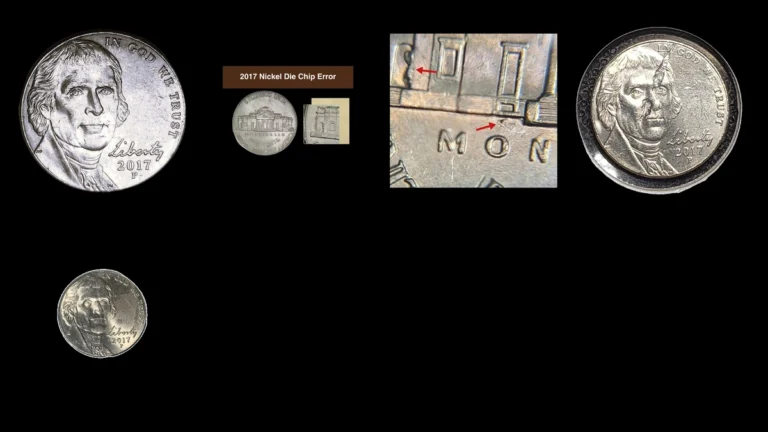
5. 1874 Nickel The Shield Ring or Motto Has Another Outline: Doubled Die Error
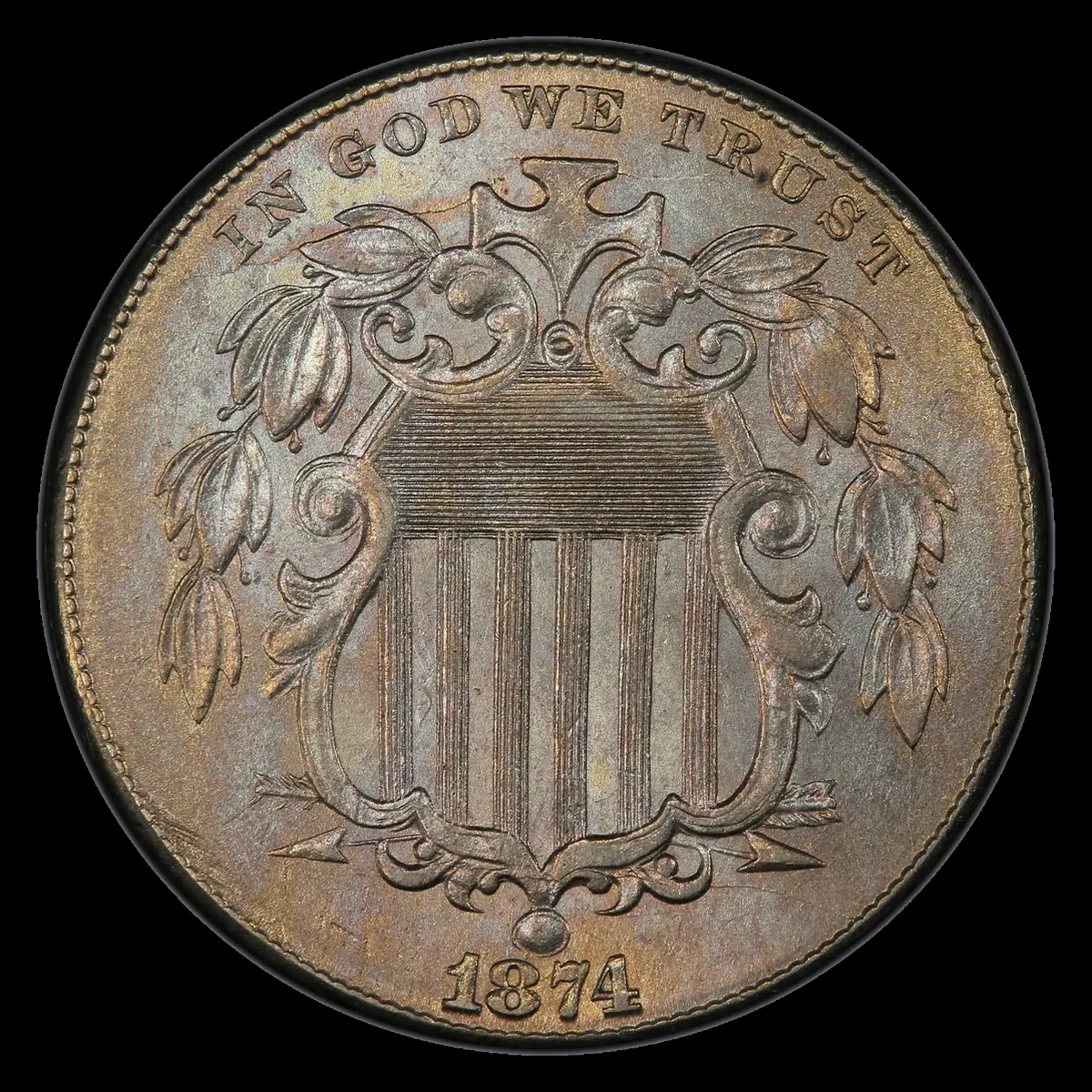
One cataloged 1874 pattern places a strongly separated second ring below the shield toward the lower right. Another pattern spreads motto doubling toward the rim.
These are different dies rather than features required together on every coin. The doubled detail existed in each tool before it struck the blank.
How to Identify
Use the Shield Nickel Varieties descriptions to compare the actual ring pattern, holding the date upright. Its lower-right duplicate has little overlap with the main ring.
For the separate motto pattern, match several affected letters and their outward spread. Flat ledges and general thickness require other explanations than rounded repeated contours.
What It’s Worth
Identified ordinary-strike doubled dies suggest $75–$1,500. Clear separation and attractive preservation support stronger comparisons.
The ring and motto types need their own matched references. A catalog label does not make different patterns equally visible, scarce, or valuable.
6. 1874 Nickel Extra Numerals Reach into the Border: Date-Punch Varieties Error
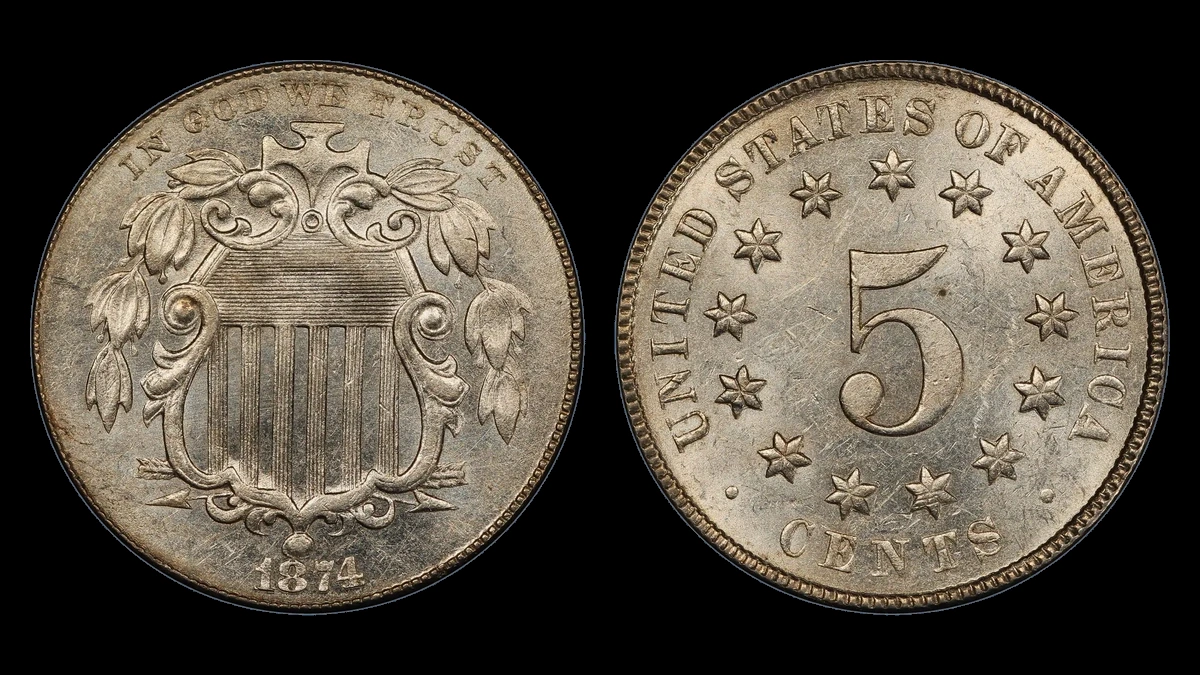
Ordinary examples include upward repunching of the complete date or just 18. A separate Proof pattern repeats part of the 4 upward.
Misplaced entries reach the small border teeth: one shows the top of 1 below the normal 1. Another combines an 8 curve in the teeth with repunched 18 on the same coin.
How to Identify
Photograph the entire date together with the border below it. Compare above 18 or all four digits for ordinary patterns, while keeping the Proof’s repeated 4 separate.
For misplaced fragments, distinguish recognizable numeral shape from a normal border tooth or scratch. Match both positions on the combined 18-and-8 variety instead of imagining a full hidden date from one short line.
What It’s Worth
Ordinary date-punch varieties suggest $75–$1,000, while Proof examples have a separate estimated range of $500–$2,000.
Proof finish and preservation contribute substantially to that total. The combined repunched 18 and misplaced 8 belongs to one coin and should not receive two whole-coin values added together.
Conclusion
An original 1874 nickel error should have a visible relationship to the way the blank or die formed its design. A shifted outline, raised crack, blocked patch, and extra numeral each preserve different evidence.
Use the actual finish and condition when comparing prices, and keep the small date traces connected to their surrounding border in photographs. Preserve loose metal and original surfaces so those distinctions remain available for examination.