Rare 1953 Dime Errors (List & Pictures)
On 1953 dime errors, the mint letter can be as revealing as an unusual outline. A 1953-S/S in MS67 brought $1,200 at Heritage in August 2022.
Estimated whole-coin values range from $10–$1,500, covering fine cracks, peeling silver alloy, and displaced second strikes. Begin around the mintmark and portrait, then use both faces and an edge view to investigate larger changes.
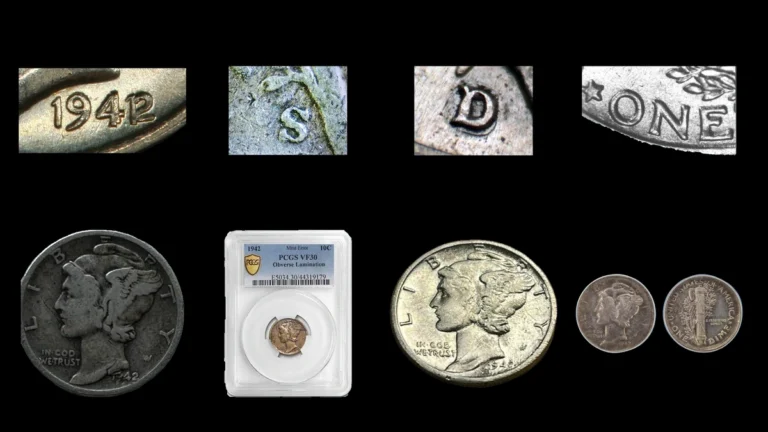
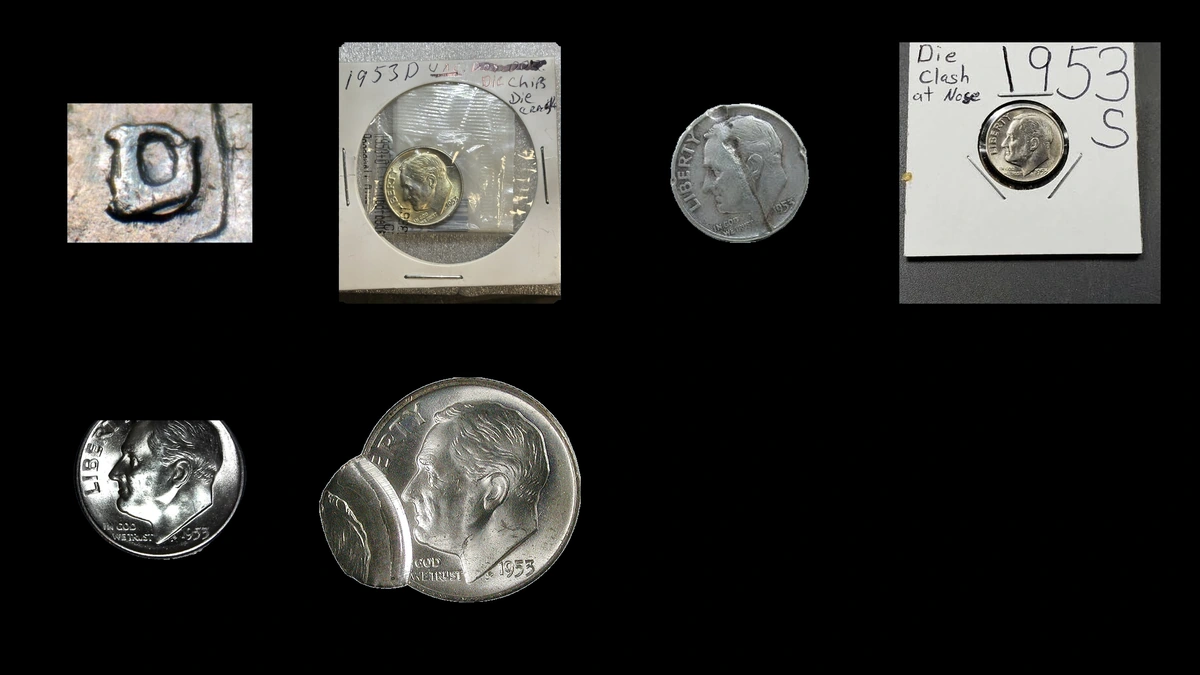
1. 1953 Dime Another Letter beneath the D or S: Repunched Mintmark Error
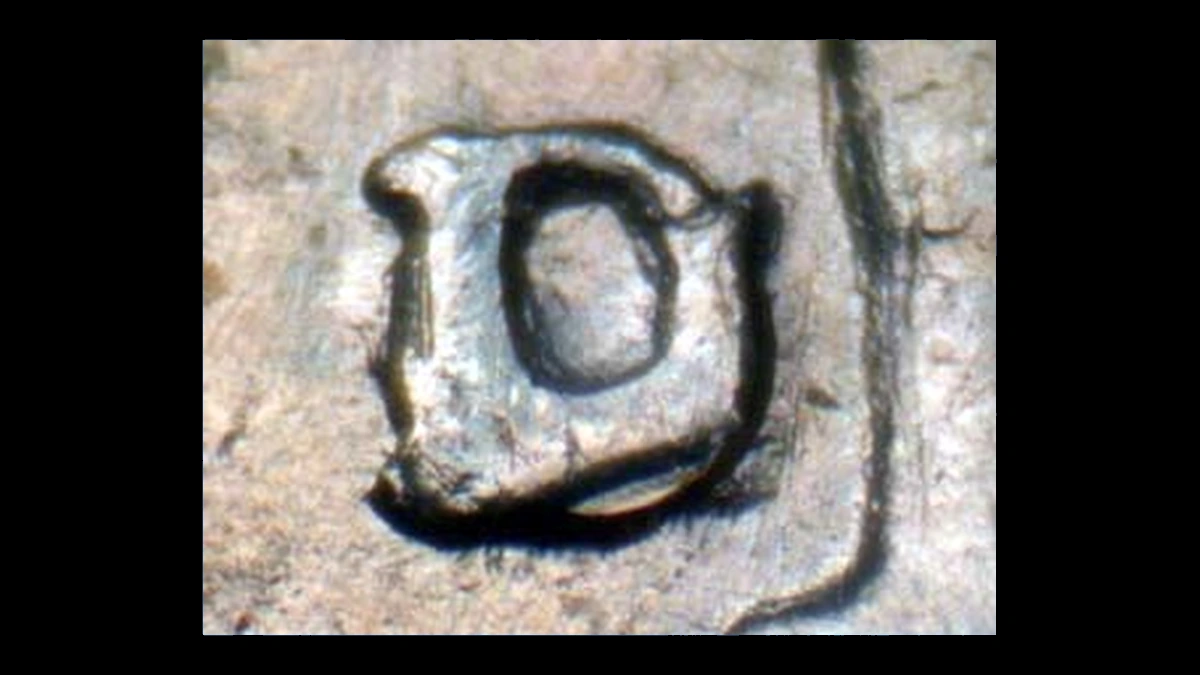
Find the mint letter immediately left of the reverse torch. On the Denver horizontal-D variety, an earlier D lies about a quarter turn from the upright letter.
The San Francisco S/S is a separate pattern, with an extra S reported toward the upper left. Both originated when the mintmark was punched into the tool again without fully covering an earlier impression.
How to Identify
Photograph the full mintmark before enlarging small strokes. For the horizontal D, look for characteristic portions outside both sides of the upright D and compare them with a letter rotated about 90 degrees.
For the S/S, examine the upper-left remnant against an identified San Francisco example. A thicker letter or a bright scratch does not establish an underlying S.
Change the light angle to distinguish rounded original strokes from a low flat shelf. Keep the two mint patterns separate when choosing reference photographs.
What It’s Worth
Identifiable S/S examples are estimated at $50–$1,500, and horizontal-D examples at $40–$300. PCGS records a $1,200 Heritage result in August 2022 for a 1953-S/S graded MS67.
MS67 indicates an exceptionally well-preserved unworn coin. That San Francisco result should not set the price of an ordinary worn Denver variety.
2. 1953 Dime Extra Curves around the Mouth: Reported “Hot Lips” Doubled Portrait Error
A repeated lip outline can prompt a doubled-die examination, but the nickname alone does not establish the cause. Philadelphia and San Francisco examples are reported, with the nose and brow also worth comparing.
How to Identify
Check the reverse mintmark first: S identifies San Francisco, while Philadelphia correctly has no letter. Use a comparison for that mint rather than transferring another coin’s mouth shape.
Look for related rounded outlines at the lips, nose, and brow that remain in place as lighting changes. A blob may be a small tool break, and a flat shelf may result from movement during striking.
True doubled-die detail belongs to the stamping tool and is different from striking the whole coin twice. An enlarged or swollen-looking mouth needs a specific matching pattern before that explanation is accepted.
What It’s Worth
If confirmed as genuine doubled-die detail, the estimated range is $25–$250. This conditional comparison does not represent a transaction for every dime called Hot Lips.
Clear repeated curves are more convincing than a lump or shadow. Wear across the mouth can hide the distinction.
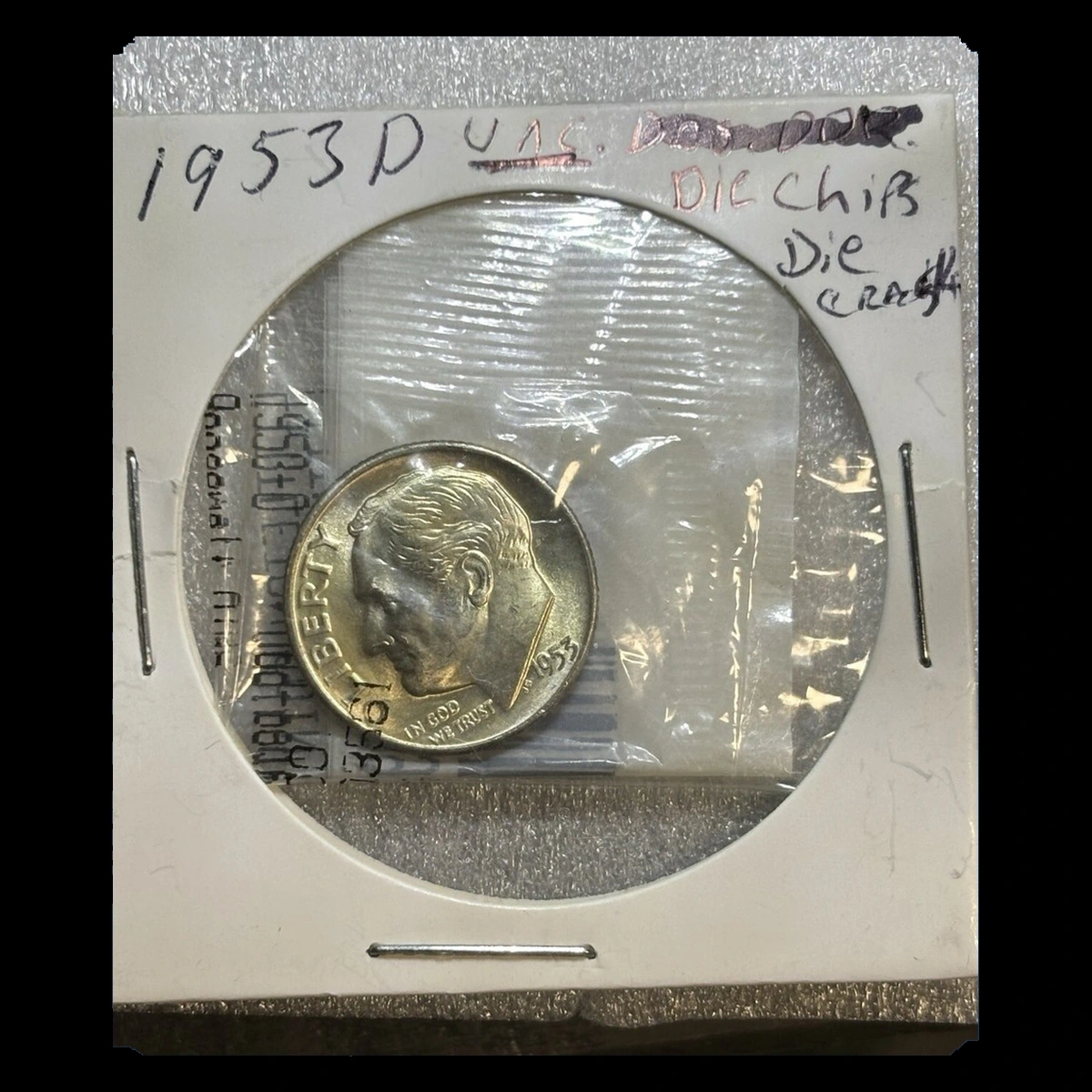
3. 1953 Dime A Ridge from the Head toward the Rim: Die Crack or “Spike Head” Error
A narrow raised line can extend from Roosevelt’s head toward the rim. Silver alloy flowing into a crack in the die leaves this raised copy on the coin.
Philadelphia and Denver examples are recorded, along with a reported San Francisco cracked-skull piece. Similar names do not connect them to the same damaged tool.
How to Identify
Follow the full path under side lighting, including any branches. A naturally raised ridge differs from a scratch’s recessed center and displaced edges.
Keep the head-to-rim relationship visible in photographs before enlarging one part. Compare the same mint and actual path, because the nickname does not specify a single shape.
What It’s Worth
Fine genuine cracks are estimated at $10–$75 for otherwise ordinary silver dimes. A clear connecting ridge on clean surfaces presents better than an uncertain isolated line.
A narrow crack does not command the same comparison as a large missing-tool break or dramatic repeated strike.
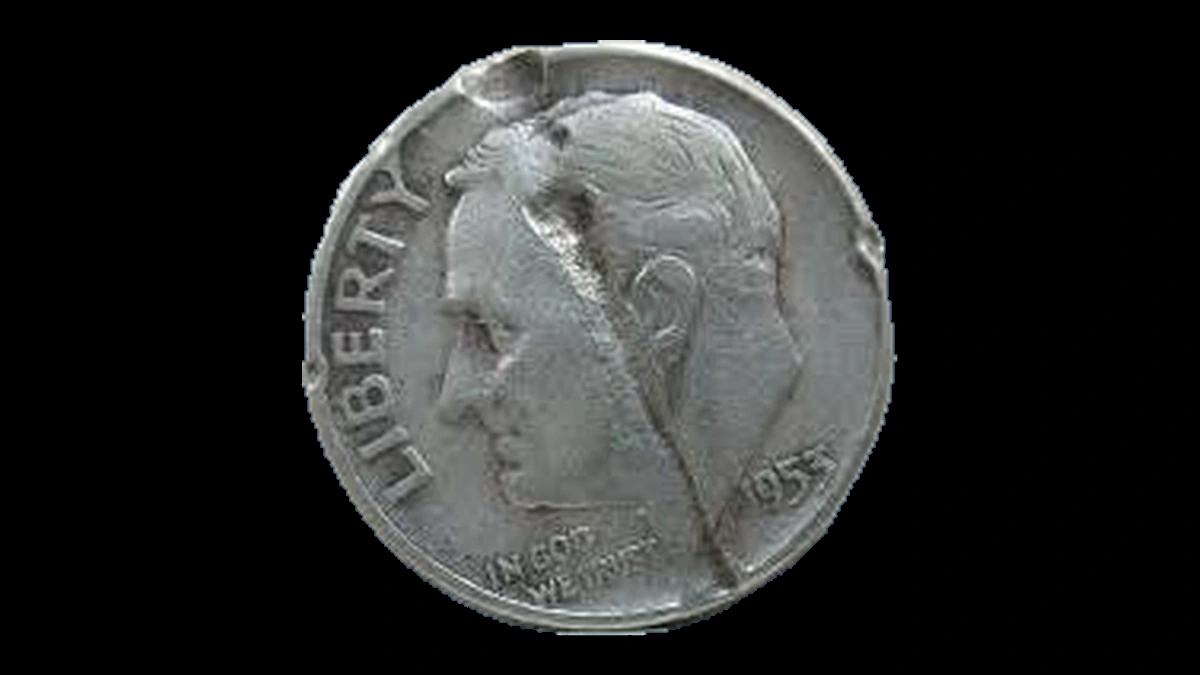
4. 1953 Dime A Thin Layer Lifting at the Left Front: Lamination Error
The dealer-described Denver example has peeling along the front between about 8:30 and 10 o’clock. A weak boundary within the metal can separate locally, leaving an attached flap or a shallow missing area.
How to Identify
A 1953 dime is 90% silver and 10% copper throughout its alloy. This separation is not loss of an outer clad sheet of the kind used on later dimes.
Inspect the seam where a layer lifts and rejoins the coin, without moving the flap. Original design continuing onto the separated material helps distinguish it from a freshly scraped patch.
The normal reference is 2.50 grams and 17.91 mm. An attached flap can leave weight near normal; metal that has fallen away can reduce it, so record the actual loose coin without pressing fragile areas.
What It’s Worth
Modest original laminations are estimated at $20–$150. A 1961 front-lamination dime graded NGC AU58 sold for $32 in January 2016.
That is a different-year comparison. The 1953-D catalog supplies a location but no realized price, and the preserved flap and nearby portrait need their own assessment.
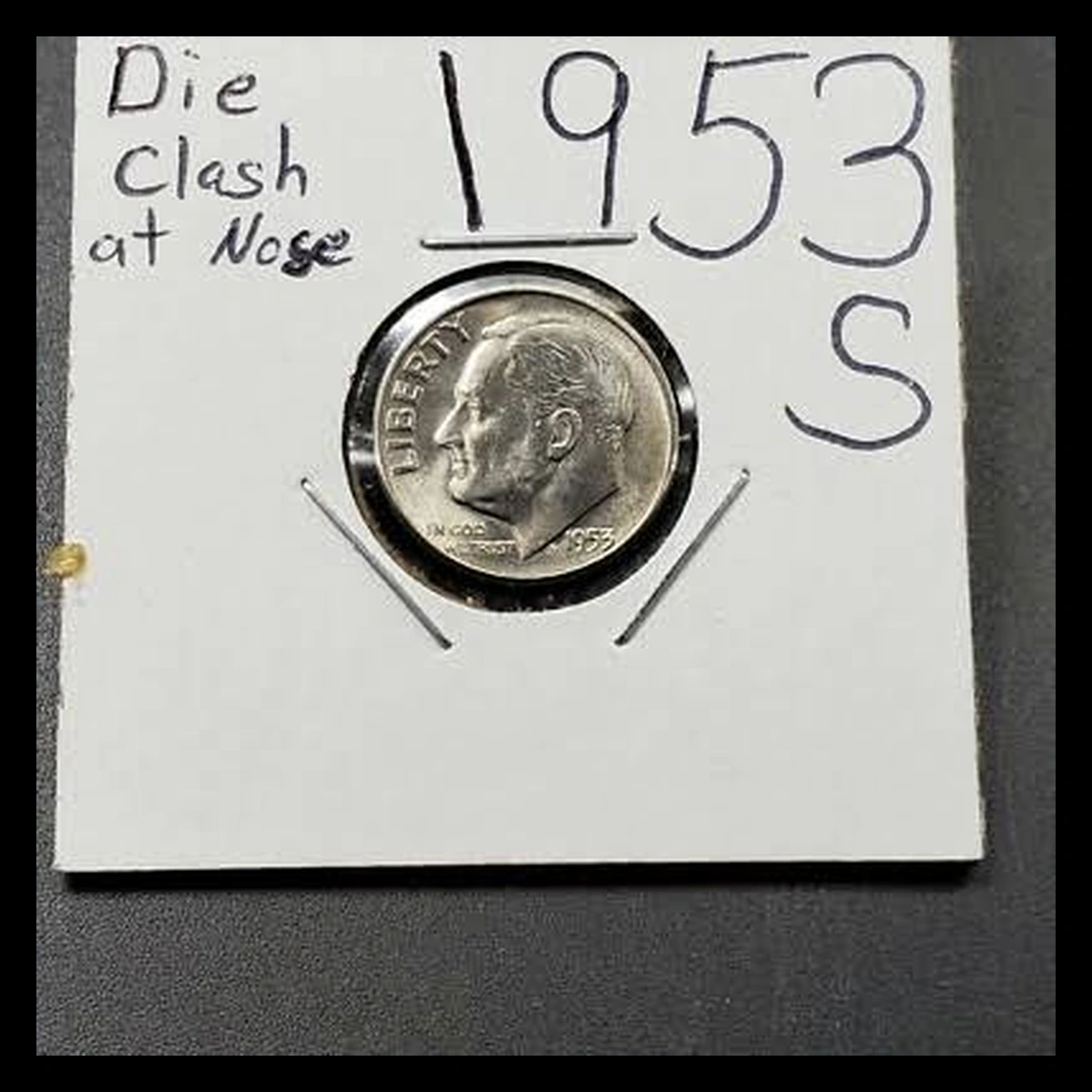
5. 1953 Dime Portrait Traces among the Reverse Design: Die Clash Error
A reverse clash can carry faint fragments from Roosevelt’s side. The tools first contacted each other without a blank, then copied the resulting marks onto later coins.
How to Identify
The reported San Francisco example is described as prooflike, meaning an ordinary strike with mirrorlike areas. It is not a specially made Proof.
Compare photographs of both faces at equal size and look for curves or angles that fit a recognizable portrait fragment. The catalog gives no fixed location for every transferred outline.
Keep the same trace in view as the light moves. Cleaning scratches and moving reflections can be mistaken for transferred design if only one bright image is considered.
What It’s Worth
A recognizable reverse clash is estimated at $20–$175. Clear original traces and attractive surfaces support the stronger end.
Mirrorlike brightness alone neither confirms the clash nor establishes its price. Cleaning can create shine while damaging the evidence.
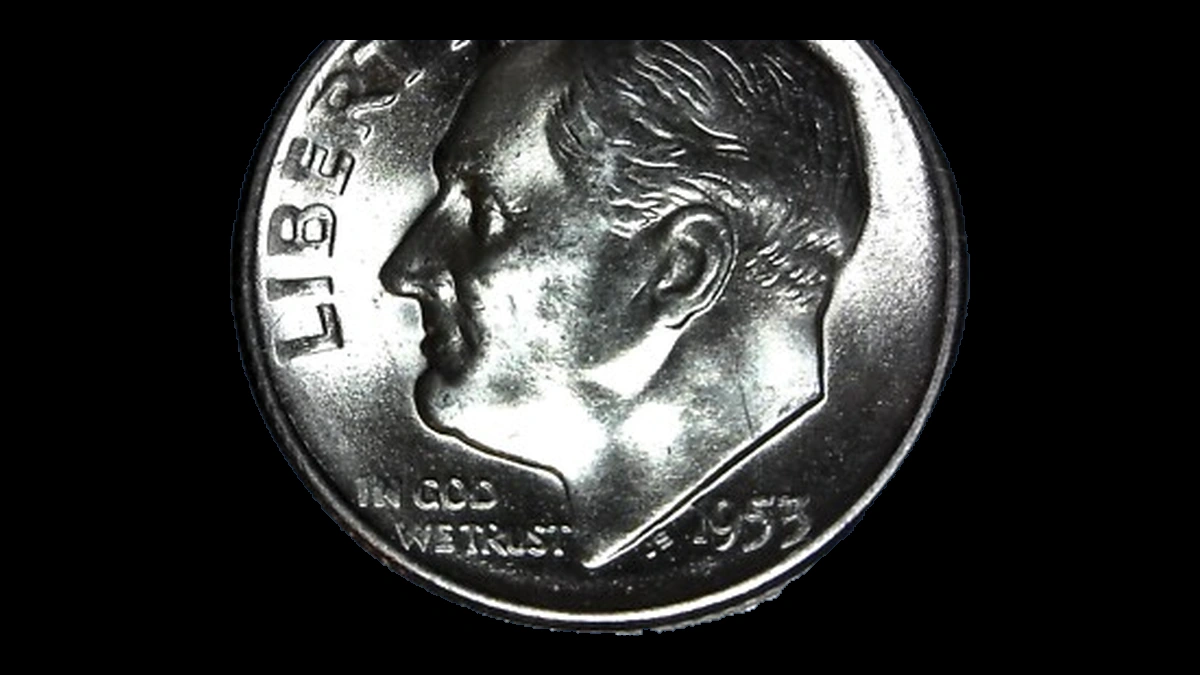
6. 1953 Dime A Hollow Interrupting the Design: Struck Through Material Error
Material between a tool and blank can block the intended design or leave an impression of its own. The 1953 report establishes neither a specific mint nor the object involved.
How to Identify
Follow the boundary from ordinary struck detail into the affected area. A later dent can push metal sideways and crush nearby features instead of leaving a strike-formed interruption.
Photograph the surface under two lighting directions without cleaning or probing it. Describe visible texture before naming an unseen piece of metal or other object.
If material remains attached, preserve its boundary for examination. The suggestion of a fragment does not establish that an object is actually retained in this reported coin.
What It’s Worth
Identified strike-throughs are estimated at $15–$200, based on comparable silver-dime errors. No sale of the reported 1953 example is supplied.
A recognizable impression with sound surrounding detail makes a stronger display than an indistinct patch. A retained-object premium requires an object’s presence to be established.
7. 1953 Dime Two Levels around the Edge: Partial Collar Strike Error
An edge step records different amounts of restraint during the blow. Metal outside the collar can spread farther than the portion contained by the ring.
How to Identify
View the side and follow the change in level and grooves. A circular line on the face alone does not demonstrate the two-part edge structure.
The recorded 1953-S example is NGC MS64 Full Bands. Full Bands describes separated horizontal bands on the reverse torch, not the collar fault.
Check both faces for later crushing that could explain a damaged edge. Keep an encapsulated example sealed and use side photographs where the holder permits them.
What It’s Worth
Comparable partial collar dimes are estimated at $25–$225. The NGC MS64 Full Bands San Francisco coin sold for $31 in July 2021.
A distinct edge transition helps show the error. Torch sharpness contributes to the complete coin’s quality rather than creating a separate error price to add.
8. 1953 Dime Missing Metal, Sometimes with Extra Spread: Clipped Blank and Broadstrike Error
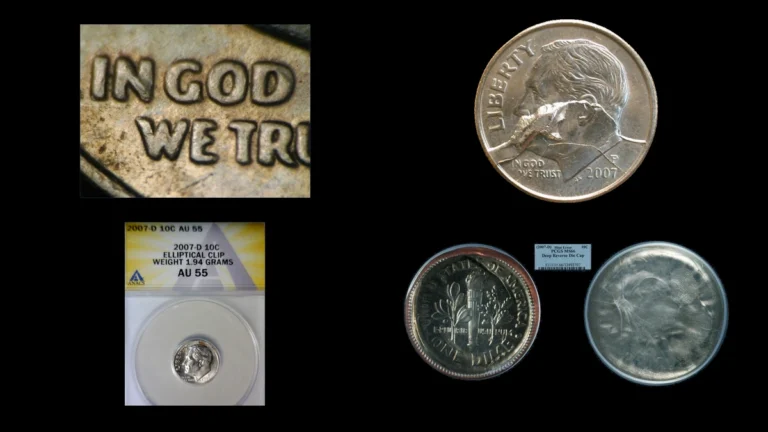
The San Francisco PCGS MS66 coin combines an approximately 20% clip with a broadstrike. Its blank was incomplete before striking, and inadequate collar restraint then allowed the remaining metal to spread.
A different Denver NGC MS64 Full Torch example has a reported 30% curved clip. Its sharp torch designation does not establish the San Francisco coin’s broadstrike feature.
How to Identify
Inspect both endpoints where the missing arc meets struck metal. File grooves, a fresh cut, or crushed lettering can reveal damage added after minting.
For the San Francisco combination, confirm natural expansion in the surviving border and edge as well. A clip alone does not demonstrate loss of collar restraint.
Opposite-rim weakness may support an original clip when present. Give greater weight to the natural boundary and endpoint flow than to a missing percentage quoted without photographs.
What It’s Worth
Clear clip-and-broadstrike combinations are estimated at $75–$400; the separate curved-clip type at $35–$250. The San Francisco MS66 combination sold for $156 in July 2021.
That is one price for the coin with both features. Date readability and an undamaged opening matter alongside the amount of missing metal.
9. 1953 Dime The Final Date Digit Cut Off: Reported Off-Center Strike Error
A seller describes a Denver dime whose final 3 is cut off by an off-center strike. A close-up of that digit alone cannot establish how the entire blank sat in the press.
How to Identify
Start with a full reverse photograph and ask whether that design also falls partly outside the blank. A shifted front tool can narrow the rim near the date without displacing both faces.
Then inspect the final digit and any untouched metal on the front. Grinding, edge cutting, and wear can remove detail for reasons unrelated to blank placement.
Keep the faces aligned when comparing their boundaries. Matching displacement and original unstruck metal support the claim more directly than a missing 3.
What It’s Worth
A genuine dated 1953 off-center dime is estimated at $30–$350. The seller’s description supplies neither a sale result nor a measured displacement percentage.
The range applies after confirming the error. A readable year and clear blank crescent improve the comparison.
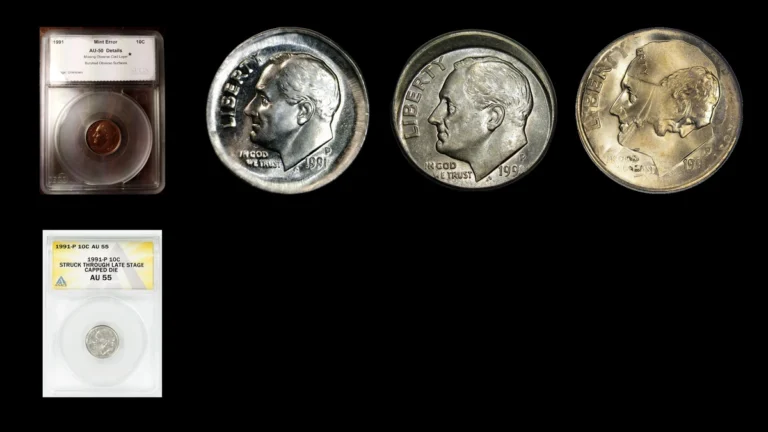
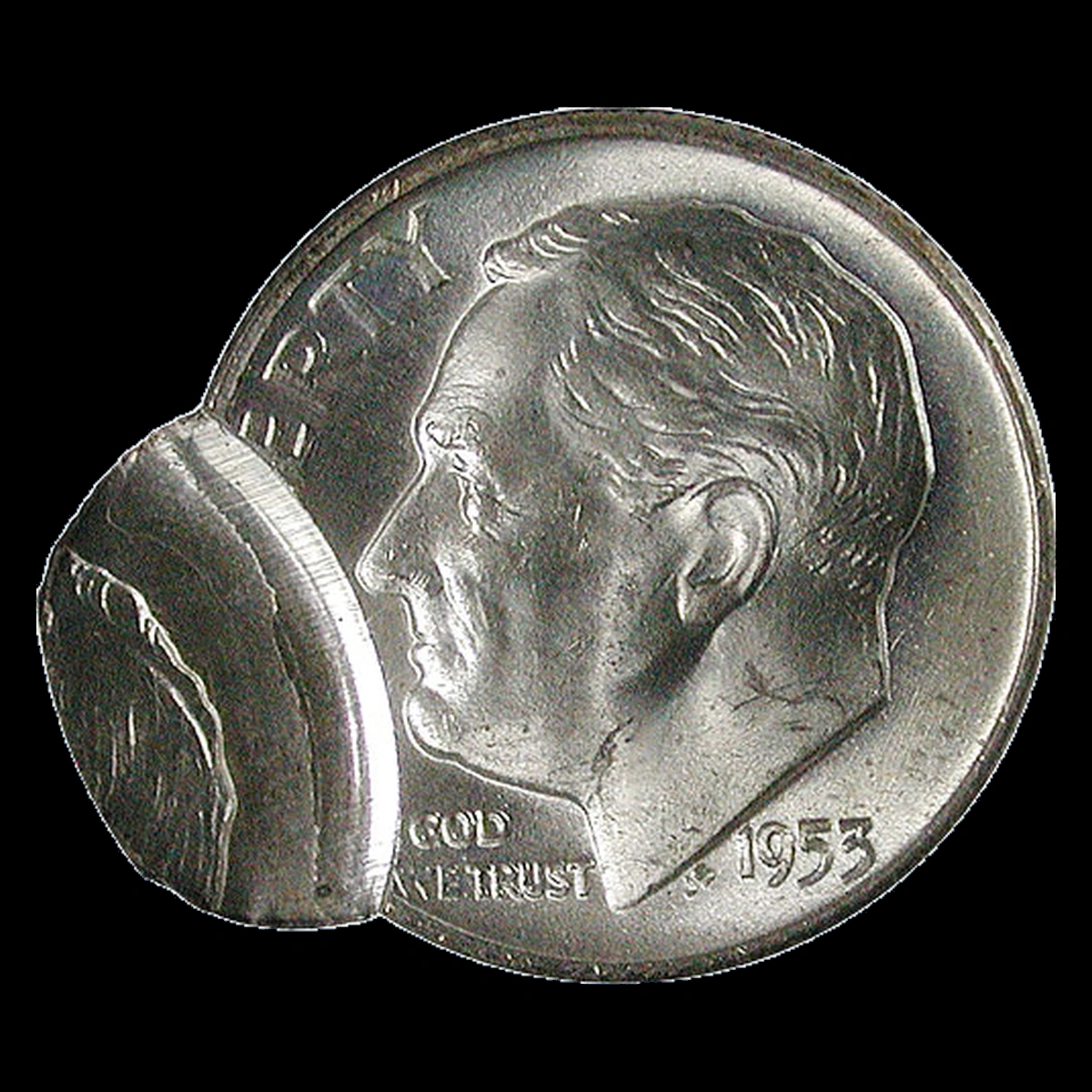
10. 1953 Dime Another Head in Front of Roosevelt: Double Strike Error
The back of a second head appears ahead of the original portrait on the recorded Denver NGC MS64 coin. Its later strike landed 75% off center over another blank.
That other blank blocked the reverse tool in the overlapping area. The two faces therefore need not show matching second designs.
How to Identify
Locate the first portrait and date, then follow the second head in a full-face photograph. Genuine displaced detail should explain the overlap rather than resemble a sunken mirror image pressed in later.
Map the affected reverse area against the later portrait. The lack of a normal second reverse impression should fit where the intervening blank blocked contact.
This movement involves an already struck coin receiving another blow. It differs from small doubled letters carried in a tool.
What It’s Worth
Clearly double-struck silver dimes of this kind are estimated at $200–$1,000. The collector’s record supplies the MS64 coin’s arrangement rather than a known sale price used here.
A readable first date, distinct later portrait, and undamaged surfaces support interest. The blocked reverse belongs to the same whole-coin value.
Conclusion
The strongest 1953 dime comparison keeps mint, condition, and physical sequence together. A sideways D, an upper-left S remnant, and a reported doubled mouth need different matching photographs despite their small size.
For larger features, preserve peeling metal and inspect the edge and both faces. Confirm each part of a combined error, and keep a documented sale separate from a seller’s description or a different-year comparison.