Rare 1962 Nickel Errors (List & Pictures)
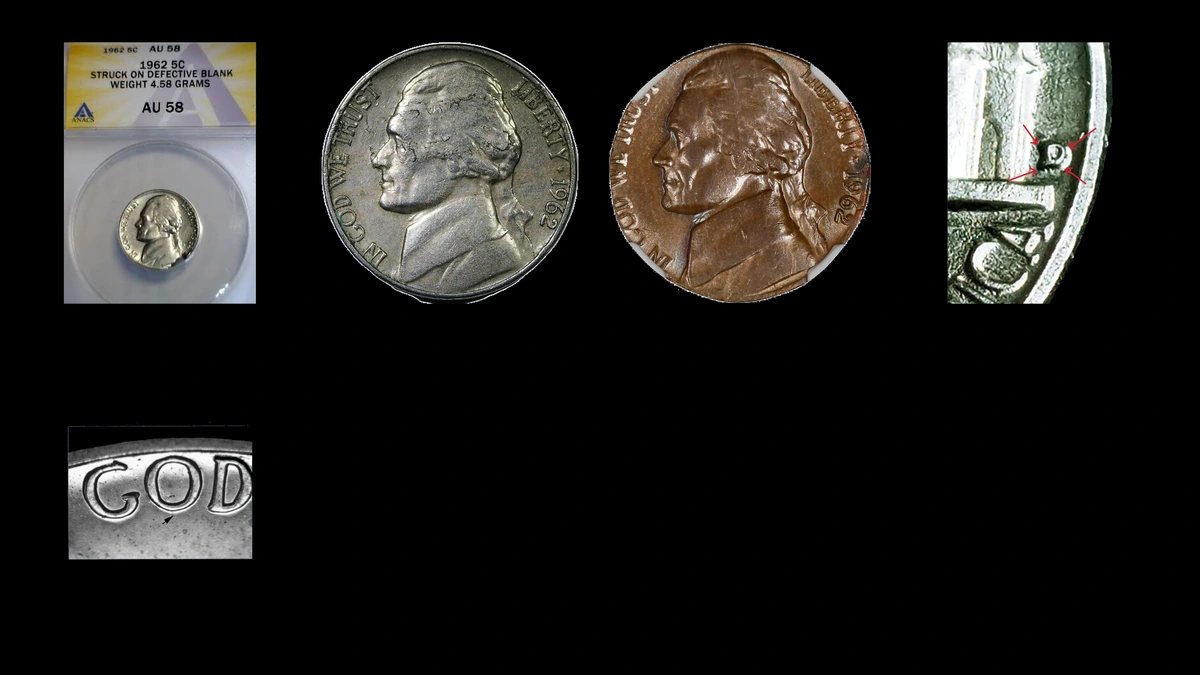
A 1962-D nickel over a finished 1962 cent sold for $3,416 in March 2026. Estimated values for 1962 Jefferson nickel errors range from $10–$4,500, including smaller metal flaws and die varieties.
Begin with the blank and any older design, then compare the position of the strike, raised patches and repeated lettering.
| Observation | Possible explanation | Estimated range |
|---|---|---|
| Underweight original blank | Defective blank | $25–$250 |
| Peeling or split metal | Lamination, sometimes with indent | $10–$500 |
| Small copper disk without older design | Cent-blank strike | $200–$1,000 |
| Lincoln detail beneath Jefferson | Finished-cent overstrike | $750–$4,500 |
| Unused crescent | Off-center strike | $25–$700 |
| Raised front patch | Die break | $15–$300 |
| Extra tilted D outline | Repunched mintmark | $10–$150 |
| Several repeated letter outlines | Doubled or tripled die | $10–$750 |
A normal nickel weighs 5 grams and measures 21.21 millimeters across a plain edge. Denver’s D sits beside Monticello on the reverse; Philadelphia has no mintmark, and Philadelphia origin alone does not establish the specially prepared Proof finish.
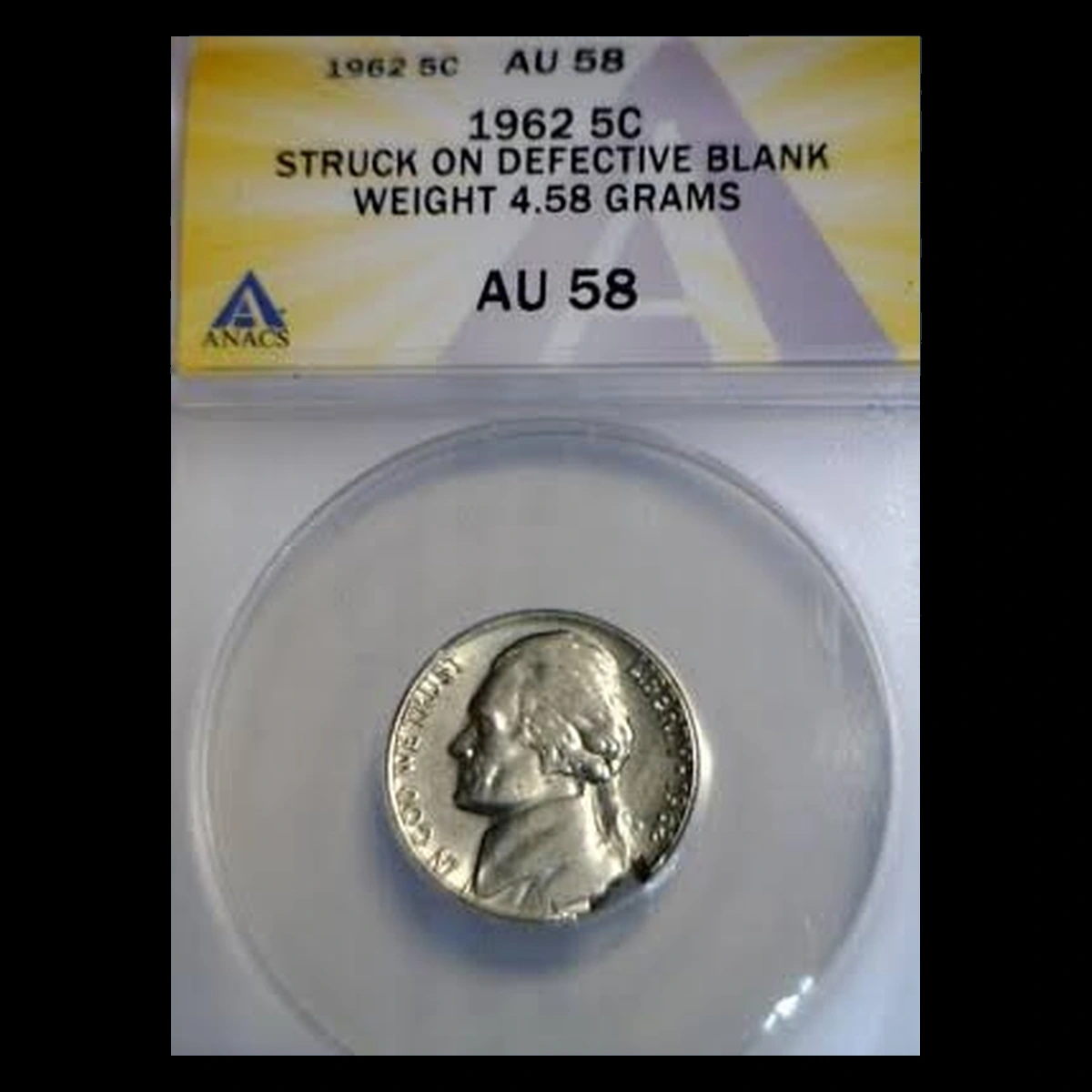
1. 1962 Nickel A Light Coin with an Original Strike: Defective Blank Error
The recorded Philadelphia NGC MS63 piece weighs 4.2 grams, while a separate Denver NGC MS62 example weighs 3.4 grams. Both were cataloged as defective blanks.
The descriptions do not establish one missing shape or a complete manufacturing explanation. Low weight alone cannot rename either coin as a clip or a wrong-denomination blank.
How to Identify
Record the candidate’s actual weight, diameter and thickness, then compare its original surfaces with certification photographs. Neither catalog supplies replacement dimensions to assume.
Look for corrosion, filing or deliberate thinning that removed metal after striking. The design and boundary must support an originally defective blank.
What It’s Worth
Identifiable defective-blank nickels are estimated at $25–$250. Visibility and condition matter alongside the amount of weight lost.
The Philadelphia 4.2-gram MS63 coin sold for $75 in July 2021. The Denver coin’s greater shortage does not automatically make it more valuable or establish the same defect.
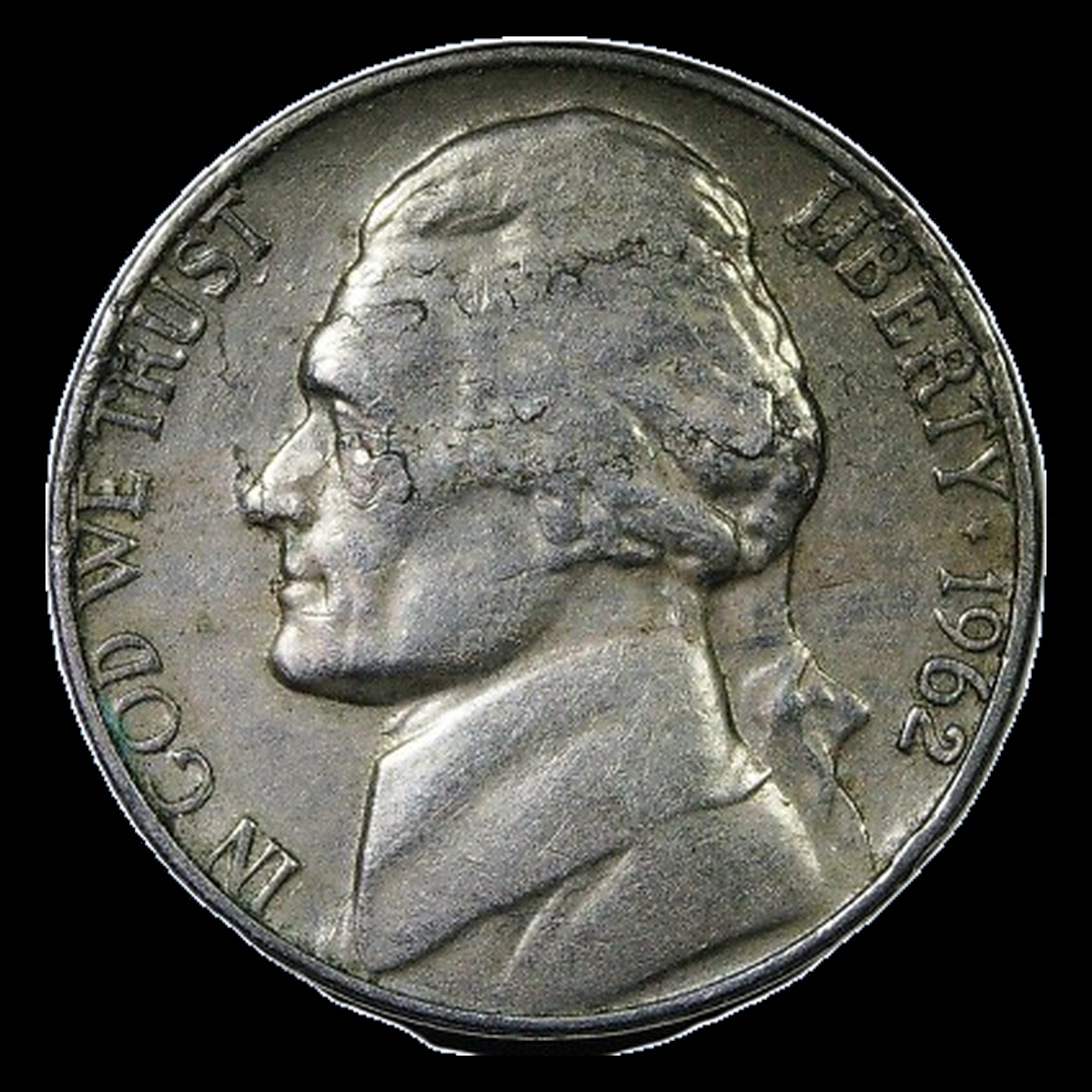
2. 1962 Nickel Peeling Metal or a Split with a Depression: Lamination Error
A weak seam inside the alloy can leave a local flap or a more extensive thin piece. One cataloged 1962 coin combines a split blank with an obverse indent.
An indent is a depression where another metal piece blocked the die. The description does not establish split timing or the depression’s percentage.
How to Identify
Use a side view to distinguish a small peel from deeper separation without bending attached metal. Then inspect the obverse depression independently of the rough split surface.
Follow interrupted design into the hollow and compare it with the exposed metal. Their actual relationship is needed before deciding whether splitting preceded or followed striking.
What It’s Worth
Local laminations are estimated at $10–$150, and identifiable split-blank-plus-indent combinations at $75–$500. Each combination receives one overall valuation.
The 1962 coin belonged to a four-piece lot sold for $488.75 in August 2010. A 1941 coin and two undated errors were also included, so the total is not an individual 1962 sale.
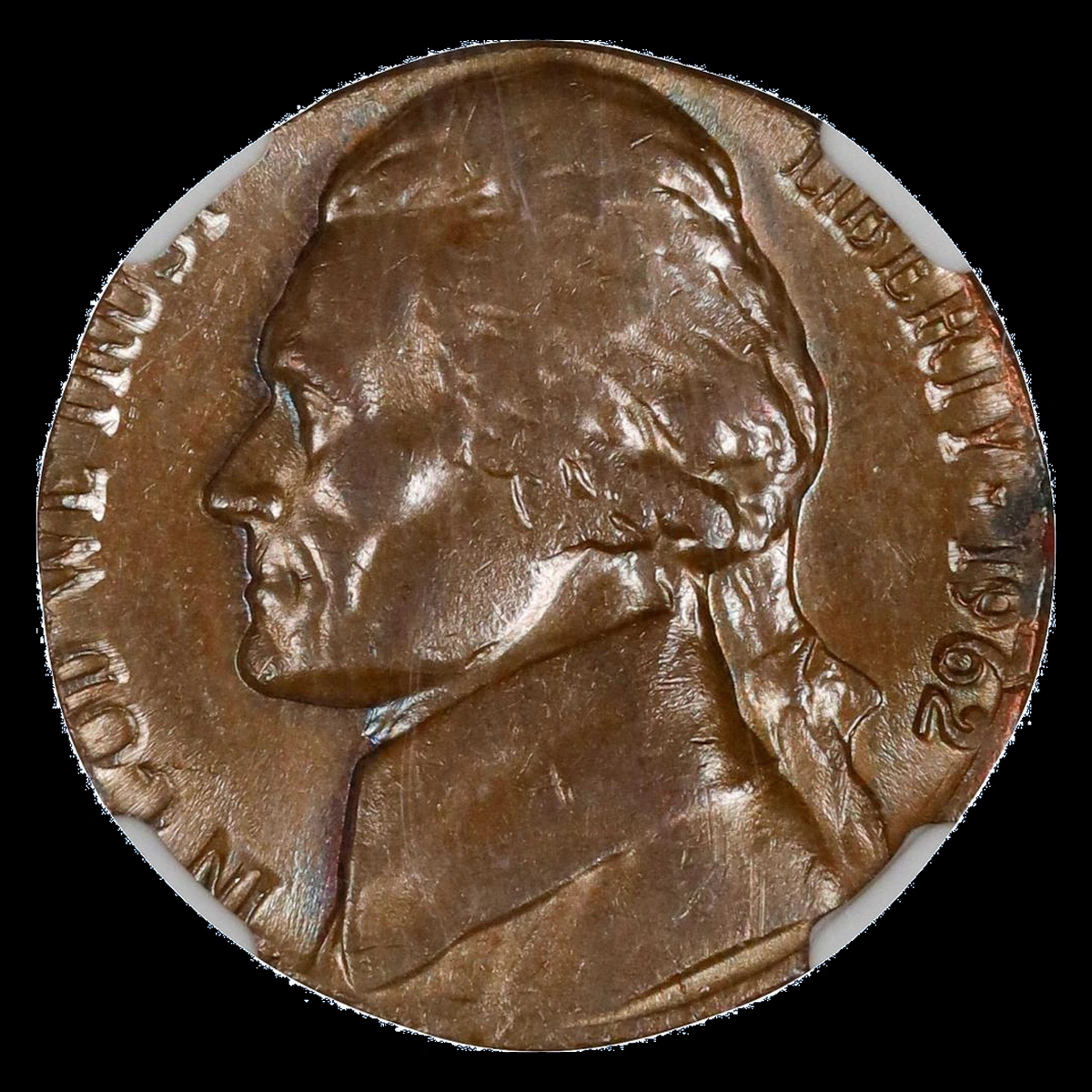
3. 1962 Nickel Jefferson on a Smaller Copper Disk: Cent-Blank Strike Error
The wrong unused blank can give a nickel its copper color and cropped outer design. A Denver PCGS MS62 example appeared in the Don Bonser collection.
A separate NGC MS62 Red and Brown specimen has a recorded weight of 3.2 grams. That measurement does not belong to the PCGS coin.
How to Identify
A cent blank of this period starts near 3.11 grams and 19.05 millimeters. Compare those standards with the actual metal and outline, allowing for expansion under the nickel strike.
Inspect for coating seams and filed edges that could imitate copper color or small size. An earlier Lincoln design would indicate a finished-cent host instead of an unused blank.
What It’s Worth
Identified 1962 cent-blank nickels are estimated at $200–$1,000. Original copper surfaces and readable date and mint support useful comparisons.
The PCGS MS62 example sold for $348 in November 2020. The separate 3.2-gram NGC MS62 Red and Brown piece brought $488.75 in August 2010.
4. 1962 Nickel Lincoln Detail Under a Later Nickel Design: Finished-Cent Overstrike Error
A finished cent can enter the nickel press and receive Jefferson and Monticello over its earlier designs. The surviving host image is what distinguishes this event from a blank mix-up.
One Denver nickel over a 1962-D cent was graded NGC MS64. Another AU58 record describes a Denver nickel over a 1962 cent without establishing the host cent’s mint.
How to Identify
Locate an identifiable older cent detail and follow it beneath the newer nickel impression. Both designs should belong to the same metal rather than joined pieces.
Read the dates and mintmarks independently. A D in the nickel design cannot prove the mint of the underlying cent.
Use the period cent’s standard weight and diameter only as starting references. No actual measurements for these two auctioned overstrikes are supplied here.
What It’s Worth
Identifiable overstrikes with both designs visible are estimated at $750–$4,500. Grade alone cannot predict the entire price.
The AU58 example brought $3,416 on March 23, 2026. The separately described MS64 nickel over a 1962-D cent sold for $930 in August 2020.
5. 1962 Nickel Designs Shifted Beside an Unused Crescent: Off-Center Strike Error
A blank out of position receives only part of the intended design, leaving solid unstruck metal at one side. The general 1962 report establishes no certified specimen, mint or direction.
A wide border around a complete design is not the same thing. A one-face shift may involve a misaligned die instead of a displaced blank.
How to Identify
Compare both faces for the same relationship between bare metal and design lost beyond the edge. Read the actual 1962 date before choosing a dated comparison.
Inspect the blank-looking area for grinding and the edge for cutting. If the mintmark area missed the strike, its emptiness cannot establish Philadelphia.
What It’s Worth
Genuine dated examples are estimated at $25–$700. Preserved identification and surfaces affect appeal as much as a large unused area.
A 1999-D nickel struck 65% off center sold for $75 in September 2024. That different-year result supplies no percentage or auction history for the 1962 report.
6. 1962 Nickel A Raised Obverse Patch: Die Break Error
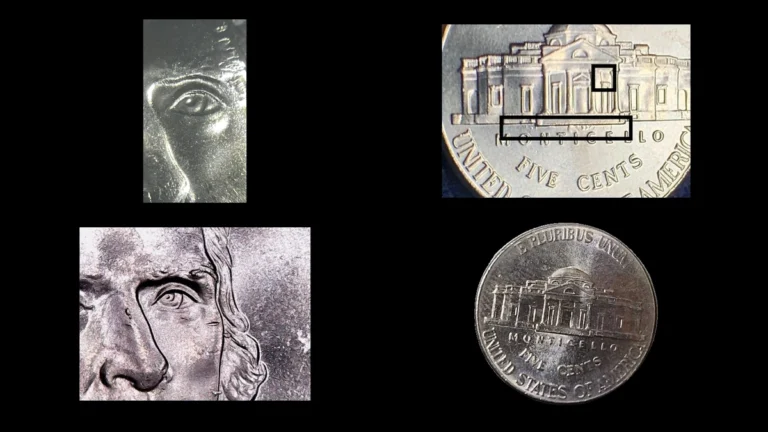
When a section of die steel breaks away, metal can rise into the vacant space rather than receive normal design. The cataloged 1962-D pattern is identified as JNC-62D-1.
The documented NGC XF45 specimen was sold with three 1967 nickels bearing their own breaks. Their patch shapes and conditions do not describe the 1962 piece.
How to Identify
Compare the entire front patch and adjacent design with the JNC-62D-1 photograph. Its original shape matters more than the presence of any raised lump.
Look for solder seams or a dent that pushed metal upward. Normal weight is possible because the missing steel came from the tool, not the coin.
What It’s Worth
Genuine comparable 1962-D die breaks are estimated at $15–$300. Size, visibility and preservation guide the comparison.
The four-coin group sold for $126.50 in August 2010. That total cannot be assigned entirely to its XF45 1962-D member.
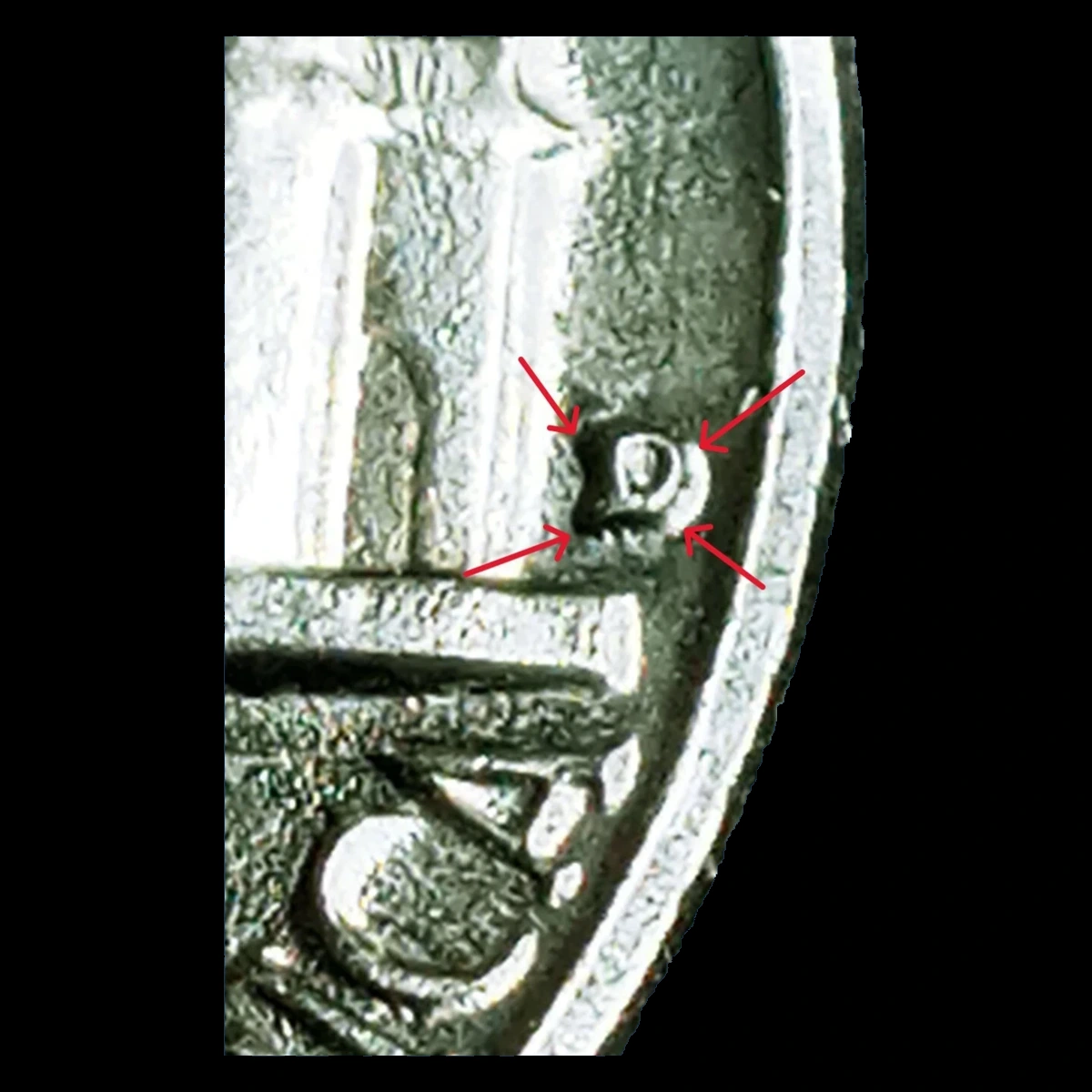
7. 1962 Nickel A Tilted Second D: Repunched Mintmark Error
A repeat placement of the separate mintmark punch can leave an additional tilted outline. The documented Denver pattern is D over D, repeating the same mint letter.
A small die chip, a dent or movement during striking can also make a letter look unusual. The secondary shape must follow a recognizable D.
How to Identify
Inspect the mintmark beside Monticello using Wexler’s pictured pattern. Follow the extra curve and upright rather than choosing an attribution from one thick corner.
Move the light to distinguish rounded relief from a flat shelf. A front-position mintmark belongs to later Jefferson designs, not this 1962 location.
What It’s Worth
Identifiable D/D examples are estimated at $10–$150. Sharp original outlines and attractive surfaces support stronger interest than damaged or worn traces.
No individual sale is assigned to the illustrated pattern. The range concerns minor mintmark varieties with the coin’s overall condition included.
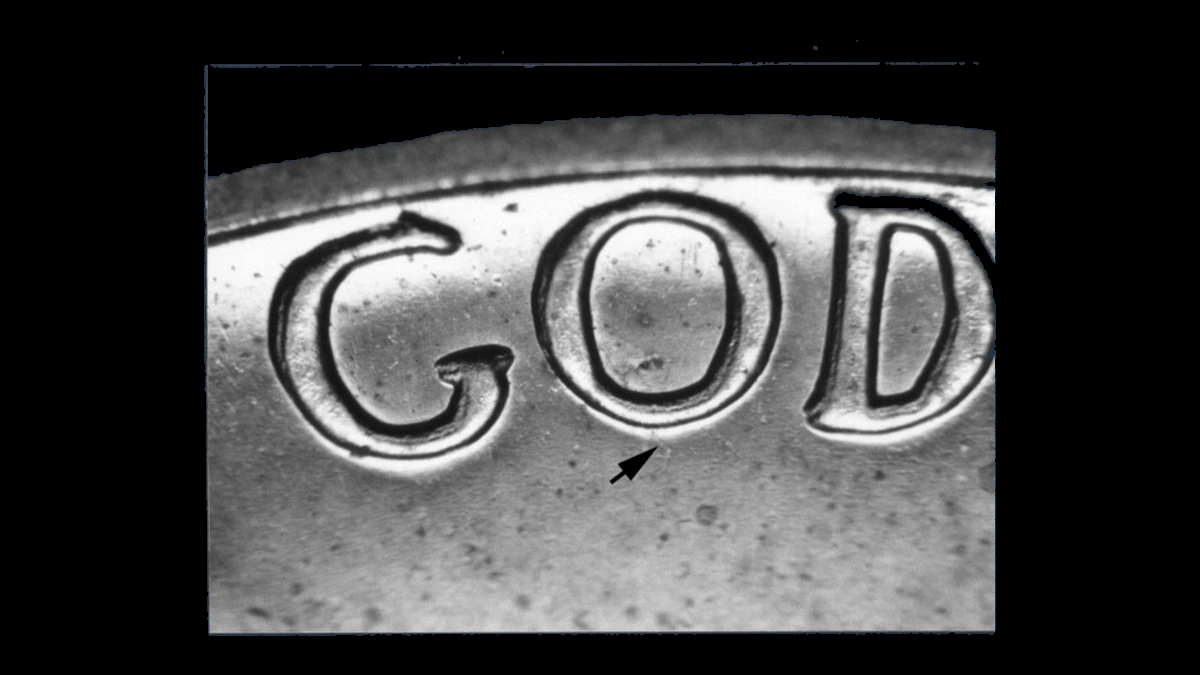
8. 1962 Nickel Two or Three Letter Outlines: Doubled and Tripled Dies Error
Reported Denver obverse patterns affect IN GOD WE TRUST and sometimes the lower hair ribbon. Reverse patterns can be clearest toward AMERICA.
Philadelphia reports include Proofs and examples whose finish is unrecorded, with motto, date, LIBERTY or reverse detail affected. Some reverse outlines originated in an earlier shared tool, so they need not identify one rare working die.
How to Identify
Compare several rounded extra outlines or split letter ends with the illustrated 1962 catalog. Select the same mint and finish when known.
Flat shelves from striking movement offer a different explanation. If a catalog number has changed, follow the pictured pattern instead of automatically transferring the old number.
What It’s Worth
Identified doubled and tripled designs are estimated at $10–$750. Bold visible features and preserved surfaces can support greater interest.
The range includes ordinary condition value and is not a documented result for every listing. A reflective Philadelphia nickel is not automatically a Proof, and shared-tool doubling should not be priced as a uniquely rare die.
Conclusion
A 1962 nickel can be light because of a defective blank, a split or a different denomination’s metal. Weight is a starting clue; original surfaces and surviving designs explain which category fits.
Keep recorded specimens separate when comparing grades and prices. The host cent’s mint needs its own evidence, group results remain group totals, and a small die variety requires a matching shape rather than an unusual-looking letter alone.