Rare 1965 Nickel Errors (List & Pictures)
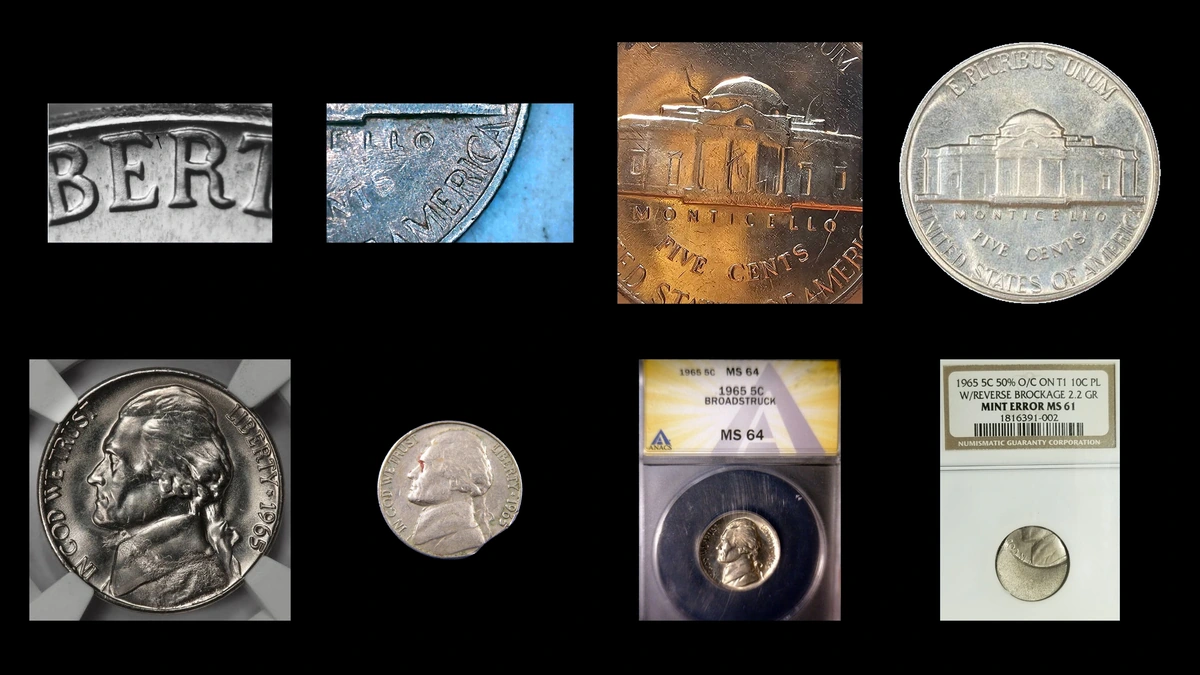
A 1965 nickel on a silver dime blank sold for $6,000 in July 2021. Its small size was a clue, but identifying the metal explained why it was so valuable.
The 1965 nickel errors below span about $5–$8,000. No mintmark is normal for this year; compare the visible feature and distinguish regular coins from Special Mint Set pieces, called SMS coins.
1. 1965 Nickel Raised Letter-Area Cracks and Interior Chips Error
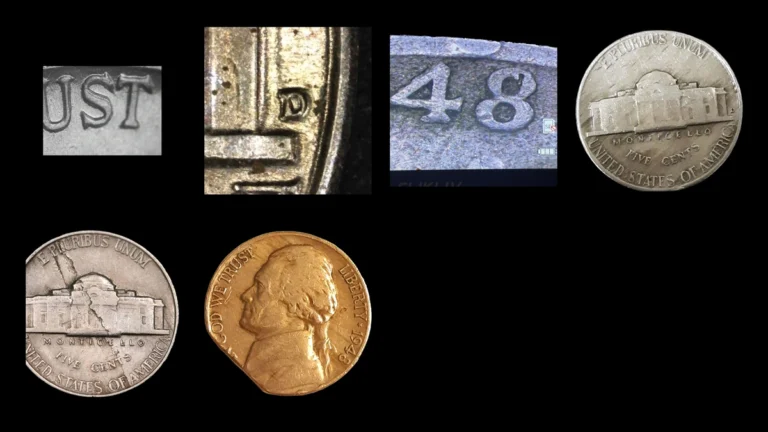
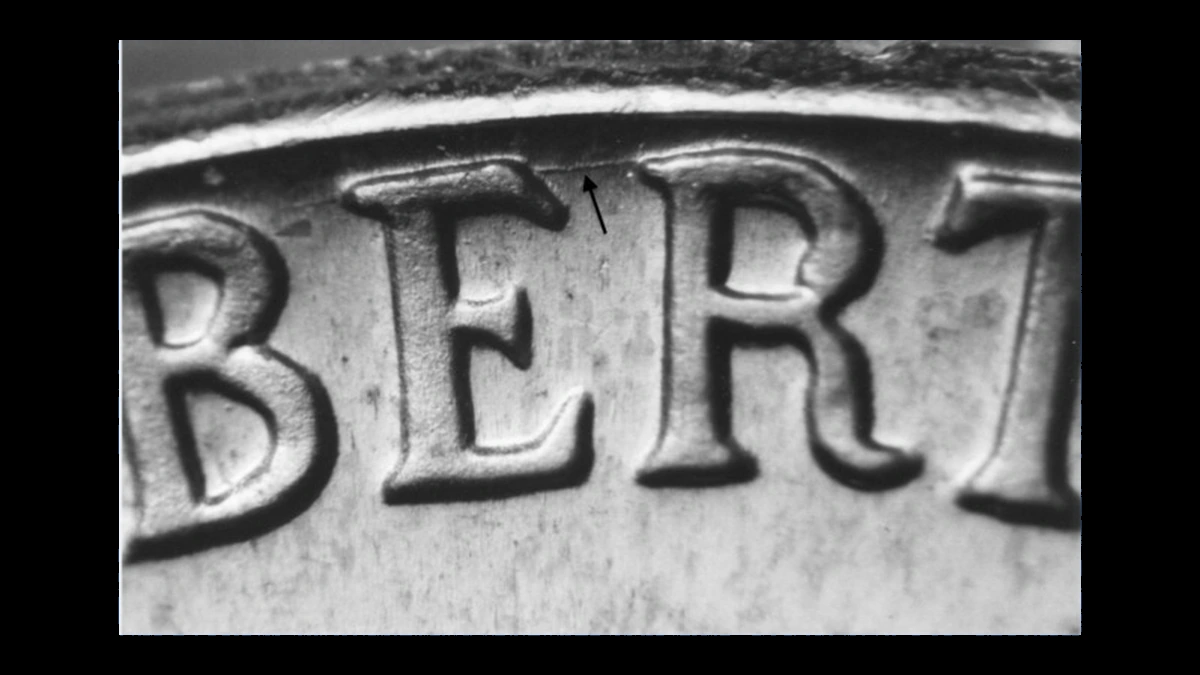
One listed doubled-die coin also has a crack from the upper E toward R in LIBERTY. The die’s crack filled with metal during striking and left a raised line.
A separate collector report describes an interior lump that may be a small die chip. A lump away from the rim is not a rim cud.
How to Identify
Check the E-to-R line in side light to see whether its center is raised. A scratch cuts into the surface, even if displaced metal rises along its sides.
For an interior bump, inspect the surrounding design for a dent or scraping. A cud requires a break connected to the rim, while an isolated feature needs its own explanation.
What It’s Worth
$5–$50 is the estimate for small genuine cracks and chips. Clear larger features are easier to appreciate than a faint line.
The reported interior lump needs confirmation before the range applies. On the doubled-die coin, the crack and doubling remain part of one whole-coin value.
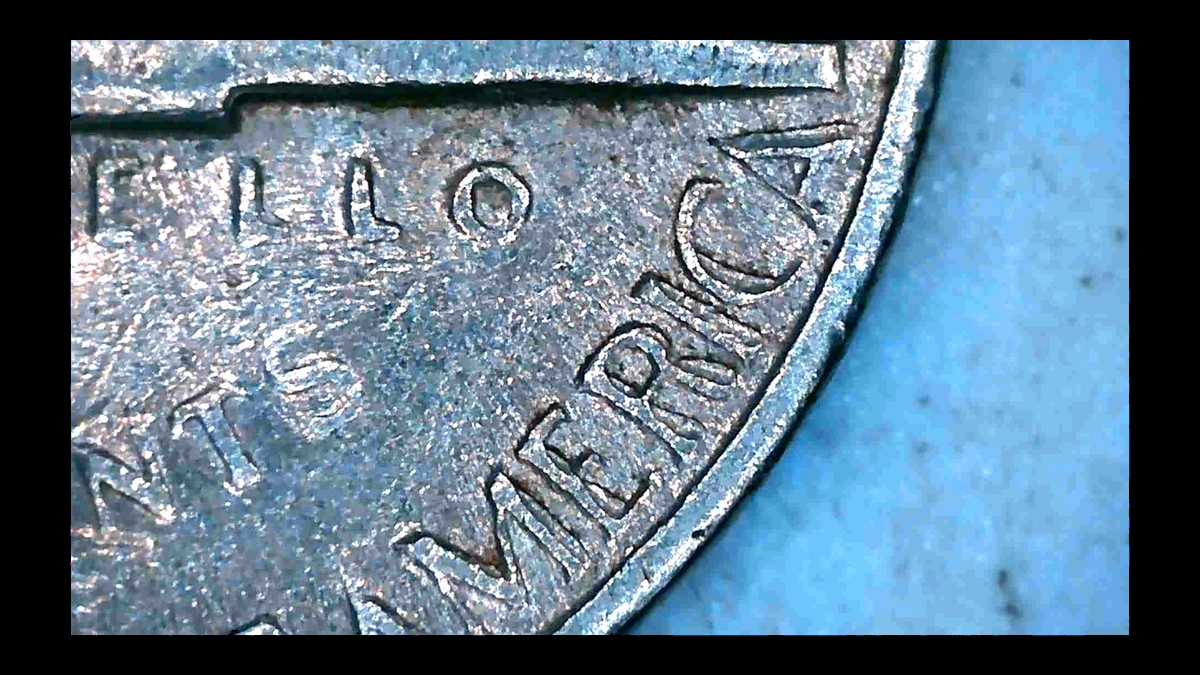
2. 1965 Nickel Extra Letter Detail from a Doubled Die Error
Two listed back varieties have close doubling, with one showing stronger separation toward the right. A separate SMS front variety has thickened rounded strokes and subtler motto changes.
The repeated detail began on the die, the stamping tool. An SMS pattern should not automatically identify an ordinary circulation coin.
How to Identify
Use an appropriate SMS comparison for its front variety, where thickening may lack a wide gap. For the back, compare close edges with the matching 1965 variety photographs.
Look for the same rounded extra shape under changing light. A flat ledge beside a letter can result from movement during striking instead.
What It’s Worth
$10–$150 is the range for identified minor varieties. Clear repeated detail and attractive surfaces make stronger comparisons than barely visible thickening.
No separate auction result is supplied for each pattern. SMS preservation contributes to the whole coin’s value as well as the variety itself.
3. 1965 Nickel Possible Opposite-Design Traces from a Die Clash Error
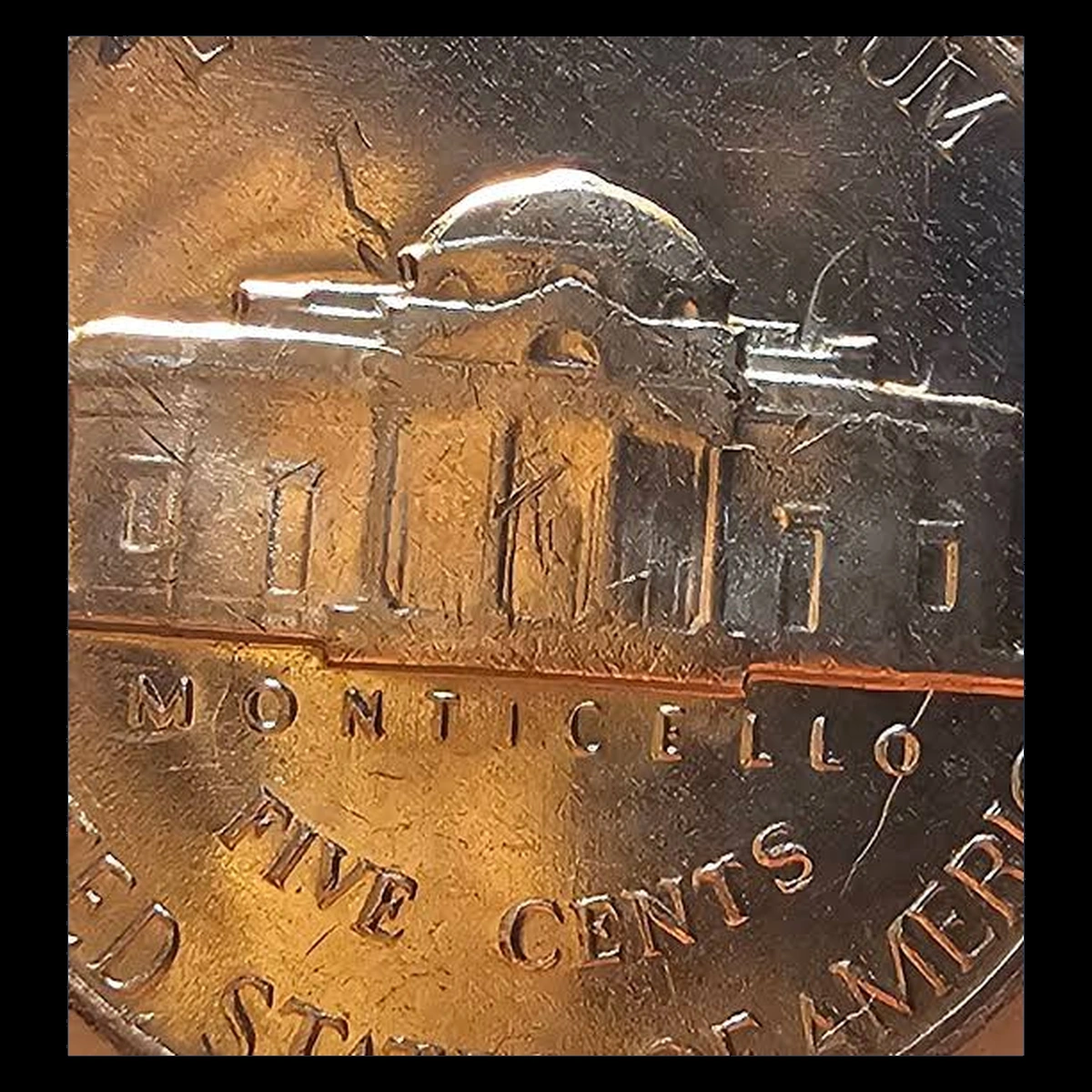
A guide mentions clashes as a possibility for 1965 without identifying a particular specimen. A clash begins when the dies touch with no blank between them and later transfer extra traces to coins.
How to Identify
Compare connected extra lines with recognizable parts of Jefferson or Monticello from the opposite face. The report does not establish a fixed location to search.
A scratch or rough patch is not enough merely because it looks unusual. The suspected fragment should explain a real opposite-side shape alongside the normal design.
What It’s Worth
$10–$100 is a conditional estimate for a confirmed modest clash on a regular coin. A clear recognizable fragment supports more interest than an isolated mark.
This is not a recorded 1965 clash sale. The guide’s general mention does not establish a premium for a scratched nickel.
4. 1965 Nickel A Thin Flap from Lamination Error
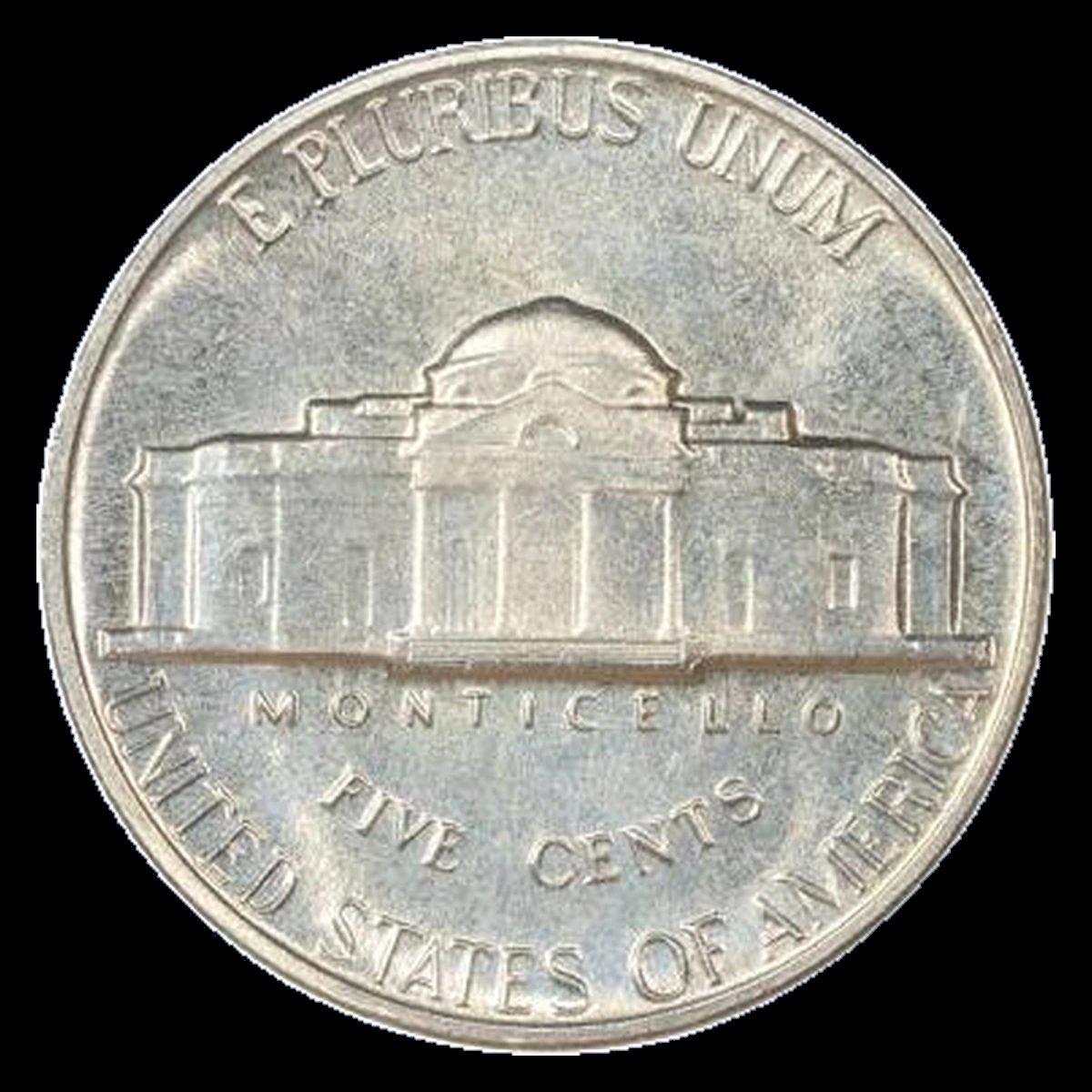
A weakness inside the blank can let a surface layer crack or peel. The 1965 guide lists lamination without tying it to a particular graded coin or location.
Normal nickels use copper-nickel alloy throughout. A peel is not a missing silver layer or a missing covering over a copper core.
How to Identify
Leave a loose flap in place and follow the boundary with side lighting. A split within the metal differs from the path of a tool digging into a finished surface.
Inspect the edge if the separation reaches it, without forcing the opening wider. Missing metal may lower weight, but roughness or dark color alone cannot establish lamination.
What It’s Worth
$10–$100 is the estimate for a confirmed small lamination. A clear original layer or attached flake can be more appealing than minor roughness.
No sale of an identified 1965 specimen is supplied for this category. Corrosion or scraping does not create the same error premium.
5. 1965 Nickel A Small Void above Monticello’s Door Error
A PCGS MS67 nickel has a tiny cavity described as a planchet void above the doorway. The term refers to an empty space in the original blank.
The same coin has a separate contact mark on Jefferson’s upper cheek. That cheek mark should not become a second blank defect.
How to Identify
Find the doorway and enlarge the arch immediately above it, as described in the PCGS record. Inspect the cavity’s border for disturbed metal, cuts, or corrosion.
A tiny void may have almost no measurable effect on weight. Its location and original surrounding surface matter more than the coin’s high grade alone.
What It’s Worth
$5–$2,500 spans very different condition levels: an ordinary coin with a confirmed small void may fit $5–$50, while an exceptional comparable MS67 may fit $1,500–$2,500. Preservation drives the higher comparison.
The entire MS67 coin sold for $2,093.63 in November 2019. That was not a $2,000 payment for the tiny cavity by itself.
6. 1965 Nickel Missing Detail from a Strike-Through Error
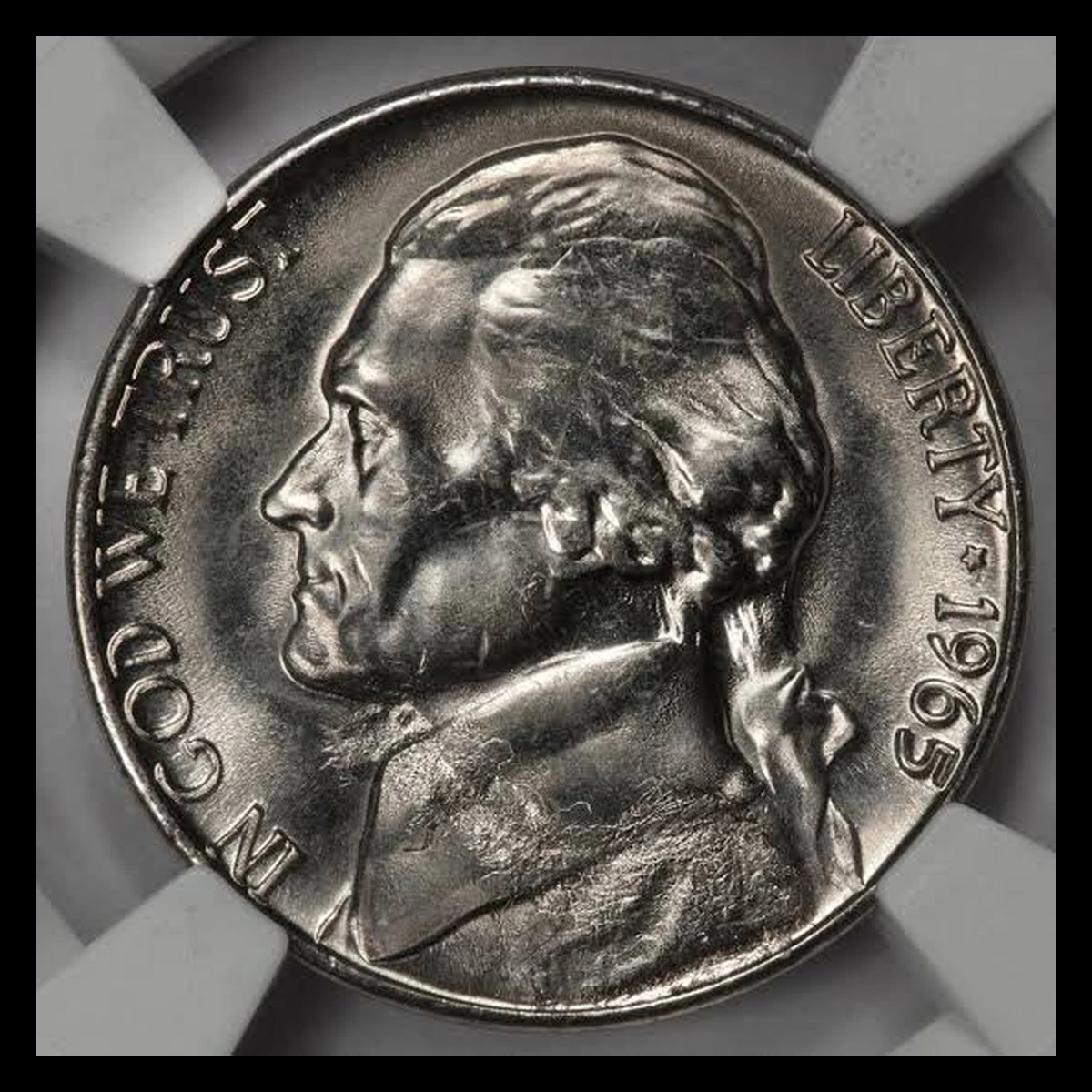
A PCGS SP66 SMS nickel has a struck-through area on the back. Material blocked the die from forming part of the design.
A separate guide report describes a cloth impression. The SMS listing does not identify cloth, so the two descriptions should remain distinct.
How to Identify
On the SMS example, follow the back design into the interrupted area shown in the SP66 listing. SP is its special-strike grading label.
A cloth attribution needs supporting woven texture, not simply a smooth depression. Preserve any material still attached and examine the boundary for later gouging.
What It’s Worth
$25–$500 covers confirmed regular cloth impressions around $25–$200 and clear SMS strike-throughs around $100–$500. Finish, size, and readable texture influence the comparison.
The SP66 listing does not supply a completed-sale figure here. The range is an estimate rather than a claimed result for that coin.
7. 1965 Nickel Two Curved Gaps from Clipped Blanks Error
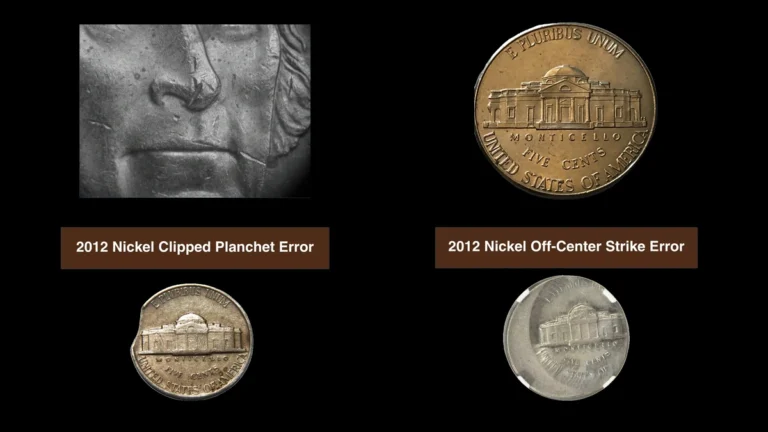
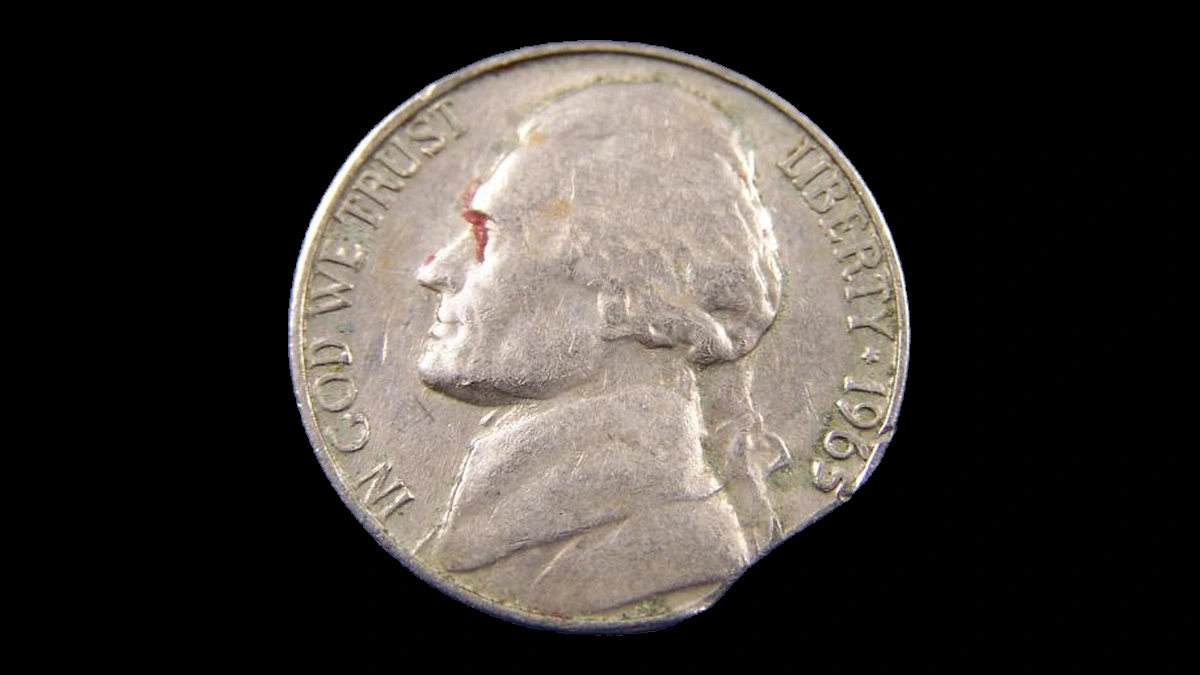
The recorded NGC MS66 nickel has two curved clips. Blank cutting overlapped existing holes in the strip, leaving gaps before the design was struck.
How to Identify
Inspect both openings for design weakening or flowing toward the missing metal. Fresh cuts, burrs, and repeated tool marks suggest later removal.
A clip lowers the normal 5-gram weight, while intact spans can be compared with about 21.21 mm. Weight does not establish the timing of metal loss, so check each gap separately.
What It’s Worth
$20–$200 is the estimate for genuine 1965 clips. Coin World’s auction table records $53 for the MS66 double-curved-clip example in October 2021.
Two gaps do not automatically double a single-clip price. The readable date, natural boundaries, and overall surface belong to one coin.
8. 1965 Nickel A Curved Indent with a Broadstruck Outline Error
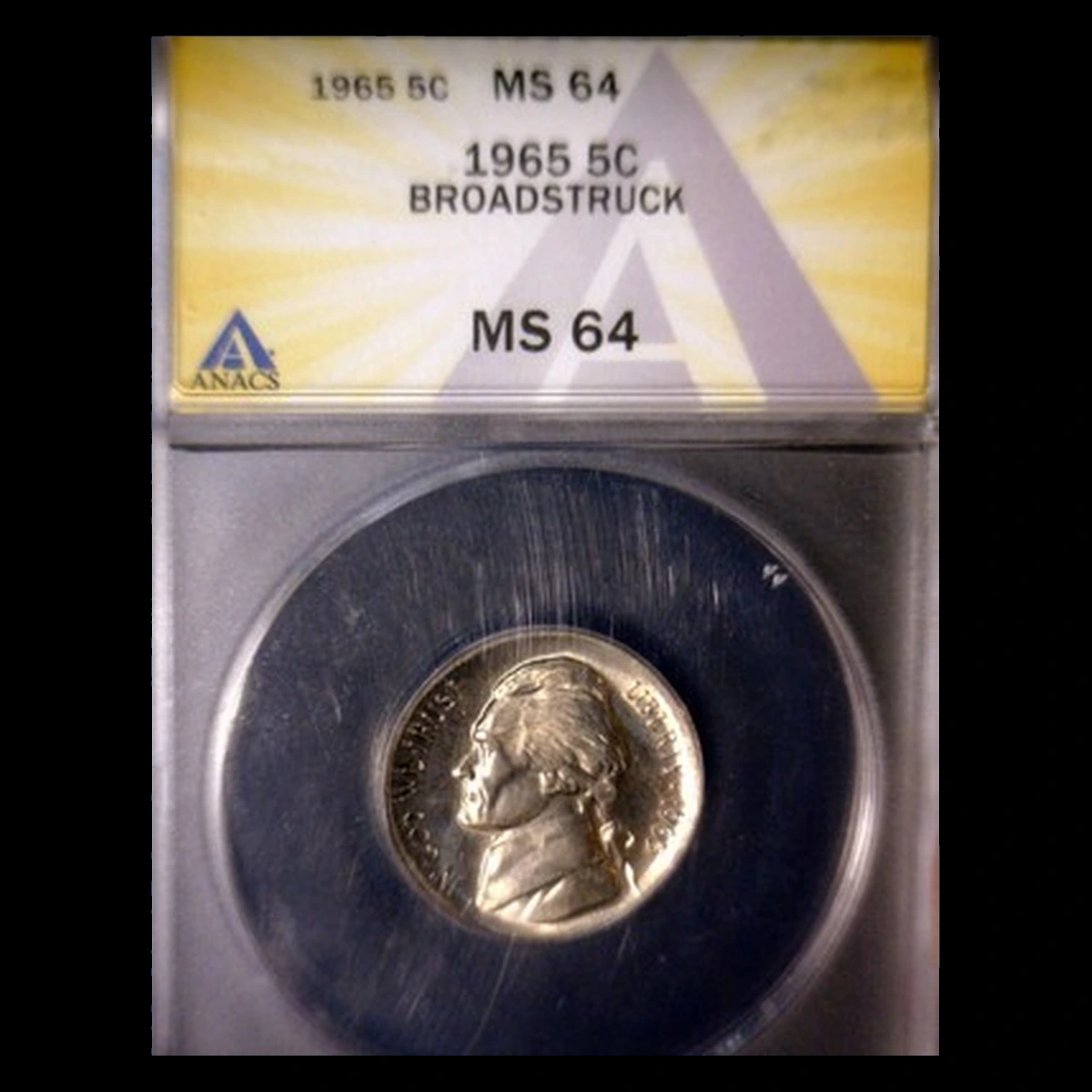
Another blank overlapping the nickel during striking can press a curved hollow into it. The coin may also spread beyond normal size if the collar fails to contain the metal.
A year guide reports a 45% indent with broadstriking. The coin is unlettered, as genuine 1965 nickels do not carry D mintmarks.
How to Identify
Find the indent’s curved boundary and check where ordinary lettering stops. A later vise mark may instead flatten already completed detail.
Compare the hollow with the expanded surrounding metal. The reported percentage does not provide a direction or shape for another candidate.
What It’s Worth
$150–$700 is the estimate for a confirmed combined indent and broadstrike. A clear date and readable curved impression make the error easier to understand.
The guide’s 45% description is not a verified auction result. Both effects belong to one object and should not receive two full values.
9. 1965 Nickel Off-Center Designs on Regular and SMS Coins Error
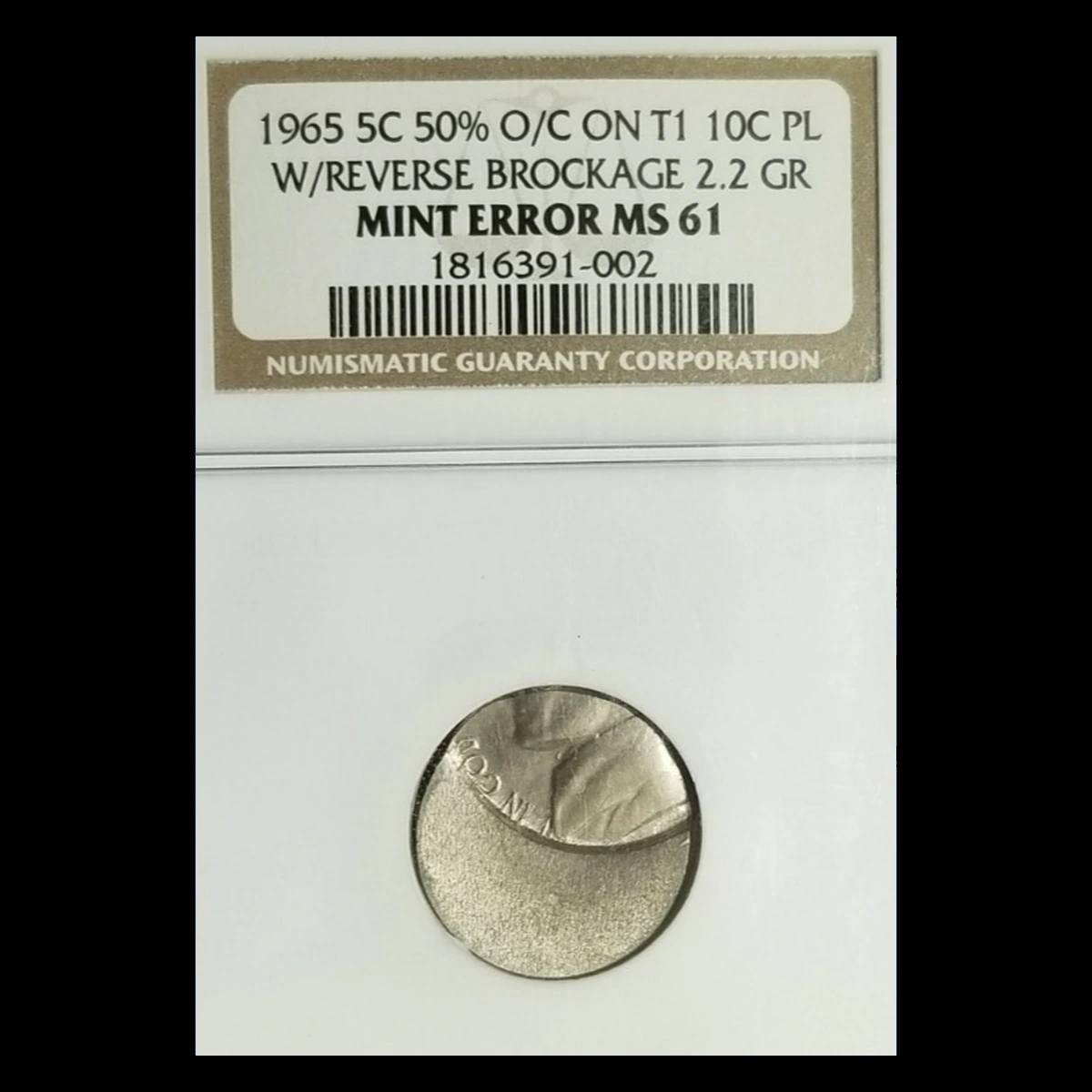
Reports include an approximately 10% offset of unspecified finish and separate SMS examples around 5% and 10%. A misplaced blank leaves bare metal beside design that falls beyond its edge.
SMS means Special Mint Set, not Proof. Neither a missing mintmark nor a shiny surface alone establishes that collector issue.
How to Identify
Compare both faces for missing outer design beside corresponding unused metal. A complete design with an uneven border can come from one shifted die instead.
Establish SMS identity through its grading description or known set history before choosing that price range. Do not upgrade an unspecified-finish report based only on similar displacement.
What It’s Worth
$25–$1,000 spans regular off-center pieces around $25–$200 and identified SMS examples around $300–$1,000. A 10% off-center SMS coin graded NGC MS64 is recorded at $705 in June 2014.
A regular coin with the same percentage does not inherit the SMS result. Date visibility and condition remain important within either group.
10. 1965 Nickel Overlapping Designs from Two Strikes Error
One PCGS MS65 coin received a second strike 25% off center. A different NGC MS66 example turned between two blows while remaining inside the collar.
The second coin can retain a nearly normal outline despite its overlapping designs. That differs from rotated dies, where a single strike leaves the two faces misaligned with each other.
How to Identify
Trace two positions of the same feature on one face, then compare the other side. An in-collar double strike may require following shifted letters rather than looking for a bare crescent.
A tilted back after flipping the coin does not prove repeated striking. The decisive evidence is overlapping impressions on the same surface.
What It’s Worth
$250–$1,200 is the estimate for comparable double strikes. The 25% off-center second-strike coin brought $432 in July 2021.
Coin World records $646.25 in August 2013 for the separate MS66 in-collar example. Both grades describe preservation rather than the number or force of the blows.
11. 1965 Nickel An Oval Shape from a Foldover Strike Error
The known NGC MS64 example entered the press nearly upright and folded as the dies struck it. Its date remains clear, while LIBERTY and AMERICA stretch toward the edge.
E PLURIBUS is missing, and the fold’s seam ends appear near four and nine o’clock. Those details explain more than the oval outline by itself.
How to Identify
Follow the stretched letters toward the seams to see how design formed during the folding. A finished nickel bent afterward does not reproduce that relationship.
Do not flatten the piece to measure it. Record its actual shape and retained weight while protecting the seam and raised edges.
What It’s Worth
$2,500–$6,000 is the estimate for a comparable professionally identified foldover. The recorded coin sold for $4,312.50 in August 2010.
A readable date and convincing folded structure support the comparison. Later bending of an ordinary nickel does not create the same value.
12. 1965 Nickel A Nickel Design on a Wrong Blank Error
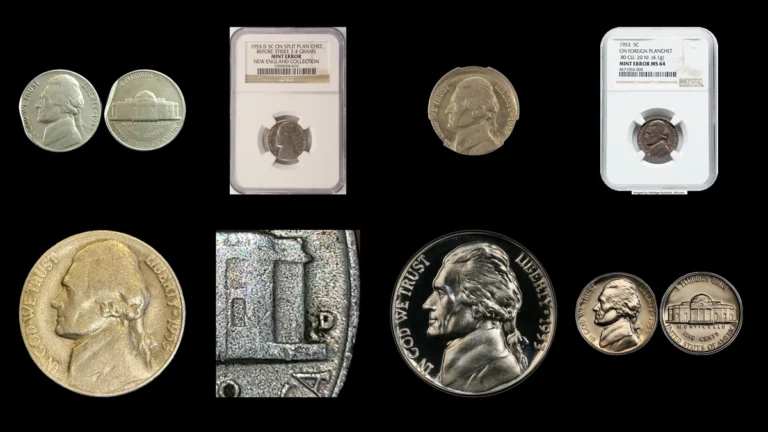
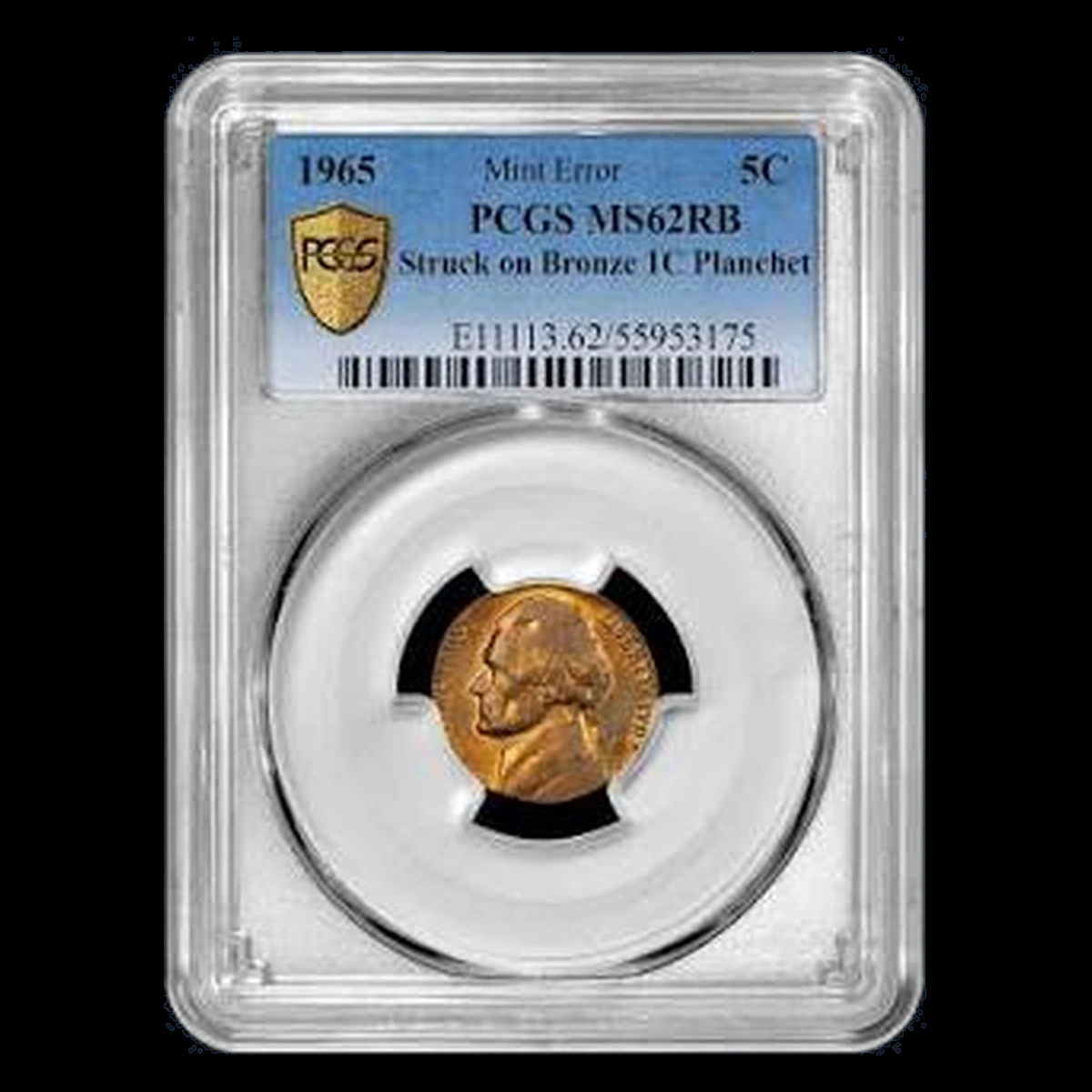
Recorded types include a copper cent blank, a silver dime blank, and a reported clad dime blank. The silver example weighs 2.5 grams, while clad dime metal has outer layers around a copper core.
Those are different materials under the same nickel design. A silvery appearance or small diameter cannot settle which blank was used.
How to Identify
Combine reliable weight with the edge and naturally truncated design. Standard starting weights are about 3.11 grams for a period cent, 2.27 grams for a clad dime, and 5 grams for a nickel.
The documented silver dime-blank nickel is 2.5 grams. Plating and grinding can imitate color or light weight, so composition needs to support a silver attribution.
What It’s Worth
$200–$8,000 spans clad-dime estimates around $200–$800, copper-cent examples around $400–$1,500, and identified silver-dime pieces around $4,000–$8,000. The metal makes a large difference.
The NGC MS62 silver dime-blank coin sold for $6,000 in July 2021. A cent-blank MS64 brought $805 in January 2004, while the clad-dime range has no matched sale supplied here.
Conclusion
A 1965 nickel needs the right comparison as well as a visible oddity. Special Mint Set identity changes the market, and a light silver-colored coin needs its metal established before it can be priced as a silver-blank error.
For smaller finds, show the feature beside normal design and preserve fragile metal. Missing mintmarks are ordinary for the year, while a real clip, repeated strike, or fold needs its own physical evidence.