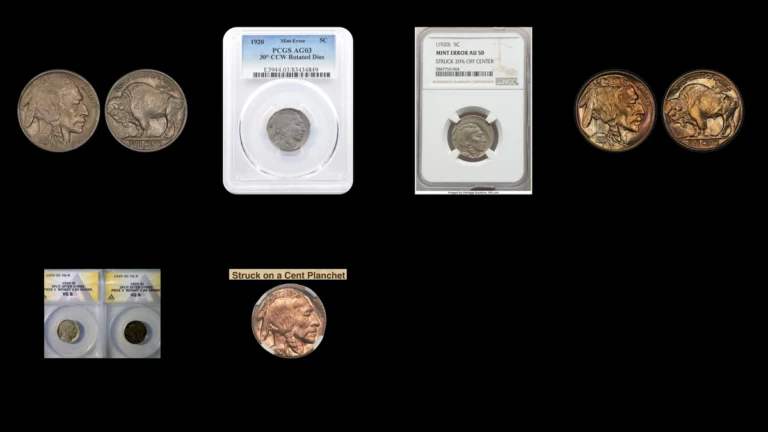
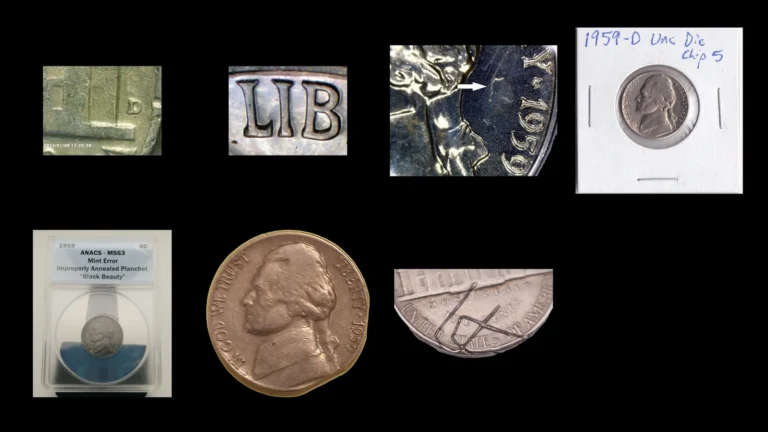
Rare 1924 Nickel Errors (List & Pictures)
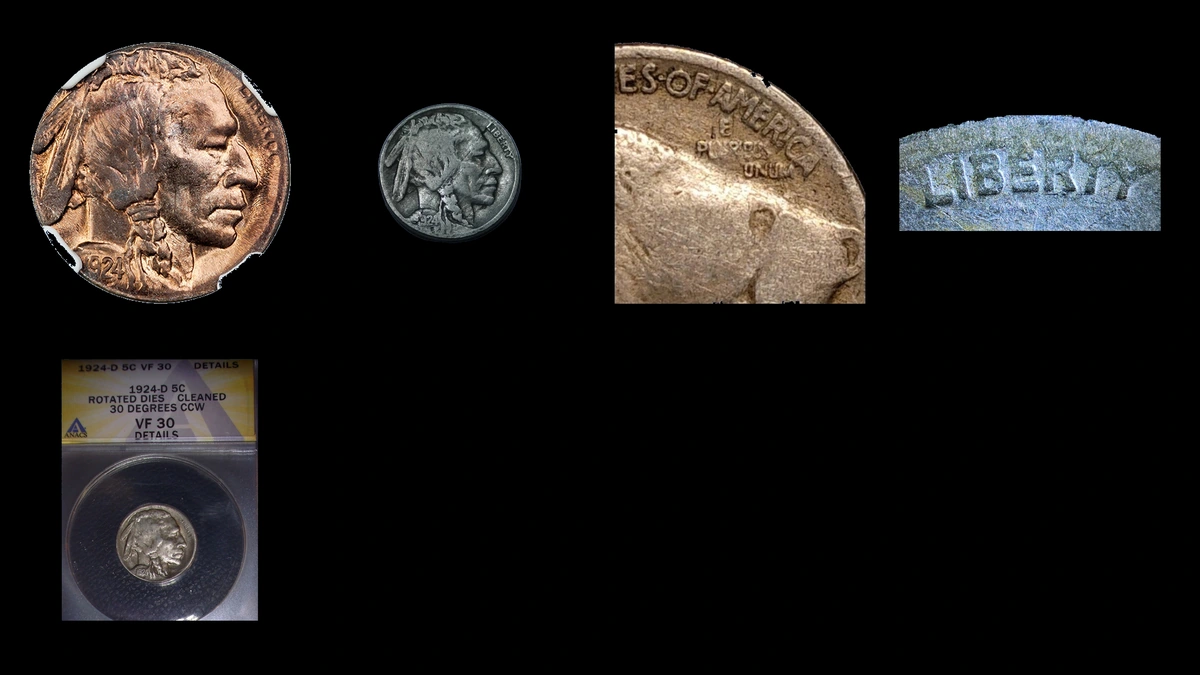
Mint Error News lists an exceptional cent-blank Buffalo nickel at $28,200. Estimated whole-coin values for 1924 Buffalo nickel errors span $15–$30,000, with preservation explaining much of the distance between small flaws and that result.
Compare the outline and metal first, then examine missing or repeated detail and the alignment of the two faces.
| Clue | Error or variety | Estimated range |
|---|---|---|
| Gap plus stepped edge | Clip and partial collar | $150–$650 |
| Unused crescent | Off-center strike | $100–$900 |
| Small copper-colored disk | Cent-blank strike | $3,000–$30,000 |
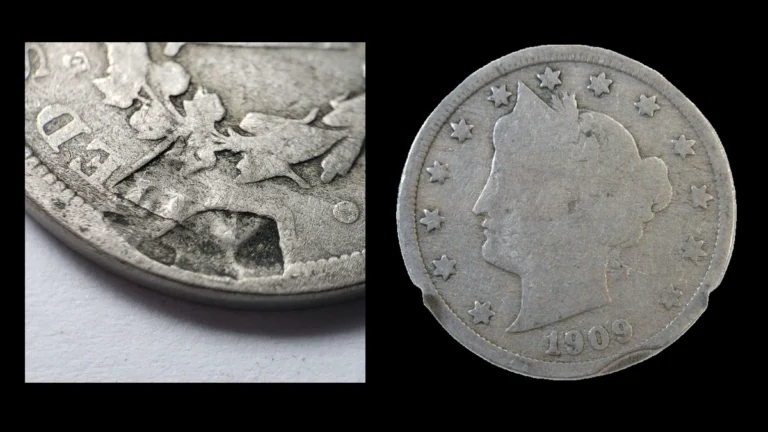
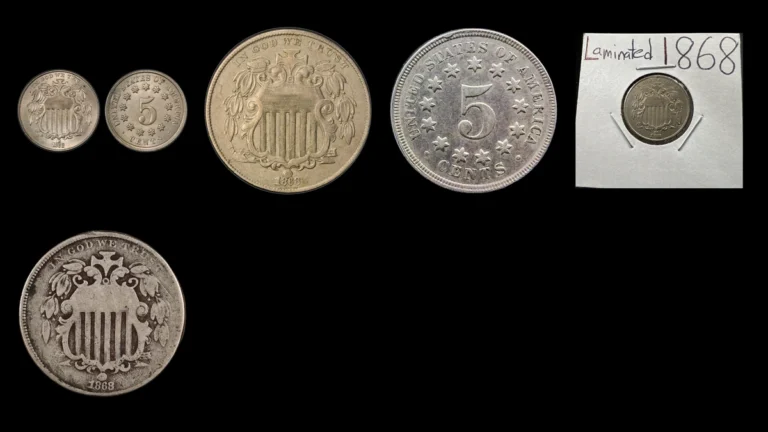
| Original metal peeling | Lamination | $15–$500 |
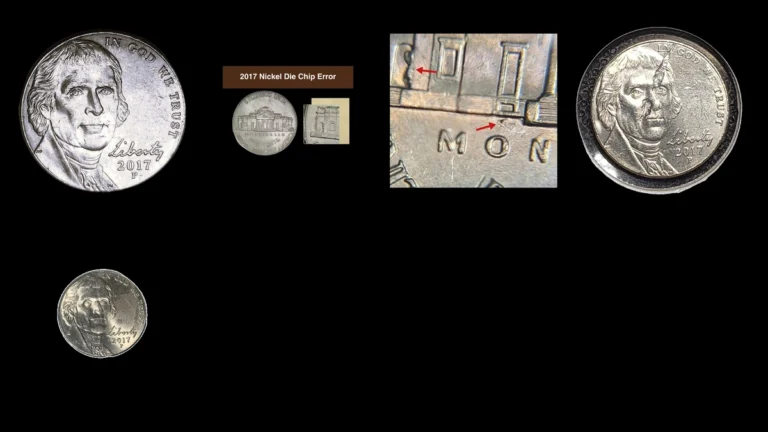
| Localized interrupted design | Strike-through | $30–$600 |
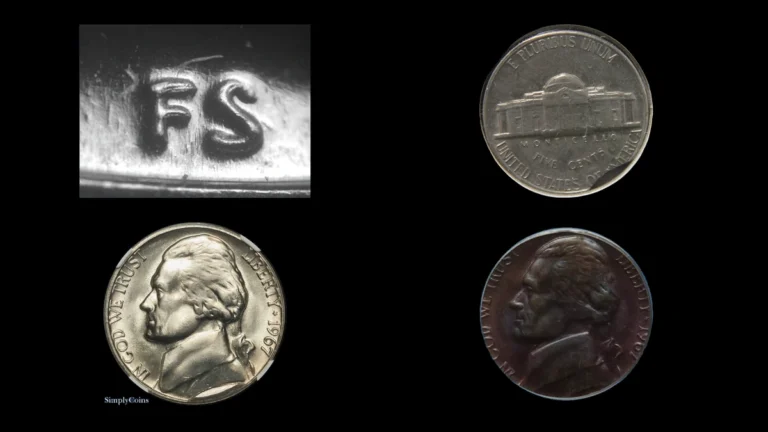
| No F beneath the date | Missing-initial variety | $75–$750 |
| Repeated eye and nostril outlines | Doubled obverse | $25–$250 |
| Buffalo tilted after controlled flip | Rotated dies | $25–$150 for the reported worn type |
A normal Buffalo nickel weighs 5 grams and measures 21.21 millimeters, with a plain edge. Its D or S mintmark is below FIVE CENTS; the F beneath the date stands for designer James Earle Fraser.
1. 1924 Nickel A Small Gap and an Edge Step: Clip with Partial Collar Error
The documented PCGS MS64 coin has a 4% clip and a partial-collar strike. Missing metal was already part of its blank before the press formed the design.
The collar is the ring that restrains metal during striking. Partial restraint also produced an edge step where one area spread farther than another.
How to Identify
Inspect the opening and the stepped edge as separate features on the same coin. Original rim formation at the clip’s ends should differ from a sharp later cut.
Show the edge from the side to distinguish the collar step from a battered or rolled rim. Reeding is not part of the test on this plain-edge coin.
What It’s Worth
A similar identified combination is estimated at $150–$650. Condition and the clarity of both features affect its appeal.
The MS64 clip-and-partial-collar coin sold for $345 on January 9, 2011. That is one whole-coin result, not a separate $345 price for each feature.
2. 1924 Nickel Designs Shifted Beside Bare Metal: Off-Center Strike Error
A blank misplaced under the dies can leave an untouched crescent while part of the design misses its opposite edge. The registry-listed Philadelphia example is 10% off center and graded MS63.
A separate Denver coin is 25% off center and described as AU Details with cleaning. Its surface problem remains important despite the larger displacement.
How to Identify
Compare both faces to connect the unused area with the lost design. An uneven rim alone cannot establish the position of the blank.
Read the surviving date and inspect the mintmark area. If that location lies outside the struck portion, an absent mint letter does not establish Philadelphia.
What It’s Worth
Identified examples are estimated at $100–$900. A readable year, preserved surfaces and the extent of the shift guide the comparison.
No individual sale is assigned to either the 10% MS63 or 25% Denver registry example. Cleaning can reduce the appeal of an otherwise dramatic offset.
3. 1924 Nickel A Copper Disk Too Small for the Design: Cent-Blank Strike Error
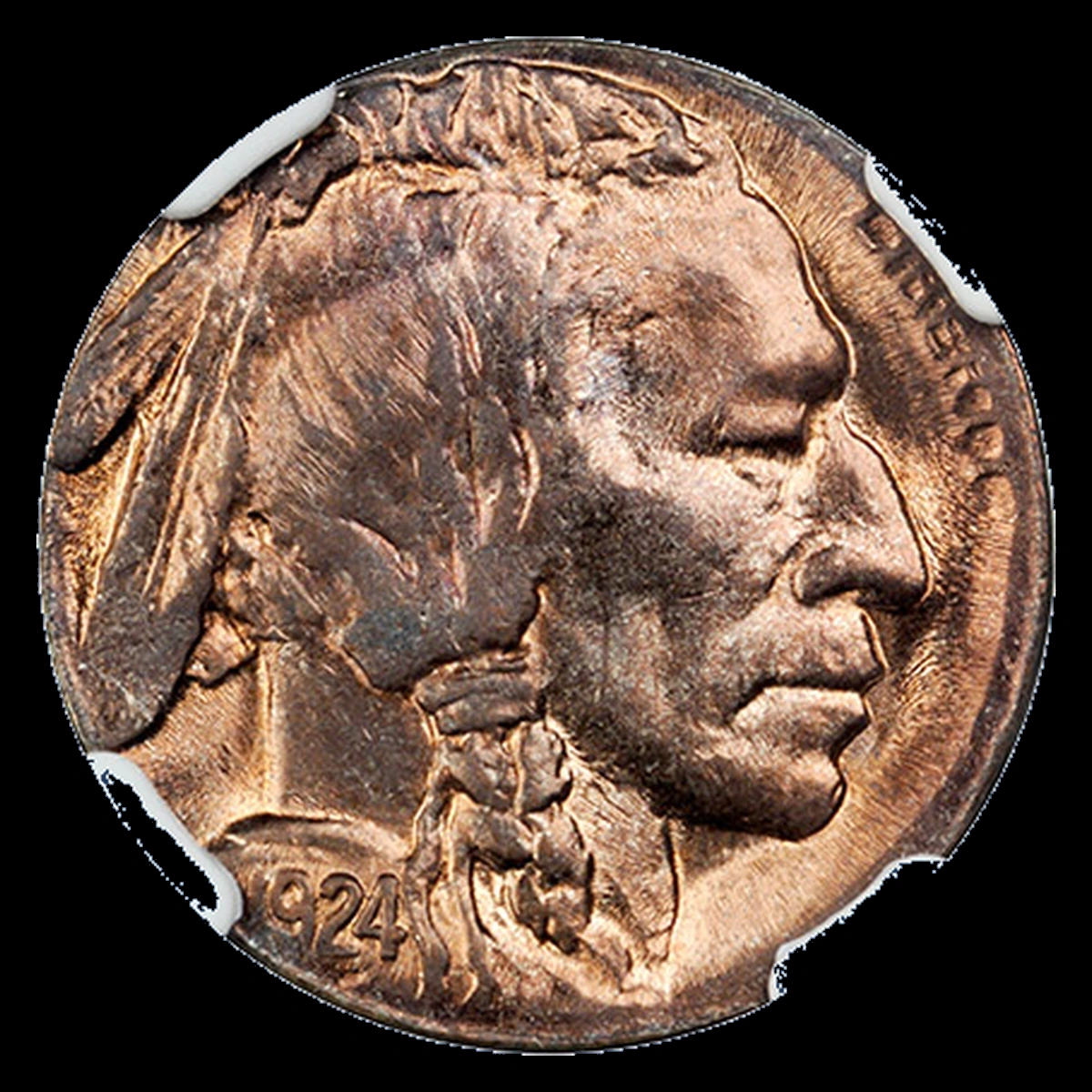
The recorded NGC MS62 Brown specimen weighs 3.2 grams and retains its date. The F and upper part of the reverse country name did not fit on its smaller cent blank.
Other examples retain more original red copper color and carry higher grades. Their descriptions belong to their own specimens.
How to Identify
A contemporary cent blank starts near 3.11 grams and 19.05 millimeters. Compare those standards with the candidate’s actual readings, allowing for spreading during the nickel strike.
Follow the cropped detail into the edge and inspect for grinding or an added coating. Copper color should support the metal and size evidence rather than replace it.
The absent F on this smaller blank is not the separate normal-size No F variety. That location simply missed the available metal.
What It’s Worth
Comparable authenticated cent-blank coins are estimated at $3,000–$30,000. Exceptional preservation is needed near the upper end.
The MS62 Brown coin sold for $3,290 in January 2014. Mint Error News lists $28,200 for an MS67 Red and Brown example, showing the importance of grade and copper surfaces.
4. 1924 Nickel Peeling Metal on Either Face: Lamination Error
An internal weakness in the copper-nickel mixture can leave a flap or a shallow opening. The metal is an alloy throughout, not a coated core.
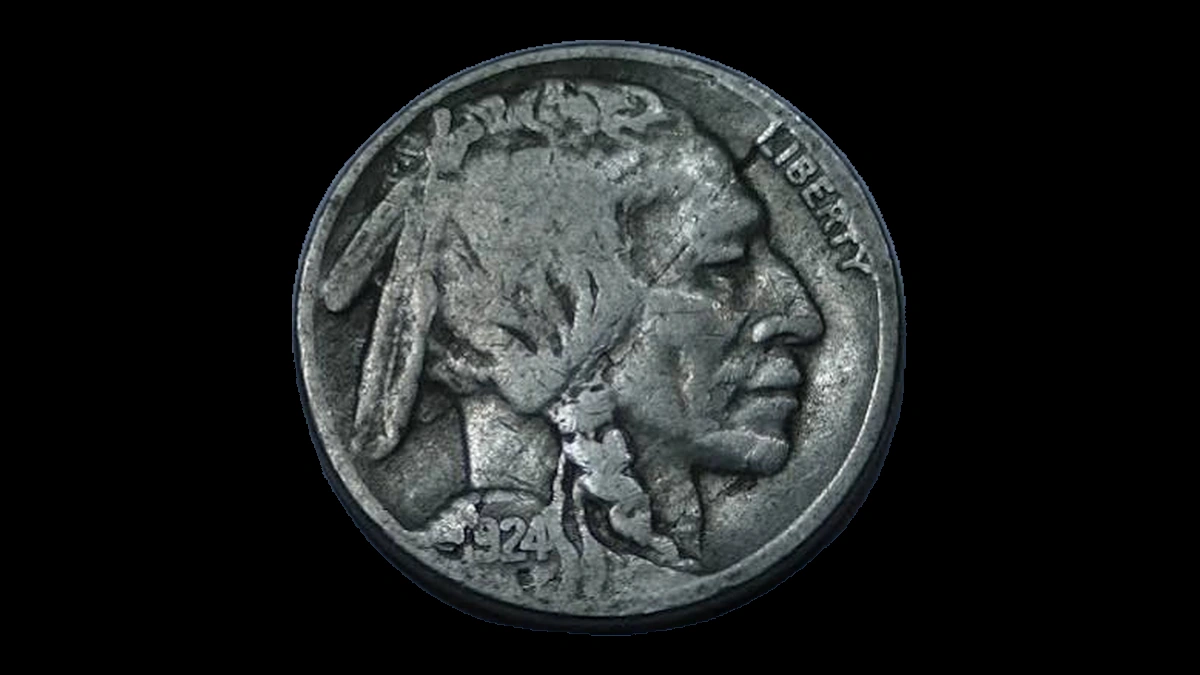
Separate reports include an ANACS AU50 San Francisco reverse lamination, another S coin with a front flake and long buffalo peel, and a Philadelphia obverse lamination. Their locations should not be combined.
How to Identify
Identify the affected face, then follow the thin boundary with magnification. Original design may continue onto the separating metal.
Leave any attached piece in place and distinguish a real opening from a dark streak. A small flap can remain attached without making a measurable difference in weight.
What It’s Worth
Estimated whole-coin values range from $15–$500 across the reported mints and conditions. The underlying coin’s grade and mint can contribute more than a minor peel.
A heavily worn 1924-S with two peels was listed by a dealer at $11. That asking price is not a completed auction and is not an appropriate direct comparison for the AU50 reverse specimen.
5. 1924 Nickel A Local Gap in the Design: Strike-Through Error
Material between the blank and a die can interrupt the intended design. The resulting patch may be weak or absent rather than normally formed.
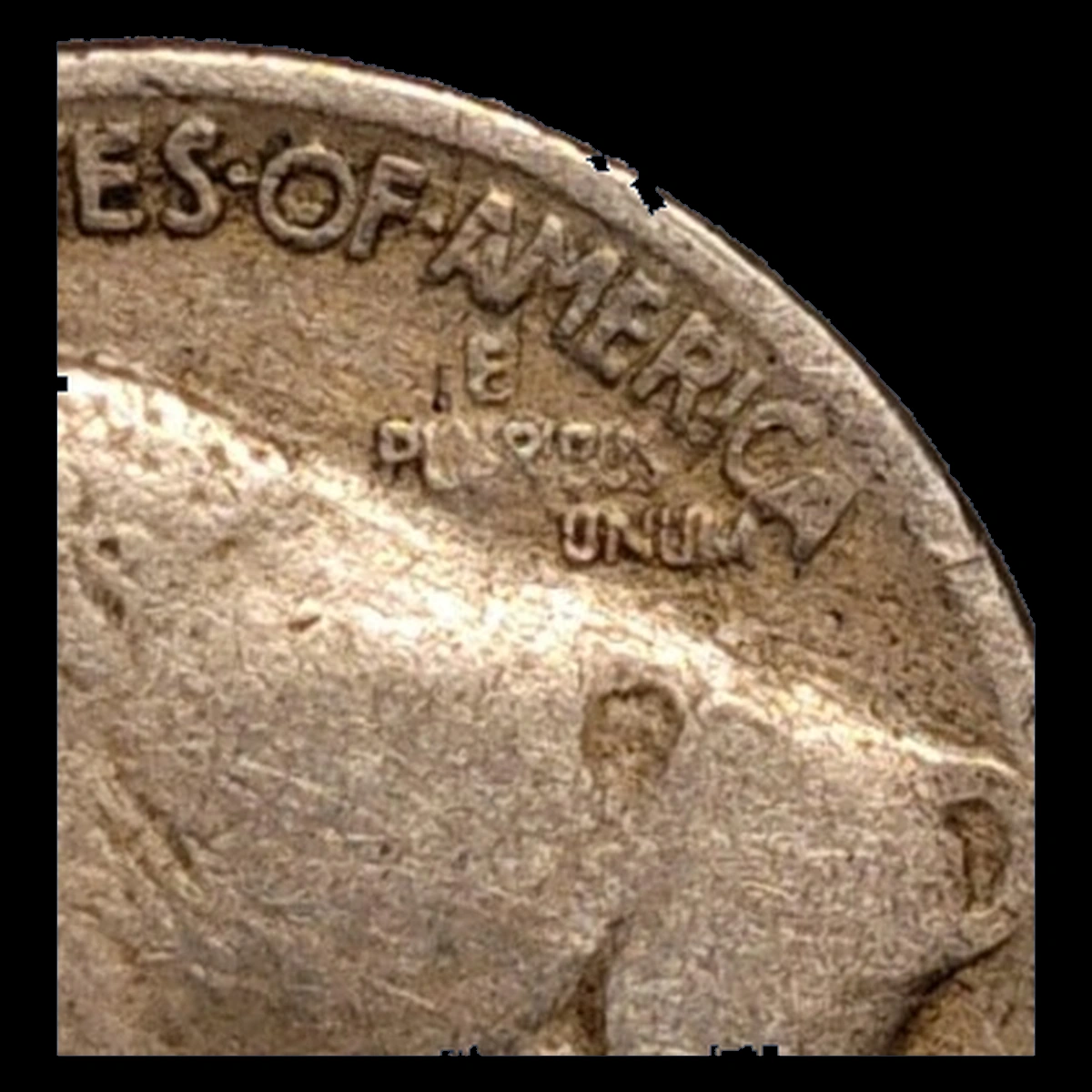
Recorded examples include a worn Philadelphia obverse interruption, a VF25 Philadelphia reverse interruption and a separate Denver MS61 reverse report. They establish no shared object or exact shape.
How to Identify
Compare the affected patch with surrounding detail at similar height. On a heavily worn coin, ordinary flattening can look like a local striking problem.
Inspect the boundary for a dent’s raised lip, corrosion or scraping. Do not name cloth or a retained fragment without supporting texture or material.
What It’s Worth
Identified strike-throughs are estimated at $30–$600. Mint, grade and clarity of the interruption all affect the whole-coin price.
The Philadelphia NGC G4 obverse example was offered at $212.70 or best offer. That listing is an asking price, and the higher-grade Denver coin needs its own comparison.
6. 1924 Nickel An Empty Space Beneath the Date: No F Variety Error
A Philadelphia MS65 example is recorded in a collector registry as the No F minor variety. The missing designer’s initial is its reported feature.
The record alone does not establish precisely how the die lost or failed to transfer the F. Wear, blocked detail and later scraping also need consideration on a candidate.
How to Identify
Locate the normal F position using an ordinary 1924 nickel, then compare the date and surrounding surface. A blank spot is more meaningful when nearby details preserve their original texture.
Look for polishing lines, scratches and broader wear. Normal weight and diameter cannot prove the variety, and a cropped wrong-blank coin has a different reason for losing this feature.
What It’s Worth
Properly identified No F coins are estimated at $75–$750. The higher end includes the quality of an attractive unworn nickel.
No individual sale is supplied for the registry’s MS65 example. A worn or scraped space below the date cannot inherit that coin’s identity.
7. 1924 Nickel Extra Eyelid and Nostril Lines: Doubled Obverse Error
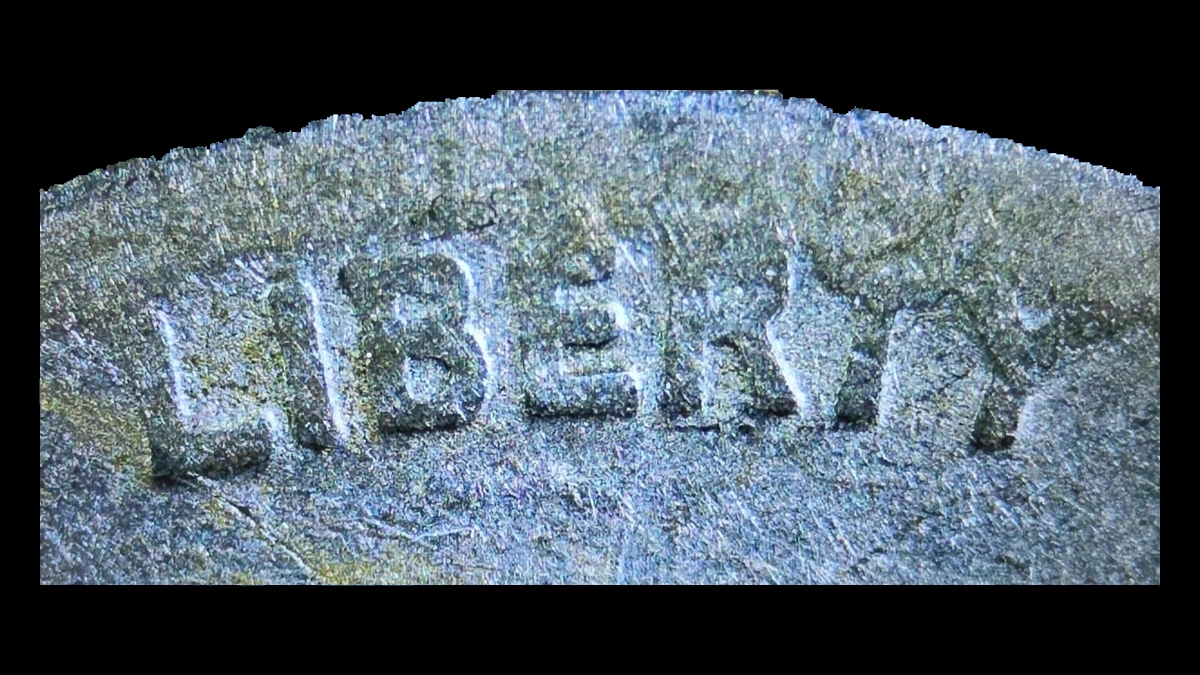
The small facial features supply the diagnostic for Philadelphia DDO-001. A faint additional outline appears at the eyelid and nostril.
The repeated image was already present in the die, so a single blow could transfer both outlines. Neither a doubled date nor doubling throughout LIBERTY is required.
How to Identify
Compare both areas with CONECA’s DDO-001 photographs. Confirm the Philadelphia reverse without D or S before assigning this pattern.
Move the lamp to remove glare and distinguish fixed metal outlines from reflections. An ordinary sculpted edge near the eye is not enough without the matching nostril feature.
What It’s Worth
Clearly attributed examples are estimated at $25–$250. Wear that erases the small separations can prevent a reliable match.
No individual auction result is assigned to DDO-001 here. The range applies to this subtle matched variety rather than any thick-looking eye.
8. 1924 Nickel A Buffalo That Tilts After Flipping: Rotated Dies Error
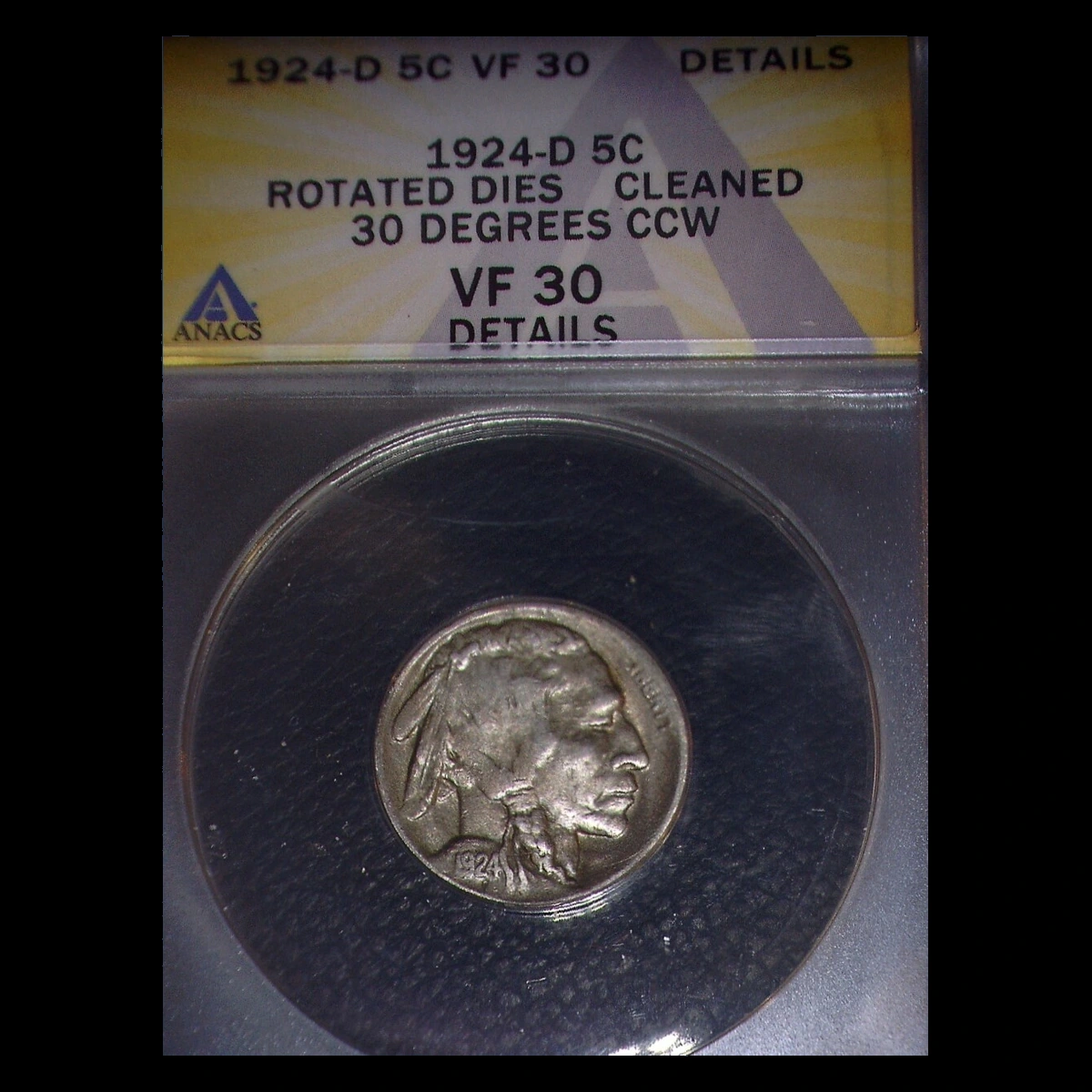
The two designs can remain complete yet face an unusual relative direction. A seller reported a 1924-D rotated-die example in Fine condition without an exact angle.
The issue is the relationship between the dies. A bent coin, sideways wrist movement or independently rotated photographs can create misleading appearances.
How to Identify
Hold the portrait upright and flip the coin top to bottom against a fixed reference. The buffalo should finish upright on a normally aligned coin.
Repeat without slipping, then measure any consistent tilt. Inspect the edge for a seam or inserted face and keep the D below FIVE CENTS visible.
What It’s Worth
A confirmed rotation on a worn 1924-D of the reported kind is estimated at $25–$150. A substantial repeatable angle is easier to demonstrate than a tiny uncertain tilt.
This range assigns neither a sale nor an angle to the seller’s coin. A single crooked photograph cannot support the attribution.
Conclusion
The missing F illustrates why the whole coin matters: it may be a variety on a normal blank or simply a detail that did not fit a cent blank. Surface flaws and interrupted strikes likewise need their own boundaries and locations examined.
Keep the clip and collar combination under one whole-coin price, preserve the difference between asking prices and sales, and use the exceptional copper-blank result only with an appropriate grade comparison.