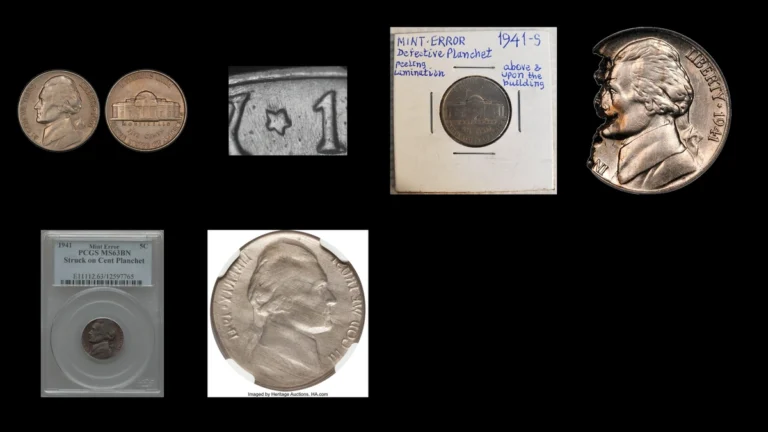
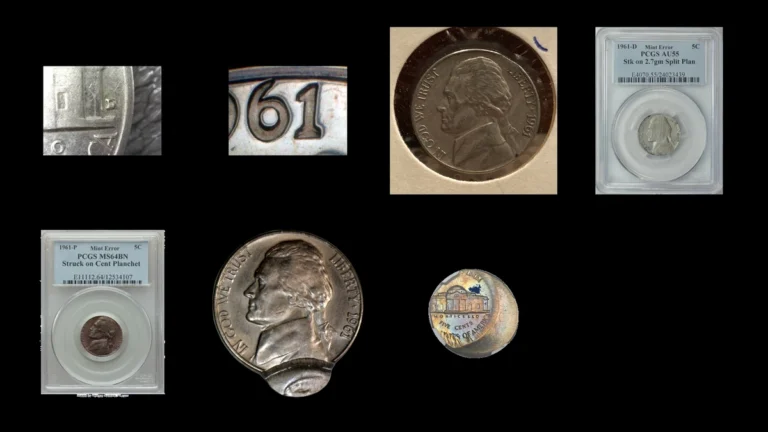
Rare 1971 Nickel Errors (List & Pictures)
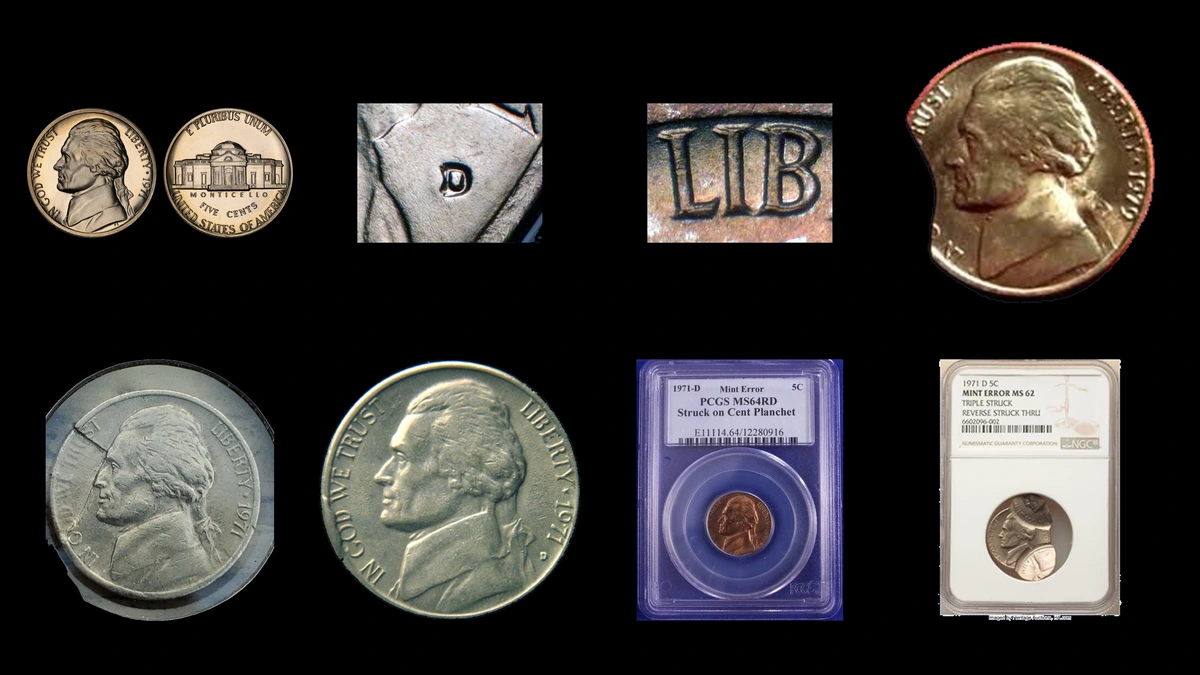
The most consequential distinction among 1971 nickel errors is the finish: no mintmark is normal on a Philadelphia circulation coin, while a genuine No S Proof is scarce. A top-quality example sold for $7,637.50 in 2016.
Supplied estimates across the categories run from $5 to $10,000. Establish the type of coin first, then examine its mintmark area, metal, outline, and any extra or missing design.
1. 1971 Nickel A Genuine Proof Has No S: Missing Mintmark Error
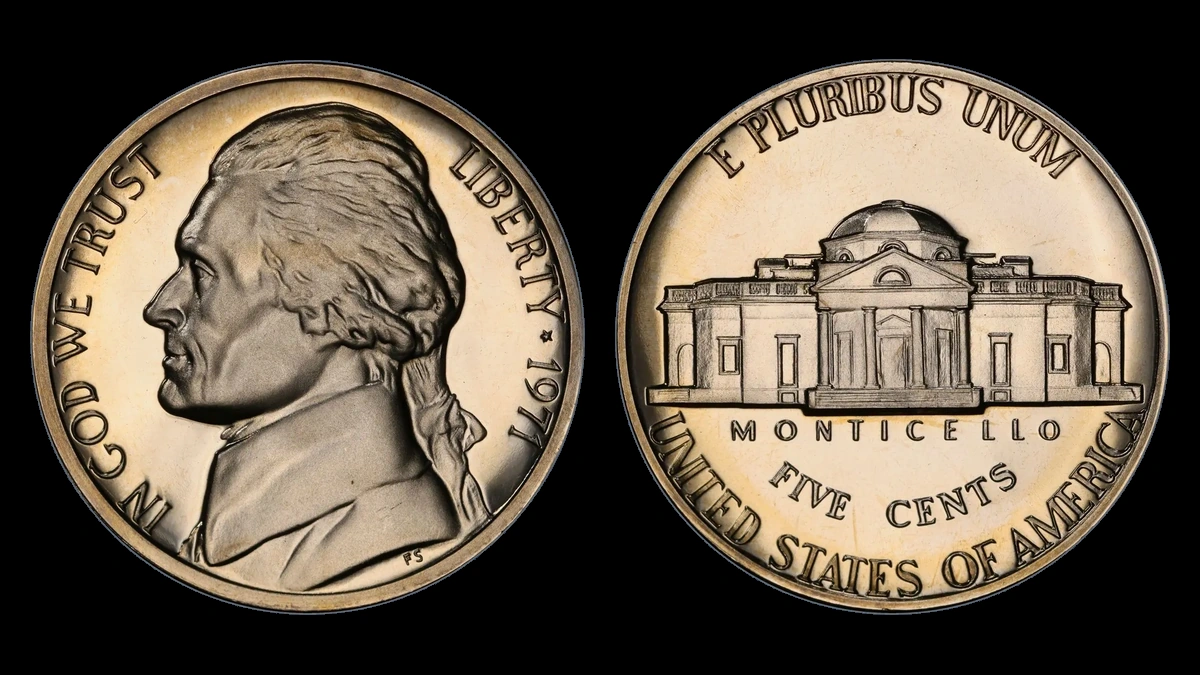
A Proof is a specially manufactured collector coin, typically with mirrored flat areas and sharply formed detail. The rare 1971 No S came from a San Francisco Proof die that lacked the mintmark normally punched into it.
Ordinary Philadelphia nickels legitimately had no mintmark in 1971. An empty space below the date is therefore meaningful only after the coin’s Proof manufacture has been established.
How to Identify
Compare both faces with an authenticated 1971-S Proof, allowing for handling that may have impaired a genuine collector finish. A polished circulation nickel can look shiny without being a Proof.
Inspect the expected S location for scraping, disturbed texture, or a depression left by removal. Authentication must address the complete coin and the originality of the missing letter, not just its brightness.
A standard nickel weighs about 5 grams, measures 21.2 millimeters, and has a plain edge. Record measurements only when safe, and leave certified coins in their holders throughout the checks below.
What It’s Worth
$700–$2,000 for genuine examples with more marks or weaker contrast and $2,000–$10,000 for exceptional pieces are the supplied estimates. A PCGS PR69 Deep Cameo example brought $7,637.50 in 2016.
Deep Cameo describes strong contrast between frosted raised design and mirrored fields. Neither those prices nor the missing-mintmark attribution applies to an ordinary Philadelphia nickel with no letter.
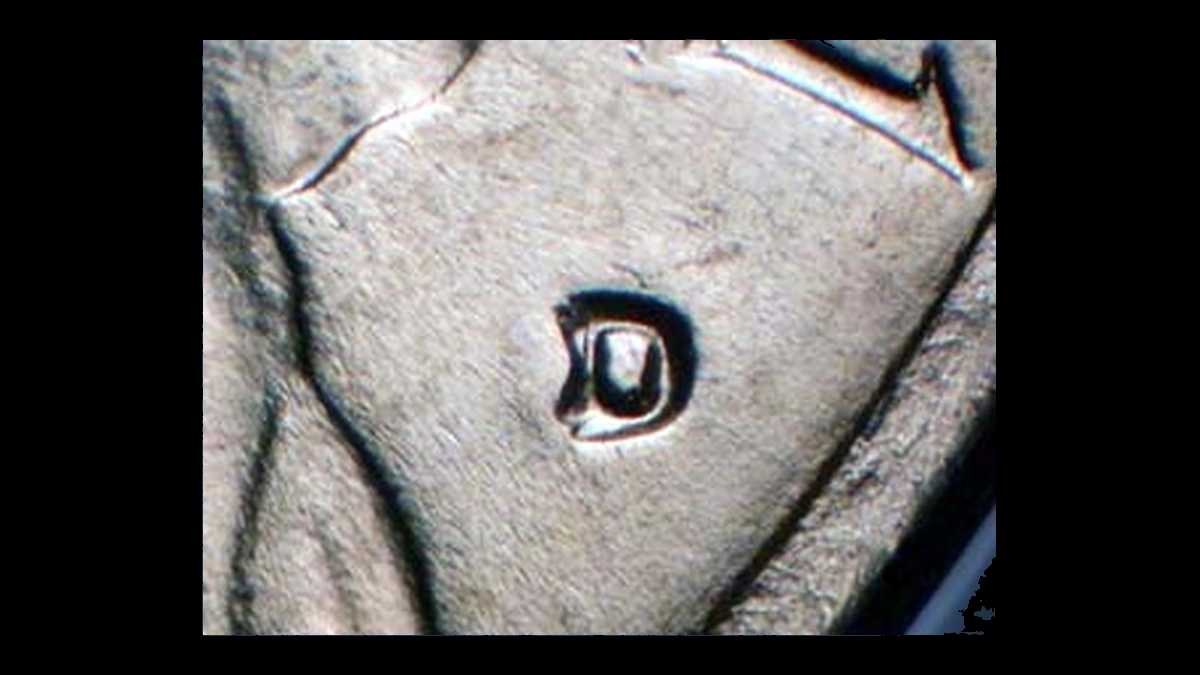
2. 1971 Nickel A Second Curve Follows D or S: Repunched Mintmark Error
While mintmarks were applied to individual dies with a punch, a shifted repeat application could leave overlapping letter shapes. The coins struck afterward reproduce those shapes as a repunched mintmark.
Catalogs record Denver circulation examples and San Francisco Proof examples for 1971. The direction of the extra impression differs among listings.
How to Identify
Choose a D or S comparison that matches the coin’s mint and manufacture. Follow the whole additional curve rather than assuming that a direction seen on one variety applies to another.
Change the lighting to distinguish metal from shadow, and inspect the letter’s base for damage or additions. A filled center or a flat shelf beside the mintmark does not establish a repeated punch.
What It’s Worth
$10–$75 for minor authenticated examples and $75–$250 for clear, attractive pieces are type estimates. No particular 1971 catalog number is assigned a completed sale here.
A Proof’s preservation and finish also contribute to its value. A repeated S is a separate feature from the absence of S on the rare Proof discussed above.
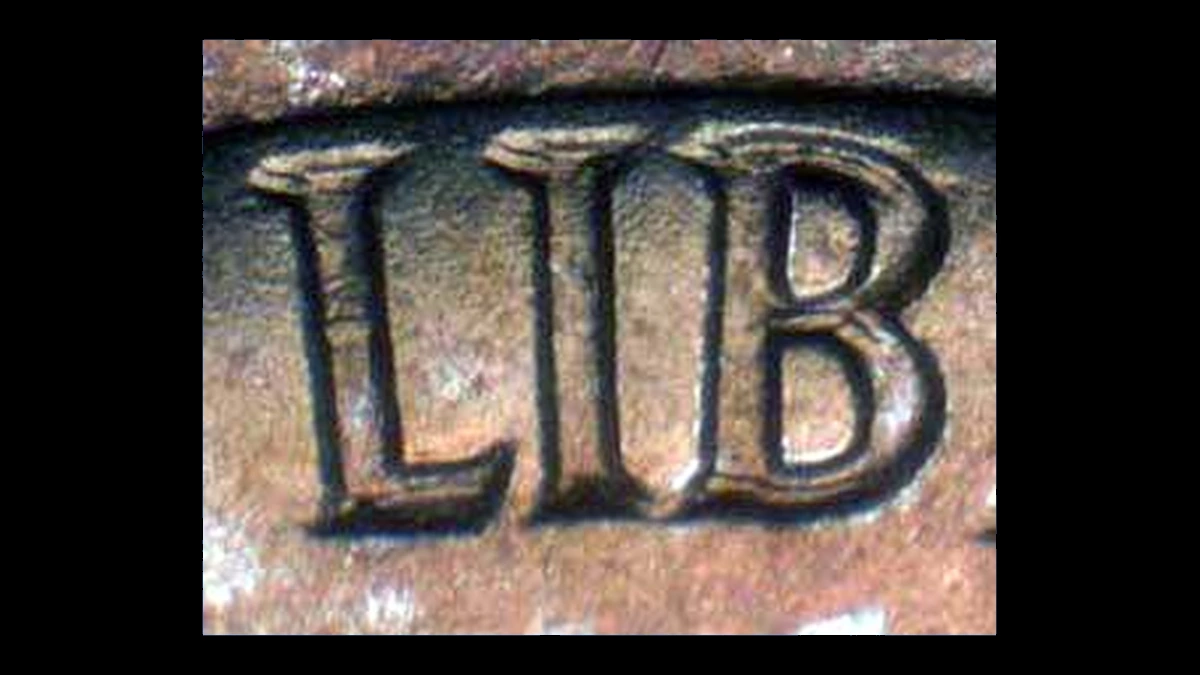
3. 1971 Nickel Rounded Extra Letter Edges: Doubled Die Error
A doubled die has repeated design details built into the stamping tool before any coin receives them. Philadelphia front doubling is cataloged for 1971, while San Francisco Proof listings include front and reverse varieties.
Those patterns have different spacing and strength. They must be compared individually rather than treated as one universal 1971 doubled design.
How to Identify
Record the mintmark, finish, and affected face before comparing several letter corners or curves. A Proof reverse photograph cannot identify a Philadelphia front variety.
Look for consistent separated rounded edges or split corners under changing light. Flat shelves from movement during striking need a different explanation and do not establish doubled dies.
What It’s Worth
$20–$100 for modest identified varieties and $100–$400 for strong, attractive examples are the supplied ranges. Condition and finish remain part of those whole-coin estimates.
The prices are not interchangeable among all listed varieties. In particular, doubling on a Proof with an S does not qualify it for No S Proof values.
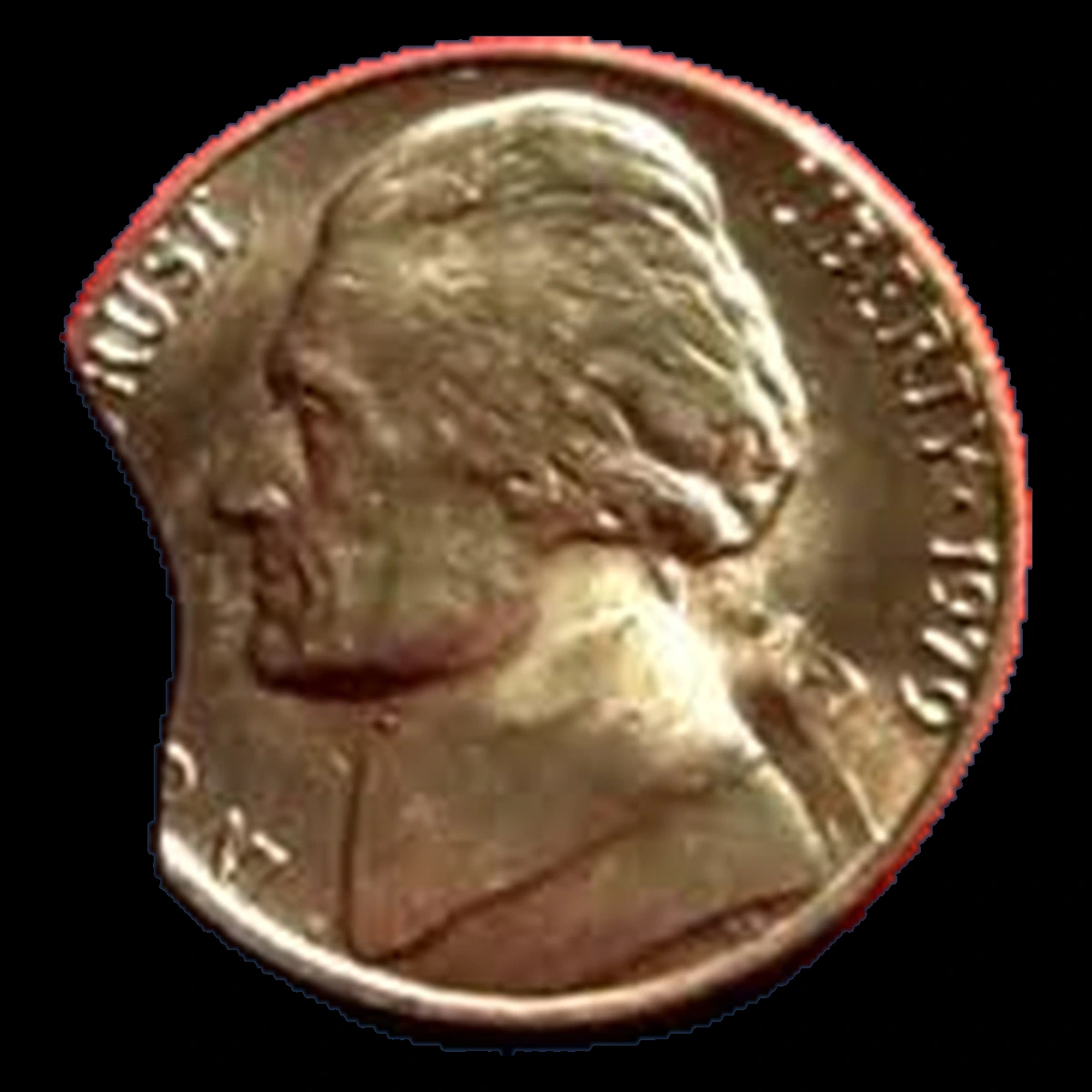
4. 1971 Nickel A Missing Edge Section Needs a Readable Date: Reported Clip Error
The proposed 1971 clipped-planchet example has a conflicting date description. It therefore does not yet establish a confirmed specimen for this year.
A genuine clip begins with an incomplete blank that receives a design only on the metal present. A later cut can create a similar opening after the coin has been struck.
How to Identify
Read and photograph the complete date before accepting the year-specific claim. Then examine the ends of the gap for sawing, filing, or cuts through finished details.
Compare the gap’s boundary with the remaining edge and inspect the opposite rim for supporting weakness. Reduced weight merely confirms missing metal; it cannot distinguish an original clip from later cutting.
What It’s Worth
$15–$75 for modest worn clips and $75–$200 for stronger, attractive examples are conditional estimates if a genuine 1971 specimen is confirmed. They do not resolve the listing’s conflicting date.
A 1997-P nickel with a 20% clip brought $124 in March 2025. That different-year example provides context without establishing the identity or value of the unresolved coin.
5. 1971 Nickel A Real Separation Runs Into the Coin: Cracked Planchet Error
A crack in the original blank is an opening within the coin’s own metal. That differs from a crack in a die, which normally leaves a raised line on the struck coin.
The recorded Philadelphia example was graded NGC AU58, indicating very light wear. Its attribution concerns the blank rather than damage to a stamping tool.
How to Identify
Use side lighting to decide whether the line opens into the metal or rises above it. Follow the separation toward the edge without flexing the nickel.
Inspect for cutting marks, bending, and the way the surrounding design meets the opening. The coin may retain nearly its normal weight if both sides remain attached and little metal is lost.
What It’s Worth
$25–$125 for worn genuine examples and $125–$500 for stronger pieces with clear original separation are the estimates. The NGC AU58 1971 cracked-planchet nickel sold for $46 in October 2022.
Its result illustrates that a visible opening need not make a coin expensive. Later bending or cutting does not qualify for a mint-error premium.
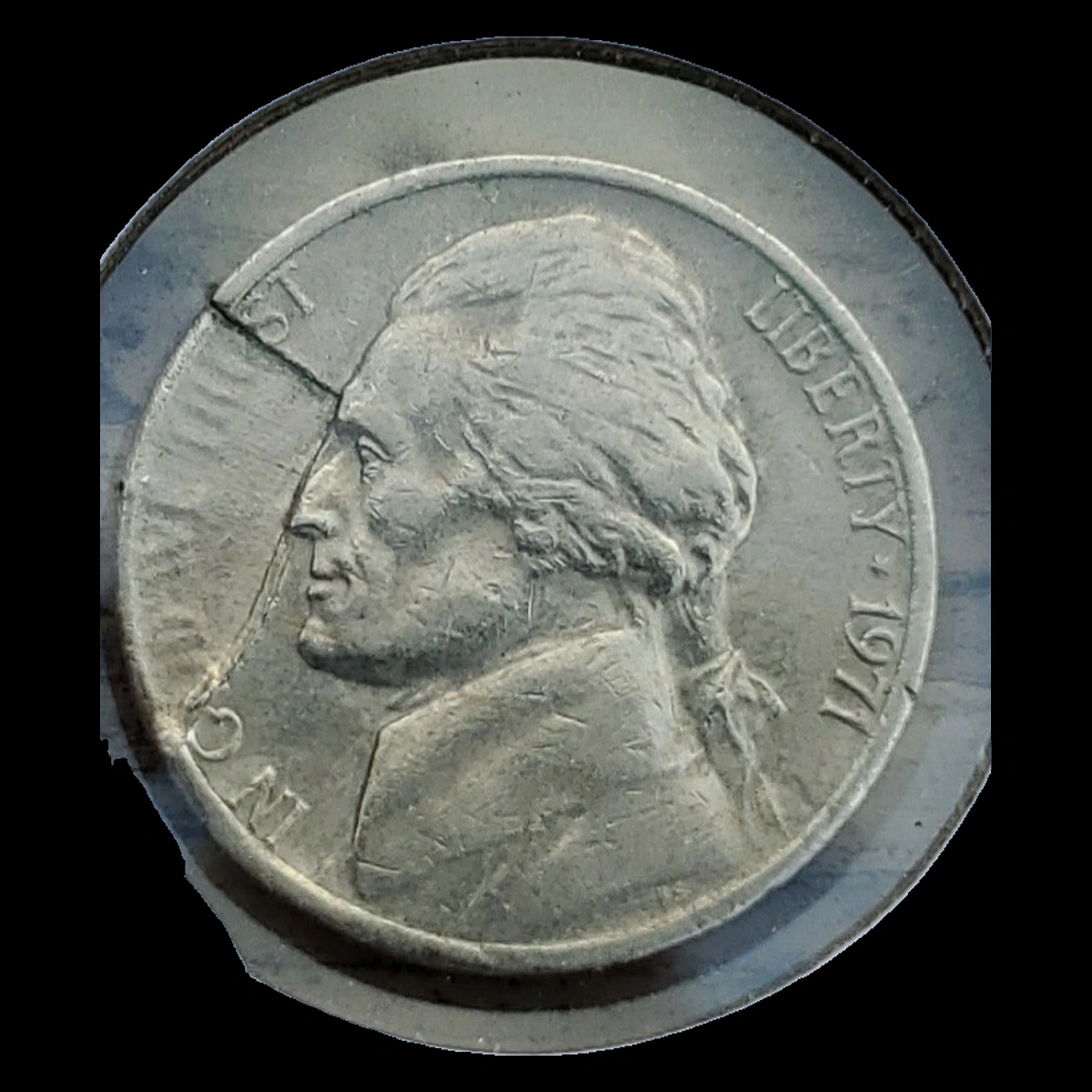
6. 1971 Nickel A Wide Layer Separates on the Reverse: Lamination Error
The supplied auction description records a broad lamination on the back of a 1971 nickel without specifying a mintmark or clock position. A weakness within the blank allowed a surface layer to lift or separate.
This is the nickel’s own copper-nickel metal, not a missing outer coating. It also differs from an impression left by an object caught between blank and die.
How to Identify
Protect an attached flap and examine its boundary with low light. A layered separation or peeled opening should be distinguishable from a scratch crossing finished detail or general corrosion.
Keep the whole reverse in view when photographing the flaw’s relationship with Monticello. Do not pick at the metal to test how far it extends.
What It’s Worth
$15–$100 for worn examples and $100–$450 for wide, attractive laminations are the supplied estimates. The recorded 1971 coin appeared in a six-coin sale.
The lot total cannot be assigned to this coin or divided mechanically to obtain an individual result. A clear original separation and intact identification are more useful than a vague rough patch.
7. 1971 Nickel A Raised Patch Reaches the Rim: Cud Error
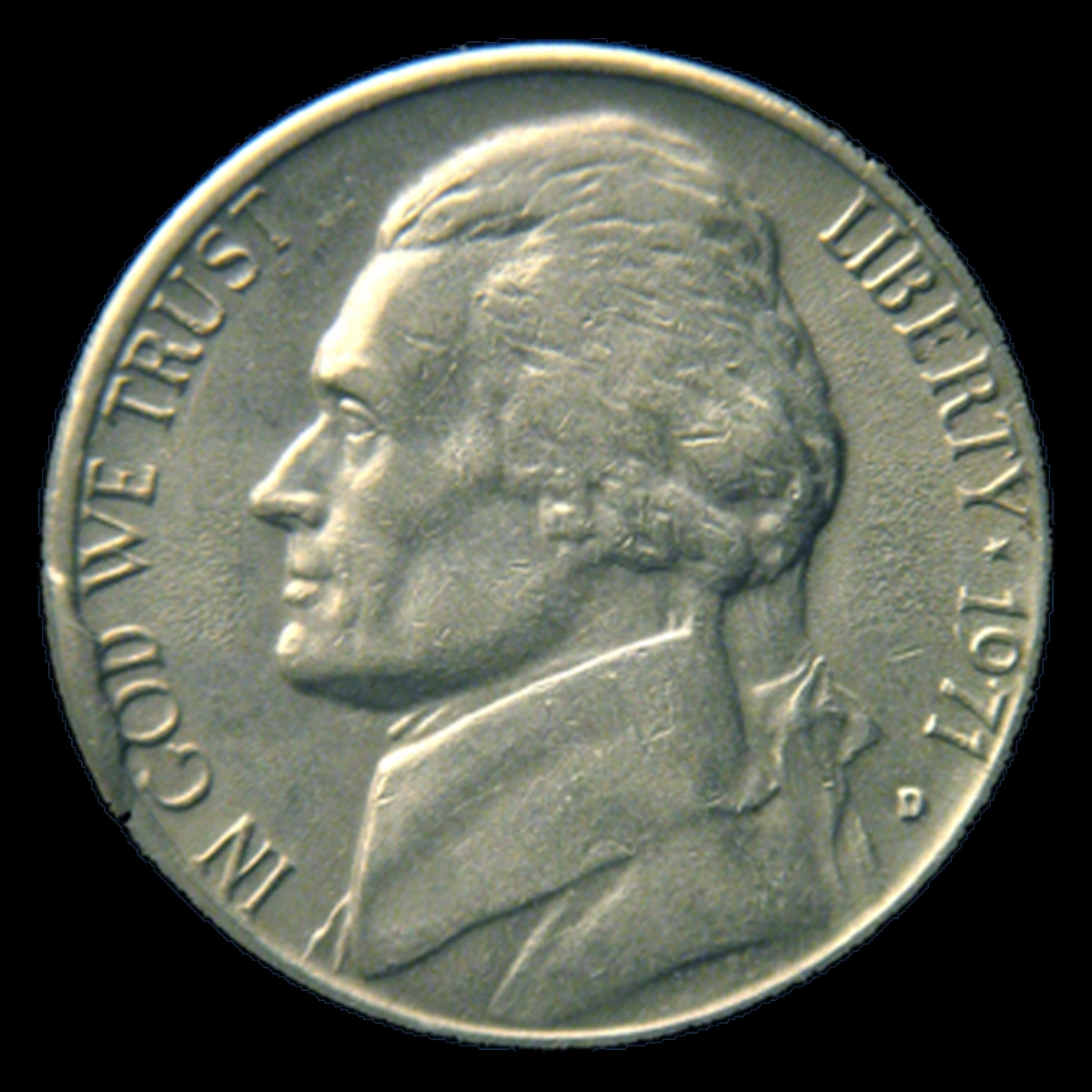
Specialist catalogs list two distinct 1971-D cuds. These raised patches formed when metal entered a missing section at the edge of the die, replacing part of the intended design.
How to Identify
Begin at the adjacent edge to rule out a dent or folded rim that pushed metal onto the face. Then trace the patch’s connection with the rim and inspect for an attachment seam or different texture.
The opposite face may show weak detail because metal flowed toward the die break. Match the entire shape with the appropriate 1971-D listing rather than choosing a variety by size alone.
What It’s Worth
$20–$150 for worn cuds and $150–$600 for strong examples on attractive coins are type estimates. No individual realized price is supplied for either listed 1971-D pattern.
A lightly worn 1983-P cud sold for $63 in July 2022. That comparison concerns another year, and an ordinary rim dent is not equivalent to either documented die break.
8. 1971 Nickel An Obstruction Interrupted the Design: Struck Through Error
Material between the blank and die can leave a depression or prevent a local part of the design from forming. Soft material tends to obscure details, while a firmer object may leave a defined impression.
The supplied 1971 report does not establish one material or position for all examples. A shape can support an obstruction without identifying exactly what it was.
How to Identify
Compare the affected area with surrounding detail before assigning a name such as wire or grease. A later dent or scrape can interrupt an already finished surface in a different way.
Look for displaced lips, a cutting path, or an adjacent edge impact that helps explain damage. Do not clean the mark or fit an object into it to test the theory.
What It’s Worth
$5–$50 for small weak areas and $50–$300 for substantial clear impressions on attractive coins are the estimates. No particular unidentified 1971 specimen is assigned an auction sale.
A recognizable original interruption offers more evidence than one faint letter. General wear and later scratches should not be valued from the same range.
9. 1971 Nickel Dark Surface Color Accompanies a Low D: Improper Annealing Error
Several 1971-D nickels graded PCGS MS65 carry both improper-annealing and low-mintmark descriptions. The abnormal color concerns blank heating before striking, while the low D concerns a separate visible placement feature.
The two features do not explain each other. Brown color also does not prove a cent blank or a missing outer metal layer.
How to Identify
Compare the coin’s size and weight with an ordinary nickel, then inspect both faces and the edge for plating, blistering, or heat damage. Normal measurements do not establish when the color changed.
Assess the D’s position separately using the date as a fixed reference against a certified low-D example. Preserve the surface for examination because cleaning can erase evidence needed to distinguish mint annealing from later heat or chemicals.
What It’s Worth
$40–$150 for authenticated worn or marked pieces and roughly $150–$400 for attractive unworn examples are the estimates. One PCGS MS65 coin with both features sold for $149 in July 2022, just below the suggested unworn band.
The sale prices the complete combination. Small ordinary mintmark-placement differences and unrelated discoloration do not establish that same error coin.
10. 1971 Nickel Design Misses Part of a Normal Blank: Off-Center Strike Error
An ordinary off-center strike leaves an intact area of blank metal beside a partial design. The misplaced blank received only the portion caught between the dies.
The supplied year guide reports this category without establishing a specific mint or percentage for every example. These normal-blank reports are separate from certified wrong-planchet combinations.
How to Identify
Read the date with the full outline visible and compare both faces using the same edge position. Both should reflect the misplaced blank, rather than just one face having a narrow border.
Inspect the blank area for grinding or flattened lettering and the edge for trimming. A much smaller or lighter piece needs a wrong-planchet assessment rather than an automatic normal-blank attribution.
What It’s Worth
$25–$150 for modest displacement and $150–$750 for dramatic, attractive dated examples are the estimates. A 1999-D nickel struck 65% off center sold for $75 in September 2024.
The later-year result shows why percentage alone does not determine value. The visible date and original surfaces help establish a useful comparison.
11. 1971 Nickel Different Metal in a Nickel-Sized Disc: Reported Dime Stock Error
A nickel blank cut from the wrong metal strip differs from a small finished dime blank entering the press. Error researcher Mike Diamond described a damaged 1971-D as apparently struck on layered dime stock.
That proposed origin remains qualified. Significant heat and physical damage complicate examination and cannot automatically be treated as additional mint errors.
How to Identify
Investigate the metal structure at any exposed edge without scraping or cutting it. Dime stock has bonded layers with copper in the center, whereas normal nickel metal is one copper-nickel alloy.
Record weight, width, and the surviving original design independently of the damaged areas. The normal nickel standards are only comparison figures, not measurements supplied for this specimen.
Heat can alter color, so a burned or thin appearance alone cannot establish dime stock. Metal analysis may be needed to test the proposed origin.
What It’s Worth
$100–$500 for a heavily affected authenticated example and $500–$1,500 for a clearer, attractive specimen are conditional estimates. No realized price is supplied for Diamond’s reported coin.
A 1987-P nickel on quarter stock sold for $1,175 in October 2012. That is a different year and stock type, while heat damage can reduce clarity and appeal rather than add a premium.
12. 1971 Nickel A Smaller or Foreign Blank Carries Nickel Details: Wrong Planchet Error
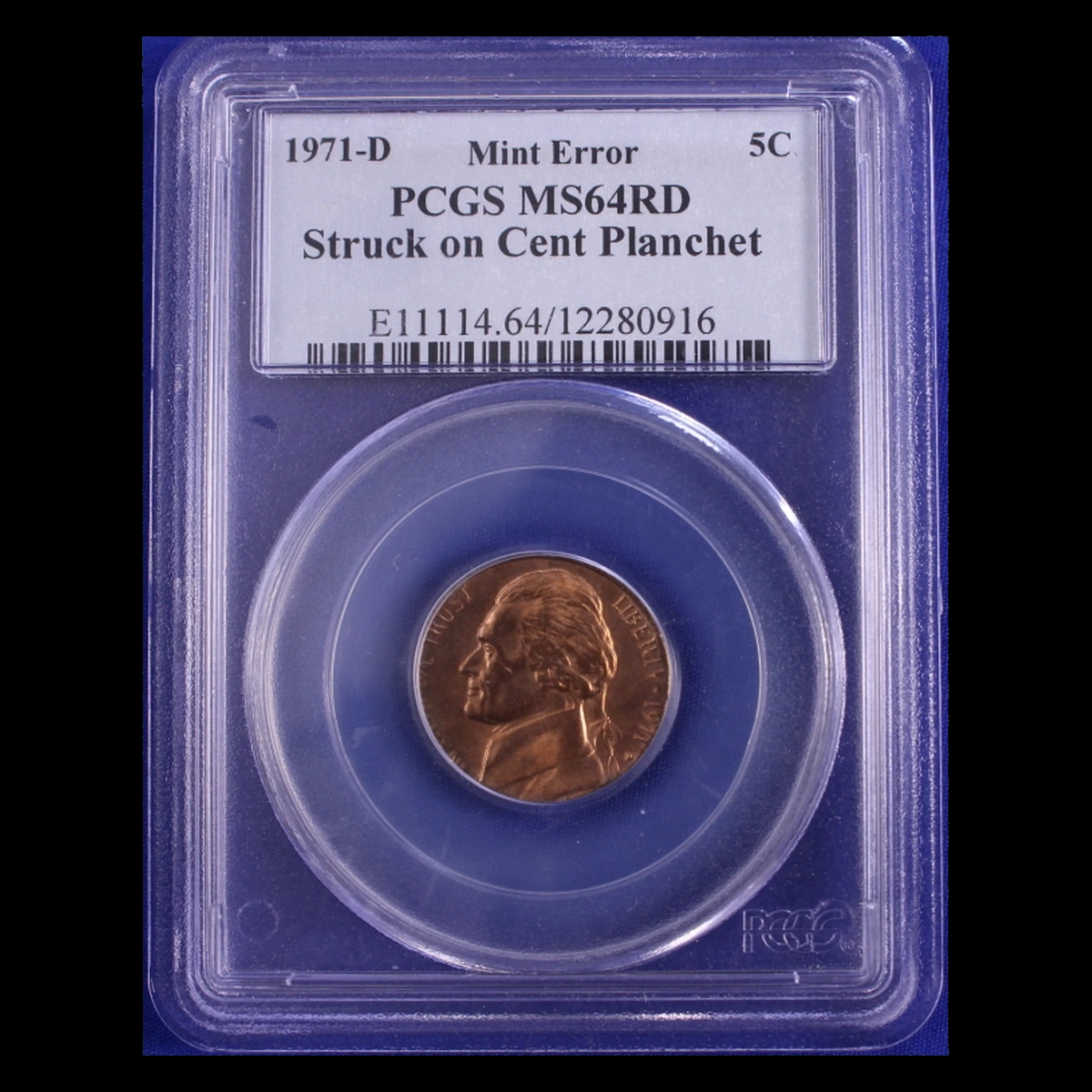
The supplied 1971 examples use cent, dime, and Philippine twenty-five-sentimos blanks. Some also received extra strikes or landed off center, making the starting metal only one part of the explanation.
Cent-planchet reports include ordinary strikes, double strikes, and a 15% off-center example. A Philadelphia nickel is 45% off center on a dime blank, while a separate Denver dime-planchet coin was double struck.
How to Identify
Compare composition, cropped design, and actual measurements together. A contemporary cent blank normally begins near 3.11 grams and a dime near 2.27 grams; the documented double-struck dime example is listed at 2.3 grams.
The Philippine specimens have separate reported weights of 4 grams and 3.9 grams. Do not transfer either measurement to another similar-looking coin.
Inspect the edge and cutoff lettering for evidence of a genuinely different blank. Plating can change color but does not explain a naturally truncated nickel design on undersized metal.
What It’s Worth
$200–$1,000 for cent- or dime-planchet pieces, $1,000–$3,000 for stronger combinations, and $500–$1,500 for the foreign-planchet examples are the estimates. The PCGS MS63 Philadelphia coin struck 45% off center on a dime blank realized $480 in October 2022.
Price the complete object rather than adding separate full values for a wrong blank and an off-center strike. Their combined appearance and preservation determine the useful comparison.
13. 1971 Nickel Later Impressions and Contact Marks Overlap: Multiple Strikes Error
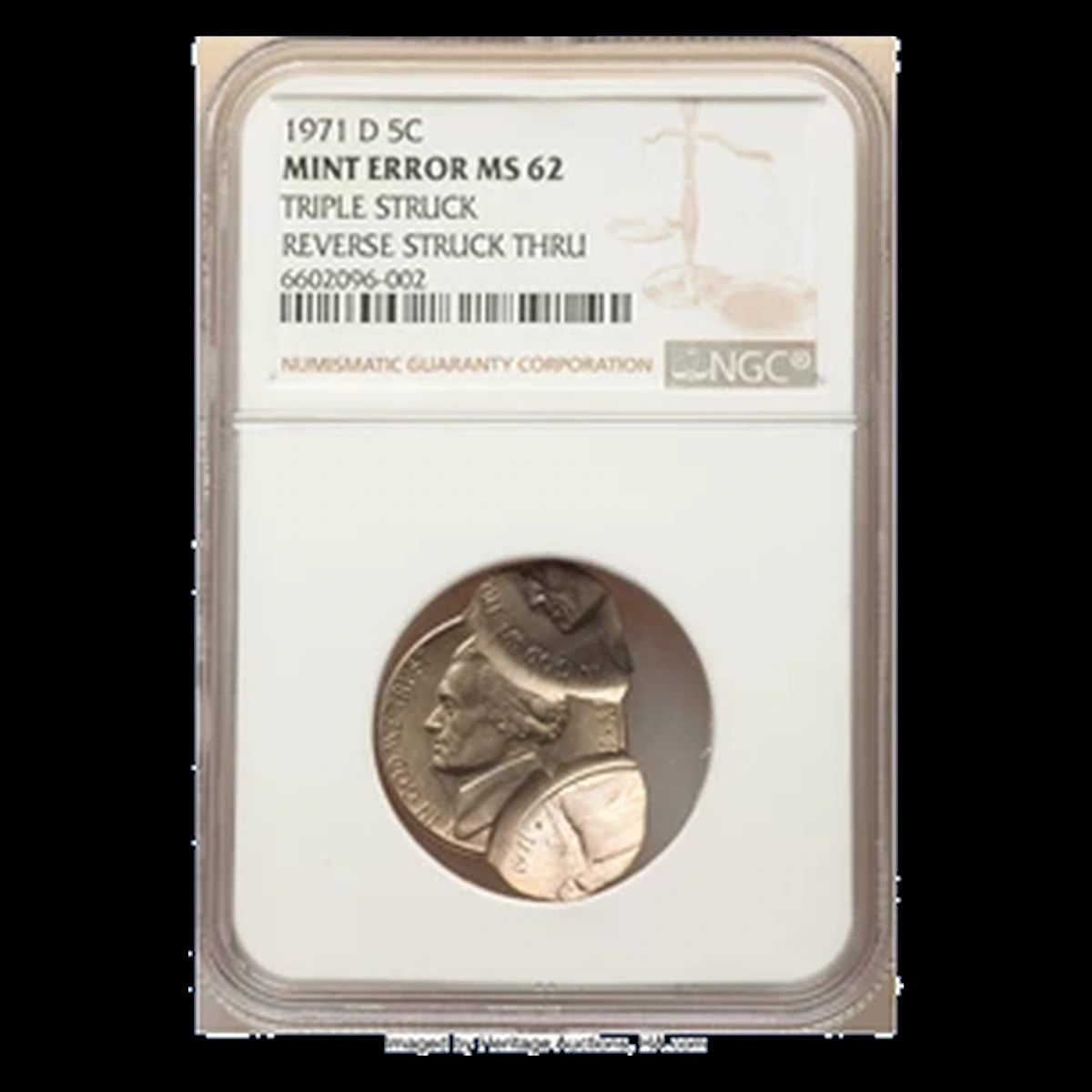
A recorded Denver triple strike began with a normal impression, followed by two small strikes near 9 and 12:30 with the first design upright. A fresh blank blocked the reverse during the final blow.
A separate Denver double strike has a second impression 35% off center. Another collector-reported coin flipped before a weak second strike and has both a plain front indent and recessed backward detail from contact with a struck nickel.
How to Identify
Find the first design before tracing the later impressions and the areas they cross. The triple strike’s blocked final reverse does not mean the entire coin has only one designed face.
On the separate flip-over report, distinguish a smooth indent from a recessed mirror image, called brockage. A faint raised ghost does not establish that transferred backward impression.
The triple-struck coin also has a U-shaped scratch above Monticello’s dome. Keep that later mark separate from the original strike sequence.
What It’s Worth
About $100–$500 for modest multiple strikes and $500–$2,000 for attractive complex combinations are the estimates. The PCGS MS64 1971-D triple strike sold for $97.75 in February 2005, slightly below the lower estimate.
The result concerns that specific scratched coin. Readable overlapping designs and the nature of the contact marks can matter more than the number of blows alone.
14. 1971 Nickel A Dime-Planchet Nickel Forms a Cup: Die Cap Error
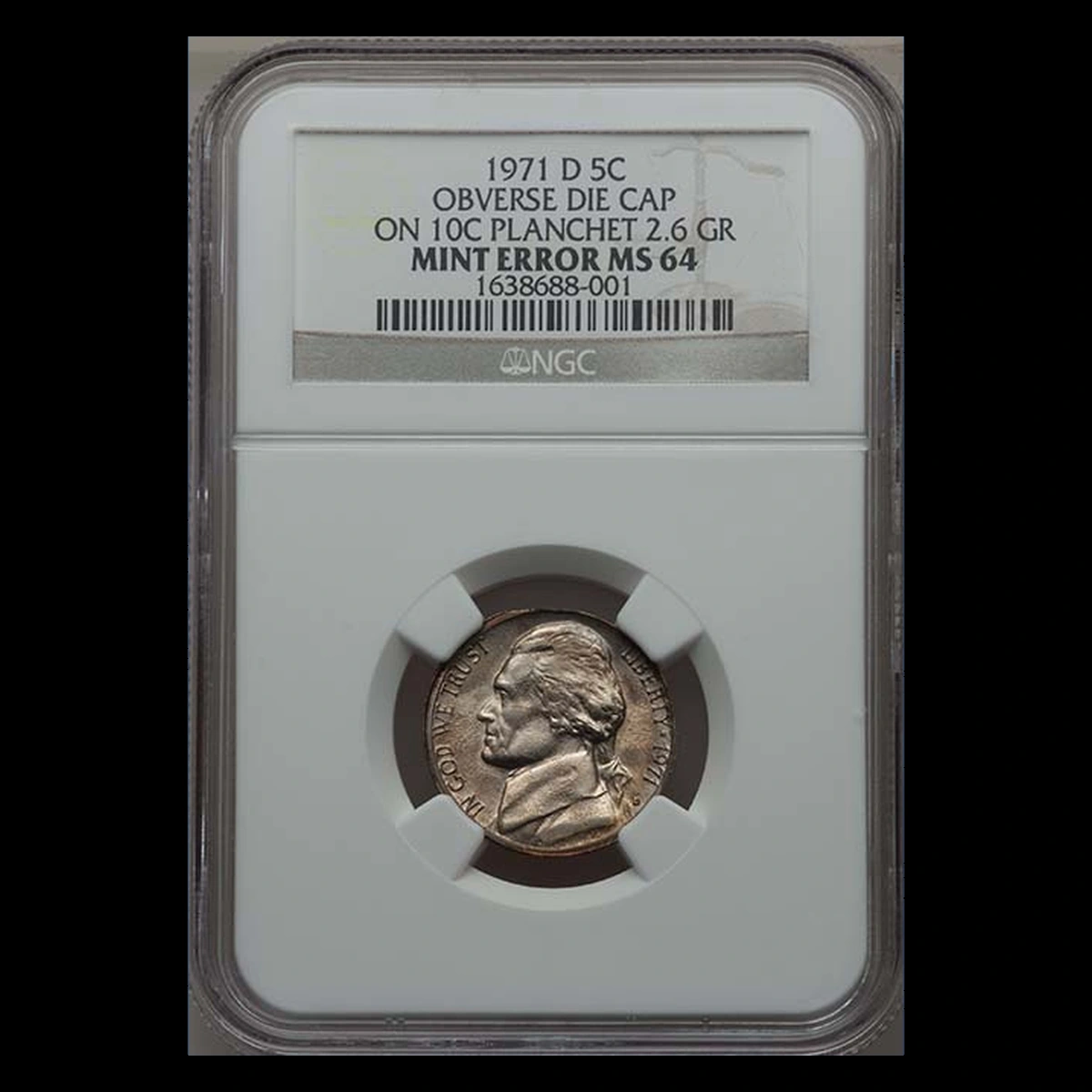
The recorded 1971-D cap combines a wrong blank with attachment to the front die. Continued press operation stretched the small disc into a cup instead of leaving it flat.
NGC graded the example MS64 and its recorded weight is 2.6 grams. That actual figure is separate from the 2.3-gram double-struck dime-planchet nickel described earlier.
How to Identify
Photograph the side profile, portrait-side base, and opposite face without flattening the cap. Examine how the design stretches toward the wall and whether the shape supports attachment to a die.
Tool bites or a sharply forced crease can reveal later bending. Support fragile walls gently and record dimensions without squeezing the cup into a normal nickel outline.
What It’s Worth
$500–$1,200 for less attractive genuine examples and $1,200–$2,500 for strong, well-preserved pieces are estimates for the whole compound error. The NGC MS64 dime-planchet cap brought $881.25 in August 2016.
Do not add a separate cap price to a separate wrong-planchet price. The intact cup and its original surfaces provide the evidence collectors are valuing.
Conclusion
For 1971 nickels, manufacture and mint identification come before price: an ordinary unmarked Philadelphia coin is fundamentally different from a No S Proof. Other unusual pieces need their own explanation of the blank, strike, or die.
Keep actual specimen weights and contact marks attached to the correct examples. Preserve cracks, layers, and cup shapes, while describing later damage separately from the minting event it may partly obscure.