Rare 1890 Nickel Errors (List & Pictures)
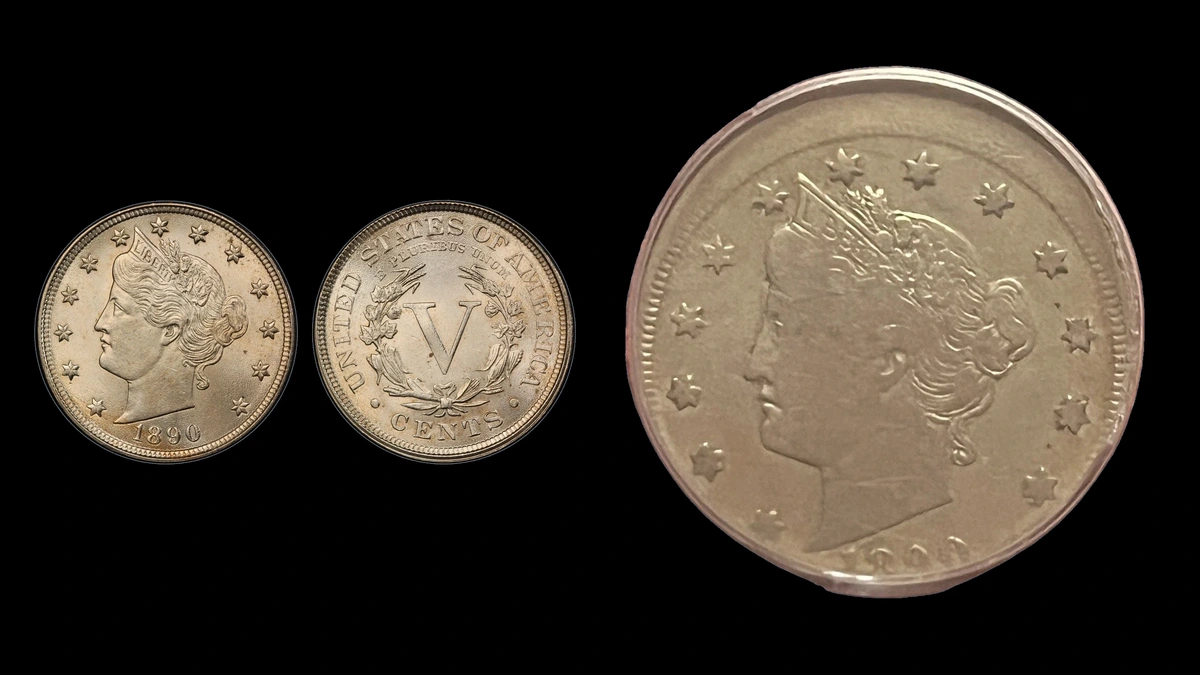
Two thin 1890 nickels illustrate why the order of minting events matters. One split before striking and sold for $690; another split after an off-center strike and brought $1,050, both in October 2022.
Estimated values for 1890 nickel errors span $15–$3,500. Inspect the date and outline, then examine separated metal and reversed impressions to work out what happened to the individual coin.
| Observation | Possible cause | Estimated range |
|---|---|---|
| Extra strokes within date digits | Repunched date | $40–$1,000 |
| Curved missing section | Clipped planchet | $25–$350 |
| Wider outline with all details present | Broadstrike | $75–$750 |
| Missing stars beside unstruck metal | Off-center strike | $100–$1,500 |
| Peeling surface or greatly reduced thickness | Lamination or split | $15–$2,000 |
| Sunken reversed design | Reported brockage | $250–$3,500 if authenticated |
1. 1890 Nickel Earlier Date Strokes Remain inside the Numerals: Repunched Date Error
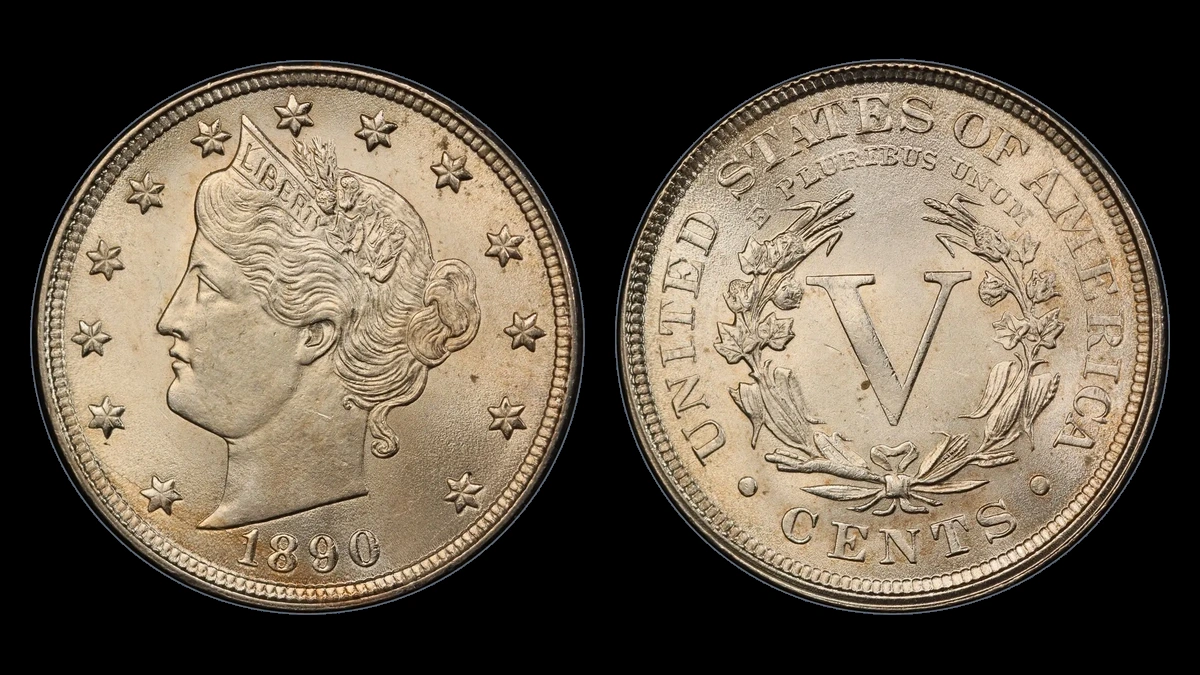
The upper loops of 8 and 9 and the area beneath the top of 1 are useful places to inspect. Reported extra strokes there arose when the date was punched into a die more than once in slightly different positions.
How to Identify
FS-301 is a recognized 1890 variety, but a matching date pattern is needed before using that attribution. Compare the entire date at the same scale as an identified example.
Move the light across the digits to distinguish raised remnants from cuts and reflections. A flat shelf or general thickness does not reproduce the shapes of earlier numeral impressions.
What It’s Worth
$40–$1,000 is an estimated range for attributed 1890 repunched dates. An AU50 FS-301 coin brought $517 at GreatCollections in July 2013, as recorded by PCGS.
That lightly worn example offers a specific comparison. Cleaning, heavy circulation wear, or weak attribution can limit the relevance of its price to another coin.
2. 1890 Nickel A Crescent Is Missing near the Rim: Curved Clip Error
The recorded NGC VG10 coin has an approximately 5% curved clip near three o’clock. Its blank was incomplete before the dies applied the design, likely from overlapping an earlier opening during blank production.
How to Identify
Hold the date upright and inspect both ends of the recorded gap, looking for the rim’s natural approach to the missing metal. A neat arc alone proves little because later cutting can imitate the outline.
Look for saw or file marks and inspect the opposite rim for supporting weakness. VG10 denotes substantial wear, which can make subtle original edge details harder to see.
Normal Liberty nickels weigh about 5 grams, measure 21.2 millimeters, and have plain edges. A clip can lower weight while intact spans still measure close to the normal diameter; these references also help with the shape changes below.
What It’s Worth
$25–$350 is an estimated range for genuine curved clips, depending on preservation, size, and readable identity. No completed sale is supplied for the VG10 coin.
A 1997-P Jefferson nickel with a larger 20% clip sold for $124 in March 2025. That later design illustrates the same mechanism, but is not a price record for the 1890 specimen.
3. 1890 Nickel A Wide Border Surrounds a Complete Design: Broadstrike Error
The collar normally limits how far a blank spreads during striking. Without its usual restraint, an 1890 nickel could expand outward while retaining all of Liberty, the reverse design, and the outer details.
How to Identify
Trace the stars and peripheral lettering on both faces before deciding that the design is complete. Unequal margins are possible on a broadstrike, but actual design loss calls for an off-center comparison.
Inspect the spread metal for hammer marks, rolled edges, or flattened relief caused after minting. The supplied report establishes no fixed specimen measurement, and an ordinary plain edge is not evidence of collar failure.
What It’s Worth
$75–$750 is an estimated whole-coin range for an authenticated 1890 broadstrike. Preservation and natural expansion matter, with no completed 1890 sale assigned to the report.
A 1999-P Jefferson broadstrike brought $89 in March 2025. That different design provides limited context for the mechanism rather than a direct Liberty nickel valuation.
4. 1890 Nickel Upper Stars Run beyond the Metal: Off-Center Strike Error
On the recorded PCGS VF35 example, a roughly 10% shift toward eleven o’clock leaves parts of the upper stars outside the blank. Original unstruck metal remains opposite the displaced design.
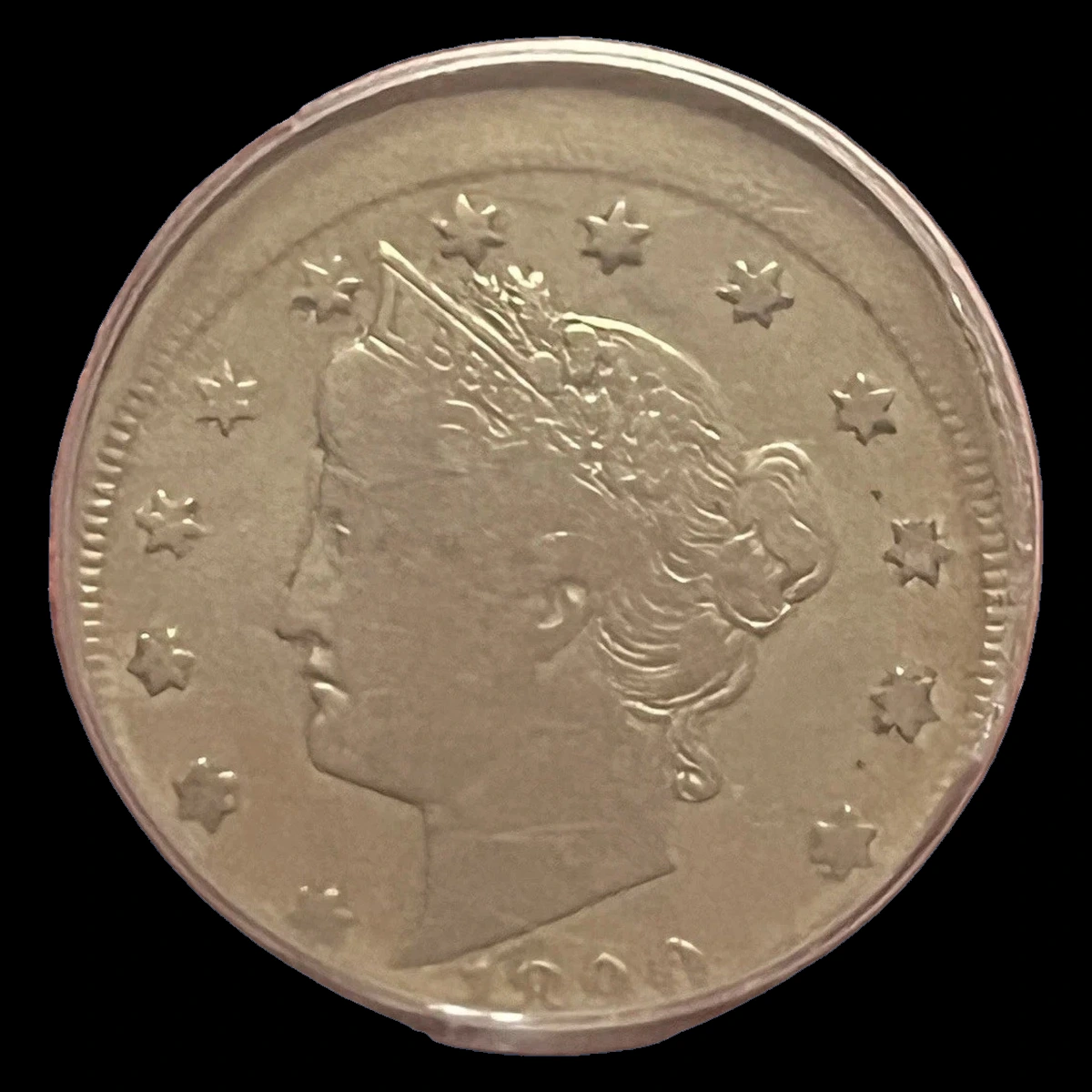
How to Identify
Check the date and the ends of the stars, then compare the reverse for the same strike displacement. A wide border around complete design does not explain missing star tips.
Examine the edge for later cuts or grinding and the blank crescent for original surface texture. Displacement alone need not remove metal, so markedly low weight calls for an additional explanation.
What It’s Worth
$100–$1,500 is an estimate for genuine dated 1890 off-center strikes across a range of grades. No completed sale is supplied for this 10% VF35 example.
A 1902 Liberty nickel struck 20% off-center sold for $561.20 in XF40 in March 2026. Its date, wear, and displacement differ, and neither it nor the VF35 coin should be confused with the separate split-after-striking piece below.
5. 1890 Nickel A Layer Peels or the Coin Becomes Much Thinner: Lamination and Split Metal Error
Internal weakness can separate a small patch or a substantial part of the blank’s thickness. The resulting surface reveals whether the separation preceded the strike or exposed the interior afterward.
How to Identify
A recorded NGC MS63 piece weighs 2.7 grams and split before striking, receiving weak design on both faces. Another NGC MS64 piece weighs 3 grams and split after being struck 10% off-center.
These are separate specimens, not two pieces of a matching pair or before-and-after weights for one coin. The first can show design on metal exposed by splitting, while the later split exposes an inner surface that did not directly contact the die.
For a local lamination, follow the natural layer boundary without lifting a flap. Parallel machining marks or a deliberately cut edge would support a different explanation for thinness.
What It’s Worth
$15–$250 is an estimate for local peeling, while extensive authenticated split pieces may fall around $300–$2,000. The 2.7-gram pre-strike split brought $690 and the 3-gram post-strike split brought $1,050 in October 2022.
NGC reports both results with buyer’s premiums included. Each price belongs to an individual specimen; the higher result also reflects its particular combination with an off-center strike.
6. 1890 Nickel A Reversed Image Lies below the Surface: Reported Brockage Error
A previously struck coin caught in the press can impress its raised design into a new blank. The resulting sunken mirror image is called a brockage.
The supplied 1890 report does not identify a complete mirror-image specimen or establish which face is affected. An actual candidate therefore needs its own attribution.
How to Identify
Compare a recognizable sunken letter or portrait fragment with a mirrored photograph of a normal coin. Examine the opposite face and the surrounding struck surface to see whether the image fits an original minting event.
Finished coins squeezed together later can also create reversed impressions. Edge damage, seams, and disrupted original relief need to be considered before accepting a brockage claim.
What It’s Worth
$250–$3,500 is a conditional estimate for an authenticated 1890 brockage, with a clear substantial impression and attractive preservation needed toward the upper end. It is not a documented sale range for a known complete 1890 specimen.
A 1990-P Jefferson double strike with front brockage sold for $139 in October 2022. Its much later design and different combined error make it only a limited comparison.
Conclusion
The sequence of events is especially useful for understanding an 1890 nickel with missing or separated metal. A clip starts with an incomplete blank, an off-center strike displaces design, and a split can occur before or after that design is applied.
Match date remnants carefully and keep reported brockages conditional until examined. The price of one documented split piece should remain attached to its own weight, grade, and striking history.