Rare 1985 Nickel Errors (List & Pictures)
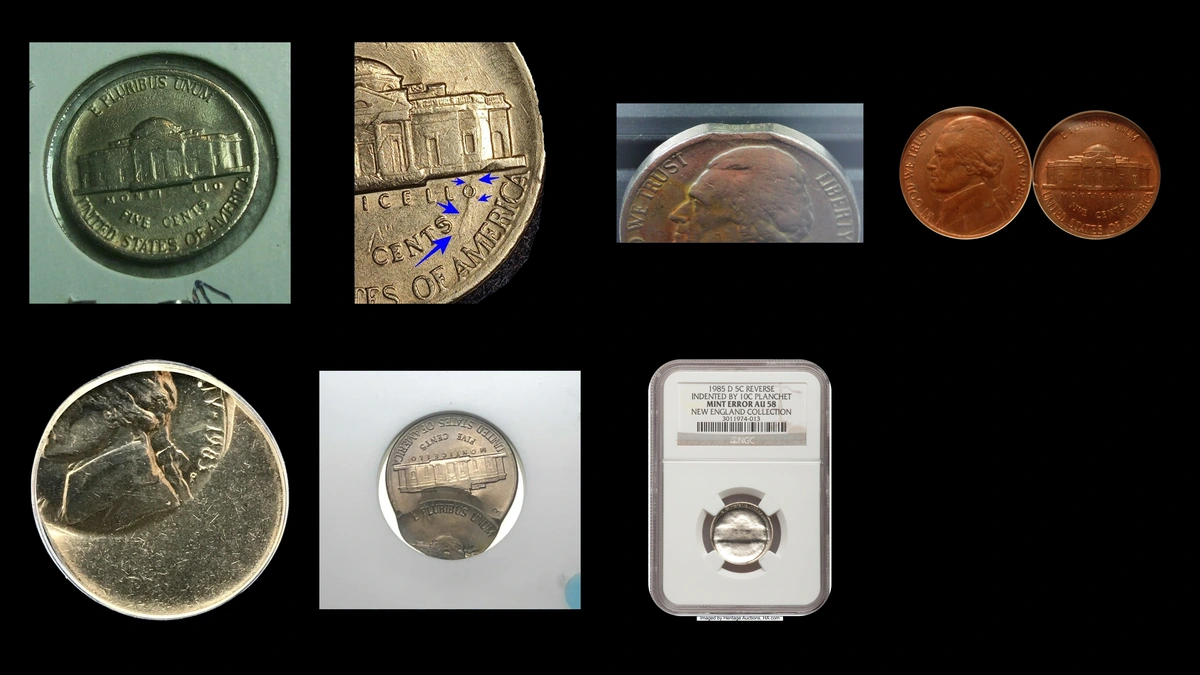
A 1985-P deep die cap sold for $1,265 in October 2010. A different-year cent-blank nickel reached $1,495, providing another comparison within the estimated $5–$2,000 range for 1985 nickel errors.
Begin with raised and missing details, then inspect the edge and full outline before deciding whether an unusual coin involves another blank, repeated strikes, or a finished cent underneath.
| Clue | Category | Estimated value |
|---|---|---|
| Weak or extra fine design | Grease, clash, or doubled die | $5–$100 |
| Missing or expanded outline | Clip or broadstrike | $15–$150 |
| Unusual original color | Improper annealing | $30–$200 |
| Displaced or repeated designs | Off-center or multiple strike | $30–$650 |
| Blocked reverse | Dime-blank indent | $600–$1,400 |
| Copper-colored smaller coin | Cent blank or struck-cent host | $500–$1,750 |
| Deep cup | Die cap | $800–$2,000 |
A normal nickel weighs 5.00 g and measures 21.21 mm, with a plain edge. Its metal is a uniform mixture of 75% copper and 25% nickel.
1. 1985 Nickel One Area Fades beside Clear Detail: Grease-Filled Die Error
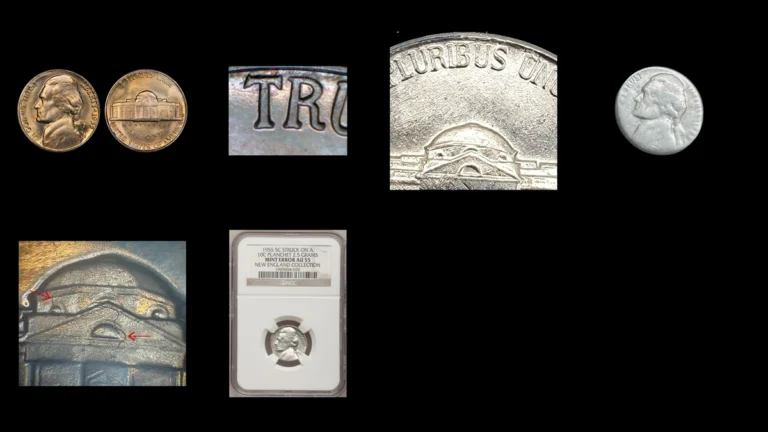
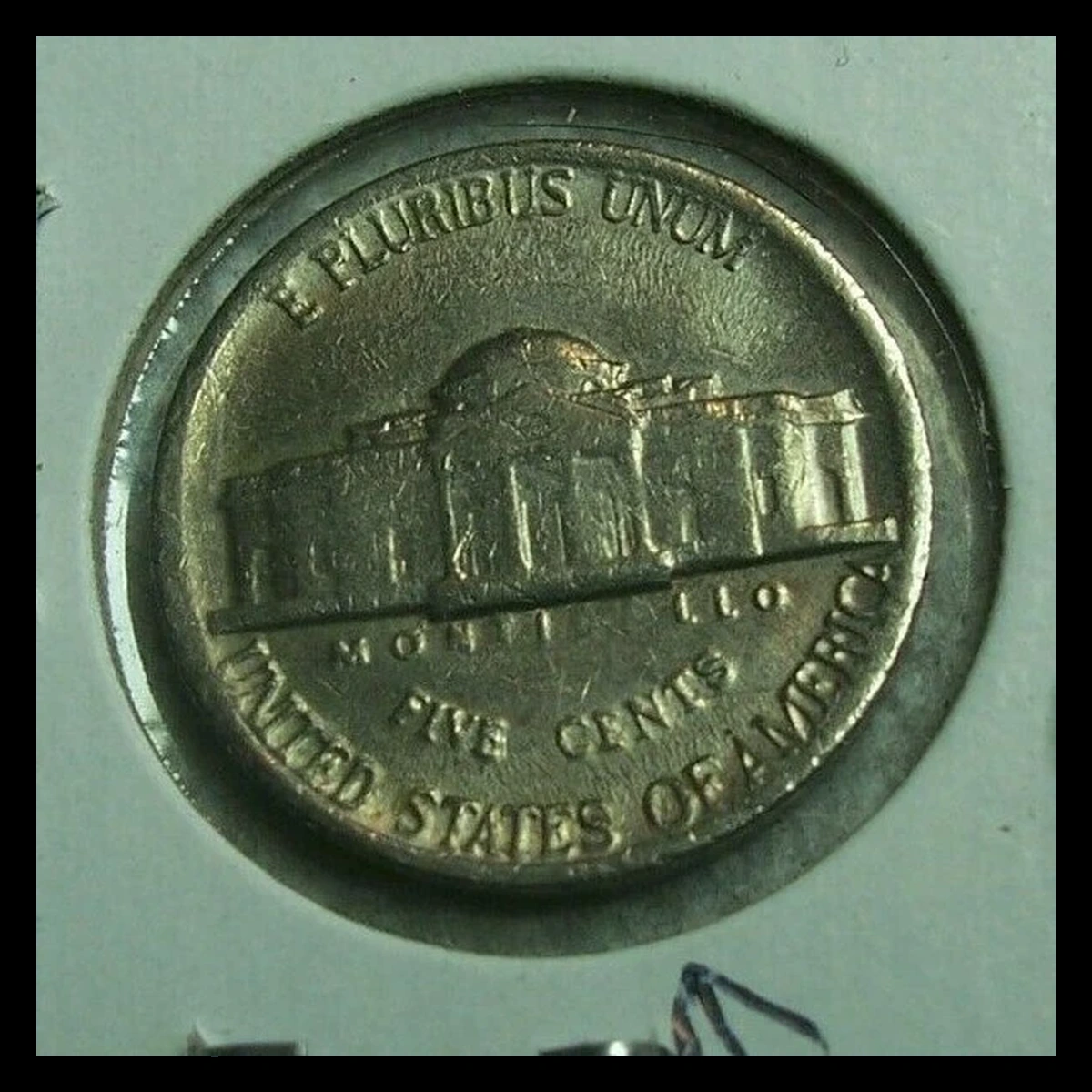
Soft debris in a die recess can prevent a letter or other feature from forming. The 1985 report identifies no single missing letter required on every example.
How to Identify
Compare the weak patch with Jefferson’s cheek and hair and the raised building details. Similar smoothing across exposed high points may be ordinary wear.
Move the light across the boundary to look for parallel scratches from rubbing or polishing. A local blocked strike should fit the otherwise undisturbed surface.
What It’s Worth
Small genuine interruptions have an estimated value of $5–$30. Extensive clear loss can attract more interest than a slightly weak letter.
No specific 1985 sale is supplied for this category. Scraped or heavily worn detail does not support the same identification.
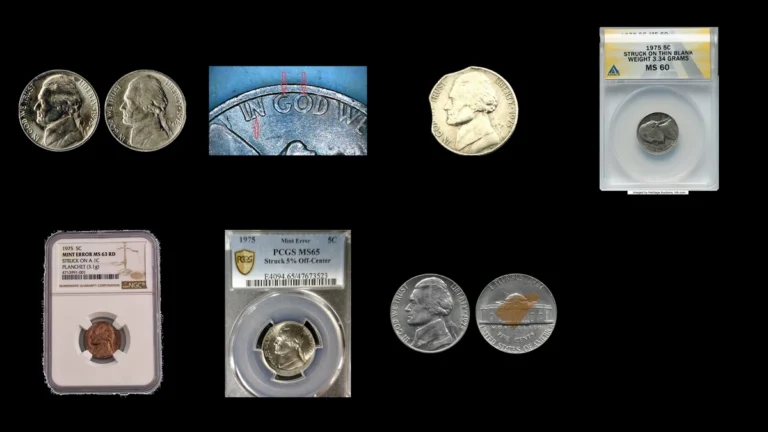
2. 1985 Nickel Repeated Letter or Portrait Contours: Doubled Die Error
Reports for Philadelphia and Denver mention the date, motto, and Jefferson’s outline. Each mint needs its own pattern comparison.
How to Identify
Look for rounded separation and split corners across several neighboring letters. A true feature stays fixed when the lamp moves.
Flat shelves that reduce the original outline can result from movement during striking. The report does not establish one shared variety for P and D coins.
What It’s Worth
Confirmed minor doubled dies have an estimated value of $10–$100. Stronger matchable separation generally supports the higher range.
No named 1985 variety sale is assigned here. Thick lettering alone does not establish the premium.
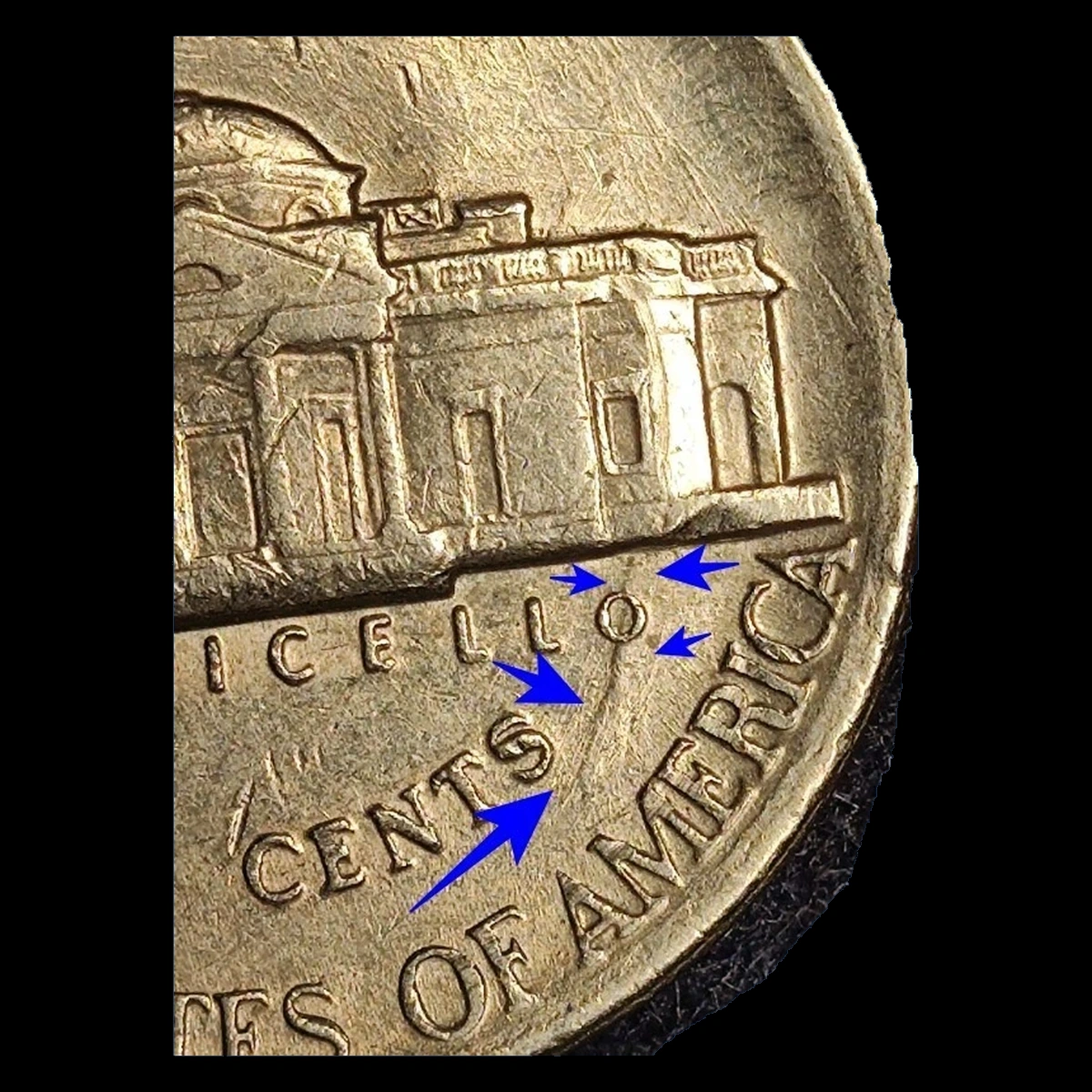
3. 1985 Nickel A Building or Portrait Fragment Appears on the Wrong Face: Die Clash Error
A 1985 error guide reports clashes for both mints. Contact between the dies without a blank can transfer pieces of the opposing designs.
How to Identify
Compare a promising line near Jefferson with Monticello, or a reverse curve with the portrait. A second matching angle helps support the relationship.
Do not connect unrelated scratches into an imagined design. The actual transferred shape matters more than its general location.
What It’s Worth
Estimated values are $10–$60 for clearly identified clashes. Visible outlines are more useful than faint marks requiring difficult lighting.
The range is guidance for the reported category, not an auction amount assigned to every unusual line.
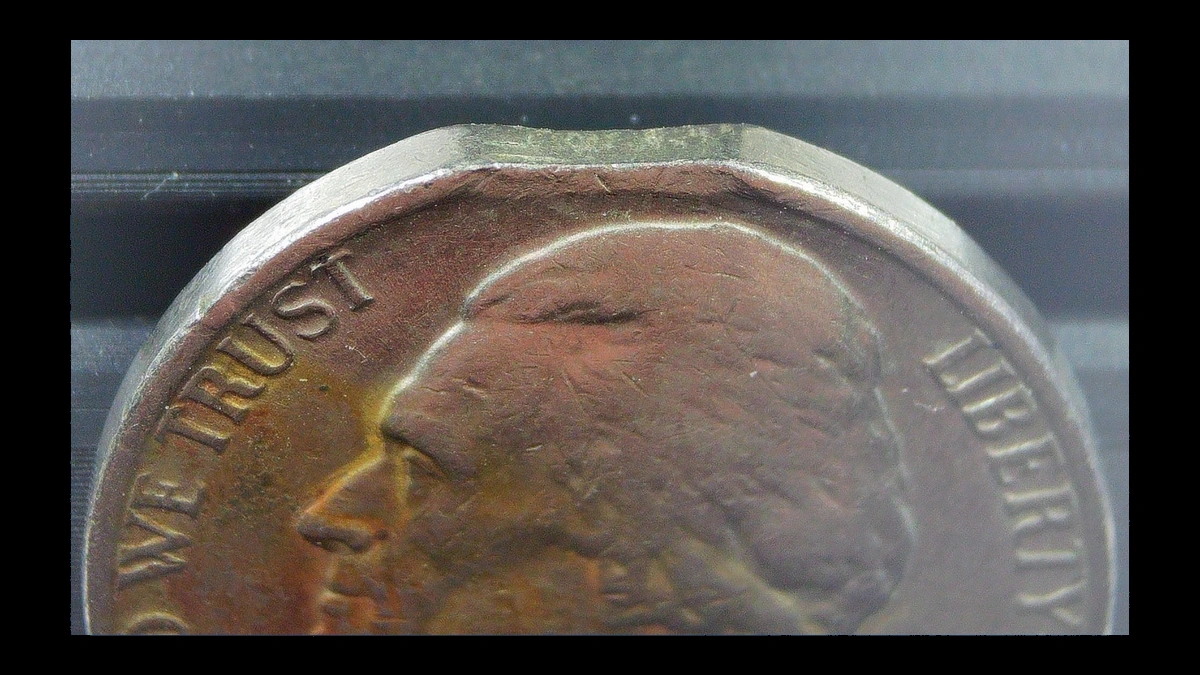
4. 1985 Nickel A Curved or Straight Edge Segment Is Missing: Clip Error
A Philadelphia curved-clip example weighs 4.85 g and was graded ANACS MS64. Straight clips are also reported for the year.
How to Identify
Inspect how the rim approaches both ends of the gap. Fresh saw lines, file grooves, or a folded burr can reveal removal after striking.
The recorded weight is only slightly below normal. Opposite-rim weakness may support a genuine clip but is not required on every example.
What It’s Worth
Estimated values are $15–$125 for genuine clips. The small 4.85 g example should not be treated like a coin with a huge missing crescent.
A 2005-P clipped nickel sold for $99 in June 2026. That later-year result is a comparison, not a sale of the 1985 piece.
5. 1985 Nickel A Wide Border Surrounds Complete Design: Broadstrike Error
Without normal collar restraint, metal can spread outward during striking. The expanded coin retains substantially complete designs rather than losing them beyond one edge.
How to Identify
Follow the lettering around both faces and compare the outline at several points. Later flattening may smear letters or leave hammer marks.
The report supplies no exact diameter for the illustrated coin. A plain edge is normal and does not prove collar failure.
What It’s Worth
Estimated values are $20–$150 for original visibly expanded examples. Clear borders and good surfaces support the stronger end.
A 1989-P broadstrike graded ANACS MS63 was listed at about $47 in a December 2020 sale. It offers a modest different-year comparison.
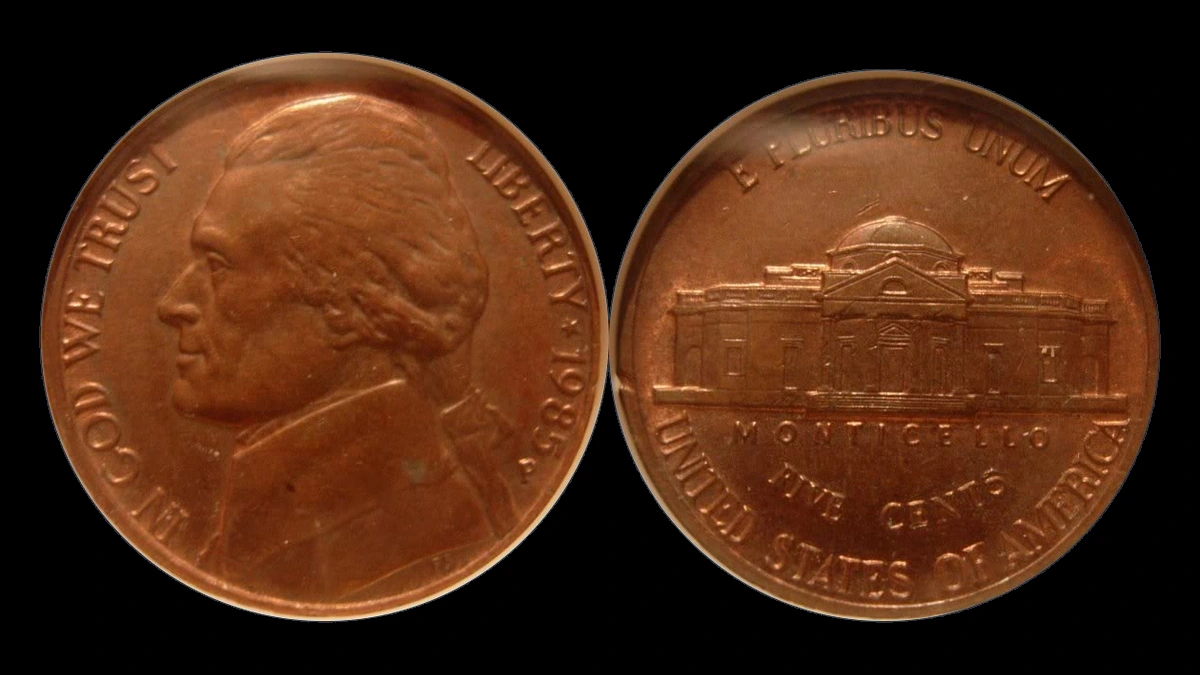
6. 1985 Nickel Unusual Surface Color from Blank Heating: Improper Annealing Error
A Philadelphia NGC MS63 example was cataloged as improperly annealed. The abnormal surface arose during the heating used to soften the blank.
How to Identify
Compare the actual certification and surfaces rather than treating all dark nickels alike. Soil, chemicals, plating, and later heating can also change color.
Inspect recesses and the edge under neutral light without rubbing the coin. A coating that bridges detail or peels away requires a different explanation.
What It’s Worth
A confirmed example has an estimated value of $30–$200. Original color together with undamaged surfaces supports the comparison.
The MS63 coin was in a four-coin lot sold for $322 in September 2010. That total also covered nickels dated 1959, 1993, and 1995 and cannot be assigned to the 1985 piece alone.
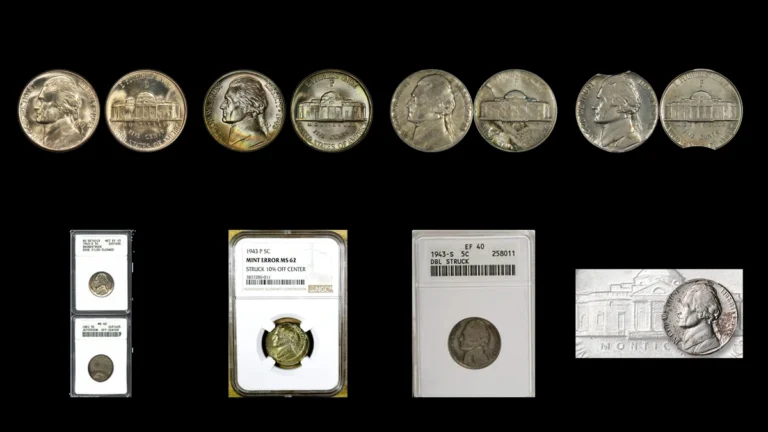
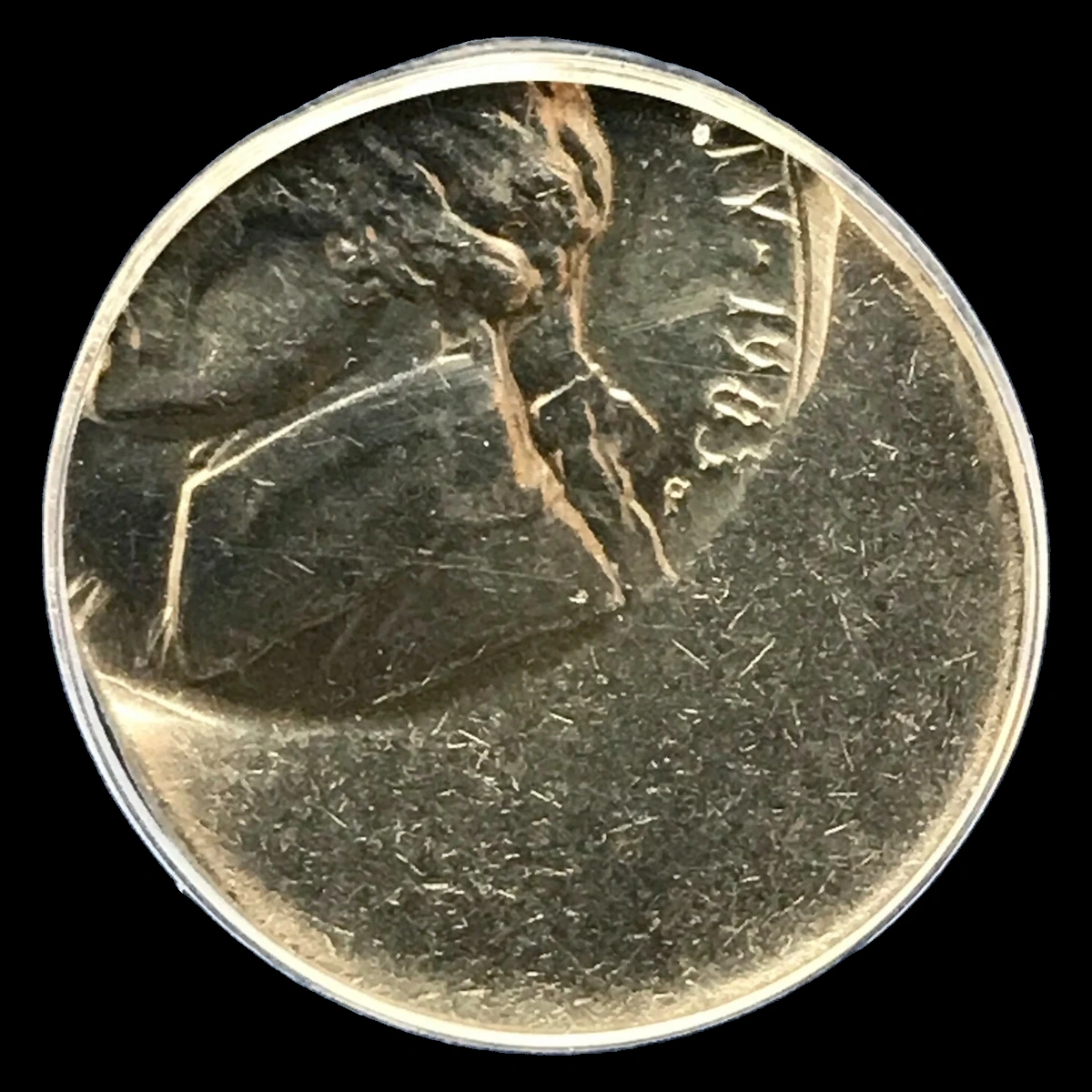
7. 1985 Nickel Most of the Blank Escapes the Dies: Off-Center Strike Error
A Denver ANACS MS64 example was struck about 65% off-center toward eleven o’clock. It appeared alongside a separate 1987-P nickel in an auction pair.
How to Identify
Keep the surviving date and D visible with the full outline. Both faces should explain the same displaced blank and original unstruck area.
Philadelphia off-center pieces are also reported, but they do not inherit this specimen’s direction. Another visible design position would require a separate multiple-strike assessment.
What It’s Worth
Estimated values are $30–$250 for 1985 off-center nickels. A readable date and healthy surfaces help support interest.
The Denver 65% example appeared in a January 2022 pair listed at $65. Since the 1987-P was included, that total is not an individual Denver price.
8. 1985 Nickel Two or Three Designs Overlap: Multiple Strike Error
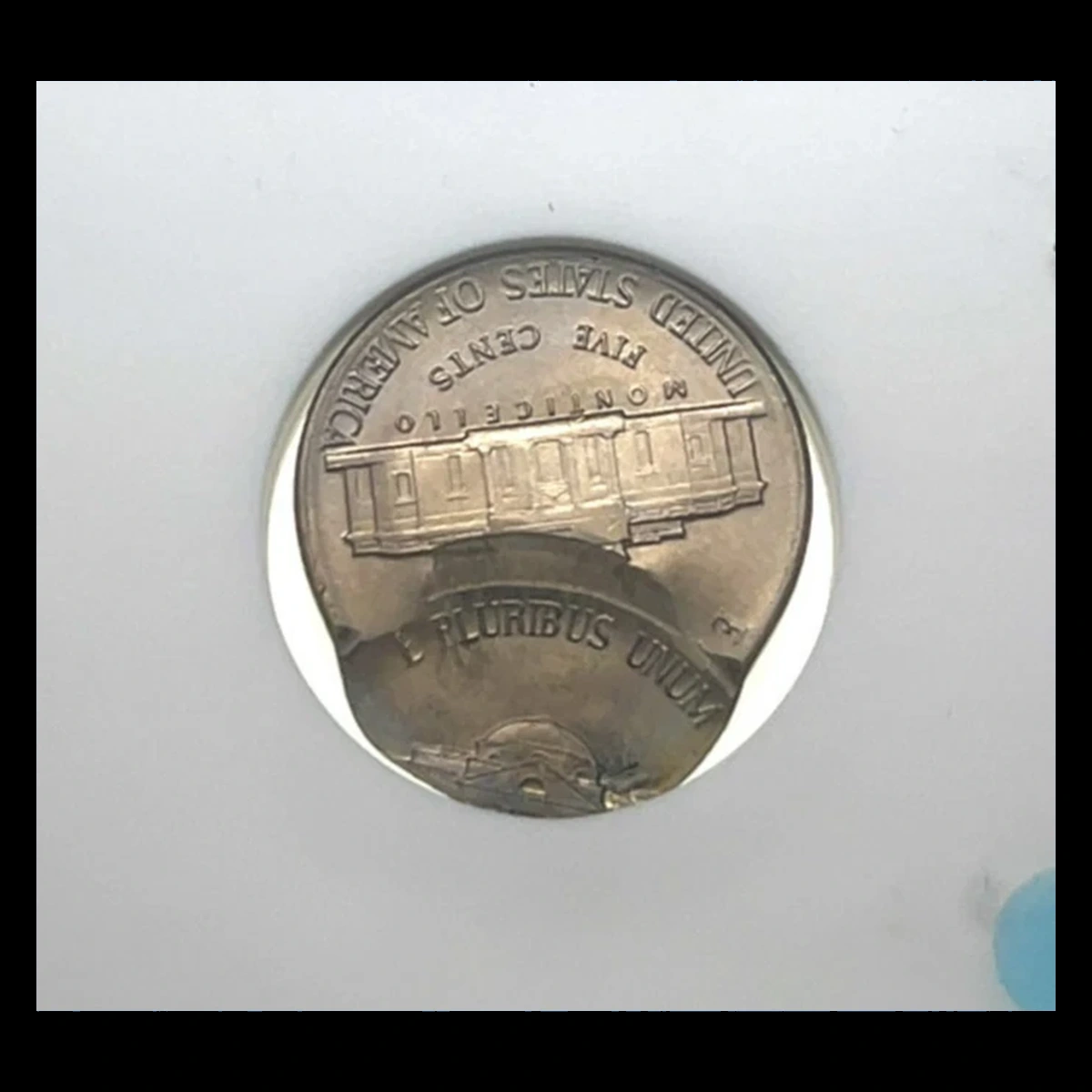
A Philadelphia NGC MS64 received an 80% off-center second blow, while another Philadelphia coin was triple struck. Separate specimens have second-strike areas blocked on one face.
How to Identify
Trace larger repeated portrait, letter, or building fragments as distinct positions. A triple needs three coherent impressions rather than three stray lines.
The Philadelphia NGC MS63 75% second strike lacks reverse detail in that area. The separate Denver 95% second strike near 11:30 lacks front detail there.
What It’s Worth
Estimated whole-coin values are $75–$650 across double and triple strikes. Readable intersections and clear blocked areas make stronger comparisons.
The Philadelphia 80% NGC MS64 sold for $99 in January 2023. That result is not assigned to the triple or either blocked-face example.
9. 1985 Nickel A Dime-Sized Area Blocks Monticello: Indent Error
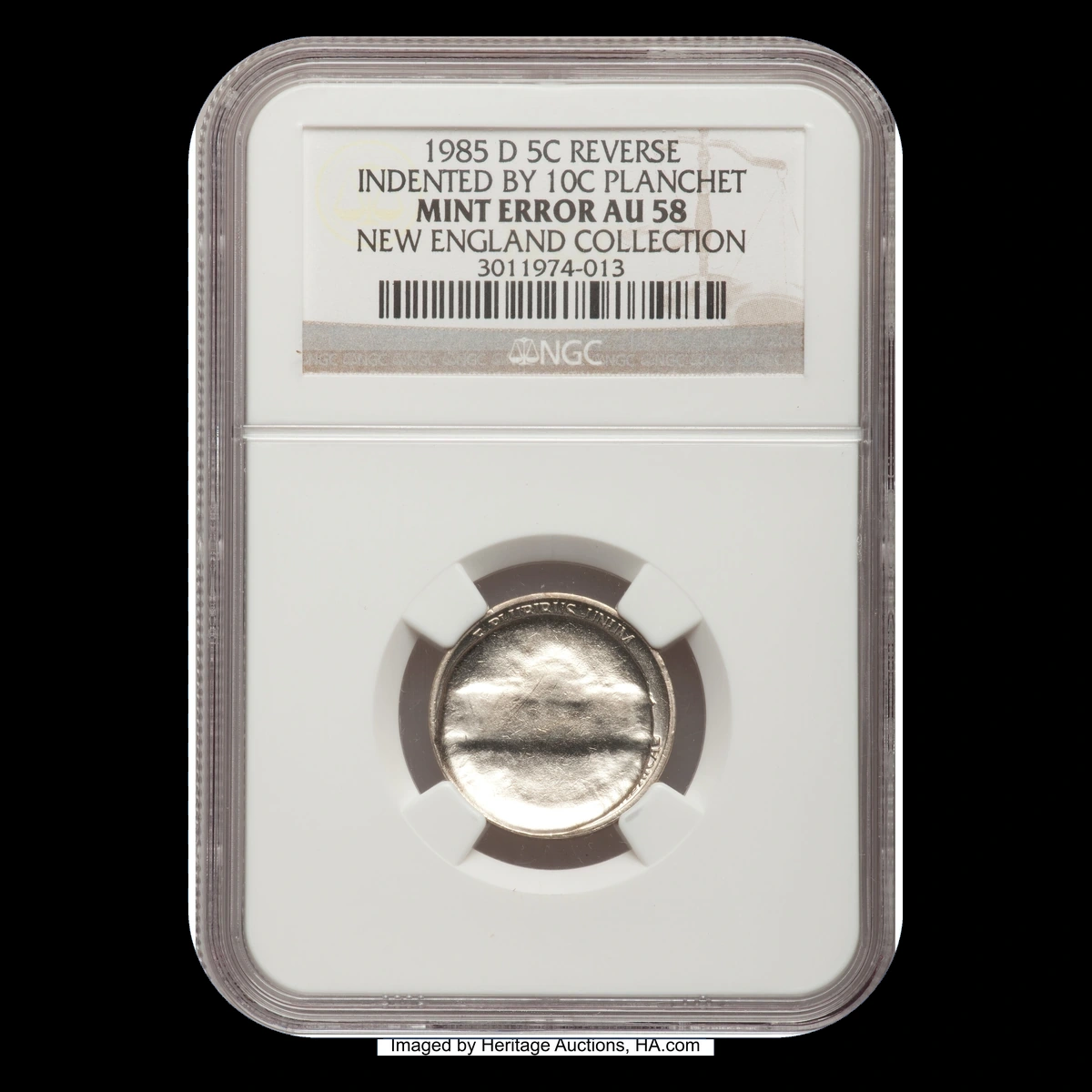
A nearly centered dime blank lay against the reverse during striking. Jefferson remained largely normal while most building detail was blocked and outer lettering struck more clearly.
How to Identify
The affected coin remains a nickel, not a nickel design on dime metal. Inspect how the smaller blank’s boundary explains weak central design beside stronger edge letters.
A later circular punch can imitate a depression. Examine both faces and the edge for destructive crushing or cuts inconsistent with the original strike.
What It’s Worth
Estimated values are $600–$1,400 for comparable clear dime-blank indents. Recognizable identity and the blocked-strike pattern are essential.
The Denver NGC AU58 example sold for $1,092.50 in August 2010. The payment covered only the nickel, without the dime blank that caused the indent.
10. 1985 Nickel Nickel Images over Earlier Lincoln Details: Double Denomination Error
A finished cent can receive another design after entering the nickel press. Recorded examples include a Denver PCGS MS64 Red and a separate Philadelphia NGC MS62 Red and Brown.
How to Identify
Locate genuine Lincoln or cent-lettering fragments beneath the later nickel impression. An unused cent blank cannot supply those earlier details.
Read any host date independently rather than borrowing 1985 from the nickel design. A modern cent normally begins at 2.50 g and 19.05 mm, but its actual identity must guide the comparison.
What It’s Worth
Estimated values are $600–$1,500 for comparable nickel-over-cent errors. Readable evidence of both denominations and surface preservation affect the result.
The Denver coin sold for $840 in January 2018. That transaction is not a recorded price for the separately graded Philadelphia specimen.
11. 1985 Nickel A Copper-Colored Blank Lacks Earlier Cent Design: Cent Planchet Error
A Philadelphia NGC MS66 Red example was struck on a cent blank. Its smaller disc could not accommodate the complete outer nickel design.
How to Identify
A regular cent blank from this period is copper-plated zinc, not solid bronze. Compare its approximately 2.50 g starting weight, smaller size, and original cropped design with the normal nickel standard.
The APMEX example provides a documented type. Any earlier Lincoln detail would require a struck-cent host explanation instead.
What It’s Worth
Estimated values are $500–$1,750 for well-preserved 1985 cent-blank strikes. The cited MS66 Red listing supplies no usable sale price.
A 1993-P cent-blank nickel graded NGC MS66 Red sold for $1,495 in August 2010. It is a different-year comparison rather than a 1985 auction record.
12. 1985 Nickel High Walls Form a Deep Cup: Die Cap Error
A Philadelphia nickel remained attached to the front die and repeatedly contacted fresh blanks. Its metal wrapped around the tool as its reverse design spread and flattened.
How to Identify
Compare the tall walls with design stretched into the curved metal. A few bent corners or an ordinary hammered depression do not explain the same formation.
The documented NGC MS68 was placed in an extra-thick holder. Use side views without pressing the walls or trying to straighten the coin.
What It’s Worth
Estimated values are $800–$2,000 for impressive caps with comparable depth and preservation. Shallower or damaged examples require different comparisons.
The deep Philadelphia NGC MS68 cap sold for $1,265 in October 2010. Its very high unworn grade and distinctive shape are both part of that result.
Conclusion
A wider coin, a deep depression, and a smaller copper-colored piece point to different events. Establish the full outline and both designs before deciding what entered the press or how many blows occurred.
Keep auction pairs and multi-coin lots separate from individual sales. For cent-related errors, surviving Lincoln details distinguish a finished host coin from an unused blank, while the deep cap needs its stretched design and walls considered together.