Rare 1997 Dime Errors (List & Pictures)
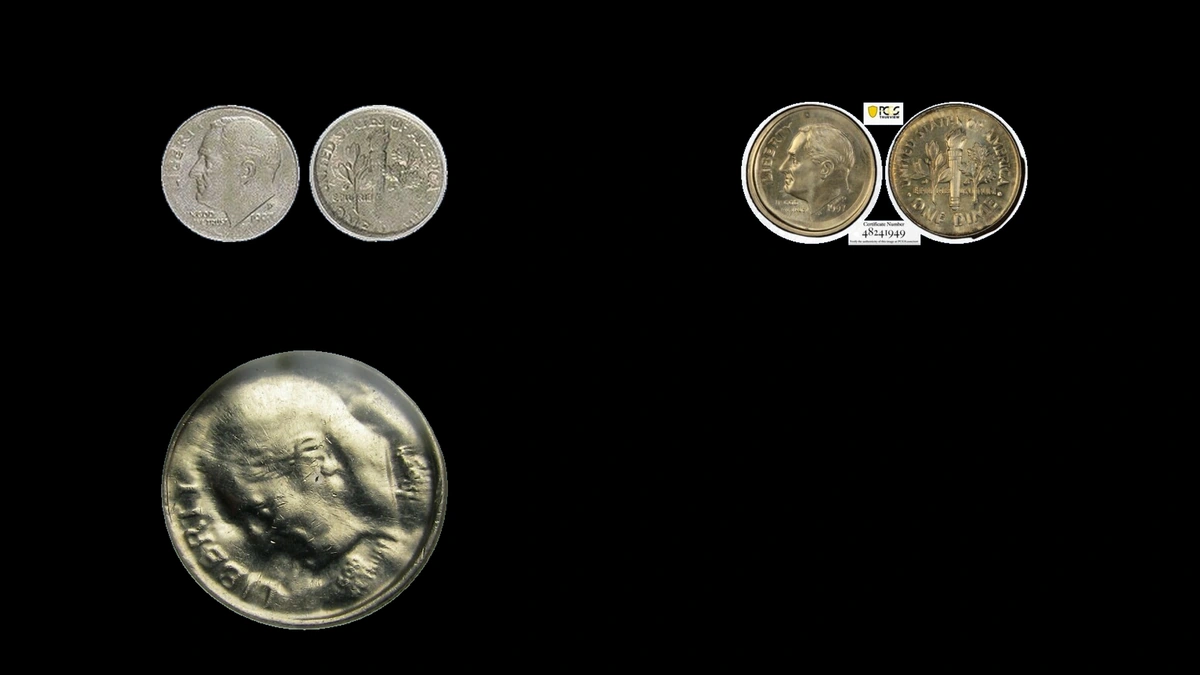
A low-weight dime and a copper-colored dime need different checks. One 1997-P example is made from solid copper-nickel, while other errors expose the copper inside an ordinary layered coin.
Estimated values for these 1997 dime errors run from $5–$3,500. A documented double strike sold for $138; begin with the metal and edge, then look for missing or repeated design.
1. 1997 Dime Exposed Copper on a Face: Missing Clad Layer Error
An ordinary 1997 dime has copper-nickel outer layers bonded to a copper center. Collectors call this a clad coin.
If an outer layer is missing, copper can show on the face. A 1997-P example appears in auction records with an ANACS MS61 grade, but the affected face and amount of loss must be checked on that coin.
How to Identify
Inspect the edge and any boundary between copper and remaining silver-colored metal. A genuine layer boundary provides better evidence than a brown color alone.
A normal circulating dime weighs about 2.268 grams and measures 17.91 millimeters across. Missing metal should affect the weight, though partial and complete layer losses will not give the same reading.
Look for scraping, chemical pits, or a coating over an otherwise normal coin. Those can create unusual color without a Mint-made missing layer.
What It’s Worth
$40–$750 is an estimated range for genuine missing-layer dimes. The extent of loss, original surfaces, and overall condition help determine the price.
A 2018-P dime missing its front layer sold for $384 in July 2021. That different-year, complete-face example is a comparison, not a sale of the reported 1997-P coin.
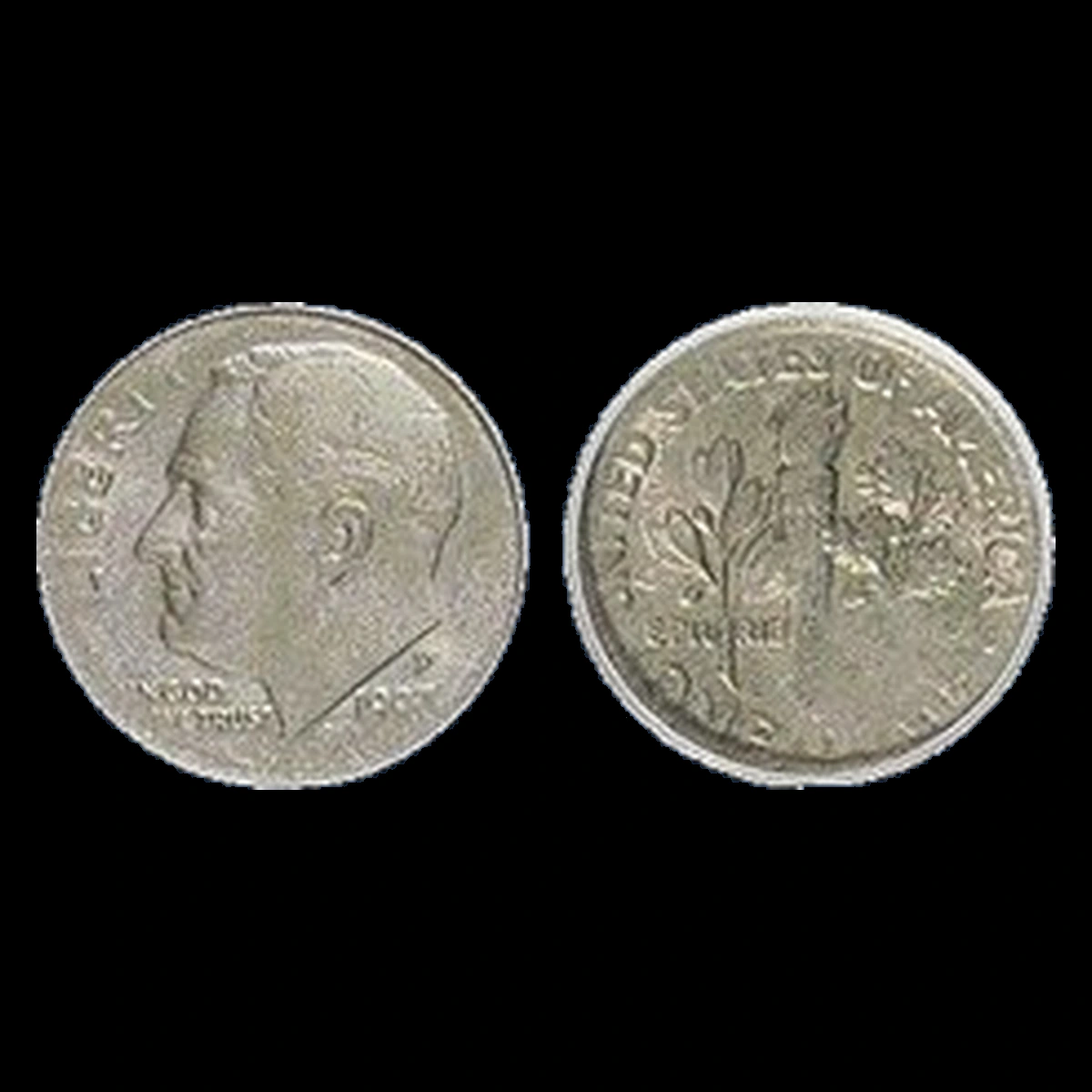
2. 1997 Dime Full Width but Only 1.85 Grams: Solid Copper-Nickel Blank Error
The studied 1997-P dime in this category looks full-sized but weighs 1.85 grams. Its metal is solid copper-nickel instead of the normal copper-centered layers.
It was once described as missing its core. The established feature is the unusual solid-metal disk; that older name does not explain how it was produced.
How to Identify
Compare the weight, full diameter, and edge structure together. A low reading alone could also come from wear, corrosion, grinding, or lost outer metal.
Professional metal testing can help establish whether the whole disk is copper-nickel. A surface photograph cannot prove what is inside it.
Mike Diamond’s examination explains the problem with the old missing-core theory. Do not rename this example a foreign blank without evidence identifying such a blank.
What It’s Worth
$500–$3,000 is an estimated range for an authenticated full-sized dime on unusual solid copper-nickel metal. The measured composition is central to that comparison.
Modern Roosevelt foreign-blank guide estimates around $1,500–$2,500 provide broader wrong-metal context. They neither establish a sale of this 1.85-gram coin nor identify its blank as foreign.
3. 1997 Dime A Step Around the Edge: Partial Collar Error
A stepped edge can form when the blank is only partly inside the collar. The collar is the ring that controls the coin’s width and makes its edge grooves during striking.
A documented 1997-S silver Proof has a 25% partial-collar description. A separate ordinary Philadelphia report combines a partial collar with a depression called an indent.
How to Identify
Follow the change between the restrained, grooved edge and the part that spread differently. Filing or crushing an edge can leave marks without the same original struck step.
Establish the issue before comparing weight. A normal 90% silver Proof weighs 2.50 grams, while an ordinary clad dime weighs 2.268 grams.
The S silver example was graded PR69 Deep Cameo, describing a nearly perfect collector Proof with strong contrast. The reported P coin’s indent should not be transferred to that silver coin.
What It’s Worth
$20–$750 spans the estimated ranges for these different issues. Ordinary Philadelphia examples are estimated at $20–$300, while comparable silver Proof errors fall around $100–$750.
The silver Proof’s preview bid was not a final sale price. A historical $5 dealer offer for a 2005 ordinary dime shows how modest simple collar errors can be, but it is not a silver-Proof comparison.
4. 1997 Dime A Straight Gap or Oval Shape: Clipped Planchet Error
A planchet is a blank ready to become a coin. If part of its metal is missing before striking, the finished dime can have an incomplete outline.
Separate 1997-D reports show a straight end clip and an elliptical, or oval, example. The oval coin was graded PCGS MS65.
How to Identify
On the reported straight clip, the shortage runs along the side from about 7:30 to 10:30. Use that location only when comparing the corresponding coin.
Check the rim ends and nearby letters for metal shaped around an existing shortage. A later cut slices through details that had already formed.
For the oval example, inspect both faces to see how the design filled the unusual blank. Weight and original surfaces around the shortage help separate a genuine error from an altered outline.
What It’s Worth
$25–$400 is an estimated range across straight and elliptical clips. A dramatic oval shape and a small straight shortage need different comparisons.
A 1997-P nickel with a 20% clip sold for $124 in March 2025. That is a different denomination and does not supply a sale amount for either Denver dime.
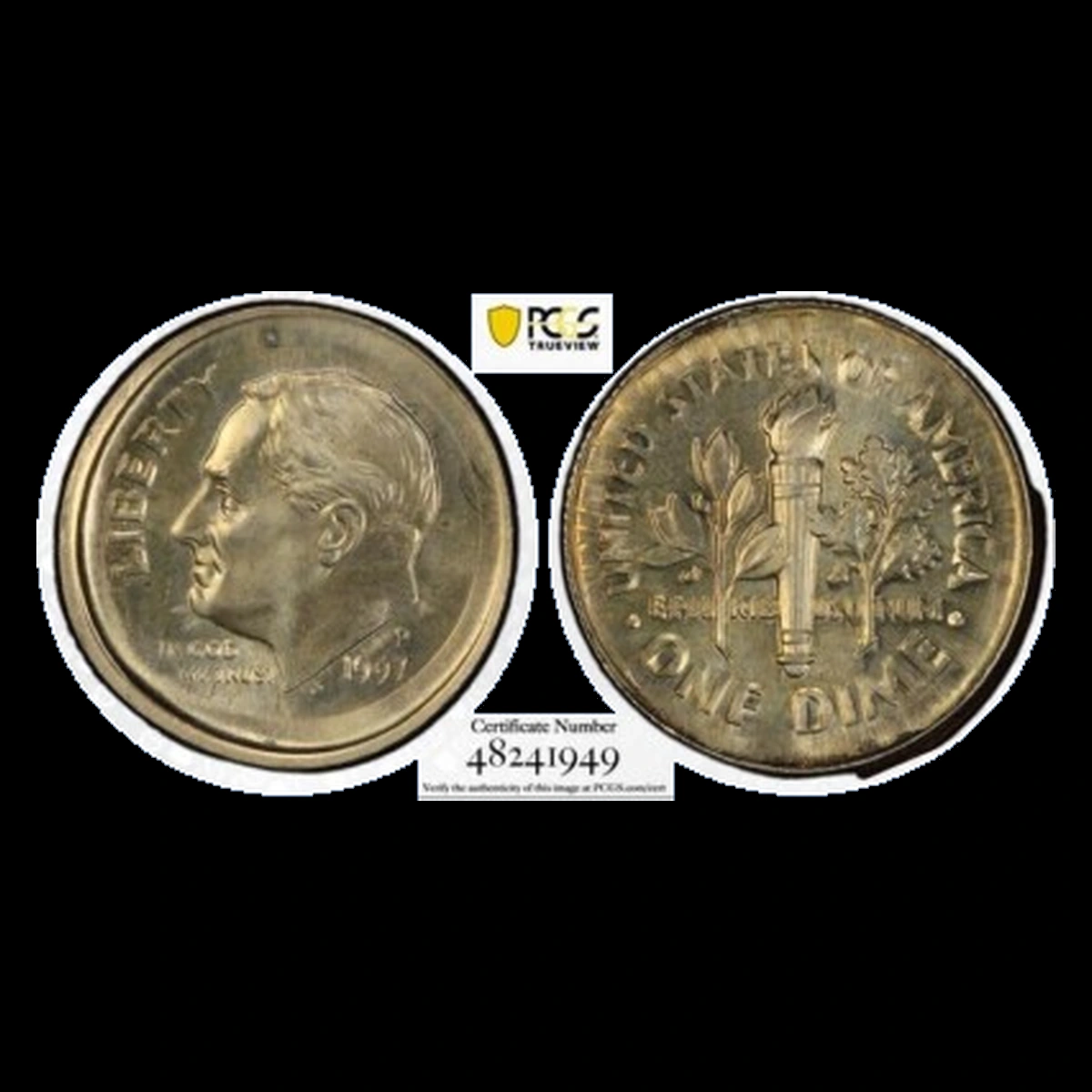
5. 1997 Dime A Wider Outline and a Hollow: Broadstrike With an Indent Error
A broadstrike spreads beyond the normal edge restraint. On one 1997-P dime, another blank also blocked part of the front and left a hollow.
That hollow is the indent. The documented coin has it on the lower-left front and was graded ANACS MS64.
How to Identify
Inspect the expanded outline and the depression separately, then see how they fit together. The blocked area need not contain backward letters because the intervening piece was a blank.
On the cataloged coin, the last date digit and P helped establish its identity. Compare those remaining details before borrowing its description for another specimen.
A separate partial-collar-and-indent report has its own edge shape. It should not inherit the broadstrike’s lower-left location.
What It’s Worth
$30–$500 is an estimated range for genuine expanded strikes and clear indent combinations. Shape, visibility, and preservation contribute to one total value.
The ANACS MS64 broadstrike with an indent sold for $58 in January 2003. That price covers the complete coin, not a separate amount for each effect.
6. 1997 Dime A Bare Crescent Beside the Design: Off-Center Strike Error
A blank that misses the middle of the press can receive only part of the design. Untouched metal remains beside lettering and portrait details that run off the edge.
A dealer described one 1997-P dime as 35% off center toward 1 o’clock. Another cataloged coin, graded PCGS MS62, is 60% off center in that direction.
How to Identify
Turn the front upright before comparing the stated direction. Then check both sides for matching boundaries between struck and untouched areas.
Read the date and P wherever they survive. Marks from grinding away finished details do not resemble metal that never received a design.
The two reported percentages belong to separate coins. Keep their shapes and grades apart when choosing a comparison.
What It’s Worth
$40–$500 is an estimated range for genuine dated 1997-P off-center dimes. A legible date can be more desirable than a larger shift that removes it.
A 1977 dime struck 10% off center sold for $109 in June 2026. It provides different-year context, rather than a result for either cited 1997 example.
7. 1997 Dime A Fine Raised Line: Die Crack Error
A narrow ridge may record a crack in the steel die that stamped the coin. Metal pushed into the opening leaves a raised line on the dime.
The report for 1997 does not establish one mint or a required path. Judge the line on the actual coin.
How to Identify
Use low side lighting and follow the line with a magnifier. A crack trace rises above the surface instead of cutting down into it.
Check for a groove beside the ridge, since a scratch can push metal up along its sides. Photograph where the line meets a letter or another design feature.
What It’s Worth
$5–$100 is a working estimate for small genuine die cracks. Faint lines usually attract much less interest than clear, easily visible ones.
The range uses minor modern Roosevelt cracks as a guide. It does not assume that a large chunk of the die broke away or assign a sale to the general 1997 report.
8. 1997 Dime A Local Patch of Missing Detail: Struck Through Material Error
Material blocking part of a die can prevent a local area from receiving its normal design. A seller described one 1997-P example as a grease strike and also noted a partial collar.
The missing detail is the feature to inspect. Weak letters alone do not identify the blocking substance as grease.
How to Identify
Compare the affected patch with equally exposed details elsewhere. Wear often flattens the high points more widely, while an obstruction may affect a limited area.
Look for a boundary between normal and missing design. Scraping, chemicals, and a generally weak strike need separate consideration.
The report does not specify an exact patch location. Check the reported edge step on the actual coin rather than assuming every weak-design dime has a partial collar.
What It’s Worth
$10–$150 is an estimated range for genuine local blocked-design errors. The size and clarity of the interruption help determine its appeal.
The seller’s description is not a completed sale or independent proof of grease. If a collar error occurs on the same coin, compare the combination once instead of adding two maximum estimates.
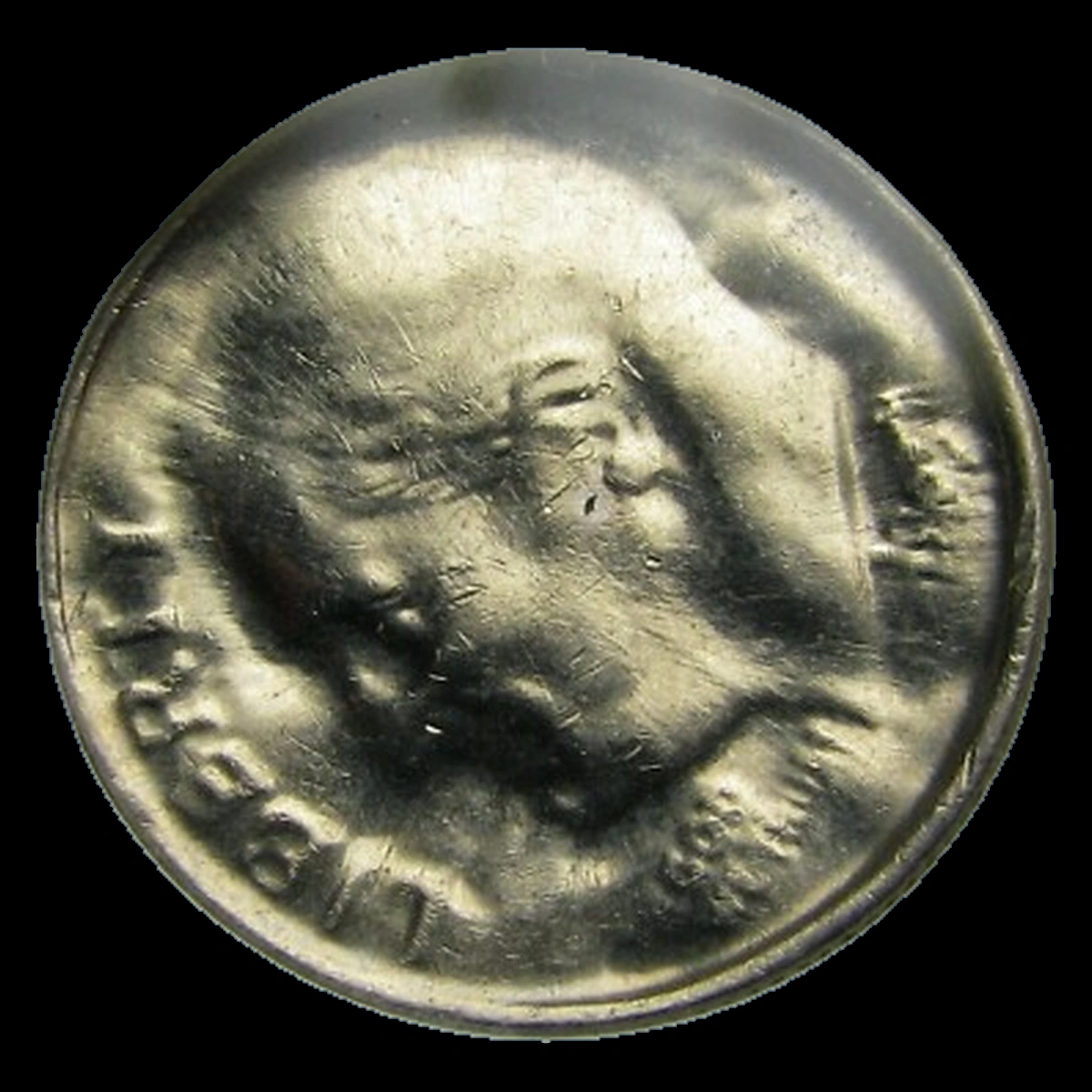
9. 1997 Dime A Softened Image From a Covered Die: Capped-Die Strike Error
A coin stuck to a die can act as a covering between the tool and later blanks. As this covering thins, it can pass a weak or spread-out design to new coins.
The recorded 1997-P dime received a strike through such a late-stage cap. It was graded ANACS MS60, meaning unworn but potentially heavily marked.
How to Identify
Compare the amount of detail on the two faces. A covered die can alter one side while the opposite die continues to produce a clearer image.
Match the complete softened pattern rather than one weak letter. The supplied record does not establish which face to expect on every candidate.
The receiving dime is not the cap itself. It does not need the deep cup shape that a coin stuck to a die can develop.
What It’s Worth
$30–$300 is an estimated range for comparable late-stage capped-die strikes. A recognizable altered image is more useful than unexplained overall softness.
The ANACS MS60 example sold for $49 in October 2022. This price concerns the receiving coin, not the separate coin that covered the die.
10. 1997 Dime Roosevelt’s Design Appears Twice: Double Strike Error
A dime can receive another strike if it remains in or returns to the press. The later image may land across the first one at a different position.
A documented 1997-P coin has an off-center second strike and an NGC MS64 grade. Its auction title does not give an exact shift percentage or direction.
How to Identify
Connect recognizable parts of each design and inspect where the later one crosses the earlier image. A depression alone is not evidence of another strike.
A separate published example has one strike about 70% off center near 12:30 and another about 98% near 6 o’clock. That coin may have flipped between strikes.
The possible flip and those percentages belong to the separate published coin. Do not add them to the MS64 auction example’s description.
What It’s Worth
$100–$1,000 is an estimated range for genuine repeated-strike dimes. More distinct images and a readable date can make the sequence easier to understand.
The NGC MS64 example sold for $138 in December 2020. No confirmed amount is assigned here to the more extreme two-strike example.
11. 1997 Dime A Cent Design Over an Earlier Dime: Double Denomination Error
The documented coin began as a finished 1997-P Roosevelt dime. A later strike added a 1997 Lincoln cent design over it.
Both designs remain on the same original metal. The order matters: this is a cent struck over a dime, not a dime struck on an unused cent blank.
How to Identify
Find a Roosevelt or torch feature beneath a Lincoln-cent detail. Follow where the newer design presses across the older one.
Read the two dates separately and establish the earlier P from the dime’s own remains. Another account mentioning a later cent year does not describe this same 1997-over-1997-P coin.
The starting coin had a dime’s layered metal and normal weight, not a cent’s blank. Inspect its edge for surviving grooves and layers, while allowing for expansion from the later strike.
What It’s Worth
$1,500–$3,500 is an estimated range for comparable cent-over-dime errors with readable designs. Clear evidence of both stages strengthens the comparison.
The NGC MS65 example sold in August 2026, but its public listing does not display the final price. Earlier bids of $1,585 and $1,905 were interim amounts.
Neither bid is presented here as the sale result. The estimated range applies to the whole double-denomination coin.
Conclusion
A useful 1997 dime check starts with the edge and metal, then moves to the design. Exposed copper, a solid copper-nickel disk, and an older dime under a cent image are three different findings.
Estimated values range from $5–$3,500. Keep ordinary clad coins separate from silver Proofs, and use only the strike directions, measurements, and grades that belong to the example you are comparing.