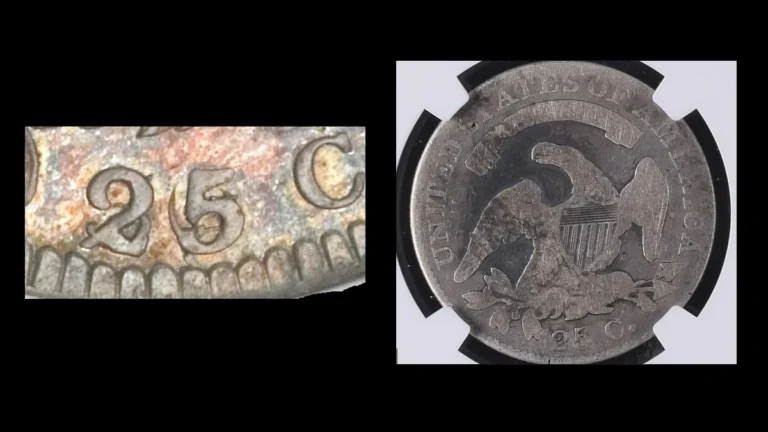
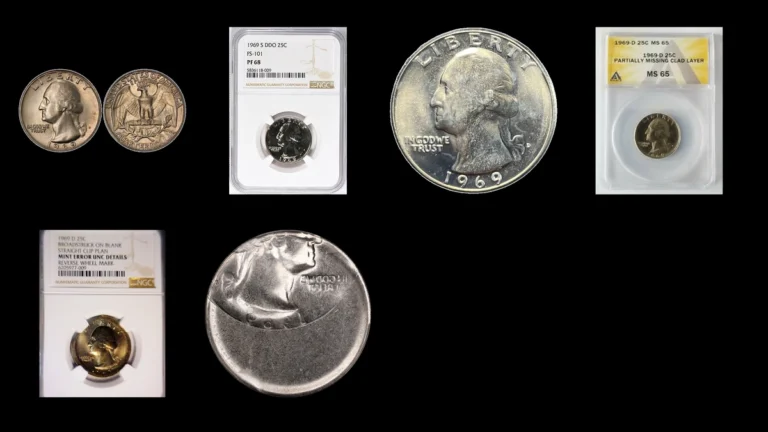
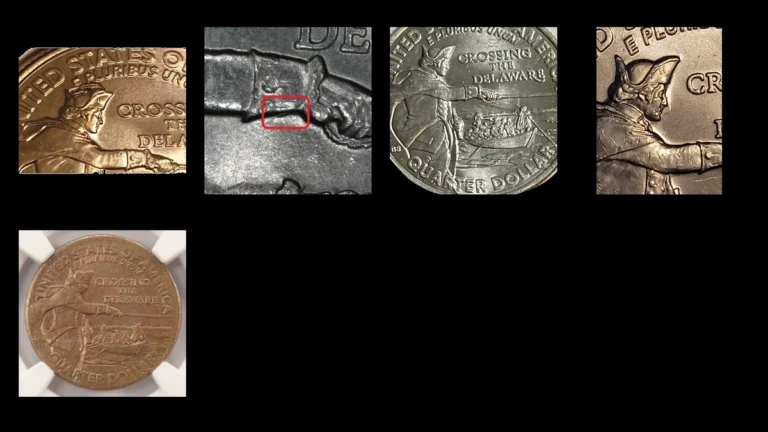
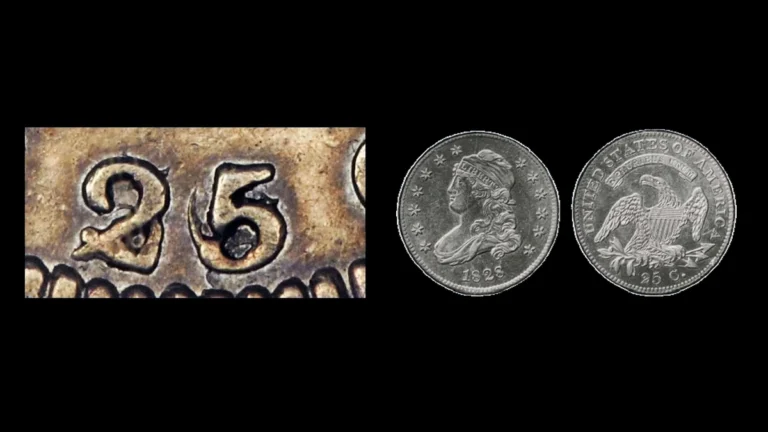
Rare 2000 Quarter Errors (List & Pictures)
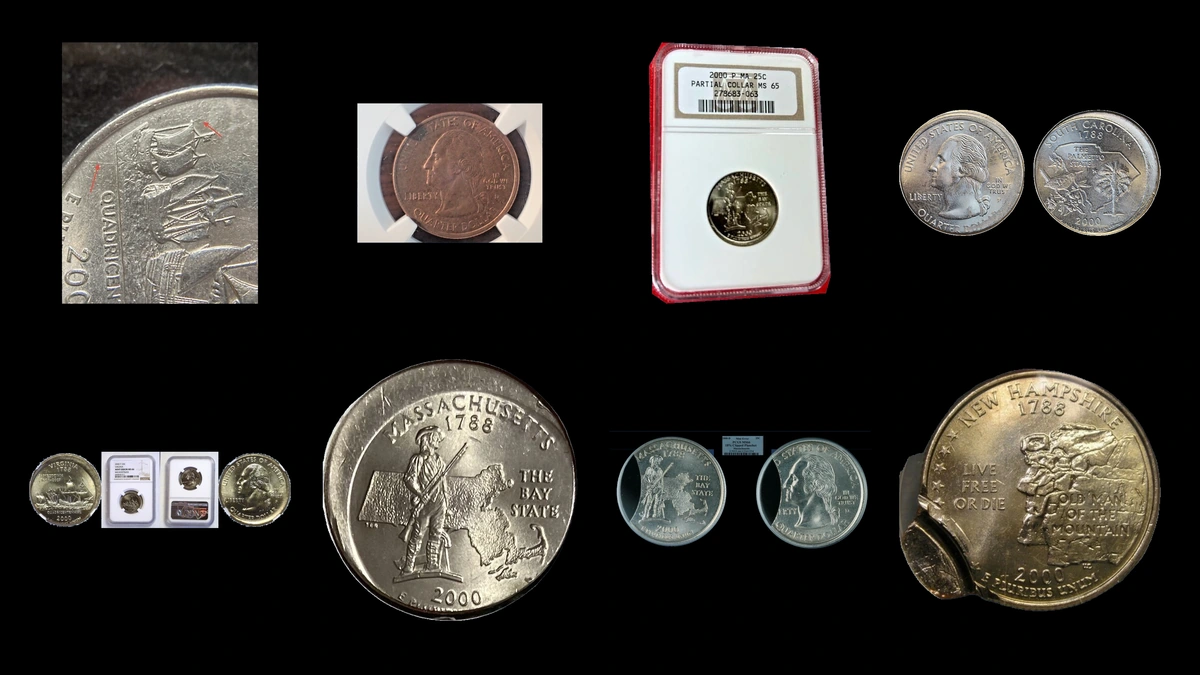
The five state designs make 2000 quarter errors a broad field, from tiny earlobe doubling to mismatched quarter and dollar dies. Supplied estimates run from $10 to $200,000.
A Washington/Sacagawea-eagle mule graded PCGS MS66 sold for $194,062 in January 2024. Start with ordinary design details and metal defects, then compare unusual outlines and overlapping images before considering a rare die pairing.
For measurement comparisons, an ordinary clad quarter is about 5.67 grams and 24.3 millimeters across. A 2000 silver Proof instead has a 6.25-gram standard and should not be assessed as a copper-core clad coin.
1. 2000 Quarter A Second Curve Appears under the Ear: Doubled Die Error
Massachusetts Philadelphia and Denver examples have distinct doubled-ear patterns, and a Denver Virginia example also affects the earlobe. The repeated feature originated in the die before it struck the coin.
New Hampshire doubled-die reports concern both mints but do not establish the same ear feature. Each variety needs its own match.
How to Identify
Read the mint mark before comparing the ear’s lower contour under magnification. On the Philadelphia Massachusetts example, tool marks near UNITED, GOD, and BAY provide additional comparisons that should not be transferred to Denver.
Look for a raised repeated curve rather than a thin flat shelf from strike movement. Use an identified New Hampshire reference instead of assuming that every reported variety affects the ear.
What It’s Worth
$20–$250 is the estimate for these small doubled details. Strength, attribution, and preservation matter more than the description “doubled ear” alone.
A clear unworn feature is easier to demonstrate than one obscured by scratches. A variety label should agree with the coin’s actual pattern.
2. 2000 Quarter A Brow or Mountain Mouth Gains a Ridge: Die Crack or Cud Error
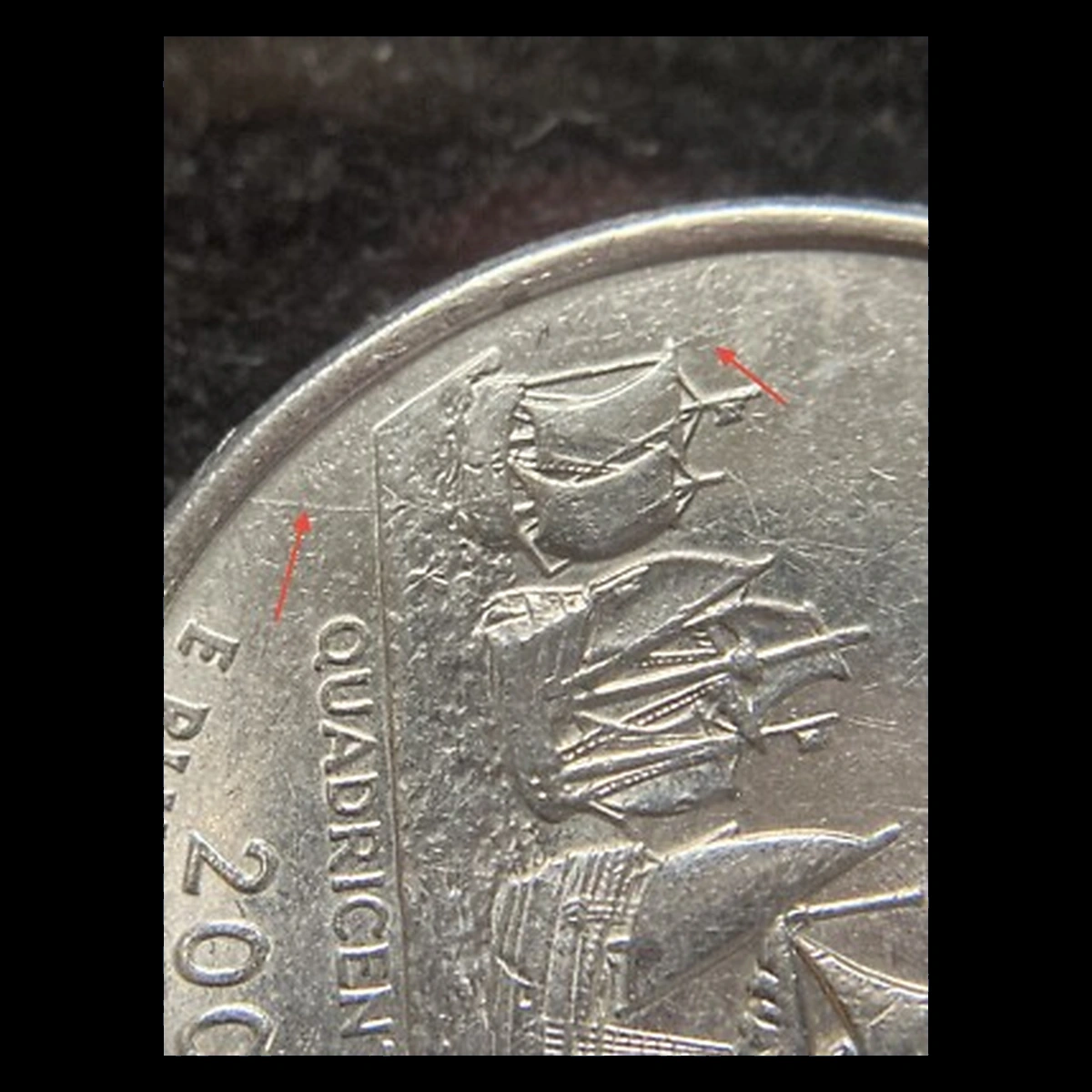
Reported cracks include South Carolina’s Washington brow and nose and a line from New Hampshire’s mountain mouth. Metal entering a die fracture produces a raised ridge on the coin.
A reported Virginia cud is a different shape: a raised area from a broken die edge connected to the coin’s rim. An internal lump is not automatically a cud.
How to Identify
Use side lighting to distinguish a raised line from a recessed scratch with displaced metal beside it. Keep the surrounding portrait or landscape visible so normal design lines remain identifiable.
For a cud claim, trace the patch into the outside rim. A nickname for a mouth line cannot substitute for that connection.
What It’s Worth
$10–$50 is the estimate for modest readable cracks, while obvious rim breaks are estimated at $75–$300. These are whole-coin ranges.
The size and relief of the original feature influence appeal. Damage that merely produces a raised lip does not qualify.
3. 2000 Quarter Much of the Virginia Design Is Shallow: Weak Strike Error
A Denver Virginia quarter graded ANACS MS61 was labeled a die adjustment strike. Broad faint detail can result from insufficient striking pressure, although the older label does not prove why that pressure was low.
How to Identify
Compare both faces and inspect the fields beside the shallow design for circulation rubbing. An originally weak strike should not require heavy surface wear to explain its faintness.
A local missing letter may instead involve an obstruction. Follow the extent of the weakness before assigning a press-wide explanation.
What It’s Worth
$40–$300 is the supplied estimate for comparable weak strikes. The Denver Virginia ANACS MS61 coin sold for $62 in October 2010.
MS61 indicates no circulation wear with noticeable marks. Clear original weakness is a better comparison than a worn quarter with a vaguely faint design.
4. 2000 Quarter Selected Details Fail to Form: Struck Through or Filled Die Error
A supplied South Carolina example has extensive weakness on both faces, especially the reverse. A separate Philadelphia Virginia coin has weak peripheral lettering on both sides.
Material between die and blank can interrupt the strike, while grease filling die recesses can prevent letters from forming. The reports do not identify one common object for these coins.
How to Identify
Compare weak areas with adjacent intact detail and inspect their boundaries for scraping or impact. On South Carolina, wide photographs are needed to show how much of the reverse is affected.
For Virginia, follow the outer lettering on both faces rather than isolating one letter. Name cloth, wire, or another material only if its shape or texture supports that identification.
What It’s Worth
$20–$100 is the estimate for modest filled-letter effects, with larger clear interruptions estimated at $100–$600. Preservation and extent help distinguish the comparisons.
Several weak letters from one obstruction remain part of one error coin. They do not each carry a separate full premium.
5. 2000 Quarter Maryland’s Surface Has an Unusual Tone: Improper Annealing Error
Annealing prepares the blank through heating before striking. Reported Maryland examples include red or gray Denver coins, sometimes with rolling lines, and separate Philadelphia examples.
How to Identify
Examine the quarter under neutral light and inspect the texture where colors change. Residue, bubbles, corrosion, and later burning can alter an ordinary coin’s appearance.
A normal weight does not prove annealing, and a dark nickname does not establish mint origin. Preserve the surface for comparison with an identified example.
What It’s Worth
$30–$300 is the estimate for a convincing Maryland annealing error. Distinct original color on attractive surfaces can be more appealing than a heavily marked example.
The range requires evidence of a preparation-stage effect. It is not a price guide for every dark Maryland quarter.
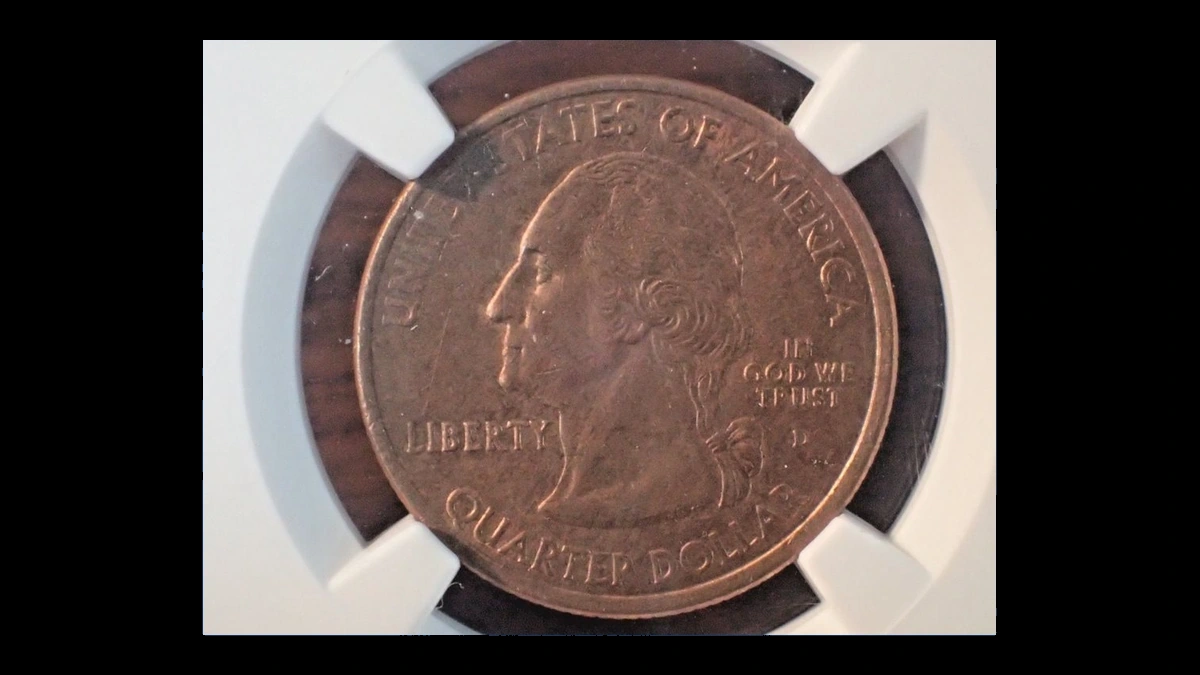
6. 2000 Quarter Copper or a Defective Patch Replaces Cladding: Missing or Defective Layer Error
Missing-layer examples are supplied across all five state designs, with different affected faces and mints. New Hampshire also has a defective reverse-cladding example that should not be described as complete layer loss.
How to Identify
Inspect the edge and affected face together for actual layer structure. Staining or a coating can change color while the pale outer metal remains intact.
Recorded examples include a 4.51-gram Massachusetts coin and Maryland pieces around 4.6–4.7 grams. These specimen measurements are not mandatory weights for every layer error.
On the New Hampshire coin, examine the patch boundary without calling the whole reverse bare. Scratches and chemical pits may indicate later metal removal.
What It’s Worth
$80–$1,000 is the supplied estimate for missing or defective cladding. A Denver Massachusetts reverse-missing-layer coin with environmental damage sold for $79 in January 2014.
That problem coin is not a clean unworn comparison. A genuine manufacturing error can coexist with later damage that reduces value.
7. 2000 Quarter A Silver Proof Has a Blank Defect: Defective Planchet Error
The recorded South Carolina example is a San Francisco silver Proof graded PR69. Its defect originated in the metal blank before the design was impressed.
How to Identify
Establish the silver Proof identity before inspecting how the design crosses or meets the defective area. A high numerical grade describes preservation and does not identify the exact flaw mechanism.
Use changing light to distinguish original irregular metal from cuts through a finished surface. Do not automatically call the defect a split or missing clad layer.
What It’s Worth
$75–$400 is the estimate for a comparable identifiable blank defect. The PR69 silver Proof sold for $109.25 in October 2010, including its silver content and condition in the whole-coin price.
A larger rough area is not automatically worth more. Visibility and the appearance of the remaining design influence collector preference.
8. 2000 Quarter Wire Remains within Split Metal: Rolled-In Foreign Material Error
A Philadelphia Maryland quarter contains a steel wire or bristle associated with split cladding. The material was incorporated into the strip during rolling, before blanks were cut.
How to Identify
Photograph the object from above and at a low angle to show its relationship to the surrounding metal. Do not pull it or probe the opening.
The Error-Ref rolled-in-bristle discussion explains why this differs from a groove left by loose material during the final strike. Embedded ends and split cladding provide more evidence than a dark line alone.
What It’s Worth
$200–$1,200 is the supplied estimate for a clearly identified rolled-in wire quarter. Visible retained material and an understandable connection to the metal strengthen its display.
A loose wire resting in a scratch is a different situation. Its appearance would not establish this manufacturing sequence.
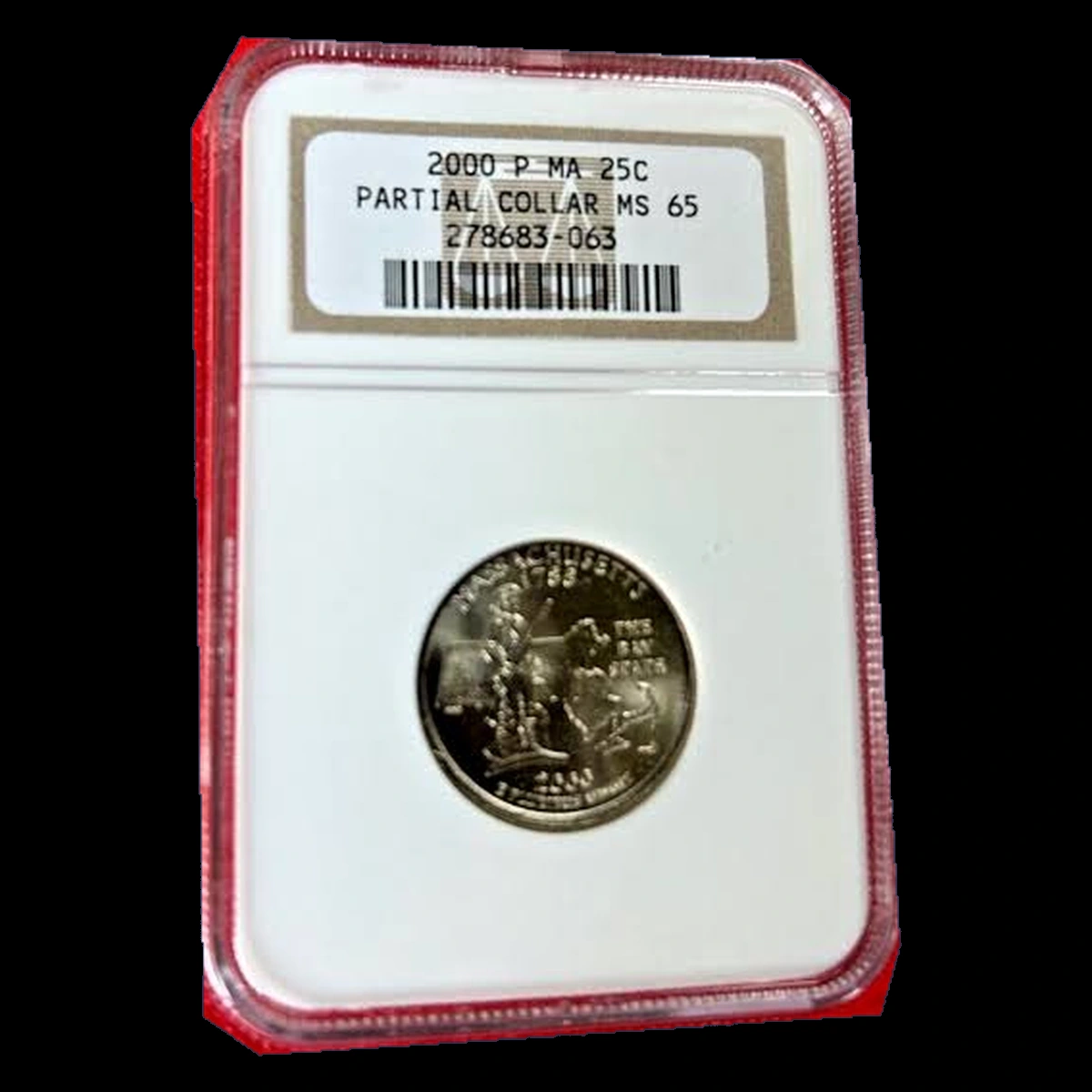
9. 2000 Quarter The Edge Has a Wider Second Level: Partial Collar Error
Massachusetts and Maryland examples show a step between a restrained grooved band and a wider section. The blank sat only partly inside the collar during striking.
A Virginia combination also has a displaced front design and an unstruck lip near one o’clock. Those front clues accompany the edge error rather than replacing it.
How to Identify
Examine the edge from the side and follow the physical step around its circumference. A normal copper stripe is a color boundary, not a two-level edge.
On the Virginia example, compare the one-o’clock lip and nearby weak QUARTER DOLLAR with the stepped structure. A front-only photograph may conceal the decisive collar evidence.
What It’s Worth
$20–$350 is the estimated group range. Maryland partial-collar coins sold for $19 in September 2008 and $29 in December 2008 in different unworn grades.
A pronounced step or additional clear striking feature may attract more interest. Small edge irregularities do not automatically command large premiums.
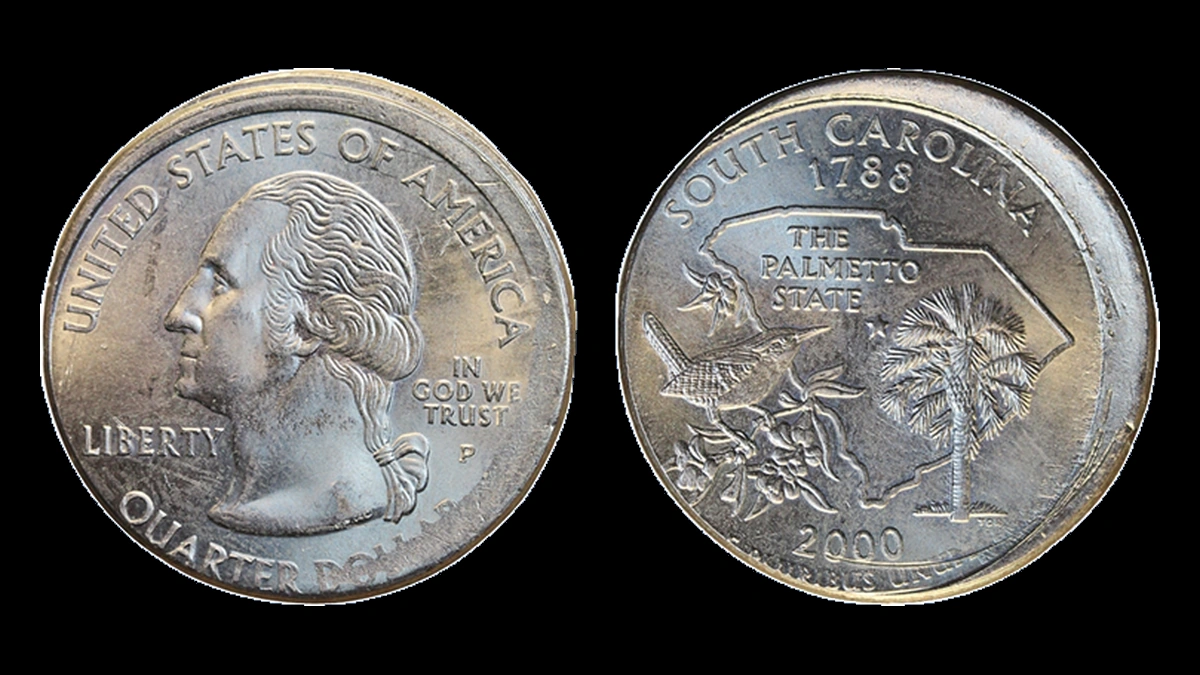
10. 2000 Quarter Virginia’s Two Designs Sit Unevenly: Misaligned Dies Error
Both dies are reported as misaligned on a Philadelphia Virginia quarter. Their separate positions can produce unequal borders without establishing that both moved in the same direction or by the same amount.
How to Identify
Photograph each face straight on and compare its narrowest and widest borders independently. A tilted view can exaggerate apparent misalignment.
Inspect the edge for dents or a folded lip, then ask whether separate die positions explain the two designs. A displaced blank requires a different explanation for compatible missing design on both faces.
What It’s Worth
$75–$600 is the estimate for a convincing Virginia dual-misalignment example. Obvious shifts and an undamaged edge support stronger comparisons.
One slightly uneven rim on an ordinary quarter is insufficient. Both reported design shifts need visible support.
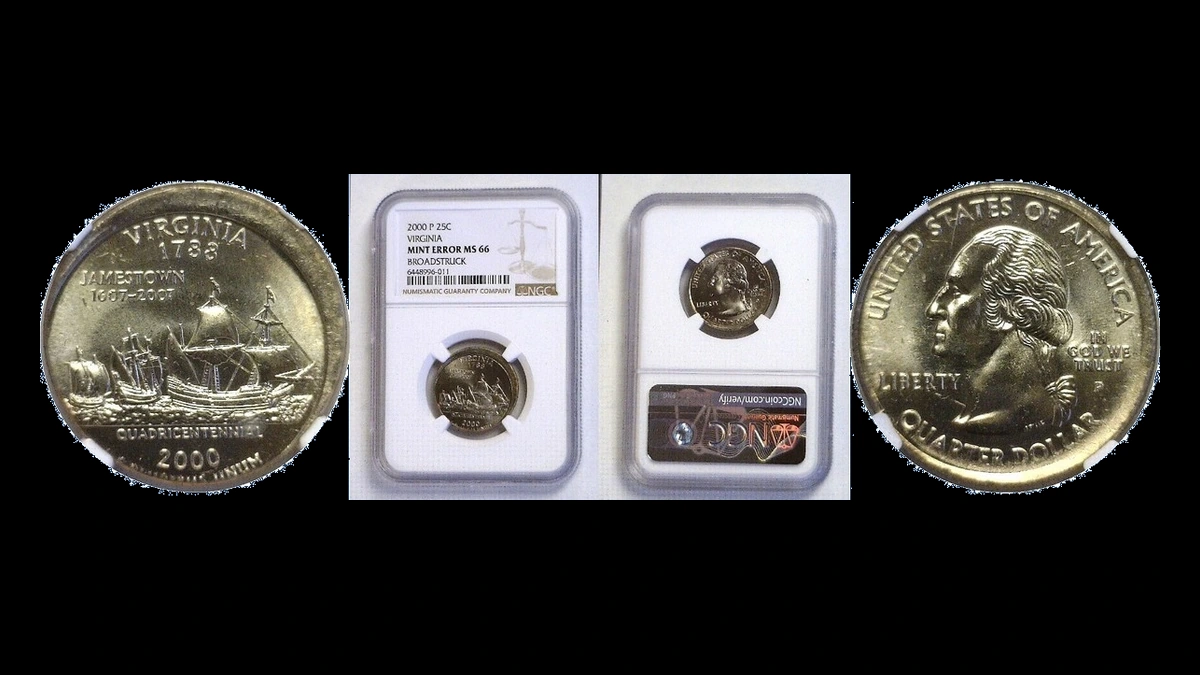
11. 2000 Quarter The Complete Picture Sits in Spread Metal: Broadstrike Error
Broadstrikes are reported for South Carolina, New Hampshire, Virginia, and Massachusetts. Some Massachusetts and New Hampshire pieces used Type I blanks, meaning blanks without the usual prepared raised rim.
A Massachusetts combination also has a small front struck-through area and a die crack. These are features of one coin rather than separate objects.
How to Identify
Trace the full design inside the expanded outline and inspect the edge for incomplete collar grooves. An off-center strike instead loses part of the intended picture beyond the metal.
On the Massachusetts combination, the thin impression near eleven o’clock and raised bust-tip crack require separate surface checks. Neither proves broadstriking without the outline evidence.
What It’s Worth
$30–$750 is the supplied broadstrike estimate. Noticeable spread and readable original artwork are generally easier to display than mild unevenness.
The Massachusetts coin receives one whole-coin value for its combined features. Adding full broadstrike, crack, and struck-through prices would count the same object repeatedly.
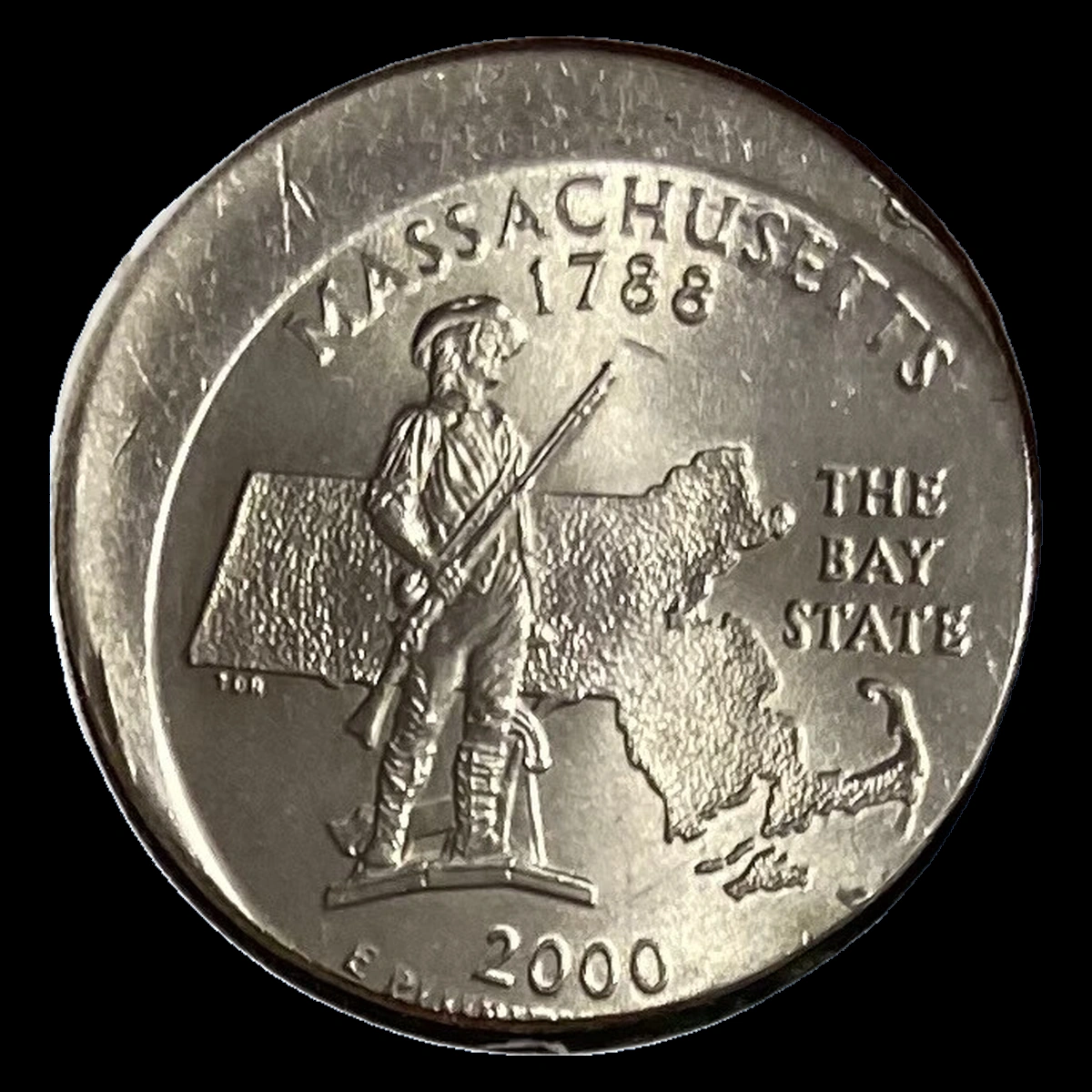
12. 2000 Quarter Part of the State Design Misses the Blank: Off-Center Strike Error
Examples range from modest Virginia displacement to roughly half the design missing on New Hampshire. A Maryland specimen is described as about 45% off center, with its mint not established.
A South Carolina piece may be listed as “(2000)” when the design identifies the issue but the date itself is unstruck. Parentheses preserve that distinction.
How to Identify
Compare both faces and locate the untouched area opposite the lost design. A shift on only one face may instead involve die alignment.
Inspect the plain surface for grinding and read the actual year where it survives. Virginia’s 1607–2007 Jamestown inscription does not replace the 2000 issue date.
What It’s Worth
$80–$1,500 is the estimate for these off-center quarters. Readable identity and original surfaces matter alongside displacement.
The Denver New Hampshire example has reverse scratches. Its condition must remain separate from higher-grade or cleaner specimens, even when their shifts look similar.
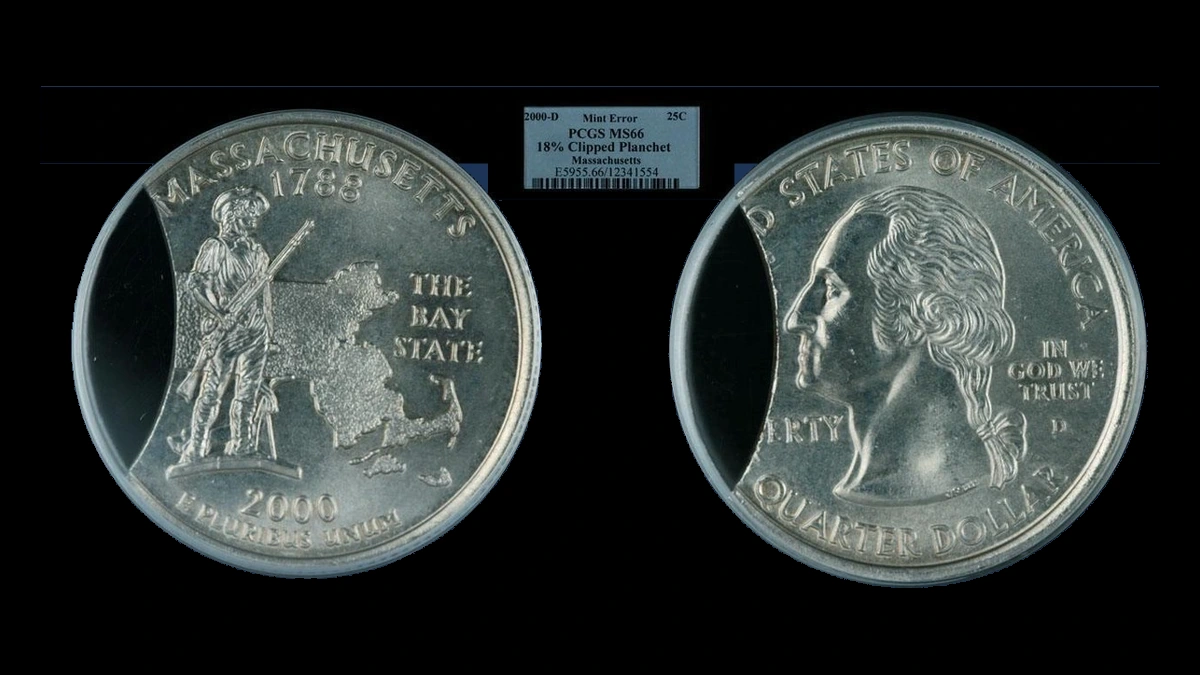
13. 2000 Quarter The Blank Has a Gap or Unusual Outline: Clips and Incomplete Blanks Error
Massachusetts, Maryland, and Virginia examples include curved, straight, corner, and oval incomplete blanks. Some also received off-center strikes.
A Massachusetts corner-clip coin weighs 4.4 grams, while a separate Massachusetts coin combines double curved clips with an off-center strike. Neither should be confused with the double straight-clip sale below.
How to Identify
Inspect the design beside the missing boundary for original metal flow rather than later cutting. On an oval blank, trace the entire outline instead of expecting a single bite-shaped gap.
Separate absent metal from present but unstruck metal on combined examples. Weight alone cannot assign another coin’s clip percentage.
What It’s Worth
$40–$150 is the estimate for modest clips, with larger or combined errors reaching an estimated $500–$3,500. A Philadelphia Maryland quarter with a 20% clip sold for $84 in March 2014.
A Massachusetts double straight-clip and off-center combination sold for $3,360 in July 2021. That dramatic combination differs from both the 4.4-gram corner clip and the double curved-clip report.
14. 2000 Quarter A Cut Is Attributed to Testing: Virginia Assay Cut Error
A Philadelphia Virginia quarter graded NGC MS62 was offered as an assay-cut example. An assay cut concerns removal of metal for testing rather than an incomplete blank produced during ordinary cutting.
How to Identify
Start with the holder description and supporting history, then inspect the cut and adjacent design. A missing section cannot establish who removed it or why.
Tool marks and remaining weight may describe the removal without proving Mint testing. Preserve the cut surface rather than cleaning it or trying to reproduce its shape.
What It’s Worth
$800–$1,800 is the conditional estimate for a comparable established assay-cut coin. The Virginia MS62 example was listed at a $1,500 asking price, not a documented completed sale.
A neatly cut ordinary quarter does not qualify from appearance alone. The attributed history is essential to this comparison.
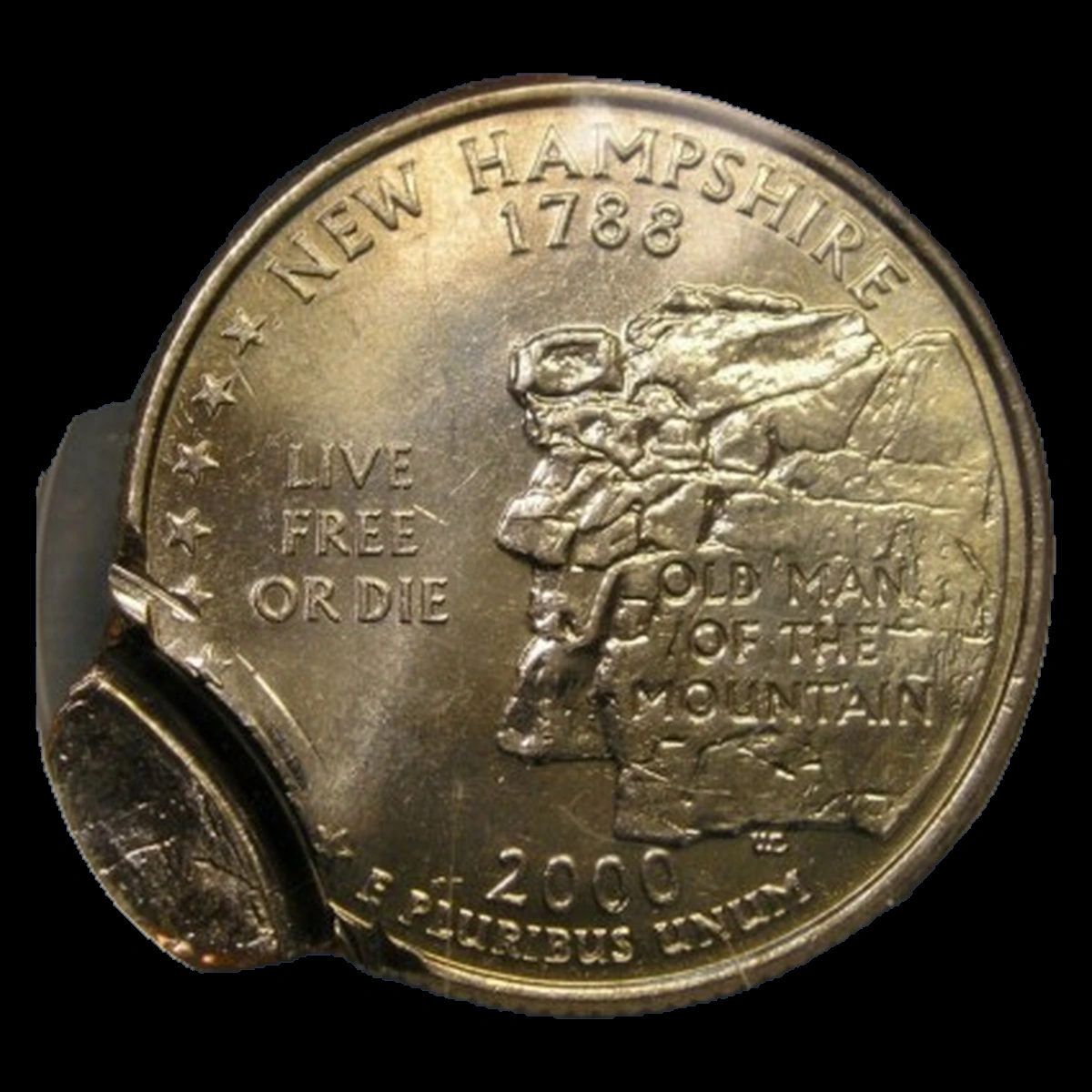
15. 2000 Quarter Several Design Positions Overlap: Multiple Strikes Error
Examples occur across all five state designs, with Massachusetts and Virginia pieces receiving more than two strikes. Movement between blows can leave distinctly displaced images.
A San Francisco New Hampshire clad Proof instead shows a smaller rotated second impression. That close overlap is a repeated strike, not a design doubled within the die.
How to Identify
Trace connected groups of letters or artwork into separate positions rather than counting every extra line. On the Proof, inspect the date and reverse lettering for the modest rotation.
Later strikes may cover a mint mark or place another beyond the metal. The Massachusetts example whose mint is not established must retain that uncertainty.
What It’s Worth
$200–$2,500 is the supplied group estimate. A Massachusetts triple strike sold for $1,200 in December 2025, while a quadruple strike brought $1,037 in March 2026.
The New Hampshire clad Proof sold for $253 in October 2010. The different results show why counting blows alone does not determine value.
16. 2000 Quarter A Smooth Depression Accompanies Another Error: Indent Combinations Error
Two Philadelphia New Hampshire examples include an indent from an overlapping blank. One is about 80% off center, while the other is double-struck with a 40% indent.
How to Identify
On the 80% example, distinguish the small struck area, plain remaining metal, and actual depression. They describe different parts of the same accident.
On the second coin, establish the two design positions before outlining the 40% indent. That percentage describes the hollow rather than the distance between strikes.
A backward image within a depression calls for a brockage comparison. A later dent may instead crush or drag already finished detail.
What It’s Worth
$300–$2,500 is the estimate for recognizable New Hampshire indent combinations. Clear boundaries and surviving state detail help demonstrate the event.
The indent and accompanying strike error contribute to one value. Their separate full estimates should not be added.
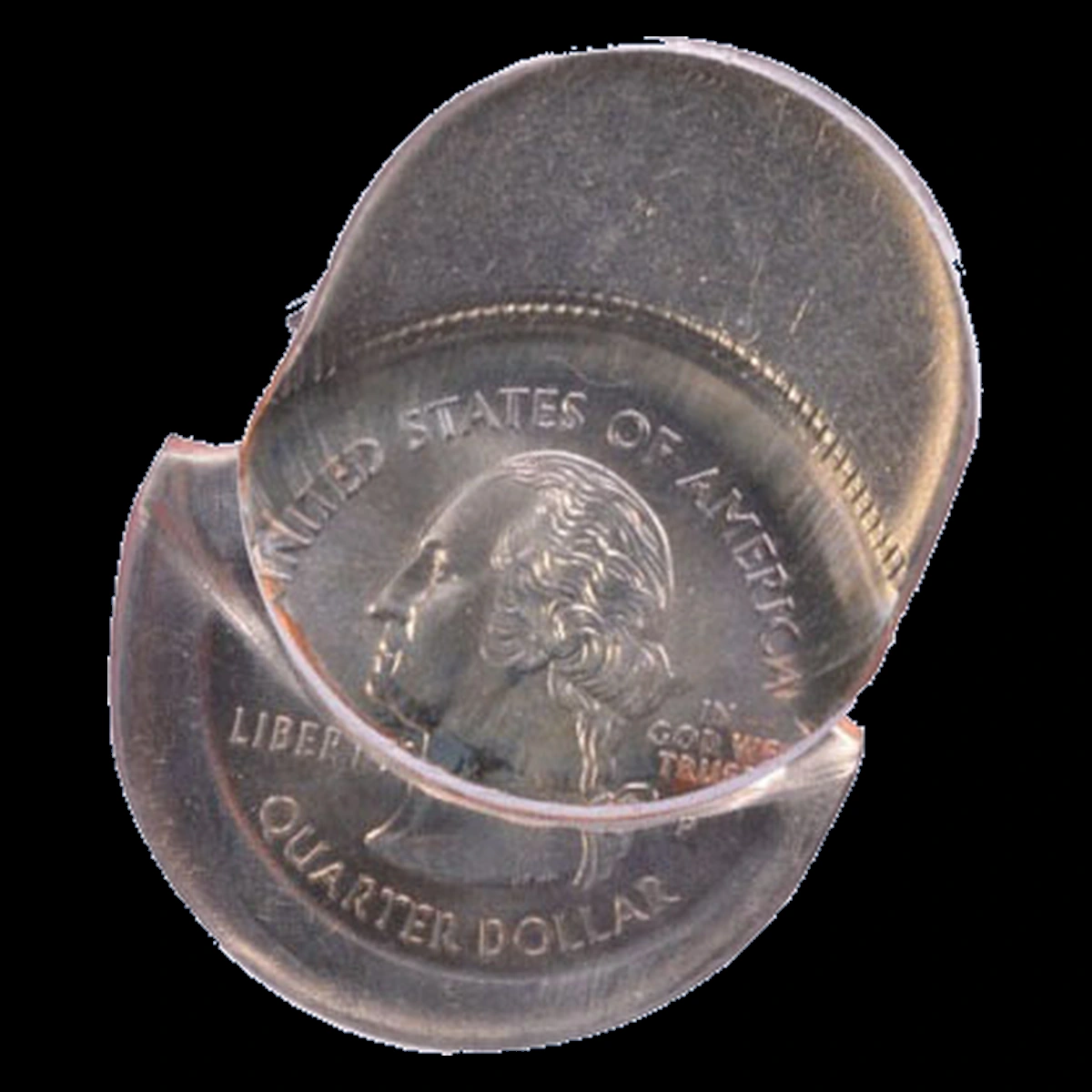
17. 2000 Quarter A Mirror Image Links One Coin to Another: Brockage and Matched Pair Error
A finished coin can impress its raised design into another blank as a sunken reversed image called a brockage. New Hampshire examples include a double-strike and brockage matched pair and a separate front-brockage broadstrike.
How to Identify
Read the transferred letters backward and use side lighting to establish recessed relief. A normal raised duplicate in ordinary reading direction requires another explanation.
For a proposed pair, compare several matching details and boundaries in photographs without pressing the coins together. On the broadstruck example, evaluate expansion separately from the mirror impression.
What It’s Worth
$500–$2,000 is the estimate for a clear brockage, while a convincing matching pair is estimated at $1,500–$6,000. A pair’s value covers both members together.
The separate broadstruck brockage remains one combined error coin. Matching contact evidence and image clarity are central to either comparison.
18. 2000 Quarter A Heavy Yellow Blank Is Specially Identified: Reported Experimental Planchet Error
The Massachusetts example weighs 100 grains, approximately 6.48 grams, and has bright yellow metal with small edge defects. It is identified as an experimental-blank strike.
Maryland and South Carolina experimental-blank reports do not establish the same measurements or metal mixture. They require separate evidence.
How to Identify
Begin with the attribution and documented metal analysis rather than yellow color. Plating or an ordinary wrong blank can produce a different explanation.
Compare the Massachusetts recorded mass with the ordinary clad standard, while recognizing that weight alone does not establish an experiment. Inspect edges for coating buildup without scratching or applying chemicals.
What It’s Worth
$1,500–$5,000 is the estimate for an established experimental example of comparable importance. The Massachusetts 100-grain PCGS MS65 coin sold for $2,875 in February 2011.
That result belongs to the identified specimen. Maryland and South Carolina cannot inherit its composition or price from a shared label.
19. 2000 Quarter Quarter Dies Use Another Blank or Collar: Wrong Planchet Error
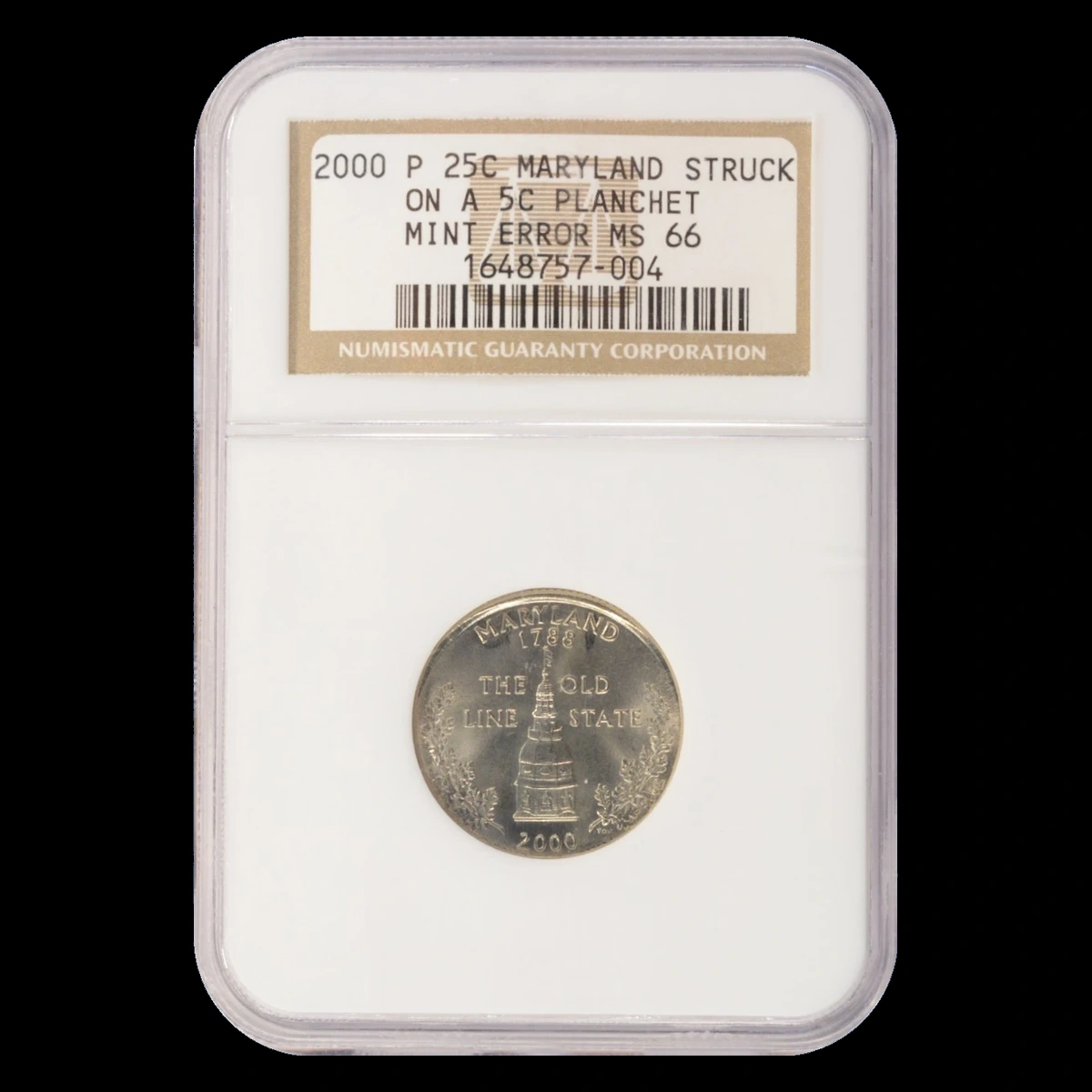
Maryland examples include nickel and dime blanks, and South Carolina has a dime-blank example. A different Maryland combination uses a dollar blank and dollar collar with the quarter’s normal two designs.
Virginia has a wrong-blank report without an established denomination. Its blank should remain unnamed until identified.
How to Identify
Read both faces before interpreting size: Washington with the proper state reverse is not a mismatched-face mule merely because the blank is large. The Maryland dollar combination requires compatible blank and collar-edge evidence.
Nickel and clad dime blank standards are about 5 grams and 2.268 grams, respectively, not documented weights of these examples. Inspect smaller pieces for original edge formation rather than grinding that removed outer letters.
What It’s Worth
$800–$5,000 is the estimate for smaller wrong-blank quarters, while the established Maryland dollar-blank and dollar-collar combination is estimated at $3,000–$15,000. These are different physical configurations.
Recognizable state detail and secure blank identification support value. Another coin’s known denomination cannot resolve the Virginia report.
20. 2000 Quarter Quarter Impressions Cover Irregular Scrap: Scrap-Metal Strike Error
A Philadelphia Massachusetts scrap strike weighs 45 grains, about 2.92 grams. A separate Denver South Carolina aluminum scrap weighs 11.1 grains, about 0.72 gram, and received nine strikes.
How to Identify
Follow connected state-design fragments across the irregular outline, including the South Carolina piece’s rotated overlapping impressions. Inspect edges for later cuts through an ordinary finished quarter.
Keep grains distinct from grams and use reliable identification for the aluminum claim. A silvery photograph alone cannot establish composition.
What It’s Worth
$1,500–$10,000 is the supplied estimate for clearly identified scrap strikes. The nine-strike South Carolina aluminum piece sold for $2,990 in September 2003.
That price covers the entire object and its repeated impressions. Its weight and metal must not be assigned to the Massachusetts scrap.
21. 2000 Quarter The Design Is Stamped into a Machine Part: Feeder Finger or Fragment Error
A feeder finger moves blanks through the press and can receive coin impressions if it enters the striking area. The Denver Maryland example is an entire part encapsulated by NGC without a numerical grade.
A separate Philadelphia South Carolina tip fragment weighs 1.5 grams and has repeated design traces. Neither object is a regular quarter blank.
How to Identify
Start with the machine-part outline, then follow the coin impressions across its surface. On the South Carolina tip, repeated UNITED STATES lettering helps connect the fragment to the dies.
Do not apply normal quarter dimensions or weigh a holder as though it were the object. The recorded 1.5 grams belongs only to the small South Carolina fragment.
What It’s Worth
$2,000–$20,000 is the estimated group range. The entire Denver Maryland feeder finger sold for $15,600 in August 2019.
Its price is not a sale result for the tip fragment. The ungraded part also should not receive an invented numerical grade.
22. 2000 Quarter Massachusetts Covers an Older Georgia Design: Same-Denomination Overstrike Error
The reported piece combines a 2000 Philadelphia Massachusetts strike over a finished 1999 Philadelphia Georgia quarter. Both impressions are quarters, so this is a cross-state overstrike rather than a double-denomination coin.
How to Identify
Compare normal images of both state designs and follow connected Georgia details beneath the stronger Massachusetts impression. Isolated faint lines may be insufficient to distinguish an undercoin from clash marks.
Read surviving years and mint marks only where visible. The standard quarter-sized host is compatible with the combination but does not prove it.
What It’s Worth
$5,000–$15,000 is the estimate for a clearly identified cross-state overstrike. The cited auction appearance was unsold and therefore supplies no realized price.
Readable portions of both designs and sound surfaces help support the attribution. Much of an earlier image may be obscured by the later blow.
23. 2000 Quarter A Dollar or Cent Design Overlies a State Quarter: Double Denomination Error
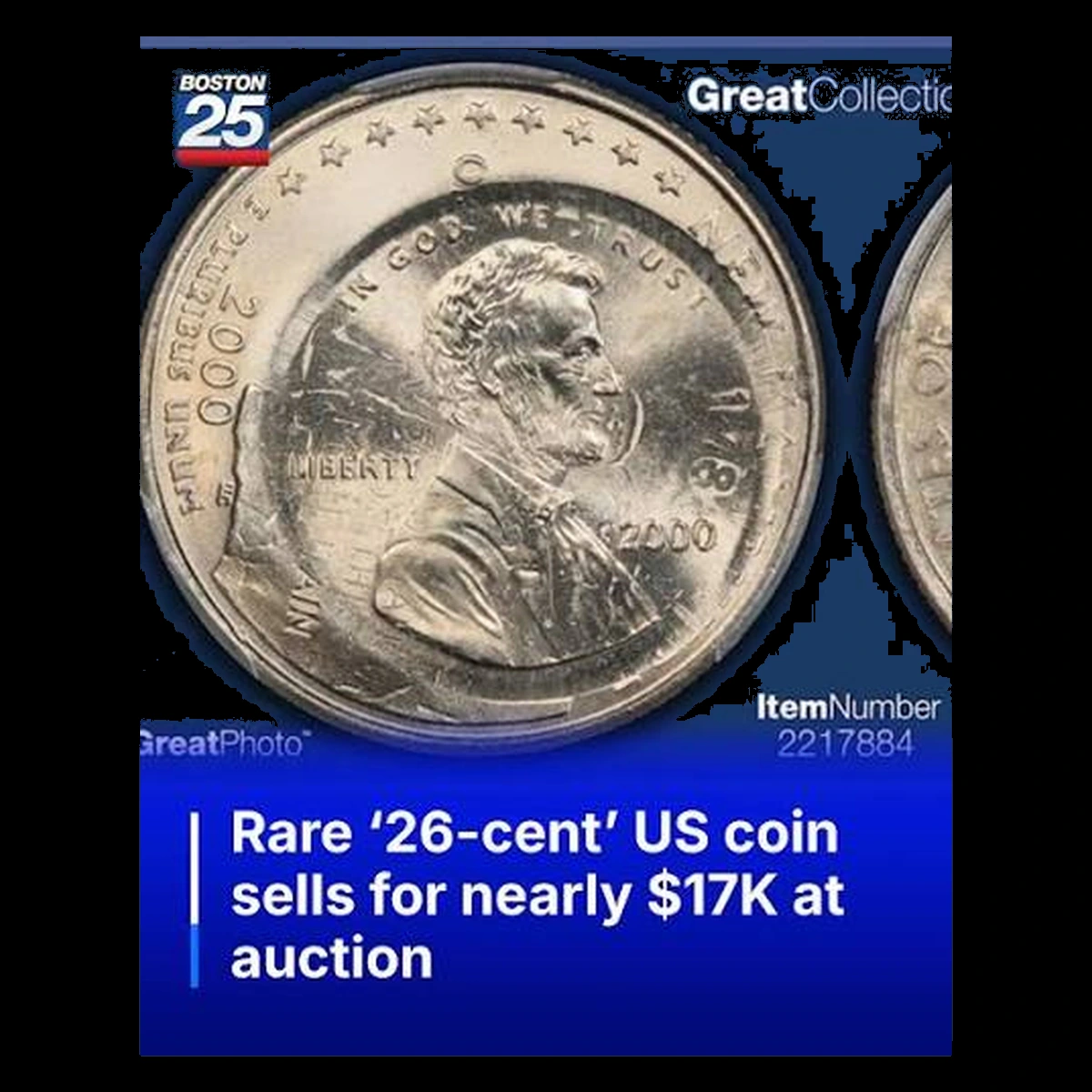
Massachusetts and Maryland quarters are known beneath Sacagawea dollar impressions. New Hampshire and Virginia hosts appear beneath Lincoln cent designs, including flip-over arrangements.
The finished quarter came first. This differs from quarter dies striking an unused blank intended for another denomination.
How to Identify
Trace an unmistakable state feature beneath the later design on both faces. Maryland’s surviving lettering and Capitol dome can establish the host without assigning its mint from the dollar’s P.
On a Virginia-under-cent piece, the later strike’s off-center measurement does not automatically describe the original quarter strike. A flip-over attribution requires the correct relationship of both old and new designs, not one upside-down letter.
What It’s Worth
$2,000–$20,000 is the estimated range for these cross-denomination overstrikes. Clear evidence of both denominations and preservation guide the comparison.
The cited Massachusetts-under-dollar auction appearance was unsold. It cannot be quoted as a completed transaction, and a flip-over label alone does not determine the strongest value.
24. 2000 Quarter The Two Faces Belong to Different Coins: Quarter-and-Dollar Mule Error
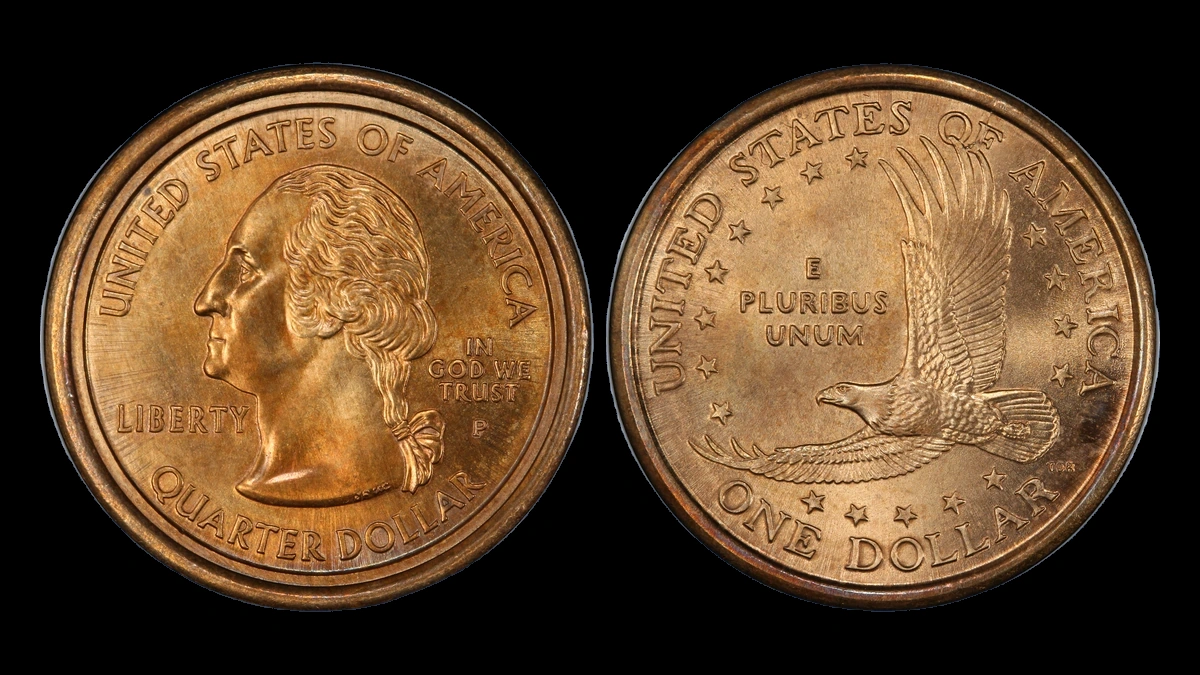
A mule pairs dies intended for different coins. One established combination has Washington opposite the Sacagawea dollar’s eagle and is undated, though assigned to 2000.
A separate Denver combination pairs Sacagawea with the South Carolina reverse. Both use dollar blanks, but their face pairings must remain distinct.
How to Identify
Turn the coin over and identify each design independently. The Washington/eagle mule is not expected to show a normal quarter date.
The Denver Sacagawea/South Carolina example has a plain edge, weighs 8.1 grams, and measures 26.5 millimeters. Its reverse has raised inner and outer rim levels around a lower middle band.
Check for seams or altered faces and seek authentication of the intact pairing. A gold-colored ordinary quarter does not establish a mule.
What It’s Worth
$75,000–$200,000 is the estimate for these established pairings. PCGS reported the Washington/eagle MS66 sale of $194,062 in January 2024.
The different Denver Sacagawea/South Carolina mule graded MS64 sold for $84,000 in August 2024. Each result belongs to its own pairing and preservation.
Conclusion
The state design, mint, and physical structure are the best way to organize 2000 quarter errors. A doubled ear needs a die-pattern match, while missing layers, incomplete blanks, and machine-part strikes require different evidence in the metal.
For overlapping or mismatched designs, establish which impressions belong together and in what order. Preserve the distinction between individual coins, matched pairs, asking prices, and unsold appearances before applying any value comparison.