Rare 2010 Sacagawea Dollar Errors (List & Pictures)
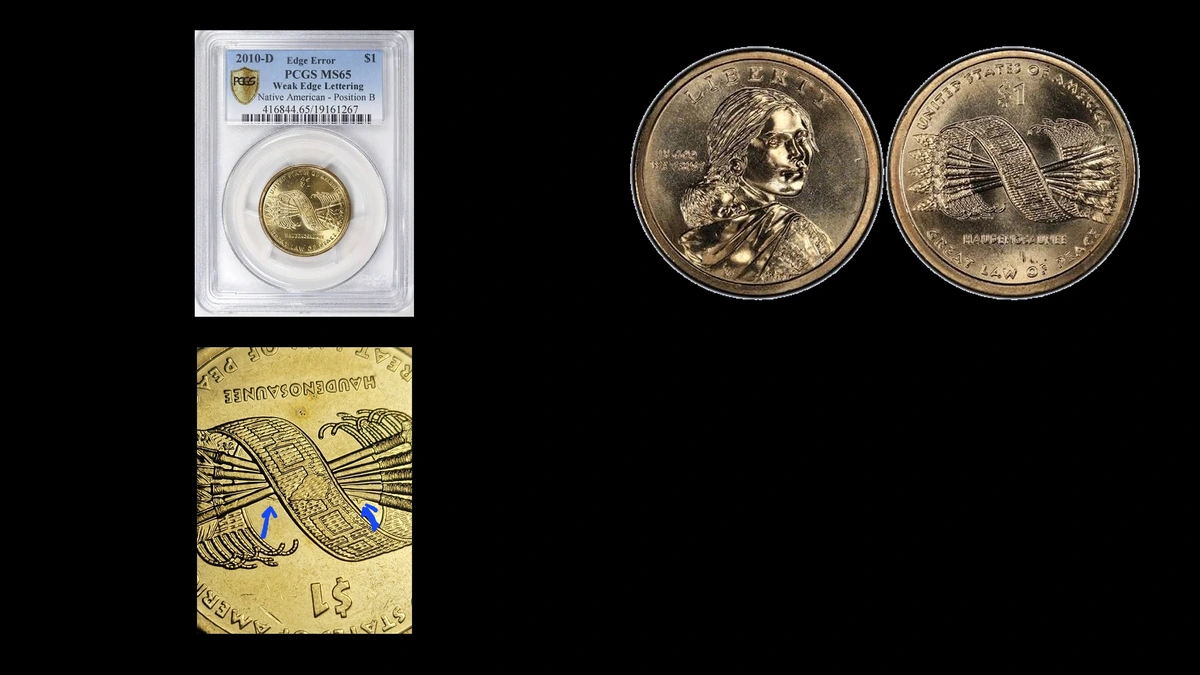
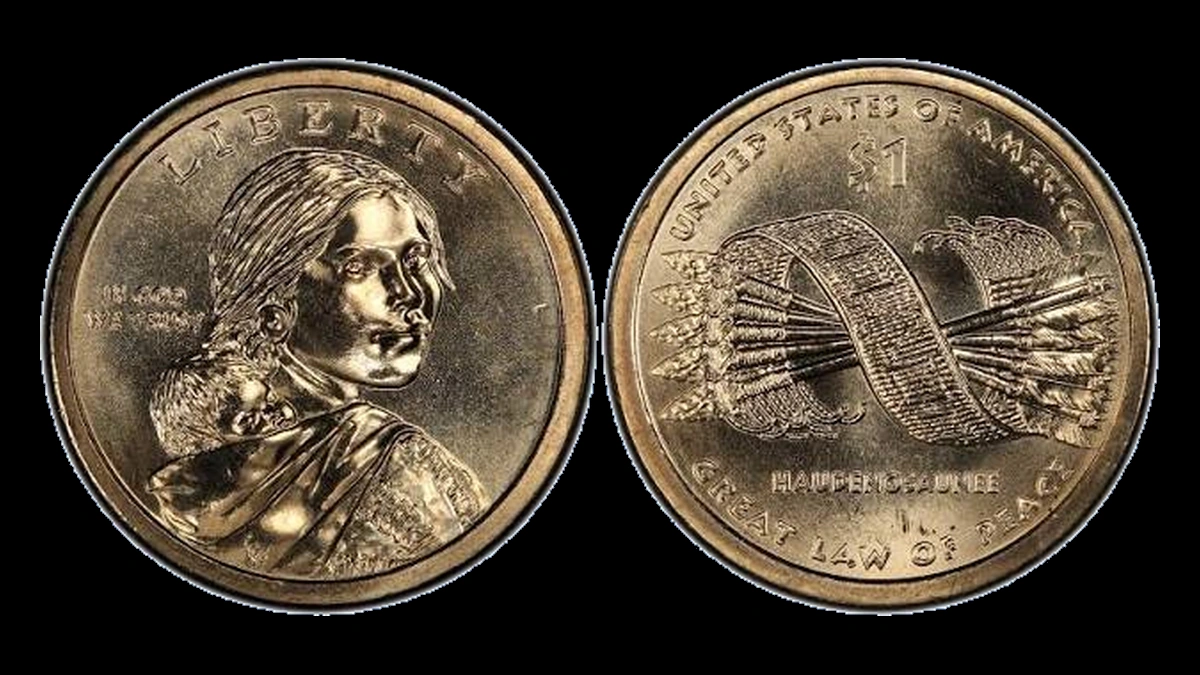
The belt and five arrows identify 2010 Sacagawea dollar errors even when the edge date is absent. Supplied estimates span $5–$3,500, with finish and the actual manufacturing fault central to the comparison.
The highest provided sale is $3,120 for a 2000-P dollar struck 50% off-center in April 2021, an earlier-year comparison. A 2010 satin-finish missing-edge example brought $1,708 in May 2026; inspect the edge, faces, and shape separately.
| Area | Possible groups | Estimated values |
|---|---|---|
| Edge inscription | Weak or partial; missing; doubled | $10–$2,000 across groups and finishes |
| Front or reverse design | Missing motto; doubled die; strike-through; cracks or cuds | $5–$800 |
| Surface metal | Peeling; reported improper annealing | $25–$1,200 |
| Outline and profile | Clip; broadstrike; off-center strike; die cap | $30–$3,500 |
1. 2010 Dollar Shallow Characters or a Blank Stretch: Weak or Partial Edge Lettering Error
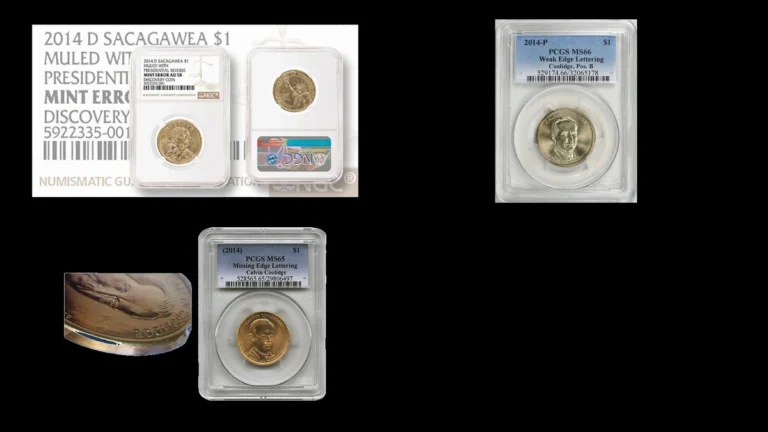
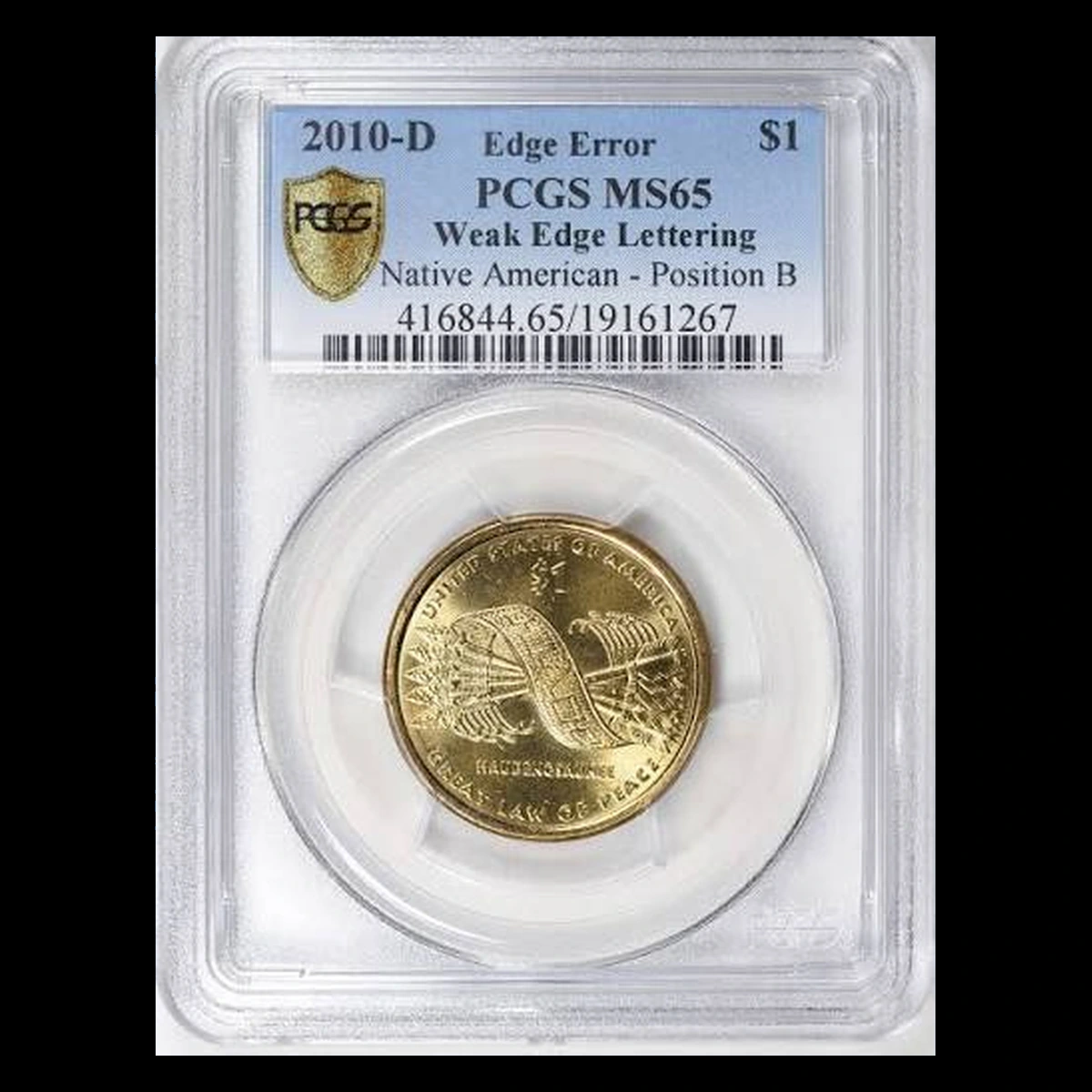
A weak inscription retains faint cuts, while a partial inscription has an unlettered stretch between surviving details. Both concern the separate edge-lettering operation after the faces were struck.
PCGS lists weak lettering for ordinary Philadelphia and Denver coins in both normal orientations, plus partial lettering for Philadelphia Position A. The Denver partial-lettering report gives less detail about its individual example.
How to Identify
Compare words section by section with a normal 2010 dollar facing the same direction. Position A and Position B are normal reading orientations, not errors.
Change the light angle to reveal shallow strokes inside an apparently blank area. Inspect neighboring rims for scraping or flattening that could have removed letters later.
Record the surviving P or D directly. The direction of the words cannot establish a mintmark that is unreadable.
What It’s Worth
$10–$300 is the supplied estimate for weak and partial lettering on ordinary 2010 dollars. Small changes in depth generally provide a less dramatic display than an obvious missing section.
The PCGS Native American dollar guide gives grade-dependent figures for ordinary weak-edge coins. These are guide values rather than completed sales or a promise that every faint character adds a substantial premium.
2. 2010 Dollar No Inscription Anywhere on the Edge: Missing Edge Lettering Error
A completely missing edge lacks the date, mint letter, and E PLURIBUS UNUM around the full circumference. Ordinary dollars can miss the separate operation that adds those characters.
Examples also exist with the softly textured satin finish used for collector sets. Satin finish is a normal manufacturing finish, and a signed grading label is not another Mint error.
How to Identify
Identify the Hiawatha belt and five arrows before inspecting overlapping sections around the entire edge. Any original lettering that survives distinguishes partial or weak inscription from complete absence.
Establish ordinary or satin finish through the coin, its original set, or a reliable label while leaving sealed packaging intact. An absent mint letter should remain unspecified unless supported by an established attribution.
IN GOD WE TRUST normally remains on the front, so its presence does not disprove this edge error. Check for filing and rounded borders even when a loose coin remains near the normal 8.10 grams and 26.5 millimeters.
What It’s Worth
$50–$2,000 spans the supplied finish-dependent estimates: about $50–$650 for ordinary coins and $300–$2,000 for satin examples. Condition can move prices substantially within those categories.
NGC records a satin-finish PCGS MS67 example at $1,708 in May 2026. A separate MS66 entry brought $575 in May 2012.
These are distinct transactions in the collector-finish category. An ordinary dollar should not inherit their values merely because its edge is also unlettered.
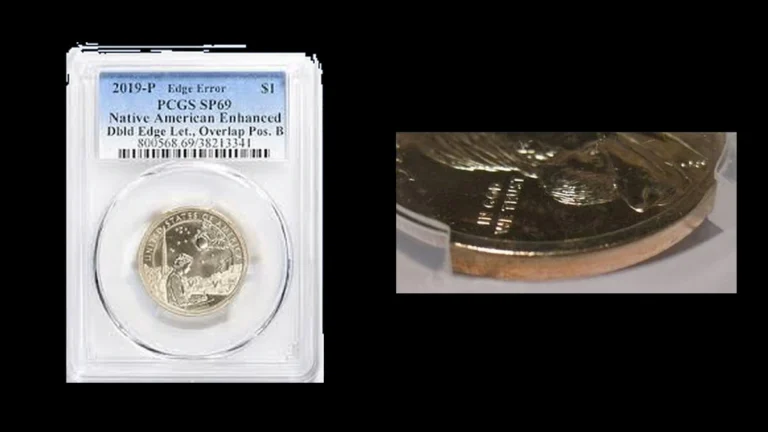
3. 2010 Dollar Two Readable Strings of Edge Characters: Doubled Edge Lettering Error
An additional trip through the edge-lettering equipment can press a second inscription into the dollar. Its date, mintmark, and words may cross the first set in varying positions.
Reports concern Philadelphia and Denver 2010 dollars without establishing one required spacing or direction. This lettering event is separate from the strikes that form the two faces.
How to Identify
Trace neighboring characters into two independent sequences rather than counting isolated lines. A recognizable letter from each pass should connect with the spacing of the next strokes.
Take a broad edge view as well as the clearest overlap. One damaged character in a narrow crop cannot prove a complete second inscription.
Move the light while keeping the coin still to distinguish recessed cuts from shifting reflections. One normal inscription read upside down is not doubled lettering.
What It’s Worth
$50–$500 is the supplied estimate for genuine 2010 doubled-edge dollars. Clearly traceable inscriptions and original surfaces make a stronger comparison than near-total overlap with little readable detail.
A 2007-P John Adams doubled-edge dollar in MS66 brought $288 in February 2022. That different design and year provide context rather than a completed 2010 sale.
4. 2010 Dollar IN GOD WE TRUST Absent from the Front: Reported Missing Motto Error
The motto belongs on the face of a 2010 dollar, so a report of a Denver coin without it concerns a different location from missing edge lettering. Other front details reportedly remain.
Weak formation or material blocking part of the die can suppress lettering. The report does not establish a particular substance or specific damaged tool as the cause.
How to Identify
Locate the motto on a normal 2010 coin and compare that exact area at the same scale. Look for surviving tops or bottoms of characters that show whether the words fade gradually or disappear abruptly.
Check nearby high points for wear and the patch for polishing lines or a lowered surface. Compare the reverse for broader striking weakness without assuming that a sharp back identifies the precise cause.
Photograph the readable edge D separately to preserve the reported mint identity. Keep that edge evidence distinct from the absent front words.
What It’s Worth
$25–$350 is the supplied estimate for a genuine production error suppressing the front motto. Clear surrounding detail beside convincingly absent words is more informative than general weakness across the coin.
No completed price is supplied for this report. Wear or polishing that removes the words falls outside the production-error range.
5. 2010 Dollar Repeated Outlines on a Face: Reported Doubled Die Error
A doubled die forms during preparation of the stamping tool and can transfer repeated details in one coin strike. It does not require a dollar to receive another whole impression.
Reports mention a Denver MS62 coin and Philadelphia examples with doubling on either face. Exact diagnostics are not established here for each example, and doubled edge dates cannot prove a doubled face die.
How to Identify
Compare the same mint and finish, distinguishing ordinary, satin, and specially prepared Proof coins. At about 10× magnification, inspect the full suspected shape and neighboring details.
Rounded separation or split corners can guide examination but still require a documented pattern match. Flat shelves beside reduced letters may result from movement during striking instead.
Keep face photographs separate from edge close-ups. Each repeated feature must be explained by the production step that actually created it.
What It’s Worth
$25–$800 is the supplied working estimate for confirmed 2010 doubled dies. Strong recognizable separation generally offers more interest than a tiny uncertain contour.
A secondary year guide reports a Denver MS62 example at $730 in 2013. Treat that as a reported comparison, not a verified price applicable to every doubled-looking letter.
6. 2010 Dollar A Recessed or Weak Patch: Struck Through Material Error
An obstruction between the blank and die can replace part of the design with an impression or weak area. Sometimes the foreign material remains embedded after striking.
The 2010 category supplies no specific mint or substance. Cloth, wire, and grease describe possible mechanisms rather than three independently established specimens.
How to Identify
Leave attached material undisturbed and follow where clear design meets the obstruction. For an empty impression, look for actual shape or texture rather than naming every weak area as grease.
A wire-like object generally leaves a recessed trace, not an added raised wire. Scraping, corrosion, or metal pushed aside by a later impact may explain a depression differently.
Photograph the transition under low side lighting and compare nearby detail on both faces. A sharp reverse helps describe the coin but cannot prove the cause of a front patch.
What It’s Worth
$25–$650 is the supplied estimate for genuine 2010 strike-throughs. Larger recognizable impressions generally make stronger displays than minor blocked detail.
Material demonstrably retained from the original strike can add interest. Neither unrelated surface damage nor an unverified attached object qualifies merely because it resembles an obstruction.
7. 2010 Dollar Raised Lines or Rim-Connected Patches: Die Cracks and Cuds Error
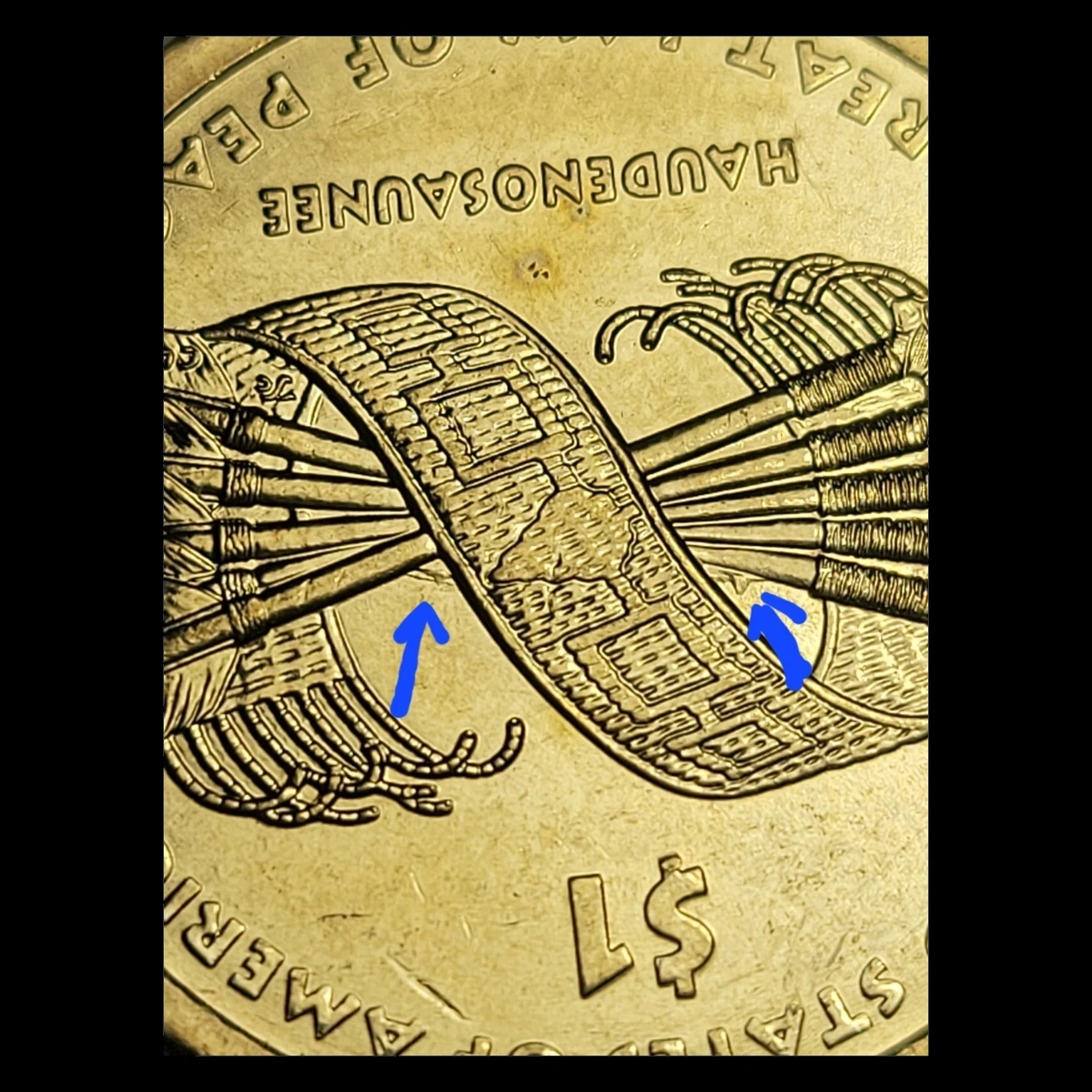
A crack in the die lets coin metal form a raised line. A larger break at the tool’s edge may leave a raised patch joined to the rim, called a cud.
Reports include a Denver crack and Philadelphia or Denver rim breaks. No exact location is established for every example, so the coin must supply its own path and rim connection.
How to Identify
Light the feature from opposite sides to determine whether it rises above the surface. A scratch may push up its sides, so inspect for a cut running down the center.
Trace a larger patch into the rim and identify the normal design replaced by extra metal. An isolated interior lump does not meet that rim-connected description.
Photograph the complete affected face and any opposite-side weakness. Avoid probing the ridge or using a close-up that hides its relationship with real design elements.
What It’s Worth
$5–$600 is the supplied combined range, with $5–$50 for small cracks and $50–$600 for clear rim breaks. The visible size and character of the damage matter more than the broad label.
A year guide reports a 2010-D MS63 cracked-die coin at $555. That reported figure needs comparison with its actual break and must not be assigned to every tiny Denver line.
8. 2010 Dollar Surface Metal Lifting on One or Both Faces: Lamination Error
A 2010-P report describes peeling on both faces. This does not mean the coin split into two whole pieces or necessarily lost an entire outer layer.
The dollar has a copper core and golden outer metal. Examination must establish whether the separation is within a layer or between bonded layers before its structure is named.
How to Identify
Protect any lifted flap without bending it back. Photograph each face and a low-angle view of the separation boundary.
Look for design continuing onto separated metal or ending where a piece is absent. A reddish area alone does not prove exposed copper because golden dollars can change color through tarnish.
Assess the two faces independently rather than expecting equal losses. Blisters, local peels, and entire missing outer faces are different descriptions, while tool marks or forced folds need careful examination.
What It’s Worth
$25–$1,200 is the supplied estimate, divided into $25–$150 for minor genuine peeling and $150–$1,200 for larger or two-sided examples. The remaining original design affects appeal.
The year guide reports a 2010-P MS62 coin peeling on both faces at $1,050. Preserve that as a reported whole-coin comparison rather than a price for any small detached fragment.
9. 2010 Dollar Darkened Color Without Established Metal Loss: Reported Improper Annealing Error
Annealing is the heating step that prepares a blank for striking. An abnormal treatment can alter its surface appearance, but ordinary tarnish can produce similarly dark golden dollars.
A confirmed 2010 example is not established by the supplied material. The familiar 2001-P comparison belongs to another issue and cannot authenticate the year-specific report.
How to Identify
Observe how original shine travels across dark areas without cleaning them. Preserved mint surface is useful evidence but can also survive beneath natural tarnish.
Compare exposed high points with protected spaces near letters. Powdery deposits, pits, or roughness suggest other surface problems.
Color and shine together still cannot establish when the change occurred. Keep the complete coin unaltered for a specialist’s assessment instead of using a dip or polish as a test.
What It’s Worth
$25–$200 is the supplied estimate for a confirmed 2010 annealing error. It draws on comparable golden-dollar pricing, including a reported 2001-P example at $79.
An original unworn surface with a convincing production-related change provides a stronger comparison than an ambiguous patch. Ordinary discoloration does not receive this error premium.
10. 2010 Dollar A Gap in the Original Outline: Clipped Blank Error
A clip starts with missing metal before the dollar is struck, such as when a blanking punch overlaps an earlier hole in the strip. The resulting design forms on the incomplete disc.
A 2010 Great Law of Peace clip is reported without an established mint or percentage. Those details must come from the particular specimen.
How to Identify
Inspect the rim opposite the gap for supporting weakness, then examine the missing section itself. Absence of an obvious weak rim does not settle authenticity.
Look for natural metal flow and fading design at the gap endpoints, distinguishing them from saw lines, burrs, or repeated filing. Both faces should agree with an incomplete blank struck afterward.
A loose coin can be weighed against the normal 8.10 grams. Low weight alone cannot distinguish pre-strike missing metal from a piece cut away later.
What It’s Worth
$30–$500 is the supplied estimate for genuine small through substantial 2010 clips. The missing area and surviving edge date or belt-and-arrows design help determine the comparison.
No completed clip sale is supplied. Prices of unstruck blanks do not establish a minimum for a struck dollar with an incomplete original disc.
11. 2010 Dollar Full Designs Within a Wider Border: Broadstrike Error
The collar normally limits the blank’s outward expansion. If it fails to contain the metal, the coin may become wider while retaining both complete designs.
The 2010 broadstrike report supplies no specific mint. Edge lettering is a separate operation, so a blank edge alone cannot demonstrate this expansion error.
How to Identify
Measure a loose candidate in several directions against the normal 26.5 millimeters, then follow all the outer design. Sacagawea, inscriptions, belt, and arrows should remain complete within the expanded metal.
Study the profile for natural spreading rather than pressure that flattened an already finished coin. The normal approximately 8.10-gram weight is compatible with greater width because no extra metal is required.
If artwork ends beyond the blank beside an untouched crescent, use the off-center comparison instead. A tiny diameter difference without clear expansion does not establish a broadstrike.
What It’s Worth
$50–$300 is the supplied estimate based on modern golden-dollar comparisons. Obvious original expansion with complete attractive designs is more persuasive than a seller’s measurement alone.
Later pressure damage or heavy contact marks weaken the comparison. Missing edge letters on an otherwise ordinary-size dollar require their own identification and pricing.
12. 2010 Dollar A Picture Displaced Beside Untouched Metal: Off-Center Strike Error
A year-specific report describes a 2010-P dollar as 35% off-center on the front. Its reverse needs examination before the description can distinguish a displaced blank from one shifted die.
True off-center striking leaves part of the original disc unstruck while some intended artwork falls beyond the metal. The annual Great Law of Peace scene can help identify the issue even when edge lettering is absent.
How to Identify
Compare the strike boundary and unstruck crescent on both faces. A centered reverse opposite a shifted front suggests die misalignment rather than the same blank sitting off-center beneath both tools.
Check that original metal remains beside the shortened picture. A clip removes that metal instead of leaving it as a broad untouched crescent.
Record the belt and arrows plus any remaining edge inscription. Grinding or flattening can create bare-looking space later, so keep the whole outline and original surface visible.
What It’s Worth
$300–$3,500 is the supplied estimate for genuine 2010 off-center dollars. Recognizable annual design, original surfaces, and clear displacement strengthen a comparison.
A 2000-P dollar struck 50% off-center sold for $3,120 in April 2021. Its eagle reverse and normal plain-edge format differ from the 2010 issue, and the reported 35% front shift still requires its own two-face assessment.
13. 2010 Dollar A Cup-Like Coin with Stretched Walls: Die Cap Error
A coin stuck to a die can spread and curl around the tool as repeated pressure acts on it. The cap is that deformed coin itself, not every later coin whose design was blocked by it.
The supplied 2010 report names a Denver example described as MS65. Its rising walls and stretched design require a side-profile examination.
How to Identify
Follow the design from the flatter center into the raised wall without forcing the coin flat. The stretching should fit metal gradually expanding around a die rather than a simple later bend.
Record the outer surface without demanding a particular reversed image, since different stages can retain different details. Sharp forced folds and later tool-pressure marks need to be excluded.
Include surviving edge date and D if readable, together with the belt-and-arrows design. These details keep the reported year and mint tied to the actual cap.
What It’s Worth
$200–$1,500 is the supplied estimate for genuine 2010-D caps from early curling through a developed cup. Depth, intact walls, and recognizable design guide the comparison.
A year guide reports the Denver MS65 cap at $1,200 in 2021. That reported figure does not price every distorted face or dollar bent into a bowl after manufacture.
Conclusion
The 2010 belt-and-arrows design can preserve a dollar’s identity when its edge cannot supply the date. Establish finish and mint evidence before comparing weak, absent, or repeated edge inscriptions with the separate features on the faces.
For changed outlines or fragile surfaces, keep the original shape and attached metal intact. Treat secondary-guide figures as reported comparisons, and match authenticated sales to their actual year, finish, and error rather than the broad category alone.