Rare 2012 Sacagawea Dollar Errors (List & Pictures)
The difference between a faint edge and an empty edge can change how you describe 2012 Sacagawea dollar errors. Look around the entire coin before deciding that its inscriptions are gone.
Correctly identified ordinary examples have estimated values of $10–$650. A different-year 2010 satin-finish dollar without edge lettering brought $1,708 in May 2026, showing why finish matters when comparing prices.
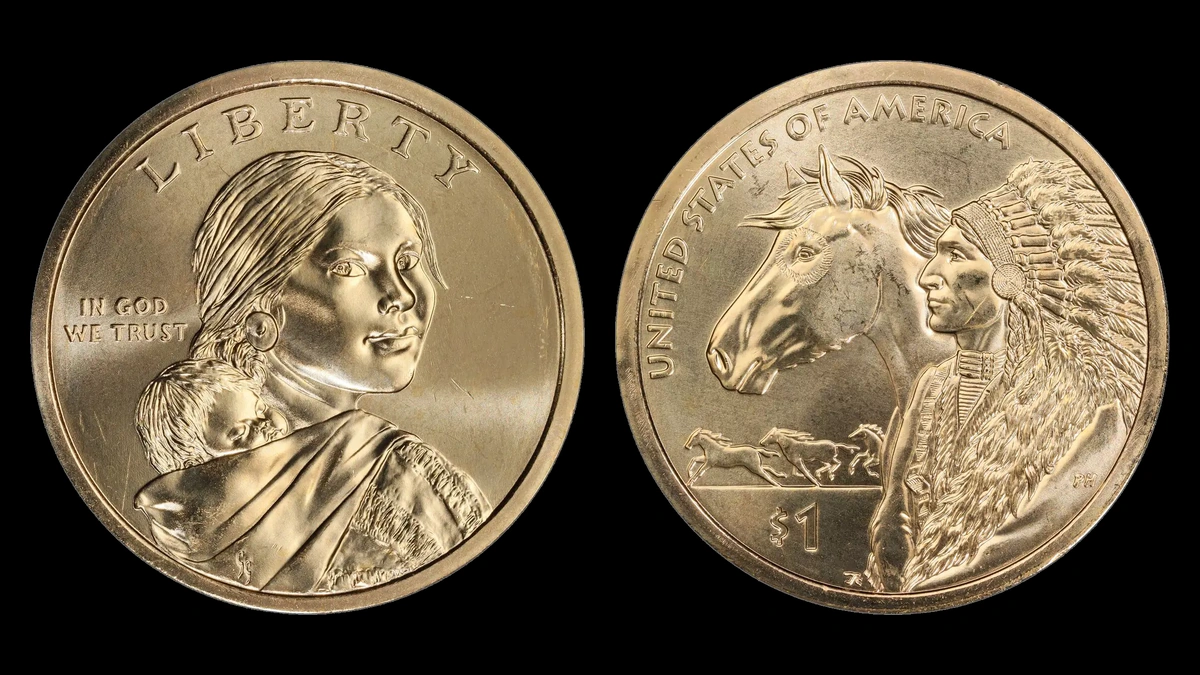
The chief-and-horses reverse helps identify the 2012 issue when its edge date is unreadable.
2012 Dollar Some Edge Strokes Survive: Weak or Partial Lettering Error
A shallow date digit beside clear letters can result from uneven contact during edge lettering. Ordinary dollars receive these inscriptions after the main designs have been struck.
PCGS lists weak edge lettering for a 2012-P Position A dollar. Position A names a normal reading direction; it is not the error.
Partial lettering is also reported without an established mint letter. Weak lettering has shallow strokes, while a partial inscription includes a blank section beside surviving marks.
How to Identify
Begin with a word you can read and rotate the coin from that point. Follow each recessed stroke as it becomes shallower or disappears.
Change the light over a seemingly empty section before calling it blank. A faint letter hidden by one shadow may become visible from another angle.
Compare the transition with a normal 2012 edge. Scraping, dents, or flattened metal can remove finished letters after the coin leaves the mint.
Record any readable date and mintmark in your photographs. A partial edge without a surviving P cannot inherit Philadelphia identification from the separate PCGS-listed weak-edge coin.
What It’s Worth
$10–$300 is the estimate for genuine weak or partial edge lettering on ordinary 2012 dollars. Slight weakness on a marked coin fits nearer the lower end.
A long blank section beside clear surviving letters is easier to demonstrate than a barely shallow stroke. An unworn surface with few marks can also improve the whole-coin comparison.
The year-guide figures are estimates rather than auction results. Normal edge reading direction adds no error premium.
2012 Dollar No Edge Marks Anywhere: Missing Edge Lettering Error
The chief and horses identify the issue even when there is no edge date to read. The 2012 date, mint letter, and E PLURIBUS UNUM normally appear on that edge.
If the ordinary coin missed the edge-lettering operation completely, all those inscriptions would be absent. IN GOD WE TRUST would still remain on the front.
The 2012 error listing reports this category without a confirmed mint assignment. Complete absence differs from having a few faint or surviving letters.
How to Identify
First confirm the chief and horses on the back. Earlier Sacagawea dollars with the flying eagle normally have plain edges and should not be mistaken for this error.
Inspect a full circle under changing light, including the area next to each face’s raised border. A tiny remaining stroke sends the coin back to the weak or partial category.
Look for filing and an unusually rounded edge. For a loose coin, the normal 8.10-gram weight and roughly 26.5-millimeter diameter can help reveal substantial metal removal.
Matching those measurements does not prove the error. An apparently original blank edge still needs examination to rule out later smoothing.
What It’s Worth
$50–$650 is the estimate for an authenticated ordinary 2012 missing-edge dollar. Preservation and demand matter, while heavy edge damage reduces its appeal.
NGC records $1,708 for a 2010 satin-finish missing-edge dollar in May 2026. That specially finished collector issue is a different-year comparison.
Its result should not become the automatic price for an ordinary 2012 coin. Compare the same finish and similar condition when choosing a value.
Conclusion
One readable stroke is enough to separate complete absence from weak or partial lettering. The most useful evidence is a full edge inspection with clear transitions, not a photograph of only the blankest section.
Keep the chief-and-horses reverse in the photo set when the date cannot be read. Preserve any surviving mint letter and leave an unknown mint unassigned rather than borrowing it from another example.