Rare 2017 Half Dollar Errors (List & Pictures)
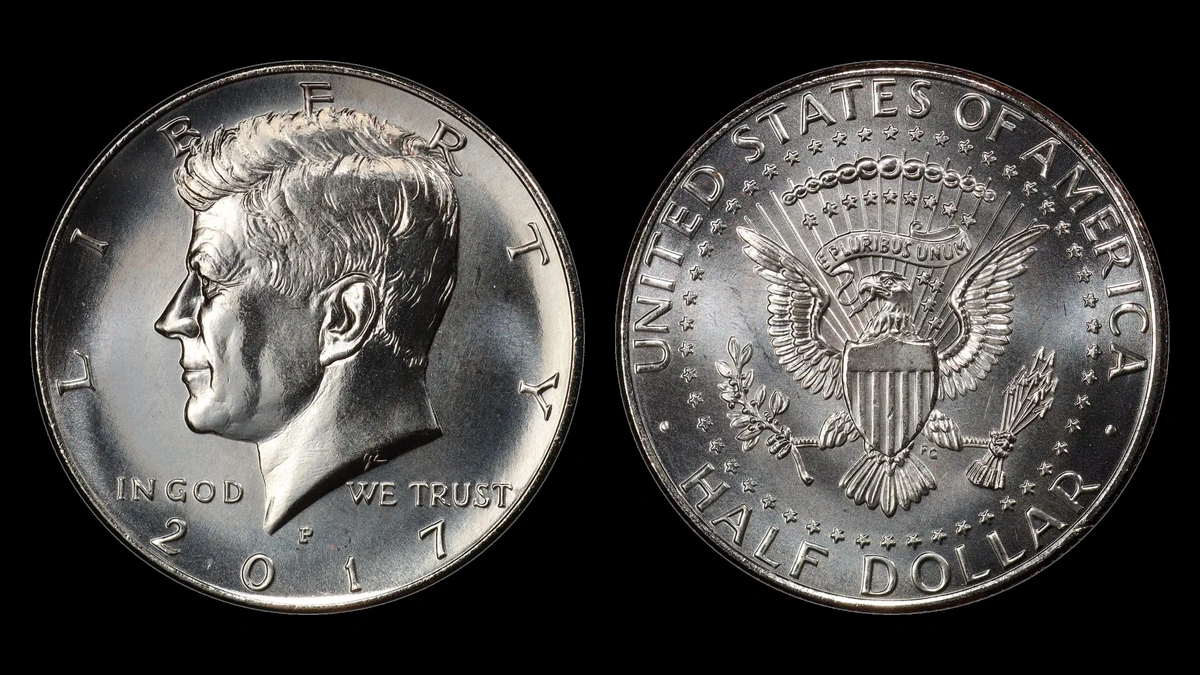
Two documented 2017-S halves have interrupted front designs, but they are different collector issues: one enhanced uncirculated and one silver proof. These 2017 half dollar errors also include reported categories to investigate on Denver coins.
Estimated values range from $5 to $600, with an older off-center coin’s $546.25 sale providing a comparison. Identify the finish, inspect the affected design and outline, then examine small raised features.
| Visible clue | Area or issue | Error | Estimated value |
|---|---|---|---|
| Interrupted front detail | Two separate 2017-S collector finishes | Struck through | $75–$600 |
| Bare metal beside missing design | Reported D-mint category | Off-center strike | $50–$550 |
| A gap in the metal edge | Reported D-mint category | Clipped planchet | $25–$200 |
| A small ridge or lump | No fixed D-mint location supplied | Die crack or chip | $5–$100 |
| A second raised detail | No specific side named for D coins | Minor doubled die | $10–$150 |
Ordinary layered-metal halves and the enhanced uncirculated issue weigh 11.34 grams. The 90%-silver proof weighs 12.50 grams; both types are about 30.61 mm across and have edge grooves.
1. 2017 Half Dollar The Front Design Is Interrupted: Struck Through Error
GreatCollections listed an enhanced uncirculated 2017-S with a front strike-through, while Bullion Exchanges described a separate silver-proof example. Both received grade 69, indicating nearly flawless preservation.
Material blocked contact between the blank and the front die during striking. Neither account identifies that material, so the mark should not automatically be attributed to grease, cloth, or wire.
How to Identify
Determine which issue you have before choosing an image. The enhanced coin uses layered metals with deliberately varied surface texture, while the silver proof has its own reflective and frosted finish.
The enhanced PCGS SP69 listing and NGC PF69 silver-proof listing provide separate comparisons. Their error boundaries should not be combined into one pattern.
Under magnification, compare interrupted detail with the same area on an undamaged example of that finish. Normal changes in brightness are not missing design.
A copper center stripe at the edge supports the layered-metal identity. Use available measurements without disturbing sealed holders or delicate collector surfaces.
What It’s Worth
Estimated range: $75–$600 for these collector-finish strike-throughs. The two 2017 listings establish examples but supply no visible realized prices.
A regular-metal 1976-D with both sides struck through sold for $114 in March 2025. Its different finish and affected areas make it broad context rather than a direct valuation of either 2017-S.
2. 2017 Half Dollar Blank Metal Remains Beside an Incomplete Design: Off-Center Strike Error
A blank displaced in the press receives only the parts of the designs lying over it. Some intended detail falls beyond its edge, while another area of metal remains untouched.
The 2017-D report presents this as a possibility to check rather than a particular certified specimen. It does not establish a percentage of displacement.
How to Identify
Photograph both entire faces and compare where each design ends. Their missing portions should fit the same movement of the blank.
If only one side has an uneven rim, a shifted die may be the explanation. One wide margin around Kennedy is not enough to identify an off-center strike.
Keep a readable 2017 date and D in view, and inspect the transition from struck to blank metal for filing. The unstruck area may have incomplete edge grooves without actually losing a piece of the blank.
Weigh the coin and record the actual outline if it has spread. Measurements support the metal’s presence but do not replace the two-face design comparison.
What It’s Worth
Comparative estimate: $50–$550 from modest shifts to dramatic readable-date examples. A 1991-D struck 50% off center brought $546.25 in the 2009 FUN results.
The older coin was PCGS MS62, meaning unworn with noticeable marks. Its historical result supports the upper comparison without becoming a 2017 auction record.
3. 2017 Half Dollar A Section of the Edge Is Missing: Clipped Planchet Error
A planchet is the blank disc before striking. If its cutting punch overlaps an earlier hole or reaches the end of a metal strip, part of that disc may be absent.
The design then forms on the remaining metal. The supplied 2017-D report names the category without identifying a certified individual clip.
How to Identify
Inspect the missing boundary before assigning a clip percentage. Fresh cuts, filing tracks, or rolled burrs suggest metal removed after the design was complete.
Follow the remaining edge grooves and nearby struck details into the gap. Weakness in the opposite rim can support an original clip, though it is not equally strong on all examples.
A weight shortfall should be reasonable for the apparent missing amount. Measure an intact part of the outline against the normal diameter rather than measuring only across the gap.
What It’s Worth
Estimated range: $25–$200 for a genuine identified clip, with small inconspicuous gaps nearer the lower comparisons. The exact size on a 2017 candidate must be established directly.
A 1993-D curved clip in ANACS MS64 brought $34.74 including buyer’s premium in August 2025. That unworn older example provides context rather than proof of a 2017 sale.
4. 2017 Half Dollar A Thin Ridge or Small Lump Rises from the Surface: Die Crack and Chip Error
A narrow crack in a die can leave a raised line on a coin; a small missing piece can leave a lump. Coin metal enters the opening in the tool during striking.
The 2017-D report does not specify an identified coin or fixed path. Check whether the feature is raised and original before assuming its location proves a known variety.
How to Identify
Use low light to compare the suspected mark with undisturbed metal beside it. A ridge copied from a die is different from a scratch cut into the finished surface.
For a lump, look for consistent surrounding texture rather than material stuck on top. Glue or other debris can create apparent extra metal without a die chip.
Confirm the Denver mintmark and normal layered edge. A tiny interior ridge or lump should not substantially alter weight or overall diameter.
What It’s Worth
Estimated range: $5–$100 for genuine minor cracks or chips. Their visibility and the coin’s preservation affect collector interest.
A larger reverse die break on a 1976-D in NGC MS65 sold for $256 in June 2026. That more substantial unworn example belongs to a stronger comparison group than a small reported 2017-D mark.
5. 2017 Half Dollar A Small Detail Has an Extra Raised Outline: Minor Doubled Die Error
The 2017-D report mentions minor doubled dies without a variety number, location, or specified face. The repeated design would have been present in the die before the coin was struck.
It is therefore important to photograph both sides before selecting a tiny area to enlarge. No exact letter or portrait diagnostic is supplied.
How to Identify
Compare the same area with a normal 2017-D under similar illumination. Rounded repeated shapes are different from the low flat shelf that movement during striking can produce.
Move the lamp to test whether an apparent outline is glare. A stable raised detail that matches another coin from the same die is stronger evidence than extreme enlargement of an isolated edge.
Keep the date, mint, and complete face views with any close-ups. An older variety’s exact doubling pattern cannot fill the missing location information for this report.
What It’s Worth
Comparative estimate: $10–$150 for genuine minor doubling on a 2017-D. Clarity and reliable attribution are more useful than the size of the photograph.
A 1974-D doubled die graded ANACS MS64 sold for $49 at Heritage in May 2026. That unworn named variety supplies a market comparison, not a transferable identity or sale history for the unnamed 2017 feature.
Conclusion
Separate added-looking metal, repeated detail, missing metal, and areas that never received a design. The documented 2017-S strike-throughs also require the correct collector finish and metal before comparison.
Estimated values of $5–$600 cover different evidence levels. The broader Denver categories still need physical identification, while the enhanced and silver-proof examples have distinct reference coins but no supplied realized sale prices.