Rare 1941 Half Dollar Errors (List & Pictures)
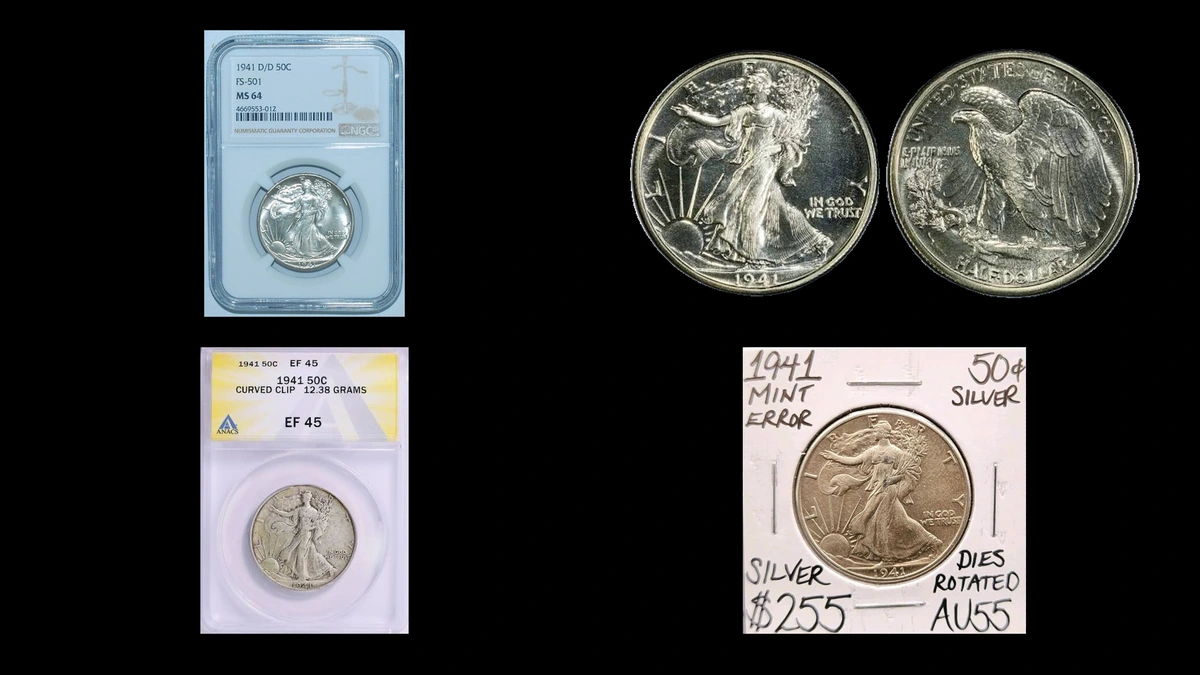
A matched pair of 1941 mint errors sold together for $24,675 in November 2013. The two coins preserve connected evidence of one press accident.
Estimated 1941 half dollar errors values span $25–$40,000, with the upper range applying to the intact pair. Start with mintmark and design details, then inspect the metal and unusual strikes.
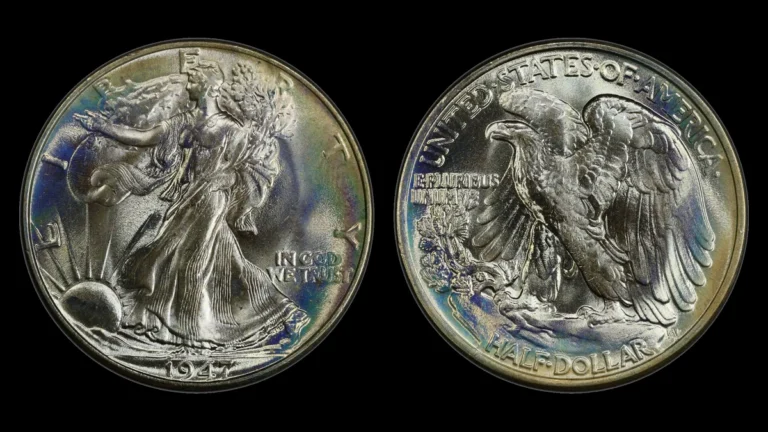
Normal Walking Liberty halves contain 90 percent silver, weigh 12.50 grams, and measure approximately 30.6 millimeters. Their reeded edges provide useful evidence alongside both faces.
| Feature to examine | Category | Estimated whole-coin or pair value |
|---|---|---|
| Small-looking S | Reported Micro S | $25–$150 without assumed rarity premium |
| Earlier D or S outline | Repunched mintmark | $50–$1,000 |
| Extra contours beyond common doubling | Individual doubled die | $50–$1,000 |
| Absent proof monogram | No AW | $400–$1,500 |
| Embedded spot near10o’clock | Slag inclusion | $150–$800 |
| Natural separation in metal | Split planchet | $75–$750 |
| Original edge gap | Clip | $50–$500 |
| Consistent reverse tilt | Rotated dies | $40–$350 |
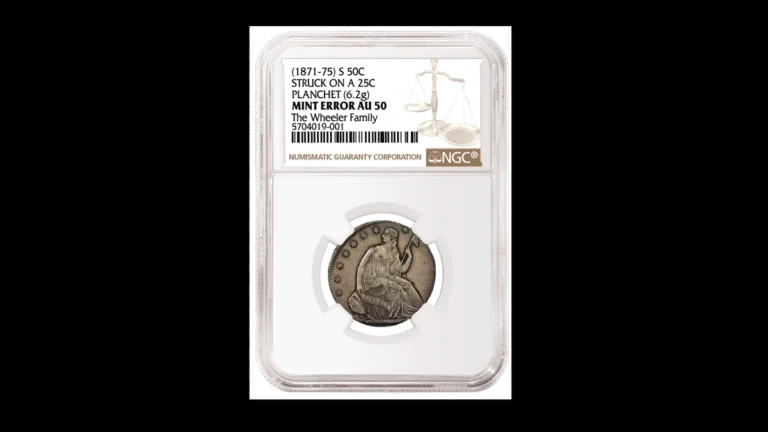
| Small silver blank | Quarter planchet | $10,000–$25,000 |
| Matching contact on two coins | Double strike/quarter-planchet pair | $20,000–$40,000 for both |
1. 1941 Half Dollar The S Appears Unusually Small: Reported Micro S Error
The Micro S name appears in a 1941 guide, but the supplied material does not establish a recognized graded variety. Mintmark punches could differ in size and style, so a small-looking letter needs a controlled comparison.
It also differs from a repunched S, which preserves a fragment of an earlier letter. The famous 1945 Mercury dime Micro S is a separate coin and does not authenticate this half-dollar report.
How to Identify
Compare the reverse S below the branch at identical magnification with a normal 1941-S. Include the entire letter, not just an enlarged curved segment.
Inspect the ends and center for wear, weak formation, and shadows that may reduce its apparent size. Calibrated images are needed for meaningful letter-height comparisons.
If an extra offset contour is present, investigate repunching separately. A seller’s label or differently enlarged photograph cannot establish an unusual punch.
What It’s Worth
Use an estimated $25–$150 whole-coin range for worn through modest unworn examples carrying the reported small S. No special rarity premium is assumed from the nickname alone.
Condition remains the main comparison until a recognized variety is established. Neither the 1945 dime’s market nor a confirmed repunched-S price can be transferred merely because the letter looks small.
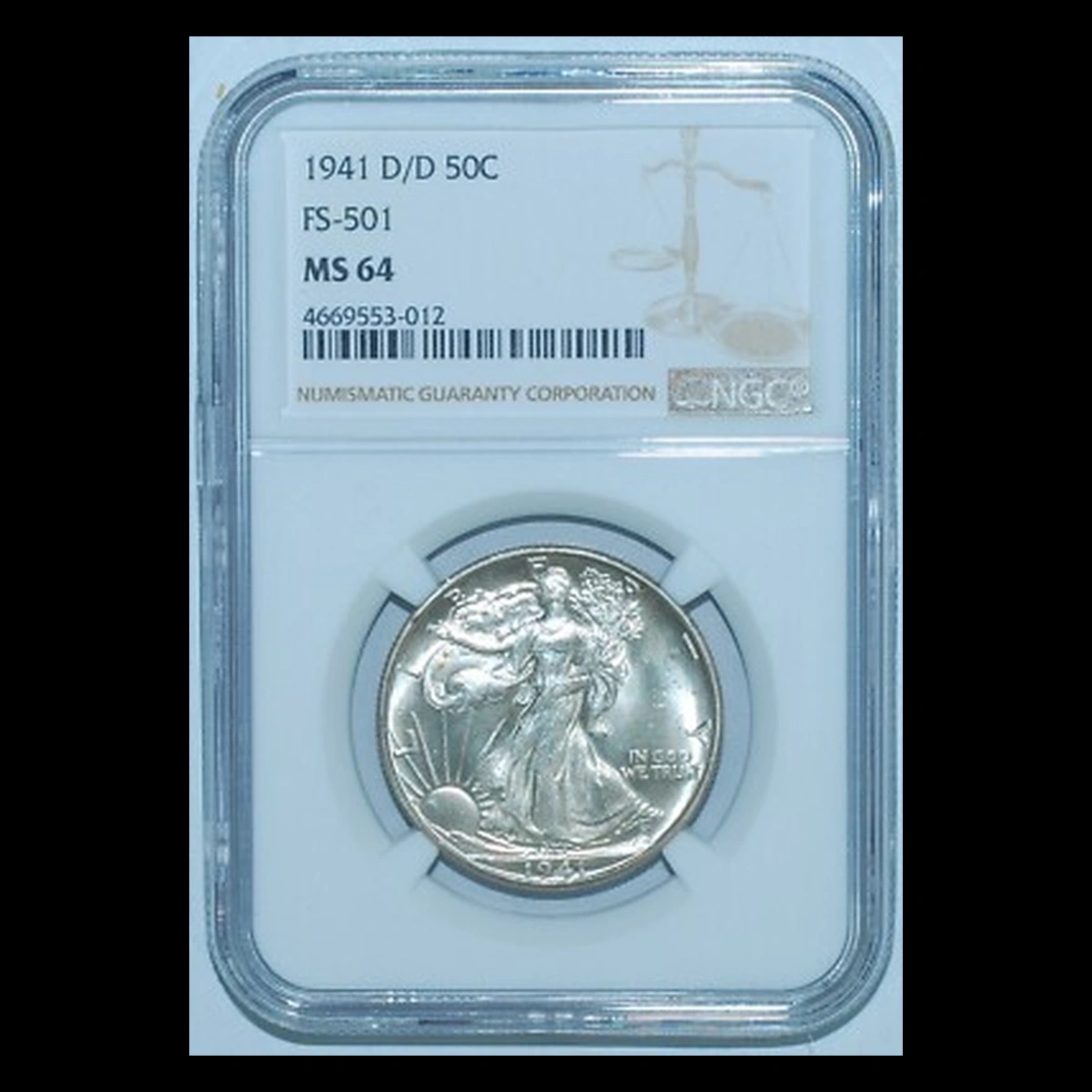
2. 1941 Half Dollar Another Letter Fragment Sits beside D or S: Repunched Mintmarks Error
Hand punching a mintmark into the die more than once could leave part of the earlier impression visible. The resulting coins share that extra letter shape.
NGC identifies multiple Denver examples, and a separate year report describes S/S. One D comparison shows an upper-left, or northwest, remnant; that direction should not be assigned to every D or the reported S.
How to Identify
Inspect the mintmark at the lower left of the reverse and follow the suspected earlier letter’s curves. A recognizable offset D or S is more useful than a bump or shadow.
Match the northwest D to its own photograph, keeping other varieties separate. The S report requires an independent pattern comparison.
Check neighboring metal for cuts or an added mintmark and distinguish rounded remnants from flat strike-related shelves. Preserve the full reverse with the closeup.
What It’s Worth
Confirmed examples are estimated at $50–$1,000, from worn to attractive unworn coins. Strength of the extra outline and preservation affect interest.
A 1939 half combining repunching and obverse doubling, graded PCGS MS64+, sold for $1,292.50 in September 2017. That different-year combination is not a direct price for 1941 repunching alone.
3. 1941 Half Dollar Extra Detail Exceeds the Shared Background: Doubled Dies and Inherited Doubling Error
Many 1941 halves share slight doubled details inherited from earlier tools used to make working dies. That common background does not automatically identify a scarce individual variety.
NGC distinguishes it from Denver’s very minor individual obverse doubled dies. Philadelphia front and reverse reports also exist, with reverse descriptions mentioning E PLURIBUS UNUM and eagle details but no numbered die established here.
How to Identify
Compare date and motto details with an ordinary 1941 of the same issue. Learn the shared outlines before seeking additional repetition that matches an individual die.
For a reverse candidate, compare the motto and relevant feathers while changing the light. Rounded extra relief differs from flat shelves formed during striking or from reflections.
Keep design context around each suspected feature. One thick letter cannot separate inherited detail from an attributed doubled die.
What It’s Worth
An individually confirmed variety has an estimated $50–$1,000 range. Common inherited doubling receives no automatic separate rarity premium.
A much stronger 1939-D FS-101 graded NGC MS67+ sold for $2,160 in April 2025. That exceptional comparison neither establishes a four-figure sale for minor Denver 1941 varieties nor confirms a general reverse-doubling report.
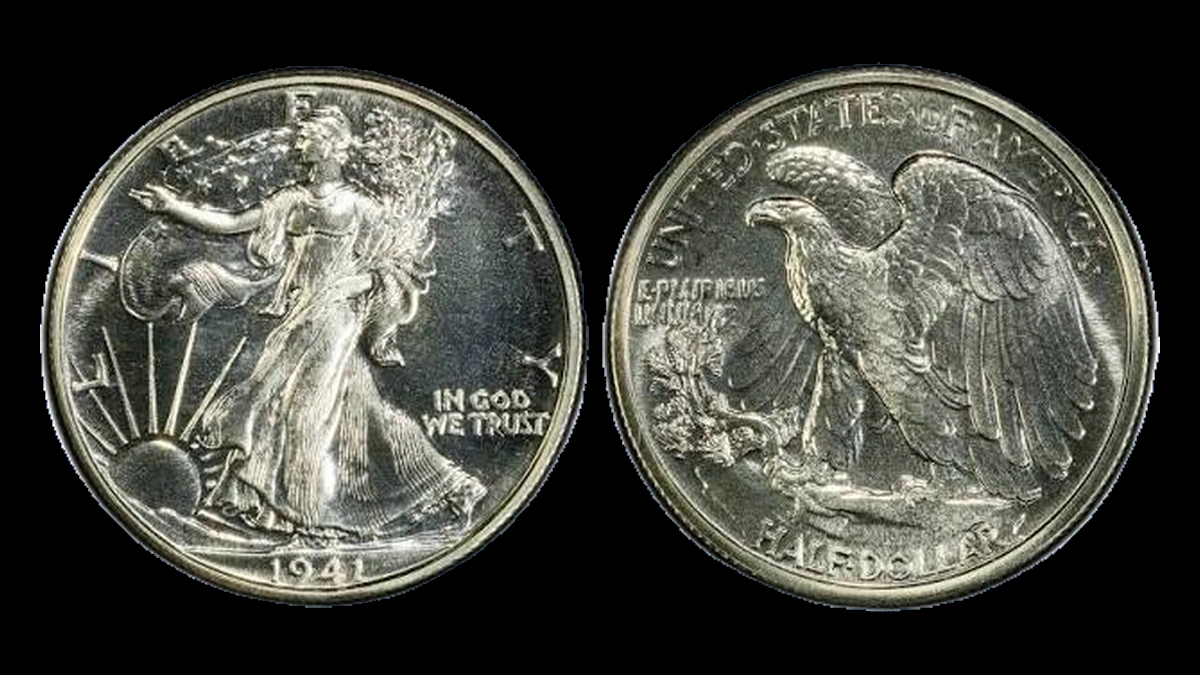
4. 1941 Half Dollar AW Is Absent from an Untouched Proof Reverse: No AW Error
The recognized 1941 proof No AW lacks Adolph Weinman’s monogram near the rock at the lower right of the reverse. Polishing the die can remove shallow initials before striking.
A proof’s sharp detail and specially prepared surfaces are part of the identification. Missing letters on a worn ordinary half need a different explanation.
How to Identify
Establish genuine proof manufacture rather than assuming a shiny coin is a proof. Compare the initials’ area with an intact example of the same issue.
Move the light to search for faint AW strokes hidden by glare, keeping the rock and nearby field in view. Inspect for rubbing and residue without cleaning.
Complete absence surrounded by original proof detail supports the variety. Normal silver weight and size alone do not prove it.
What It’s Worth
Collectible examples have an estimated $400–$1,500 range. Preservation and surface problems remain important even after attribution.
NGC PR67 and PR67+ examples sold for $690 in March 2025 and $780 in July 2025. The recognized No AW proof listing provides the relevant variety identity rather than a premium for any smoothed initials area.
5. 1941 Half Dollar An Embedded Spot Interrupts the Alloy: Slag Inclusion Error
The documented PCGS MS63 has a spot near ten o’clock on the obverse identified as a slag inclusion. This describes material trapped within the coin metal.
It differs from loose material pressed against a coin during striking. The auction supplies no chemical analysis, so the inclusion’s exact composition or depth cannot be inferred from its color.
How to Identify
Locate the spot in a full-obverse image, then examine its boundary and the nearby original design. The relationship to the struck metal matters more than matching a dark shade.
Change the light to distinguish a surface deposit or corrosion from the cataloged inclusion. A similarly placed stain does not establish trapped material.
Do not scrape, dissolve, or pry at it. Preserve the boundary that provides the useful identification evidence.
What It’s Worth
Confirmed inclusions of comparable visibility and preservation are estimated at $150–$800. The complete coin’s original surfaces affect value.
The PCGS MS63 sold for $252 in September 2019. That result is not a price for ordinary dirt, discoloration, or corrosion at the same position.
6. 1941 Half Dollar The Metal Separates along an Internal Layer: Split Planchet Error
A split planchet separates along a weakness within the prepared disc. The supplied 1941 report establishes no exact face, flap position, or timing relative to striking.
That timing matters because a split surface exposed before striking can receive design, while separation afterward can remove part of an existing image. The slag inclusion above is a separate error and not an illustration of this split.
How to Identify
Leave attached metal in place and inspect the exposed inner surface. Look for a natural separation rather than a cut or chemically roughened area.
Determine whether struck detail continues onto that surface. Photograph the observation without forcing a flap open to investigate.
Record weight, diameter, thickness, and surviving reeding. Cuts or levering marks may indicate a different history from an original alloy weakness.
What It’s Worth
Small visible separations through substantial confirmed splits are estimated at $75–$750. The amount applies to the surviving collectible coin or piece, not a fixed amount per gram lost.
A 1947 lamination graded NGC MS65 was offered by Northeast Numismatics for $275. That local peel is related but not identical to a larger split, and its asking price is not a 1941 sale.
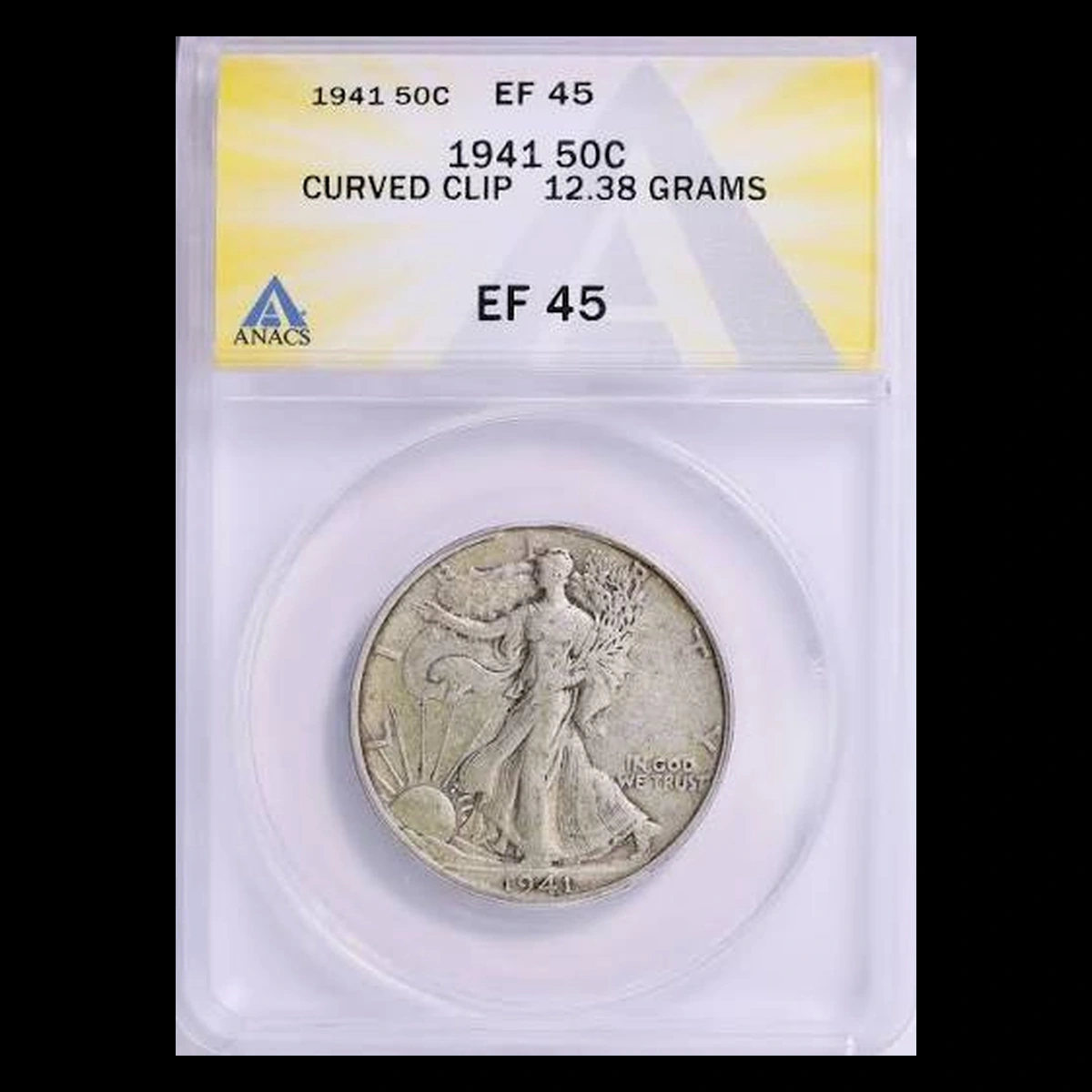
7. 1941 Half Dollar An Original Gap Interrupts the Edge: Clipped Planchet Error
A clipped blank lacks part of its outline before the designs are struck. Overlapping a prior punched hole can create a curved gap, while other blank-making circumstances can produce different shapes.
The 1941 report specifies no mint, graded specimen, or percentage. The actual edge must establish how much metal is missing and whether the loss predates striking.
How to Identify
Inspect both ends of the gap and follow how the rim and design approach the boundary. Original formation around an incomplete blank differs from cutting through completed details.
Look for saw marks or grinding in the remaining edge and consider possible opposite-rim weakness. That supporting clue is not sufficient alone.
Compare lost weight with the absent area and circulation wear. Measure intact spans rather than treating an incomplete outline as a normal diameter.
What It’s Worth
Genuine examples have an estimated $50–$500 range. Condition, size, and readable identity determine the most useful comparison.
A 1942-S clip graded ANACS MS62 sold for $81.90 including the buyer’s fee in May 2025. It provides modest nearby-year context without establishing a certified 1941 specimen or its percentage.
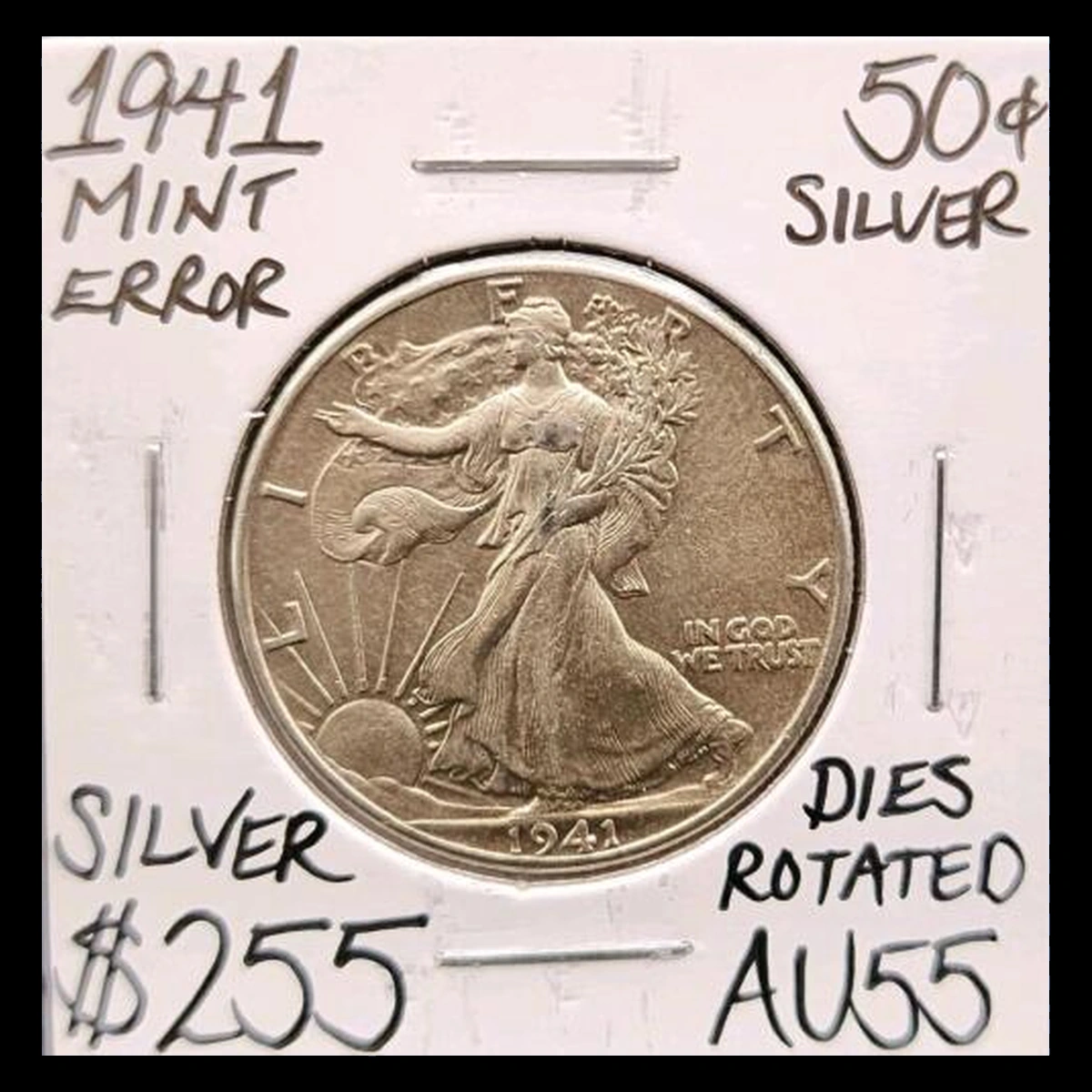
8. 1941 Half Dollar The Eagle Repeatedly Lands at an Angle: Rotated Dies Error
The reported 1941 sold in a cardboard holder with a seller’s AU55 description. No independent grading-service opinion or measured rotation angle is established.
Rotation concerns the relationship between the faces. Each can have a normal-looking design while their final orientation is wrong.
How to Identify
Hold Liberty upright beside a vertical reference and flip the coin top to bottom without sideways twisting. Repeat the motion and record whether the eagle lands at the same incorrect angle.
A continuous recording can preserve this relationship better than photographs independently turned upright. Check for slipping in the holder before measuring the tilt.
Inspect the edge for seams from joined coin halves and document normal physical characteristics. A tilted photograph by itself cannot establish rotated dies.
What It’s Worth
Confirmed rotations on collectible worn and ordinary unworn coins are estimated at $40–$350. A large obvious tilt can attract more interest.
The ungraded Musick Auction example received a $70 winning bid in May 2026. That is not a documented all-in total, an independently confirmed AU55 grade, or a benchmark for a particular angle.
9. 1941 Half Dollar The Half-Dollar Design Extends beyond a Smaller Silver Disc: Quarter Planchet Error
The described 1941 NGC MS64 was struck on a quarter planchet, leaving outer portions of the larger design without metal beneath them. Its mint remains unresolved in the auction description.
A missing mintmark cannot establish Philadelphia if the mintmark area failed to reach the blank. This coin is also separate from the AU58 quarter-planchet partner in the matched pair below.
How to Identify
Compare measured weight and size with a silver quarter blank’s starting standards of 6.25 grams and about 24.3 millimeters. Those standards are not supplied measurements of this MS64 specimen.
Inspect the original truncation of letters and edge formation for signs of filing. Both normal quarter and half-dollar alloys are 90 percent silver, so color alone offers little distinction.
Allow for spreading and retain the surviving date in the photographs. Leave mint identity unresolved when its area is missing.
What It’s Worth
The comparison-based estimate is $10,000–$25,000. A readable date and original surfaces support stronger interest.
Nearby-year 1942 quarter-planchet examples sold for $16,200 in 2018 and $18,000 for an NGC MS64 in January 2022. Those separate results are not sales of the described 1941 MS64 and provide no mint-specific premium for it.
10. 1941 Half Dollar Two Coins Preserve Matching Contact: Double Strike and Quarter-Planchet Mated Pair Error
The intact pair records a finished half not fully leaving the press before a quarter blank entered. The next blow struck the half again 90 percent off center while placing a half-dollar design on the smaller blank.
The quarter-planchet piece also received a tiny impression from its companion’s reeded edge, called an edge brockage. It weighs 6.3 grams, and NGC graded both partners AU58, indicating slight wear.
How to Identify
Compare the tiny impression near two-thirty on the smaller piece with the companion’s edge grooves. This physical correspondence links the coins more directly than two independent error labels.
Trace the full half’s earlier image and distant later strike, then examine the smaller piece’s own half-dollar design. Its transferred edge marks are not a complete reversed portrait.
Keep both faces and edges of both coins together in the photographs. The recorded 6.3 grams belongs only to the smaller partner; 12.50 grams is the normal full-half standard rather than a supplied measurement of its mate.
What It’s Worth
The intact matched pair has an estimated $20,000–$40,000 range. Its connected physical evidence gives it a different market from unrelated individual errors.
The two-coin Heritage lot sold for $24,675 in November 2013. That is one total for both pieces, not an individual price or two separate sales.
Conclusion
The strongest 1941 comparisons depend on precise identity: a confirmed proof No AW, an embedded inclusion, or two physically matched error coins. General labels such as Micro S and inherited doubling should not supply an unsupported rarity premium.
Preserve surfaces, attached layers, and both sides of every example. Keep the $24,675 result attached to the intact pair, and leave the separate MS64 quarter-planchet coin’s mint unresolved when its design cannot establish it.