Rare 1882 Half Dollar Errors (List & Pictures)
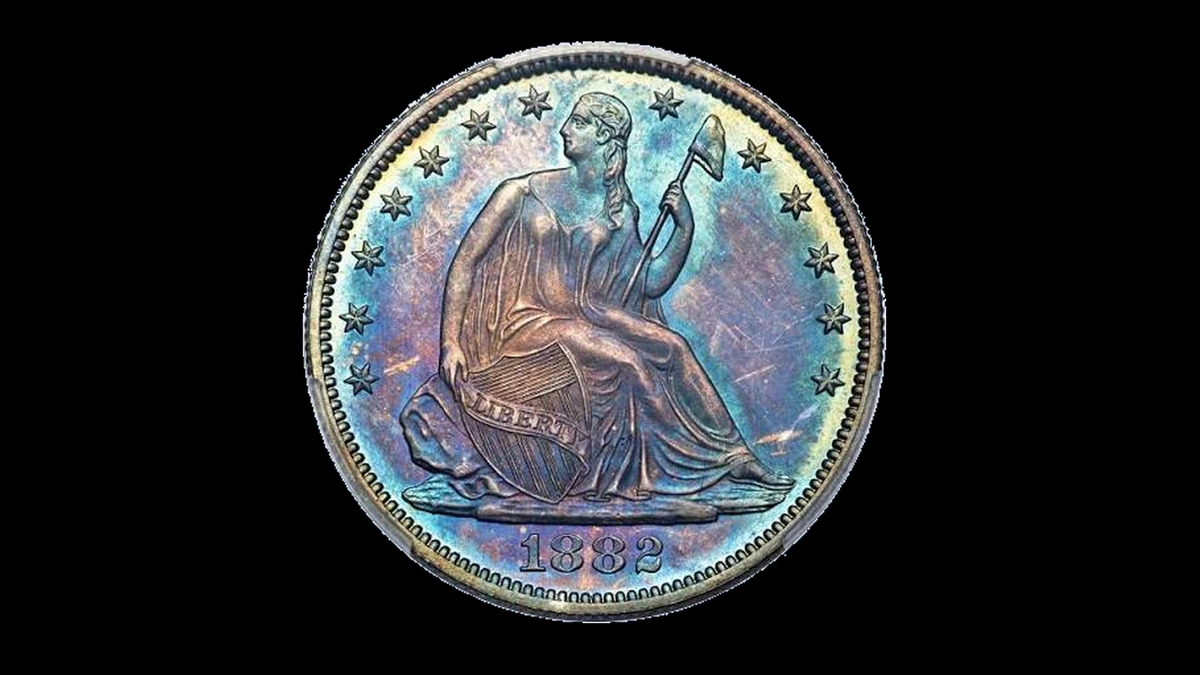
The date can look perfectly clear on a valuable 1882 half dollar. The clue to this variety sits farther down, hidden in the border.
For collectors checking 1882 half dollar errors, the WB-102 proof has an estimated $2,000–$5,000 range in certified Proof-64 to Proof-66 grades. An exceptional example reached $16,867 at Superior Galleries in 2006.
Here is how to find its small extra marks and choose a useful price comparison.
1882 Half Dollar Extra Digit Tops Below the Date: Misplaced Date Error
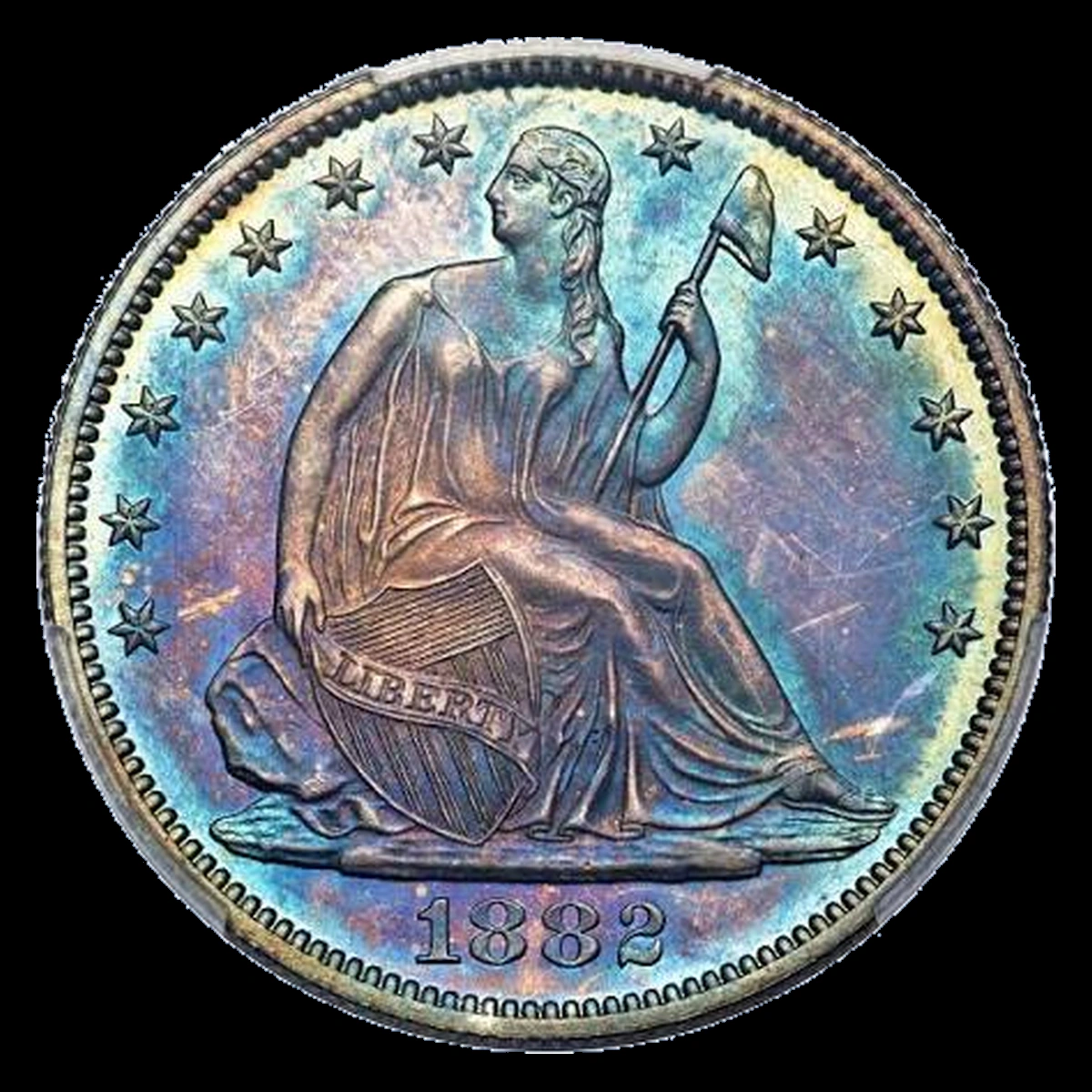
Look for two tiny curves among the teeth along the lower rim. You will not find a complete second date there: only the tops of digits remain.
Collectors label this pattern WB-102, a variety found on Philadelphia proofs. These coins were specially made for collectors.
The curves record a correction to the die, the steel tool that stamps the design. A date punched too low was replaced higher up, leaving these small pieces of the first attempt.
How to Identify
Hold the coin under a lamp and follow the lower border with a 10× magnifier. Check the spaces below the 1 and first 8, then below the two 8s.
Use a photograph of a confirmed 1882 WB-102 proof to compare both curves. Their position relative to the date matters as much as their shape.
Turn the light slightly to check that the curves rise above the surface. A cut or scratch sinks into the metal, while a reflection can disappear when the light moves.
Do not identify the variety from one random bump. You want the pair of digit tops in the documented positions, with the normal date visible above them.
A loose, unworn 1882 half dollar should weigh about 12.50 grams and measure 30.6 millimeters across. Those measurements and its grooved edge can help check the coin itself, but only the date marks identify this error.
What It’s Worth
Estimated range: $2,000–$5,000 for certified Proof-64 to Proof-66 examples. These grades describe preservation, so compare coins with similar marks and surface condition.
A Proof-65 Cameo example sold for $2,760 in October 2025. A Proof-66 Ultra Cameo brought $4,560 in August 2024.
“Cameo” describes the contrast between the raised design and the reflective background. Both the condition and that contrast affect how closely an auction coin compares with yours.
The historical $16,867 result belongs to an exceptional example. It does not mean every proof with these extra digit tops is worth that amount.
Conclusion
For this 1882 error, the useful first step is a close look below the date. Match both raised digit tops to a WB-102 proof reference before comparing grades or prices.
The estimated $2,000–$5,000 range covers certified Proof-64 to Proof-66 coins, while the $16,867 result represents an exceptional sale. Surface condition and contrast help explain the gap between those examples.