Rare 1908 Dime Errors (List & Pictures)
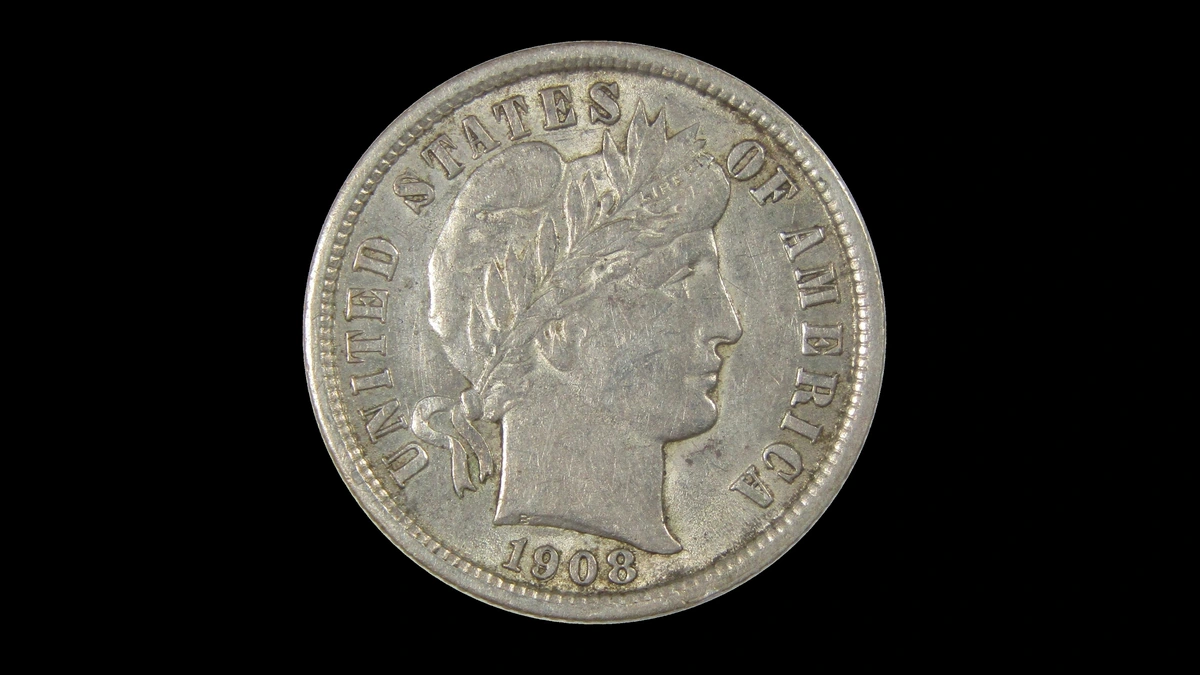
Small date remnants and changes to the whole outline both occur among reported 1908 dime errors. Estimated values span $20–$1,500; a Denver repunched date sold for $161 in 2006, while a different-year 1899 off-center dime provides a $312 June 2023 comparison.
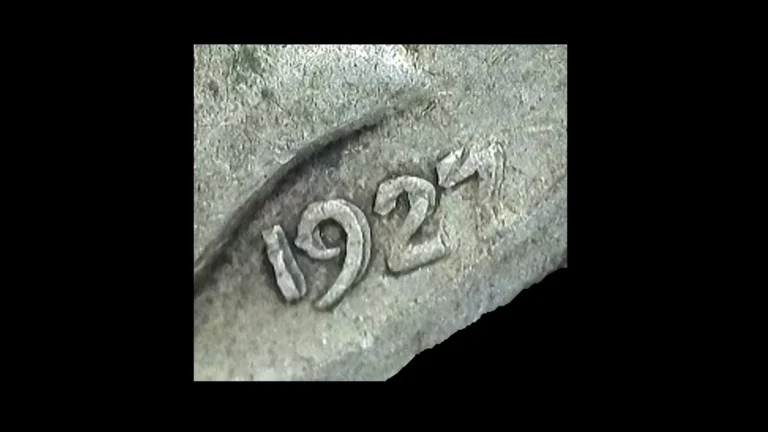
Begin with the mintmark and date close-ups, then examine both faces and the edge for signs of outward spreading or displacement.
| Observation | Possible identification | Estimated range |
|---|---|---|
| Extra mintmark curve | Denver repunched mintmark | $35–$500 |
| Overlapping date strokes | Repunched date | $20–$1,100 |
| Number tops near rim teeth | Misplaced date | $50–$900 |
| Wider coin with complete designs | Broadstrike | $75–$750 |
| Blank margin and missing outer design | Off-center strike | $200–$1,500 |
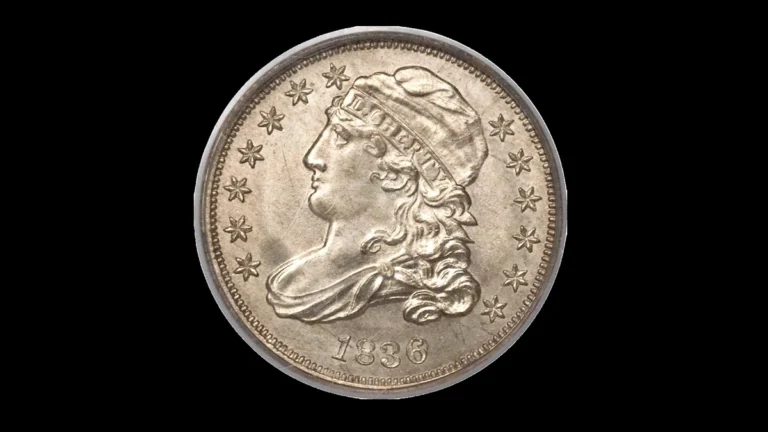
A normal Barber dime originally weighs 2.50 grams and measures about 17.9 millimeters, with a grooved edge. The letter below the reverse bow identifies Denver, San Francisco, or New Orleans as D, S, or O; Philadelphia has no mint letter.
1. 1908 Dime Another Curve beside D: Repunched Mintmark Error
The tiny Denver D can preserve part of an earlier mintmark impression. Repeated punching into the die left an extra letter outline that transferred to coins struck from it.
NGC records repunched mintmarks for 1908-D. The feature belongs to the die, rather than an extra D stamped onto an already finished dime.
How to Identify
Retain the bow and nearby rim teeth in a close-up while tracing the possible second D. Its curve should match an attributed Denver example in shape and position.
A nick can push metal sideways, and a flat shelf can result from movement during striking. Neither substitutes for a recognizable earlier D outline.
What It’s Worth
Worn through lightly worn examples are estimated at $35–$500 for the complete coin. A different-year 1899-O repunched mintmark brought $115 in May 2023, with slight wear and a noted condition problem.
That comparison shows the modest market possible for a Barber mintmark variety. It does not establish a specific sale price for the Denver pattern.
2. 1908 Dime Extra Curves Close to the Numerals: Repunched Date Error
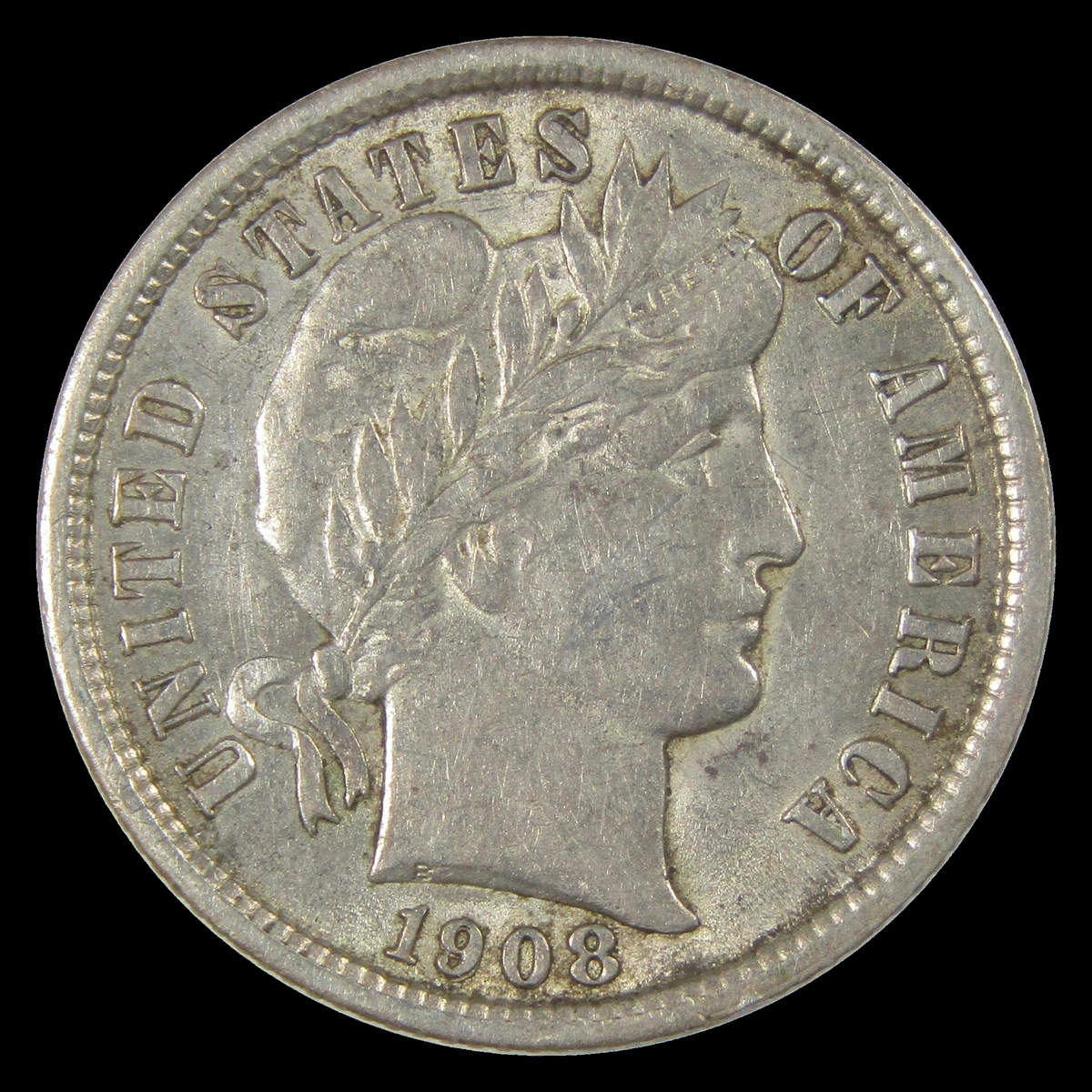
Small overlapping date shapes can remain where a date punch was entered into the die more than once. Known reports cover Philadelphia, Denver, and San Francisco, with New Orleans also listed in an annual guide.
Each mint’s pattern needs its own match. A thick-looking date or a shared catalog number does not establish identical extra strokes.
How to Identify
After checking the mintmark, inspect all four numerals against the appropriate variety photograph. Follow an extra curve far enough to see whether it forms a recognizable part of an earlier number.
Random scratches can cross a digit without repeating its shape. A narrow flat ledge alongside one edge can also have a different striking cause.
What It’s Worth
A working range is $20–$1,100 for typical collectible examples of varying preservation. The Denver FS-301 AU58 sold for $161 in January 2006.
A heavily worn Philadelphia FS-301 graded G4 brought only $13 in June 2014, below that working range. The same FS number here refers to different mint-specific varieties, and the two grades represent very different remaining detail.
3. 1908 Dime Number Tops above the Rim Teeth: Misplaced Date Error
On the documented Philadelphia example, tiny tops of 1 and 0 appear below the ordinary date, just above the rim teeth. The date punch entered the die in the wrong location before the proper date was completed.
The same tool also has extra impressions beside the main date, so misplaced and repunched numerals can coexist. Denver misplaced-date reports require their own location references.
How to Identify
Keep the rim in the image and inspect the narrow space beneath the normal date. Match the Philadelphia number tops with the Barber dime variety guide rather than treating any stray notch as a numeral.
Then inspect the main date for the separate repunching on that pairing. Neither feature requires the finished coin to have received two displaced strikes.
What It’s Worth
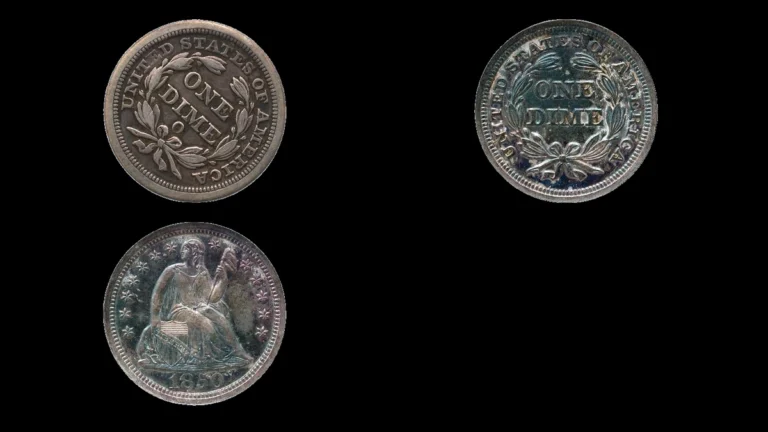
Identifiable examples are estimated at $50–$900 from worn through lower unworn grades. An 1859 Seated dime with a misplaced date sold for $118.12 as VF30 in October 2024, a different-year and different-design comparison.
Two date features still belong to one coin for valuation. Their visibility and the surfaces should guide the comparison instead of adding independent premiums.
4. 1908 Dime Extra Width without Missing Design: Broadstrike Error
A broadstrike spreads outside the normal outline when the collar fails to contain the blank. That ring ordinarily controls width and forms the edge grooves during striking.
The 1908 guides report this category without supplying a specific completed auction result. Actual expansion together with complete designs is the important combination.
How to Identify
Measure the outline against a normal dime and follow the full outer lettering on both faces. An uneven border alone does not demonstrate outward spread.
Inspect the edge for incomplete normal collar formation and the surfaces for later hammering. A coin widened after minting commonly has flattened or disturbed details instead of original struck designs.
What It’s Worth
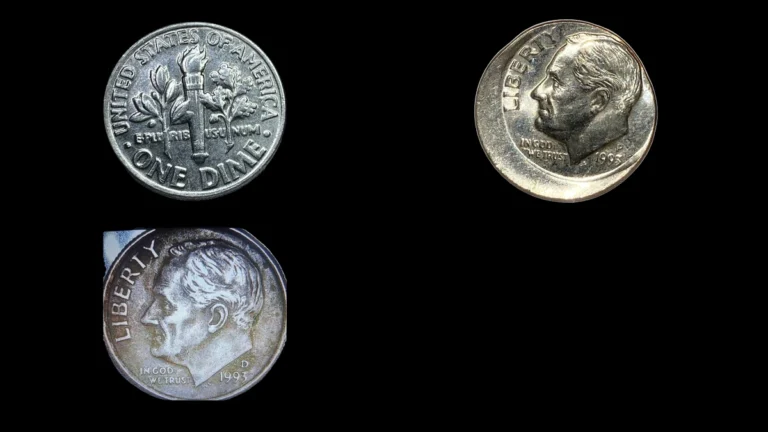
The broad estimate is $75–$750, with a year guide suggesting $100–$200 for circulated examples. An 1899 Philadelphia broadstrike sold for $161 in June 2005, but cleaning and corrosion affected its adjusted grade.
That different-year result illustrates the effect of damage, not a confirmed 1908 transaction. Degree of spread and preservation must be compared together.
5. 1908 Dime An Unstruck Crescent beside Cropped Design: Off-Center Strike Error
A blank positioned too far to one side receives only part of the dies’ designs. Untouched metal remains on one side while outer design misses the opposite boundary.
The supplied 1908 report gives no specific mint, direction, or percentage. Those details must be established from the coin rather than borrowed from another year’s example.
How to Identify
Check both faces for the displaced strike and an original boundary between struck and untouched metal. A one-face shift can involve a misaligned die, while grinding can remove design without creating an original blank crescent.
Read the date and whatever mintmark area remains before assigning a year or mint. An ordinary off-center event does not remove the blank’s metal, although wear can still lower its weight.
What It’s Worth
Readable-date examples are estimated at $200–$1,500. A separate 1899 Philadelphia dime struck 10% off center and graded VF25 reportedly sold for $312 in June 2023.
That same-series sale supports a comparison for a modest displacement. It supplies neither a confirmed 1908 sale nor an angle or percentage for the generic report.
Conclusion
For 1908 dimes, keep the mintmark attached to every date comparison and the complete outline visible for striking errors. Small extra curves need precise photographic matches, while spread or displacement should explain both faces and the edge.
Separate broad estimates from documented sales, and remember that one coin showing both misplaced and repunched numerals still has a single value shaped by condition and clarity.