Rare 1850 Dime Errors (List & Pictures)
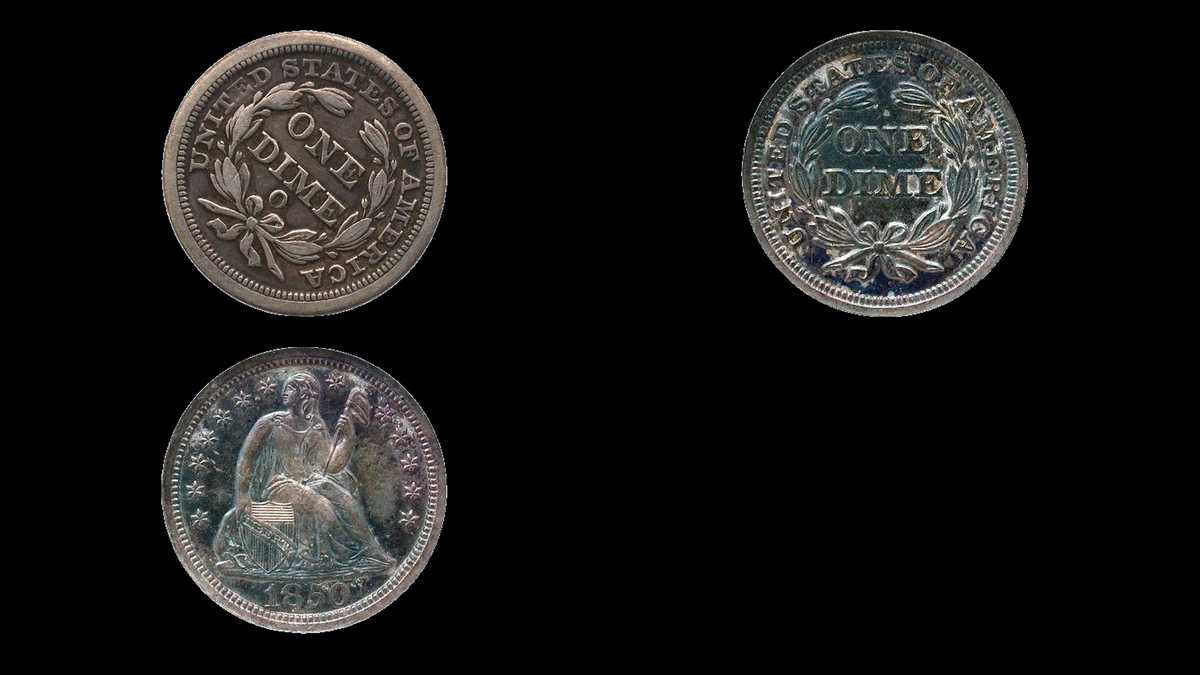
The highest supplied 1850-O sale, $40,800 in August 2022, concerns an exceptional MS67 coin without an established rotation error. For the conditions covered here, 1850 dime errors have estimated whole-coin values of $30–$6,500.
Separate the angle between the two designs from the smaller raised cracks and doubled contours within them.
| Visible clue | Feature | Estimated whole-coin value |
|---|---|---|
| Reverse leans after a controlled flip | 1850-O rotated reverse | $150–$6,500 |
| Raised lines leave the wreath and cross lettering | Die cracks | $30–$2,000 |
| Extra shield or reverse contours | Doubled die | $50–$5,500 |
1. 1850 Dime The reverse turns left relative to Liberty: Rotated Reverse Error
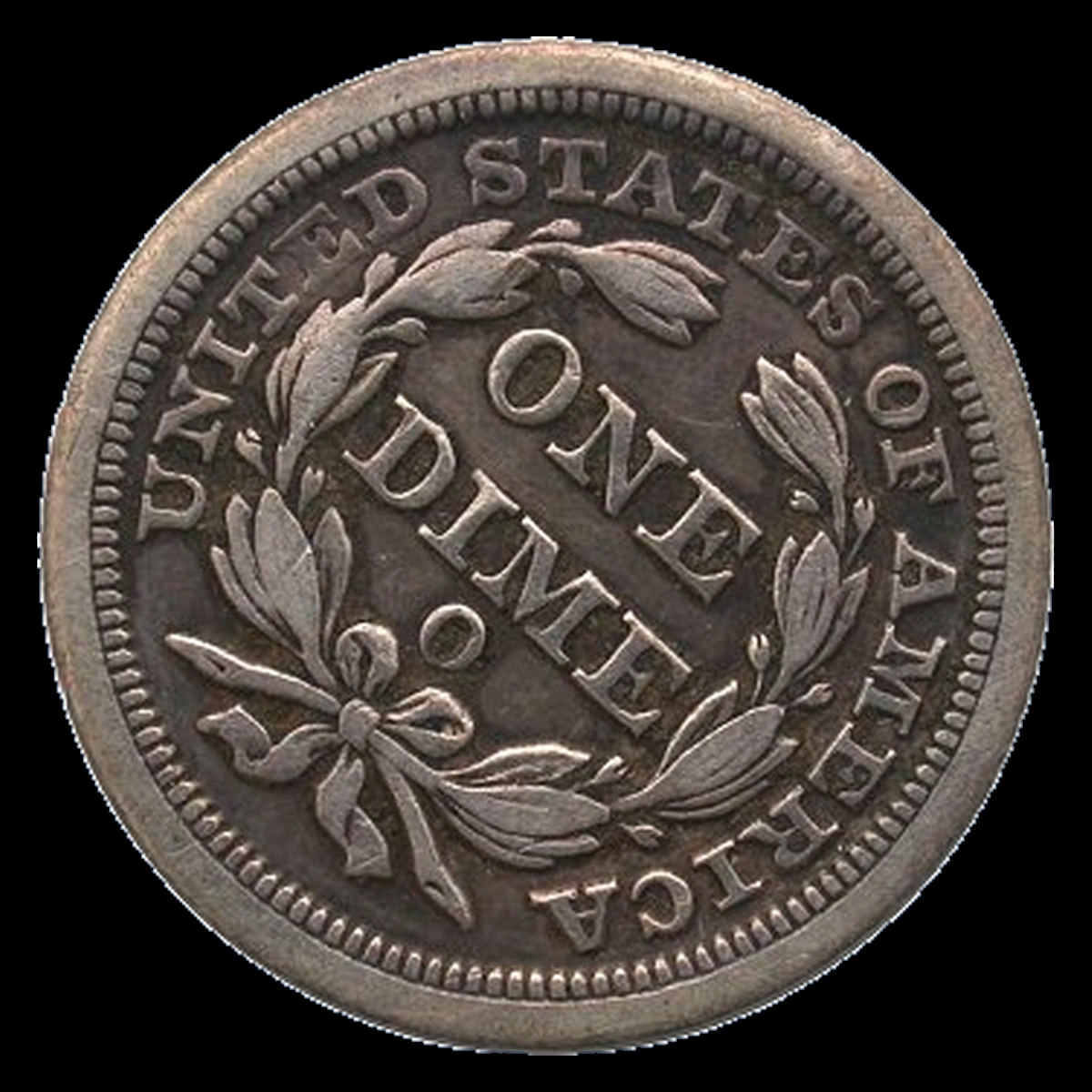
The Large O below the wreath identifies New Orleans, but the mintmark’s own position is not the error. On the F-105a described in the 1850-O catalog, the entire reverse is rotated approximately 45 degrees left.
This records an incorrect angular relationship between the two dies, the tools that stamp the faces. Both designs can remain otherwise complete and centered.
Two separately straightened photographs may conceal the rotation entirely. The important relationship becomes visible when the actual coin is turned without changing its orientation in the holder.
How to Identify
Secure the coin in a transparent holder with Liberty upright and flip it from top to bottom. The reverse of a normally aligned United States coin should then appear upright.
Repeat the movement against a vertical guide. A matching F-105a should return to the same approximately 45-degree left lean each time.
A sideways flip or a coin spinning inside the holder can create a false angle. Record an unbroken sequence if possible, retaining the Large O and full reverse design in view.
For an accessible coin, original specifications of about 2.67 grams and 17.90 millimeters provide a general check. Inspect the grooved edge for a seam or other alteration, without treating correct measurements as proof of the rotation.
What It’s Worth
The estimate is $150–$6,500 for worn through attractive lightly worn or lower-grade unworn whole coins. The New Orleans issue and condition contribute substantially.
A reported $399.99 offering for an ungraded F-105a is an asking price. It is not evidence that a buyer paid that amount.
PCGS records the $40,800 MS67 result for an exceptionally preserved 1850-O in August 2022. The sale did not identify a rotation error and therefore cannot establish a rotation-specific price.
2. 1850 Dime An apparent extra stem continues beyond the wreath: Die Cracks Error
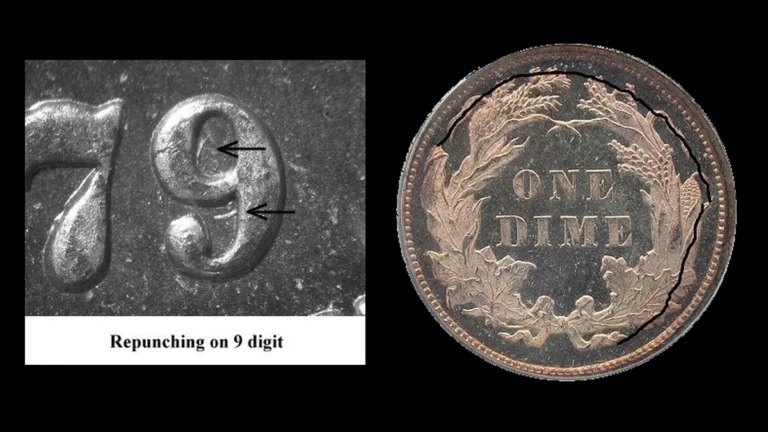
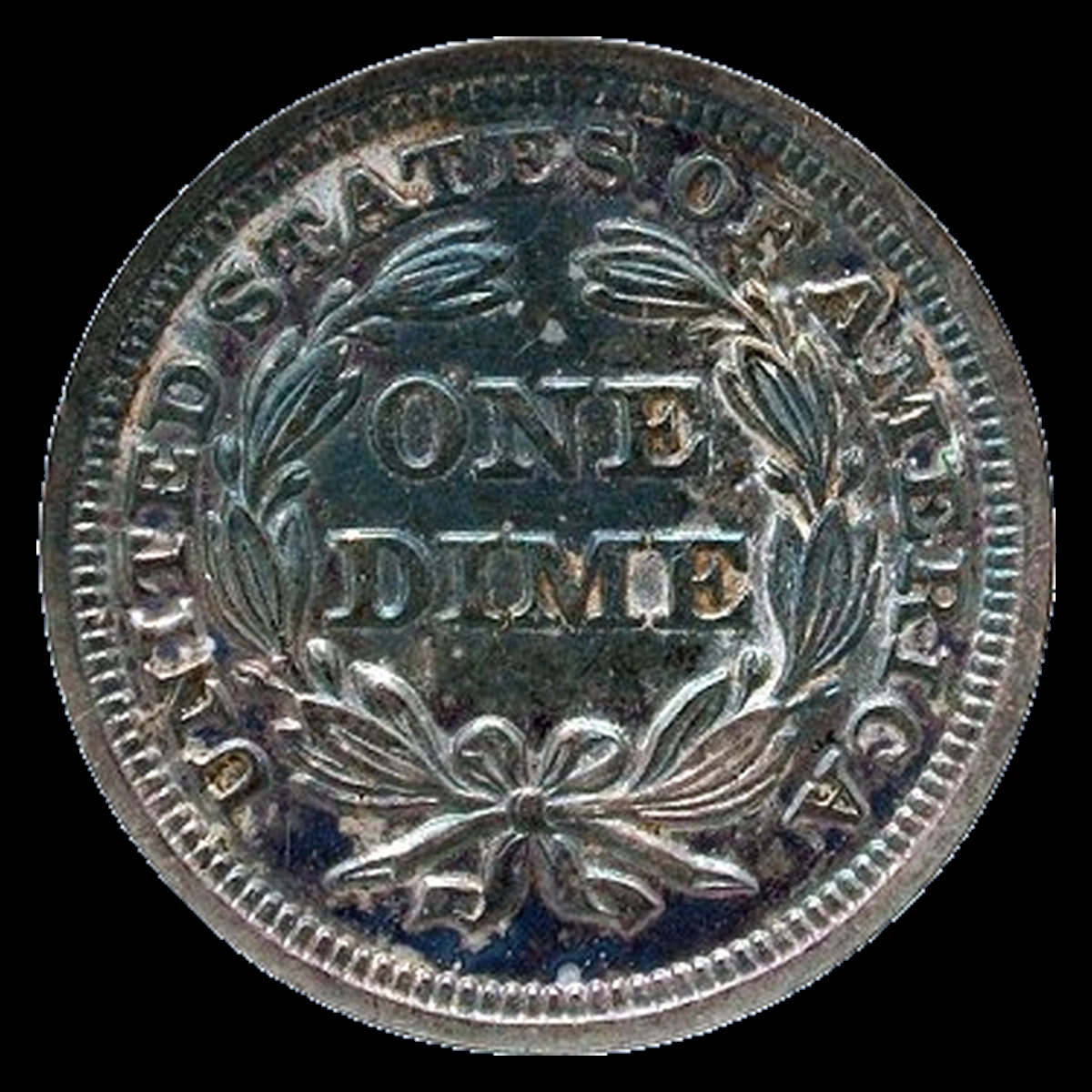
Some raised lines can resemble normal wreath detail until they cross into letters or reach the border. One recorded reverse has crossing lines from the upper wreath toward STATES and a stronger route through the lower left wreath and stem to the rim.
These ridges formed when silver entered narrow openings in cracked dies. Other Philadelphia examples carry obverse cracks near the date or stars, but those routes belong to separate tools or stages.
How to Identify
Trace the suspected line until it leaves the normal plant design. On the described reverse, the lower-left ridge continues through the stem and reaches the border.
Keep the complete reverse visible while checking the upper crossing lines. Matching their paths to the same reference is more useful than counting unrelated marks around the wreath.
Light the surface from several directions to establish that the line rises above it. A scratch is cut into the silver, even when a shadow beside it looks raised in one photograph.
Choose a separate matching reference for an obverse date or star crack. The reverse pattern should not be imposed on every 1850 dime with a line.
What It’s Worth
Estimated values are $30–$2,000 for worn through attractive unworn whole coins. A continuous, legible route generally presents the feature more clearly than one obscured by heavy wear.
Greysheet lists an ordinary PCGS EF45 at $120 in November 2024 and a PCGS MS63 at $660 in September 2025. The first had noticeable wear; the second was unworn with marks.
Neither sale is assigned to the pictured crack network. They supply condition context rather than measured premiums for specific ridges.
3. 1850 Dime Fine extra contours border the shield or wreath: Doubled Die Error
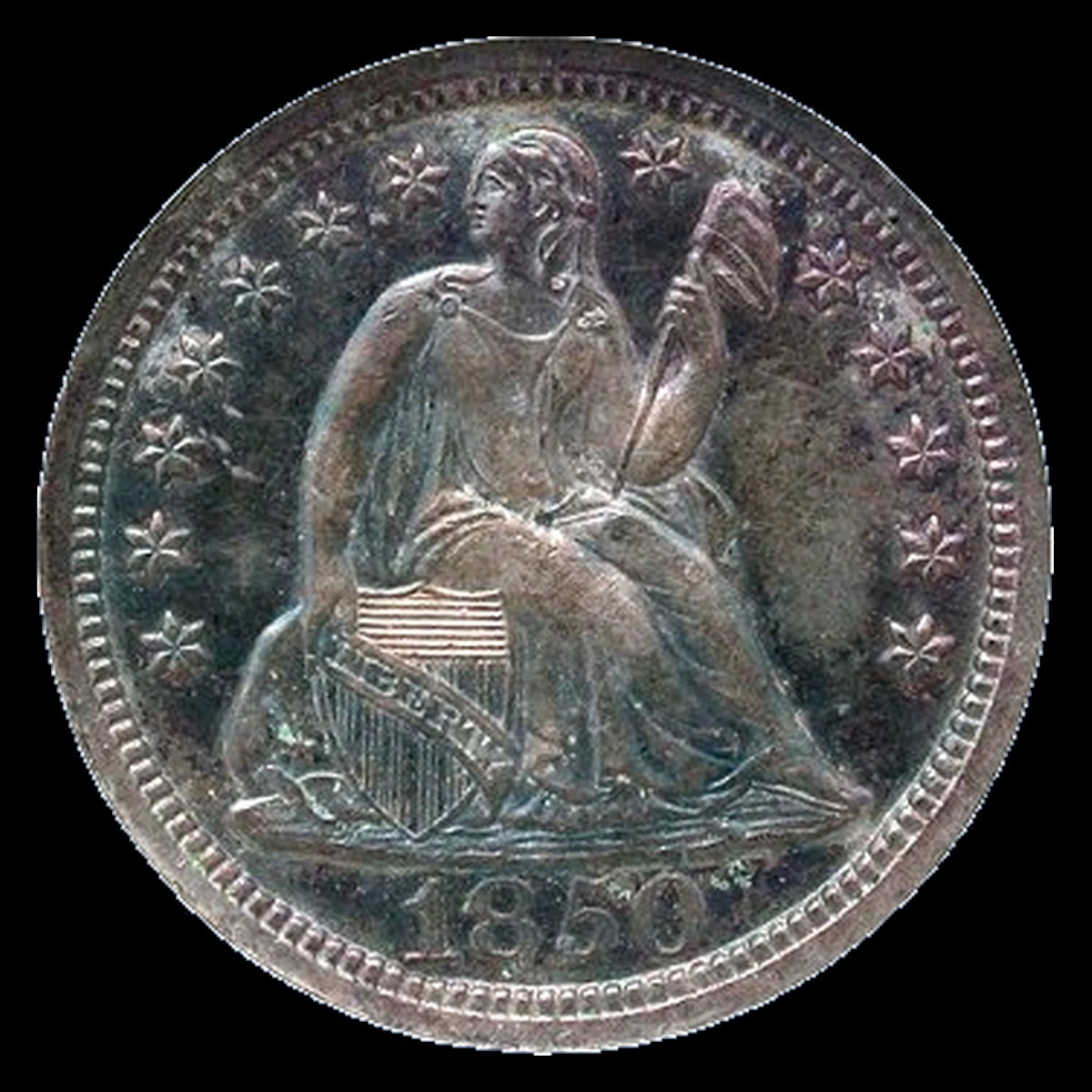
The F-106 obverse has extra outlines to the left of odd-numbered stripes in the lower shield, including the first and third. A separate F-110 reverse has light doubling in parts of the wreath, AMERICA, and the left ribbon end.
These repeated contours were already part of the dies’ designs. A single ordinary strike could copy them, without the coin receiving a second complete blow.
Fine lines behind the reverse lettering are separate marks. Their proximity does not make them additional doubled letters.
How to Identify
Confirm Philadelphia by checking for the absence of O. Then choose the reference for the face being examined rather than combining both separate varieties into one required pattern.
For F-106, compare the lower shield stripes at 10× magnification with a normal example. Follow the extra contours at the identified stripes instead of relying on overall thickness.
For F-110, inspect the wreath, AM in AMERICA, and the left edge of the left ribbon tail. Rounded secondary contours need a different assessment from flat shelves created by movement during striking.
Check surrounding surfaces for scratches or alteration that may obscure the fine detail. Normal dimensions alone cannot confirm such small doubled elements.
What It’s Worth
The whole-coin estimate is $50–$5,500, from worn examples with readable doubling to very well-preserved unworn coins. Original surfaces help retain these delicate features.
Greysheet’s sales index lists $4,800 for a PCGS MS65+ CAC F-101 in June 2024. That is a high-grade same-year comparison involving a different variety.
It is not a recorded sale of either F-106 obverse doubling or F-110 reverse doubling. Their identification and valuation require the relevant feature on the actual coin.
Conclusion
A fixed turning sequence tests rotation, while magnification distinguishes cracks from normal stems and doubled contours from nearby lines. Keep each pattern associated with its proper mint, die, and face.
The estimated $30–$6,500 range covers the conditions discussed here. The $40,800 exceptional New Orleans sale remains a separate high-grade comparison, and the ungraded seller offering remains an asking price rather than a completed sale.