Rare 1999 Penny Errors (List & Pictures)
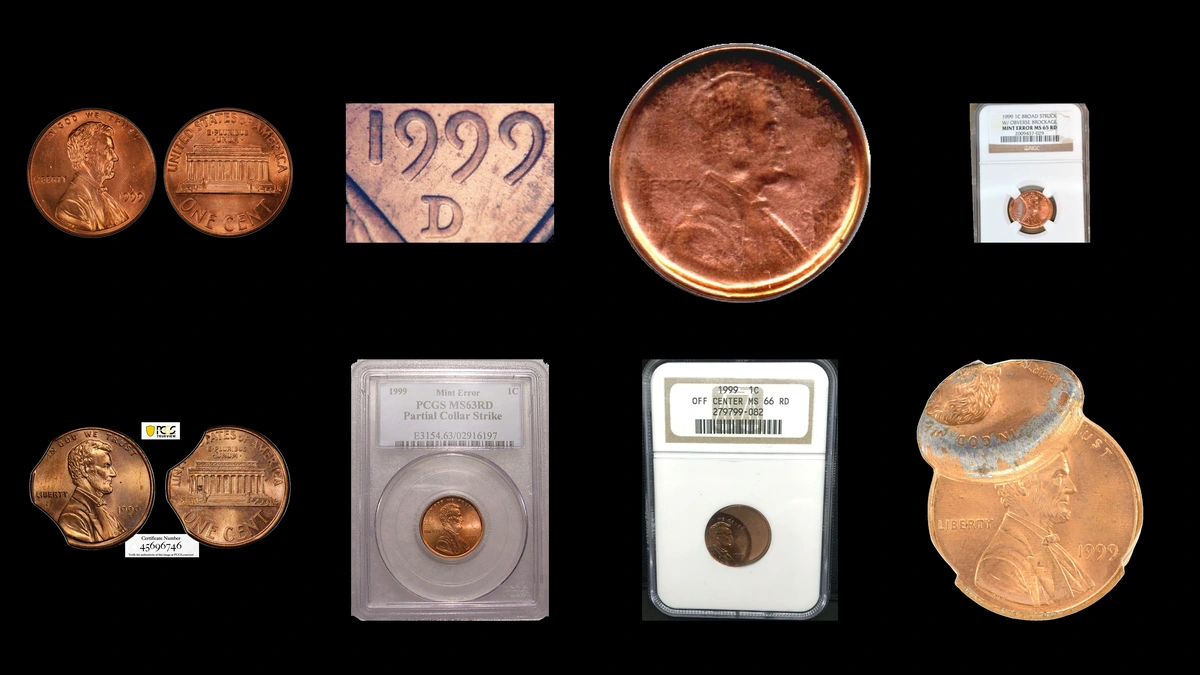
A 1999 cent with Lincoln on the front and a dime’s reverse sold for $138,000 in April 2006. The eighteen groups of 1999 penny errors below span estimated values of $2–$200,000, but most finds are far less dramatic.
Start with AMERICA and the small surface features, then examine the outline and underlying metal. An ordinary cent weighs 2.50 grams, measures 19.05 mm, and has thin copper plating over zinc with a smooth edge.
| Visible clue | Error or variety | Estimated value |
|---|---|---|
| Unexpected AM spacing | Wide AM or Close AM mix-up | $100–$5,000 |
| Repeated detail | Doubled die | $5–$200 |
| Rounded lifted coating | Plating blister | $2–$50 |
| Rim lump or bounded step | Cud or retained break | $5–$300 |
| Blocked or softened design | Struck-through error | $25–$400 |
| Design-free depression | Indent | $30–$500 |
| Transferred image | Brockage or counterbrockage | $20–$2,500 |
| Missing curved sections | Clipped planchet | $20–$250 |
| Expansion or edge step | Broadstrike or partial collar | $20–$400 |
| Plain metal beside partial design | Off-center strike | $15–$500 |
| Separate design positions | Multiple strikes | $40–$800 |
| Shallow curved profile | Cupped strike | $25–$300 |
| Walls wrapped around a tool | Die cap | $100–$1,500 |
| Gray zinc surface | Unplated cent | $50–$600 |
| Cent design on dime blank | Wrong planchet | $400–$1,500 |
| Older dime details overlap | Double denomination | $600–$3,000 |
| Joined metal discs | Bonded group | $500–$5,000 |
| Separate cent front and dime back | Mule | $100,000–$200,000 |
1. 1999 Penny AM Spacing That Does Not Fit the Finish: Reverse Mix-Up Error
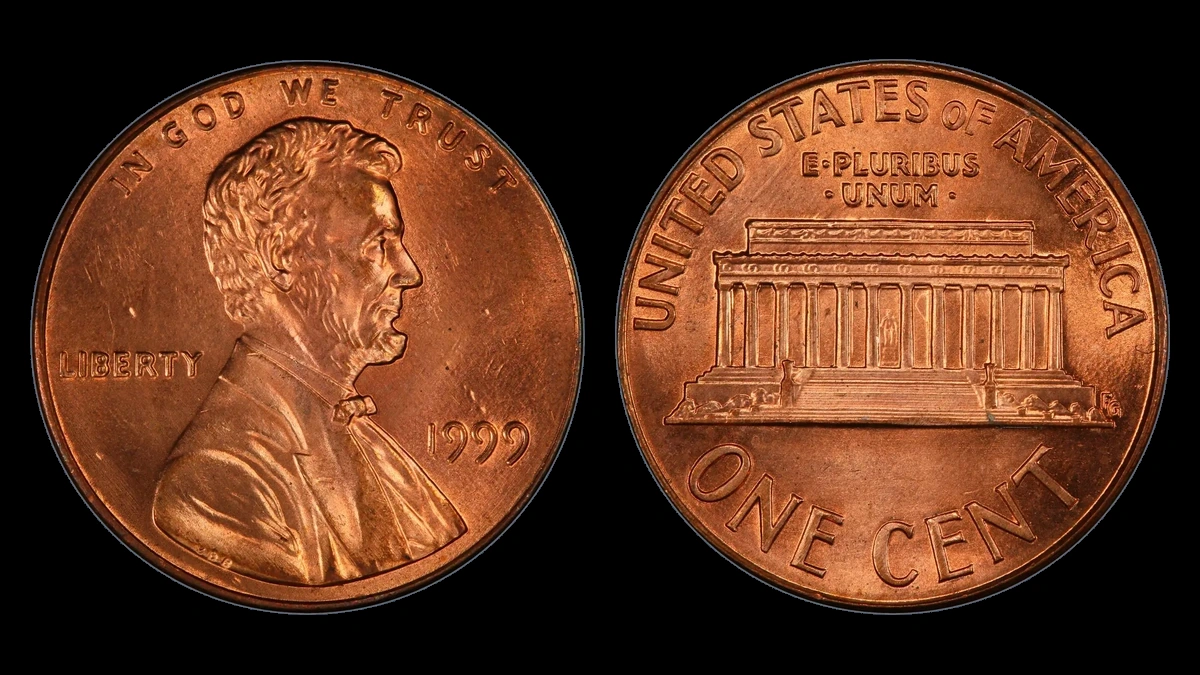
Normal 1999 circulation cents have A and M in AMERICA nearly touching, while normal S Proofs have a clear gap. The collectible pairings reverse those expectations: a Philadelphia Wide AM circulation cent or an S Close AM Proof.
How to Identify
Establish the mint and finish before judging the letter gap. A polished circulation cent is not automatically a Proof, and separated AM is normal on the regular S Proof reverse.
Compare the FG initials and their distance from the Memorial as well as AM using the appropriate Wide AM reference. Both recognized mix-ups use FS-901 in their respective listings, so the number needs its mint and finish context.
What It’s Worth
The estimated range is $100–$5,000, depending on the exact variety, grade, and any additional error. Exceptional condition should not set expectations for worn pieces.
PCGS records $4,583 for an MS68 Red Wide AM in January 2020 and $1,035 for a PR69 Close AM Proof in December 2008. A separately certified Wide AM struck 10% off center needs its own comparison rather than an arbitrary sum of two premiums.
2. 1999 Penny Repeated Date or Letter Detail: Doubled Die Error
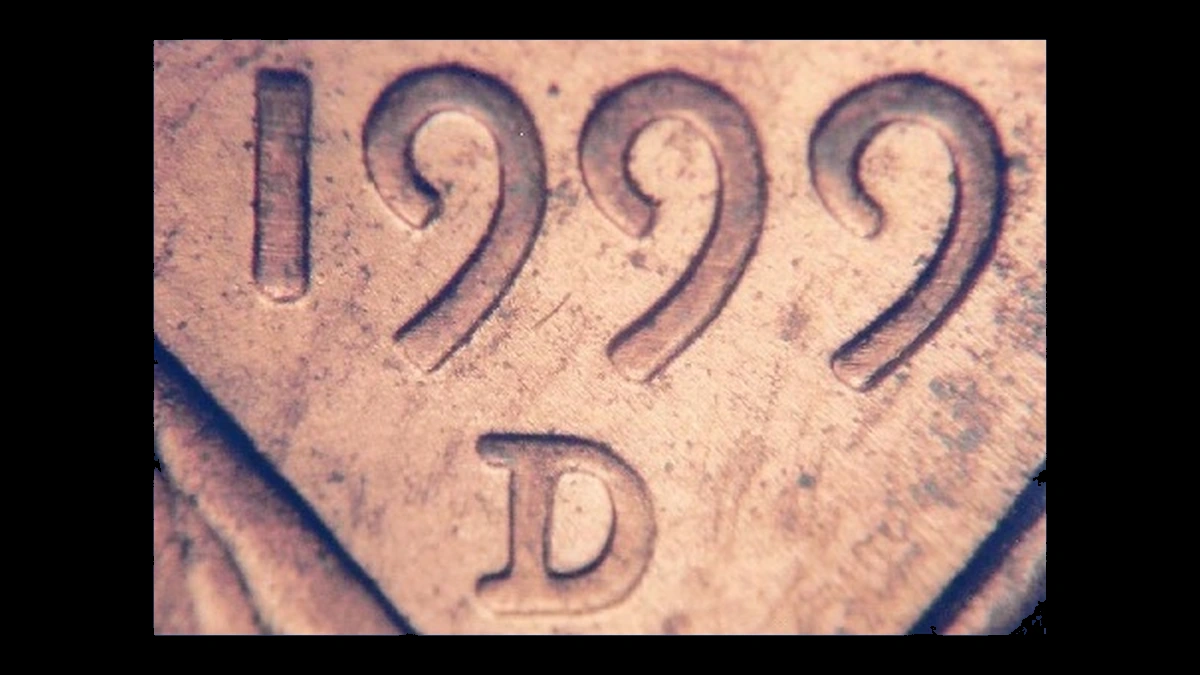
An extra contour can be part of the die’s design before the coin is struck. Philadelphia and Denver front-side varieties are reported, along with separate Denver reverse-lettering doubling.
How to Identify
Match the affected face and mint to a confirmed variety photograph. One repeated letter does not require all the other letters to show the same effect.
Change the lighting to distinguish physical extra detail from reflections, flat strike-doubling shelves, or a split in the copper coating. Do not join unrelated front and reverse marks into one invented variety.
What It’s Worth
Identified minor 1999 doubled dies have an estimated value of $5–$200. Clear repeated detail and attractive surfaces support the higher end.
No specific sale is assigned to the reported patterns. General thickness or ordinary strike doubling does not justify the same estimate.
3. 1999 Penny A Rounded Copper Dome: Plating Blister Error
The thin copper skin can lift locally from the zinc core and create a smooth bubble. Design may remain visible across the raised coating, unlike a solid lump copied from a broken die.
How to Identify
Inspect the rounded boundary and surrounding surface without pressing or puncturing it. White residue, rough pits, flaking, or evidence of heating may point to changes after minting.
Check the opposite face and edge as well. A tiny blister may leave normal weight and diameter essentially unchanged.
What It’s Worth
Confirmed mint-made 1999 plating blisters have an estimated value of $2–$50. Most small examples remain near the lower end.
This is a comparison range without a particular 1999 sale. Size alone does not create a premium when corrosion or later heat explains the bubble.
4. 1999 Penny A Rim Lump or Stepped Area: Cuds and Retained Breaks Error
A missing rim-connected piece of die can leave a raised patch called a cud. If a broken section stays in the tool, its boundary may produce a step while some design remains inside.
How to Identify
For a cud, follow the solid raised patch to the rim and inspect the design it replaces. For a retained break, look for a bounded area with surviving detail rather than demanding a featureless lump.
Recorded Philadelphia examples need exact outline matches. Attached debris, coating bubbles, and thin cracks reaching the edge should not be substituted for the cataloged breaks.
What It’s Worth
Estimated values range from $5–$300 across small related cracks and more conspicuous breaks. Strength, preserved design, and condition matter.
No single sale establishes the price for every recorded stage. A later stage or an appealing nickname does not guarantee a fixed increase over another example.
5. 1999 Penny The Portrait Is Softened or Blocked: Struck-Through Error
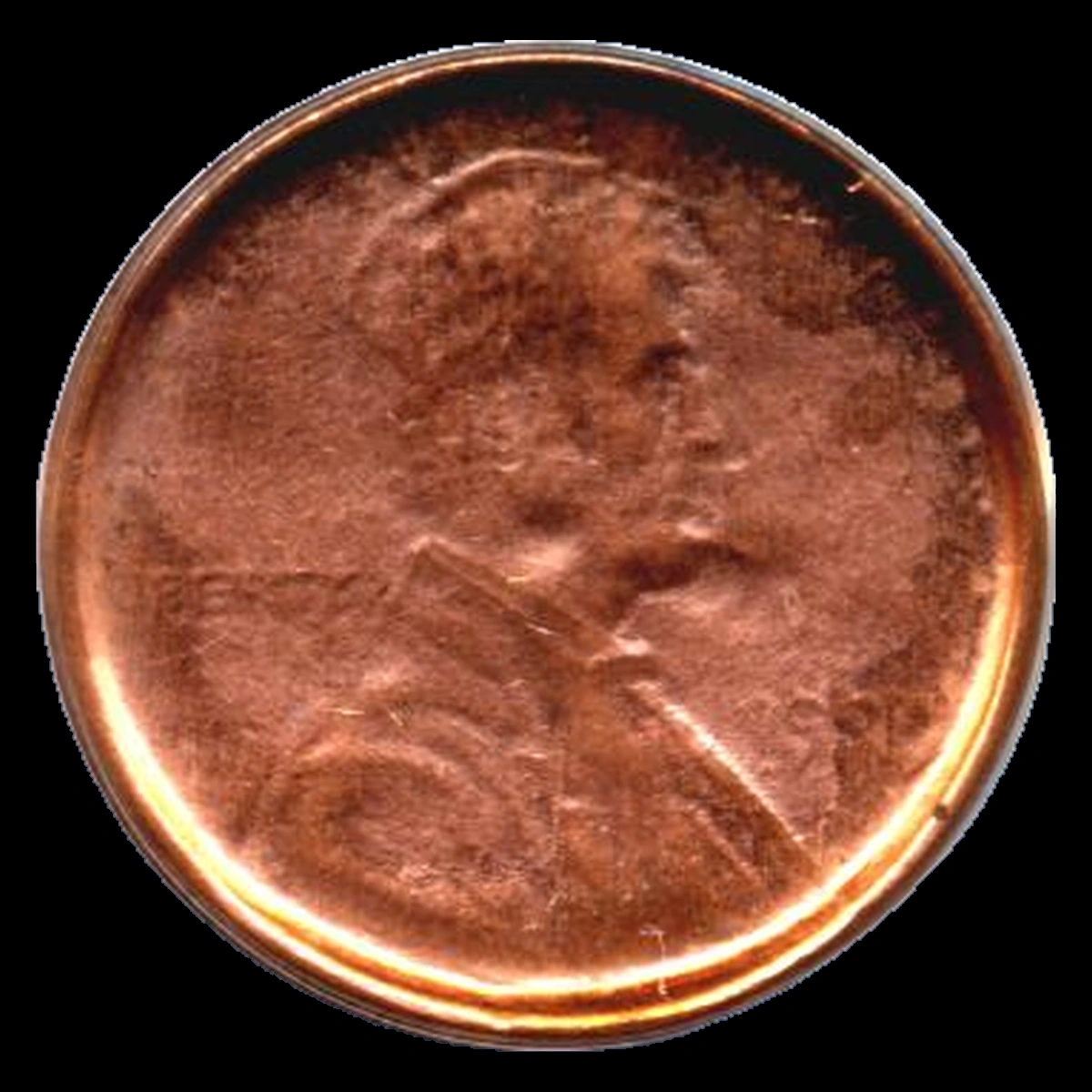
A coin stuck on a die can become a thin cap through which the tool transmits a weakened design. One 1999 example is recorded as struck through a late-stage cap.
A separate 1999 report combines front-side obstruction with an expanded strike, without identifying the blocking material. Neither coin must itself have the cup shape of the cap above it.
How to Identify
Compare weak portrait detail with sharper areas and original surface elsewhere. Wear, corrosion, or grinding must not explain the missing design.
For a bounded impression, follow its actual edge rather than assuming grease caused it. An expanded outline alone does not identify what came between the coin and the die.
What It’s Worth
A confirmed 1999 strike-through has an estimated value of $25–$400. A clear effect can be more appealing than slight unexplained softness.
A 1995 late capped-die strike graded PCGS MS65 Red sold for $180 in March 2025. That is a different-year reference, not a sale of either reported 1999 piece.
6. 1999 Penny A Smooth Depression Without an Image: Indent Error
An overlapping metal disc can block part of the die and press a curved depression into the coin beneath it. A recorded 1999 example combines a 35% front indent with an expanded strike.
How to Identify
Inspect the depression for a recognizable transferred design. If a mirrored image is present, brockage needs consideration instead of calling the area a plain indent.
Follow the boundary into the surrounding struck surface and check for later impact damage. The 35% figure belongs to the documented example, not every indent of this date.
What It’s Worth
A genuine 1999 indent has an estimated value of $30–$500. Depth, size, and the clarity of the original surface influence appeal.
No disclosed auction price is supplied for the 35% example. Some lots combine an indent coin and a separate brockage coin; their total cannot be assigned to just one piece.
7. 1999 Penny A Transferred Image: Brockage and Counterbrockage Error
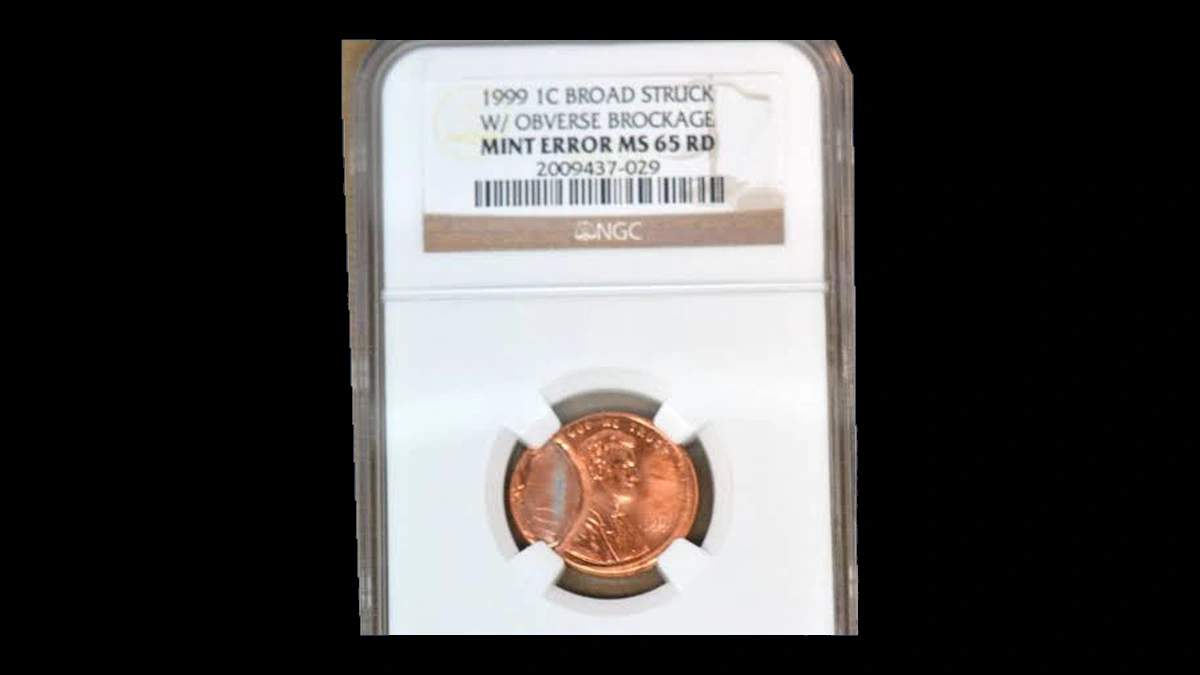
A struck coin can press a backward, sunken copy of its design into another coin, creating brockage. Transferring that impressed image again can produce a distorted, raised, normally reading counterbrockage.
How to Identify
Check reading direction and relief separately: are the letters reversed, and do they rise or sink? Trace a coherent transferred design rather than treating one thick letter as evidence of counterbrockage.
Some 1999 pieces also have expansion, an indent, or another strike. Confirm each effect on the same coin and exclude later squeezing of finished coins, which can imitate a mirrored impression.
What It’s Worth
The estimated range is $20–$2,500 across small partial brockages and stronger transferred-image combinations. The amount and clarity of recognizable design are central to comparison.
A 1999 front counterbrockage graded PCGS MS65 Red sold for $1,680 in March 2023. That unusual piece is not a price guide for every small partial transfer.
8. 1999 Penny Two Curved Gaps in the Outline: Clipped Planchet Error
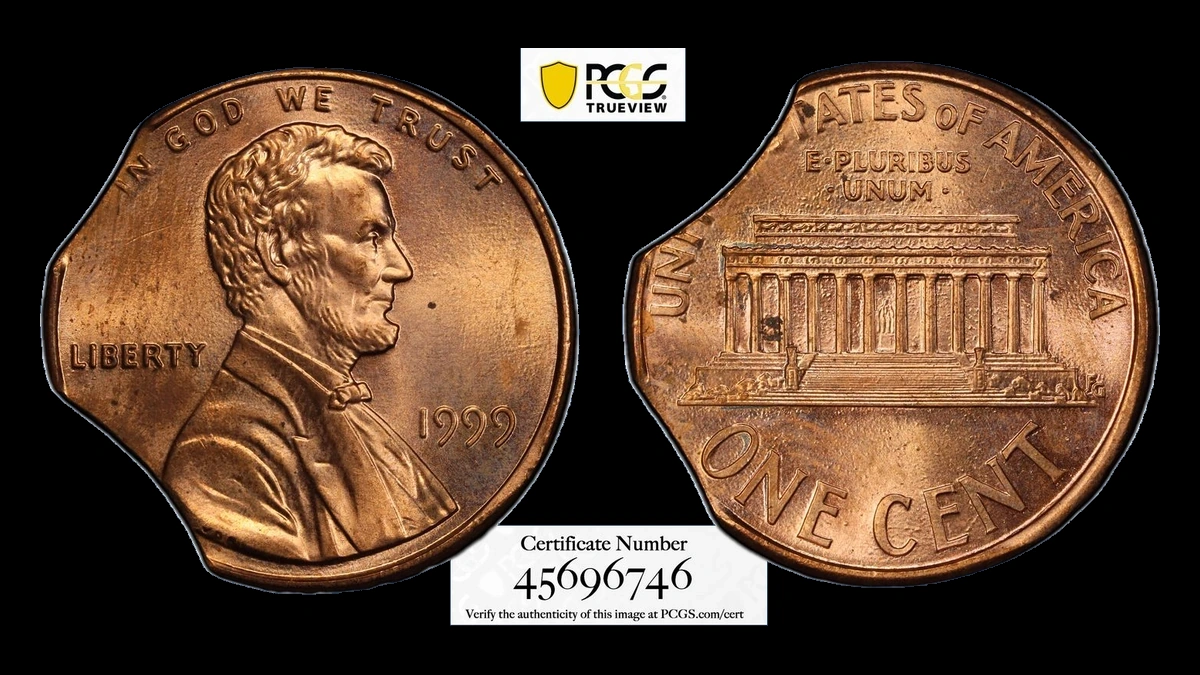
A prepared blank, or planchet, can be incomplete when its cutting punch overlaps earlier holes in the metal strip. A collector showcase records a 1999 cent with a 7% double curved clip.
How to Identify
Examine both gaps where their boundaries meet the original edge. Copper can remain on a genuine clip, and opposite-rim weakness may be helpful without being equally clear on every example.
Reduced weight supports missing metal but does not establish when it disappeared. Saw marks, filing, and fresh cut surfaces need to be excluded.
What It’s Worth
Authenticated 1999 clips have an estimated value of $20–$250. Two gaps belong to one coin and do not automatically double its value.
A 2021 Shield cent with a 5% straight clip sold for $114 in September 2025. Its different date, reverse, and clip shape limit comparison with the showcased double curved clip.
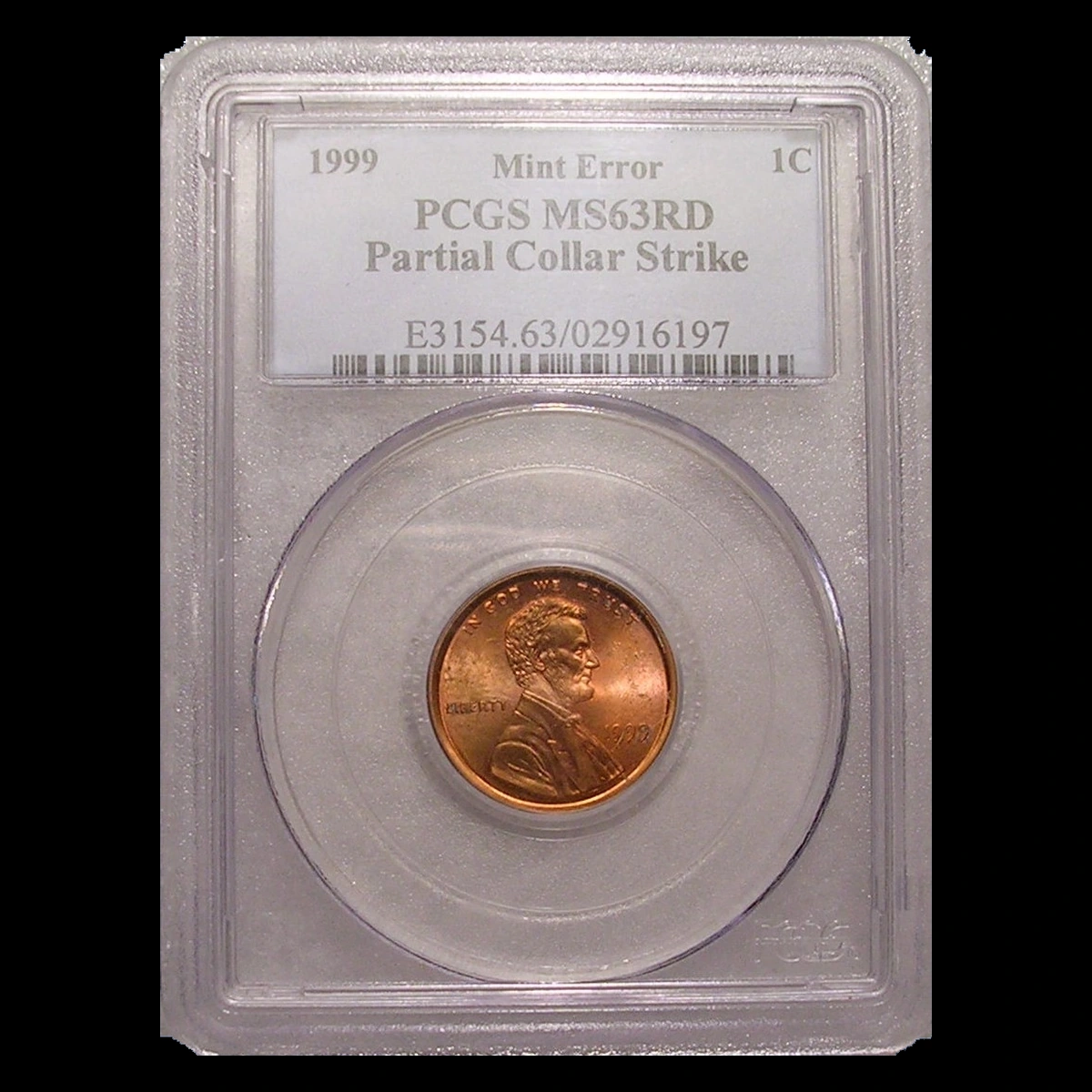
9. 1999 Penny Outward Spread or an Edge Step: Broadstrike and Partial Collar Error
A broadstrike expands while keeping the complete intended design because the collar fails to contain the metal normally. Partial collar contact can instead leave a distinct step along the edge.
How to Identify
Check all outer letters and both main designs before judging the width. Uneven spreading can be genuine, whereas crushed letters or a rolled border may indicate later pressure.
For a partial-collar candidate, view the smooth edge from the side and inspect the change of level for squeezing or filing. A cent does not need a grooved edge to show partial collar contact.
What It’s Worth
The estimated value is $20–$400 for genuine 1999 broadstrikes and partial-collar pieces. The exact edge effect and preservation determine the relevant comparison.
A 1999 broadstrike graded PCGS MS65 Red sold for $67 in March 2023. A partial-collar coin is not automatically worth the same amount.
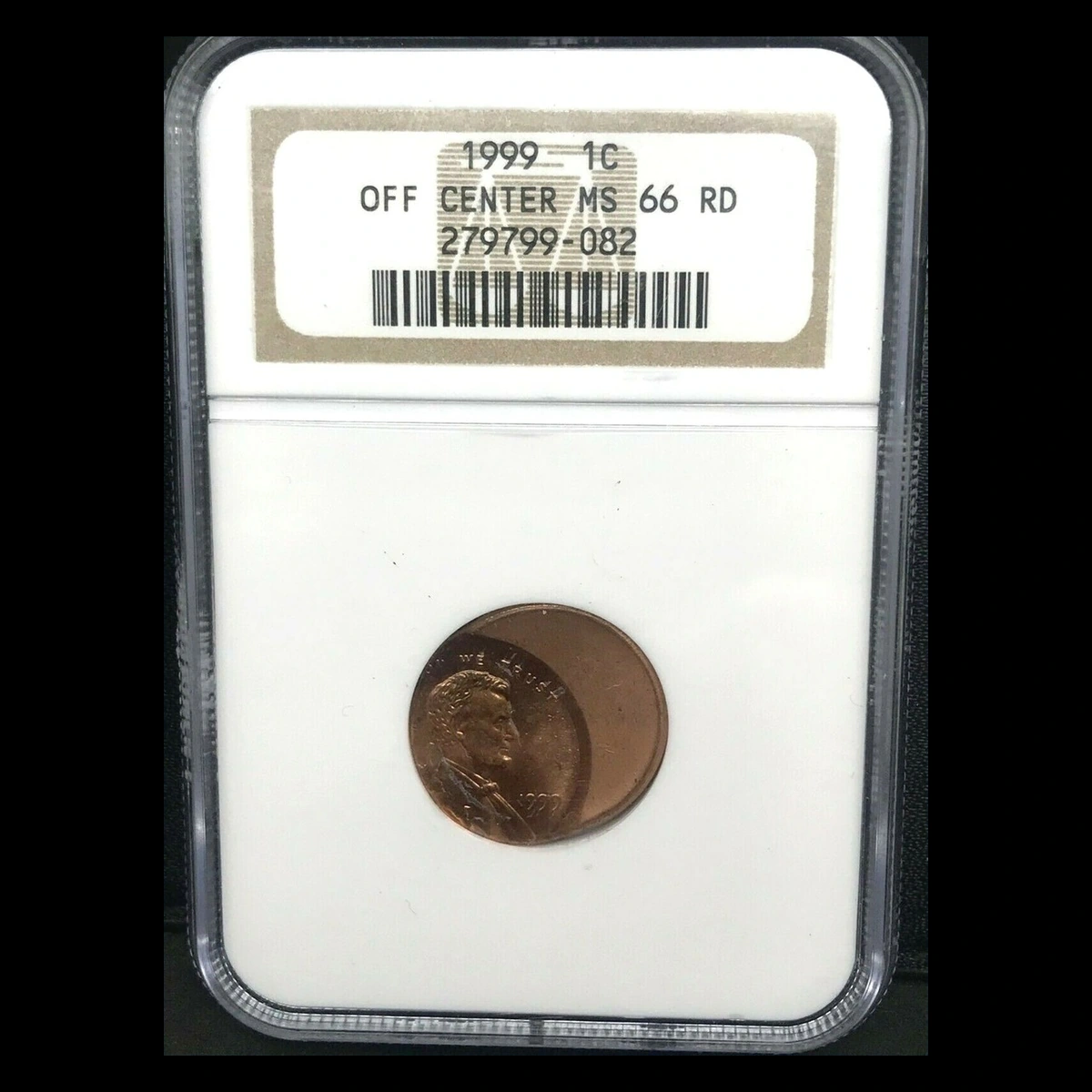
10. 1999 Penny A Partial Design Beside Plain Metal: Off-Center Strike Error
A misplaced blank can miss part of the striking area, leaving an unstruck crescent. Both faces should fit that displacement, unlike a die shift affecting only one face.
How to Identify
Locate the surviving 1999 date and inspect where original plain metal meets struck detail. A scraped or ground patch is not an unstruck area.
Philadelphia and Denver examples are reported, including a Philadelphia coin described as 10% off center. Complete designs within uneven spreading instead belong in the broadstrike comparison.
What It’s Worth
Ordinary 1999 off-center cents have an estimated value of $15–$500. Stronger displacement with a readable year and attractive surfaces can support more interest.
The 10% Philadelphia example graded PCGS MS64 Red sold for $47 in March 2023. A separate coin combining an off-center strike with the rare Wide AM reverse needs its own appraisal.
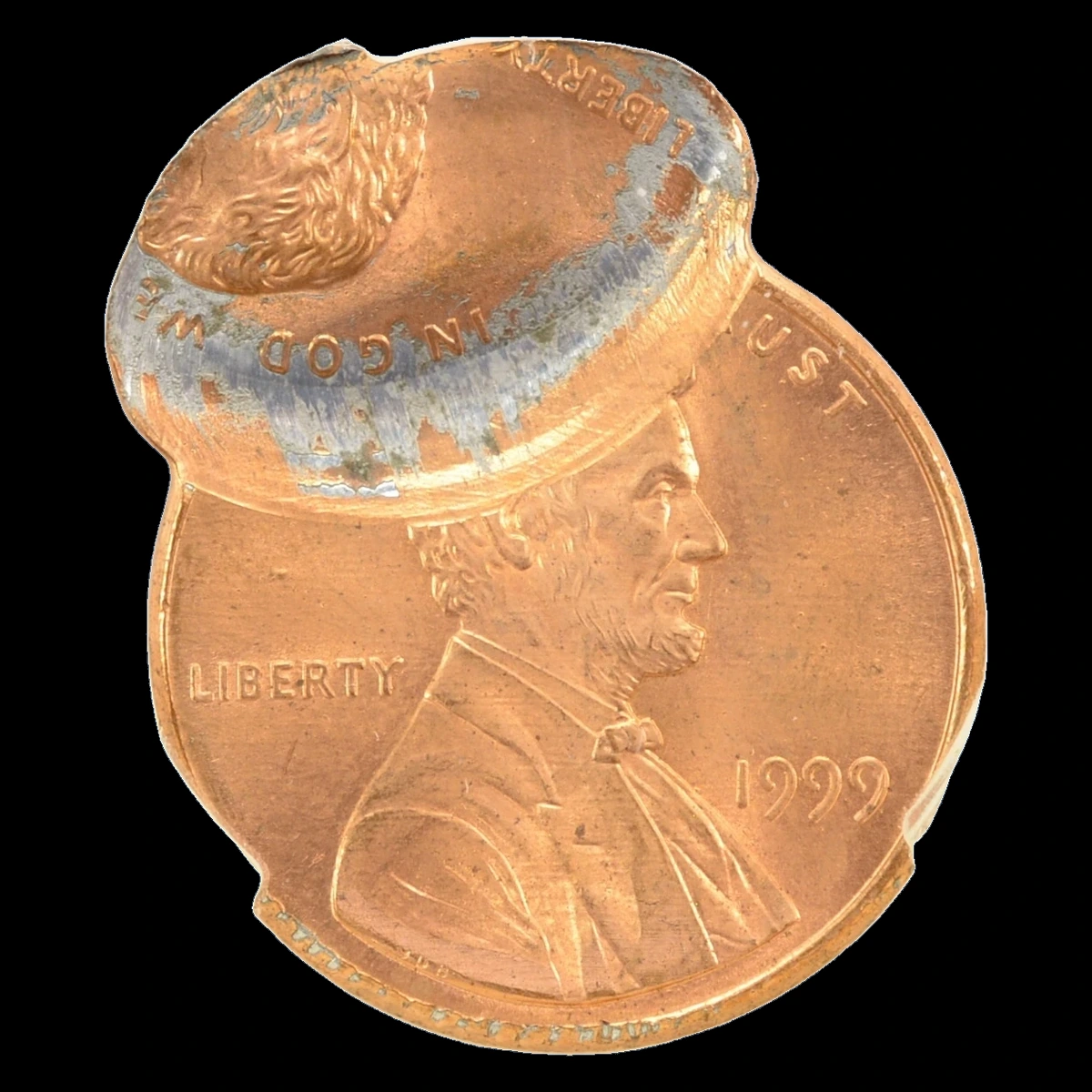
11. 1999 Penny Overlapping Design Positions: Double and Multiple Strikes Error
A coin receiving another strike after moving can preserve more than one design position. Recorded 1999 pieces include shifted, off-center, expanded, and flipover arrangements.
How to Identify
Follow the strongest surviving parts of each impression across both faces. In a flipover, Lincoln and the Memorial may share a face; a shift without a flip produces a different arrangement.
Do not count every outline as another blow when later strikes may have erased earlier detail. Isolated doubled letter edges can also have a different cause.
What It’s Worth
Estimated values for 1999 repeated strikes span $40–$800. Clearly separated or recognizable flipped designs generally display the sequence best.
A flipover double strike with a large expanded outline, graded PCGS MS65 Red, sold for $159 in March 2023. That price belongs to one arrangement, not every multiple-struck cent.
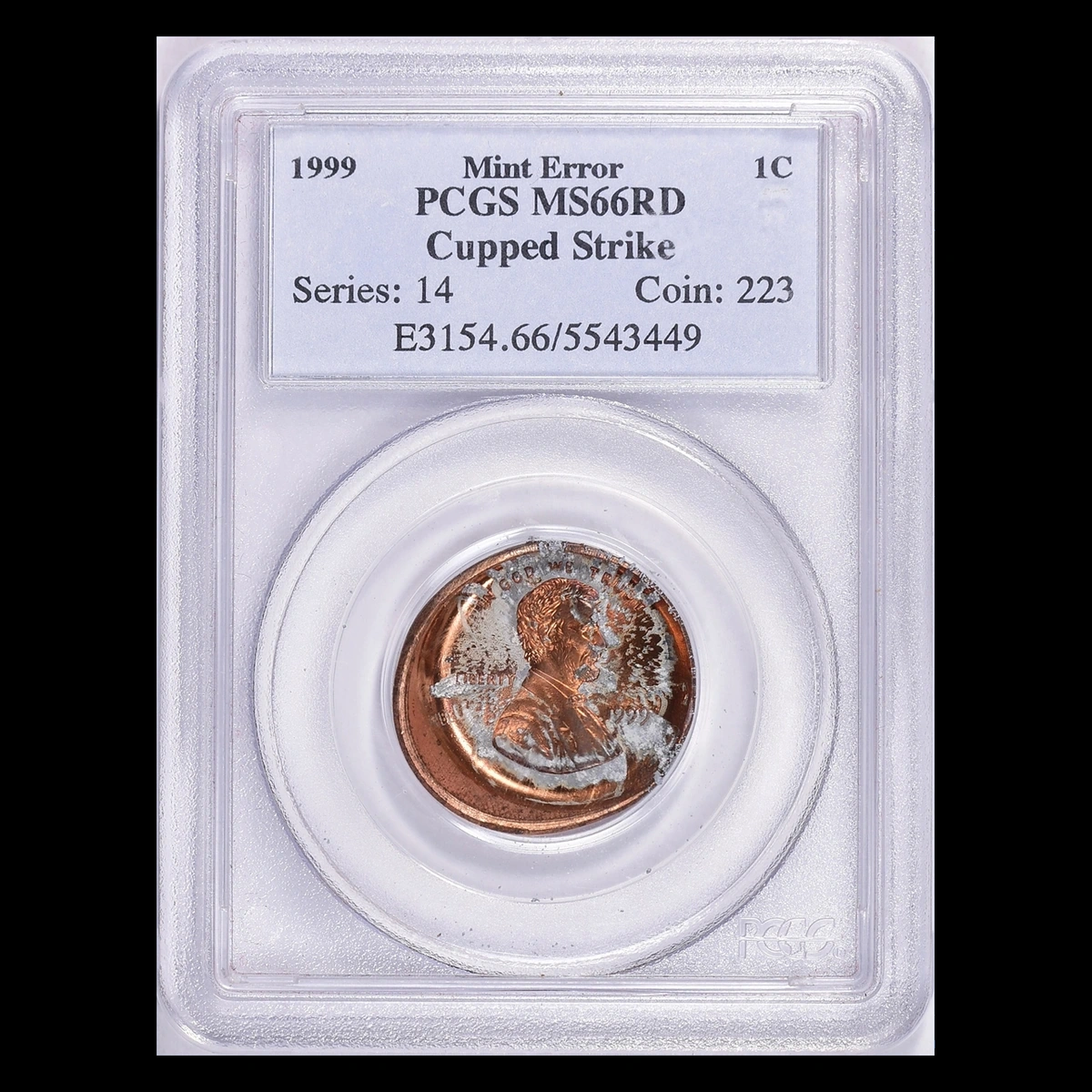
12. 1999 Penny A Shallow Dish Profile: Cupped Strike Error
A cupped strike has a concave face and a convex face. A 1999 example graded PCGS MS66 Red appears in a collector showcase, documenting the type without establishing every step that formed its curve.
How to Identify
View the whole profile without trying to flatten it. Check the design, slope changes, and edge for folds, squeezed letters, or tool marks from later bending.
A shallow curved shape should not automatically receive the repeated-strike history of a deep die cap. Authentication needs to support mint-made curvature.
What It’s Worth
A confirmed 1999 cupped strike has an estimated value of $25–$300. Profile, original surfaces, and confidence in its attribution affect the comparison.
The MS66 Red showcase coin supplies no realized price here. Its grade describes an unworn copper-red example with few marks, not any bent penny of the same date.
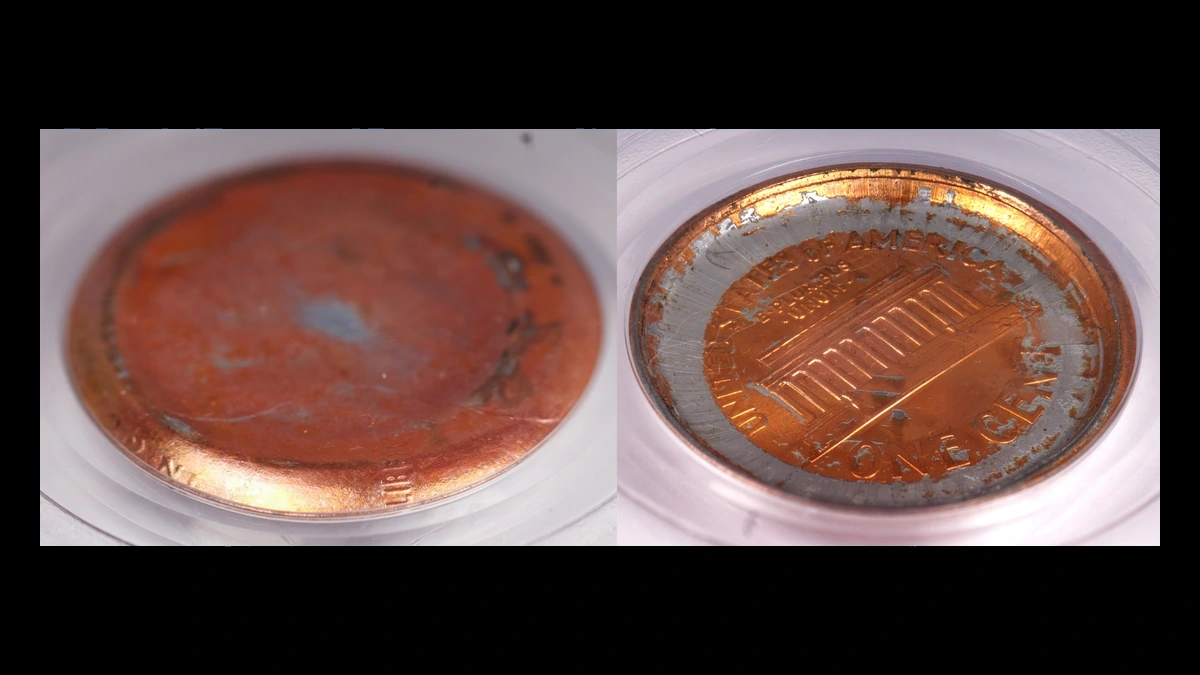
13. 1999 Penny Walls Rise Around the Die: Die Cap Error
A cent that remains attached to a die can wrap around it during further strikes. Recorded 1999 examples include a reverse cap and a deep front-side cap with stretched design.
How to Identify
Inspect the walls and transitions to the center without pressing them. Their design and metal movement should fit attachment to a stamping tool, rather than sharp folds imposed later.
The cap’s side name identifies the tool that held it. A separate coin struck underneath that cap is a different object and need not be bowl-shaped.
What It’s Worth
Authenticated 1999 caps have an estimated value of $100–$1,500. Depth and recognizable surviving design can vary greatly.
In March 2023, a deep front cap graded PCGS MS64 Red sold for $660, while a reverse cap graded PCGS MS65 Red brought $124. Those are separate individual sales.
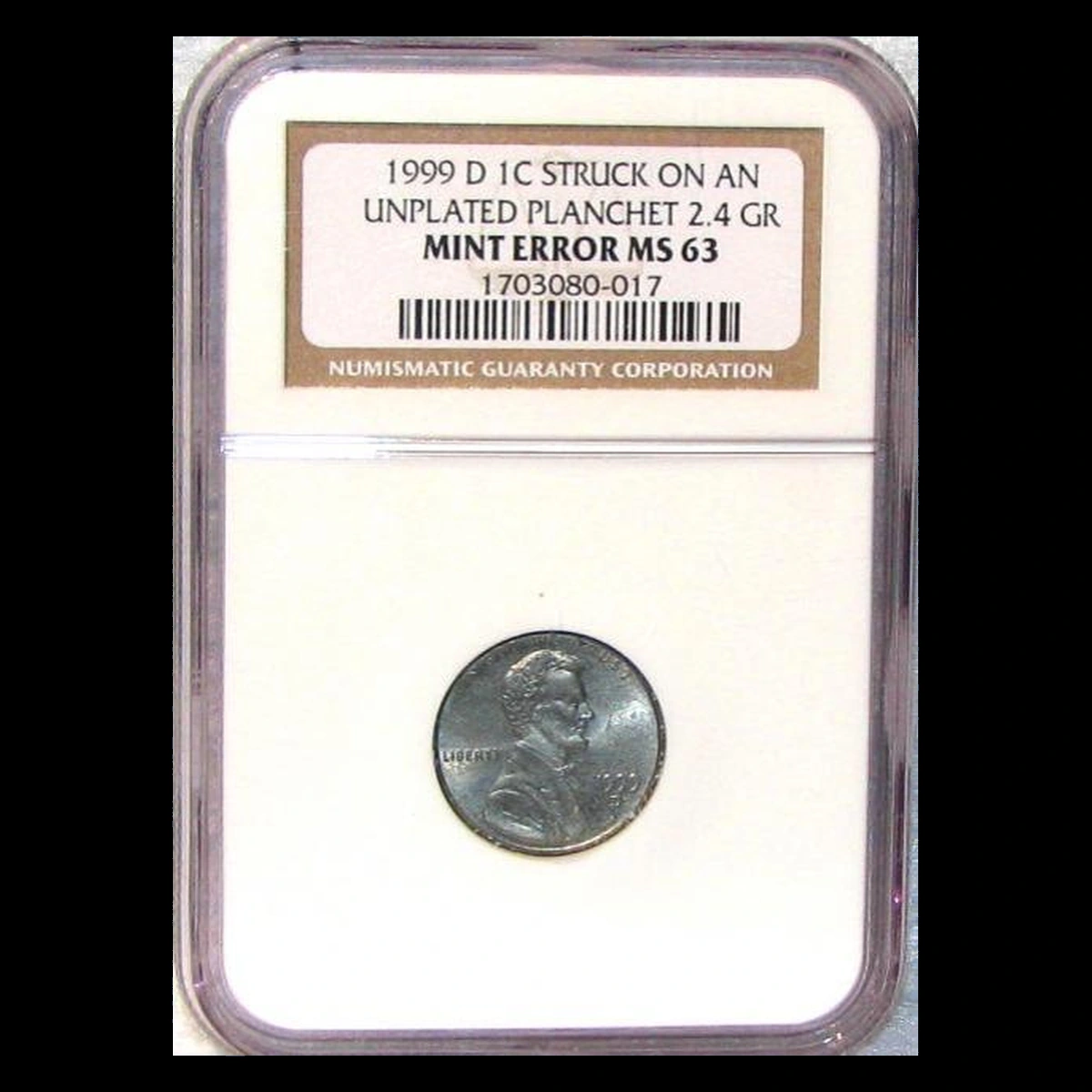
14. 1999 Penny The Copper Coat Is Absent: Unplated Zinc Error
A documented 1999-D unplated cent shows zinc instead of the normal copper-colored covering. Its underlying metal differs from the layered metal of a dime blank.
How to Identify
Inspect the gray surface for sharp original detail, chemical pits, residue, or softened edges. Stripping copper from a finished coin and adding a coating can both alter color without creating this error.
Weight and diameter alone cannot prove an omitted thin coating. A professional examination should establish that the unplated surface belongs to production rather than later treatment.
What It’s Worth
A confirmed 1999 unplated zinc cent has an estimated value of $50–$600. Surface preservation is especially important on exposed zinc.
A 1995-D unplated cent graded PCGS MS63 sold for $180 in March 2023. That nearby-year result is not a sale of the illustrated 1999-D example.
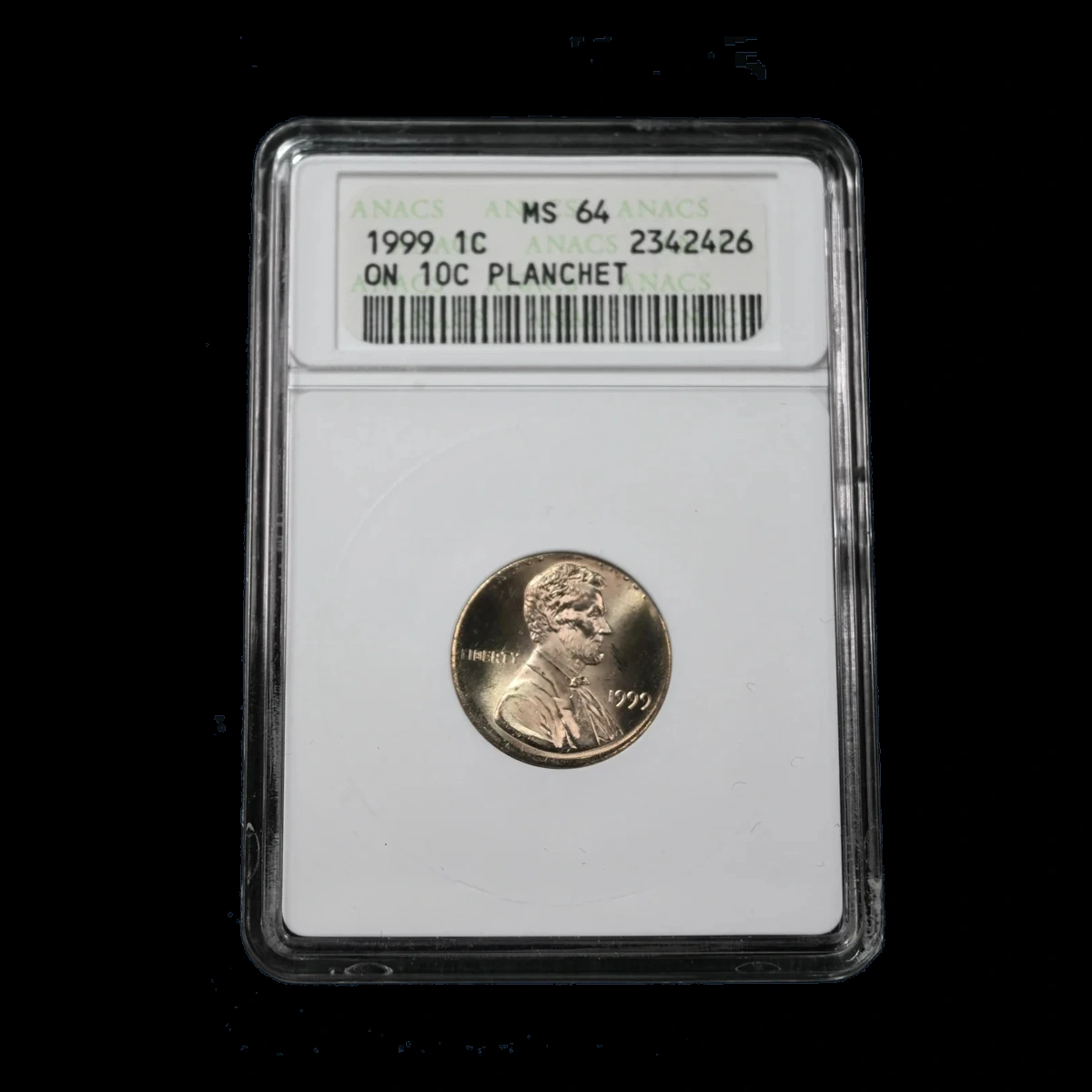
15. 1999 Penny Cent Design on a Smaller Clad Blank: Wrong Planchet Error
A blank intended for a dime can receive Lincoln-cent dies instead. The larger design may not fit the smaller disc, as illustrated by a recorded 1999 example graded PCGS MS65.
How to Identify
A dime blank starts around 2.268 grams and 17.91 mm, though a cent strike can spread it. Inspect its layered metal and rule out trimming, added coating, or chemical stripping.
An unused blank has no earlier Roosevelt or torch design and no reeding from a finished dime. Earlier dime images would identify a double denomination instead.
What It’s Worth
A confirmed 1999 cent on a dime blank has an estimated value of $400–$1,500. Readable identity and preserved surfaces help narrow the comparison.
A 2007-D example graded PCGS MS66 sold for $600 in March 2023. Its different date prevents treating that amount as a transaction for the showcased 1999 coin.
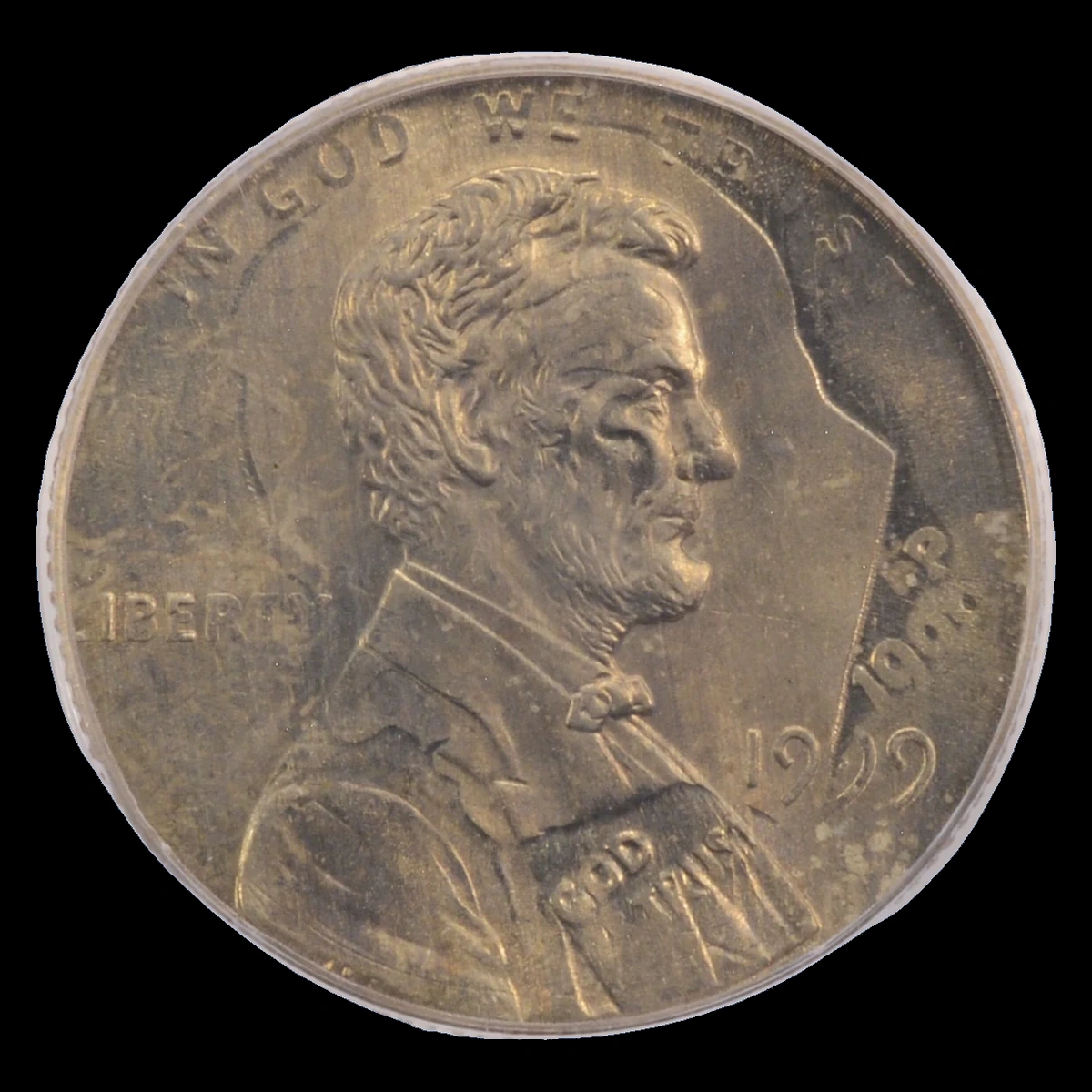
16. 1999 Penny An Older Dime Lies Beneath the Cent: Double Denomination Error
A finished dime can enter the cent press and receive another denomination’s design over its first image. Recorded 1999 cent strikes involve separate dimes dated 1997, 1998, and 1999-P.
How to Identify
Find recognizable Roosevelt, torch, or dime lettering beneath the cent design before trying to read the earlier date. Keep that dime date separate from the 1999 cent date.
One reported 1999-P dime received a cent strike halfway off center; do not assign that displacement to the other examples. Dime weight and surviving or distorted reeding support the identification but cannot replace the earlier design evidence.
What It’s Worth
Authenticated 1999 double denominations have an estimated value of $600–$3,000. A clear mix of both designs is a major part of their appeal.
A 1999 cent on a dime graded PCGS MS64 sold for $1,200 in March 2025. That sale description does not establish which earlier dime date belongs to each separately reported specimen.
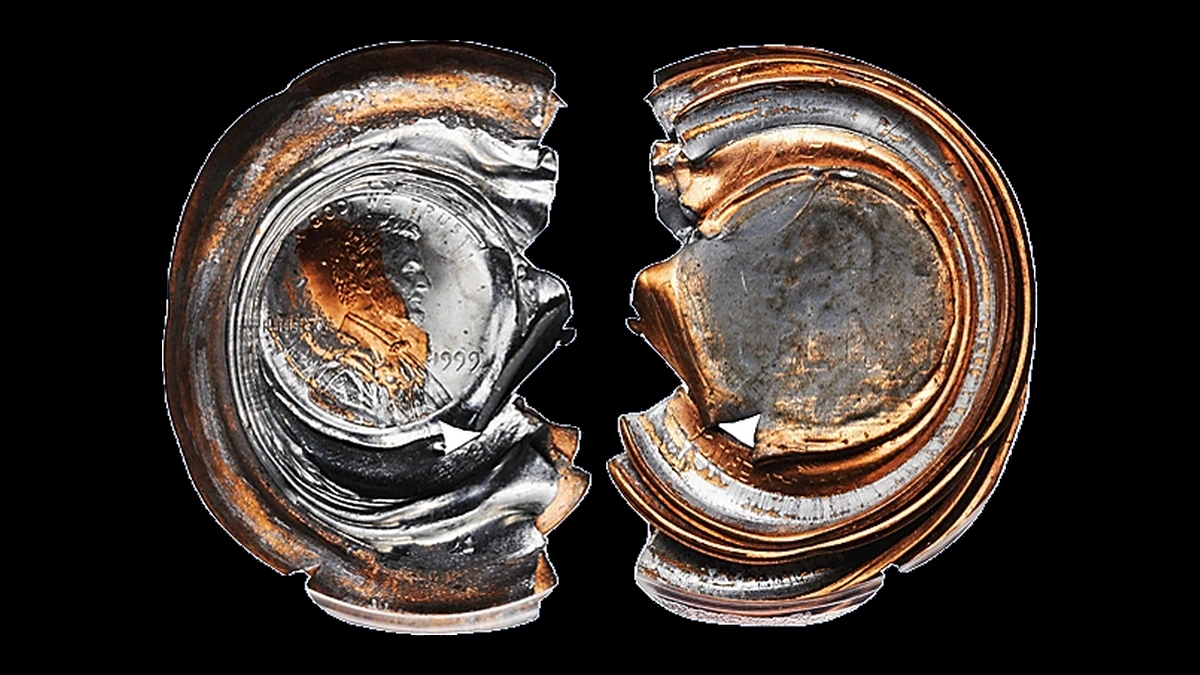
17. 1999 Penny Several Discs Remain Joined: Bonded Group Error
Metal discs can become connected during striking and remain together as one object. Recorded 1999 pieces include a two-disc pair and a three-disc group graded NGC MS64 Red.
How to Identify
Leave the layers connected and examine their edges and designs without prying. Glue, solder, or later tool marks can explain an imitation stack.
The recorded three-disc group weighs 7.5 grams, consistent with three normal starting cents. Matching that total alone cannot prove a genuine mint bond; the connection and strikes need authentication.
What It’s Worth
Authenticated 1999 bonded groups have an estimated value of $500–$5,000. The price applies to the whole connected object, with layer count and appearance affecting the comparison.
The NGC MS64 Red three-disc group sold for $3,840 in March 2024 with its photo certificate. That total does not belong to each disc or to the separate two-disc pair.
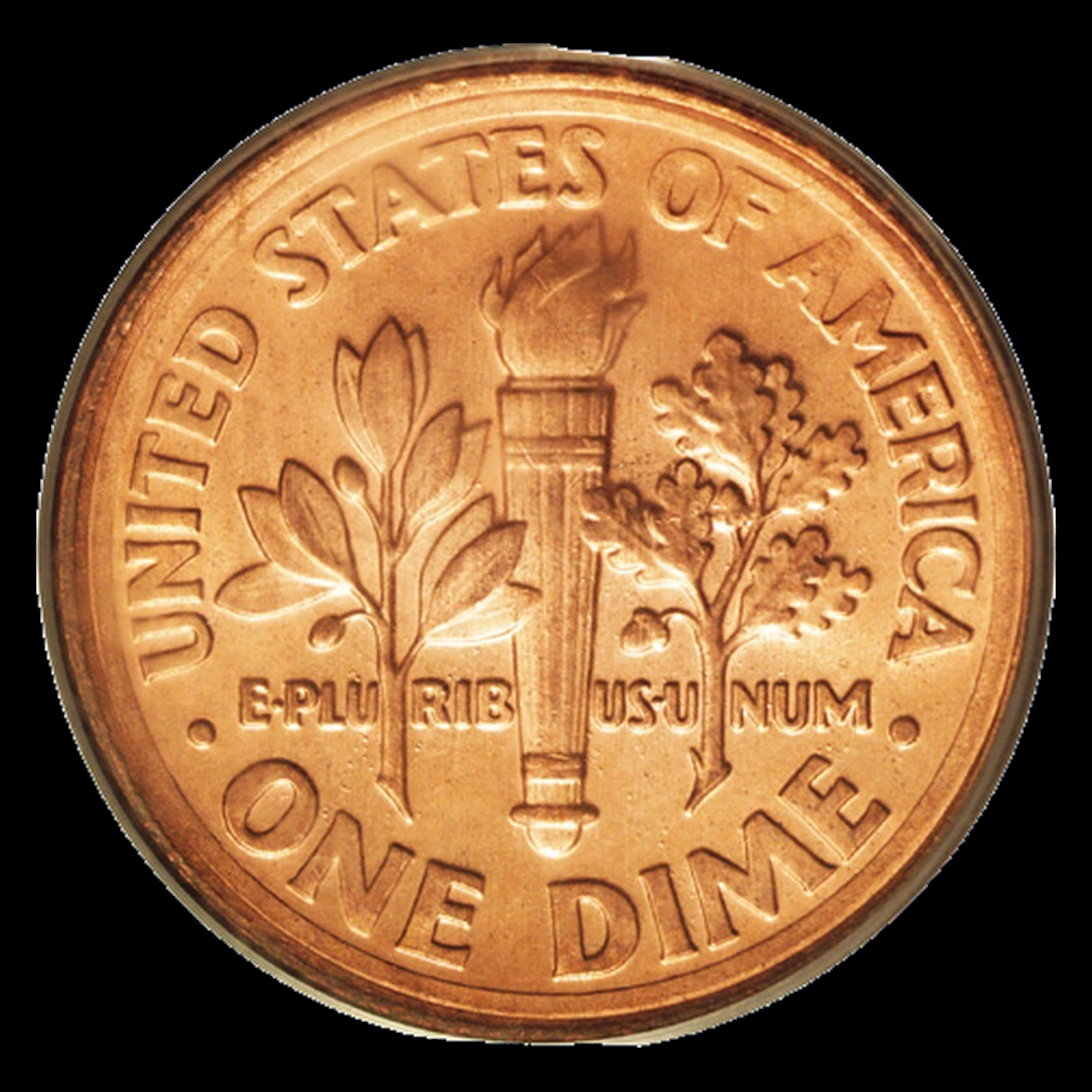
18. 1999 Penny Lincoln in Front, a Dime Reverse Behind: Mule Error
The exceptional 1999 mule pairs cent and dime dies on one cent blank. Lincoln appears on the front, while the back carries the torch and ONE DIME instead of the Memorial.
How to Identify
Each face should show its own design rather than overlapping layers of cent and dime detail. That separates the mismatched-die pairing from a cent struck over a finished dime.
Inspect for seams, solder, machining, or a fitted insert without scraping the surface. The genuine piece uses cent metal, but normal measurements cannot authenticate it; the intact structure and mint strike need expert examination.
What It’s Worth
An appraisal range of $100,000–$200,000 reflects this exceptional authenticated pairing. It is not a prediction for a future sale or a valuation for a novelty assembled from coins.
The PCGS MS66 Red mule sold for $138,000 in April 2006. That historical result describes a specific unworn copper-red coin with the confirmed wrong die pairing.
Conclusion
The correct AM spacing depends on the coin’s finish, while a gray surface depends on what happened to its metal. Those two checks alone prevent several common misidentifications among 1999 cents.
For larger errors, distinguish a plain indent from a transferred image and an unused dime blank from a previously struck dime. Preserve joined discs and delicate shapes, and keep extraordinary historical prices tied to the authenticated pieces that earned them.