Rare 1980 Penny Errors (List & Pictures)
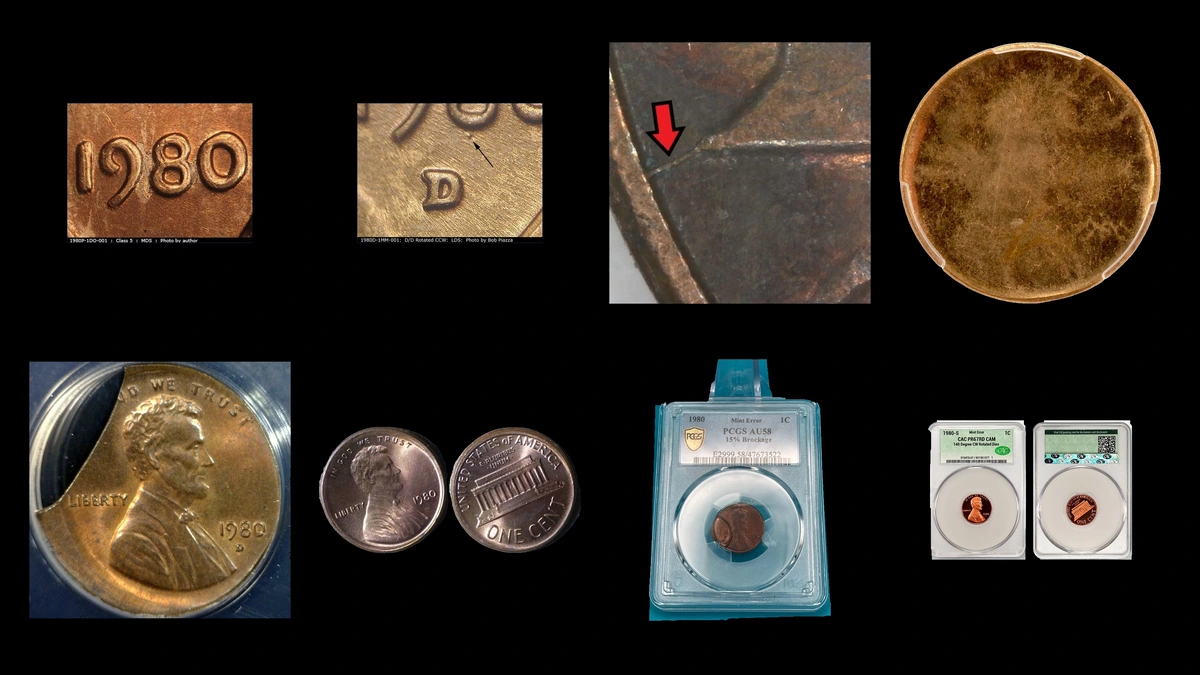
Weight matters when checking 1980 penny errors: a normal example is a copper-rich 3.11-gram cent, not a later zinc penny. One 1980-D struck on a silver dime blank brought $18,000 in August 2025.
The working ranges below span $2–$25,000. Start with the letters and surface, then move to missing metal, changed shapes, and wrong blanks.
| What catches your eye? | Start with |
|---|---|
| A repeated letter or small raised mark | Doubled dies, mintmarks, or die breaks |
| A bare crescent or missing edge | Off-center strike or clip |
| Two pictures or a folded shape | Repeated strikes, brockage, or foldover |
| Silver color and low weight | Clad dime blank, finished dime, or silver blank |
1. 1980 Penny Date or Building Details Repeat: Doubled Dies Error
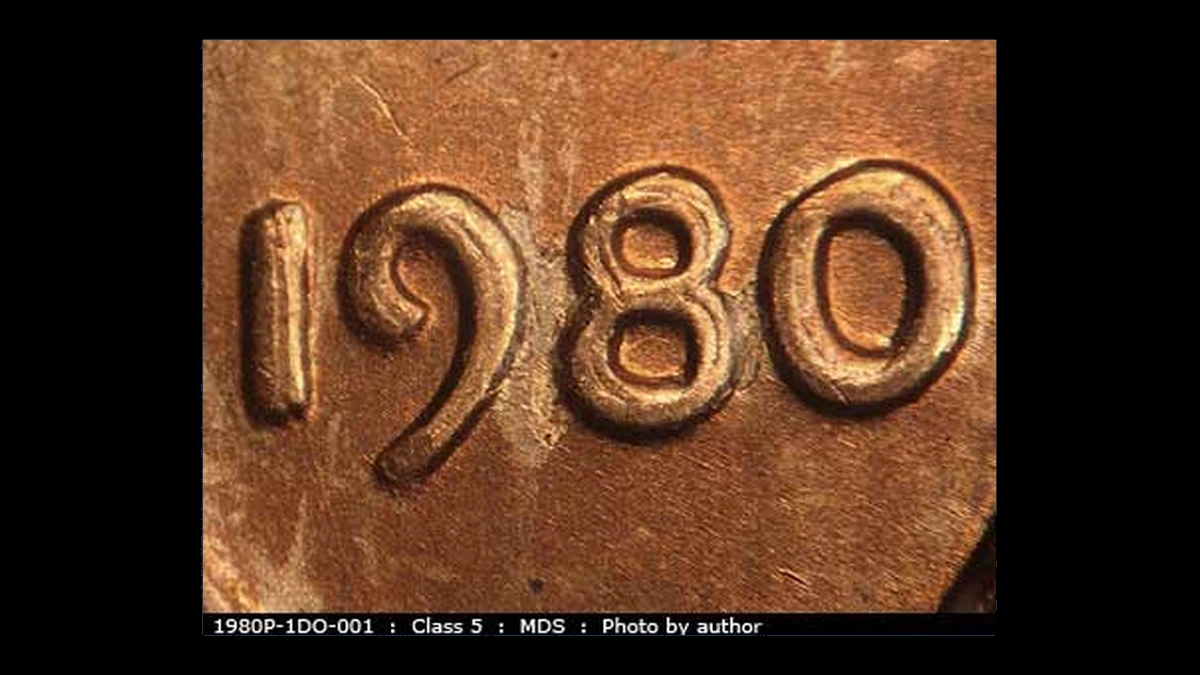
The Philadelphia front variety FS-101 shows repeated date and lettering edges, with other detail around the chest folds, bow tie, and TRUST. A separate back variety adds detail at the top of the sixth opening between the Memorial columns.
How to Identify
For FS-101, compare the date and LIBERTY with the correct front pattern. For the back variety, count the column openings from the left and examine the sixth one’s ceiling.
The doubling was built into the die, so these coins did not need two strikes. Flat ledges caused by movement during striking are a different effect.
What It’s Worth
$25–$500 is the estimate for the front FS-101, while the smaller back feature fits about $5–$100. These are separate variety ranges.
PCGS records a $260 eBay sale in May 2021 for an MS64 Brown FS-101. That result does not price the reverse variety or ordinary thick-looking letters.
2. 1980 Penny The Mint Letter Has an Extra Stroke: Repunched Mintmark Error
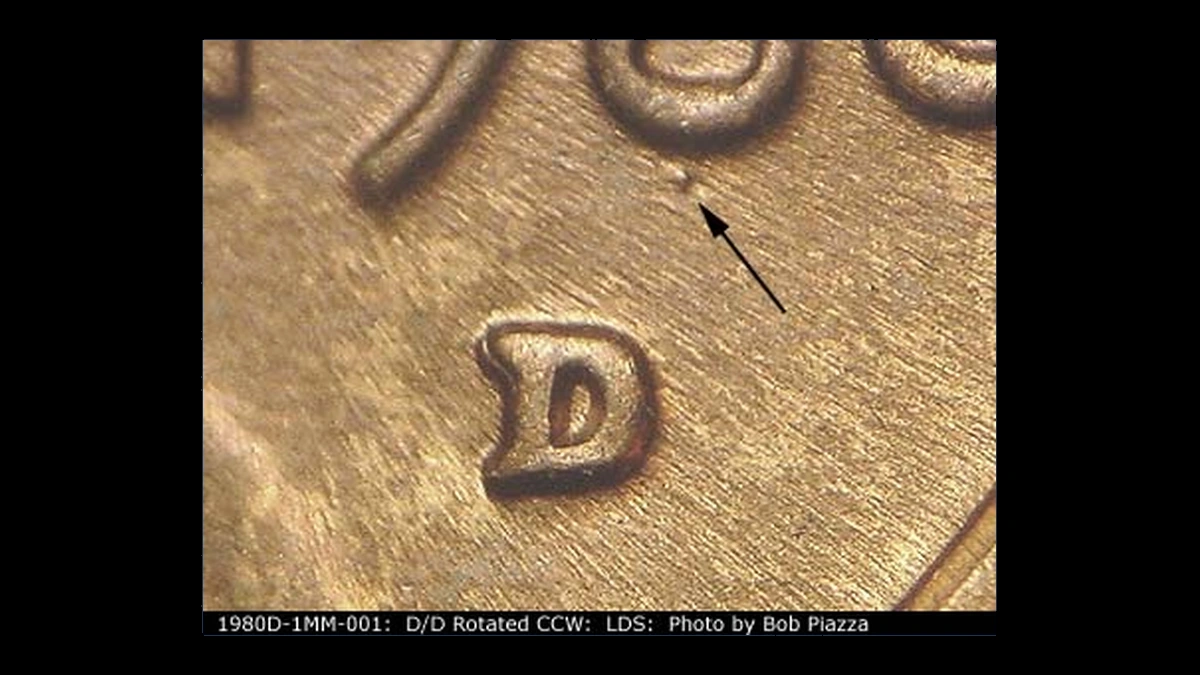
Mint letters were added to the dies with a separate punch in 1980. A shifted repeat could leave another partial D or S.
Denver varieties include extra strokes to the left and turned outlines. A reported S repunch concerns a collector Proof and requires its own evidence.
How to Identify
Trace enough of the extra curve or line to see how it fits another placement of the same letter. An isolated bump may be tool damage instead.
Some older Denver listings were reclassified as die damage. A Denver photograph also cannot establish the reported S Proof variety.
What It’s Worth
$5–$150 is the estimated Denver range; a confirmed S Proof repunch can be compared around $25–$250. Separation and preservation affect both.
The S figure is conditional on identification, not a supplied sale or an established catalog number for that report. An obsolete listing does not create a rarity premium.
3. 1980 Penny Raised Lines or Blobs Break the Design: Die Cracks and Cuds Error
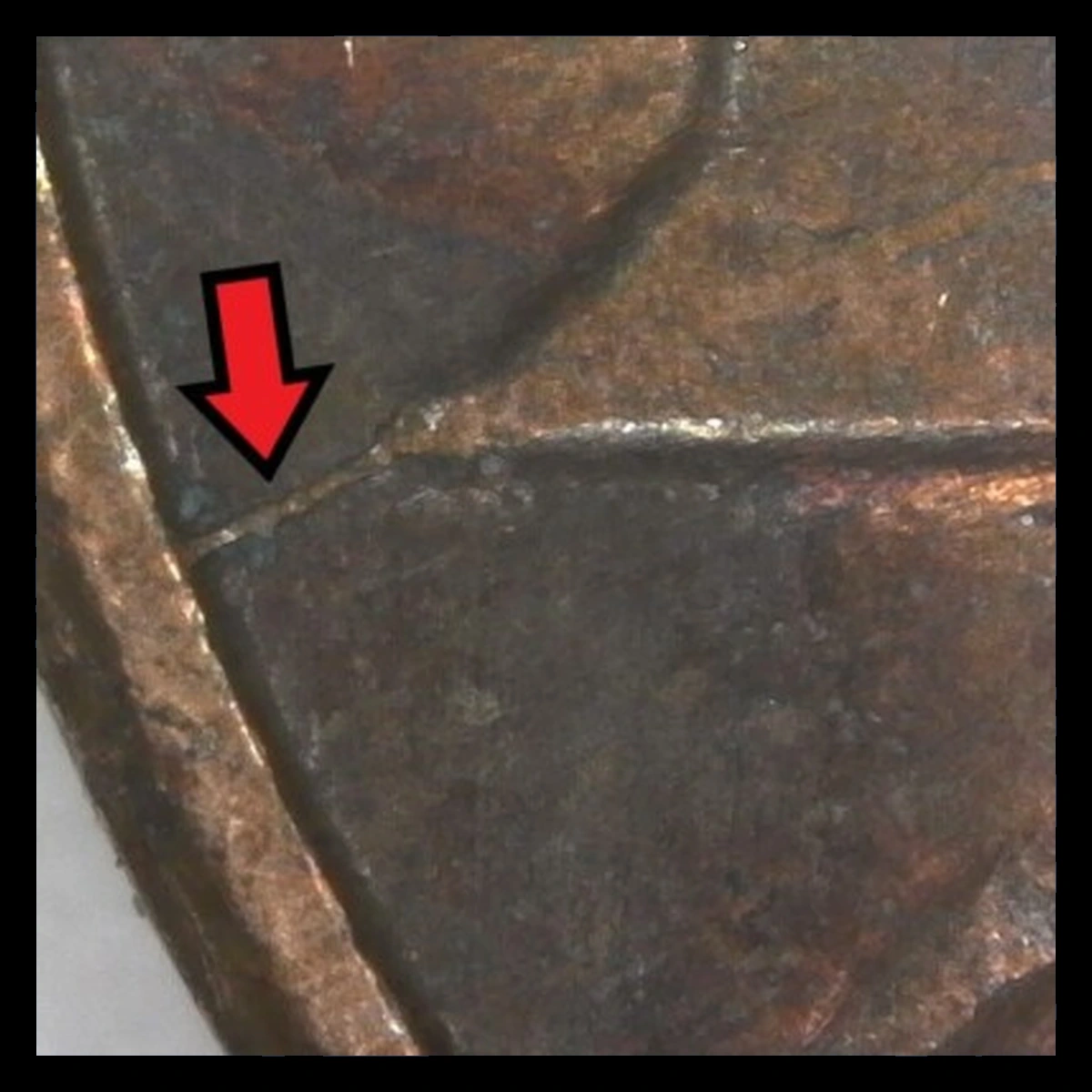
A crack in a die can leave a raised line on Lincoln’s head, sometimes resembling a spike. Missing die pieces can make chips or larger rim-connected breaks called cuds.
A BIE is a chip between B and E in LIBERTY. The many Philadelphia and Denver patterns have different positions rather than one shared layout.
How to Identify
Use side light to see whether the feature is raised, then follow its boundaries. A scratch cuts into the surface, although its displaced edges can stand up.
A cud must join the rim, while an interior chip need not. One reported coin also has cap-related distortion, which should stay attached to that specimen.
What It’s Worth
$2–$30 suits small cracks and chips, with clearer cuds around $30–$500. A compound cud-and-cap error receives one overall value.
A 2021-D retained cud sold for $186 in September 2025. Its Shield design and zinc-centered metal differ from the copper-rich 1980 issue.
4. 1980 Penny Letters Fade Without Similar Wear Nearby: Grease-Filled Design Error
A contemporary report describes a Philadelphia 1980 cent with grease-filled detail. Grease or dirt inside a die’s recesses can prevent parts of the design from forming.
How to Identify
Compare weak letters with Lincoln’s high points and nearby sharp detail. Broad wear, rough corrosion, or scraping can explain missing detail after minting.
Look for original surface within the blocked area. One faint letter alone does not establish the cause.
What It’s Worth
$2–$20 is the estimate for minor weakness, rising to about $20–$100 for a larger clear obstruction. Visibility helps determine the closest comparison.
A 2021-D grease struck-through cent sold for $84 in September 2025. That later coin is a comparison for blocked design, not matching metal or condition.
5. 1980 Penny The Opposite Design Leaves Faint Traces: Die Clash Error
A collector reported matching clash marks on Philadelphia 1980 cents from an original bag. The dies had touched without a blank and transferred traces of their designs.
How to Identify
Connect the unexpected line to a recognizable part of the opposite design. A short scratch should not be expanded into an imagined picture.
Several pennies can share a clash because the marked dies continue working. Later die polishing may also remove some traces while leaving others.
What It’s Worth
$5–$150 is a comparison-based range for recognizable clashes. Clearer transferred shapes on attractive coins generally have more appeal.
No selling price for the reported bag coins is supplied. Repeated scratches or polish marks do not receive a clash premium merely because they recur.
6. 1980 Penny A Thin Covering Softens the Portrait: Capped-Die Strike Error
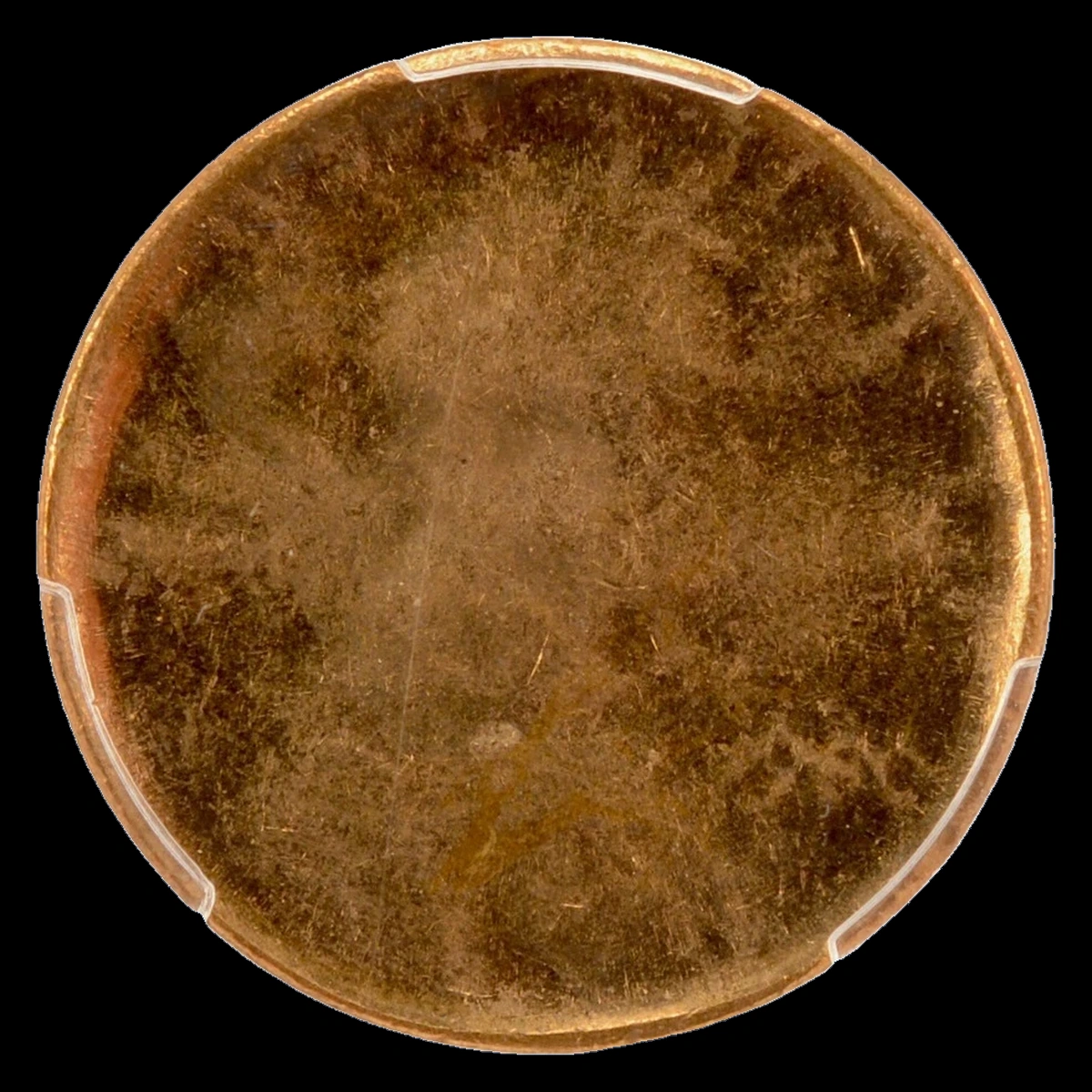
This penny received its design beneath a coin stuck to the die. As that covering thinned under repeated blows, some design could pass through while other areas remained soft or distorted.
The 1980 example is the receiving coin, not the cup-shaped die cap itself.
How to Identify
Follow the transition from clear detail to connected distortion across the relatively flat coin. Compare a confirmed late-stage capped-die strike rather than any blurred portrait.
Ordinary wear affects exposed high points after striking. Here the covering changed how the design reached the new blank.
What It’s Worth
$100–$600 is the estimate for a receiving coin with clear cap effects. Prices for tall die caps concern a different object.
A PCGS MS63 Red and Brown example appeared in a June 2014 auction, without a supplied result here. A separate ANACS MS63 Red record should not be treated as the same coin.
7. 1980 Penny Missing Edge Pieces Meet a Shifted Design: Clips Error
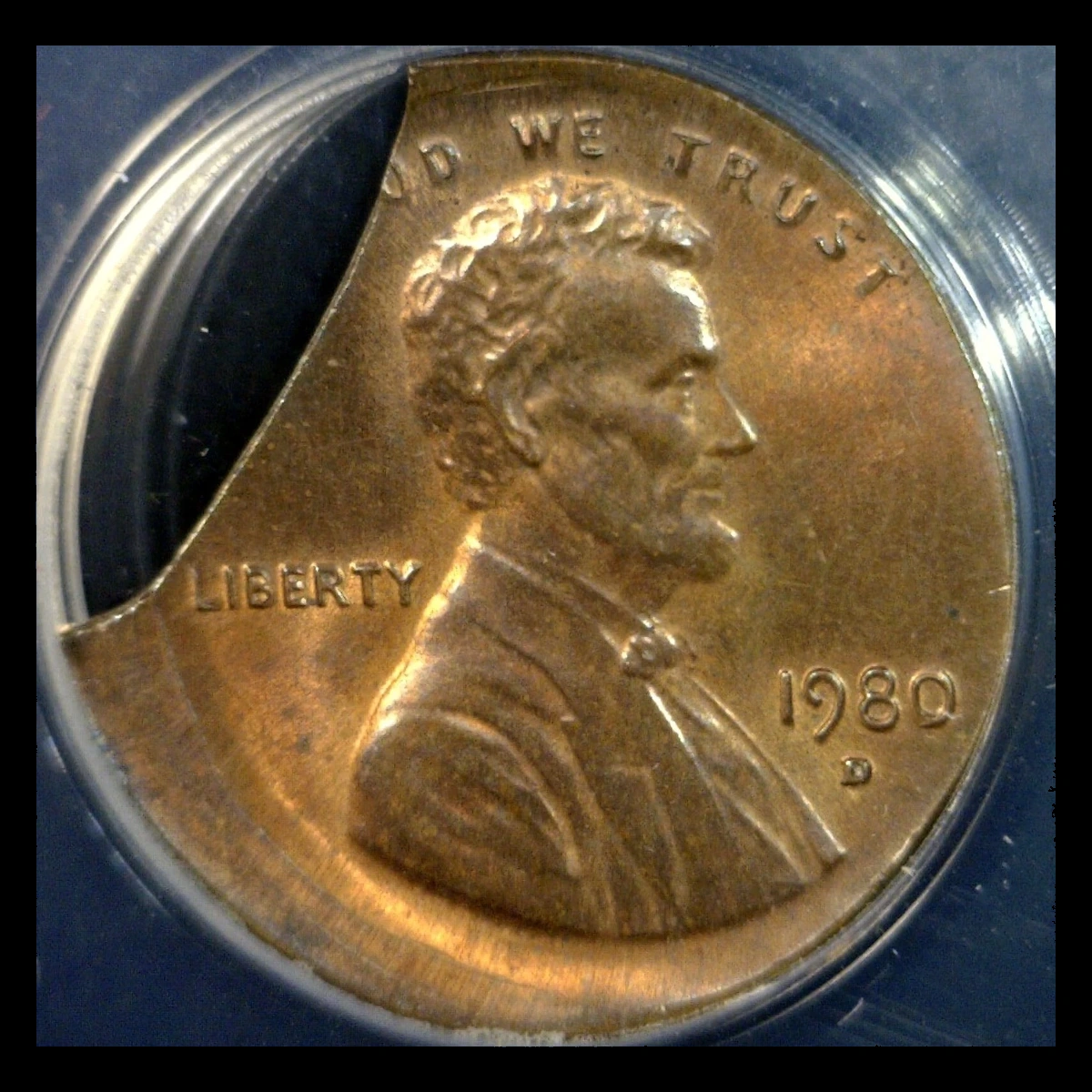
A 1980-D example combines a 5% curved clip with an 8% off-center strike. Another combines a straight clip and displacement, while a separate Denver penny has two curved clips listed at 3%.
How to Identify
Trace the outer outline first: the clip removes metal, while an off-center crescent still contains metal. Check how the struck design meets each original missing boundary.
On the two-clip coin, do not assume the listed 3% means 3% at each gap. Filing or sawing a finished cent can create a false clip.
What It’s Worth
$15–$500 covers genuine clips through more dramatic combined errors. Size, preserved date, and condition affect the comparison.
The PCGS MS63 Red and Brown coin with the 5% clip and 8% displacement sold for $84 in December 2024. That is one total for both features.
8. 1980 Penny An Expanded Border Holds the Complete Design: Broadstrike Error
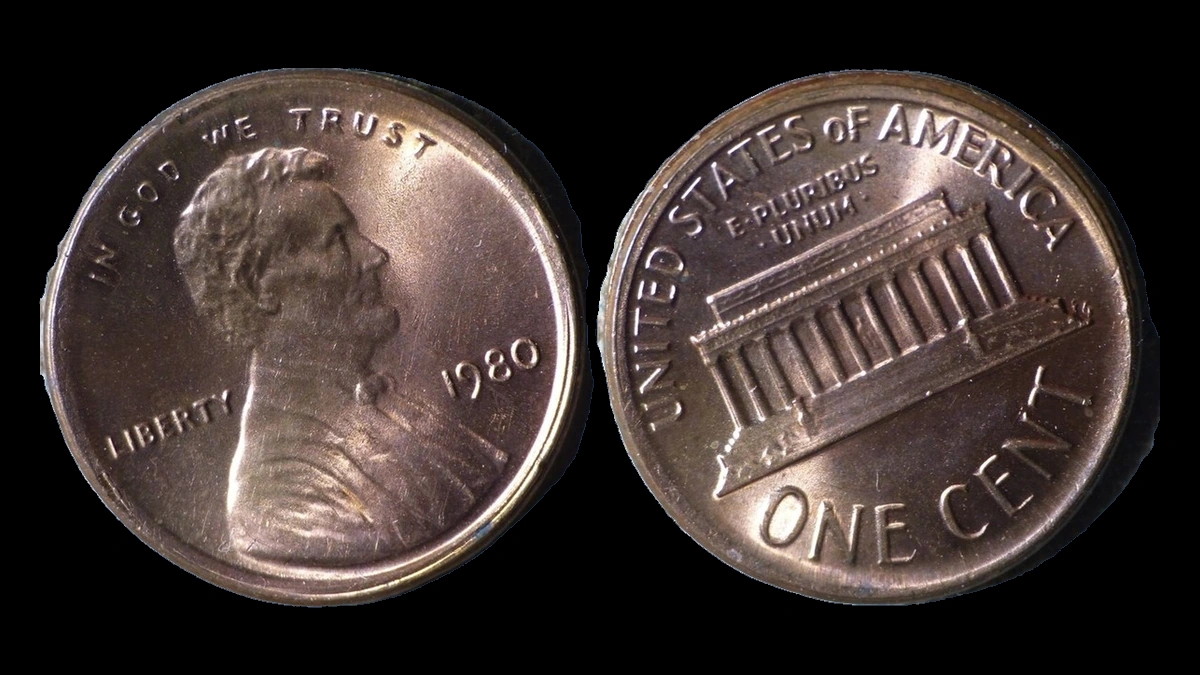
A broadstruck penny spreads outward because the collar, the ring around the blank, fails to restrain it normally. The complete design remains on the enlarged surface.
How to Identify
Check the outer letters before measuring the width. If part of the design fell beyond the metal, use the off-center comparison instead.
A normal 1980 cent starts near 19.05 millimeters across and has a smooth edge. Later flattening may also widen one, but tends to crush finished details or leave tool marks.
What It’s Worth
$20–$350 is the estimated range for different degrees of spread and preservation. Original copper color and surface marks also affect appeal.
The recorded 1980-D graded NGC MS63 Red and Brown sold for $57 on March 8, 2021. Red and Brown describes its surface color, not a different alloy.
9. 1980 Penny Much of the Blank Remains Plain: Off-Center Strike Error
Recorded 1980 strikes range from modest shifts to examples with very little design remaining. The blank was partly outside the dies when struck.
A 20% and an 80% off-center coin show different amounts of the same basic event. Their percentages are not separate error types.
How to Identify
Find the year and any D before comparing the displacement on both faces. A nearly empty disc cannot be assigned to 1980 just because it resembles a dated example.
Inspect the plain crescent for grinding and the edge for cuts. A design shift confined to one face may involve a different die-alignment problem.
What It’s Worth
$15–$600 is the estimate for genuine dated examples. Clear identity and undamaged surfaces can matter as much as the percentage.
A 1984-D cent about 55% off center sold for $41 in September 2024. That later zinc-centered coin shows why a large displacement does not guarantee a large price.
10. 1980 Penny Backward Detail Sinks into Expanded Metal: Brockage Error
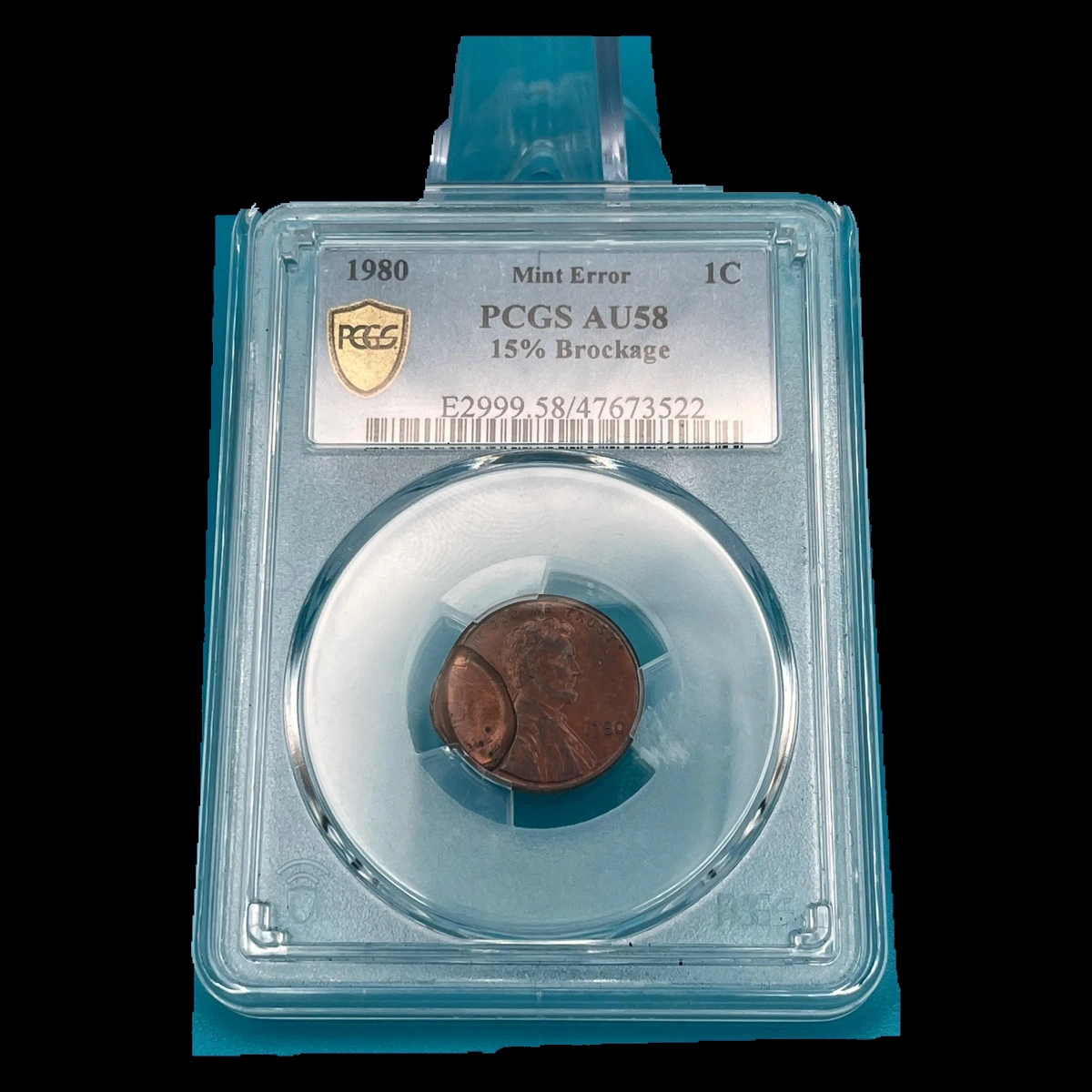
A struck coin left in the press can stamp its raised design into the next blank. The recessed mirror image it leaves is a brockage.
The documented 1980 NGC MS64 Red example combines a front brockage with a broadstrike. The expanded outline and backward impression belong to one coin.
How to Identify
Reverse a clear photograph or use a mirror to see whether the unusual design becomes recognizable. The impression should sink into the surface rather than stand up normally.
Check that the spread and impression fit the original strike. Neither the grade nor the diameter tells you the brockage’s coverage.
What It’s Worth
$150–$750 is the estimate for a genuine brockage-and-broadstrike combination. Coverage and clarity help distinguish examples.
An undated cent with a full front brockage sold for $192 in March 2025. That comparison does not establish a date or metal for the undated coin.
11. 1980 Penny A Tiny Strike Sits on an Oval Blank: Elliptical Blank Error
The recorded PCGS MS62 Brown example began with an oval blank and was struck about 90% off center. Only a small area received cent detail.
How to Identify
Photograph the full outline before enlarging the struck portion. The oval shape and the off-center design are separate clues to two events on one coin.
Inspect the boundary for later cutting or filing. The supplied record establishes no exact weight, so do not invent one from the coin’s narrow appearance.
What It’s Worth
$150–$750 is the estimated combined value. Recognizable struck detail and original surfaces help make the unusual blank understandable.
The example appeared in a July 2022 sale, but no realized amount is used here. A slightly shifted round blank is a weaker comparison.
12. 1980 Penny The Memorial Is Turned After a Normal Flip: Rotated Proof Error
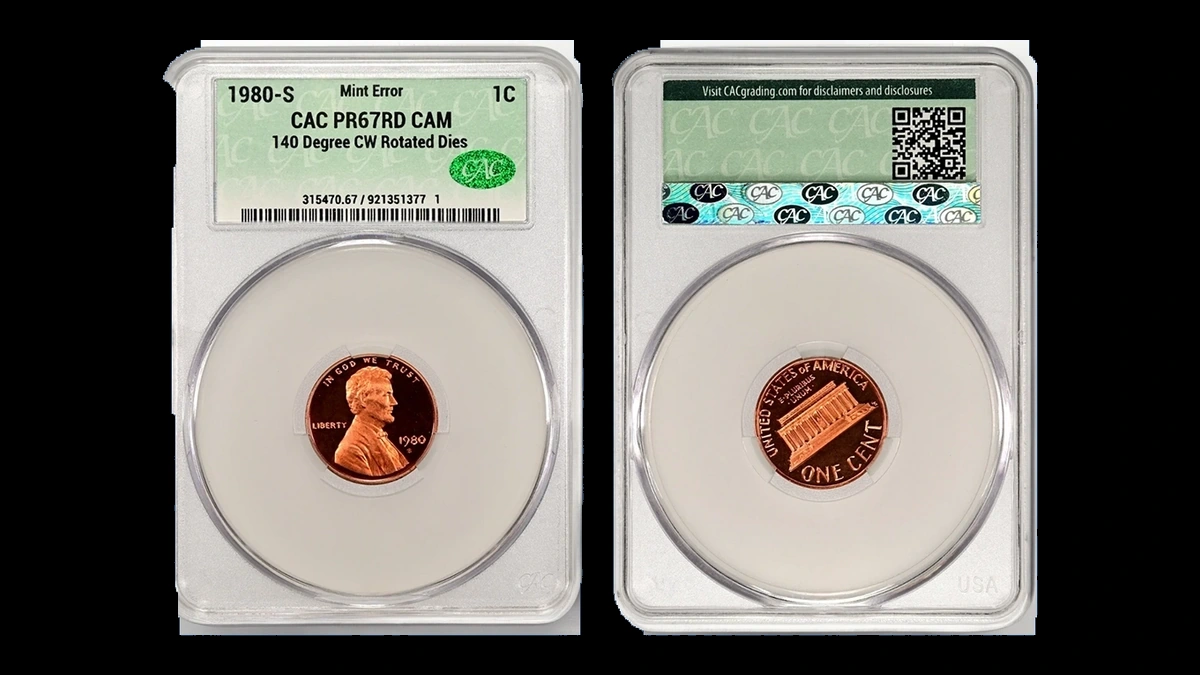
A recorded 1980-S Proof has a back rotated about 130 degrees clockwise. One die sat at the wrong angle relative to the other.
How to Identify
Hold Lincoln upright, then flip the coin top to bottom without twisting sideways. A normal United States cent finishes with its back upright too.
Use fixed orientations in photographs, especially if the coin is in a holder. Proof identifies a specially made collector coin; it does not mean that every reflective penny is a Proof.
What It’s Worth
$100–$750 is the estimate for different large rotations and surface conditions. Fingerprints and scratches can be especially visible on Proof surfaces.
The 130-degree 1980-S graded PCGS PR66 Red and Brown sold for $384 on July 5, 2022. This is a sale of the reported Proof itself.
13. 1980 Penny Several Cent Pictures Overlap: Double and Triple Strikes Error
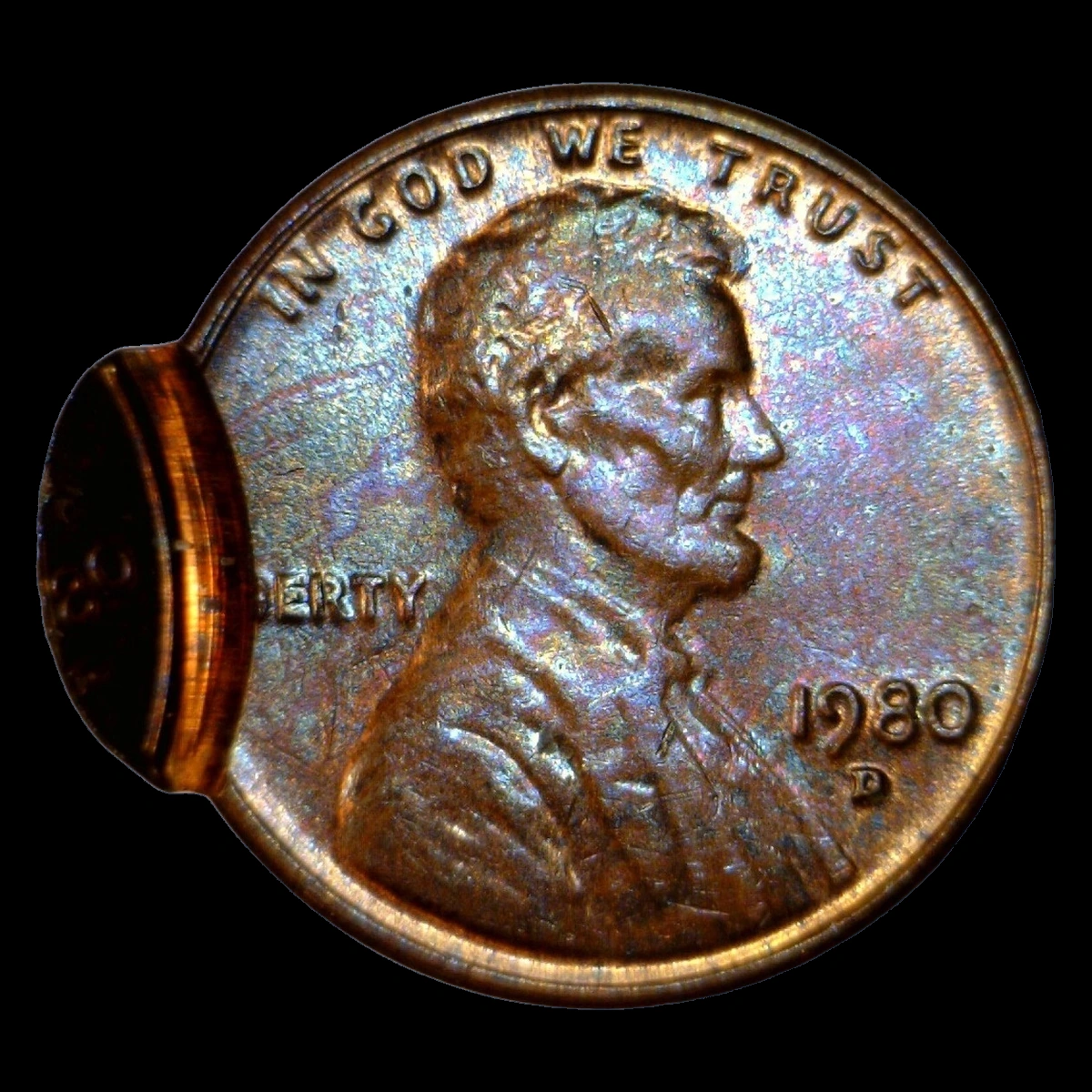
The records include a 75% off-center second strike and a separate triple strike with all blows off center. Another coin has an 80% off-center second strike with one face blocked and later corrosion.
How to Identify
Trace a recognizable portrait, date, or lettering group from each strike position. Check the other face for corresponding impressions or a blocked area.
Do not count flat doubled edges as extra blows. Corrosion is later damage and can obscure the sequence rather than add another mint error.
What It’s Worth
$50–$1,200 is the estimated range for double and triple strikes with different visible overlaps. More strikes do not guarantee more value if they erase earlier details.
A 1979 cent with an off-center second strike sold for $204 in September 2023. Its copper-rich metal provides a useful nearby-year comparison.
14. 1980 Penny The Design Follows a Folded Blank: Foldover Strike Error
A blank standing on edge can collapse and fold when the dies close. The documented 1980 foldover retains its full date and carries an NGC MS64 Red and Brown grade.
How to Identify
Follow the design onto the folded metal without opening the fold. The impression should fit a blank folding during the strike.
A finished penny bent afterward may have damaged lettering across the bend. The complete date on this specimen distinguishes it from undated foldovers.
What It’s Worth
$600–$2,500 is the working range for authenticated examples with differing shape and condition. An understandable striking sequence helps their appeal.
The documented 1980 coin sold for $1,020 on December 23, 2024. Sales of undated zinc foldovers do not represent additional transactions for this copper-rich piece.
15. 1980 Penny Cent Detail Appears on a Tiny Irregular Piece: Struck Fragment Error
The recorded fragment weighs only 0.23 gram and was graded NGC MS62 Red and Brown. Cent dies struck its irregular surface, and the auction attributed it to 1980.
How to Identify
Follow the impression to each irregular edge to assess whether the metal was already a fragment when struck. A piece cut from a finished cent can show sliced design and tool marks.
The fragment’s source is not established by its outline. A cataloged year also does not mean a complete date survives on the small piece.
What It’s Worth
$200–$1,000 is the estimate for an authenticated struck fragment with recognizable detail. The remaining design helps explain its identity.
The reported piece appeared in a two-coin auction lot. No share of a combined lot total is assigned as its individual sale price.
16. 1980 Penny A Small Gray Blank Carries Only Cent Designs: Clad Dime Blank Error
Philadelphia NGC MS64 and Denver NGC MS65 examples are recorded at about 2.3 grams each. They were struck on clad dime blanks, not the silver blanks described below.
How to Identify
A clad dime blank normally starts near 2.268 grams and 17.91 millimeters across. Its silver-colored outer layers surround a copper center.
Look for crowded cent lettering and the correct layered metal. An unused blank has no previous Roosevelt design and need not have a finished dime’s edge grooves.
What It’s Worth
$250–$1,000 is the estimate for genuine 1980 clad dime-blank cents. Readable identity and attractive surfaces help support stronger prices.
A 1981-D example sold for $372 in September 2025. The two recorded 1980 grades belong to separate coins and should not be averaged into one specimen’s history.
17. 1980 Penny An Earlier Dime Picture Lies Under the Cent: Double Denomination Error
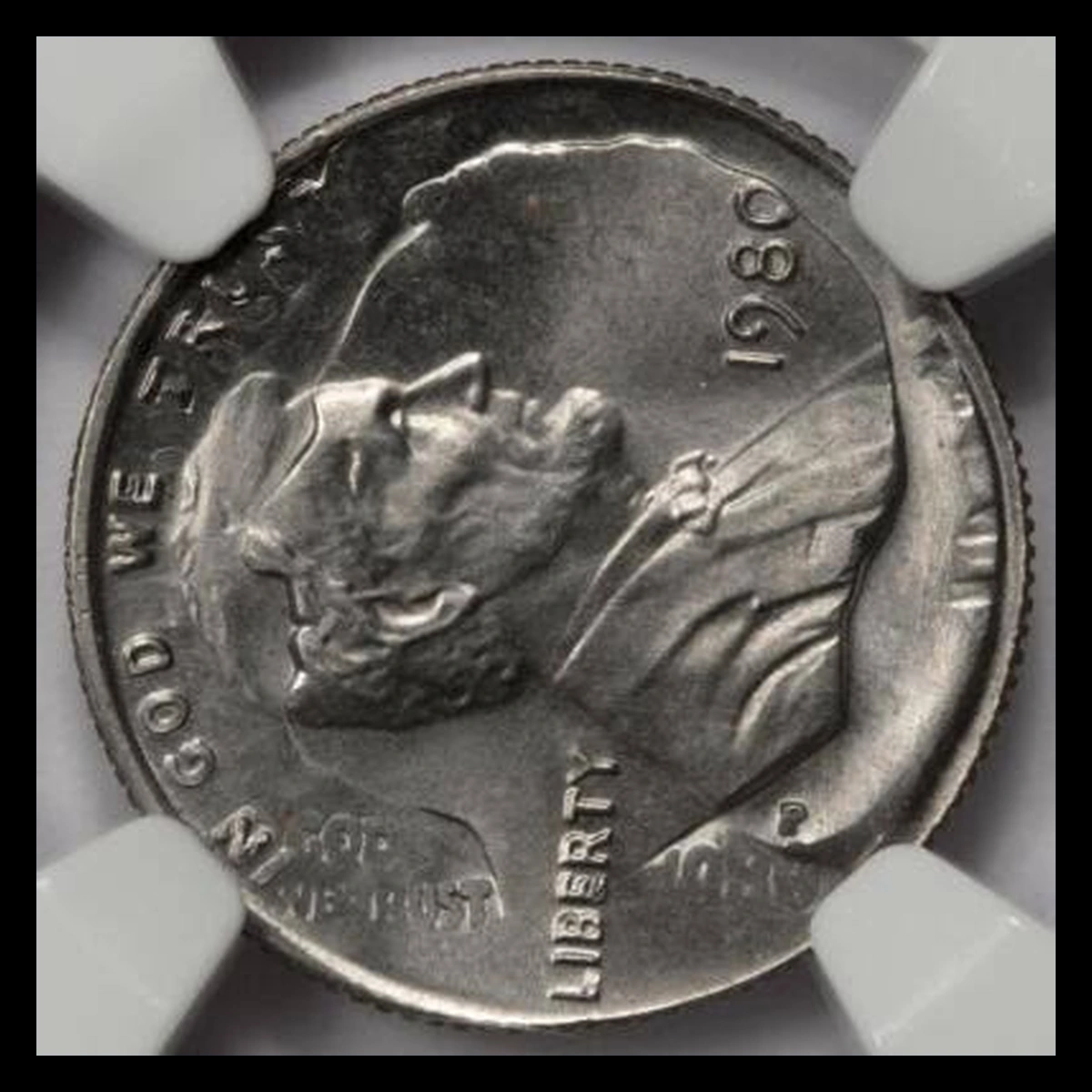
A finished 1980-P dime received cent designs on the recorded PCGS MS66 example. Its dime date survives, but the final digit of the cent date is missing.
A separate ICG MS67 example also has a flipover event and two complete dates. That extra turn does not belong to every 1980 cent-over-dime coin.
How to Identify
Locate Roosevelt or the torch beneath the cent details, then read the two dates separately. A clear dime year does not make missing cent digits visible.
The earlier dime’s design distinguishes a finished-coin overstrike from a wrong unused blank. Check both faces when assessing a claimed flipover sequence.
What It’s Worth
$700–$3,000 is the estimated range for clearly identified examples. Readable parts of both designs can be more important than grade alone.
The PCGS MS66 sold for $1,380 on April 29, 2011. A different PCGS MS63 cent over a 1980-P dime brought $1,920 in September 2025, not a later resale of the MS66 coin.
18. 1980 Penny Testing Confirms Silver in the Wrong Blank: Silver-Blank Error
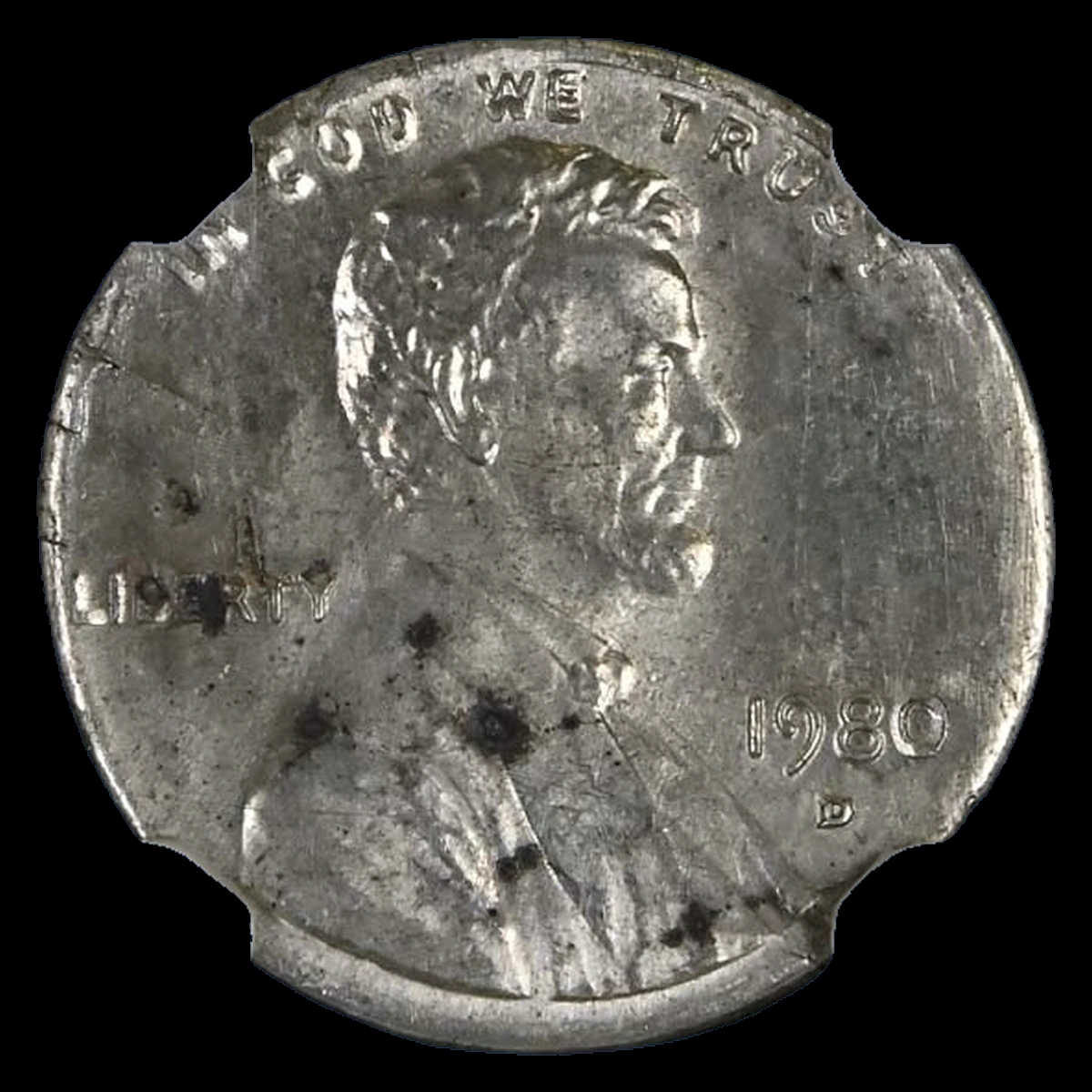
Two recorded 1980-D silver-blank cents have different weights and identities. The 2.1-gram NGC MS62 uses an unidentified silver blank, while the 2.5-gram NGC MS64 uses a 90% silver dime blank.
How to Identify
Record weight and the crowded outer design, then arrange metal testing. A magnifier or silver color cannot distinguish silver from clad metal or added surface plating.
The lighter blank has no established country or exact silver mixture in the supplied record. Do not label it as a particular foreign issue or as the 2.5-gram dime blank.
What It’s Worth
$4,000–$25,000 is the estimated span for these rare silver-blank possibilities. Confirmed metal identity is essential to choosing the comparison.
The 2.1-gram unidentified silver-blank cent sold for $6,300 on January 17, 2025. The separate 2.5-gram silver dime-blank cent brought $18,000 on August 28, 2025.
Conclusion
A normal 1980 cent’s copper-rich metal gives this date a different starting point from later zinc pennies. Keep that in mind when comparing weight, missing metal, and wrong blanks.
For combined errors, describe the whole coin before choosing a range. An off-center clip, a broadstruck brockage, and a dime overstrike can each contain several useful clues without becoming several separately priced objects.