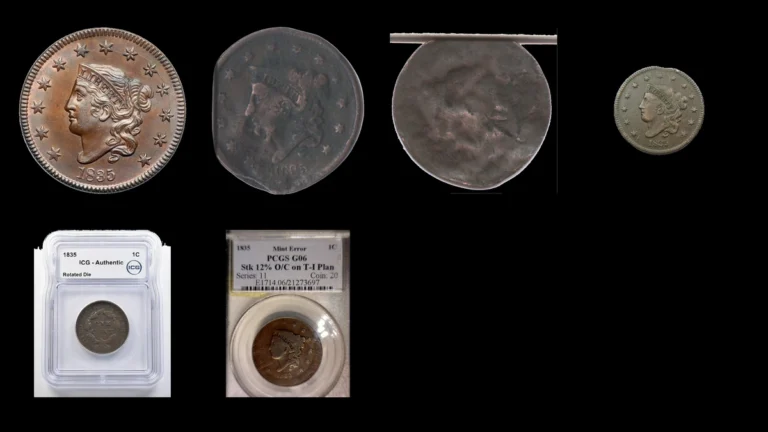
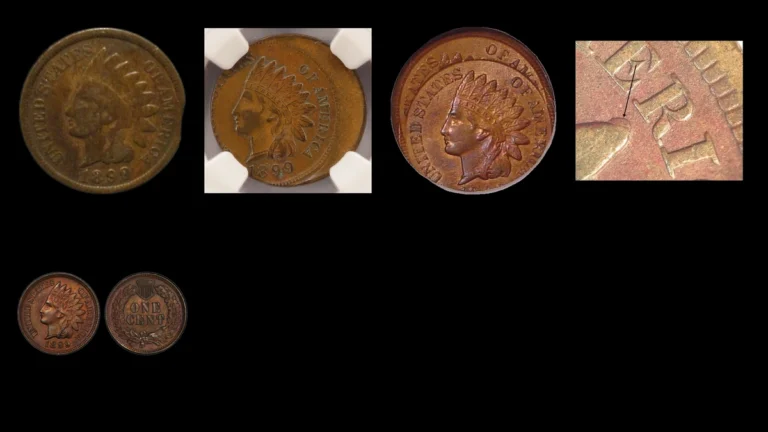
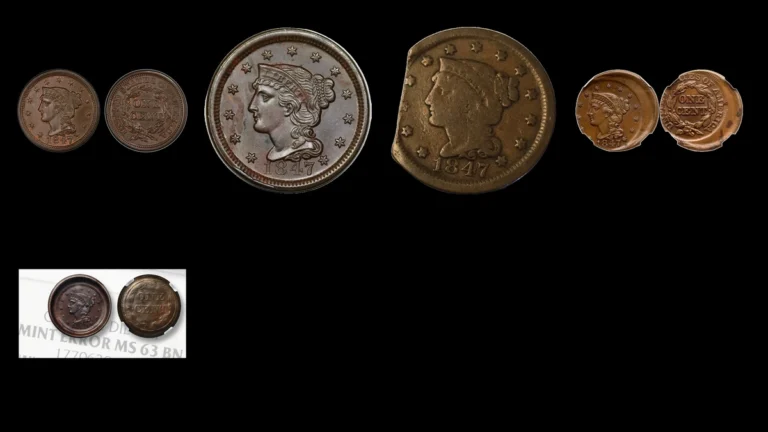
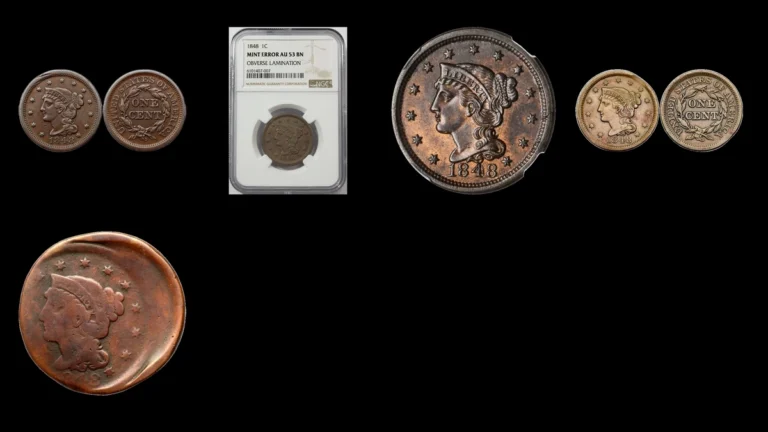
Rare 1975 Penny Errors (List & Pictures)
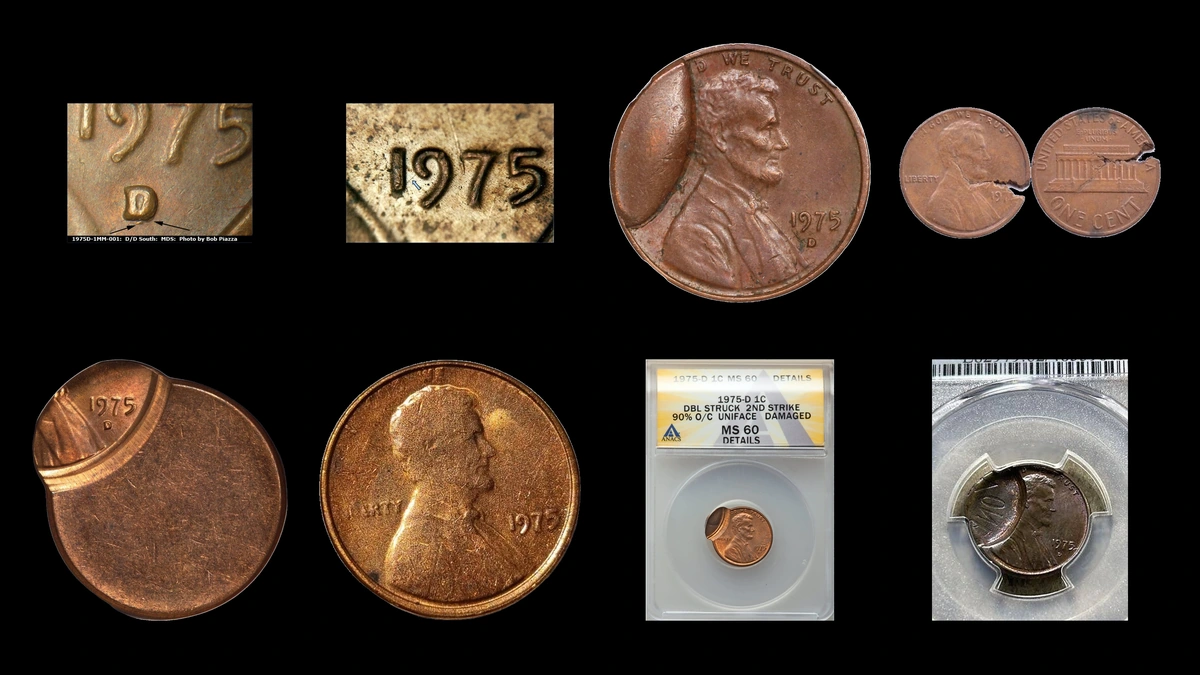
The normal 3.11 g copper-alloy coin is the starting point for identifying 1975 penny errors. Estimated values below run from $2–$3,000, with the mated-pair range covering both coins together.
A 1975 cent over a dime sold for $960 in 2018; a different-year 2001 example brought $1,320 in September 2025. Follow the mintmark, design, thickness, and outline before examining more complex strike combinations.
| Inspection clue | Category | Estimated value |
|---|---|---|
| Earlier D outline | Repunched mintmark | $3–$150 |
| Repeated letter contours | Doubled die | $3–$150 |
| Raised bar, ridge, or rim patch | BIE, cracks, and cuds | $2–$1,200 |
| Thin naturally split metal | Split blank | $50–$400 |
| Expanded disc with full designs | Broadstrike | $20–$250 |
| Unstamped metal beside missing design | Off-center strike | $20–$600 |
| Blocked or impressed area | Struck-through material or cap | $10–$600 |
| Two separate impressions | Double strike | $50–$800 |
| Cup-shaped wall | Die cap | $150–$1,500 |
| Design struck across a fold | Foldover | $250–$1,500 |
| Full backward recessed design | Brockage | $200–$2,000 |
| Two coins with matching interaction | Mated error pair | $500–$3,000 together |
| Cent on smaller clad metal | Dime blank | $350–$1,500 |
| Earlier dime design under cent details | Double denomination | $700–$3,000 |
An ordinary 1975 cent measures 19.05 mm and has a plain edge, with copper alloy throughout rather than copper plating over zinc. Record safely accessible measurements once, using existing records for sealed coins and preserving all fragile folds or attached material.
1. 1975 Penny A second D beyond a split lower tip: Repunched Mintmark Error
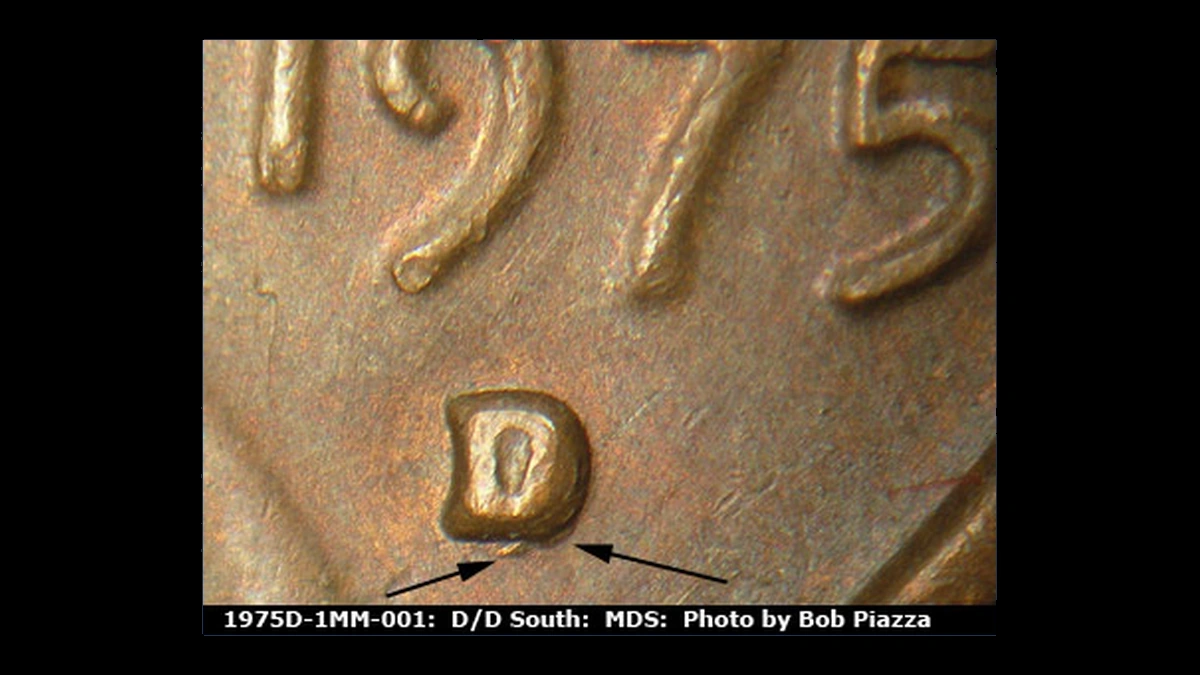
Start with the entire D below the date. Earlier punch placements can survive as curves or uprights when the mint-letter punch shifts between blows into the die.
Listed 1975-D forms include northwest, west, and south overlaps. A damaged punch can also produce a split-looking lower end without creating a second punch position.
How to Identify
Follow any extra stem or curve beyond the lower tip and compare the complete pattern with the 1975-D examples and damaged-punch comparison. An isolated fork is insufficient.
Catalog labels can differ, making photographs more reliable than similar numbers alone. Supporting background marks may strengthen a match once the earlier letter itself is established.
What It’s Worth
$3–$150 is estimated for confirmed repunched mintmarks, with recognizable separation generally more appealing than very close overlap. The range compares minor Lincoln varieties rather than a supplied sale for every pattern.
The damaged-punch lookalike does not receive an RPM premium. Its value remains that of an ordinary coin in comparable condition.
2. 1975 Penny Forked letter corners or rounded extra edges: Doubled Dies Error
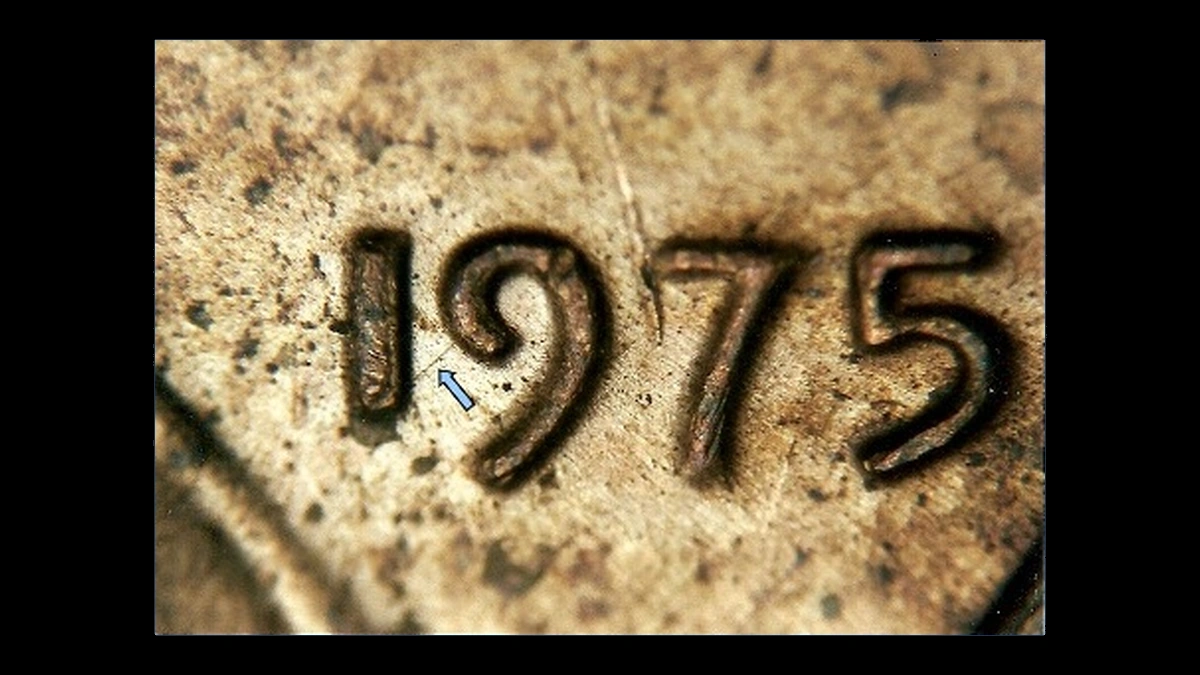
Inspect the design itself before searching for tiny identifying scratches. Recorded Philadelphia varieties affect different front details, with another variety involving reverse lettering.
A doubled die has repeated design detail before striking. A Denver obverse report needs its own established match rather than a Philadelphia reference.
How to Identify
Compare the exact letters, directions, and extra rounded contours with the appropriate variety. Small supporting marks can confirm the tool after the duplicated design is found.
Flat shelves from movement during striking can occur even on a genuine doubled-die coin. Judge each apparent extra edge separately instead of treating every thick letter as part of the variety.
What It’s Worth
$3–$150 is estimated for confirmed minor 1975 doubled dies. Strength, preservation, and how easily the pattern can be recognized influence the comparison.
The range does not document a transaction for every listed tool. A Denver candidate needs a reliable identification before receiving the same type of premium.
3. 1975 Penny A football-shaped rim patch or smaller raised feature: Cuds, BIE, and Die Cracks Error
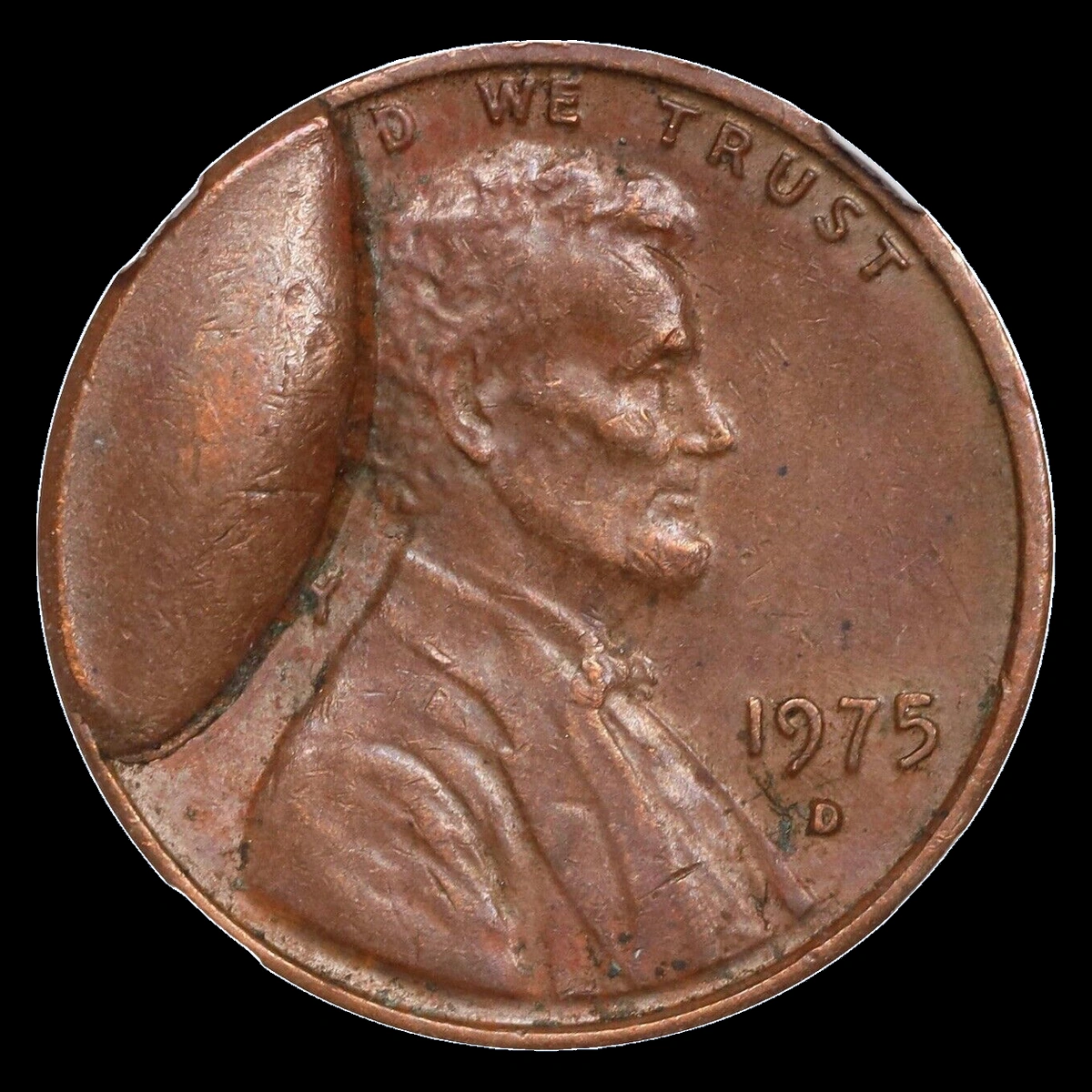
One 1975-D variety has a large football-shaped raised area connected to the front rim. Metal filled the space left by a missing die section, creating a cud.
Other breaks affect only the rim, while smaller faults leave head-area ridges or a BIE bar between B and E in LIBERTY. Philadelphia and Denver shapes differ, and continued die failure can enlarge a recorded break.
How to Identify
Trace a large patch to the rim and compare its complete boundary with the correct mint’s photograph. A rim-only defect cannot be forced to match a larger face-covering cud.
For smaller features, distinguish raised ridges from scratches and locate a BIE in its actual letter gap. Check the edge for pushed-in damage that might imitate a blob.
What It’s Worth
$2–$1,200 spans estimated values from small bars and cracks to large attractive cuds. A tiny BIE is not comparable to a dramatic missing die section.
A 1979 Philadelphia cud graded PCGS MS64 Brown sold for $1,020 in May 2021. That desirable different-year break shows market potential but is not a transaction for the football-shaped 1975-D.
4. 1975 Penny A much thinner coin with a separated surface: Split Blank Error
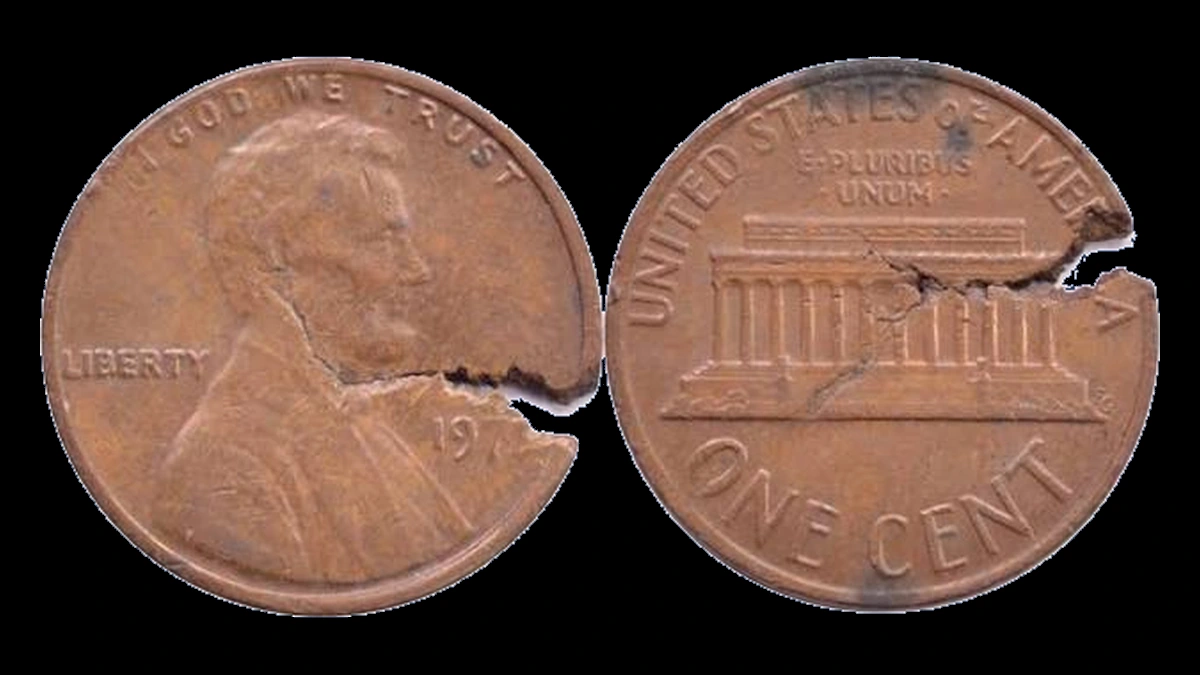
The recorded Denver split-disc example weighs 1.57 g, close to half the normal cent weight. A weakness inside the copper alloy allowed a layer to separate through the disc’s thickness.
This is not the loss of thin copper plating from a zinc core. The short auction description does not settle whether the separation occurred before or after striking.
How to Identify
Compare thickness and examine both faces and the edge for a natural separation surface. Repeated abrasive lines can reveal grinding that removed metal later.
Look for design struck onto a separated surface or detail lost when a layer came away. Those observations help determine timing more effectively than low weight by itself.
What It’s Worth
$50–$400 is estimated for a confirmed 1975-D split-disc error. Natural surface evidence, surviving design, and separation timing all affect appeal.
No verified sale price is supplied for the 1.57 g specimen. A ground-down cent can have similar weight without receiving the same mint-error premium.
5. 1975 Penny Full designs within a widened border: Broadstrike Error
Check the outer words on both faces when the coin looks oversized. If the collar, the ring limiting width during striking, fails to contain the blank, metal can expand around complete designs.
A recorded 1975-D example is graded ANACS MS63 Red and Brown. That describes an unworn coin retaining some red copper color.
How to Identify
Compare several widths and follow the lettering within the extra margin. An uneven border can still be genuine when the design remains complete.
Inspect for hammering, flattened letters, and impact damage that might explain later enlargement. Broadstriking redistributes the blank’s metal rather than inherently removing a substantial amount.
What It’s Worth
$20–$250 is estimated for a confirmed Denver broadstrike, allowing more for stronger natural spread and cleaner surfaces. No sale is assigned to the ANACS specimen.
A 1999 broadstrike graded PCGS MS65 Red brought $67 in March 2023. Its plated-zinc construction differs from the solid copper alloy here, so it offers broad mechanism-based context.
6. 1975 Penny A large untouched area beside displaced designs: Off-Center Strike Error
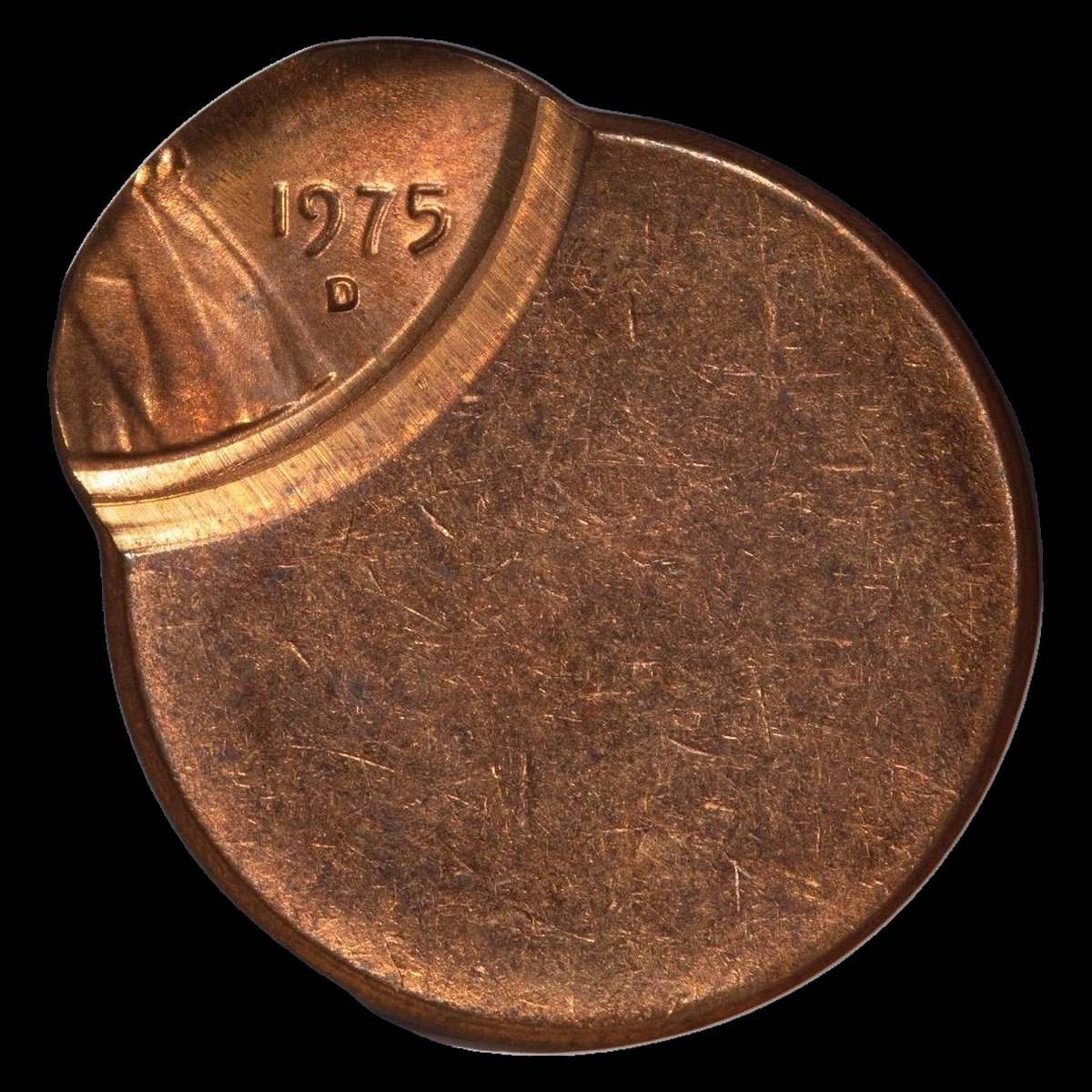
A recorded Denver piece is about sixty-five percent off center toward nine o’clock. Other Denver examples range from forty to seventy-five percent, while a Philadelphia listing reaches ninety percent.
These are different coins whose blanks sat partly outside the dies. Greater displacement leaves less design available to establish the date and mint.
How to Identify
Read the surviving year and mint independently, then compare the blank-to-struck boundary on both faces. A shift confined to one side suggests another alignment problem.
Inspect the edge for later cutting and the plain area for scraping. Avoid turning a quick visual estimate into an exact offset percentage.
What It’s Worth
$20–$600 is estimated for dated examples. A clear shift with useful identity and attractive original surfaces supports stronger demand than a dramatic but dateless or damaged piece.
A 1982 plated-zinc cent struck seventy percent off center sold for $74 in June 2025. The later coin’s different metal and date keep that result separate from the 1975 reports.
7. 1975 Penny Blurred design or an impressed patch: Struck Through Material or a Cap Error
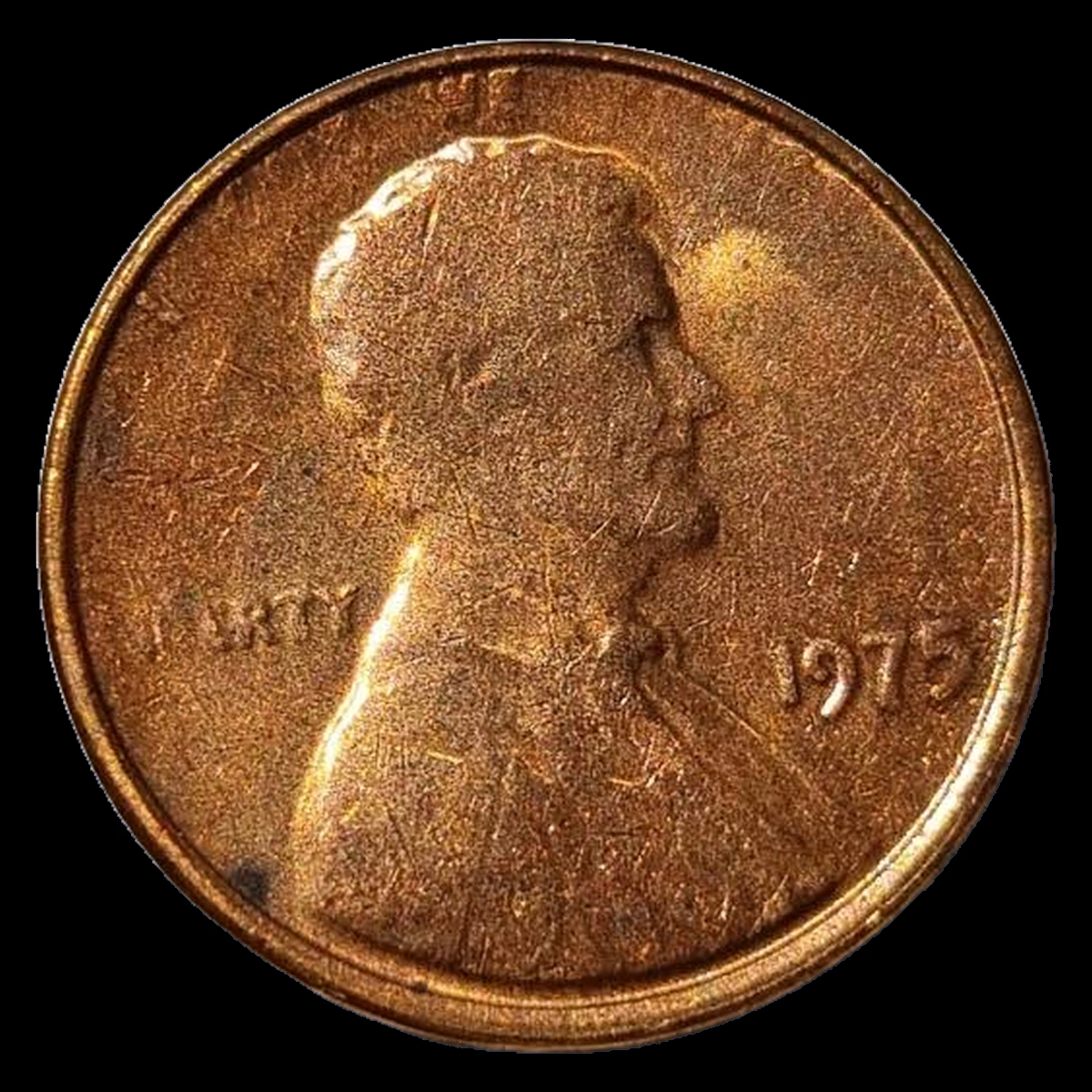
Obstructions can soften, hide, or replace normal detail during striking. The recorded Denver cap-struck example has a blurred front and normal back after a thin coin cap covered the obverse tool.
Separate Philadelphia reports include a fully obstructed front, other cap-related effects, and a detached metal flake that need not originate from the same coin. Another Denver report combines an impression with possible partial-collar contact.
How to Identify
Describe the surface first, distinguishing a definite impressed shape from unexplained weakness. Missing detail does not identify grease, cloth, or metal without further evidence.
Compare both faces and inspect any claimed collar step along the edge. Partial collar contact is a separate edge effect and does not mean the collar was the trapped object.
Keep attached fragments in place and look for scraping or corrosion that could explain later detail loss. Match the specific obstruction or cap distortion rather than every reported combination at once.
What It’s Worth
$10–$600 is the estimated span from modest obstructions to striking, well-defined examples. Larger recognizable impressions can make the production event easier to understand.
A 1995 late-stage cap strike brought $180 in March 2025. That comparison relates to the cap form and does not directly price a metal-flake impression or each additional label on one coin.
8. 1975 Penny A later design crossing the first: Double Strike Error
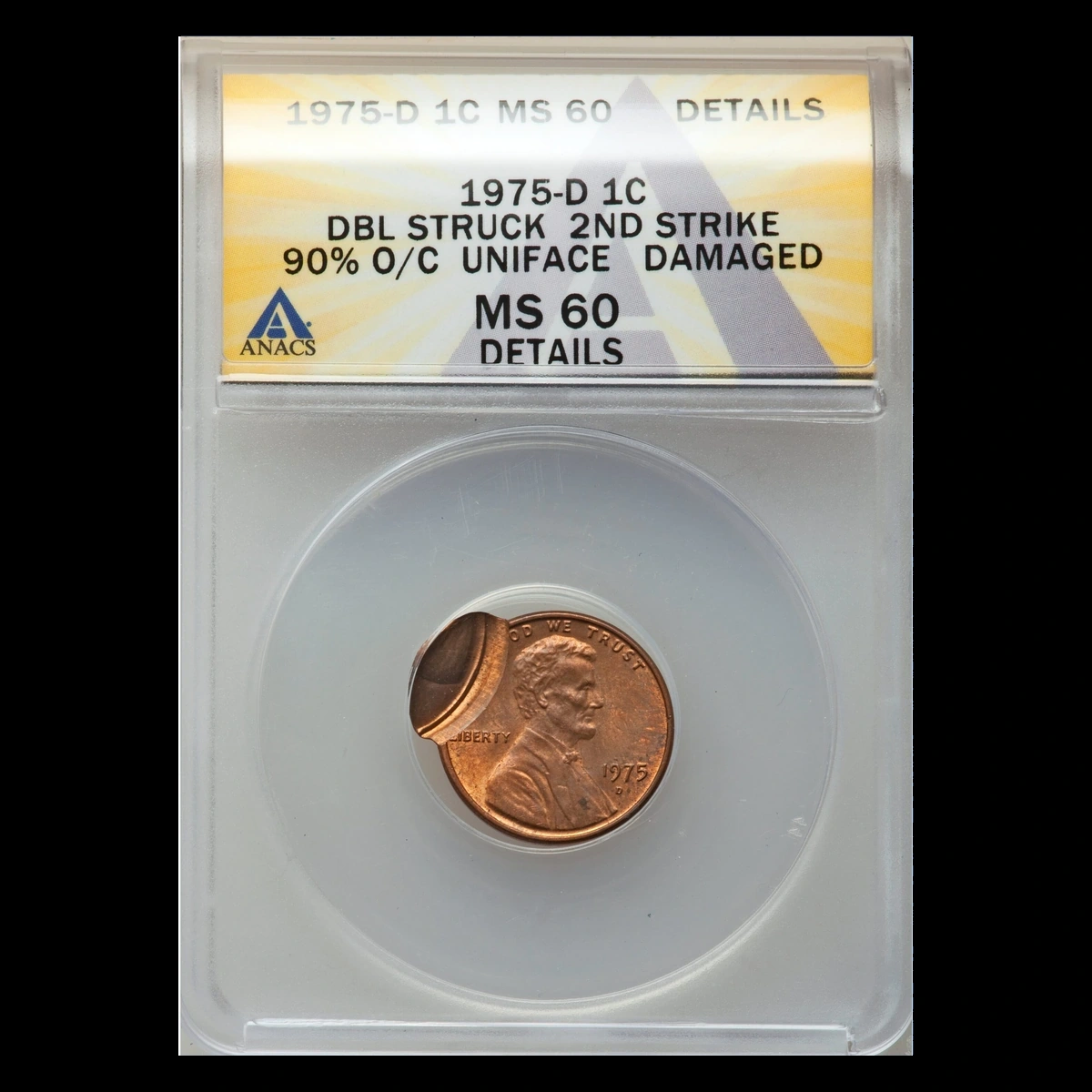
A coin can move, flip, or spread before receiving another blow. One Philadelphia example has a ninety-five-percent off-center second strike on only one face.
Separate Denver coins include ordinary off-center later strikes, a flipover, and a double-strike/broadstrike combination. A shared percentage does not establish the same sequence or blocked side.
How to Identify
Follow where the later impression interrupts the earlier design, rather than interpreting a flat letter ledge as another strike. A flipover must show a second design from the opposite face.
For a one-sided later strike, examine the corresponding blocked area on the other side. Check the edge for later vise or hammer damage and assess any additional spread independently.
What It’s Worth
$50–$800 is estimated across confirmed double strikes. Readable repeated design and an appealing arrangement can matter more than the highest displacement figure.
The Philadelphia one-sided second strike graded ANACS MS64 Red and Brown sold for $144 on March 8, 2021. A Denver double-strike/broadstrike combination brought $168 in October 2019, with condition still relevant to either comparison.
9. 1975 Penny A raised wall around the coin: Die Cap Error
Recorded Denver caps stuck to the portrait-side die and stayed through later cycles. Pressure stretched their outer metal around the tool to form a cup-like wall.
The examples include a deep NGC MS64 Red and Brown piece and a separate PCGS MS65 Red and Brown coin. The cap is the stuck coin itself, unlike the flatter coins struck through its covering.
How to Identify
View the wall from several angles and trace original design flowing into it. A blurred portrait alone does not establish that this coin was the cap.
Inspect for plier marks, pinches, or sharp folds from later bending. Preserve the shape while documenting width and height rather than attempting to restore a flat circle.
What It’s Worth
$150–$1,500 is estimated for confirmed Denver caps, depending on depth, surviving detail, and preservation. Neither listed 1975-D specimen has a separate realized price supplied here.
A 1979-D deep obverse cap graded PCGS MS64 Red sold for $329 in January 2016. That different-year example is a more appropriate comparison than an ordinary cent bent into a cup.
10. 1975 Penny Original design across a folded disc: Foldover Strike Error
A foldover changes how the blank lies beneath the dies as the design is applied. The Philadelphia 1975 example graded PCGS MS65 Red and Brown appeared in a public display.
A separate Denver report needs its own specimen match. It cannot borrow the Philadelphia coin’s grade or exact fold.
How to Identify
Inspect the ridge and adjoining design to determine whether the metal received the strike while folded. A completed design stretched or torn by later bending provides different evidence.
Keep the fold closed and inspect accessible edge sections for gripping marks. Width and thickness document the altered form without requiring an ordinary flat diameter.
What It’s Worth
$250–$1,500 is estimated for confirmed foldovers with readable identity and convincing original detail. The range compares folded copper-alloy cents rather than a documented auction sale of either 1975 example.
The Denver claim enters the comparison only after confirmation. Later-bent pennies do not qualify for the same error premium.
11. 1975 Penny A full backward image sunk into one face: Brockage Error
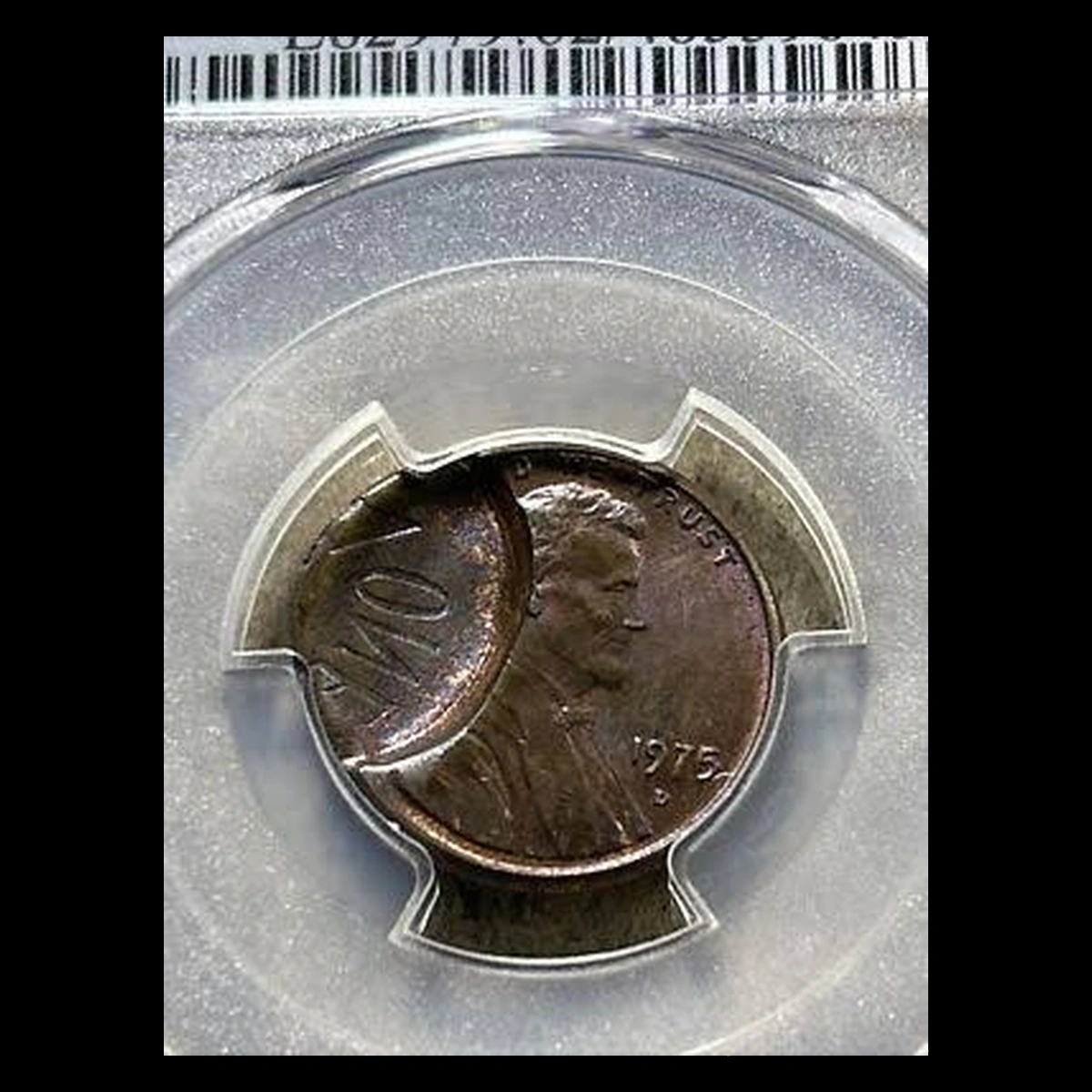
A struck coin remaining between a fresh blank and a die can impress its raised design into the new metal. The resulting brockage is recessed and reversed.
The recorded Philadelphia 1975 example is labeled one-hundred-percent obverse brockage and graded PCGS MS64 Red. Its complete image differs from a small partial impression.
How to Identify
Compare the unusual face with a mirrored normal design and use side lighting to confirm actual recessed detail. A faint outline or discoloration is not equivalent to a full impressed image.
Examine the other face and edge for later vise pressure. Squeezing two finished coins together can make reversed marks, so the entire piece needs evidence of an original mint strike.
What It’s Worth
$200–$2,000 is estimated for a confirmed full brockage, with completeness, legibility, and original surfaces favoring the upper end. No verified sale is supplied for the listed PCGS coin.
A small partial patch should not inherit the full-image estimate automatically. Authentication distinguishes a collectible strike from a later pressure transfer.
12. 1975 Penny Two coins preserving one interaction: Mated Error Pair Error
The reported 1975-D pair consists of separate coins with consecutive NGC certificates and MS66 Red and Brown grades. A mated pair requires physical evidence that the pieces participated in the same minting event.
Certificate sequence alone cannot establish that connection. Neither a bond nor a mirror impression should be assumed without observing it.
How to Identify
Study both coins side by side and identify the particular contact surfaces or transferred details. Their boundaries should describe a consistent interaction rather than simply similar dates and colors.
Document each coin’s measurements, mintmark, and edge separately. Keep the surfaces apart rather than pressing them together to test a supposed fit.
What It’s Worth
$500–$3,000 is the estimate for both authenticated coins together. It is not a price per coin and should not be doubled.
No verified sale is supplied for the reported pair. Clear connecting evidence and preservation can make a genuine set more desirable than unrelated errors with consecutive certification numbers.
13. 1975 Penny A smaller clad blank carrying only cent designs: Struck on a Dime Blank Error
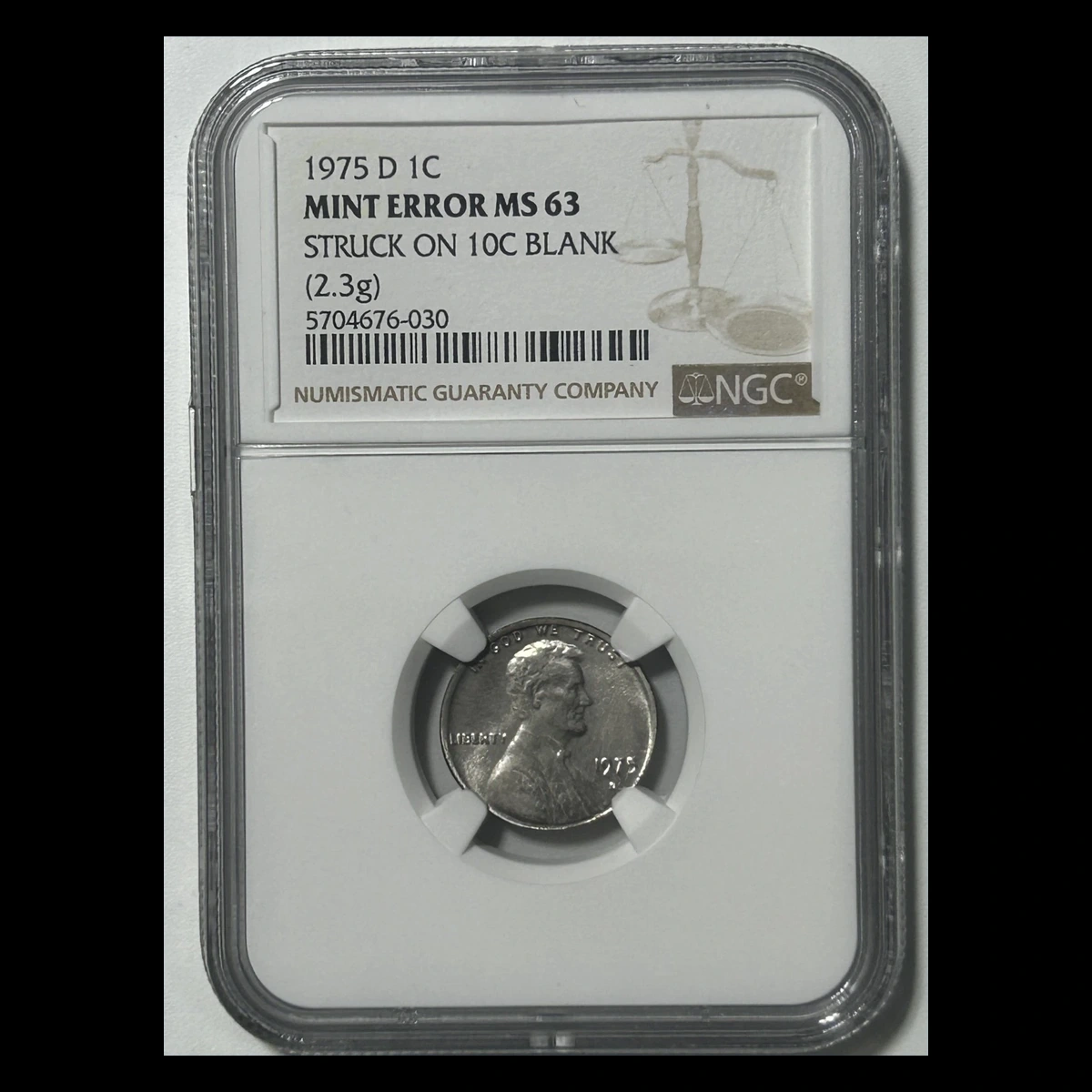
The recorded Philadelphia specimen weighs 2.3 g, while the separate Denver piece is listed at 2.26 g. Both concern unused dime metal receiving a cent strike.
The Denver blank is described as Type 1, meaning it had not received its prepared raised edge before striking. This term concerns blank preparation, not a different dated design.
How to Identify
Compare the layered edge and weight with a normal dime’s approximately 2.268 g and 17.91 mm starting size. Cent-striking pressure can spread the smaller disc.
Do not require the grooves made by a finished dime strike on an unused blank. Earlier Roosevelt or torch detail would instead identify an already-struck dime beneath the cent.
What It’s Worth
$350–$1,500 is estimated for confirmed examples. A clear date and established wrong-metal identity help the comparison.
A 2007-D cent on a dime blank graded PCGS MS66 sold for $600 in March 2023. The recorded Denver 1975 example has a Details grade indicating a condition problem, which prevents automatic comparison with an undamaged coin.
14. 1975 Penny Older dime details beneath Lincoln and the Memorial: Double Denomination Error
The recorded 1975 specimen graded NGC MS66 Brown carries cent designs over a finished dime. Portions of its original portrait, torch, or lettering can remain beneath the newer design.
This is one piece of metal bearing two denominations, rather than joined coins. An unused dime blank supplies different metal but cannot contribute a preexisting image.
How to Identify
Find an identifiable dime feature and trace where the cent design covers it. Read any surviving dates separately instead of assuming one year identifies both strikes.
The layered metal and weight should fit a dime rather than a normal copper-alloy cent. Document the spread outline while accounting for expansion during the later blow.
What It’s Worth
$700–$3,000 is estimated for confirmed examples with varying preservation and design visibility. The NGC MS66 Brown coin sold for $960 on August 19, 2018.
A 2001 cent over a 2001-P dime brought $1,320 in September 2025. That later comparison is not another sale of the 1975 piece.
Conclusion
Use the correct copper-alloy standard, then connect each unusual feature with evidence of how it formed. A damaged D punch, a naturally split layer, and a genuine second strike leave different clues despite sometimes similar first impressions.
The $2–$3,000 estimates include both individual coins and one complete mated pair. Keep that unit of value clear, preserve fragile metal, and compare the exact specimen rather than combining unrelated descriptions.