Rare 1928 Penny Errors (List & Pictures)
A pale penny needs a metal check, while missing shoulder initials need a surface check. A silver dime-blank example leads the documented results for these 1928 penny errors at $3,120 on August 28, 2025.
The estimated range spans $2–$5,000. Work from the whole coin’s metal and displaced design toward the smaller clues in Lincoln’s shoulder, LIBERTY, mintmark, and reverse lettering.
| Visible clue | Type | Estimated range |
|---|---|---|
| Small silver disc with crowded outer detail | Dime planchet | $1,500–$5,000 |
| Blank area beside incomplete design | Off-center strike | $30–$1,000 |
| VDB weak or absent at shoulder | Reported grease-filled die | $5–$100 if supported |
| Raised bar between B and E | BIE chip | $2–$75 |
| Additional D or S outline | Repunched mintmark | $5–$300 |
| Repeated upper motto or wheat detail | Denver doubled reverse | $10–$500 |
The ordinary copper-alloy cent weighs 3.11 g and measures 19.05 mm across a plain edge. Record both faces and the edge, using a scale, calipers, and a 10× magnifier when the coin can be handled safely.
1. 1928 Penny The Design Outgrows a Small Silver Disc: 1928 Dime Planchet Error
The documented coin weighs 2.5 g, matching a standard silver dime blank. It received Lincoln’s design after that smaller piece of metal entered the cent press.
Much of the rim is weak, and the upper motto spreads toward the edge. Those strike features accompany its silver composition rather than being explained by color alone.
How to Identify
Measure the actual outline instead of assigning the normal cent diameter; a dime blank starts smaller and can spread. Inspect the edge for added coating without scratching through the surface.
Have composition and original strike assessed together. An unused dime blank has no earlier dime design, unlike a finished dime that later receives a cent impression.
What It’s Worth
Authenticated silver-dime-blank examples have an estimated $1,500–$5,000 range. Condition and how clearly the wrong blank can be identified affect the comparison.
Heritage sold the NGC XF45 coin for $3,120 on August 28, 2025. Its worn but detailed surfaces show that this error’s identity can matter even without an unworn grade.
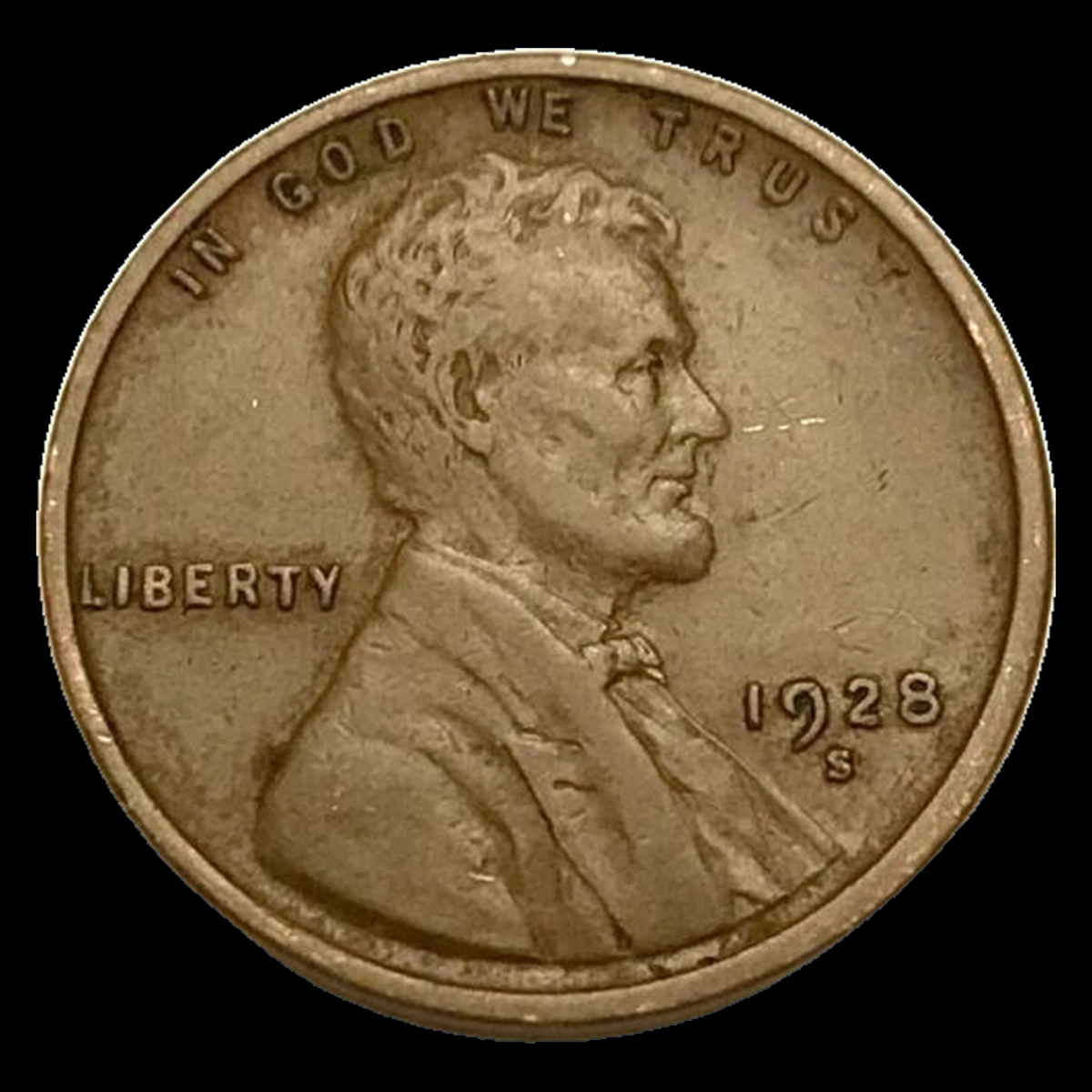
2. 1928 Penny Part of the Disc Remains Bare: 1928 Off-Center Strike Error
A misplaced blank receives only the portion of design that falls within its metal. The remaining unstruck area stays attached rather than disappearing as a clipped section.
Reports cover Philadelphia, Denver, and San Francisco examples. The amount and direction of displacement must be established for each coin.
How to Identify
Compare both faces for design loss consistent with one displaced blank. A centered reverse opposite a shifted front can instead point to a misaligned die.
Read 1928 and any surviving mintmark directly, then inspect the blank area for sanding. Another specimen cannot supply a final digit missing from the coin under examination.
What It’s Worth
Dated off-center examples have an estimated $30–$1,000 range. Readability, original surfaces, and the surviving design affect comparison alongside the shift.
A 1936 cent struck fifteen percent off center in ANACS MS60 Brown brought $63 in January 2022. That nearby-year result does not price a much more displaced 1928 specimen.
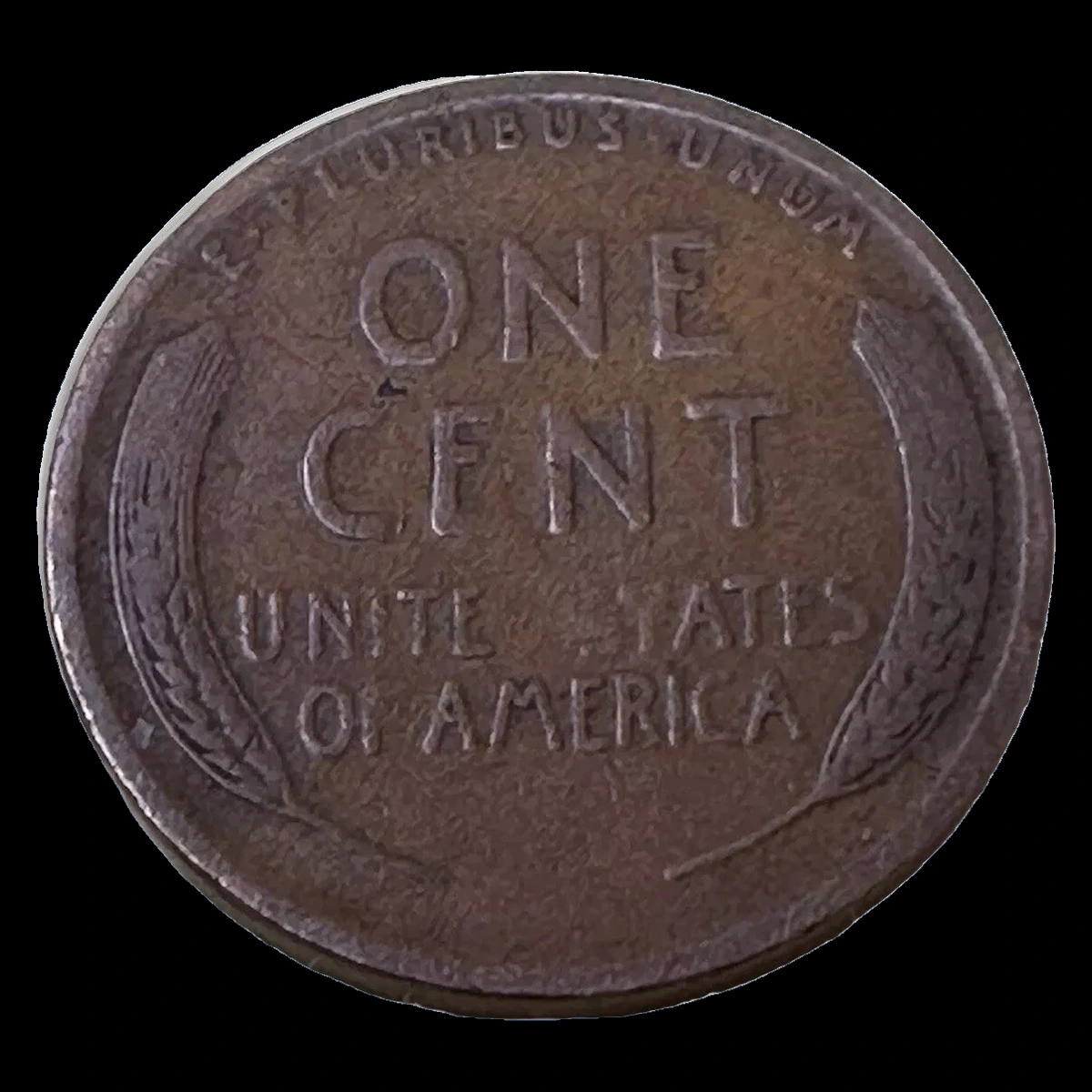
3. 1928 Penny VDB Is Weak or Missing at the Shoulder: 1928 Filled-Die Report Error
The small designer’s initials VDB belong on Lincoln’s shoulder. The reported error attributes their absence to grease blocking that part of the die.
Such filling can prevent local design formation while nearby detail remains. Wear and ordinary weak striking also make tiny initials difficult to see, so absence alone is insufficient.
How to Identify
Compare the shoulder with a normal 1928 cent of similar condition and inspect other exposed portrait features for wear. Look for remaining letter traces under varied lighting.
Scraping lines may show deliberate removal, and cleaning will not establish the original cause. This is a claimed interruption of expected initials, not a separate design intentionally made without VDB.
What It’s Worth
A clearly supported filled-die example has an estimated $5–$100 range. Most faint missing details belong near the lower end unless surrounding preservation strengthens the evidence.
No specific 1928 auction result is supplied. Ordinary shoulder wear should not receive a grease-strike premium merely because a listing says “no VDB.”
4. 1928 Penny A Raised I-Like Bar Interrupts LIBERTY: 1928 BIE Error
A small broken piece of die can leave a gap that fills with raised coin metal. In the space between B and E, that shape resembles an extra I.
The broad 1928 report does not assign every BIE to a single mint. The exact letter gap defines the nickname.
How to Identify
Keep the full word visible while examining the raised bar under side lighting. A nearby lump elsewhere is not automatically BIE.
Check whether the feature rises naturally from the original surface rather than cutting downward like a scratch. Attached dirt and metal pushed by squeezing require separate explanations.
What It’s Worth
Small genuine BIE chips have an estimated $2–$75 range. A clear bar on an attractive surface is easier to compare than a faint worn lump.
This is a minor Wheat-cent chip estimate rather than a documented 1928 transaction. It should not be inflated with prices for large rim-connected breaks.
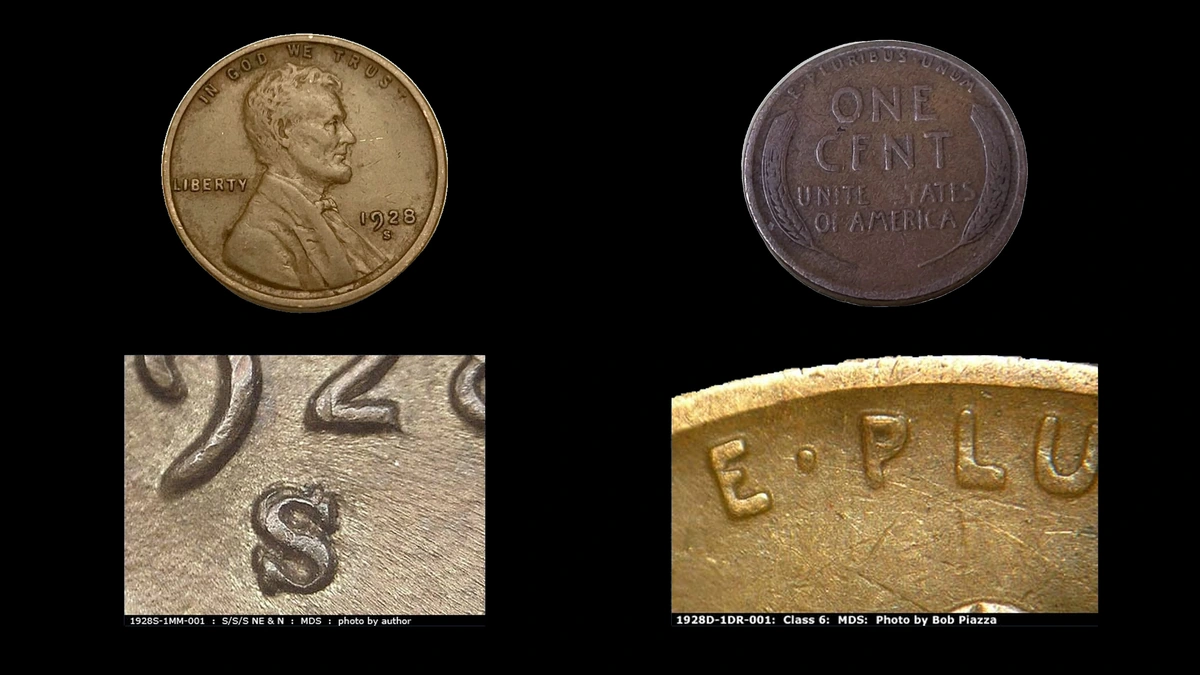
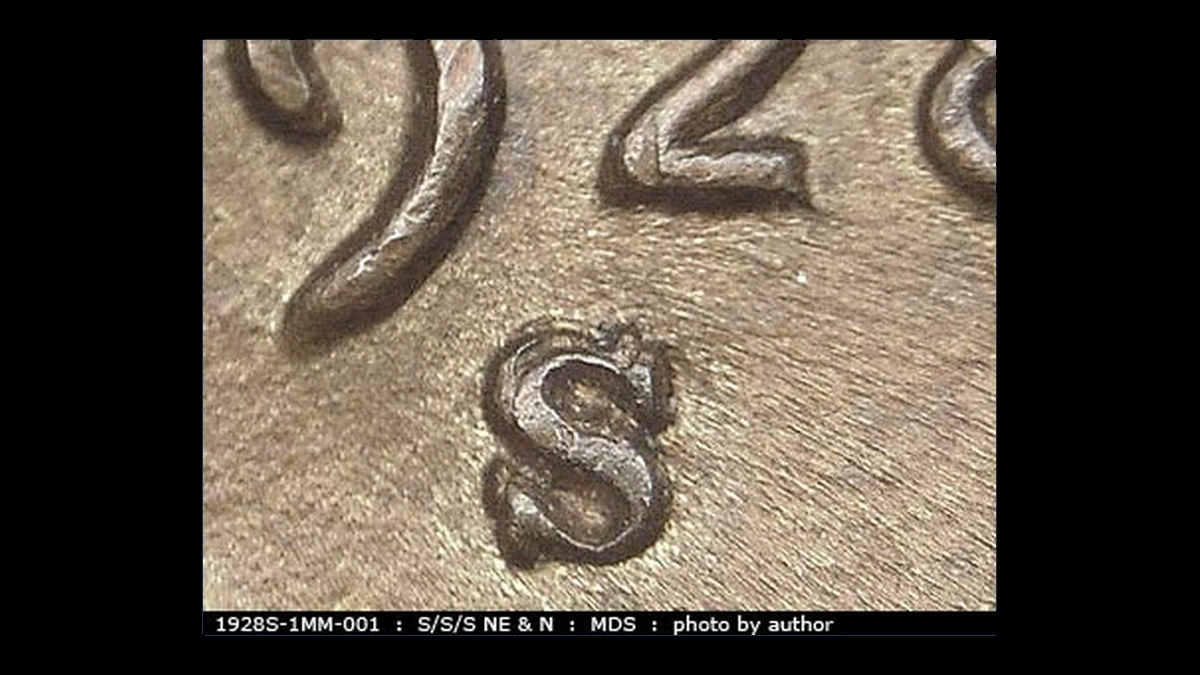
5. 1928 Penny Another D or S Follows the Mint Letter: 1928 Repunching Error
Mint workers added letters to the dies by hand. Slightly shifted placements could leave part of an earlier D or S around the final impression.
Both Denver and San Francisco are reported. The category concerns same-letter repetition and does not automatically mean D over S or S over D.
How to Identify
Choose the normal mintmark shape before tracing the extra stroke. San Francisco’s normal large and small S forms need separate references; size difference alone is not repunching.
Follow enough of the remnant to recognize another placement of the same letter. A flat shelf, scratch, reflection, or shapeless bump cannot supply that pattern by itself.
What It’s Worth
A matched repunched mintmark has an estimated $5–$300 range. Strength and preservation guide comparisons within the broad group.
No individual realized prices are supplied for these reports. An ordinary large S should not receive a variety premium simply because it looks bigger than a small S on another coin.
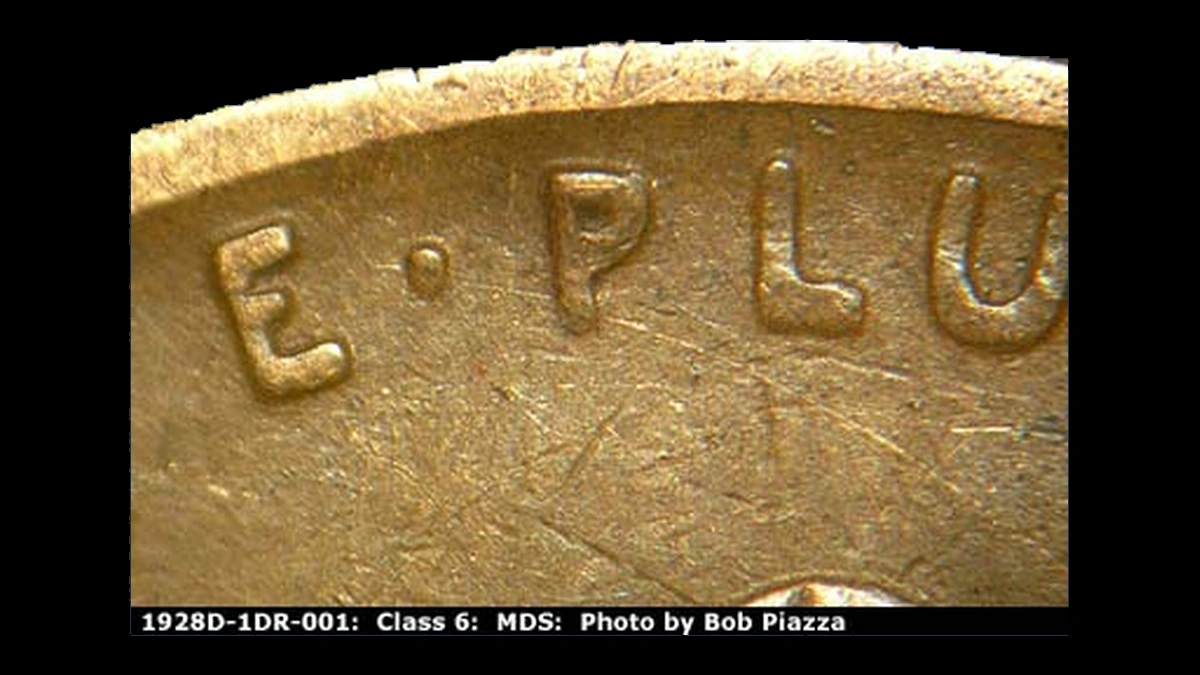
6. 1928 Penny The Upper Motto or Wheat Details Repeat: 1928-D Doubled Reverse Error
The Denver report concerns repeated design in E PLURIBUS UNUM and the wheat details. That altered pattern existed in the reverse die before it reached the coin.
This differs from repunching the separate D on the front. It also differs from a flat ledge produced by movement during the actual strike.
How to Identify
Confirm the Denver mintmark, then compare the reverse with the appropriate attributed example. Photograph the repeated line with enough surrounding detail to locate it.
Look for another raised contour instead of a shelf beside a reduced letter. Normal dimensions identify the coin’s basic format but cannot establish which reverse die made it.
What It’s Worth
A correctly matched minor reverse doubled die has an estimated $10–$500 range. Strong clear outlines on unworn metal offer a better comparison than faint irregularities on worn letters.
The range does not claim a realized sale for a specific 1928-D specimen. A famous doubled-front result is not interchangeable with this mint, face, and pattern.
Conclusion
The estimated $2–$5,000 span becomes useful after the visible clue has an explanation. Missing VDB needs evidence beyond wear, an extra mintmark stroke needs more than a normal size difference, and pale metal needs composition testing.
For an off-center piece, keep the readable date with views of both faces. For a fine variety, retain enough surrounding design in the closeup to show exactly where the repeated or raised feature sits.