Rare 1886 Penny Errors (List & Pictures)
Two normal portrait styles appear on 1886 Indian Head cents, and neither is an error. Matching the correct style helps identify the actual extra date strokes, cracks, or unusual edge.
Estimated values for these 1886 penny errors run from $5–$5,000. The supplied auction comparison for a displaced second strike is a different-year 1894 coin at $517.50, while the listed 1886 collar and broadstrike prices are offers to sell.
1. 1886 Penny Extra Strokes Appear inside 6 or beside 86: Repunched Date Error
Type 1 date varieties include an earlier stroke in the lower loop of 6 and other patterns involving the second 8 as well. The date punch entered the die more than once in slightly different positions.
How to Identify
First check the lowest feather: Type 1 points between I and C in AMERICA, while Type 2 points between C and the final A. Those are normal design differences.
Keep the entire 86 together in a close-up and follow the added stroke around its loop. Some recorded impressions lie below the main detail, while another lies above it, so the direction must match one specific variety.
A flat shelf from movement during striking or a thick worn loop is a different clue. Repeated date punching also does not require a second portrait on the coin.
What It’s Worth
$30–$2,500 is an estimate for identified repunched dates across different conditions. Type, color, and the strength of the actual pattern contribute to the whole-coin value.
A small trace inside 6 need not match the price of a stronger 86 variety. If lamination is also present, assess the actual combination once instead of adding two complete-coin estimates.
2. 1886 Penny Tiny Digits Sit below the Main Date: Misplaced Date Error
Type 2 Variety 11 shows remnants from several misplaced date-punch impressions among the border teeth. An earlier 1 lies below the left base of the normal 1, with other fragments near the first 8.
How to Identify
Confirm Type 2 from the lowest feather before using the Variety 11 photographs. Keep the normal date and lower border in the same view.
Match the fragments beneath the 1 and around the first 8 as a group. An isolated bump or shadow among the teeth does not establish several misplaced digits.
This pairing also developed cracks on both faces. Those marks are useful context but have a different cause from the misplaced date.
What It’s Worth
$75–$3,500 is an estimated whole-coin range for identified Type 2 examples. The underlying Type 2 coin and its preservation account for part of that spread.
No specific Variety 11 sale is supplied. The accompanying cracks remain features on the same coin, rather than separate maximum prices to add.
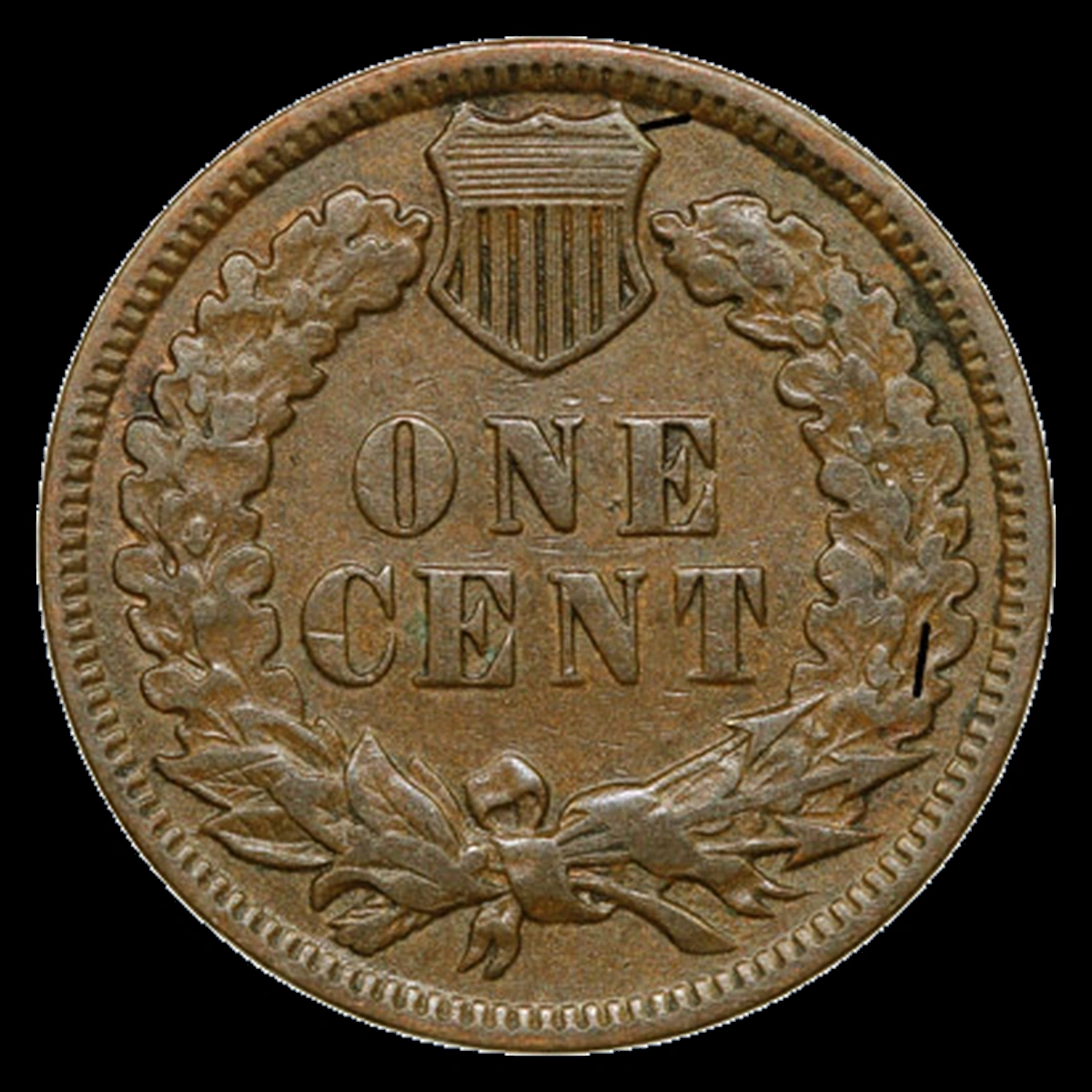
3. 1886 Penny Fine Raised Lines Cross the Design: Die Cracks Error
Bronze entering a crack in the die leaves a narrow raised ridge. The recorded Type 1 pattern starts near twelve-forty-five, while Type 2 Variety 11 has its own front and back cracks.
How to Identify
Select a reference with the correct normal portrait style. The Type 1 starting point should not be assigned to a Type 2 line simply because the year matches.
Move the light along the mark to see whether it rises or cuts into the metal. A scratch may have raised sides, but its central groove differs from a solid die-crack ridge.
What It’s Worth
$5–$200 is an estimate for modest cracks on circulated coins. Much of the total can reflect the date, portrait style, and overall condition.
This is not a reported sale of each die stage. A more developed break or an exceptional grade would need a different comparison.
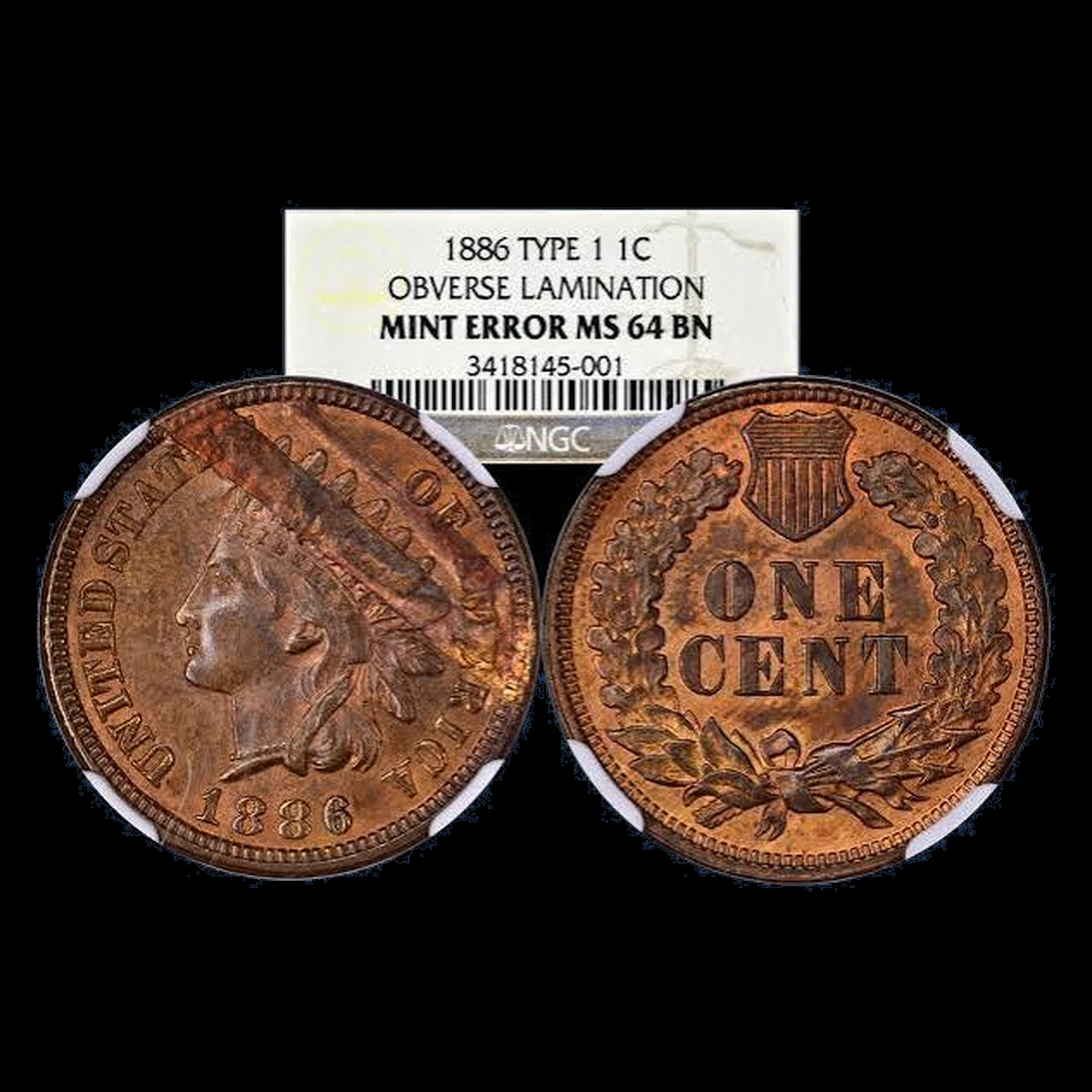
4. 1886 Penny A Surface Layer Peels or Opens at the Edge: Lamination Error
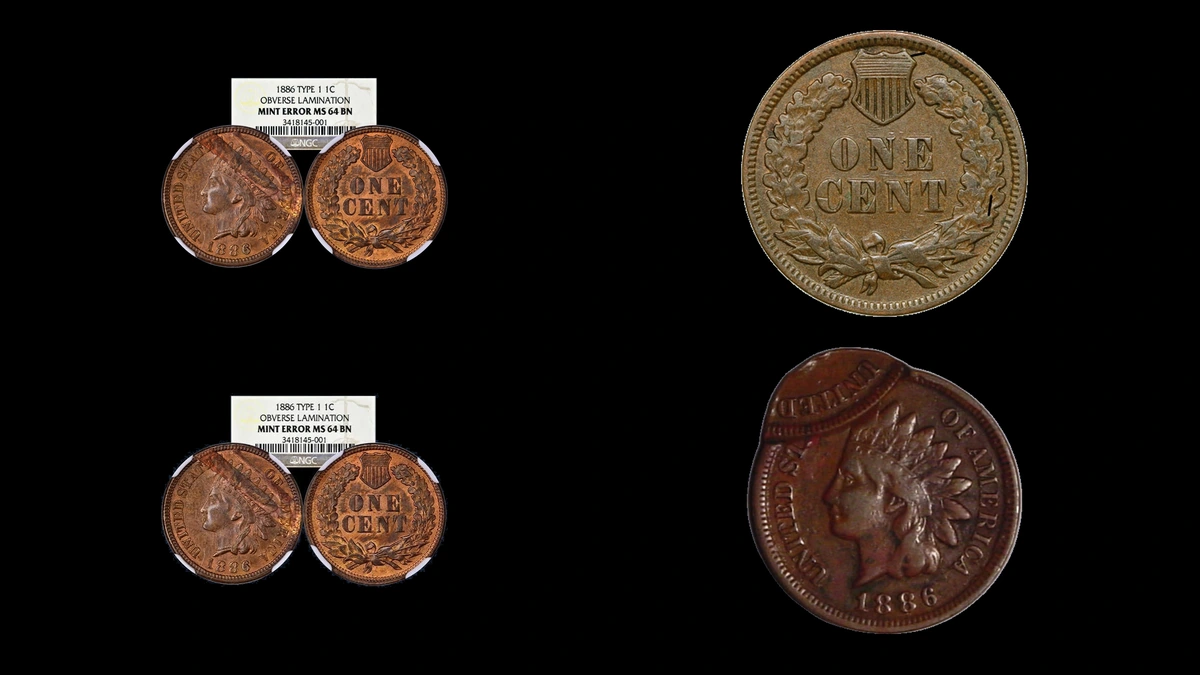
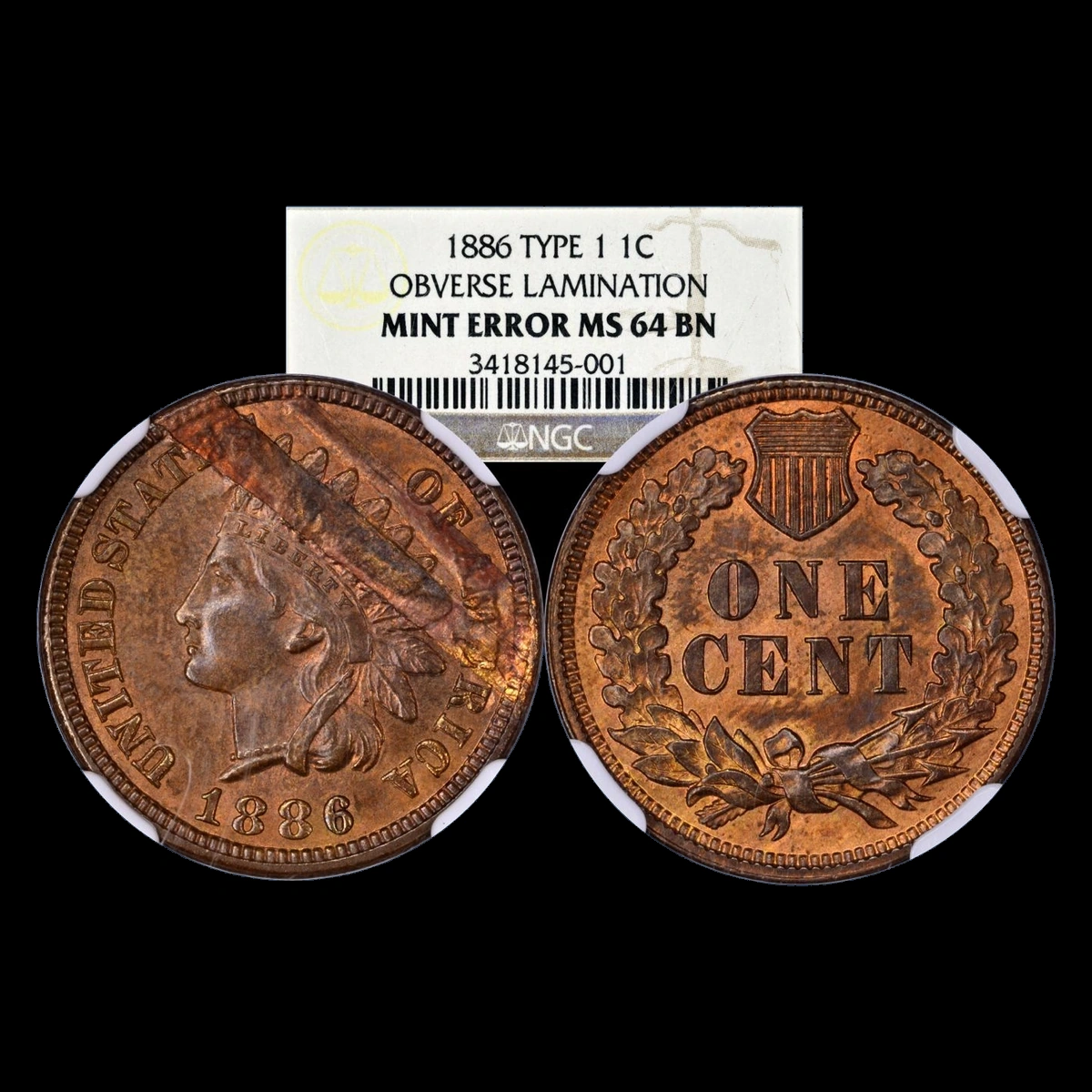
Weakness inside the bronze can produce a front peel or a clamshell-like opening. The supplied collection shows two separate Type 1 coins with these different appearances.
How to Identify
The collection photographs include an NGC MS64 Brown Snow-7 with an 86 repunch and front lamination. A separate NGC MS65 Red and Brown coin has the clamshell opening.
Follow the point where the layer still joins the coin, without prying it apart. A natural internal separation needs to be distinguished from a seam cut into the edge.
A normal cent weighs about 3.11 grams and measures 19.05 millimeters across. Attached layers may retain nearly normal weight, so avoid using low weight as a required sign of lamination.
What It’s Worth
$30–$500 is a working estimate for modest surface laminations, with stronger clamshell separations or high-grade combinations around $300–$5,000. Both supplied examples are unworn, but their grades, colors, and defects differ.
No adopted sale amount accompanies the two collection coins. The front peel and repunched date belong to one specimen; the edge opening belongs to the other.
5. 1886 Penny A Curved Gap Interrupts the Rim: Clipped Blank Error
The dealer-described clip lies near three o’clock and has weaker rim detail opposite it. The blank was missing that curved section before receiving the coin design.
How to Identify
The NGC AU Details description means light wear plus a condition problem, whose exact nature is not specified in the supplied description. Read the full holder information when available and keep the coin sealed.
Inspect how the rim approaches both ends of the gap. Filing through a finished border or metal folded inward by a blow can imitate a missing segment.
Opposite-rim weakness helps only when the gap itself is original. It should not replace a close examination of the boundary.
What It’s Worth
$50–$250 is an estimate for a lightly worn Details example, with better-preserved, problem-free clips around $100–$500. The unknown condition problem must not be silently dropped from the comparison.
These are estimates rather than a recorded sale of the dealer’s coin. Portrait type and the remaining surface condition matter along with the curved gap.
6. 1886 Penny A Long Local Feature Changes the Edge: Broken Collar Error
The collar is the retaining ring around the blank during striking. A break in part of that ring can let metal move into the damaged area and change a section of the edge.
How to Identify
The older listing describes an NGC XF45 coin affected from about nine-thirty to two o’clock. View its edge from the side, then compare the altered span with unaffected metal.
A face crack, full broadstrike, folded rim, or seam from added metal has a different shape. Follow one continuous edge feature rather than grouping every raised border point together.
What It’s Worth
$75–$750 is an estimate for identifiable collar-break examples of different sizes and conditions. The older listing priced the XF45 coin at $195.
That $195 was a listed price, not a confirmed auction result. It supplies a circulated-condition comparison rather than a fixed value for every unusual edge.
7. 1886 Penny The Whole Border Spreads Outward: Broadstrike Error
The dealer’s Type 2 NGC XF45 penny has an expanded outline while retaining the intended designs. Its metal was not contained normally by the collar.
How to Identify
Trace the outer design on both faces to confirm it remains on the metal. An off-center component instead sends part of the intended image beyond the blank.
Check Type 2 from the feather position, then inspect the widened margin for crushing, scraping, or a folded lip. Extra width by itself can also result from later pressing.
What It’s Worth
$150–$1,500 is a working estimate for comparable 1886 broadstrikes. Northeast Numismatics listed the Type 2 XF45 example at $350.
That is an asking price for a circulated coin. The normal Type 2 value contributes to the total alongside the original spreading.
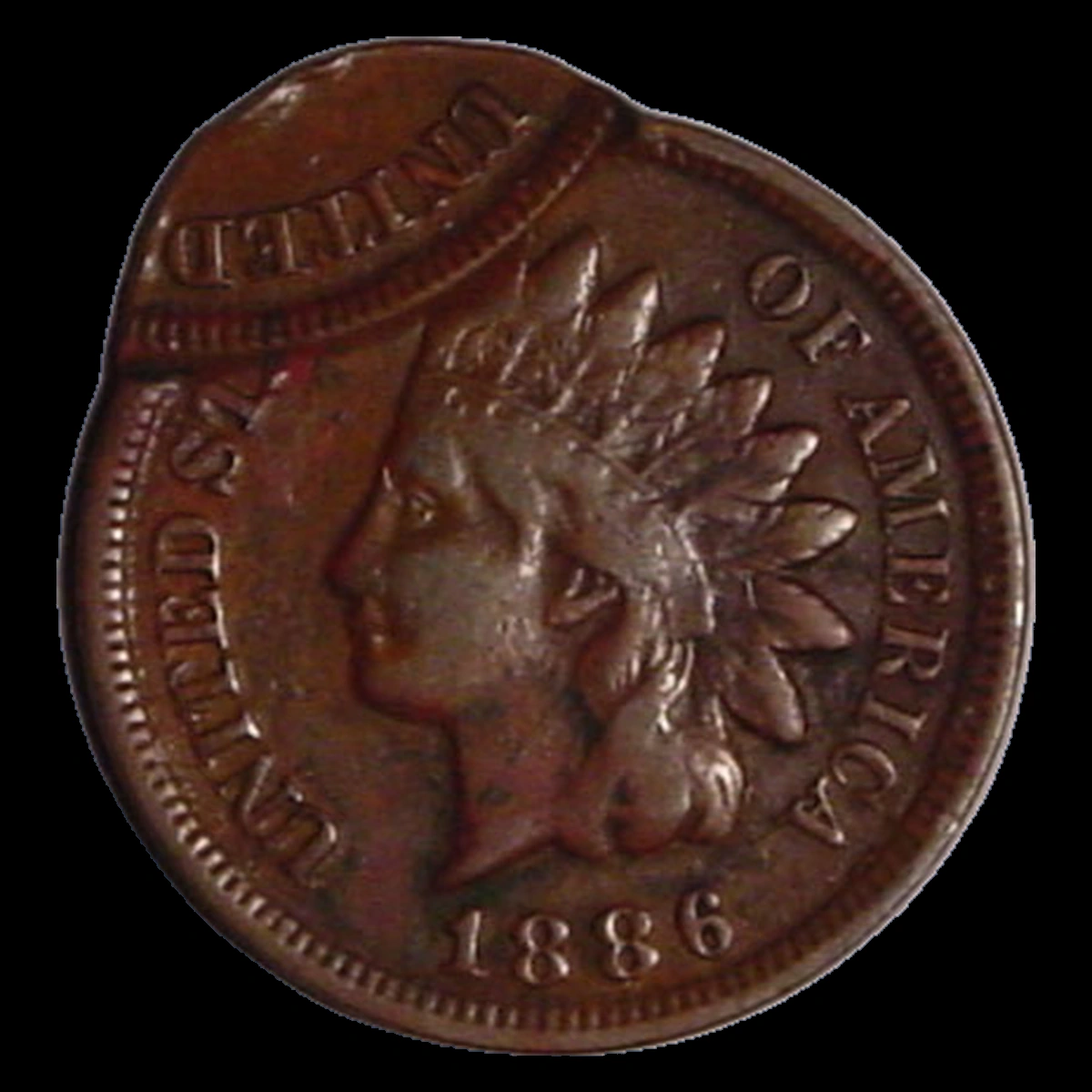
8. 1886 Penny A Second Impression Appears near the Top: Double Strike Error
The published Type 2 penny was struck first in the center, then again 75% off center near eleven o’clock. It had moved before leaving the press.
How to Identify
The NGC AU55 Brown example has light wear. Keep the small second impression in the same photograph as the centered first design so the sequence can be followed.
Find recognizable letters or portrait lines from each strike and check the other face for the same movement. A few extra date strokes alone cannot demonstrate a second blow to the entire coin.
What It’s Worth
$500–$4,000 is an estimate for confirmed examples of this kind. Preservation, Type 2 identity, and readable overlap influence the comparison.
An 1894 NGC VF30 double strike sold for $517.50 in January 2008. It also had a 75% second strike but more wear, so the amount is not a sale assigned to the 1886 AU55 specimen.
Conclusion
Start with the normal portrait type and keep it attached to every date or error comparison. A Type 1 repunch and Type 2 misplaced date cannot exchange their identifying details.
For the larger features, use edge views and both faces: a local collar break differs from a broadstrike, and a peeling front differs from a clamshell opening. Listed dealer amounts and collection specimens also need to stay separate from completed auction sales.