Rare 1889 Penny Errors (List & Pictures)
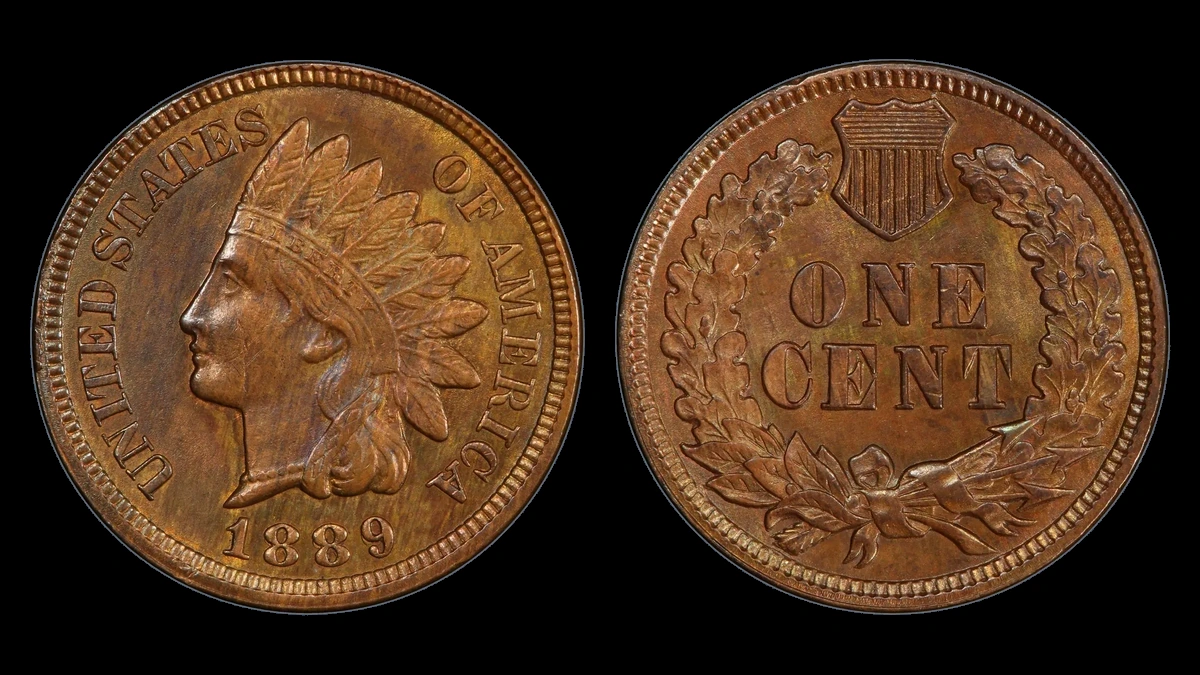
A triple-struck Indian Head cent brought $5,040 in December 2022. Its overlapping designs are far more obvious than the small date and letter features also reported among 1889 penny errors.
Estimated whole-coin values span $5–$6,000. Begin with the date and ordinary-versus-Proof finish, then compare repeated design, opposite-face traces, surface texture, and the outline.
| Where the clue appears | Possible error | Estimated value |
|---|---|---|
| Beside normal digits | Repunched date | $10–$4,000, including Proofs |
| Away from the date | Misplaced date | $20–$1,500 |
| ERICA or reverse design edges | Doubled die | $15–$1,500 |
| Unfamiliar opposite-face outlines | Die clash | $15–$3,000, including Proofs |
| Long color bands | Uneven alloy | $5–$150 |
| Raised crack or lower reverse step | Die break | $5–$750 |
| Unused metal or overlapping designs | Off-center or triple strike | $100–$6,000 |
Normal bronze examples weigh about 3.11 grams and measure roughly 19 millimeters across, with a plain edge. Use measurements when safely accessible and keep sealed coins in their holders.
1. 1889 Penny Earlier Strokes Follow the Date: Repunched Date Error
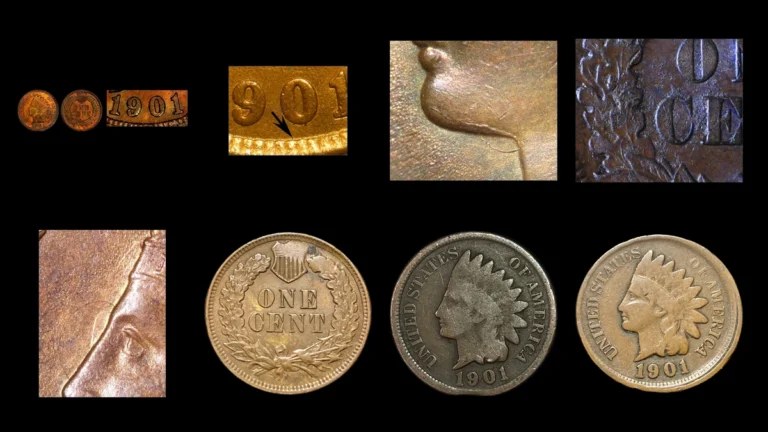
A shifted date punch could leave small portions of its first position visible in the die. Later pennies reproduce those remnants beside the completed numerals.
How to Identify
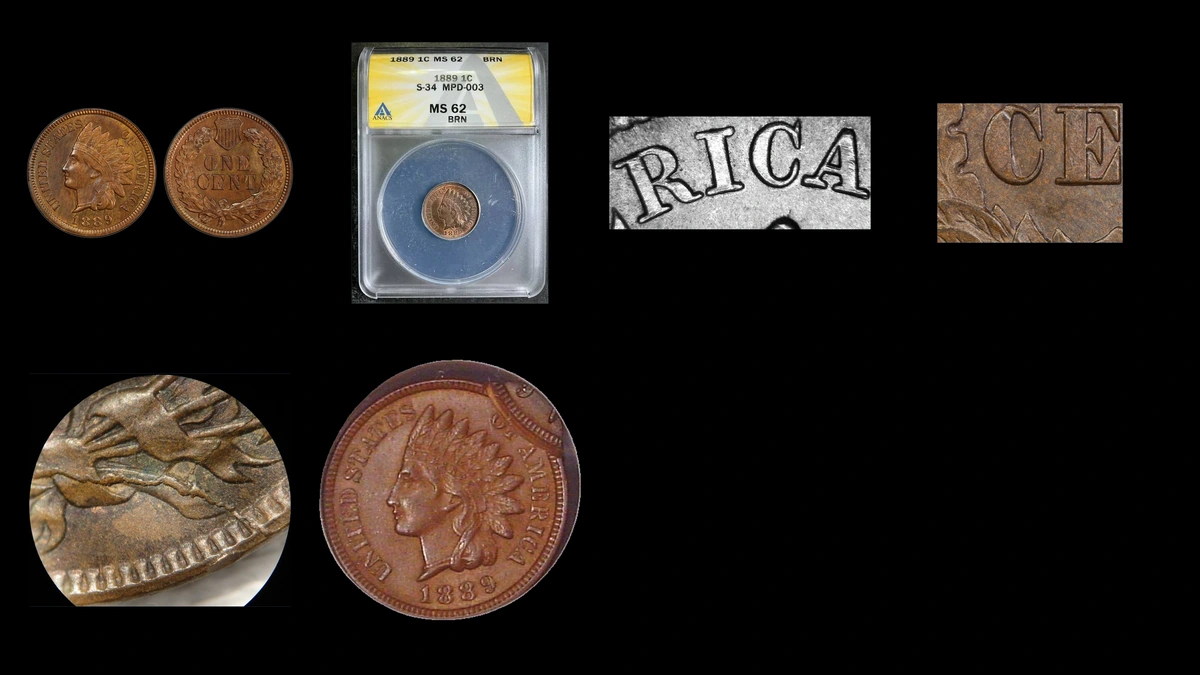
The cited ordinary-strike pattern has remnants below or inside the four digits. A separate specially made Proof pattern repeats parts of 18 upward, requiring a different comparison.
Map the extra strokes with the date upright and distinguish them from flat shelves beside narrowed digits. Associated front doubling or a misplaced fragment must be identified separately from the date repunch itself.
What It’s Worth
Estimated whole-coin values span $10–$4,000: ordinary varieties about $10–$1,000 and suitable Proof examples about $200–$4,000. Proof quality can explain much of the higher tier.
An ordinary FS-301 graded MS64 has a recorded $405 eBay result from May 2015. That marketplace result does not price the separate upward-punched Proof date.
2. 1889 Penny A Number Fragment Appears Elsewhere: Misplaced Date Error
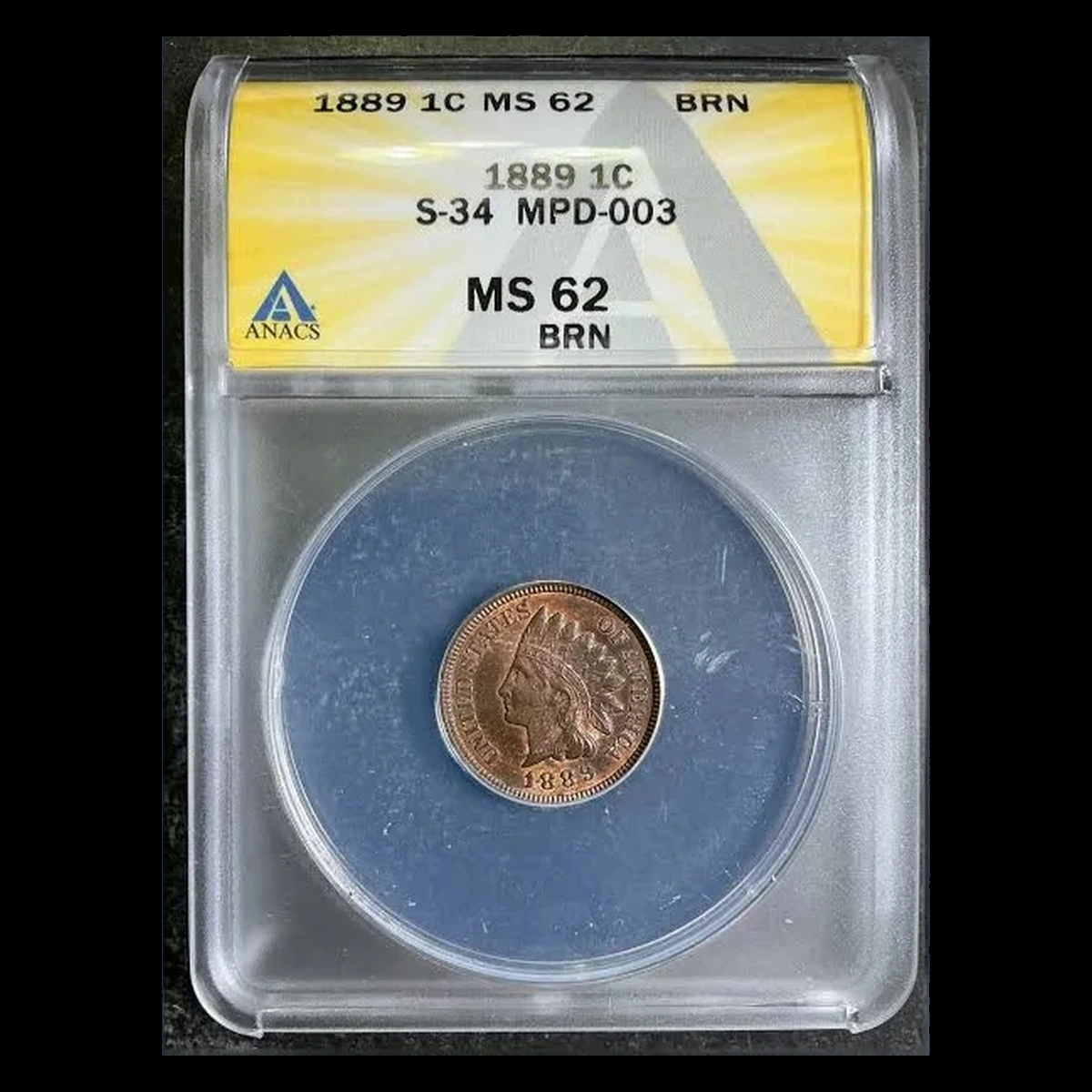
The specialist list includes a misplaced-date variety paired with a repunched date. The misplaced fragment comes from the date punch touching the wrong part of the die, away from the final date position.
How to Identify
Obtain the attributed variety photograph before selecting a promising bump on the coin. The supplied report does not establish an exact fragment position to infer from the year alone.
Match the surviving raised shape without mentally completing missing curves. A damaged border tooth, chip, or scratch can resemble a numeral fragment.
What It’s Worth
A properly identified 1889 misplaced date is estimated at $20–$1,500. This conditional range includes the associated date variety and overall condition.
A 1908 MS65 Red and Brown misplaced-date cent has a recorded $1,187 eBay result from 2021. That different-year comparison cannot authenticate or price an unidentified 1889 bump.
3. 1889 Penny Repeated Edges in ERICA or the Wreath: Doubled Dies Error
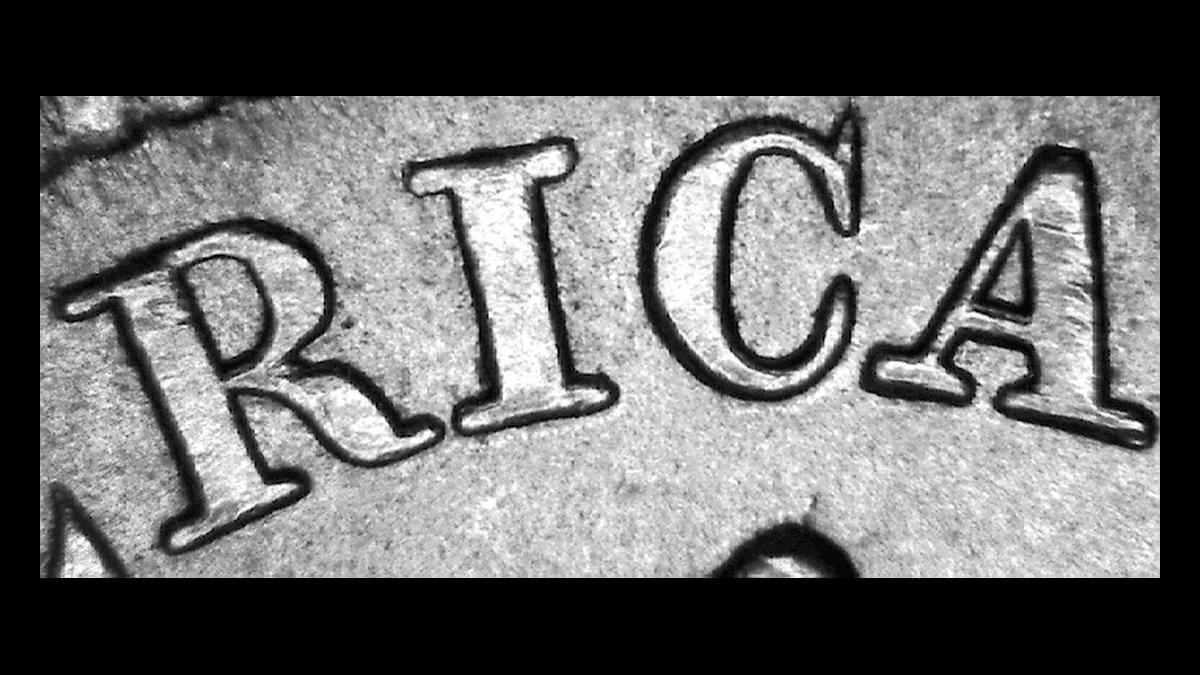
The front variety repeats ERICA in AMERICA inward toward the center. A separate reverse variety repeats leaf veins, arrowheads, ribbon, shield, and ONE CENT toward the left.
How to Identify
Select the correct face before matching the direction. Begin at ERICA for the front, or the right wreath’s leaf veins for the reverse, then check the associated repeated details.
The front variety also has a repunched date, but its numerals cannot replace the ERICA diagnostic. A portrait-shaped clash line near the wreath is likewise different from a repeated leaf edge.
What It’s Worth
Matched doubled dies are estimated at $15–$1,500. The exact variety, visible strength, and preservation determine the comparison.
An FS-801 reverse-doubled cent graded AU55 Brown sold for $240 in July 2025, according to PCGS. That lightly worn reverse-variety result is not a sale of the separate inward-doubled front.
4. 1889 Penny A Portrait-Like Trace Appears on the Back: Die Clash Error
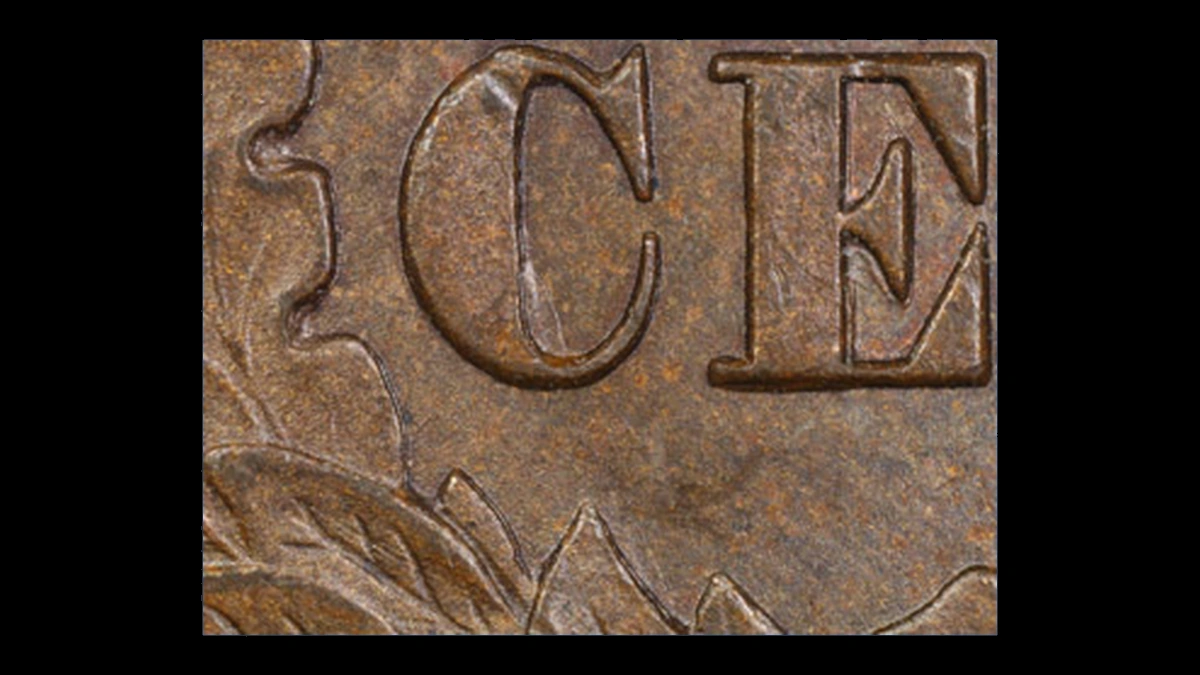
When dies touch without a blank, traces of one design can transfer to the other tool. Coins struck afterward may show unfamiliar opposite-face outlines.
How to Identify
Ordinary 1889 coins include reported displaced or repeated clash patterns. Match the actual outline and alignment rather than turning unrelated lines into an imagined portrait.
A separate Proof variety has marks on both faces and needs its own photographs. Shine alone does not establish Proof status, and a doubled leaf vein remains a different feature from a nearby clash line.
What It’s Worth
The estimated whole-coin range is $15–$3,000: ordinary clashes about $15–$500 and suitable Proof examples about $200–$3,000. Finish and condition contribute substantially to the Proof tier.
No individual realized sales are supplied for these tool pairs. A coin also carrying reverse doubling receives one combined assessment rather than two full estimates added together.
5. 1889 Penny Long Color Streaks Cross Intact Metal: Uneven Alloy Error
Uneven mixing within the bronze can produce bands that develop different colors. The reported wood-like pattern concerns the metal itself rather than a second design in the die.
How to Identify
Follow the streaks through the portrait and lower fields under changing light. Intact color bands differ from cut-in cleaning scratches crossing finished details.
Inspect for a coating, stains, and altered surfaces without rubbing the coin. A wood-like appearance alone cannot prove original alloy mixing.
What It’s Worth
Ordinary examples with convincing original streaking are estimated at $5–$150. The underlying coin’s preservation can account for most of that amount.
No sale is assigned to a particular 1889 streaked specimen. Artificial color, corrosion, or harsh cleaning can reduce value despite a dramatic-looking pattern.
6. 1889 Penny A Raised Line Borders a Stepped Section: Die Cracks and Retained Cud Error
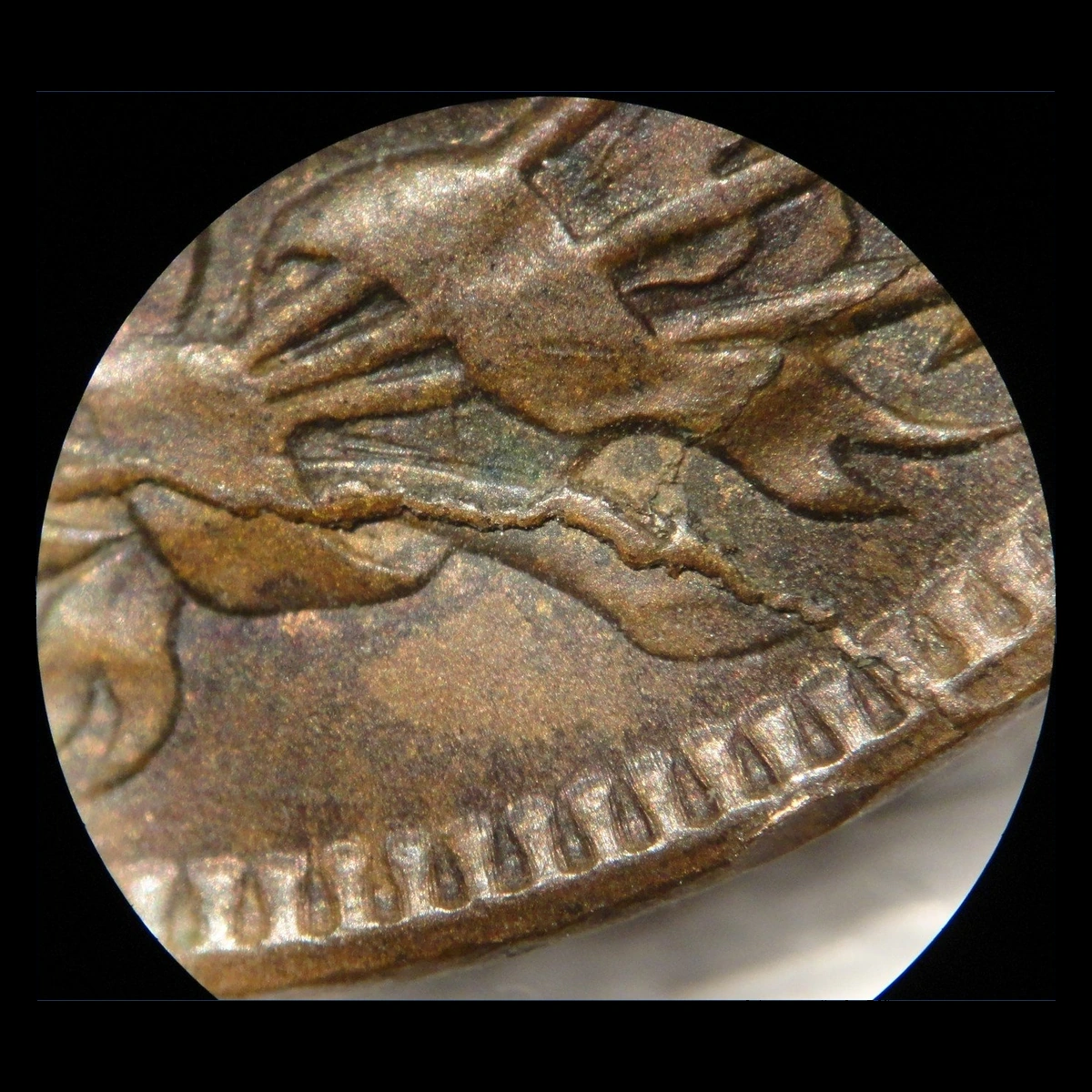
The documented retained reverse break lies along the lower rim from about 5:30 to seven o’clock. A broken die section moved while remaining in place, creating a step and still transmitting design.
How to Identify
View the lower reverse at a low angle and follow the raised boundary around the stepped section. Inspect the adjacent edge for folding or added metal.
Other 1889 reverse cracks have their own routes through the wreath, ribbon, and arrows. A long raised line alone does not demonstrate movement of a retained section.
What It’s Worth
Estimate $5–$750 overall, with modest cracks around $5–$75 and a clear retained rim break around $50–$750. Visibility and preservation affect the whole-coin value.
A 1946-S Lincoln cud sold for $288 in March 2021. That different design and missing-piece break supplies broad context rather than an exact retained-section comparison.
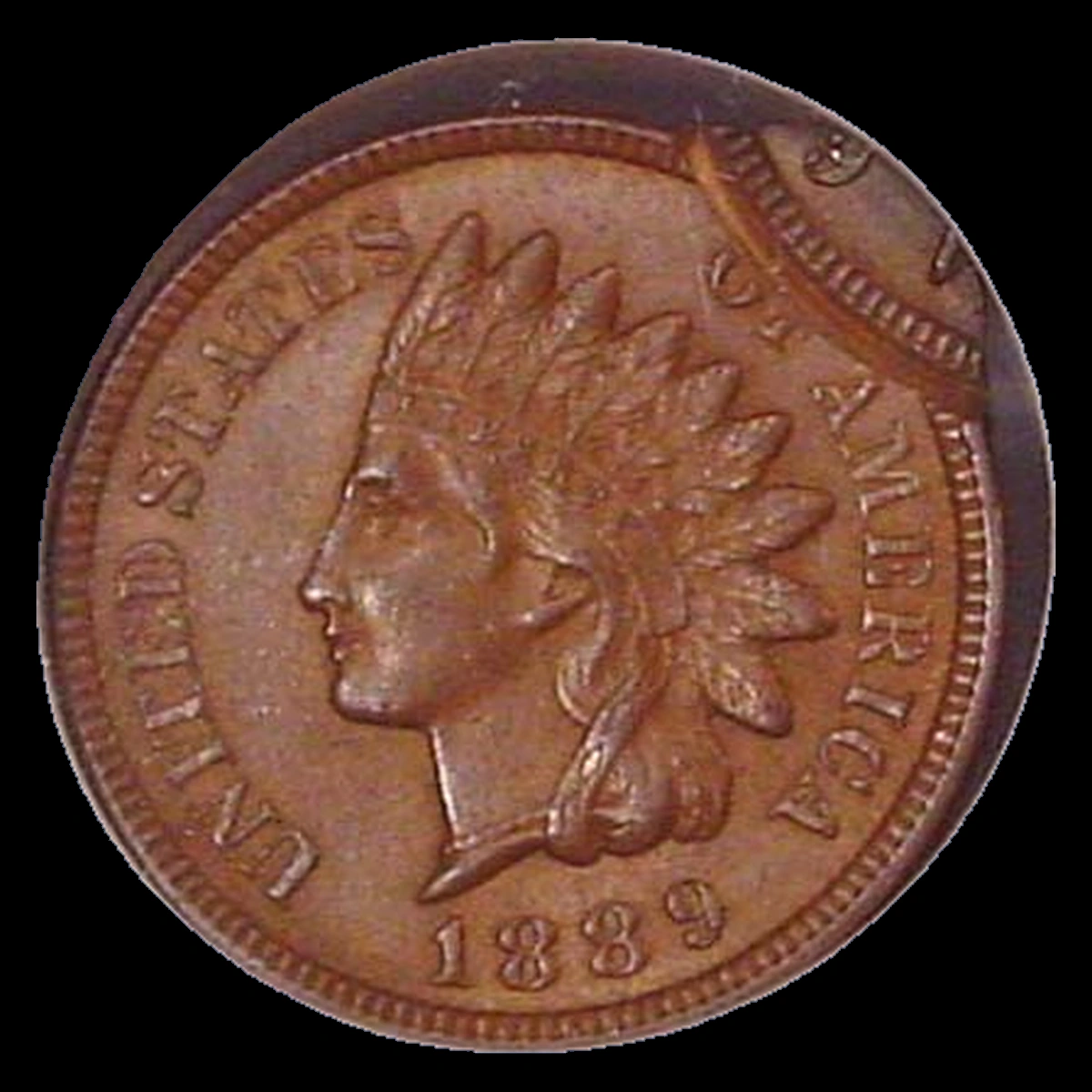
7. 1889 Penny Blank Metal Borders an Incomplete Design: Off-Center Strike Error
A planchet outside its intended position receives only part of the design. The remaining unused area is still metal, unlike an edge section cut or clipped away.
How to Identify
Compare both faces and confirm the surviving date reads 1889. One shifted face opposite a centered face may involve a die alignment problem instead.
Inspect the unused area for grinding and the edge for filing. The general report supplies no standard percentage or direction for all examples.
What It’s Worth
A genuine dated 1889 off-center cent is estimated at $100–$1,500. Displacement, date legibility, and condition guide the comparison.
An 1897 Indian cent struck 10% off center and graded AU58 sold for $280.60 in March 2026. Its measured shift and slight wear belong to that different-year specimen.
8. 1889 Penny Three Design Impressions Overlap: Triple Strike Error
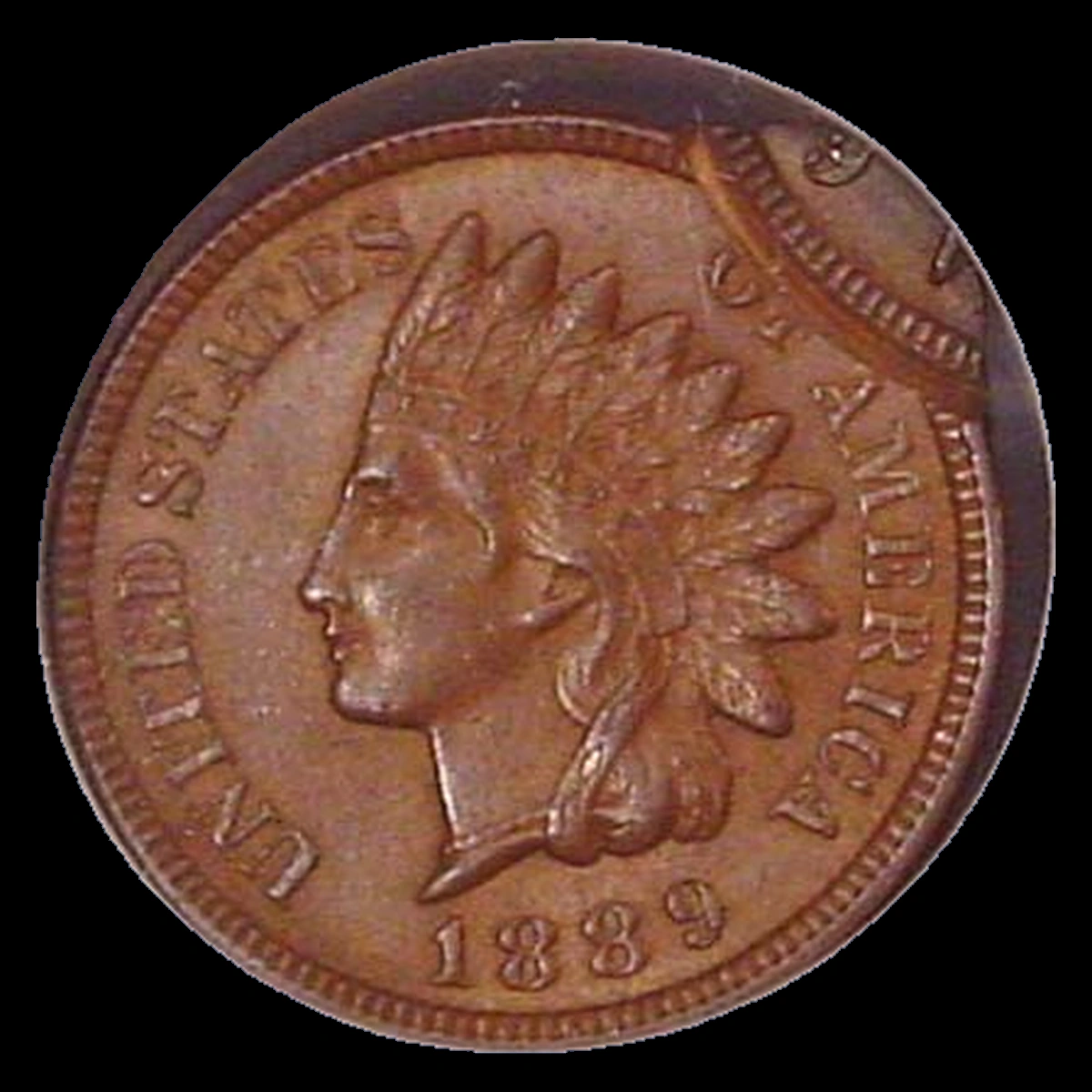
The documented NGC MS62 Red and Brown cent received three blows. Earlier portraits and lettering survive partly beneath later impressions on the same piece of metal.
How to Identify
Trace each proposed portrait into its own lettering or border, then locate where a later blow flattened earlier detail. Three date-like bumps cannot replace recognizable portions of three strikes.
Test the sequence against the reverse and inspect the edge for joins or later pressing. The three images need not remain equally complete.
What It’s Worth
Estimated values span $1,000–$6,000 for genuine triple strikes with different preservation and readable overlaps. The number of blows does not multiply a single-strike price.
The NGC MS62 Red and Brown example sold for $5,040 in December 2022, including the buyer’s premium, as reported in NGC’s account. Its surviving arrangement is central to that comparison.
Conclusion
Keep ordinary and Proof date patterns separate, and distinguish a repeated reverse design edge from a trace transferred from the front. Those small choices prevent unrelated marks from being treated as the same variety.
The $5–$6,000 estimates include both modest surface features and a dramatic triple strike. Match the physical evidence, finish, and preservation before using a recorded price to assess another 1889 cent.